
HVAC Technician School: Programs, Cost, and Career Outlook 2026 September
HVAC technician school takes 6-24 months and costs $3,000-$25,000. ✅ Learn about trade school programs, what you'll study, certifications, and career
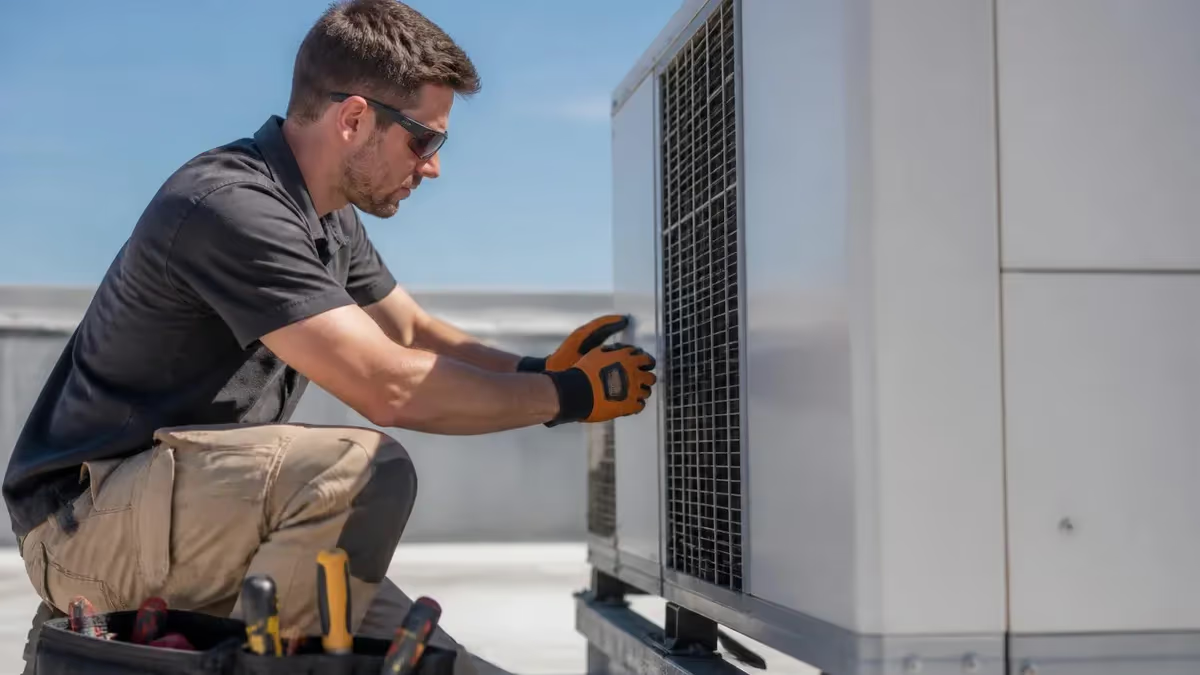
HVAC Technician School: Everything You Need to Know
Heating and cooling technicians are in short supply everywhere — and the shortage is getting worse as experienced technicians retire faster than training programmes produce replacements. If you're looking for a career that pays well, offers genuine job security, and gets you working with your hands rather than sitting at a desk, HVAC technician school is one of the fastest and most practical pathways available. The training takes months rather than years, the investment is a fraction of a college degree, and job prospects after graduation are strong in every region of the country.
HVAC technician school trains you to install, repair, and maintain heating, ventilation, and air conditioning systems — skills that are in high demand and pay well without requiring a four-year degree. The typical HVAC programme takes 6 to 24 months (depending on whether you attend full-time or part-time), costs between $3,000 and $25,000 in tuition, and prepares you for EPA certification and entry-level employment in one of the most stable skilled trades in the country.
The heating and cooling industry doesn't have enough technicians to meet demand. The Bureau of Labor Statistics projects 6% job growth for HVAC mechanics and installers through 2032, with tens of thousands of job openings annually from both growth and retirements. Experienced HVAC technicians earn $50,000–$80,000+ per year, with overtime and emergency service calls adding significantly to base pay. Starting salaries are lower ($35,000–$45,000) but ramp up quickly as you gain experience and certifications. For someone looking for a well-paying trade career without college debt, HVAC is one of the strongest options available.
HVAC technician school isn't just about learning to fix air conditioners — the curriculum covers electrical theory, refrigeration cycles, airflow dynamics, heating systems (gas furnaces, heat pumps, boilers), controls and thermostats, building codes, and the EPA regulations governing refrigerant handling. You learn through a combination of classroom instruction and hands-on lab work, building real skills on actual equipment before you enter the field. Graduates leave with the technical foundation to start working — though the learning continues extensively through on-the-job experience in the first few years.
This guide covers how to choose an HVAC programme, what the training involves, how much it costs, what certifications matter, and what the career looks like after graduation. Whether you're graduating high school, changing careers, or adding HVAC skills to an existing trade background, the information here helps you evaluate whether HVAC school is the right investment for your situation.
- Programme length: 6–24 months (certificate or diploma programmes); 2 years for an associate degree
- Tuition: $3,000–$15,000 at community colleges; $10,000–$25,000+ at trade/vocational schools
- What you learn: Refrigeration, heating systems, electrical theory, controls, airflow, ductwork, building codes, EPA regulations
- Key certification: EPA Section 608 — legally required to handle refrigerants. Obtained by passing a written exam after training
- Career entry: Most graduates start as helpers or apprentices, advancing to journeyman technician with experience
- Salary range: $35,000–$45,000 starting; $50,000–$80,000+ experienced. Overtime can significantly increase total compensation
- Job outlook: Strong demand — 6% growth projected, with tens of thousands of annual openings from retirements alone
How to Become an HVAC Technician
Step 1: Complete HVAC Training
Step 2: Get EPA 608 Certified
Step 3: Gain Field Experience
Step 4: Pursue Additional Certifications
Step 5: Advance Your Career
What HVAC School Teaches You
HVAC programmes combine classroom instruction with hands-on lab work, building both theoretical understanding and practical skills. The curriculum is designed to prepare you for the realities of fieldwork — not just passing an exam. Here's what a comprehensive HVAC programme covers.
Refrigeration fundamentals are the scientific foundation of HVAC. You learn how refrigerants absorb and release heat as they change between liquid and gas states, the four components of the refrigeration cycle (compressor, condenser, expansion device, evaporator), and how temperature and pressure relationships govern system behaviour. This theoretical understanding is what separates a skilled technician who can diagnose problems from a parts-swapper who replaces components until something works.
Electrical theory and wiring cover the electrical systems that power and control HVAC equipment. You learn to read wiring diagrams, use multimeters to measure voltage, current, and resistance, troubleshoot electrical circuits, and understand the control logic that determines when equipment turns on and off. Electrical work is a major component of HVAC service — probably 40–50% of service calls involve electrical issues — so this portion of training is heavily emphasised in quality programmes.
Heating systems instruction covers gas furnaces (the most common residential heating system), heat pumps (which provide both heating and cooling), boilers, and electric heating systems. You learn combustion theory, gas valve operation, heat exchanger inspection, ignition systems, and the safety controls that prevent carbon monoxide poisoning and fire. Heating system service is critical because mistakes can create life-threatening safety hazards — HVAC programmes take heating safety training seriously.
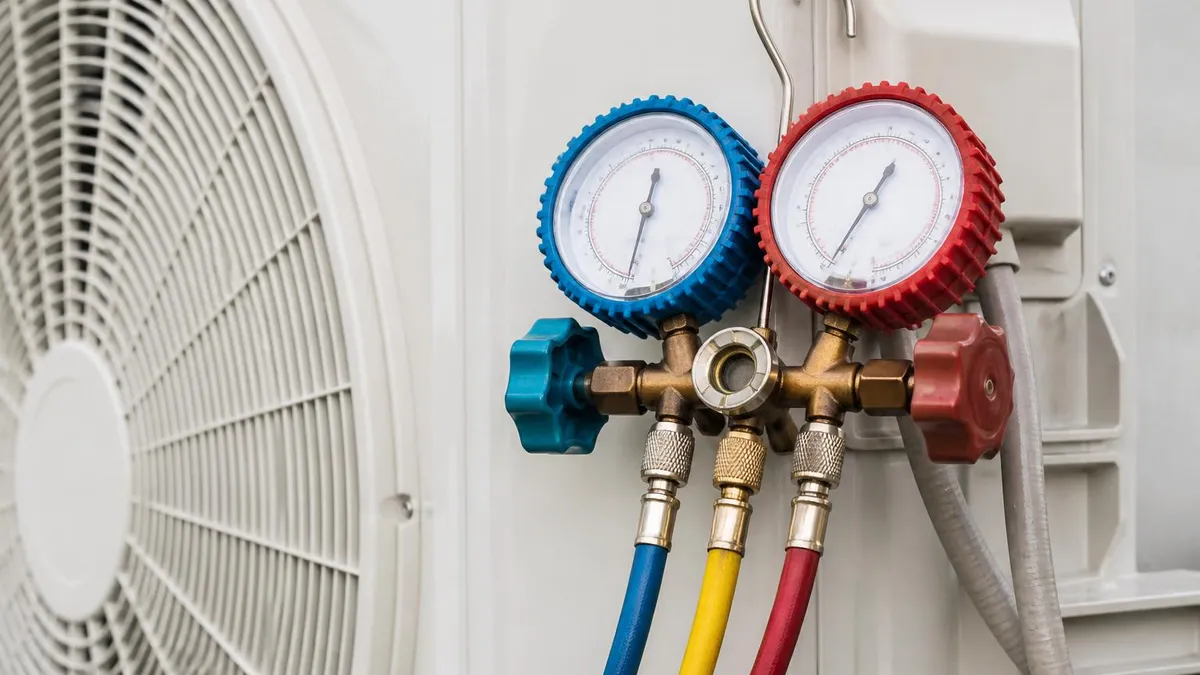
Air conditioning and heat pump systems are covered in depth because they represent the largest share of HVAC service work. You learn system sizing, refrigerant charging, superheat and subcooling measurements, compressor diagnostics, and troubleshooting poor cooling performance. Hands-on practice with charging equipment, gauges, and recovery machines builds the physical skills you'll use daily in the field.
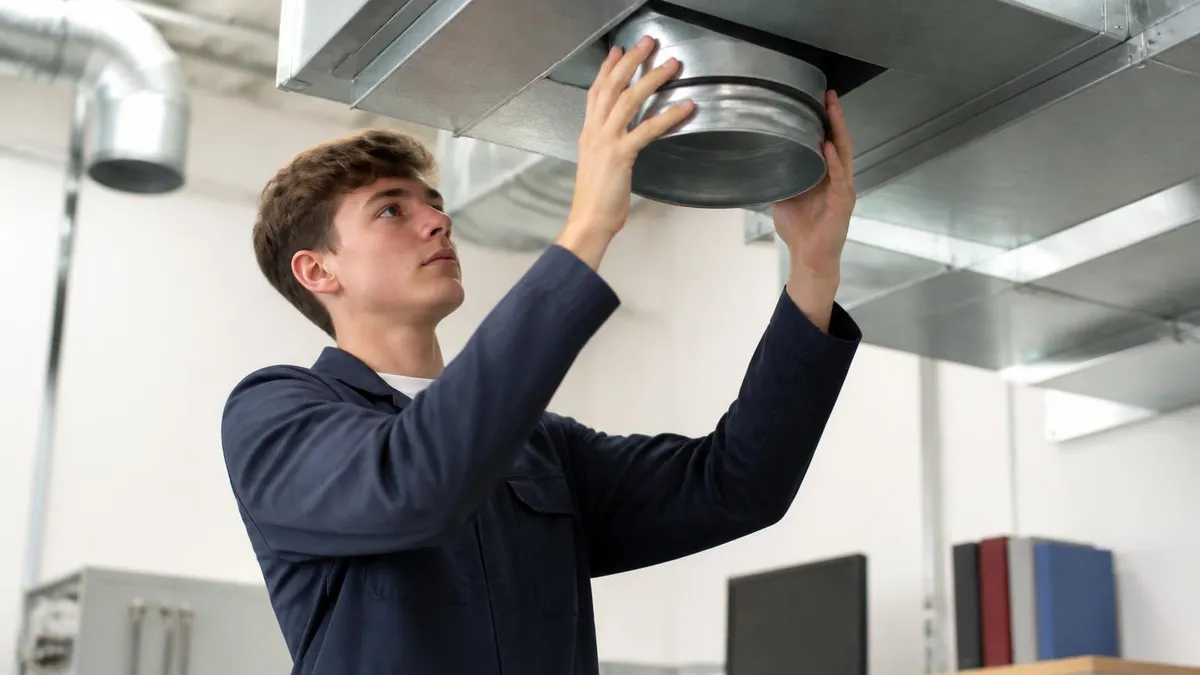
Ductwork and airflow are often underemphasised in shorter programmes but are essential for quality installations and effective troubleshooting. You learn duct design principles, static pressure measurement, air balancing, and how duct problems (leaks, restrictions, poor design) affect system performance and energy efficiency. Many comfort complaints that homeowners attribute to equipment problems are actually airflow problems — technicians who understand ductwork solve these issues faster and more accurately.
Building codes and safety regulations round out the curriculum. You learn the mechanical codes that govern HVAC installations (clearances, venting requirements, combustion air provisions), electrical codes relevant to HVAC wiring, and refrigerant handling regulations (EPA 608). Understanding code requirements is essential because inspectors check HVAC work during new construction and renovation projects. Code violations mean rework — which costs time, money, and credibility. Programmes that include code training produce graduates who install correctly the first time.
Types of HVAC Training Programmes
Community colleges offer the best value for HVAC training — tuition for in-district students is typically $3,000–$15,000 for the full programme. Programmes range from short certificate programmes (6–12 months) to associate degrees (2 years). Community college credits are transferable if you later pursue further education. Accredited community college programmes have established relationships with local HVAC employers who recruit directly from their graduates. Financial aid (FAFSA) is available.
Dedicated trade schools offer focused HVAC training without the general education courses that associate degree programmes include. Programmes are typically 6–18 months and cost $10,000–$25,000. The advantage is speed and focus — you're learning HVAC exclusively. The disadvantage is higher cost per credit hour compared to community colleges, and credits may not transfer to other institutions. Research the school's graduation rate, job placement rate, and employer reputation before enrolling.
Union and non-union apprenticeships combine paid on-the-job training with classroom instruction over 3–5 years. Apprentices earn while they learn — starting at $15–$20/hour and increasing as they progress. The apprenticeship path is longer than trade school but results in the most comprehensive training and typically includes journeyman certification upon completion. Union apprenticeships (through HVAC local unions or the United Association) include benefits and defined wage progression.
Some HVAC manufacturers (Carrier, Lennox, Trane, York) offer proprietary training programmes, either standalone or in partnership with trade schools. These programmes focus on the manufacturer's specific equipment lines and often include guaranteed employment or preferred hiring with the manufacturer's dealer network upon completion. The training is narrower in scope than a general HVAC programme but provides deep knowledge of specific systems and direct employment connections.
HVAC School Cost and Financial Aid
HVAC training costs vary dramatically by programme type and institution:
- Community college certificate (6–12 months): $3,000–$8,000 for in-district students. The most affordable option with quality instruction and lab facilities
- Community college associate degree (2 years): $8,000–$15,000. More comprehensive, includes general education courses, and the degree may help with future advancement
- Trade school certificate (6–18 months): $10,000–$25,000. Faster than an associate degree, focused exclusively on HVAC, but more expensive per month than community college
- Apprenticeship: Typically free — the employer or union covers training costs. You earn wages throughout the 3–5 year programme
- Additional costs: Tools ($500–$1,500 for a starter set), EPA 608 exam ($20–$100), textbooks ($200–$500), safety equipment ($100–$200)
HVAC Certifications: What You Need
Certifications are the credentials that HVAC employers care about most — in many cases more than the specific school you attended. Some are legally required (EPA 608), while others are voluntary but significantly impact your earning potential and career advancement.
EPA Section 608 certification is mandatory by federal law for any technician who purchases, handles, or disposes of refrigerants. You cannot legally work on systems containing refrigerants without it. The certification involves a written exam administered at EPA-approved testing centres (many HVAC programmes include the exam). Universal certification (covering all refrigerant types) is the most practical option — most employers expect Universal 608 as a minimum qualification.
NATE (North American Technician Excellence) certification is voluntary but highly valued. NATE exams test real-world HVAC knowledge across installation and service specialties — air conditioning, heat pumps, gas furnaces, air distribution, and more. Passing NATE exams demonstrates competency that goes beyond completing a training programme. Many employers pay higher wages to NATE-certified technicians, and some require NATE certification for advancement to senior positions. NATE certifications are valid for 2 years and require continuing education for renewal.
HVAC Excellence and R-410A certifications are additional credentials that demonstrate safety competence and proficiency with current refrigerant systems. The transition from R-22 (phased out) to R-410A and newer refrigerants has created demand for technicians certified in current refrigerant handling practices. As the industry continues transitioning to lower-GWP refrigerants (R-32, R-454B), additional refrigerant-specific certifications will become important.
State and local licences vary — some states require HVAC contractors to hold a state licence, while others regulate at the municipal level or don't require licensing at all. If your state requires licensing, the licence typically involves a combination of education, work experience, and a written exam. Check your state's contractor licensing board for specific requirements in your area.
Choosing an HVAC Technician School
- ✓Check accreditation — look for programmes accredited by HVAC Excellence or PAHRA. Accreditation means the curriculum meets industry standards for quality
- ✓Ask about hands-on lab time — programmes with significant lab hours (400+ for certificates, 800+ for associate degrees) produce better-prepared graduates than lecture-heavy programmes
- ✓Compare tuition costs — community colleges are typically the best value. Trade schools cost more but may offer faster completion
- ✓Ask about job placement rates — strong programmes track and share the percentage of graduates who find HVAC employment within 6 months
- ✓Check whether EPA 608 testing is included — most programmes integrate EPA exam preparation and testing, saving you time and the hassle of scheduling it separately
- ✓Visit the school's lab facilities — modern equipment (current-generation systems, proper diagnostic tools, recovery machines) indicates a programme invested in quality training
- ✓Ask about employer partnerships — programmes with relationships with local HVAC companies often provide graduates with direct hiring pipelines
- ✓Verify financial aid eligibility — confirm the school participates in Title IV financial aid (FAFSA) before enrolling if you need financial assistance
HVAC as a Career: Pros and Cons
- +Strong job security — HVAC systems are in every building, they require regular maintenance, and they break down in extreme weather when demand peaks. The work can't be outsourced or automated
- +Good pay without a degree — experienced HVAC technicians earn $50,000–$80,000+ with overtime regularly available. Business owners and specialised technicians earn significantly more
- +Variety and autonomy — no two days are identical. You troubleshoot different problems in different locations, work independently, and develop expertise through continuous learning
- +Fast career entry — certificate programmes take 6–12 months. You can be working in the field earning money while college graduates are still in school accumulating debt
- −Physically demanding — the work involves lifting heavy equipment, working in cramped spaces (attics, crawlspaces, rooftops), and operating in extreme temperatures (hot attics in summer, cold rooftops in winter)
- −Emergency and irregular hours — HVAC systems fail during extreme weather, which is when customers need service most urgently. Evening, weekend, and holiday calls are common, especially early in your career
- −Injury risk — working with electricity, refrigerants, gas lines, and heavy equipment carries inherent safety risks that require constant attention and proper safety practices
- −Continuous learning required — HVAC technology evolves constantly (new refrigerants, smart controls, heat pump technology, building automation). Keeping current requires ongoing education throughout your career

HVAC Career Outlook and Salary
The HVAC industry offers one of the strongest career outlooks of any skilled trade — a combination of growing demand, retiring workforce, and insufficient training pipeline that creates excellent employment prospects for new technicians.
Entry-level HVAC technicians (graduates with EPA 608 and 0–2 years of experience) typically earn $35,000–$45,000 per year. With 3–5 years of experience and additional certifications (NATE, manufacturer training), pay increases to $45,000–$60,000. Senior service technicians and commercial HVAC specialists with 5–10+ years of experience earn $60,000–$80,000+. These figures represent base pay — overtime, on-call premiums, and performance bonuses can add 15–30% to total compensation in many positions.
HVAC business owners represent the highest earning potential in the trade. Technicians who start their own HVAC service companies — after gaining enough experience and building industry relationships — can earn $100,000–$200,000+ depending on business size, market, and management skills. The barrier to starting an HVAC business is relatively low compared to many industries: a truck, tools, licensing, and insurance are the primary startup costs. Many successful HVAC company owners started as technicians and grew their businesses incrementally.
Geographic location affects pay significantly. Technicians in major metropolitan areas and regions with extreme temperatures (Southwest for cooling, Northeast for heating) tend to earn more than those in mild-climate or rural areas. However, the cost of living difference partially offsets the pay gap. The strongest markets for HVAC employment combine high demand (extreme climate), a large building stock (commercial and residential), and an insufficient supply of local technicians — which describes most growing Sun Belt cities.
Benefits vary by employer type. Larger HVAC companies and union positions typically offer health insurance, retirement plans (401k or pension), paid time off, and company-provided vehicles and tools. Smaller companies may offer fewer benefits but provide more flexibility, mentorship, and faster advancement. When evaluating job offers after completing HVAC school, compare total compensation packages rather than just hourly rates — a position paying $2/hour less but including health insurance and a company truck may be worth significantly more in total value.
HVAC Technician School: Key Numbers
Day in the Life of an HVAC Technician
Understanding what daily HVAC work actually looks like helps you evaluate whether the career suits your personality, physical capabilities, and lifestyle preferences before investing in training.
A typical service technician's day starts with reviewing the schedule — usually 4–6 service calls or 1–2 installations assigned through the dispatcher. You drive to each location in your service truck (which doubles as your mobile workshop, stocked with tools, parts, and diagnostic equipment), assess the problem, diagnose the cause, and either repair it on-site or schedule a return visit for parts that need to be ordered. The diagnostic process is where your training pays off: listening to the system, measuring temperatures and pressures, checking electrical components, and working through the possibilities until you identify the root cause.
Customer interaction is a bigger part of the job than many people expect. You're entering people's homes and businesses, explaining what's wrong, presenting repair options and costs, and building trust that brings repeat business and referrals. Technicians who communicate well and treat customers respectfully earn more (through tips, performance bonuses, and advancement) than technically skilled technicians with poor people skills. If you strongly prefer working alone without customer contact, HVAC service may not be the ideal fit — though installation and commercial work involve less direct customer interaction than residential service.
The physical demands are real and worth evaluating honestly. You carry tools and equipment (sometimes heavy units up stairs or onto rooftops), work in confined spaces where temperatures can exceed 130°F in attics or drop below freezing on rooftops, and maintain awkward positions for extended periods while working on equipment. The physical demands decrease somewhat as you advance into supervisory or specialised roles, but the first 5–10 years of an HVAC career are physically intensive.
Proper lifting technique, wearing knee pads consistently, staying hydrated during hot-weather work, and maintaining general physical fitness all help manage the physical demands over the long term. If you have chronic back, knee, or shoulder problems, discuss the specific physical requirements with both a doctor and a working HVAC technician before committing to the career — their honest perspective on daily physical demands is more informative than any written job description or marketing material could ever be.
Not all HVAC training programmes deliver equal value — some charge $20,000+ for training that community colleges offer at $5,000. Before enrolling, compare the curriculum and outcomes (job placement rates, graduation rates) of the programme you're considering against your local community college's HVAC programme. If the expensive school's outcomes aren't significantly better, the cheaper option is the smarter investment. Check accreditation (HVAC Excellence or PAHRA), verify financial aid eligibility, and read reviews from graduates. A flashy campus and aggressive marketing don't compensate for a programme that doesn't prepare you for EPA 608 certification and employer expectations.
HVAC Specialisations Worth Considering
As you gain experience, specialising in a specific area of HVAC can significantly increase your earning potential and job satisfaction. Generalist technicians who handle everything are always needed, but specialists command higher rates and have more career options.
Commercial HVAC involves larger, more complex systems than residential work — rooftop units, chillers, cooling towers, building automation systems, and variable air volume systems. Commercial technicians earn more than residential technicians (typically 15–25% higher) because the equipment is more expensive, the consequences of system failure are more severe, and the technical knowledge required is deeper. Transitioning from residential to commercial usually requires additional training and mentorship.
Refrigeration technicians specialise in commercial refrigeration — walk-in coolers, blast freezers, display cases, and industrial refrigeration systems. Supermarkets, restaurants, cold storage facilities, and food processing plants all need refrigeration service. This specialisation is less seasonal than residential HVAC (refrigeration runs year-round) and often pays well because of the specialised knowledge required.
Controls and building automation is the fastest-growing HVAC specialisation. Modern buildings use sophisticated control systems (BACnet, Tridium, Honeywell, Johnson Controls) to manage HVAC, lighting, and other building systems. Technicians who can programme, troubleshoot, and optimise these systems are in extremely high demand and command some of the highest wages in the trade. This specialisation requires comfort with technology and some programming aptitude in addition to traditional HVAC skills.
Energy efficiency and green building is an emerging specialisation driven by tightening energy codes and growing demand for high-performance buildings. Technicians who understand Manual J load calculations, energy auditing, heat pump technology (including cold-climate heat pumps and geothermal systems), and building envelope interactions can provide consulting-level services that command premium rates. As heat pump adoption accelerates and electrification becomes a policy priority in many states, technicians with expertise in heat pump installation and service are among the most sought-after in the HVAC industry.
HVAC Technician School Questions and Answers
About the Author

NATE Certified HVAC Technician & Licensing Exam Trainer
Universal Technical InstituteMike Johnson is a NATE-certified HVAC technician and EPA 608 universal-certified refrigerant handler with a Bachelor of Science in HVAC/R Technology. He has 19 years of commercial and residential HVAC installation and service experience and specializes in preparing technicians for NATE certification, EPA 608, A2L refrigerant safety, and state HVAC contractor licensing examinations.