
HVAC System Replacement: The Complete Homeowner's Guide to Costs, Timing, Sizing, and Installation
Complete HVAC system replacement guide: 📝 costs, sizing, timing, contractor vetting, permits, and what to expect during installation day.
HVAC system replacement is one of the largest home investments most owners ever make, typically falling between $7,500 and $18,000 for a full furnace and air conditioner swap with new refrigerant lines, thermostat, and minor duct modifications. Because the decision impacts comfort, monthly utility bills, indoor air quality, and resale value for the next 15 to 20 years, it pays to slow down and understand the full picture before signing a proposal. This guide walks through every stage of the replacement process from initial diagnosis to post-installation tuning.
The decision to replace rather than repair usually arrives suddenly, often during a July heat wave or January cold snap when a 14-year-old condenser finally gives up. At that moment, contractors are booked solid, financing offers feel urgent, and homeowners face a $9,000 decision with no time to research. The best way to avoid that pressure is to learn the fundamentals now, while your equipment still works, so you can recognize end-of-life warning signs and plan a controlled replacement instead of an emergency one.
Modern systems are dramatically different from the units installed in the early 2000s. Variable-speed compressors, communicating thermostats, refrigerants like R-454B that replace the phased-out R-410A, and tighter efficiency mandates from the Department of Energy have reshaped what a quality install looks like. A contractor who is still installing single-stage equipment with builder-grade ductwork in 2026 is leaving substantial comfort and efficiency gains on the table, and you will feel the difference within the first cooling season.
Sizing remains the single most misunderstood part of replacement. Roughly 60 percent of residential systems in North America are oversized, often by a full ton or more, because contractors use rules of thumb based on square footage instead of running a proper Manual J load calculation. Oversizing causes short cycling, poor humidity control, premature compressor wear, and higher bills, which is the opposite of what most homeowners expect when they upgrade to a larger unit. Right-sizing through proper calculation matters more than brand selection.
Ductwork is the silent partner in any replacement project. A brand-new 96 percent AFUE furnace bolted to leaky, undersized, or poorly routed ducts will never deliver the comfort or efficiency the equipment is rated for. Before you sign a proposal, ask whether the contractor measured static pressure on your existing duct system, inspected accessible runs for leaks, and verified that supply and return sizing matches the new equipment's airflow requirements. If they skip this step, you are paying premium prices for a compromised installation.
Permits, code compliance, and equipment registration are non-negotiable but frequently shortcut by low-bid contractors. Without a pulled permit and a passing inspection, your warranty may be voided, your homeowner's insurance can deny claims tied to faulty installation, and any future home sale will surface the issue during inspection. Reviewing the basics in hvac basics can help you ask sharper questions about airflow, sizing, and what a code-compliant install actually requires.
This guide covers when to replace versus repair, how to evaluate equipment options and SEER2 ratings, what a fair price looks like in 2026, how to vet contractors, what installation day actually involves, and how to verify the system is operating correctly after the trucks leave. Whether you are facing an immediate failure or planning a proactive upgrade two summers from now, the information below will help you spend smarter and end up with a system that performs the way it was designed to.
HVAC System Replacement by the Numbers
When to Replace vs. Repair Your HVAC System
If your furnace is over 15 years old or your AC over 12 years old, replacement usually beats repair on a total-cost basis. Older equipment loses 1-2% efficiency annually and uses obsolete refrigerants that are expensive or unavailable.
When a single repair costs more than 50% of replacement value, replace it. A $2,800 compressor on a 13-year-old $7,000 system is a clear replacement signal, not a repair opportunity.
Systems using R-22 (banned since 2020) or aging R-410A units face skyrocketing refrigerant costs. New systems use R-454B or R-32, which are both more efficient and lower-GWP refrigerants.
If utility costs have climbed 20-40% with no rate change, the system is degrading. New variable-speed equipment can cut cooling bills 30-50% in hot climates with no comfort sacrifice.
Hot rooms, cold rooms, high humidity, loud operation, and frequent cycling are signals that your existing system can no longer match the load. Repairs rarely fix these symptoms permanently.
Proper sizing begins with a Manual J load calculation, a room-by-room analysis defined by the Air Conditioning Contractors of America that measures heating and cooling loads based on your home's insulation, window orientation, infiltration rate, occupancy, and local design temperatures. A correctly sized system runs longer at lower capacity, dehumidifies effectively, and stays within its peak efficiency window for hundreds of hours per season instead of slamming on and off every six minutes the way an oversized unit does.
Contractors who quote tonnage from square footage alone are guessing. A 2,400 square foot home in Phoenix with single-pane windows and an uninsulated attic needs vastly different equipment than the same square footage in Minneapolis with triple-glazed windows and R-60 attic insulation. Tools like the HVAC duct calculator help verify that the airflow side of the equation is just as carefully sized as the equipment itself, because mismatched ducts will sabotage even a perfectly sized condenser.
Manual S follows Manual J and matches the calculated loads to specific equipment models using manufacturer expanded performance data, not the nameplate rating. A 3-ton condenser does not actually produce 36,000 BTU at every operating condition. At 95°F outdoor and 75°F return air, it might deliver 34,800 BTU, while at 110°F it drops to 31,500 BTU. Manual S ensures the unit you buy actually meets your design-day load at your local design temperature, not just on paper.
Manual D handles ductwork sizing once the equipment is selected. New variable-speed blowers operate over a wide CFM range, which means hvac duct sizing calculator tolerances are tighter than in the past. An ECM blower trying to push 1,400 CFM through ducts sized for 1,100 CFM will spike static pressure, increase noise, reduce efficiency, and shorten motor life. Replacement is the right time to evaluate, seal, and resize problem ductwork while walls and equipment are accessible.
Zoning is worth considering during replacement, especially for two-story homes, finished basements, or additions that never quite kept up with the original system. A modern variable-capacity heat pump paired with two or three zones can deliver tightly controlled comfort to each area without the temperature swings most single-zone systems produce. Zoning adds 15-30% to project cost but solves comfort problems that no amount of equipment upgrading can fix on its own.
Climate matters more than most homeowners realize. In the humid Southeast, latent capacity (moisture removal) is just as important as sensible capacity (temperature drop), and oversizing cripples latent performance. In cold-climate retrofits, modern inverter-driven heat pumps now hold capacity to -5°F or lower, which means the old assumption that heat pumps fail north of the Mason-Dixon line is outdated. A correctly specified cold-climate heat pump can replace many gas furnaces entirely with significant operating-cost savings in regions with cheap electricity.
Insist on seeing the actual Manual J output. A legitimate report runs 8-20 pages, lists every room with its calculated load, and shows assumptions about windows, walls, and infiltration. If a contractor hands you a one-page summary with no inputs visible, the calculation either was not done or was generated with default assumptions that have no relationship to your house. This single document separates professional replacement work from rule-of-thumb installation that you will regret within two summers.
HVAC Practice Test Questions
Prepare for the HVAC - Heating Ventilation and Air Conditioning exam with our free practice test modules. Each quiz covers key topics to help you pass on your first try.
HVAC Air Conditioning
HVAC Exam Questions covering Air Conditioning. Master HVAC Test concepts for certification prep.
HVAC Code Compliance
Free HVAC Practice Test featuring Code Compliance. Improve your HVAC Exam score with mock test prep.
HVAC Electrical Controls
HVAC Test Prep for Electrical Controls. Practice HVAC Quiz questions and boost your score.
HVAC Energy Efficiency
HVAC Questions and Answers on Energy Efficiency. Free HVAC practice for exam readiness.
HVAC Heating Systems
HVAC Mock Test covering Heating Systems. Online HVAC Test practice with instant feedback.
HVAC Load Calculations
Free HVAC Quiz on HVAC Load Calculations. HVAC Exam prep questions with detailed explanations.
HVAC Tools and Equipment
HVAC Practice Questions for HVAC Tools and Equipment. Build confidence for your HVAC certification exam.
HVAC Refrigeration
HVAC Test Online for Refrigeration. Free practice with instant results and feedback.
HVAC Safety Practices
HVAC Study Material on Safety Practices. Prepare effectively with real exam-style questions.
HVAC System Design
Free HVAC Test covering System Design. Practice and track your HVAC exam readiness.
HVAC Thermodynamics
HVAC Exam Questions covering Thermodynamics. Master HVAC Test concepts for certification prep.
HVAC System Replacement Equipment Options
The traditional split system pairs a high-efficiency gas furnace (90-98% AFUE) with a central air conditioner (15-22 SEER2). This combination remains the most cost-effective replacement for homes with existing gas service and ductwork in cold to mixed climates, with installed costs typically running $8,000-$15,000 for quality equipment.
Modern condensing furnaces use sealed combustion, variable-speed ECM blowers, and modulating gas valves that adjust output from 40% to 100% based on demand. This eliminates the temperature swings and short cycling of older 80% AFUE single-stage units, dramatically improves quiet operation, and pairs perfectly with two-stage or variable-speed cooling for year-round comfort control.
Should You Replace Your HVAC System Now or Wait?
- +Newer equipment is 30-50% more efficient than systems from 2010-2015
- +Federal tax credits up to $2,000 available for qualifying heat pumps through 2032
- +Variable-speed equipment dramatically improves comfort and humidity control
- +Planned replacement avoids emergency markup pricing during peak seasons
- +Modern refrigerants (R-454B, R-32) are future-proof against EPA phase-outs
- +Quiet inverter compressors operate at 55-65 dB versus 75-85 dB for older units
- +New systems include warranties of 10-12 years on parts and compressor
- −Upfront cost of $8,000-$22,000 is substantial for most households
- −Payback period of 7-12 years requires staying in the home long-term
- −Disruption during install requires 1-3 days without heating or cooling
- −Variable-speed equipment is more expensive to repair if it fails out of warranty
- −Refrigerant transition (R-454B) is still maturing — parts supply may be limited
- −Poor installation negates equipment efficiency gains, so contractor selection is critical
Pre-Installation HVAC System Replacement Checklist
- ✓Obtain at least three written estimates from licensed, insured contractors
- ✓Verify a Manual J load calculation is included with every proposal
- ✓Confirm the contractor will pull a permit and schedule inspection
- ✓Ask for AHRI certificate matching the indoor and outdoor units
- ✓Request itemized pricing for equipment, labor, materials, and permits
- ✓Check for tax credit eligibility and required documentation
- ✓Review duct evaluation findings and any sealing or resizing recommendations
- ✓Confirm thermostat compatibility with new variable-speed equipment
- ✓Verify warranty terms — 10 years parts is standard, 12+ years is better
- ✓Schedule installation outside peak season if possible for lower pricing
Bigger is not better — it is worse
An oversized HVAC system cools or heats your home too quickly, satisfying the thermostat before the air conditioner has time to remove humidity or the furnace has time to deliver even temperatures to remote rooms. The result is short cycling, sticky indoor air at 78°F, comfort complaints in upstairs bedrooms, and a compressor that wears out years early. Always demand a Manual J calculation — never accept a tonnage quote based on square footage alone.
HVAC system replacement costs in 2026 vary by region, equipment tier, and installation complexity, but most homeowners should budget $8,000-$18,000 for a complete furnace and air conditioner swap. Entry-level systems with 80% AFUE furnaces and 14.3 SEER2 air conditioners start near $7,500 installed. Mid-tier two-stage systems with 96% AFUE and 16-17 SEER2 run $10,000-$13,000. Premium variable-speed systems with communicating controls and 18-22 SEER2 ratings push $14,000-$20,000 before any ductwork upgrades.
Heat pump replacements typically run $1,500-$4,000 higher than equivalent gas systems because they include both heating and cooling capability in one outdoor unit. However, federal tax credits under the Inflation Reduction Act provide up to $2,000 back for qualifying heat pumps that meet CEE Tier 2 hvac regulations and most state utility programs add another $500-$3,000 in rebates. Net cost after incentives often lands within $1,000 of a comparable gas furnace plus AC combination.
Ductwork modifications add meaningfully to project budgets. Sealing accessible duct joints with mastic typically runs $400-$1,200. Resizing a single problematic return run costs $600-$1,500. Adding a return in a closed-off bedroom averages $800-$1,800. Full duct replacement in a slab home with attic distribution can hit $4,000-$10,000 — at which point pivoting to ductless mini-splits sometimes makes economic sense for problem zones.
Beware of unusually low bids. A $5,500 quote for a full system replacement almost always means contractor-grade equipment, no permit, no Manual J, builder-spec ductwork left untouched, and corners cut on refrigerant line set, condensate management, and combustion air. The savings disappear within three years through higher bills, comfort complaints, premature failures, and voided warranties. Choose the middle of three reasonable bids, not the cheapest.
Financing options have expanded significantly. Most contractors offer manufacturer-backed programs through Wells Fargo, Synchrony, or GreenSky with 0% promotional periods of 12-24 months. Home equity lines of credit typically deliver lower long-term rates than promotional financing if you cannot pay off the balance within the promotional window. Some states offer PACE financing tied to property taxes, though this complicates future home sales and should be approached cautiously.
Energy efficiency improvements often justify part of the cost on operational savings alone. Replacing a 15-year-old 10 SEER air conditioner with a 17 SEER2 inverter unit can cut summer cooling bills 35-45% in hot climates. Replacing an 80% AFUE furnace with a 96% AFUE modulating unit drops gas usage 15-20%. Over a 15-year ownership horizon, these savings frequently total $6,000-$12,000, meaningfully offsetting upfront cost.
Reviewing options like the HVAC duct supplies guide can help you understand what materials a quality install should include and price out any duct modifications fairly. A transparent contractor will walk through every line item, explain why each material was specified, and welcome questions about alternatives. If a sales rep deflects pricing questions or refuses to itemize a proposal, find another contractor before you sign anything.
Some contractors offer to skip the permit to save you $150-$400 in fees. Do not accept this. An unpermitted installation can void your equipment warranty, complicate insurance claims, and surface as a defect during home inspection when you sell. Permits also trigger an independent inspection that catches installation errors a homeowner could never detect. The fee is the cheapest insurance you will buy on the entire project.
Installation day begins early — most crews arrive between 7:30 and 8:30 AM and expect to be onsite 6-10 hours for a standard split system replacement. A two-person crew handles most jobs, with a third tech sometimes called in for crane work, attic furnace replacements, or zoning system installs. Before the crew arrives, clear pathways to the indoor and outdoor units, protect floors and furniture along the work route, and confine pets to a quiet area away from the work zone.
The first hour is dedicated to recovery of existing refrigerant under EPA Section 608 regulations. The technician connects a recovery machine to the existing system, pulls refrigerant into a sealed tank, and documents the recovery on a manifest. Skipping this step is a federal violation that can carry $44,000 per-day fines. While recovery runs, other crew members disconnect electrical, gas, and condensate connections and prepare removal pathways for the old equipment.
Old equipment removal usually takes 90 minutes to two hours. Outdoor condensers come off the pad relatively quickly; indoor air handlers or furnaces require more care due to gas connections, vent pipe removal, and tight mechanical room clearances. This is also when crews inspect the existing line set — modern R-454B systems require clean, properly sized copper, and old line sets must be either flushed thoroughly or replaced entirely depending on the previous refrigerant.
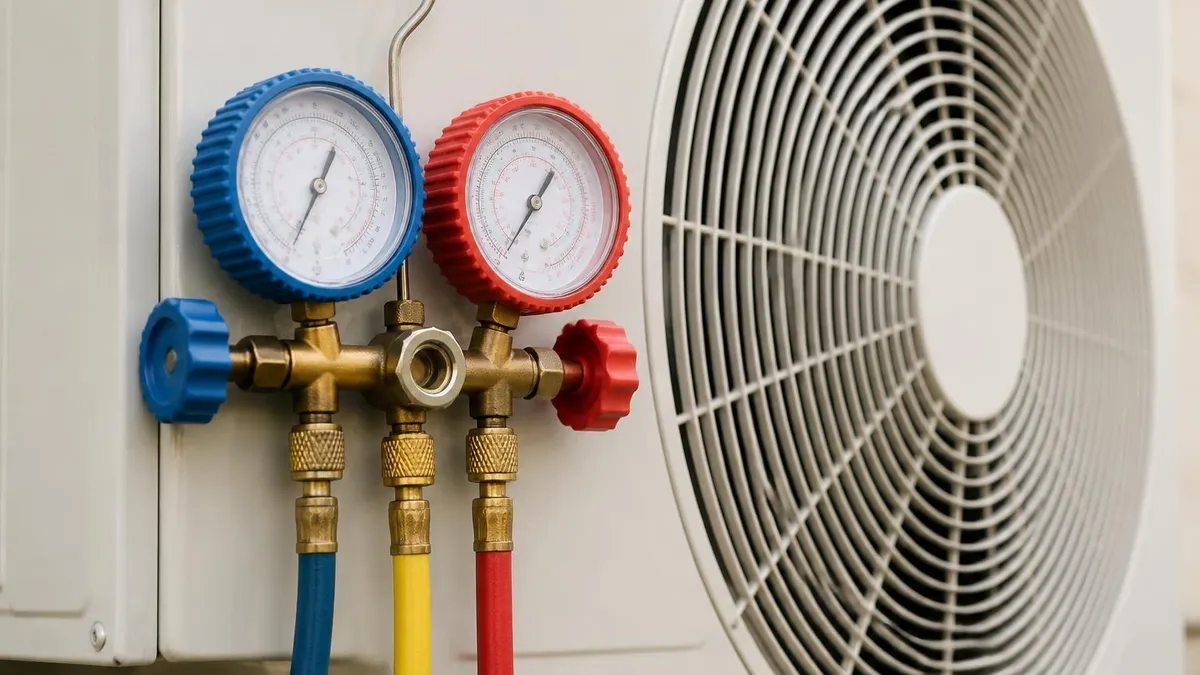
New equipment placement involves leveling the outdoor pad, setting the indoor unit, brazing refrigerant connections under flowing nitrogen, pulling a deep vacuum below 500 microns, and pressure-testing for leaks. The vacuum step matters enormously — a sloppy pull leaves moisture inside the system, which forms acids that destroy the compressor within a few seasons. Quality contractors document micron levels and decay tests in writing as part of the closeout package.
Electrical and control wiring follows mechanical work. Variable-speed and communicating systems require specific thermostats, properly terminated control wiring, and correct dip switch settings on the air handler control board. This is where many installations break down, because the equipment will run on incorrect settings but will not deliver the staging, dehumidification, or capacity control the system was designed for. Insist on a startup checklist signed by the technician documenting verified settings.
Startup and commissioning is where great installs separate from average ones. The technician verifies refrigerant charge by superheat or subcooling depending on metering device, measures supply and return temperatures, records static pressure on both sides of the blower, balances airflow with damper adjustments, and walks you through thermostat programming. Expect this final phase to take 60-90 minutes — if a crew packs up immediately after startup, the system is almost certainly not commissioned correctly.
Working with experienced hvac contractors who include documented commissioning in their standard scope dramatically improves long-term outcomes. Save every document the contractor provides: AHRI certificate, Manual J output, permit number, commissioning report, warranty registration confirmation, and operations manuals. These documents protect you for the next 15-20 years, support warranty claims, and become essential paperwork during a home sale.
After the crew leaves, run the new system through several full cycles over the first 48 hours and document anything that seems off. Listen for unusual noises during startup and shutdown, check that all supply registers deliver consistent airflow, and verify that the thermostat reports current temperature within a degree of an independent thermometer. Most callback issues surface within the first week, and reputable contractors will return promptly to address them as part of the original installation warranty.
Schedule a 30-day check-in with the installing contractor. Many companies include this as part of the install package, and it allows the technician to verify refrigerant charge has stabilized, confirm static pressure under normal operation, and tune any final airflow settings. Variable-speed systems in particular benefit from this follow-up because the control logic adapts to your home's actual load profile during the first weeks of operation, and a tech can fine-tune staging behavior at that point.
Register your equipment with the manufacturer within 60-90 days of installation — most brands require this to activate the full 10-year parts warranty. Without registration, warranties default to a 5-year baseline that excludes the most expensive components. Registration takes ten minutes online with the model and serial numbers from the unit nameplates, and your installer should provide written confirmation that they registered the equipment on your behalf, but verify independently through the manufacturer portal.
Annual professional maintenance protects your investment and preserves warranty coverage. Spring tune-ups should include refrigerant charge verification, coil cleaning, electrical connection torquing, capacitor testing, and condensate drain treatment. Fall tune-ups for hvac heating should include burner inspection, heat exchanger evaluation, combustion analysis, gas pressure verification, and safety control testing. Expect to pay $150-$250 per visit, or $250-$400 for a combined annual agreement that includes both seasons and priority service scheduling.
Change filters on the schedule your equipment manufacturer recommends, not just when they look dirty. Pleated 1-inch filters typically need replacement every 60-90 days, while 4-inch and 5-inch media filters last 6-12 months. A clogged filter spikes static pressure, reduces airflow, overheats heat exchangers in furnaces, and freezes evaporator coils in air conditioners. Setting a phone reminder tied to the season change is the simplest way to stay consistent.
Monitor energy bills against the previous year's usage for the first 12 months. Most utilities now provide year-over-year comparison tools in their billing portals. If summer cooling kWh drops 25-40% as expected with a new high-SEER2 system, the installation is performing as designed. If savings are minimal or bills actually increase, schedule a diagnostic visit immediately — performance issues caught in year one are still covered by labor warranty, while year-three discoveries usually fall on the homeowner.
Document everything in a single binder or cloud folder dedicated to the system. Include the original proposal, AHRI certificate, Manual J, permit and inspection records, photographs of equipment nameplates, manufacturer registration confirmations, every service invoice, and any warranty claims. When you eventually sell the home, this binder dramatically smooths inspections and frequently increases buyer confidence enough to support a higher closing price than comparable homes without documentation.
HVAC Questions and Answers
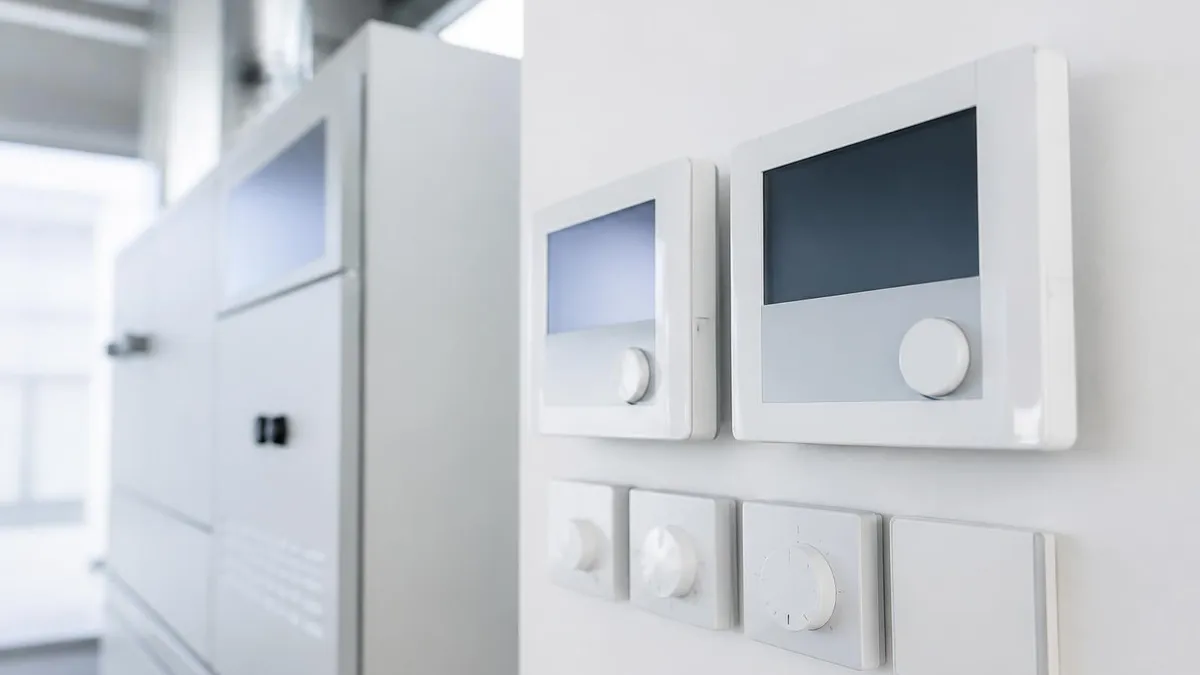
HVAC Duct Supplies: The Complete Buyer's Guide to Ductwork Components, Sizing, and Installation Materials
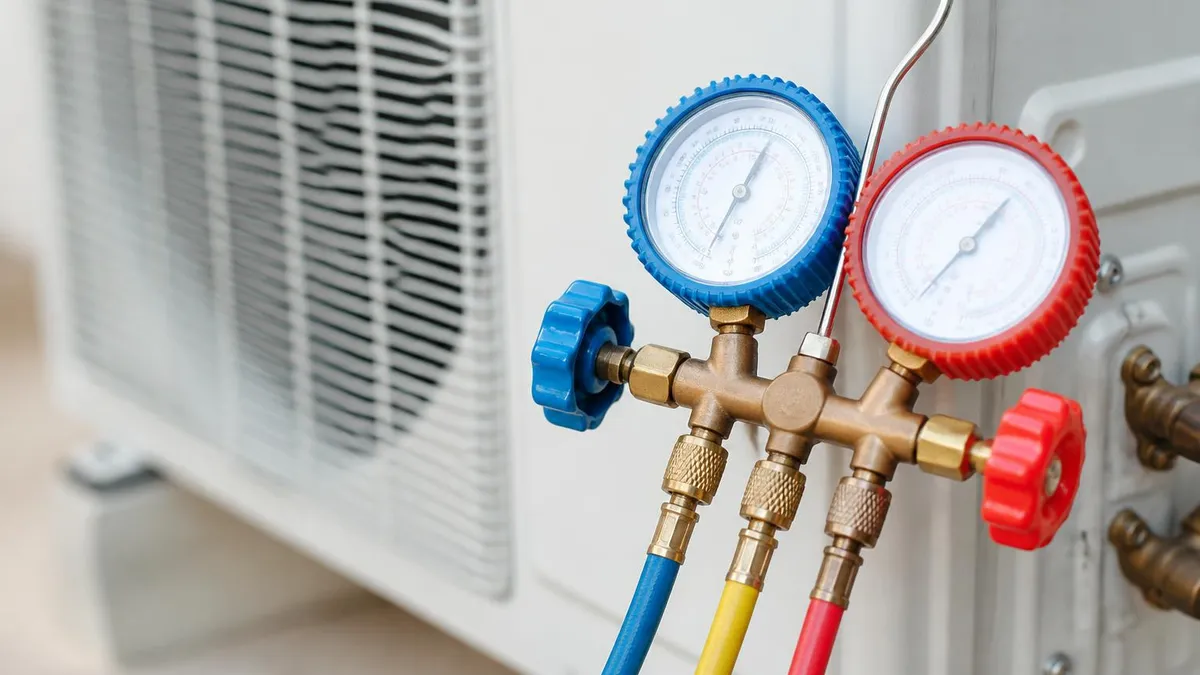
CFM HVAC Basics: How Airflow, Sizing, and System Performance Work Together

HVAC Duct Calculator: The Complete Guide to Sizing Ductwork for Airflow, Static Pressure, and System Efficiency
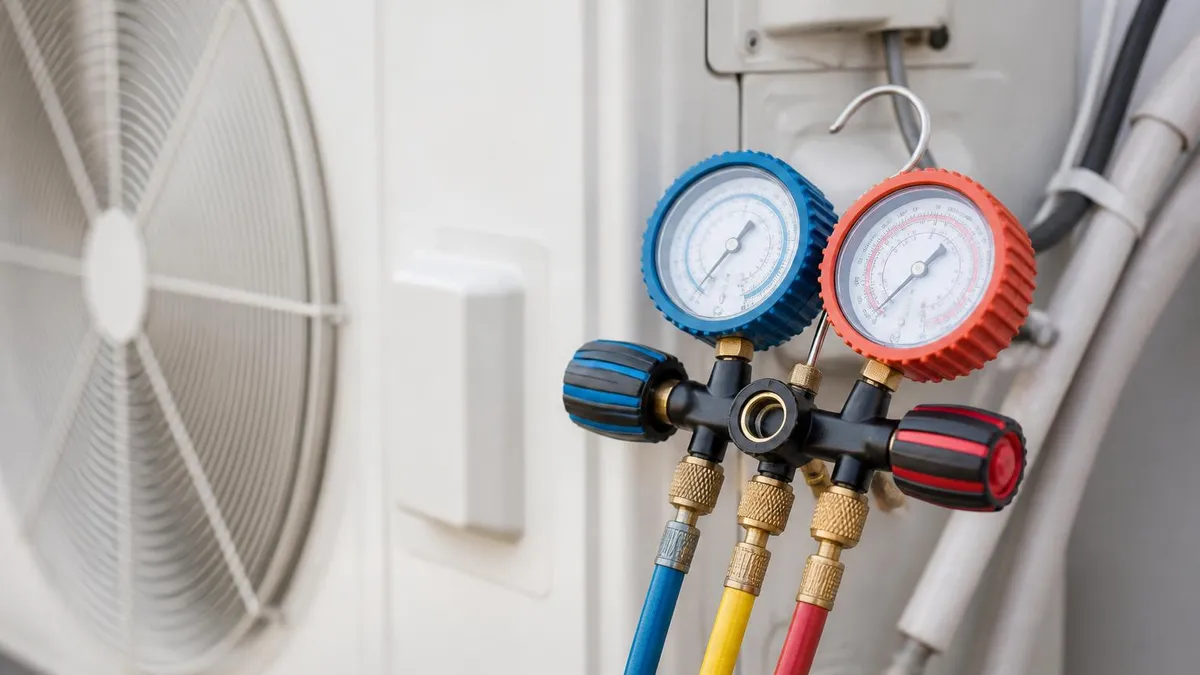
Certified HVAC Contractors: How to Find, Vet, and Hire the Right Professional for Your Home or Business

HVAC Repair Philadelphia: The Complete Homeowner's Guide to Finding, Hiring, and Working With Local Heating and Cooling Pros
About the Author

NATE Certified HVAC Technician & Licensing Exam Trainer
Universal Technical InstituteMike Johnson is a NATE-certified HVAC technician and EPA 608 universal-certified refrigerant handler with a Bachelor of Science in HVAC/R Technology. He has 19 years of commercial and residential HVAC installation and service experience and specializes in preparing technicians for NATE certification, EPA 608, A2L refrigerant safety, and state HVAC contractor licensing examinations.