
HVAC Specialist: The Complete Career Guide to Becoming a Heating, Ventilation, and Air Conditioning Professional
Become an HVAC specialist with our complete guide covering training, certifications, salary expectations, day-to-day duties, and career advancement paths. 🔎
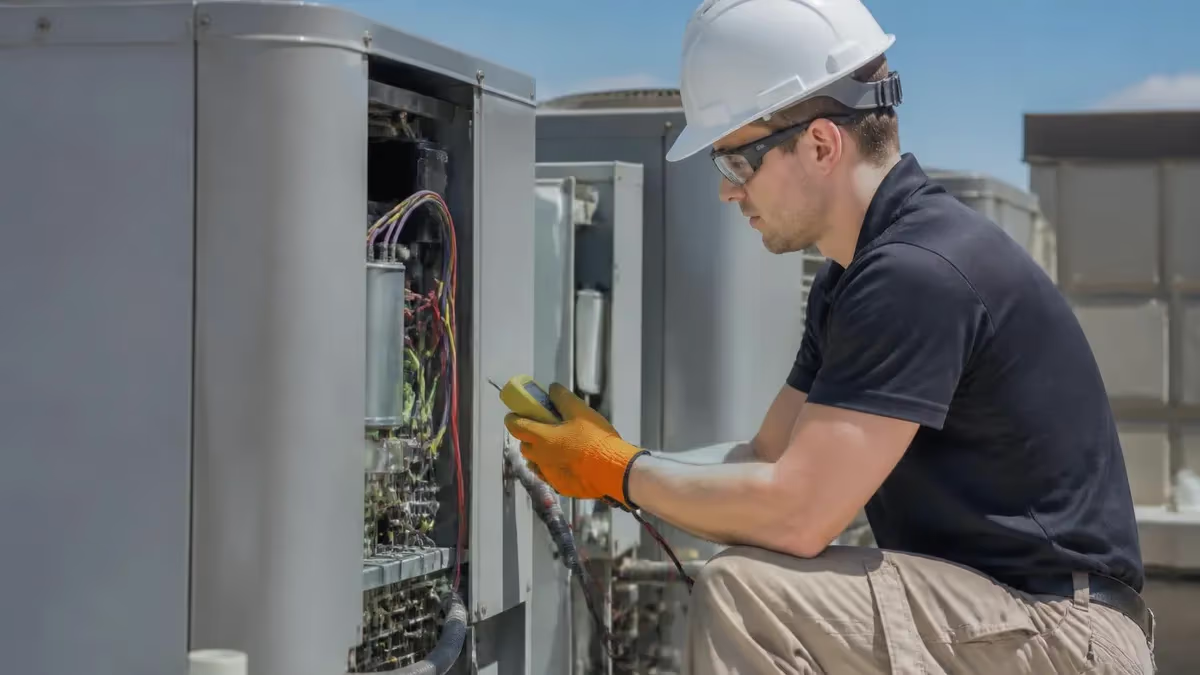
An HVAC specialist is a skilled tradesperson who installs, maintains, repairs, and troubleshoots heating, ventilation, air conditioning, and refrigeration systems across residential, commercial, and industrial buildings. Unlike a general technician, a specialist typically focuses on advanced diagnostics, complex system integration, energy efficiency optimization, and code compliance. With nearly 90 percent of American homes relying on some form of forced-air heating or central cooling, the demand for qualified professionals continues to climb steadily year after year across virtually every region of the United States.
The path to becoming an HVAC specialist combines classroom education, hands-on apprenticeship, and ongoing certification. Most professionals enter the field through a trade school program, community college associate degree, or union apprenticeship lasting between six months and five years depending on the route chosen. Federal EPA Section 608 certification is mandatory for anyone handling refrigerants, and additional credentials from NATE, HVAC Excellence, or RSES significantly boost earning potential. Many states also require a contractor license once a technician begins working independently or supervising apprentices on job sites.
Job duties for a specialist are diverse and physically demanding. On any given day you might pull vacuum on a new split system, troubleshoot a tripped pressure switch on a rooftop unit, replace a failed compressor on a 20-ton chiller, balance airflow across a multi-zone duct network, or commission a brand-new variable refrigerant flow installation in a high-rise office tower. Strong mechanical aptitude, electrical knowledge, basic plumbing skills, and the ability to read blueprints and wiring diagrams are non-negotiable requirements for long-term success in this trade.
Compensation reflects the technical demands of the work. The Bureau of Labor Statistics reports a median annual wage of approximately $57,300 for HVAC mechanics and installers, with the top 10 percent earning more than $84,000 per year. Specialists who hold multiple certifications, master commercial refrigeration, or move into supervisory and inspection roles routinely cross the six-figure mark. Service technicians who own their own businesses can earn substantially more, though overhead, insurance, vehicle costs, and the responsibility of running a company come into the equation as well.
This guide walks you through every aspect of the profession, from the initial training decision through certification, day-one job expectations, salary progression, and the specialization paths that lead to the most lucrative corners of the industry. You will also find practice quizzes, frequently asked questions, and references to deeper-dive resources like our HVAC Duct Calculator for technicians who want to sharpen the math skills that separate good installers from great ones in competitive markets.
Whether you are a high school senior weighing career options, a career changer looking for stable trade work that cannot be outsourced, or a current technician planning your next certification, this resource is designed to give you a clear and realistic picture. The trade rewards curiosity, persistence, and physical resilience, but it also offers exceptional job security, the satisfaction of solving complex puzzles every single day, and a clear pathway from entry-level helper to highly paid expert without taking on student loan debt.
The HVAC industry is also evolving rapidly. Heat pumps, low-GWP refrigerants like R-454B and R-32, smart thermostats with machine learning, building automation systems, and Inflation Reduction Act incentives are reshaping what specialists need to know. The technicians who thrive over the next decade will be those who embrace continuous learning, master both legacy equipment and emerging technologies, and develop the soft skills needed to communicate clearly with homeowners, facility managers, and general contractors on increasingly complex projects.
The HVAC Specialist Profession by the Numbers
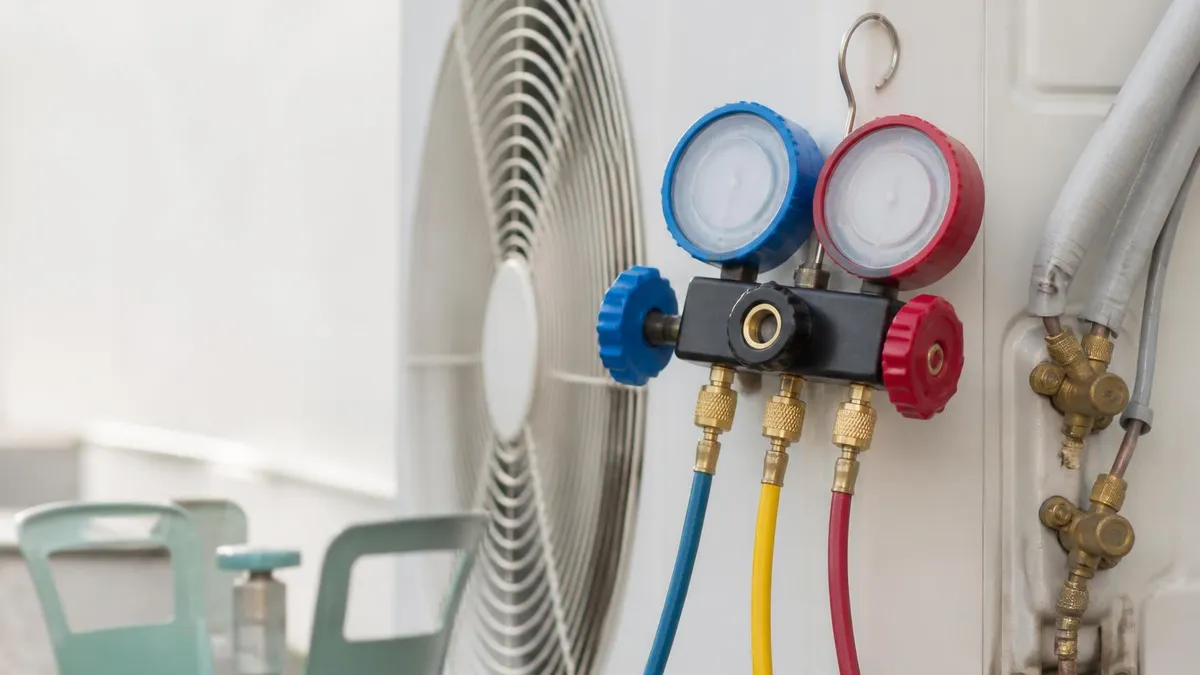
Your Path to Becoming an HVAC Specialist
Complete High School or GED
Enroll in Trade School or Apprenticeship
Earn EPA 608 Certification
Work as Apprentice or Helper
Obtain Journeyman or Contractor License
Add Advanced Specialty Certifications
Certifications form the backbone of an HVAC specialist's professional credibility and earning power. The most fundamental credential is the EPA Section 608 certification, mandated by the Clean Air Act for any technician who opens a refrigerant circuit. There are four types: Type I covers small appliances, Type II handles high-pressure systems, Type III applies to low-pressure equipment, and Universal certification covers all categories. Most working specialists pursue Universal directly because it requires the same study investment but opens every door in the field.
Beyond the EPA requirement, North American Technician Excellence (NATE) certification is widely considered the gold standard among service technicians. NATE offers core exams plus specialty exams in air conditioning, heat pumps, gas furnaces, oil furnaces, hydronics, light commercial refrigeration, and senior HVAC efficiency analyst. Holding multiple NATE certifications typically translates to a five to fifteen percent pay premium and significantly more flexibility when choosing employers in competitive metropolitan markets across the country.
State licensing rules vary dramatically. Texas requires registration as an Air Conditioning and Refrigeration Technician under the Texas Department of Licensing and Regulation, while California mandates a C-20 Warm-Air Heating, Ventilating, and Air Conditioning contractor license through the Contractors State License Board. Florida, North Carolina, Georgia, and many northeastern states have their own examination and bonding requirements. Always research your specific jurisdiction early in your training because some licenses require years of documented experience before you can even sit for the exam.
HVAC Excellence offers an alternative credentialing pathway that many trade schools incorporate directly into their curriculum. Their Employment Ready certifications validate that graduating students have mastered the practical and theoretical foundations needed for entry-level positions. Master Specialist credentials at the experienced-technician level cover topics like electrical, gas heat, air conditioning, heat pumps, and light commercial refrigeration. RSES (Refrigeration Service Engineers Society) certifications round out the major options, particularly for technicians focused on commercial refrigeration work.
Manufacturer-specific training has grown increasingly valuable as equipment becomes more sophisticated. Carrier, Trane, Lennox, Daikin, Mitsubishi, and other major brands offer factory authorization programs that teach proper installation, commissioning, and warranty service for their proprietary systems. Ductless mini-split certifications from Mitsubishi or Daikin are particularly lucrative right now because heat pump adoption is accelerating thanks to federal tax incentives. Many homeowners specifically search for factory-trained installers, giving certified technicians a significant competitive edge.
Building automation and controls represent the highest-paying certification track for forward-thinking specialists. BACnet, Niagara, Honeywell Tridium, and Johnson Controls Metasys all offer credentials for technicians who work on commercial building management systems. These professionals routinely earn $90,000 to $130,000 annually because they bridge the gap between traditional HVAC mechanical work and information technology. Adding a basic networking credential like CompTIA Network+ makes you even more valuable in this rapidly expanding niche.
Continuing education matters as much as the initial certification stack. Refrigerant regulations are changing rapidly with the phasedown of HFCs under the AIM Act, and technicians must stay current on safety protocols for mildly flammable A2L refrigerants like R-454B and R-32 that are replacing R-410A in new equipment. For technicians who handle commercial work, our guide to HVAC duct supplies covers the material side of staying current with installation best practices and modern code requirements.
HVAC Practice Test Questions
Prepare for the HVAC - Heating Ventilation and Air Conditioning exam with our free practice test modules. Each quiz covers key topics to help you pass on your first try.
HVAC Air Conditioning
HVAC Exam Questions covering Air Conditioning. Master HVAC Test concepts for certification prep.
HVAC Code Compliance
Free HVAC Practice Test featuring Code Compliance. Improve your HVAC Exam score with mock test prep.
HVAC Electrical Controls
HVAC Test Prep for Electrical Controls. Practice HVAC Quiz questions and boost your score.
HVAC Energy Efficiency
HVAC Questions and Answers on Energy Efficiency. Free HVAC practice for exam readiness.
HVAC Heating Systems
HVAC Mock Test covering Heating Systems. Online HVAC Test practice with instant feedback.
HVAC Load Calculations
Free HVAC Quiz on HVAC Load Calculations. HVAC Exam prep questions with detailed explanations.
HVAC Tools and Equipment
HVAC Practice Questions for HVAC Tools and Equipment. Build confidence for your HVAC certification exam.
HVAC Refrigeration
HVAC Test Online for Refrigeration. Free practice with instant results and feedback.
HVAC Safety Practices
HVAC Study Material on Safety Practices. Prepare effectively with real exam-style questions.
HVAC System Design
Free HVAC Test covering System Design. Practice and track your HVAC exam readiness.
HVAC Thermodynamics
HVAC Exam Questions covering Thermodynamics. Master HVAC Test concepts for certification prep.
HVAC Specialist Roles and Career Tracks
Residential service technicians work directly with homeowners, diagnosing and repairing furnaces, air conditioners, heat pumps, and ductless mini-splits. The work involves significant customer interaction, often in tight crawl spaces and hot attics. Strong communication skills are essential because you frequently need to explain technical problems and pricing to non-technical homeowners. Most residential specialists work for service companies that pay hourly plus commission on parts and service agreements.
Daily tasks range from seasonal tune-ups and filter changes to complex diagnostic work involving electrical controls, refrigerant charge analysis, and combustion testing. Top residential specialists earn $70,000 to $95,000 annually with overtime and incentive pay. The work is steady year-round in most climates because cooling demand in summer alternates with heating demand in winter, and there is almost always emergency service work available during weather extremes.

Is Becoming an HVAC Specialist Right for You?
- +Strong job security with consistent demand across all economic conditions
- +No college debt required - earn while you learn through apprenticeship
- +Median pay exceeds many bachelor's degree careers within 5 years
- +Clear advancement path from helper to journeyman to master to contractor
- +Cannot be outsourced overseas - all work must be performed on-site
- +Variety of daily tasks prevents boredom and develops broad skill set
- +Self-employment option allows experienced techs to build six-figure businesses
- −Physically demanding work in extreme temperatures and tight spaces
- −On-call rotations and emergency service disrupt personal schedules
- −Risk of injury from electrical shock, burns, refrigerant exposure, and falls
- −Continuous certification updates required as technology and regulations evolve
- −Early-career pay is modest during apprenticeship years
- −Customer-facing pressure when explaining expensive repairs to homeowners
Essential Skills and Tools for the Working HVAC Specialist
- ✓Master refrigerant recovery, recycling, and charging procedures using digital manifold gauges
- ✓Read and interpret electrical schematics, wiring diagrams, and ladder logic confidently
- ✓Use a digital multimeter for voltage, amperage, resistance, and capacitance measurements
- ✓Perform combustion analysis on gas furnaces using a flue gas analyzer
- ✓Calculate Manual J load, Manual D duct sizing, and Manual S equipment selection
- ✓Operate a vacuum pump and micron gauge to properly evacuate refrigerant lines
- ✓Braze copper tubing with nitrogen purge to prevent oxidation and contamination
- ✓Diagnose airflow problems using anemometers, manometers, and TrueFlow devices
- ✓Maintain organized truck inventory with common parts, fittings, and fasteners stocked
- ✓Document service calls thoroughly with photos, measurements, and customer signatures
The fastest path to high earnings is stacking certifications, not chasing job titles
Technicians who hold EPA Universal, NATE Core plus two specialty exams, and at least one manufacturer authorization typically earn 25-40 percent more than peers with equivalent experience but minimal credentials. Invest in certifications during slow seasons and your employer will often reimburse the cost while raising your pay rate.
Salary progression for HVAC specialists follows a predictable arc that rewards both experience and specialization. First-year apprentices typically earn $15 to $20 per hour, often through union programs where wages step up automatically each six months based on documented training hours. By the third year, apprentices commonly hit $22 to $28 per hour plus benefits. Newly minted journeymen with EPA certification and a state license can expect $28 to $38 per hour, putting annual earnings in the $58,000 to $79,000 range before any overtime is considered.
Geographic location dramatically affects earnings. Specialists working in high-cost coastal markets like San Francisco, Seattle, Boston, and New York City routinely earn $40 to $55 per hour for journeyman-level work, while equivalent technicians in rural Mississippi, Alabama, or West Virginia might earn $22 to $32 per hour. However, cost-of-living adjustments often even out the spread, and rural technicians frequently have more opportunities to run side jobs or start their own companies due to less competition for licensed labor.
The Bureau of Labor Statistics projects 6 percent employment growth for HVAC mechanics and installers between 2022 and 2032, faster than the 3 percent average across all occupations. About 37,700 job openings are projected each year over the decade, driven by retirements, replacement equipment cycles, the heat pump transition, and continued construction activity. Some industry analysts believe these federal projections actually understate demand because they predate the full impact of Inflation Reduction Act incentives that are accelerating electrification of heating systems nationwide.
Specialization unlocks the highest pay tiers in the trade. Commercial refrigeration technicians who service supermarkets, cold storage warehouses, and ice rinks routinely earn $90,000 to $115,000 because the equipment is complex and downtime costs customers significant money per hour. Controls and building automation specialists, as mentioned earlier, command similar premiums. Industrial process cooling technicians working in pharmaceuticals, semiconductor fabrication, or data centers can exceed $130,000 because their work directly affects production yields worth millions of dollars.
Self-employment offers the highest income ceiling but also the highest risk. Successful HVAC contractors who build crews of five to fifteen technicians typically generate $200,000 to $500,000 in annual owner compensation once the business is established, though it commonly takes three to seven years of grinding before reaching that level. Vehicle costs, insurance premiums, marketing expenses, and the administrative burden of managing employees, payroll taxes, and warranty claims should not be underestimated when evaluating whether to launch your own company.
Benefits packages vary widely by employer type. Union shops typically offer the strongest combination of health insurance, pension contributions, paid time off, and continuing education reimbursement. Large national service companies like ARS, One Hour Heating and Air, or Service Experts compete with comprehensive benefits including stock purchase plans and tuition reimbursement. Small independent shops may pay slightly higher hourly rates but offer thinner benefits, requiring technicians to budget for their own health insurance and retirement savings.
Tax advantages also matter when evaluating long-term financial trajectory. Technicians who maintain detailed mileage logs, track tool purchases, and write off home office space when running side work or operating as W-2 employees with substantial unreimbursed expenses can shelter meaningful income from taxation. Consulting a CPA familiar with skilled trade workers becomes important once you hit journeyman pay levels, particularly if you operate any side business activity in addition to your primary employment.

Under the AIM Act, R-410A is being phased out and replaced by mildly flammable A2L refrigerants like R-454B and R-32 starting January 2025. Specialists working with new equipment must complete A2L safety training, update their tools, and understand new leak detection and storage requirements. Failure to comply with EPA regulations can result in fines up to $44,539 per violation per day.
Career advancement for HVAC specialists rarely follows a single linear path. The most successful professionals deliberately build skills in multiple directions simultaneously, creating optionality that protects them from market shifts and opens doors to higher-paying roles. A field service technician who also learns basic controls programming, for example, can transition into commissioning work, technical sales, or building automation roles whenever the opportunity arises, rather than being locked into the physical demands of installation work indefinitely.
Lead technician and service manager roles represent the most common first promotion. Lead techs train apprentices, handle escalated diagnostic problems, and earn $5 to $10 per hour more than rank-and-file journeymen. Service managers move into salaried positions running dispatch, scheduling, and quality control for a fleet of technicians. These roles typically pay $75,000 to $110,000 plus performance bonuses, and they offer relief from the physical wear of climbing ladders and crawling through attics for ten hours daily.
Project management offers another advancement track, particularly for technicians who enjoy the planning and coordination side of larger jobs. Mechanical project managers oversee new construction and major renovation installations, coordinating with general contractors, ordering equipment, managing budgets, and ensuring code compliance. Most PMs earn $85,000 to $130,000 plus profit-sharing on completed projects. The role requires strong organizational skills and the ability to read complete construction drawings, but the work is mostly office-based with site visits.
Inspection and code enforcement work appeals to experienced specialists looking for stable government employment with strong benefits. Municipal mechanical inspectors verify that installations meet local code, typically earning $65,000 to $95,000 plus pension benefits. State HVAC examiners administer licensing tests and investigate consumer complaints. Federal positions with agencies like the GSA, VA, or military bases pay similar wages with exceptional job security. Working with reliable HVAC contractors during your installation years builds the relationships and reputation that inspectors and examiners draw on throughout their later careers.
Teaching and training represent satisfying late-career options for specialists who want to share their expertise. Community colleges, trade schools, and union apprenticeship programs constantly need experienced instructors who can translate field knowledge into classroom and lab curriculum. Pay ranges from $55,000 to $90,000 depending on institution, plus the schedule typically includes summers off and predictable hours. Many instructors continue running side service businesses to supplement teaching income while staying current on field practices.
Manufacturer technical sales offers perhaps the highest income potential outside of business ownership. Major equipment makers like Carrier, Trane, Daikin, and Mitsubishi hire experienced technicians as technical sales representatives, manufacturer reps, or factory training instructors. These roles typically pay $100,000 to $180,000 plus generous expense accounts, company vehicles, and bonus structures tied to territory performance. The work involves significant travel but provides a comfortable transition away from physical labor while leveraging the deep technical knowledge accumulated over a service career.
Energy auditing and home performance contracting represent a growing specialty for technicians interested in the building science side of comfort and efficiency. BPI-certified building analysts and HERS raters perform whole-house assessments that identify air leakage, insulation deficiencies, and HVAC sizing problems. With federal IRA incentives funneling unprecedented dollars toward home energy retrofits, demand for qualified auditors is expanding rapidly. Many auditors pair their assessment work with installation businesses, creating natural lead flow and high-margin retrofit project opportunities.
Practical preparation for an HVAC specialist career starts long before your first day on a job site. Begin by shadowing a working technician for a day if you possibly can. Local service companies are often happy to let prospective trainees ride along, especially during shoulder seasons when the schedule is calmer. This gives you a realistic sense of the work environment, customer interactions, and physical demands before you commit thousands of dollars and several months to formal training programs you may discover are not right for you.
Choose your training program carefully and verify it is accredited by HVAC Excellence or PAHRA. Accredited programs ensure the curriculum meets industry standards and that your certification will be recognized by employers nationwide. Visit campus, talk to current students, examine the lab equipment, and ask about job placement statistics. A program with strong industry connections, working refrigeration systems in the lab, and instructors with recent field experience will prepare you far better than a cheaper program that relies primarily on textbook learning.
Build your tool kit incrementally rather than buying everything at once. Start with the basics every technician needs: a quality digital multimeter, refrigeration gauges, basic hand tools, a tubing cutter, swaging tools, and a leak detector. Add specialty tools as you encounter situations that require them. Investing $3,000 to $5,000 in quality tools during your first two years pays back many times over through faster work, fewer callbacks, and the credibility that comes from being properly equipped on every service call.
Develop your soft skills as diligently as your technical skills. The technicians who advance fastest are not always the most mechanically gifted; they are the ones who communicate clearly with customers, document their work thoroughly, arrive on time, and treat homes with respect. Practice explaining technical concepts in plain language. Learn to write concise, complete service tickets. Master the art of presenting repair options without high-pressure tactics. These habits separate the technicians who get promoted from those who plateau at journeyman level.
Join a professional association early in your career. Organizations like ACCA, RSES, ASHRAE, and SkillsUSA offer networking, continuing education, and industry publications that keep you connected to broader trends. Local chapter meetings often feature manufacturer training sessions worth hundreds of dollars at no cost to members. The relationships you build through associations frequently lead to better job opportunities, partnerships, and mentorship that accelerate your career far beyond what your current employer can offer.
Document everything you learn in a personal field reference. Photograph unusual installations, record troubleshooting sequences that worked, save manufacturer specifications and service bulletins for equipment you encounter. Within five years you will have built a personal knowledge base worth thousands of dollars. Many top specialists carry a tablet with their personal library of wiring diagrams, charging charts, and refrigerant pressure-temperature tables that they refer to dozens of times daily. This habit pays dividends for your entire career.
Plan your certification roadmap with three-year intervals in mind. Year one: complete EPA Universal during training. Year two: pass NATE Core plus one specialty exam. Year four: add a second NATE specialty and complete your state journeyman license. Year six: pursue master specialist credentials, controls certifications, or manufacturer authorizations aligned with your career interests. This structured approach prevents the certification fatigue that derails many technicians who try to cram credentials in randomly without a coherent strategy.
HVAC Questions and Answers

HVAC Duct Supplies: The Complete Buyer's Guide to Ductwork Components, Sizing, and Installation Materials
HVAC Duct Calculator: The Complete Guide to Sizing Ductwork for Airflow, Static Pressure, and System Efficiency
Certified HVAC Contractors: How to Find, Vet, and Hire the Right Professional for Your Home or Business

HVAC Repair Philadelphia: The Complete Homeowner's Guide to Finding, Hiring, and Working With Local Heating and Cooling Pros
Best HVAC Repair in Bandon, OR: Local Services Near Me Guide
About the Author

NATE Certified HVAC Technician & Licensing Exam Trainer
Universal Technical InstituteMike Johnson is a NATE-certified HVAC technician and EPA 608 universal-certified refrigerant handler with a Bachelor of Science in HVAC/R Technology. He has 19 years of commercial and residential HVAC installation and service experience and specializes in preparing technicians for NATE certification, EPA 608, A2L refrigerant safety, and state HVAC contractor licensing examinations.