
HVAC Mechanic: Complete Career Guide to Skills, Training, Certifications, Salary, and How to Become a Successful Heating and Cooling Technician
📗 Become an HVAC mechanic: explore training, certifications, salary, daily duties, and the skills you need to launch a heating and cooling career.
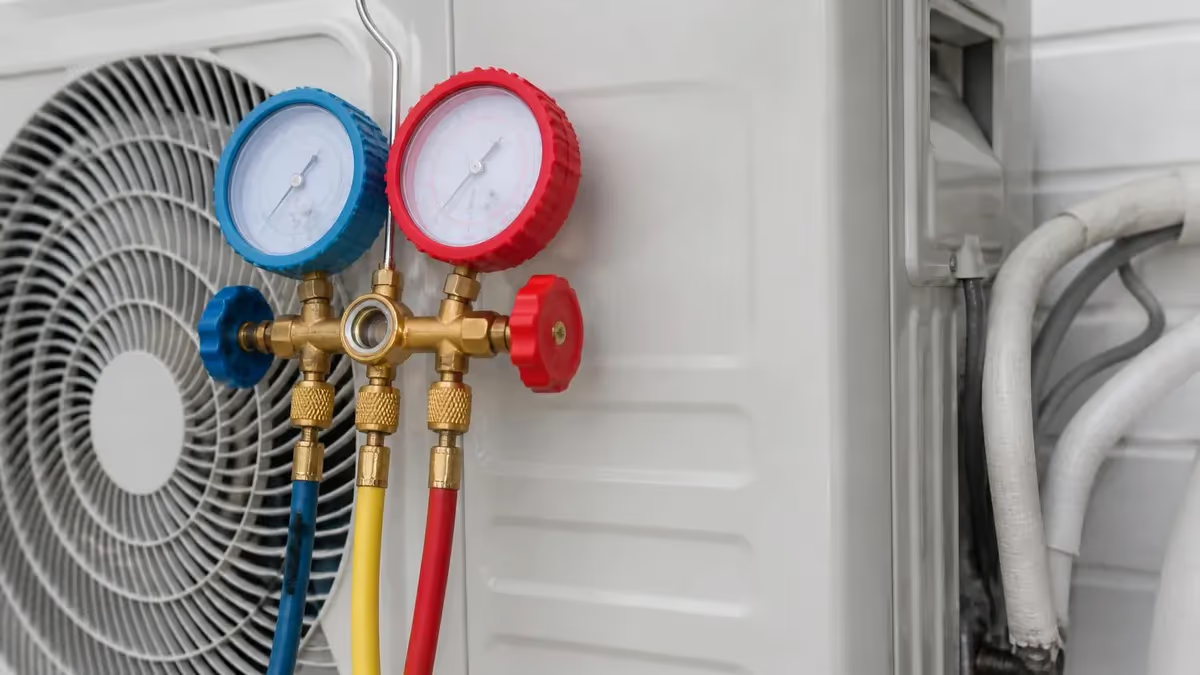
An HVAC mechanic installs, repairs, and maintains the heating, ventilation, air conditioning, and refrigeration systems that keep homes, offices, hospitals, and factories comfortable and safe year-round. Whether you picture yourself wiring a rooftop condenser on a sweltering July afternoon or diagnosing a no-heat call in the dead of winter, this is a hands-on trade that rewards problem-solvers. Demand stays strong because every building eventually needs service, and skilled technicians remain in short supply across nearly every region of the United States today.
The path to becoming an HVAC mechanic is more accessible than many four-year careers, yet it offers genuine upward mobility. Most technicians start with a trade-school program or an apprenticeship, earn an EPA Section 608 certification to handle refrigerants legally, and then build experience on the job. Over time, you can specialize in commercial refrigeration, become a project lead, move into estimating, or branch into related fields like an hvac mechanic who sells systems and equipment to homeowners and businesses.
This guide walks through everything you need to know about the trade. We cover what the job actually involves day to day, the education and licensing requirements, realistic salary expectations, the core technical skills employers look for, and the certifications that boost your earning power. You will also find practical study advice, common pitfalls to avoid, and answers to the questions aspiring technicians ask most often before committing to this rewarding and stable line of work.
The work blends mechanical, electrical, and thermodynamic knowledge. On any given day you might braze copper line sets, read a wiring diagram, recover refrigerant, calibrate a thermostat, or measure superheat and subcooling to confirm a system is charged correctly. Because no two service calls are identical, the trade attracts people who dislike sitting at a desk and prefer solving fresh puzzles with their hands, their tools, and a methodical troubleshooting mindset every single workday.
Comfort and safety are the heart of the profession. A failing furnace can produce dangerous carbon monoxide, a clogged condensate line can flood a ceiling, and an improperly charged system can waste hundreds of dollars in energy. HVAC mechanics protect families and businesses from these hazards while keeping equipment running efficiently. That responsibility is part of why the trade commands respect and steady pay, and why customers often build long-term relationships with technicians they truly trust.
If you are weighing this career, the good news is that you can test the waters affordably. Trade programs run months rather than years, apprenticeships pay you while you learn, and free or low-cost practice tests let you gauge your aptitude for the technical material before you enroll. Throughout this guide we link to focused practice quizzes so you can sharpen specific skills, from air conditioning fundamentals to electrical controls, and walk into your first class or interview already a few steps ahead.
HVAC Mechanic Careers by the Numbers
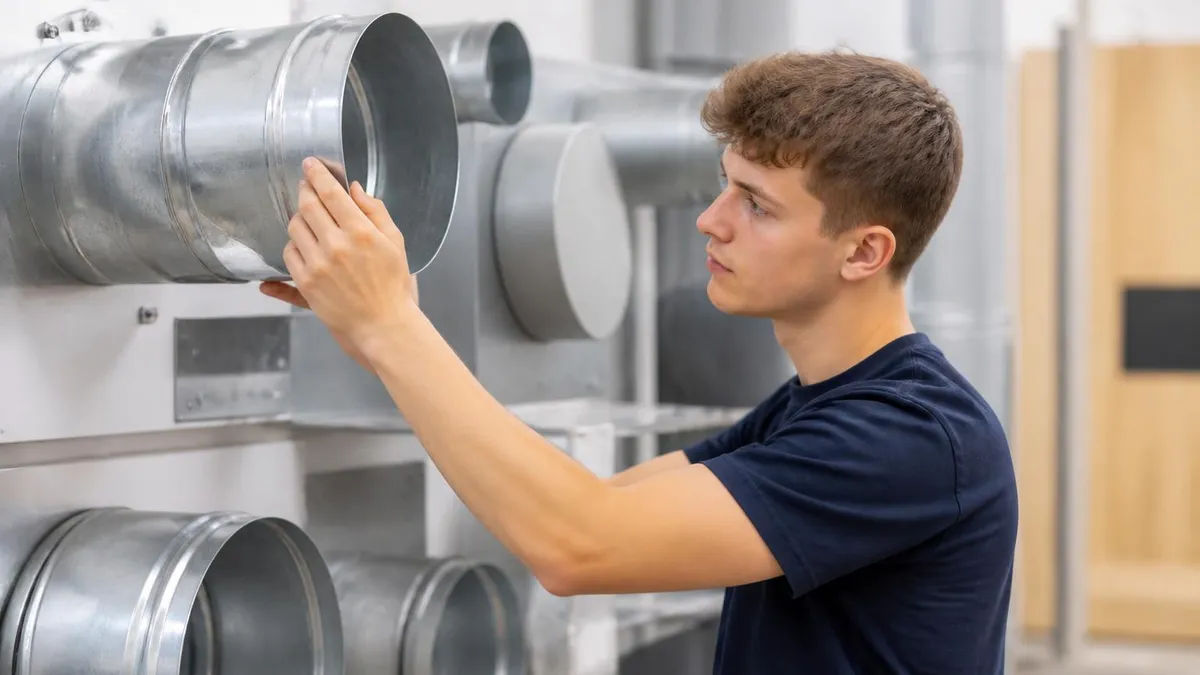
What an HVAC Mechanic Does Every Day
Mount and connect furnaces, air handlers, condensers, and ductwork. Run electrical, braze refrigerant lines, set thermostats, and commission new systems so they meet manufacturer specs and local code on the very first startup.
Perform seasonal tune-ups: clean coils, replace filters, check refrigerant charge, test capacitors, inspect heat exchangers, and tighten electrical connections to keep systems efficient and prevent costly breakdowns before they ever happen.
Diagnose no-cool and no-heat calls using gauges, meters, and wiring diagrams. Isolate faults from failed capacitors to leaking valves, then repair or replace components quickly to restore comfort for the customer.
Explain findings in plain language, provide honest estimates, and recommend repairs or replacements. Strong communication builds trust, earns repeat business, and often leads to referrals that grow a technician's reputation and income.
There are three common routes into the HVAC trade, and many technicians combine them. The first is a trade-school or community-college program that awards a certificate in six to twelve months or an associate degree in about two years. These programs teach refrigeration cycles, electrical theory, combustion, and code in a structured classroom-plus-lab setting, giving you a strong foundation before you ever set foot on a job site or touch a customer's equipment.
The second route is a registered apprenticeship, often run through a union local, a trade association, or a large contractor. Apprenticeships typically last three to five years and pair paid on-the-job work with classroom instruction. The biggest advantage is that you earn a wage while you learn, your pay rises as you hit milestones, and you finish with a recognized credential plus thousands of hours of real-world experience that employers value highly.
The third route is starting as a helper or installer's assistant and learning informally on the job. Some technicians enter this way and pick up certifications later. While this can work, it is usually slower and less complete than a structured program, because gaps in your electrical or refrigeration theory can quietly limit your troubleshooting ability and slow your progress toward higher-paying journeyman or lead positions down the road.
Whatever path you choose, expect to study heating systems, cooling systems, ductwork design, electrical controls, and energy efficiency. A good program also covers safety: working with high voltage, pressurized refrigerant, gas combustion, and ladders or rooftops all carry real risk. Employers want technicians who respect lockout-tagout procedures, wear proper personal protective equipment, and never cut corners that could injure themselves, a coworker, or the customer whose home they are working in.
Math and reading comprehension matter more than newcomers expect. You will calculate loads, convert units, interpret pressure-temperature charts, and read dense manufacturer manuals and wiring schematics. Strong arithmetic and the patience to follow a diagram step by step separate fast, accurate technicians from those who guess and waste parts. If your math feels rusty, brushing up before training pays off immediately and shortens the learning curve considerably during your first months on the job.
The trade also values lifelong learning because equipment keeps evolving. Variable-speed compressors, inverter heat pumps, smart thermostats, low-GWP refrigerants, and tighter efficiency standards all change how systems work. The best technicians treat each new product line as a chance to add a skill. Manufacturers offer free training, and many hvac mechanic professionals stay current by attending these sessions, reading service bulletins, and practicing with the latest diagnostic tools whenever they can.
HVAC Mechanic Certifications and Licensing
The EPA Section 608 certification is federally required for any technician who buys, handles, or recovers refrigerant. It comes in four types: Type I for small appliances, Type II for high-pressure systems, Type III for low-pressure systems, and Universal, which covers all three. Most working mechanics earn Universal because it removes any restriction on the equipment they can legally service in the field.
The exam tests ozone-depletion basics, recovery procedures, leak detection, and proper recordkeeping. There is no national license required to take it, and the certification never expires. Many trade programs include the exam, but you can also test through approved organizations. Because it is a legal prerequisite, earning your 608 early in training is one of the smartest moves you can make for your career.

Is Becoming an HVAC Mechanic Right for You?
- +Strong, steady demand in nearly every region of the country
- +Short training time compared with four-year degree careers
- +Apprenticeships let you earn a paycheck while you learn
- +Clear path to higher pay through experience and certifications
- +Hands-on, varied work that rarely feels repetitive or boring
- +Option to start your own contracting business and be your own boss
- +Skills transfer across residential, commercial, and refrigeration sectors
- −Physically demanding work in attics, crawlspaces, and on rooftops
- −Exposure to extreme heat and cold during peak service seasons
- −On-call and overtime hours common during summer and winter rushes
- −Real safety hazards from electricity, refrigerant, and gas combustion
- −Entry-level pay can be modest before you build experience
- −Requires ongoing study to keep up with evolving equipment and codes
Pros and Cons at a Glance
| Pros | Cons |
|---|---|
| Strong, steady demand in nearly every region of the country | Physically demanding work in attics, crawlspaces, and on rooftops |
| Short training time compared with four-year degree careers | Exposure to extreme heat and cold during peak service seasons |
| Apprenticeships let you earn a paycheck while you learn | On-call and overtime hours common during summer and winter rushes |
| Clear path to higher pay through experience and certifications | Real safety hazards from electricity, refrigerant, and gas combustion |
| Hands-on, varied work that rarely feels repetitive or boring | Entry-level pay can be modest before you build experience |
| Option to start your own contracting business and be your own boss | Requires ongoing study to keep up with evolving equipment and codes |
Core HVAC Mechanic Skills Checklist
- ✓Read and interpret wiring diagrams and ladder logic schematics
- ✓Use a multimeter to measure voltage, amperage, and resistance safely
- ✓Recover, evacuate, and charge refrigerant per EPA standards
- ✓Braze and solder copper line sets without leaks
- ✓Measure superheat and subcooling to verify a proper charge
- ✓Diagnose failed capacitors, contactors, and motors quickly
- ✓Inspect heat exchangers for cracks and test for carbon monoxide
- ✓Calculate airflow, static pressure, and basic load requirements
- ✓Follow lockout-tagout and PPE safety procedures consistently
- ✓Communicate findings and estimates clearly to customers
Earn your EPA 608 Universal certification early
Because handling refrigerant without certification is illegal, the EPA Section 608 Universal card is the single most valuable credential to earn first. It costs little, never expires, and immediately makes you employable on real service calls. Many technicians earn it before finishing their training program, instantly widening their job options.
HVAC mechanic pay reflects experience, certifications, location, and the sector you work in. The national median sits around the high-$50,000s annually, but that figure hides a wide range. New helpers may start near $30,000 to $40,000, while seasoned commercial technicians, refrigeration specialists, and licensed contractors routinely clear $80,000 or more. Overtime during peak seasons, on-call premiums, and performance bonuses can push experienced technicians' total compensation well above the published median figures in many busy markets nationwide.
Location plays a major role. High-cost metro areas and regions with extreme climates tend to pay more because demand is intense and skilled labor is scarce. Alaska, Washington, D.C., and several northeastern and western states report some of the highest average wages, while lower-cost rural areas pay less but also cost less to live in. Researching local wage data before relocating helps you weigh pay against cost of living realistically and confidently.
Specialization is one of the fastest ways to raise your income. Commercial refrigeration, controls and building automation, and chiller work all command premium rates because they require advanced knowledge and fewer technicians can do them. Technicians who learn variable refrigerant flow systems, geothermal heat pumps, or industrial controls often find themselves in high demand and able to negotiate stronger pay than generalist residential installers competing in crowded local markets.
Career growth does not stop at journeyman. With experience, you can move into lead technician, service manager, or estimator roles that trade some field work for higher salaries and steadier hours. Others pursue a contractor's license and start their own businesses, where income potential is essentially uncapped but comes with the responsibilities of running a company, managing employees, and carrying insurance and overhead through the slower seasons of the year.
Sales and project management offer another lane. Technicians who communicate well and understand equipment deeply can move into comfort advising or system design, where they help customers choose and finance new installations. This blend of technical credibility and people skills is rare and valuable, and it is why crossover roles connecting the field and the showroom often pay more than either pure field or pure sales positions alone in this competitive industry.
Benefits matter too. Many established contractors and union shops offer health insurance, retirement plans, paid training, tool allowances, and company vehicles. When comparing job offers, weigh the full package rather than the hourly rate alone. A slightly lower wage with strong benefits, reliable hours, and paid certification can easily outperform a higher rate with no support, especially over the course of a multi-decade career in this trade.

Venting refrigerant intentionally is illegal under the Clean Air Act and carries steep fines. Always recover refrigerant into approved equipment, keep accurate records, and only purchase regulated refrigerants if you hold a valid EPA 608 certification. Violations can jeopardize both your employer and your career.
If you are ready to start, begin by researching accredited training options near you. Compare community-college HVAC programs, private trade schools, and registered apprenticeships on cost, length, certification included, and job-placement rates. Contact local contractors and ask whether they hire apprentices or helpers, because a paid entry point that also funds your schooling is often the most efficient way to break into the trade without taking on student debt you will have to repay later.
Next, set a clear credential roadmap. Plan to earn your EPA 608 Universal card as early as possible, then layer on NATE or HVAC Excellence specialty certifications as you gain experience. Track your supervised hours from day one so you can qualify for a journeyman or contractor license without scrambling for documentation later. Keeping a simple logbook of jobs, dates, and skills practiced makes future license applications dramatically smoother and far faster to complete.
Build your tool kit gradually. Employers usually provide major equipment like recovery machines and vacuum pumps, but you will accumulate hand tools, a quality multimeter, gauges, and a torch over time. Buy good tools when you can afford them, because reliable instruments make accurate diagnosis possible and reflect professionalism on the job. Many shops offer tool allowances, so be sure to ask about that benefit when you compare offers from different employers.
Practice diagnostic thinking constantly. The mechanics who stand out are not necessarily the strongest or fastest; they are the most systematic. Learn to follow the refrigeration cycle, read pressures and temperatures, and eliminate possibilities one by one rather than guessing and swapping parts. Free practice tests are an excellent low-pressure way to drill this thinking, reinforce theory, and spot weak areas before they cost you time and parts on a real service call.
Develop your soft skills alongside your technical ones. Customers remember whether you were on time, clean, honest, and clear. A technician who explains a repair patiently and respects the customer's home earns referrals and repeat business that pure technical skill alone never generates. These habits also open doors to advancement, since service managers and business owners need people who represent the company well and keep clients loyal year after year.
Finally, stay curious and keep learning. The trade rewards those who treat new equipment, refrigerants, and codes as opportunities rather than obstacles. Attend free manufacturer training, read service bulletins, and connect with experienced mentors who can shorten your learning curve significantly. Many successful professionals also explore adjacent paths like an hvac mechanic specialist, building a versatile career that adapts as technology and customer needs continue to evolve over the decades.
As you prepare for training, interviews, or certification exams, a focused study routine makes all the difference. Start with the fundamentals: the refrigeration cycle, basic electrical theory, and how heat moves through evaporators and condensers. Once those core concepts feel solid, every advanced topic becomes easier because it builds on the same physics. Rushing past the basics is the most common mistake new students make, and it slows everything that follows in their studies later on.
Use practice questions actively rather than passively. After answering, read the explanation for both correct and incorrect choices so you understand the reasoning, not just the answer. Keep a running list of topics you miss and revisit them until they feel automatic. Spacing your study over several weeks beats cramming, because the technical material rewards repetition and genuine understanding far more than short-term memorization of isolated facts the night before an exam.
Hands-on practice cements theory. If you have access to a training lab, old equipment, or a willing mentor, practice taking readings, wiring circuits, and tracing the refrigeration cycle on real hardware. Connecting a textbook concept to a physical component you can touch and measure makes it stick permanently. Even a simple thermostat or a discarded condenser unit can become a powerful learning tool when you study how each part actually behaves under load.
Prepare for the EPA 608 exam specifically, since it is a near-universal requirement. Focus on the differences between the four certification types, recovery and evacuation procedures, leak-detection methods, and the recordkeeping rules. These topics appear repeatedly, and mastering them ensures you pass on the first attempt rather than paying to retest. Free 608 practice questions are widely available and closely mirror the actual exam's style and difficulty level you will encounter.
Do not neglect code and safety material, even though it feels less exciting than diagnostics. Mechanical codes govern clearances, venting, permits, and equipment installation, and inspectors will hold you to them. Safety knowledge protects your life and your customers', covering electrical hazards, combustion, refrigerant exposure, and proper ladder and rooftop practices. Employers notice technicians who take these seriously, and code fluency speeds your path toward a journeyman or contractor license considerably.
On exam or interview day, manage your nerves with preparation rather than last-minute cramming. Get a full night of sleep, arrive early, bring required identification and materials, and read each question carefully before answering. For interviews, be ready to describe your training, certifications, and a few troubleshooting scenarios you have practiced. Confidence grounded in genuine preparation comes through clearly, and it reassures both examiners and employers that you are truly ready to do the work well.
Sample HVAC Practice Questions
Try these questions from our free HVAC practice tests. The correct answer and an explanation follow each question.
A technician measures suction pressure lower than normal and discharge pressure lower than normal during heat pump heating operation. What is the MOST likely cause?
- A. Overcharge of refrigerant
- B. Undercharge of refrigerant or low outdoor ambient temperature
- C. Faulty reversing valve stuck in cooling position
- D. Plugged liquid line filter drier
Answer: B. Undercharge of refrigerant or low outdoor ambient temperature
Low suction and discharge pressures in heating mode typically indicate a low refrigerant charge or very low outdoor ambient temperature reducing the available heat source.
A technician must repair a leak in a comfort cooling system with more than 50 lbs of refrigerant within how many days of discovery?
- A. 14 days
- B. 30 days
- C. 45 days
- D. 60 days
Answer: B. 30 days
EPA 608 requires repairs to comfort cooling systems exceeding 50 lbs of refrigerant to be completed within 30 days of discovering the leak.
A technician finds microbial growth on cooling coil surfaces. Besides cleaning the coil, what HVAC design factor should be corrected to prevent recurrence?
- A. Increase supply air temperature to reduce condensation
- B. Ensure the drain pan slopes properly and condensate drains freely
- C. Replace the compressor to lower suction pressure
- D. Increase blower speed to reduce coil contact time
Answer: B. Ensure the drain pan slopes properly and condensate drains freely
Standing water in improperly draining condensate pans provides the moisture environment that sustains biological growth on cooling coils.
A technician is working on a centrifugal chiller using R-11. Which EPA 608 certification type is required?
- A. Type I
- B. Type II
- C. Type III
- D. Universal
Answer: B. Type II
Type II certification covers high-pressure and very high-pressure appliances, but centrifugal chillers using R-11 operate at low pressure, requiring Type III certification.
HVAC Questions and Answers
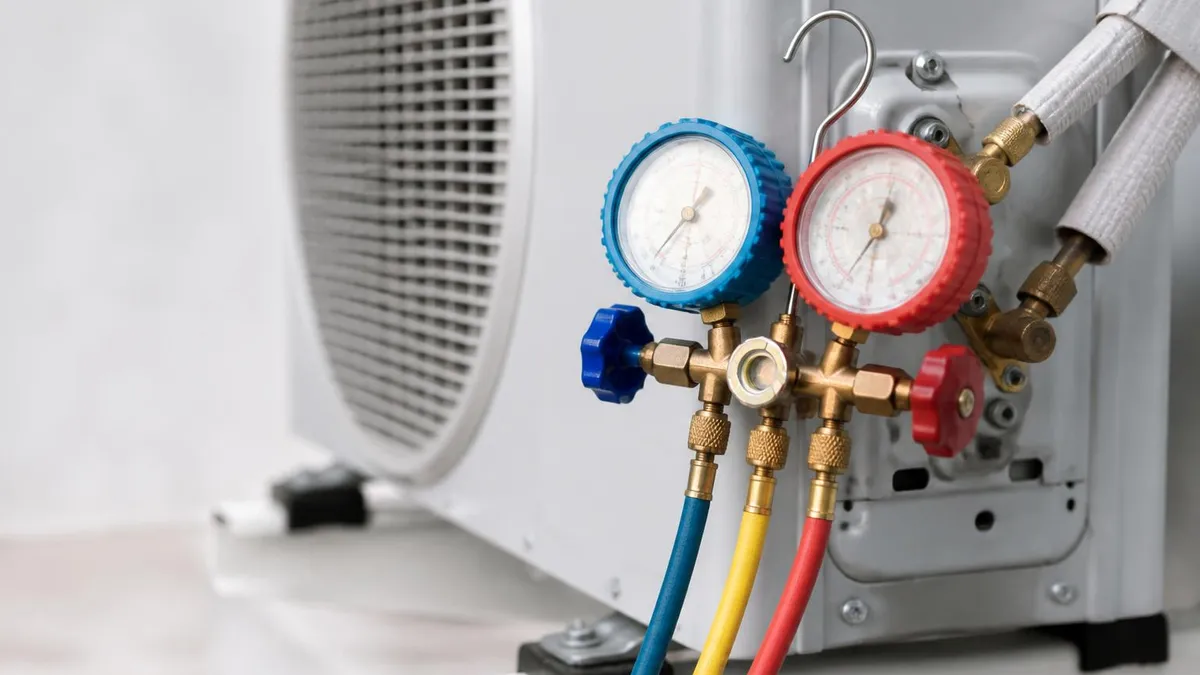
HVAC Sales: The Complete Guide to Selling Heating and Cooling Systems, Building Customer Trust, and Closing More Deals
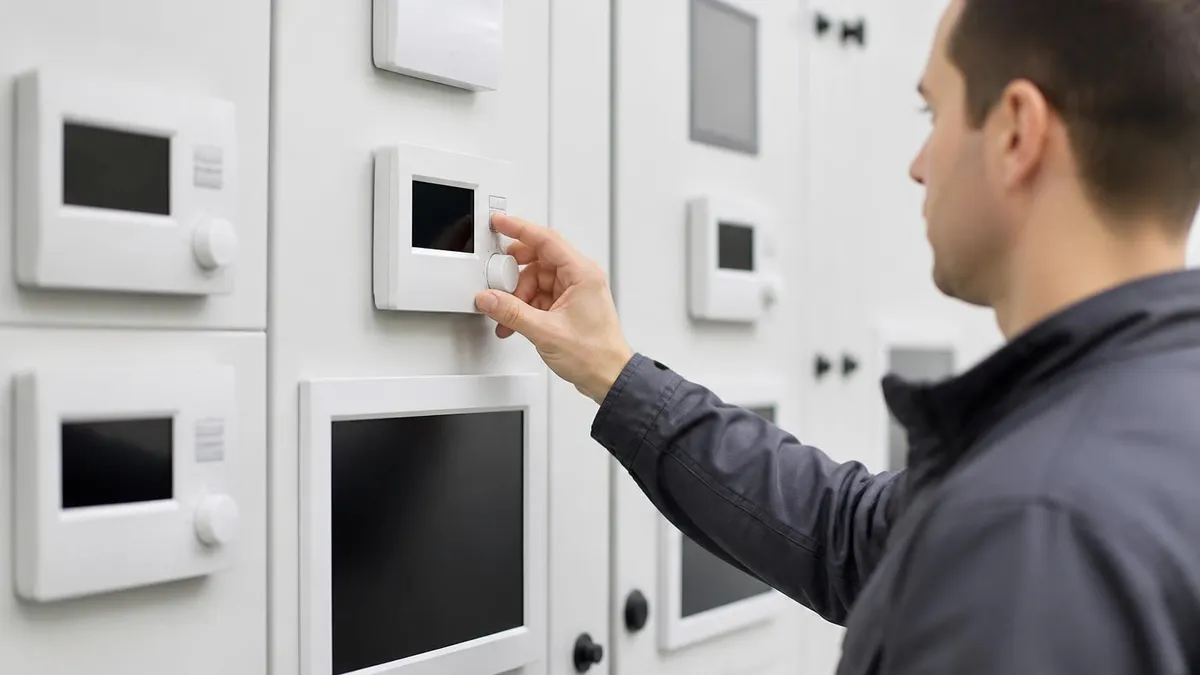
HVAC Air Duct Sealing: The Complete Homeowner and Contractor Guide to Sealing Ductwork for Efficiency, Comfort, and Indoor Air Quality

HVAC Drain Pan: Complete Guide to Function, Maintenance, and Troubleshooting
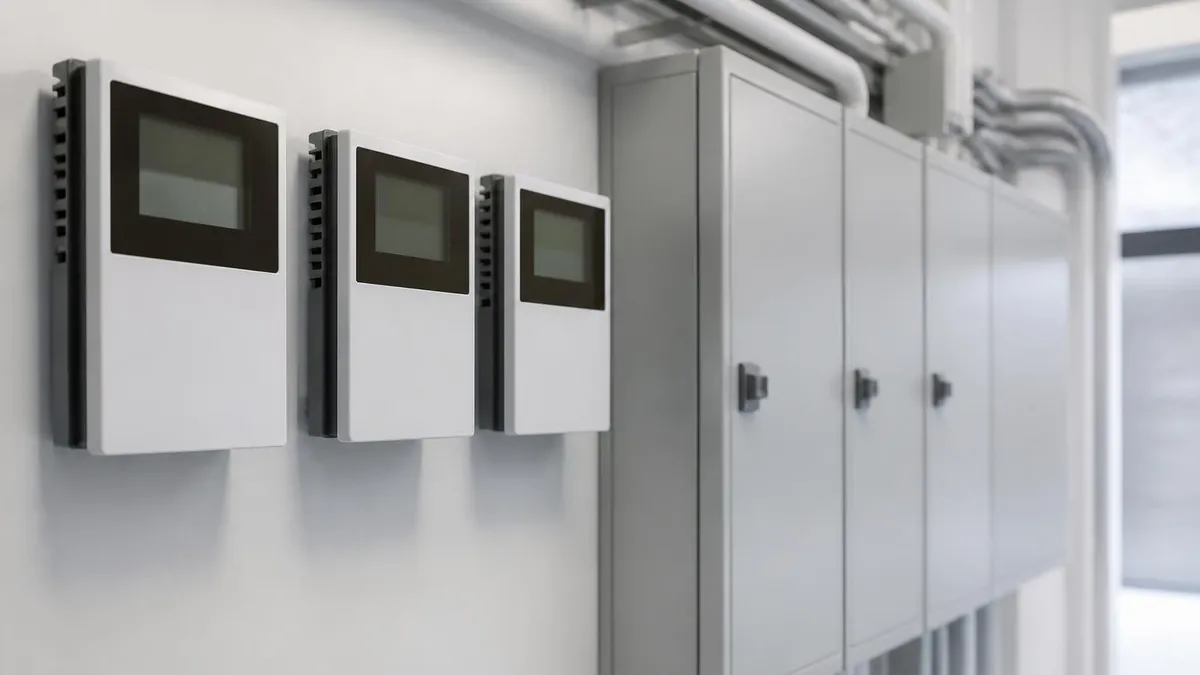
HVAC Solutions: The Complete Guide to Heating, Cooling, and Indoor Air Quality Systems for Homes and Buildings

Commercial HVAC Repair: Systems, Costs, and Service Strategies
About the Author

NATE Certified HVAC Technician & Licensing Exam Trainer
Universal Technical InstituteMike Johnson is a NATE-certified HVAC technician and EPA 608 universal-certified refrigerant handler with a Bachelor of Science in HVAC/R Technology. He has 19 years of commercial and residential HVAC installation and service experience and specializes in preparing technicians for NATE certification, EPA 608, A2L refrigerant safety, and state HVAC contractor licensing examinations.