
Electronic Air Filter for HVAC: The Complete Guide to Whole-House Air Purification, MERV Ratings, and Indoor Air Quality
Electronic air filter for HVAC systems explained: 🎯 how electrostatic precipitators work, MERV ratings, installation costs, and IAQ benefits.
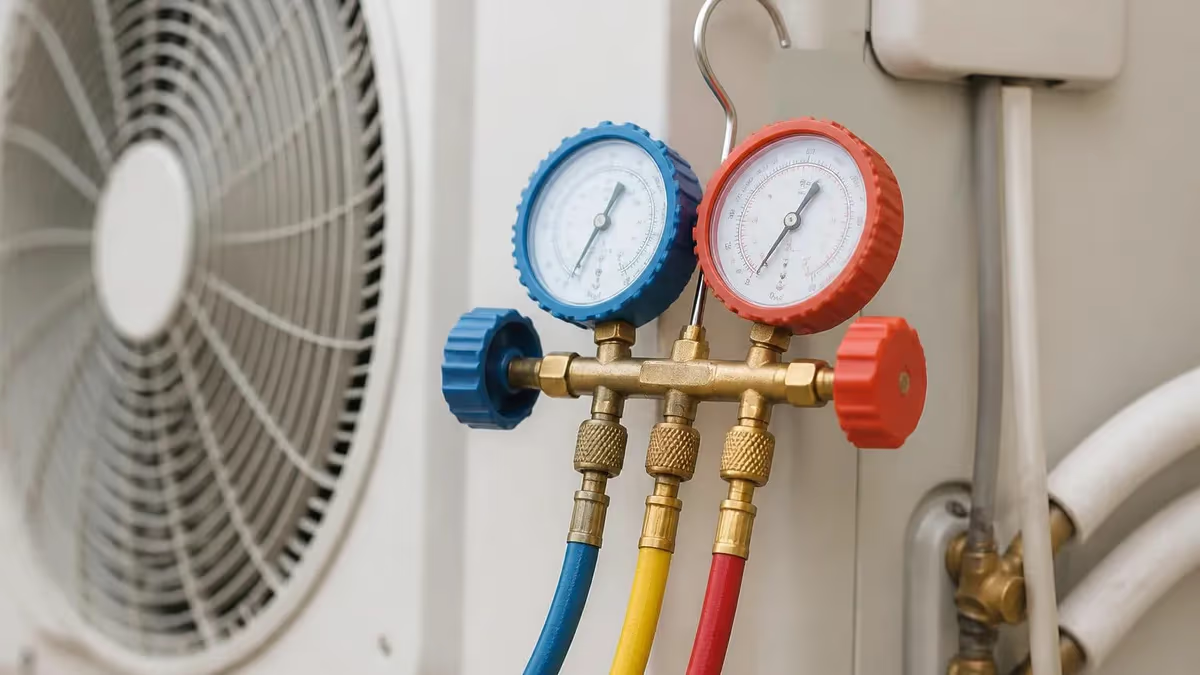
An electronic air filter for HVAC systems uses high-voltage electrical charges to capture airborne particles that conventional pleated filters miss entirely. Unlike disposable media filters that rely on mechanical filtration, electronic air cleaners ionize incoming air and attract charged particles to oppositely charged collection plates. This technology can remove particles as small as 0.01 microns, including smoke, viruses, bacteria, and ultrafine combustion byproducts that pass through even the most expensive MERV 13 pleated filters used in residential homes today.
The rise in wildfire smoke events, increased awareness of indoor air pollution, and growing concerns about respiratory health have pushed electronic air filtration from a niche luxury into a mainstream consideration for homeowners across the United States. Modern HVAC contractors now routinely recommend whole-house electronic air cleaners as part of comprehensive indoor air quality strategies, particularly for households with allergies, asthma, or members who are immunocompromised or elderly.
However, electronic air filters represent a significant investment compared to traditional filtration approaches. Installation costs typically range from $600 to $2,000, with replacement cells and ongoing maintenance adding to long-term ownership expenses. Understanding the underlying technology, performance characteristics, and proper sizing requirements is essential before committing to an electronic filtration upgrade for your forced-air heating and cooling system.
This comprehensive guide examines every aspect of electronic air filtration for residential and light commercial HVAC applications. We cover how electrostatic precipitators function at the molecular level, compare leading brands and models, walk through installation procedures, discuss maintenance requirements, and address common performance issues. Whether you are evaluating an upgrade or researching options for a new system, you will find detailed information about HVAC HVAC Solutions that include advanced filtration.
HVAC technicians, building maintenance professionals, and home inspectors all benefit from understanding electronic air filtration technology. As building codes evolve to address indoor air quality concerns and as hvac energy efficiency news standards push toward tighter building envelopes, the role of advanced filtration in maintaining healthy indoor environments continues to expand. Proper knowledge of these systems separates skilled technicians from generalists in a competitive marketplace.
We will also examine the trade-offs between electronic air filters, HEPA filtration systems, UV germicidal lights, and high-MERV media filters. Each technology has specific strengths and weaknesses, and the optimal indoor air quality solution often combines multiple approaches rather than relying on any single device. Cost, energy consumption, maintenance requirements, and effectiveness against specific contaminants all factor into selecting the right filtration strategy for any given building or homeowner.
By the end of this guide, you will understand exactly how electronic air filters work, when they make sense, how to install and maintain them properly, and what realistic performance to expect under everyday operating conditions in typical American homes.
Electronic Air Filtration by the Numbers

How Electronic Air Filters Work
Air first passes through a washable mesh pre-filter that captures larger particles like lint, hair, and dust bunnies. This stage protects the electronic components from heavy contamination and extends the service life of the ionizing section significantly.
High-voltage wires charged at 6,000 to 12,000 volts emit a corona discharge that ionizes airborne particles. Each tiny particle picks up a positive electrical charge as it passes between the ionizing electrodes at airflow speeds of 300 to 500 feet per minute.
Charged particles then enter a series of parallel aluminum plates with alternating positive and negative charges. The positively charged particles are powerfully attracted to the negative plates, where they stick until the cell is removed and washed during scheduled maintenance.
A specialized transformer steps standard 120-volt household current up to the thousands of volts required for ionization. Modern units include arc-detection circuits that automatically reduce voltage when sparking occurs, preventing damage to internal components.
Many premium electronic air cleaners include an activated carbon post-filter stage that absorbs odors, volatile organic compounds, and gaseous contaminants that pass through electrostatic capture. This combination addresses both particulate and chemical air quality concerns.
Understanding the difference between MERV-rated mechanical filters and electronic air cleaners is fundamental to making an informed filtration decision. The Minimum Efficiency Reporting Value, or MERV, was developed by ASHRAE in 1987 to standardize filter performance ratings across the industry. MERV ratings range from 1 to 16 for residential applications, with higher numbers indicating better capture of smaller particles. A standard fiberglass throwaway filter rates MERV 2 to 4, while pleated filters commonly range from MERV 8 to 13.
Electronic air filters do not technically receive MERV ratings because they operate on fundamentally different principles than mechanical filtration. Instead, manufacturers typically report performance using ASHRAE 52.2 efficiency testing or aerosol challenge tests. The best electronic air cleaners achieve removal efficiencies equivalent to MERV 14 to 16 ratings while maintaining significantly lower static pressure drop across the system, which preserves airflow and reduces blower motor strain.
Static pressure considerations are critical when comparing filtration options for existing HVAC systems. A MERV 13 pleated filter can add 0.25 to 0.40 inches of water column resistance, which forces the blower to work harder, consume more electricity, and potentially reduce overall system capacity. Electronic air cleaners typically add only 0.05 to 0.15 inches of resistance, preserving system performance while delivering superior filtration of small particles that matter most for respiratory health.
The particle size distribution captured by each technology differs significantly in real-world performance. Mechanical filters work through interception, impaction, and diffusion mechanisms that perform best at certain particle size ranges. Electronic precipitators excel at capturing the ultrafine particles between 0.01 and 0.3 microns, which include diesel exhaust, tobacco smoke, viruses, and combustion byproducts. These ultrafine particles pose the greatest health risk because they penetrate deeply into lung tissue and even cross into the bloodstream.
However, electronic air filters do have notable limitations compared to high-quality media filtration. They generate small amounts of ozone as a byproduct of ionization, particularly when collection cells become dirty. While modern units meet UL 867 ozone emission limits of 0.05 parts per million, some sensitive individuals notice the characteristic ozone smell. Additionally, electronic cleaners require regular cleaning to maintain performance, while disposable filters offer simpler set-and-forget operation that some homeowners prefer.
For homeowners working with professional hvac contractors, the choice between filtration technologies should consider the specific air quality concerns of the household, the existing HVAC system capabilities, budget constraints, and willingness to perform regular maintenance. Many contractors now recommend layered approaches that combine high-MERV media filters with electronic enhancement or supplemental purification.
Hybrid filtration systems that combine media filters with electronic enhancement plates are gaining popularity in mid-range applications. These systems use a MERV 8 to 11 pleated filter as the primary capture mechanism, with charged plates positioned downstream to capture particles that bypass the media filter. The result is performance approaching dedicated electronic systems at substantially lower installation costs and with simpler maintenance routines for the homeowner.
HVAC Practice Test Questions
Prepare for the HVAC - Heating Ventilation and Air Conditioning exam with our free practice test modules. Each quiz covers key topics to help you pass on your first try.
HVAC Air Conditioning
HVAC Exam Questions covering Air Conditioning. Master HVAC Test concepts for certification prep.
HVAC Code Compliance
Free HVAC Practice Test featuring Code Compliance. Improve your HVAC Exam score with mock test prep.
HVAC Electrical Controls
HVAC Test Prep for Electrical Controls. Practice HVAC Quiz questions and boost your score.
HVAC Energy Efficiency
HVAC Questions and Answers on Energy Efficiency. Free HVAC practice for exam readiness.
HVAC Heating Systems
HVAC Mock Test covering Heating Systems. Online HVAC Test practice with instant feedback.
HVAC Load Calculations
Free HVAC Quiz on HVAC Load Calculations. HVAC Exam prep questions with detailed explanations.
HVAC Tools and Equipment
HVAC Practice Questions for HVAC Tools and Equipment. Build confidence for your HVAC certification exam.
HVAC Refrigeration
HVAC Test Online for Refrigeration. Free practice with instant results and feedback.
HVAC Safety Practices
HVAC Study Material on Safety Practices. Prepare effectively with real exam-style questions.
HVAC System Design
Free HVAC Test covering System Design. Practice and track your HVAC exam readiness.
HVAC Thermodynamics
HVAC Exam Questions covering Thermodynamics. Master HVAC Test concepts for certification prep.
Electronic Air Filter Installation and Sizing Considerations
Proper sizing begins with measuring the airflow rate of your existing HVAC system in cubic feet per minute. Most residential systems move between 400 and 2,000 CFM depending on tonnage and ductwork design. Electronic air cleaners are rated for specific airflow ranges, and undersizing causes velocity through the cell to exceed design parameters, dramatically reducing capture efficiency and potentially causing audible arcing.
Equally important is the physical space requirement at the return air plenum. Electronic cleaners typically need 6 to 12 inches of cabinet depth plus clearance for the access door to swing open during cell removal. Many older homes lack adequate space near the air handler, requiring custom ductwork modifications or selection of slimline models that mount in tight quarters with reduced installation complexity.
Electronic Air Filters vs Traditional Media Filtration
- +Captures ultrafine particles down to 0.01 microns including smoke and viruses
- +Washable collection cells eliminate ongoing filter purchase costs over time
- +Low static pressure preserves blower performance and energy efficiency
- +15 to 20 year service life with proper maintenance and cleaning
- +Effective against wildfire smoke, cooking fumes, and combustion byproducts
- +Tax credits and utility rebates available in many states for IAQ upgrades
- +Combines well with carbon filters and UV lights for comprehensive purification
- −High upfront installation cost of $600 to $2,000 versus $20 for pleated filters
- −Requires monthly or quarterly cleaning to maintain peak performance levels
- −Produces small amounts of ozone as ionization byproduct during operation
- −Performance degrades significantly when collection cells become dirty
- −Requires adequate cabinet space near air handler for proper installation
- −Replacement ionizer wires and power supplies eventually need professional service
Electronic Air Filter Maintenance Checklist
- ✓Inspect the indicator light or display panel weekly for fault codes or service alerts
- ✓Remove pre-filter mesh monthly and rinse with warm water until completely clean
- ✓Pull collection cells every 60 to 90 days based on local air quality conditions
- ✓Wash collection cells in dishwasher on normal cycle without heated drying enabled
- ✓Allow all components to air dry completely for at least 24 hours before reinstalling
- ✓Inspect ionizing wires for breakage or excessive carbon buildup during each cleaning
- ✓Vacuum the cabinet interior to remove loose dust and debris accumulation between services
- ✓Check power supply cooling fan operation and clean intake vents annually for proper airflow
- ✓Schedule professional service every 2 to 3 years to inspect high-voltage components
- ✓Replace carbon post-filter elements every 12 months or per manufacturer specifications
Clean Cells Equal Clean Air
Studies show electronic air cleaner efficiency drops from 95% to below 50% when collection cells accumulate just 0.1 inches of particulate buildup. Establishing a strict cleaning routine every 60 to 90 days is the single most important factor in maintaining advertised filtration performance throughout the equipment lifecycle.
The financial analysis of electronic air filtration requires looking beyond initial installation costs to consider total cost of ownership over the expected 15 to 20 year service life. A quality whole-house electronic air cleaner installation typically runs between $600 and $2,000 depending on the brand, capacity, and complexity of the ductwork modifications required. Premium models from manufacturers like Trane, Lennox, and Honeywell command the higher end of this range, while budget-friendly options from Field Controls or General Filters fall toward the lower end.
Comparing this investment against ongoing pleated filter replacement costs reveals an interesting long-term picture. A household using MERV 13 pleated filters replaced every three months spends approximately $80 to $120 annually on filter media. Over 20 years, that equals $1,600 to $2,400 in filter expenses alone, not counting the labor of changing them or the disposal of used filters. Electronic systems eliminate this recurring cost entirely, replacing it with periodic cleaning labor and occasional component replacement.
Energy consumption represents another financial consideration worth examining. Electronic air cleaners draw 40 to 80 watts during operation, which translates to roughly $35 to $70 annually in electricity costs assuming continuous operation. However, the reduced static pressure compared to high-MERV media filters often offsets this consumption through lower blower motor energy use. Net energy impact frequently approaches zero or even produces small savings in systems with variable-speed ECM blowers.
Health-related cost savings, while difficult to quantify precisely, can dwarf the equipment investment for households with respiratory conditions. Reduced asthma attacks, fewer allergy medication purchases, decreased upper respiratory infections, and improved sleep quality all contribute to measurable financial benefits. Insurance companies and HSA administrators increasingly recognize indoor air quality equipment as legitimate medical expenses when prescribed by physicians for documented health conditions.
Tax incentives and utility rebates have expanded substantially under recent federal energy efficiency legislation. The Inflation Reduction Act extended and increased credits for certain indoor air quality improvements when bundled with qualified heat pump or HVAC system upgrades. State-level programs in California, New York, Massachusetts, and Oregon offer additional rebates ranging from $200 to $800 for whole-house electronic air filtration installations meeting specific performance criteria.
Property value impact provides another economic consideration that homeowners often overlook. Real estate appraisers and home inspectors increasingly note indoor air quality systems as value-adding features, particularly in markets with elevated wildfire smoke exposure, urban pollution concerns, or high concentrations of allergen-sensitive buyers. Documentation of recent installation and maintenance records helps capture this added value during real estate transactions and refinancing appraisals.
For commercial applications and large residential properties, electronic air filtration delivers even stronger economic returns through bulk processing capacity and reduced filter handling labor. Office buildings, medical facilities, and senior care centers find that the per-square-foot cost of electronic filtration drops significantly below media filtration alternatives when accounting for filter changes, disposal fees, and the labor costs of maintaining hundreds of conventional filter housings throughout large facilities.
All electronic air cleaners produce trace ozone during ionization, particularly when collection cells become dirty or when arcing occurs at damaged ionizer wires. Look for UL 867 certified units that limit ozone emissions to 0.05 parts per million or less. Individuals with severe respiratory sensitivities should consider HEPA filtration alternatives or consult their physician before installation.
Selecting the right electronic air filter brand and model requires evaluating manufacturer reputation, available capacity ranges, warranty coverage, and local service support. The market includes several established players with decades of residential and commercial HVAC experience, along with newer entrants offering innovative features at competitive price points. Understanding the strengths of each major brand helps homeowners and contractors match the right equipment to specific project requirements and budget constraints.
Honeywell remains the recognized leader in electronic air cleaner technology, with their F300 series offering whole-house solutions in capacities from 1,200 to 2,000 CFM. The F300 features electronic indicators that signal when cleaning is required, LED diagnostic displays, and modular construction that simplifies hvac scheduling software. Honeywell electronic air cleaners typically carry 5-year parts warranties and benefit from widespread parts availability through HVAC distributors and online retailers nationwide.
Trane and American Standard market the CleanEffects whole-house air filtration system, which uses a sophisticated three-stage approach combining prefiltration, electrical charging, and collection plate capture. CleanEffects systems are certified by ASTM standards as providing performance equivalent to MERV 16 filtration without the static pressure penalty. Installation must be performed by authorized Trane dealers, which limits competition but ensures qualified technicians handle the equipment correctly during commissioning.
Lennox Healthy Climate PureAir systems combine MERV 16 media filtration with UVA-light catalyst technology rather than traditional electronic precipitation. While technically not a pure electronic cleaner, PureAir competes directly in the same market segment and offers compelling performance against odors, VOCs, and biological contaminants. Lennox dealers typically bundle PureAir installations with new system replacements, capturing significant market share through their established residential HVAC channel partnerships.
For contractors sourcing equipment through standard distribution channels, exploring options at HVAC Wholesale Direct: The Complete Guide to Sourcing Equipment, Parts, and Supplies at Distributor Pricing reveals significant cost savings on Honeywell and aftermarket electronic air cleaner brands. Distributor pricing often runs 30% to 40% below retail, with the savings allowing contractors to offer competitive installation quotes while maintaining healthy project margins for their service businesses.
Field Controls and General Filters represent the value tier of the electronic air cleaner market, offering reliable performance at lower price points than premium brand-name competitors. These units typically lack some of the diagnostic features and aesthetic refinement of top-tier models but deliver comparable filtration performance for budget-conscious installations. Replacement parts remain readily available through HVAC supply houses, supporting long-term ownership without the proprietary parts concerns that affect some specialty brands.
Newer market entrants like Aprilaire, Carrier Infinity, and Bryant Evolution have introduced sophisticated electronic and hybrid filtration products designed to integrate with their proprietary communicating thermostat systems. These integrated solutions offer advanced features like automatic cleaning reminders synchronized with system runtime, smartphone notifications, and air quality monitoring that adjusts blower operation based on indoor particulate measurements throughout daily occupancy patterns.
Practical installation and ongoing operation of electronic air filtration systems require attention to several details that distinguish successful long-term performance from disappointing results. Even premium equipment delivers poor filtration when installed incorrectly, sized inappropriately, or maintained inadequately by homeowners or service contractors. The following practical guidance reflects decades of field experience hvacr meaning professionals who have installed and serviced thousands of electronic air cleaners across diverse residential applications.
Pre-installation airflow measurement is non-negotiable for proper sizing and performance prediction. Many contractors skip this step and rely on furnace nameplate ratings, which often overstate actual delivered airflow due to duct restrictions, dirty coils, or undersized return systems. Using a manometer to measure static pressure and a flow hood to verify CFM at the return plenum ensures the electronic cleaner operates within its design velocity range, where capture efficiency reaches advertised performance levels.
Sealing the duct cabinet around the electronic air cleaner installation prevents bypass airflow that dramatically reduces effective filtration. Even small gaps where contaminated air slips around the filter cell rather than through it can drop overall system efficiency by 30% or more. Quality installations use UL 181 listed metal foil tape, mastic duct sealant, and butyl gasket material at all cabinet seams to ensure 100% of return airflow passes through the active filtration zone.
Documenting baseline performance through indoor air quality testing before and after installation provides valuable data for evaluating system effectiveness and demonstrating value to homeowners. Affordable particle counters measuring PM2.5 and PM10 concentrations in real time show dramatic differences between filter-on and filter-off operation. Many contractors now include before-and-after IAQ reports as standard documentation, building customer confidence and supporting premium pricing for advanced filtration installations.
Training the homeowner on proper cleaning procedures is critical to long-term satisfaction with the investment. Walk through the complete cleaning process during the final commissioning visit, including how to safely remove cells, the dishwasher cycle settings to use, drying requirements, and signs of damage to watch for during inspection. Provide written maintenance schedules, contact information for replacement parts, and clear warranty documentation so homeowners maintain proper operation throughout the equipment lifecycle.
Coordinating electronic air filter installation with routine HVAC Tune Up Service: The Complete Guide to Professional HVAC Maintenance and Why It Pays for Itself visits maximizes the value of professional contractor time. Many service agreements now include semi-annual cleaning of electronic air filter components alongside standard furnace and air conditioner inspection tasks, ensuring optimal filtration performance without requiring separate service appointments throughout the heating and cooling seasons.
Finally, monitor system performance trends over time rather than treating installation as a one-time event. Track filter cleaning frequency, ozone perception, system airflow at the registers, and overall indoor air quality complaints from household members. Performance degradation often appears gradually, and proactive intervention through cell replacement, ionizer wire inspection, or power supply service prevents complete failures and maintains the consistent IAQ benefits homeowners expect from their substantial filtration investment.
HVAC Questions and Answers
HVAC Wholesale Direct: The Complete Guide to Sourcing Equipment, Parts, and Supplies at Distributor Pricing
HVAC Repair Portland: The Complete 2026 Homeowner's Guide to Furnace, AC, and Heat Pump Service in the Rose City
HVAC Tune Up Service: The Complete Guide to Professional HVAC Maintenance and Why It Pays for Itself
HVAC Solutions: The Complete Guide to Heating, Cooling, and Indoor Air Quality Systems for Homes and Buildings
Certified HVAC Contractors: How to Find, Vet, and Hire the Right Professional for Your Home or Business
About the Author

NATE Certified HVAC Technician & Licensing Exam Trainer
Universal Technical InstituteMike Johnson is a NATE-certified HVAC technician and EPA 608 universal-certified refrigerant handler with a Bachelor of Science in HVAC/R Technology. He has 19 years of commercial and residential HVAC installation and service experience and specializes in preparing technicians for NATE certification, EPA 608, A2L refrigerant safety, and state HVAC contractor licensing examinations.