
Home Health Aide Job Description: Complete 2026 September Guide to Duties, Skills, Pay, and Career Path
Complete job description for home health aide: ❓ duties, skills, certification, pay, and career path. Real 2026 September data with HHA exchange tips.
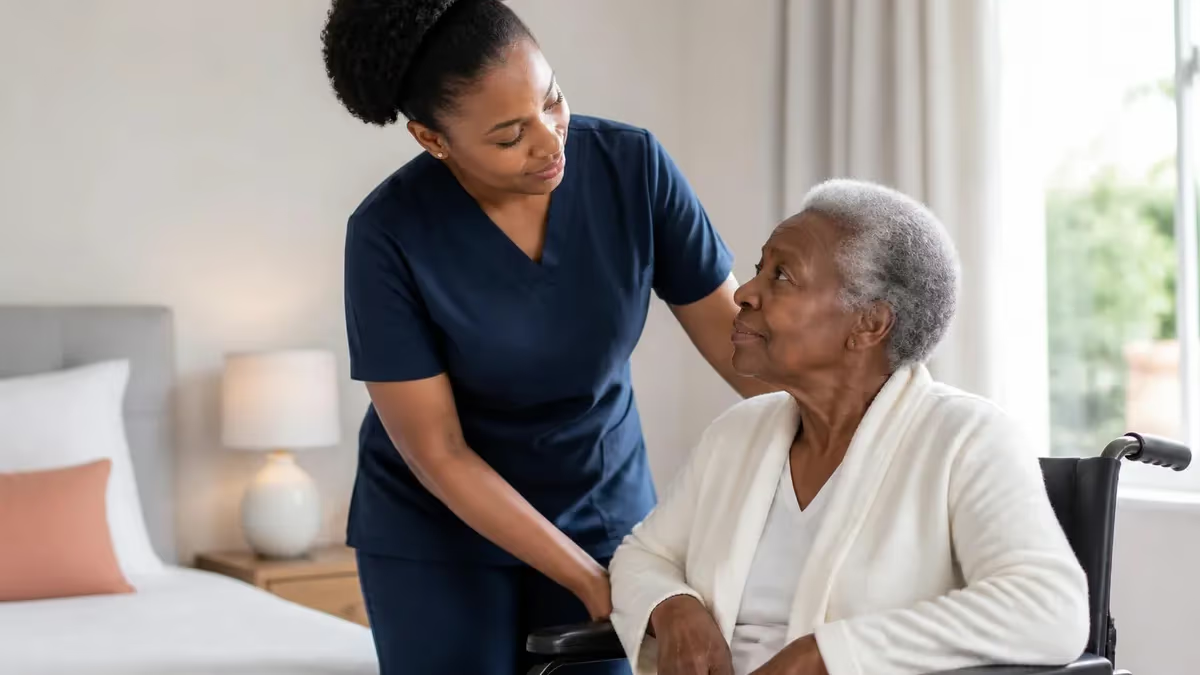
The job description for home health aide work has expanded dramatically in 2026, blending hands-on personal care with digital documentation, vital-signs monitoring, and emotional support for clients aging in place. A typical HHA helps clients bathe, dress, eat, and move safely, while also recording care visits through platforms like HHA Exchange, the electronic visit verification system used by most Medicaid-funded agencies. Understanding this role fully matters before you apply, because the title looks simple on paper but the daily reality is layered, physical, and emotionally demanding.
Most employers expect a certified hha to arrive at a client's home prepared to handle whatever the shift brings — from helping a frail 92-year-old transfer from bed to wheelchair, to gently coaching a stroke survivor through swallowing exercises ordered by a speech therapist. The job description usually lists tasks under three buckets: personal care, light housekeeping, and basic health monitoring. But seasoned aides will tell you the real work also includes companionship, advocacy, and acting as the early-warning radar that catches a UTI or fall risk before it becomes an ER visit.
According to the Bureau of Labor Statistics, the home health and personal care aide field will add roughly 820,000 jobs between 2022 and 2032, the fastest growth of any occupation tracked. That means agencies are actively hiring, wages are climbing in most states, and the job description for home health aide positions now often includes signing bonuses, mileage reimbursement, and paid certification renewal. If you are weighing whether this career fits your life, the next 2,500 words will give you the unvarnished picture.
This guide breaks down everything you need to know: the exact duties listed in real 2026 job postings, the certifications and training required, what pay looks like across states, how electronic visit verification works through HHA Exchange, and which soft skills agencies screen for first. We pulled language from more than 200 active job listings on Indeed, ZipRecruiter, and agency career pages to make sure the duty lists you read here reflect what hiring managers actually want — not generic templates from 2015.
You will also find what the job is not. An HHA is not a nurse, cannot administer most medications independently, and cannot perform sterile procedures. Knowing the legal scope of practice protects your license, your client, and your employer. We will cover those boundaries clearly in the duties section, because confusion about them is the single most common reason new aides get written up or terminated during their probationary period.
Whether you are switching careers from retail or hospitality, returning to work after raising children, or stepping up from a volunteer caregiver role you already play for a family member, this article will help you read job descriptions critically, ask the right questions in interviews, and walk into your first shift knowing what good work looks like. Let's start with the numbers that frame the whole field.
Home Health Aide Job Description by the Numbers
Core Duties Listed in Every HHA Job Description
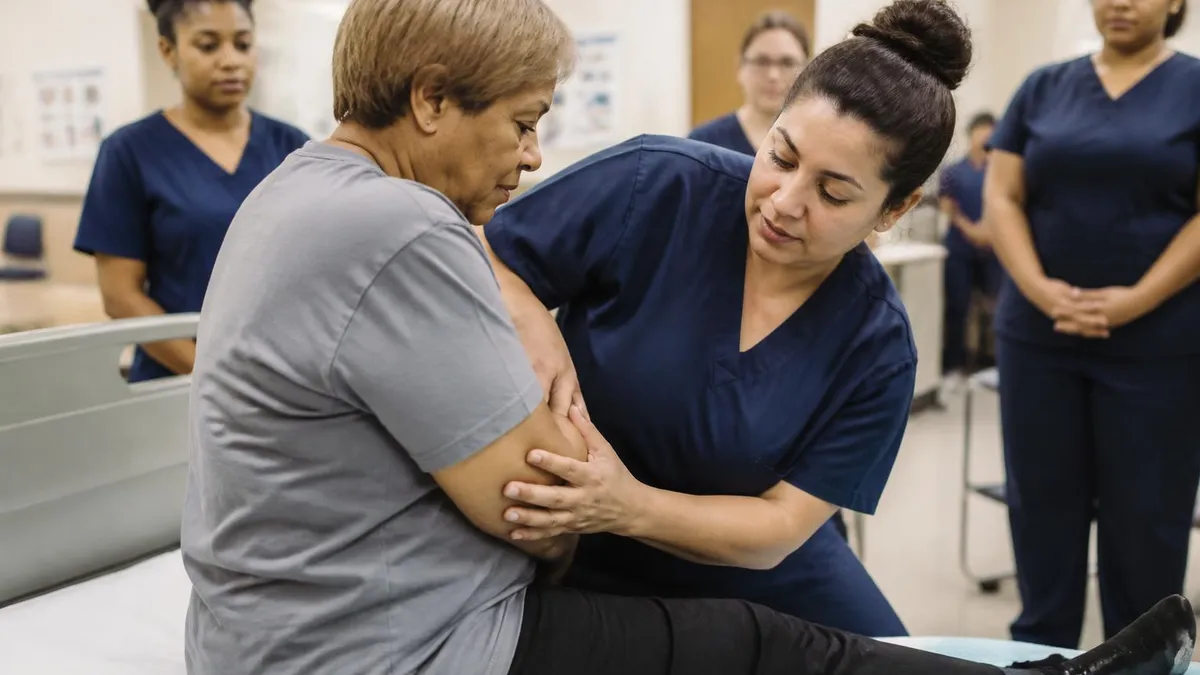
Bathing, dressing, grooming, oral hygiene, toileting, incontinence care, and safe transfers using gait belts or mechanical lifts. These activities of daily living make up roughly 60 percent of a typical shift.
Changing linens, laundering clothes, washing dishes used during the visit, vacuuming the client's living areas, and meal preparation following any prescribed diet — low-sodium, diabetic, or pureed textures.
Taking and recording vital signs, observing skin for pressure injuries, monitoring food and fluid intake, watching for behavior changes, and reporting any decline to the supervising RN within the required timeframe.
Prompting clients to take pre-poured medications at scheduled times. Aides cannot pour, mix, or administer most medications — only remind. This boundary is enforced strictly under state nurse practice acts.
Logging visit start and end times through HHA Exchange or a similar electronic visit verification app, completing daily task sheets, and noting client status changes for the care coordinator to review.
Becoming qualified for an HHA role starts with completing an approved training program. Federal regulations under 42 CFR 484.80 require at least 75 hours of instruction, including 16 hours of supervised practical training in a lab or clinical setting. However, the federal floor is just that — a floor. New York requires 75 hours but adds rigorous testing, while California mandates 120 hours, and states like Washington push training to 75 hours plus a 100-question competency exam. The job description for home health aide roles in your state will reference whichever standard your agency follows.
You will need to choose between a community college program, an agency-sponsored training, or an online hybrid option. Community college programs typically run 8 to 12 weeks at a cost of $800 to $1,500, but financial aid is often available. Agency-sponsored training is usually free in exchange for a 6 to 12 month employment commitment — agencies like BAYADA, Visiting Angels, and Right at Home frequently offer this pathway. Hybrid online programs combine self-paced modules with in-person clinical days and finish in as little as four weeks for motivated learners.
Once training ends, you sit for your state's competency evaluation. This typically includes a written test of 50 to 100 multiple-choice questions covering infection control, safety, communication, nutrition, and basic anatomy, plus a skills demonstration where you perform tasks like handwashing, blood pressure measurement, bed making with a client in the bed, and a transfer from bed to chair. To prepare efficiently, many candidates use a structured home health aide training program with video walkthroughs that show exactly how examiners want each skill performed.
After passing, your name is added to your state's Nurse Aide Registry — sometimes called the HHA Registry or Direct Care Worker Registry. Agencies are legally required to verify your registry status before hiring you, and your status must remain active through periodic work and continuing education. Falling off the registry means re-testing or, in some states, repeating training entirely. Track your renewal date the way you would a driver's license expiration.
Federal rules also require continuing education — typically 12 to 16 hours per year — covering topics like dementia care, infection prevention, elder abuse recognition, and emergency response. Reputable agencies provide this training in-house, often paid, while smaller employers may expect you to find courses on your own. Before accepting a job offer, ask specifically how continuing education is delivered and whether the hours are compensated.
One question candidates often miss is whether the role requires CPR certification on top of HHA training. About 70 percent of agencies require current BLS or basic CPR, and many will pay for the course if you do not already have it. If your job description mentions transporting clients in your personal vehicle — for example, to medical appointments — you will also need a clean driving record and proof of auto insurance with at least $100,000 liability coverage.
Finally, do not overlook the background check. All states require a fingerprint-based criminal history check, and federal law disqualifies anyone convicted of certain abuse-related offenses. Some states also screen the federal Office of Inspector General exclusion list. If you have any concerns about your background, contact a local workforce development office before paying for training — they can help you understand whether a past conviction will block certification in your state.

HHA Practice Test Questions
Prepare for the HHA - Home Health Aide exam with our free practice test modules. Each quiz covers key topics to help you pass on your first try.
HHA Basic Care and Comfort
HHA Exam Questions covering Basic Care and Comfort. Master HHA Test concepts for certification prep.
HHA Basic Care and Comfort Questions and A...
Free HHA Practice Test featuring Basic Care and Comfort Questions and Answers. Improve your HHA Exam score with mock test prep.
HHA Communication and Interpersonal Skills
HHA Mock Exam on Communication and Interpersonal Skills. HHA Study Guide questions to pass on your first try.
HHA Communication and Interpersonal Skills...
HHA Test Prep for Communication and Interpersonal Skills Questions and Answers. Practice HHA Quiz questions and boost your score.
HHA Infection Control and Safety
HHA Questions and Answers on Infection Control and Safety. Free HHA practice for exam readiness.
HHA Infection Control and Safety Questions...
HHA Mock Test covering Infection Control and Safety Questions and Answers. Online HHA Test practice with instant feedback.
HHA Mental and Emotional Support
Free HHA Quiz on Mental and Emotional Support. HHA Exam prep questions with detailed explanations.
HHA Mental and Emotional Support Questions...
HHA Practice Questions for Mental and Emotional Support Questions and Answers. Build confidence for your HHA certification exam.
HHA Mobility and Transfer Techniques
HHA Test Online for Mobility and Transfer Techniques. Free practice with instant results and feedback.
HHA Mobility and Transfer Techniques Quest...
HHA Study Material on Mobility and Transfer Techniques Questions and Answers. Prepare effectively with real exam-style questions.
HHA Nutrition and Hydration
Free HHA Test covering Nutrition and Hydration. Practice and track your HHA exam readiness.
HHA Nutrition and Hydration Questions and ...
HHA Exam Questions covering Nutrition and Hydration Questions and Answers. Master HHA Test concepts for certification prep.
HHA Observation and Reporting
Free HHA Practice Test featuring Observation and Reporting. Improve your HHA Exam score with mock test prep.
HHA Observation and Reporting Questions an...
HHA Mock Exam on Observation and Reporting Questions and Answers. HHA Study Guide questions to pass on your first try.
HHA Patient Rights and Ethics
HHA Test Prep for Patient Rights and Ethics. Practice HHA Quiz questions and boost your score.
HHA Patient Rights and Ethics Questions an...
HHA Questions and Answers on Patient Rights and Ethics Questions and Answers. Free HHA practice for exam readiness.
HHA Personal Care and Hygiene
HHA Mock Test covering Personal Care and Hygiene. Online HHA Test practice with instant feedback.
HHA Personal Care and Hygiene Questions an...
Free HHA Quiz on Personal Care and Hygiene Questions and Answers. HHA Exam prep questions with detailed explanations.
HHA Home Health Aide Certification Practic...
HHA Practice Questions for Home Health Aide Certification Practice Test. Build confidence for your HHA certification exam.
HHA Home Health Aide Certification Practic...
HHA Test Online for Home Health Aide Certification Practice Test #1. Free practice with instant results and feedback.
HHA Home Health Aide Certification Practic...
HHA Study Material on Home Health Aide Certification Practice Test #2. Prepare effectively with real exam-style questions.
HHA Home Health Aide Certification Practic...
Free HHA Test covering Home Health Aide Certification Practice Test #3. Practice and track your HHA exam readiness.
HHA Home Health Aide Certification Practic...
HHA Exam Questions covering Home Health Aide Certification Practice Test #4. Master HHA Test concepts for certification prep.
HHA HOME HEALTH AIDE COMPETENCY TEST
Free HHA Practice Test featuring HOME HEALTH AIDE COMPETENCY TEST. Improve your HHA Exam score with mock test prep.
HHA HOME HEALTH AIDE COMPETENCY TEST #1
HHA Mock Exam on HOME HEALTH AIDE COMPETENCY TEST #1. HHA Study Guide questions to pass on your first try.
HHA Home Health Aide Competency Test
HHA Test Prep for Home Health Aide Competency Test. Practice HHA Quiz questions and boost your score.
HHA Home Health Aide Competency Test #2
HHA Questions and Answers on Home Health Aide Competency Test #2. Free HHA practice for exam readiness.
Understanding HHA Exchange and Electronic Visit Verification
HHA Exchange is the dominant electronic visit verification platform used by Medicaid home care agencies in over 20 states, including New York, New Jersey, Tennessee, and California. The system records when you arrive at and leave each client's home using GPS, phone landline, or a small in-home device. This data feeds directly into Medicaid billing, so accuracy matters — a missed clock-in can mean an unpaid visit or, worse, a fraud audit for your agency.
Beyond clock-ins, HHA Exchange handles care plan task lists, daily progress notes, schedule confirmations, and time-off requests. New aides typically receive 30 to 60 minutes of training on the mobile app during orientation, but the learning curve is short. Most experienced aides complete their full visit documentation in under five minutes per shift once they master the workflow.
Should You Take an HHA Job? Honest Pros and Cons
- +Strong job security with 21 percent projected growth through 2032
- +Quick entry — most candidates earn certification in 4 to 12 weeks
- +Meaningful relationships with clients who genuinely depend on your care
- +Flexible schedules including weekends, overnights, and live-in options
- +Clear career ladder to CNA, LPN, and eventually RN with tuition support
- +Mileage reimbursement and signing bonuses common in 2026 hiring market
- −Physical strain from transfers, lifting, and long hours on your feet
- −Emotional weight of supporting clients through decline and end of life
- −Lower starting wages than some entry-level retail or warehouse roles
- −Solo work environment means limited backup if a client situation escalates
- −Driving between clients eats into earnings if mileage is not reimbursed
- −Inconsistent hours during the first 90 days while you build a regular caseload
Top Skills Employers Screen For in Every HHA Job Description
- ✓Active listening and patient observation to catch subtle health changes early
- ✓Clear written communication for daily progress notes and incident reports
- ✓Time management to complete all care plan tasks within the scheduled visit
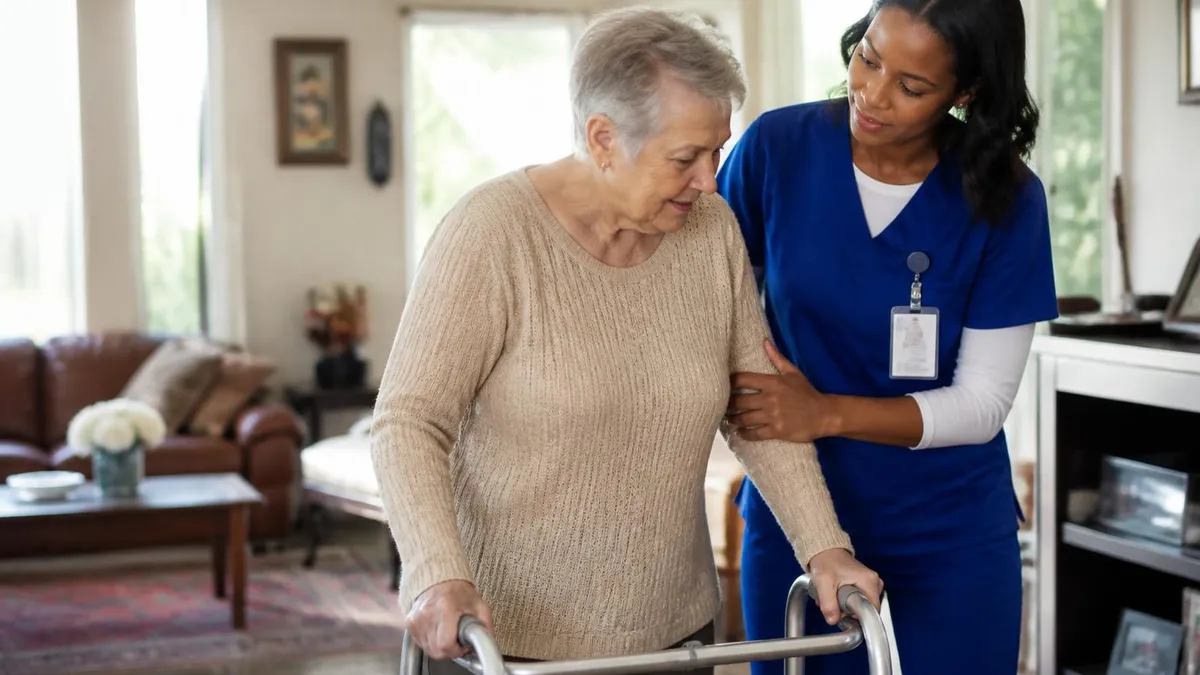
- ✓Body mechanics and safe transfer techniques to protect yourself and the client
- ✓Cultural sensitivity when serving clients of diverse backgrounds and faiths
- ✓Emotional regulation during stressful events like falls or sudden illness
- ✓Basic technology comfort with smartphones for EVV apps and messaging
- ✓Conflict de-escalation when working with clients who have dementia or anxiety
- ✓Confidentiality and HIPAA awareness in every interaction inside the home
- ✓Reliability — agencies fire more aides for attendance issues than for clinical errors
Reliability outranks skill on every HHA hiring scorecard
In a 2025 survey of 412 home care agency directors, 86 percent ranked dependability and punctuality as the single most important hiring factor — above clinical skill, experience, and even attitude. If you show up on time every shift for your first 90 days, you will have your pick of assignments and overtime within six months.
Pay for HHAs varies more by state and agency than by years of experience, especially in the first five years of a career. The 2025 BLS median was $33,530 annually, or about $16.12 per hour, but that national number hides huge ranges. In New York, where Medicaid reimbursement is higher and union contracts cover many aides, hourly rates regularly hit $19 to $22. In rural Mississippi, Alabama, and Louisiana, agencies still post listings at $11 to $13. Always check the state-specific data before negotiating.
Beyond base pay, the total compensation picture in 2026 includes a growing list of perks. Signing bonuses of $500 to $2,500 are common with national agencies. Many employers now offer health insurance after 60 to 90 days for aides working 30 or more hours weekly. Paid time off accrual usually starts at one hour earned per 30 worked, which translates to about 10 days off after a year of full-time work. Retirement matches through 401(k) plans are showing up in chains like Bayada, Interim HealthCare, and Amedisys.
Shift differentials are another lever. Overnight shifts (typically 10 p.m. to 6 a.m.) usually pay an extra $1 to $3 per hour. Holiday work — Thanksgiving, Christmas, New Year's Day, and the Fourth of July — pays time-and-a-half or double time at most agencies. Live-in cases, where you stay at the client's home for several days at a stretch, are paid as a flat daily rate that ranges from $180 to $300, plus food and lodging on site.
Mileage reimbursement matters more than new aides realize. The 2026 IRS standard rate is 70 cents per mile. If you drive 50 miles a day between clients, that is $35 in untaxed reimbursement — but only if your agency actually pays it. Some smaller agencies still do not, which can effectively reduce your take-home by $400 to $700 a month. Ask explicitly during interviews and get the rate in writing in your offer letter.
Tax treatment also varies. Most agency-employed HHAs are W-2 employees with taxes withheld automatically. A growing number of clients hire aides directly as 1099 independent contractors through marketplaces like Care.com and CareLinx. The 1099 route often pays a higher per-hour rate on paper, but you pay both halves of Social Security and Medicare (15.3 percent total), plus you owe quarterly estimated taxes. Run the math carefully before choosing.
Schedules are negotiable, especially in 2026's tight labor market. Common patterns include four 10-hour days, three 12-hour shifts, split shifts that cover morning and evening ADL needs, and traditional five-day weeks. Live-in aides typically work four days on, three days off, then rotate. Be honest in interviews about which schedule works for your family — agencies prefer one truthful conversation to chasing you down after no-call no-shows when childcare falls through.
Finally, factor in the cost of working. Scrubs, supportive shoes, a reliable phone with a generous data plan, gas, and parking add up. Most experienced aides budget $1,500 to $2,500 a year for these work-related costs. Track them carefully because many are deductible on your federal taxes if you itemize, including mileage above what your employer reimburses, professional liability insurance, and continuing education fees.
The Department of Labor recovered over $230 million in unpaid wages for home care workers between 2020 and 2024. Common violations include unpaid travel time between clients, off-the-clock documentation work, and shaving minutes off EVV clock-ins. If your agency asks you to work without recording the time, document the request in writing and contact your state labor board immediately — federal law protects you from retaliation.
The HHA role is rarely a destination — it is usually a launching pad. Within two years, most aides have a clearer sense of whether they want to deepen their clinical skills, move into care coordination, or pivot toward administration. The good news is that every direction has well-worn pathways, and most employers will help fund the next step if you stay loyal. Think of the job description for home health aide work as Chapter One in a longer career story.
The most common upward move is from HHA to Certified Nursing Assistant (CNA). The training overlaps significantly — many states allow HHAs with at least 12 months of experience to challenge the CNA exam directly. CNAs earn $2 to $5 more per hour on average, work in hospitals and long-term care facilities as well as homes, and have access to a broader range of shifts. Some aides earn CNA credentials simply to expand their schedule options while keeping their home care clients.
From CNA, the next stepping stone is Licensed Practical Nurse (LPN) or Licensed Vocational Nurse (LVN), which takes about 12 to 18 months of additional schooling. LPN pay sits in the mid-$50,000s nationally, with strong growth in home health and hospice settings. After LPN, many practitioners go bridge-to-RN through community college programs that count their LPN credits, finishing the registered nurse credential in another 12 to 24 months. Several large home health chains offer full tuition reimbursement for these pathways in exchange for service commitments.
Not interested in more clinical work? Care coordinator roles are an excellent lateral move. Coordinators schedule visits, match aides to clients, handle client and family communication, and audit documentation for compliance. The job often pays $45,000 to $60,000 and uses everything you learned in the field — without the physical strain. Most coordinators come up from the aide ranks, and recruiters prefer that background because field experience makes for better scheduling decisions.
For aides interested in starting their own businesses, there is also the entrepreneurial path. Many former HHAs build private-pay caregiving practices serving 3 to 8 clients independently, charging $25 to $40 per hour. Others pool with two or three colleagues and register as a small LLC, sharing administrative costs and covering each other's time off. Before going independent, check your state's licensing rules — some states require even tiny practices to register as home care agencies.
Specialization is another way to grow without leaving the field. Aides who pick up extra training in dementia care, hospice support, pediatric home care, or post-surgical recovery often command $2 to $6 more per hour and get first pick of assignments. Resources for these specialties are widely available, and many lead to roles in higher-acuity settings. If you are mapping out next steps, browse current hha certificate requirements in your area to identify which add-ons local agencies value most.
Finally, do not underestimate the value of staying an HHA for the long haul. Veteran aides with 10 or more years of experience often have steady client lists, full schedules, and quality-of-life benefits that beat many higher-titled roles. They mentor new aides, sit on agency advisory councils, and earn premium rates for complex cases. A long, steady career as an HHA is not a consolation prize — for many, it is exactly the work they want.
Before you accept your first HHA offer, take time to read the actual job description word by word. Highlight any task that is unfamiliar to you and ask the recruiter how training is provided. If the description mentions wound care, sterile dressing changes, or medication administration beyond reminders, push back politely — those tasks may be outside your legal scope of practice depending on your state, and an agency that asks you to perform them is putting your certification at risk before you even start.
Pay equal attention to what is missing from the description. Look for clear language on hours per week, expected travel radius, mileage reimbursement, overtime policies, and weekend or holiday rotation. Vague descriptions often translate to vague schedules, which is the leading cause of new-aide burnout in the first 90 days. If anything is unclear, request a written addendum to your offer letter spelling out the specifics. Reputable agencies will say yes; the ones that resist are a warning sign.
Once you have signed an offer, set yourself up for a smooth start. Pre-stage everything you will need: scrubs in your size, supportive non-slip shoes, a reliable smartphone with the HHA Exchange or equivalent EVV app installed and tested, a small backpack with disposable gloves, hand sanitizer, a digital thermometer, and a copy of your certification card. Create a folder for visit notes, mileage logs, and pay stubs from day one — this habit pays off enormously at tax time and during any wage dispute.
During your first two weeks, focus more on observation than performance. Watch how your senior coworkers move through the home, how they introduce themselves, where they find supplies, and how they communicate with family members who are present. Ask questions privately rather than in front of clients. Take notes after each shift on what worked and what felt awkward — these notes become your personal playbook for the next similar situation.
Treat the EVV clock as sacred. Clock in the moment you cross the client's threshold, clock out the moment you complete your final task and step toward the door. Never let a client or family member talk you into stopping the clock early to extend visit time off the books — even when their intentions are kind. The audit risk is yours alone, and lost wages from underclocking add up to thousands of dollars a year for aides who fall into the habit.
Build relationships proactively. Within your first month, introduce yourself by name to every member of the supervising nurse team, the scheduler, and the care coordinator. Send a quick weekly status email summarizing your clients' status — agencies love aides who communicate without being prompted. This habit moves you from interchangeable to indispensable, and indispensable aides get the first calls for premium shifts and bonus opportunities.
Finally, practice for the work in advance. Use free quizzes to drill the safety, infection control, and communication scenarios that actually come up in homes. The questions on most state competency exams are similar to the ones agencies use during 30-day reviews, so quiz practice doubles as job performance prep. Treat the first year as graduate school — every shift teaches a lesson the textbook missed, and the aides who lean into that learning curve become the ones every agency fights to keep.
HHA Questions and Answers

Hiring a Home Health Aide for Family: Complete 2026 Guide to Vetting, Costs, and Care Coordination

Home Health Aide Training Programs: Complete 2026 Guide to Certification, Cost, and Career Launch
HHA Practice Test Video Answers

HHA Jobs Near Me — How to Find, Train, and Start Your Career

Can a Home Health Aide Administer Medication? Scope of Practice Explained
About the Author

Registered Nurse & Healthcare Educator
Johns Hopkins University School of NursingDr. Sarah Mitchell is a board-certified registered nurse with over 15 years of clinical and academic experience. She completed her PhD in Nursing Science at Johns Hopkins University and has taught NCLEX preparation and clinical skills courses for nursing students across the United States. Her research focuses on evidence-based exam preparation strategies for healthcare certification candidates.
Join the Discussion
Connect with other students preparing for this exam. Share tips, ask questions, and get advice from people who have been there.
View discussion (8 replies)