
Home Health Aide Training Programs: Complete 2026 Guide to Certification, Cost, and Career Launch
Complete guide to home health aide training programs, 📝 HHA certification, costs, online options, and how to launch your career in 2026.

Choosing the right home health aid training pathway is the single most important decision you will make before stepping into a patient's living room as a paid caregiver. The home health aide profession is projected to grow 21 percent through 2032 according to the Bureau of Labor Statistics, far outpacing the national average for all occupations. That growth is driven by an aging baby boomer population, expanded Medicaid waivers, and a clear preference among families for aging in place rather than institutional care.
Federal regulations under 42 CFR 484.80 require every Medicare-certified home health aide to complete at least 75 hours of training, including 16 hours of supervised practical instruction. Many states stack additional requirements on top of that federal floor — New York demands 75 hours plus a competency evaluation, Washington requires 75 hours plus a 28-hour Home Care Aide curriculum, and California mandates 120 hours total. Knowing your state's specific rule before you enroll prevents wasted tuition.
Most students complete training in four to twelve weeks depending on whether they choose full-time, part-time, or hybrid formats. Tuition ranges from free (when sponsored by an employer like a hha agency) to roughly $1,500 at private vocational schools. Community colleges, the American Red Cross, and accredited online providers all offer programs that meet the federal 75-hour standard, so the smartest move is comparing accreditation, clinical hour quality, and job placement rates rather than price alone.
Once you finish coursework, you must pass a state competency exam that combines a written knowledge test with a hands-on skills demonstration. The skills portion typically covers handwashing, vital signs, transfers, bed-making with a patient in bed, perineal care, and feeding. Failure rates on the skills portion hover near 18 percent nationally, almost always because candidates rush handwashing or skip a verbalization cue, not because they lack clinical knowledge.
After passing the exam, your name is added to your state's Nurse Aide Registry, which Medicare-certified agencies must check before hiring. Most graduates start earning between $14 and $19 per hour, with metropolitan markets like Boston, Seattle, and the New York metro paying $22 to $26 per hour for experienced aides. Specialty roles in hospice, pediatric home care, or ventilator-dependent client care command an additional 10 to 25 percent premium.
This guide walks through every realistic pathway: classroom programs, online hybrid options, employer-sponsored training, costs, timelines, and the exam itself. By the time you finish reading, you will know exactly which program type fits your schedule, what to expect during clinicals, how to budget for certification, and which red flags signal a program you should walk away from. We will also cover renewal, advancement to CNA or LPN, and how technology platforms shape your daily workflow once you start clocking visits.
Home Health Aide Training by the Numbers
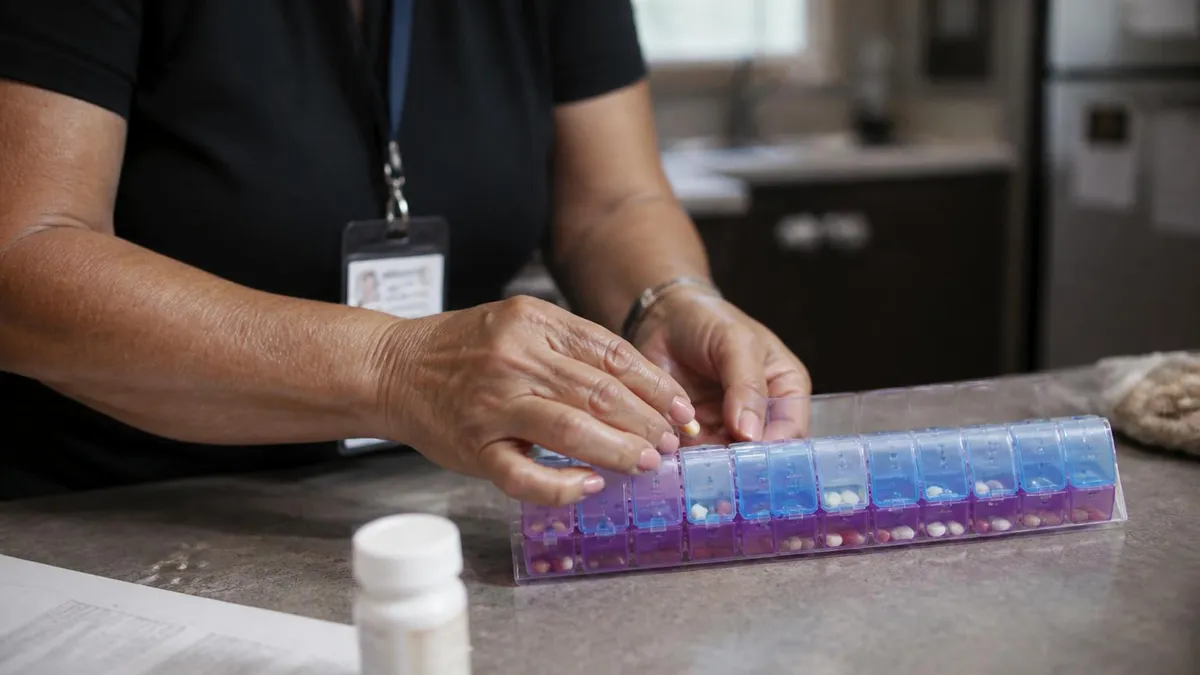
Five Pathways to Become a Certified Home Health Aide
Public two-year colleges offer 75 to 120-hour programs costing $400 to $900, often with financial aid eligibility and credit transfer toward future CNA or nursing degrees.
American Red Cross chapters and nonprofit health councils run accredited HHA programs in 4 to 6 weeks for $800 to $1,200, with strong clinical reputations and tight class sizes.
Proprietary career colleges deliver accelerated HHA certification in 3 to 4 weeks at $1,000 to $1,500, with rolling start dates and built-in job placement services.
Home care agencies hire candidates as trainees, pay for the full course, and guarantee employment afterward in exchange for a 6 to 12-month commitment to work for them.
State-approved online providers handle the 59 didactic hours digitally, then partner with local clinical sites for the required 16 hands-on hours and skills check-off.
Every accredited home health aide training program is built around the same core federal curriculum, but the depth and emphasis vary dramatically. The 59 classroom hours typically cover communication, observation and reporting, infection control, body mechanics, basic nutrition, range-of-motion exercises, and the difference between a home health aide's responsibilities and a registered nurse's clinical duties. Anyone planning to use their certification quickly should review a clear home health aide certification scope-of-practice breakdown before the first clinical day.
Personal care skills make up the largest single block of training time, usually 20 to 25 hours. You will practice bathing, oral hygiene, denture care, perineal care, hair care, shaving, and dressing — first on training mannequins, then on classmates under instructor supervision. Instructors grade not only technique but verbalization: explaining each step to the client out loud is a graded skill on the state exam, and most candidates who fail the practical portion failed because they performed silently instead of narrating.
Vital signs instruction covers temperature, pulse, respiration, blood pressure, pain assessment, and the new pulse oximetry requirement that many states added after COVID-19. You must learn to identify abnormal readings and document them accurately, because home health aides are often the first to notice the subtle decline that precedes hospitalization. Reporting a temperature of 100.4 promptly can prevent a sepsis admission.
Body mechanics and safe transfers receive 8 to 12 hours of training because back injuries are the leading cause of HHA workers' comp claims. You will learn one-person and two-person transfers, use of gait belts, mechanical lift operation, and how to position a bedbound client every two hours to prevent pressure injuries. Most programs require you to demonstrate a complete bed bath with the client remaining in bed, a skill that combines body mechanics, dignity, and infection control simultaneously.
Infection prevention has become a centerpiece of modern HHA curricula, with at least 6 dedicated hours covering hand hygiene, donning and doffing PPE, cleaning shared surfaces, handling soiled linens, and recognizing communicable disease symptoms. Standard precautions — treating every body fluid as potentially infectious — are tested heavily on the written exam and demonstrated repeatedly in lab.
The remaining classroom hours rotate through nutrition and meal preparation, basic exercise and ROM, cognitive and behavioral changes (dementia, depression, delirium), end-of-life and hospice care, emergency response (including CPR and choking), and the legal and ethical framework that governs your work. Documentation training has expanded recently because most agencies now use electronic visit verification systems that timestamp your arrival, departure, and completed tasks in real time.
Finally, the 16 supervised practical hours move you into real client homes or a clinical lab simulation with live patients. Instructors evaluate you on at least 17 federally mandated skills, including handwashing, transferring a client to a wheelchair, ambulating with a walker, measuring blood pressure, and recording urinary output. Successful completion of this clinical block is a prerequisite for sitting the state competency exam.
HHA Practice Test Questions
Prepare for the HHA - Home Health Aide exam with our free practice test modules. Each quiz covers key topics to help you pass on your first try.
HHA Basic Care and Comfort
HHA Exam Questions covering Basic Care and Comfort. Master HHA Test concepts for certification prep.
HHA Basic Care and Comfort Questions and A...
Free HHA Practice Test featuring Basic Care and Comfort Questions and Answers. Improve your HHA Exam score with mock test prep.
HHA Communication and Interpersonal Skills
HHA Mock Exam on Communication and Interpersonal Skills. HHA Study Guide questions to pass on your first try.
HHA Communication and Interpersonal Skills...
HHA Test Prep for Communication and Interpersonal Skills Questions and Answers. Practice HHA Quiz questions and boost your score.
HHA Infection Control and Safety
HHA Questions and Answers on Infection Control and Safety. Free HHA practice for exam readiness.
HHA Infection Control and Safety Questions...
HHA Mock Test covering Infection Control and Safety Questions and Answers. Online HHA Test practice with instant feedback.
HHA Mental and Emotional Support
Free HHA Quiz on Mental and Emotional Support. HHA Exam prep questions with detailed explanations.
HHA Mental and Emotional Support Questions...
HHA Practice Questions for Mental and Emotional Support Questions and Answers. Build confidence for your HHA certification exam.
HHA Mobility and Transfer Techniques
HHA Test Online for Mobility and Transfer Techniques. Free practice with instant results and feedback.
HHA Mobility and Transfer Techniques Quest...
HHA Study Material on Mobility and Transfer Techniques Questions and Answers. Prepare effectively with real exam-style questions.
HHA Nutrition and Hydration
Free HHA Test covering Nutrition and Hydration. Practice and track your HHA exam readiness.
HHA Nutrition and Hydration Questions and ...
HHA Exam Questions covering Nutrition and Hydration Questions and Answers. Master HHA Test concepts for certification prep.
HHA Observation and Reporting
Free HHA Practice Test featuring Observation and Reporting. Improve your HHA Exam score with mock test prep.
HHA Observation and Reporting Questions an...
HHA Mock Exam on Observation and Reporting Questions and Answers. HHA Study Guide questions to pass on your first try.
HHA Patient Rights and Ethics
HHA Test Prep for Patient Rights and Ethics. Practice HHA Quiz questions and boost your score.
HHA Patient Rights and Ethics Questions an...
HHA Questions and Answers on Patient Rights and Ethics Questions and Answers. Free HHA practice for exam readiness.
HHA Personal Care and Hygiene
HHA Mock Test covering Personal Care and Hygiene. Online HHA Test practice with instant feedback.
HHA Personal Care and Hygiene Questions an...
Free HHA Quiz on Personal Care and Hygiene Questions and Answers. HHA Exam prep questions with detailed explanations.
HHA Home Health Aide Certification Practic...
HHA Practice Questions for Home Health Aide Certification Practice Test. Build confidence for your HHA certification exam.
HHA Home Health Aide Certification Practic...
HHA Test Online for Home Health Aide Certification Practice Test #1. Free practice with instant results and feedback.
HHA Home Health Aide Certification Practic...
HHA Study Material on Home Health Aide Certification Practice Test #2. Prepare effectively with real exam-style questions.
HHA Home Health Aide Certification Practic...
Free HHA Test covering Home Health Aide Certification Practice Test #3. Practice and track your HHA exam readiness.
HHA Home Health Aide Certification Practic...
HHA Exam Questions covering Home Health Aide Certification Practice Test #4. Master HHA Test concepts for certification prep.
HHA HOME HEALTH AIDE COMPETENCY TEST
Free HHA Practice Test featuring HOME HEALTH AIDE COMPETENCY TEST. Improve your HHA Exam score with mock test prep.
HHA HOME HEALTH AIDE COMPETENCY TEST #1
HHA Mock Exam on HOME HEALTH AIDE COMPETENCY TEST #1. HHA Study Guide questions to pass on your first try.
HHA Home Health Aide Competency Test
HHA Test Prep for Home Health Aide Competency Test. Practice HHA Quiz questions and boost your score.
HHA Home Health Aide Competency Test #2
HHA Questions and Answers on Home Health Aide Competency Test #2. Free HHA practice for exam readiness.
Choosing Your Home Health Aide Training Format
Traditional classroom programs deliver every instructional hour face-to-face, with lab equipment available daily and instructors who can correct your technique on the spot. Students who thrive on routine, group accountability, and tactile learning consistently report higher first-attempt pass rates in this format, especially when class sizes stay below 15 and the instructor maintains a 1:5 ratio during skills lab.
The trade-off is scheduling rigidity. Most in-person programs meet four or five days per week for four to six weeks, which forces full-time workers and primary caregivers to take unpaid leave. If your local community college runs evening cohorts or Saturday-intensive tracks, in-person is almost always the strongest choice. Otherwise, hybrid or online programs offer competitive outcomes for self-disciplined learners.
Is a Home Health Aide Training Program Right for You?
- +Short timeline — most programs finish in 4 to 12 weeks versus 2 years for nursing
- +Low tuition compared to other healthcare credentials, with frequent employer sponsorship
- +Strong job market with 21 percent projected growth and immediate hiring after certification
- +Flexible scheduling including evening, weekend, and hybrid cohorts in most states
- +Direct pathway to CNA, LPN, or RN if you decide to advance your healthcare career
- +Meaningful work that lets you build long-term relationships with the clients you serve
- +Portable certification that transfers across many state lines through reciprocity agreements
- −Physical demands including lifting, bending, and long shifts on your feet
- −Emotional weight of caring for declining clients and supporting grieving families
- −Variable hours and split shifts that can complicate childcare and second-job arrangements
- −Modest entry wages compared to other healthcare roles, especially in non-metro areas
- −Limited paid sick leave at smaller agencies, though federal rules are tightening
- −Driving requirements between client homes, with mileage reimbursement that may not cover full costs
- −Exposure risk to communicable illness despite improved PPE protocols since 2020
Pros and Cons at a Glance
| Pros | Cons |
|---|---|
| Low tuition compared to other healthcare credentials, with frequent employer sponsorship | Physical demands including lifting, bending, and long shifts on your feet |
| Flexible scheduling including evening, weekend, and hybrid cohorts in most states | Emotional weight of caring for declining clients and supporting grieving families |
| Direct pathway to CNA, LPN, or RN if you decide to advance your healthcare career | Variable hours and split shifts that can complicate childcare and second-job arrangements |
| Meaningful work that lets you build long-term relationships with the clients you serve | Modest entry wages compared to other healthcare roles, especially in non-metro areas |
| Portable certification that transfers across many state lines through reciprocity agreements | Limited paid sick leave at smaller agencies, though federal rules are tightening |
Home Health Aide Training Enrollment Checklist
- ✓Confirm the program is on your state Department of Health's approved-provider list
- ✓Verify the program meets or exceeds your state's required training hours
- ✓Request a copy of the syllabus and the 17 federally mandated skills checklist
- ✓Ask for the most recent first-time exam pass rate, ideally above 80 percent
- ✓Tour the clinical lab and confirm it has hospital beds, lifts, and current PPE supplies
- ✓Compare total cost including books, scrubs, fingerprinting, and the state exam fee
- ✓Apply for employer sponsorship or WIOA workforce funding if you qualify
- ✓Schedule and pass the required two-step TB skin test or QuantiFERON blood test
- ✓Complete background check fingerprinting at least three weeks before clinicals begin
- ✓Register for the state competency exam during your final week of class
Handwashing — 20 seconds, every time, narrated out loud
Skills-test examiners can fail any candidate who skips a step on handwashing, even if every other skill is perfect. Friction time must hit 20 full seconds, you must turn the faucet off with a clean paper towel, and you must verbalize each step. Practice it 100 times before exam day.
Cost is rarely the deciding factor between training programs, but understanding the full financial picture prevents surprises. Sticker tuition typically ranges from $400 at community colleges to $1,500 at private vocational schools, but add-ons like textbooks ($60 to $120), scrubs and a stethoscope ($75), fingerprint background checks ($45 to $80), TB testing ($30 to $50), CPR certification ($85 to $120), and the state competency exam fee ($90 to $150) bring the real total closer to $700 on the low end and $1,900 on the higher end.
Funding options have expanded significantly since 2022. WIOA (Workforce Innovation and Opportunity Act) grants administered through state American Job Centers cover full tuition plus support costs for qualifying unemployed and underemployed adults. Pell Grants apply at community colleges if the HHA program is part of a credit-bearing certificate. State Medicaid agencies in 31 states now reimburse approved training providers directly for any candidate who commits to work in long-term care for 12 months after certification.
Agency-sponsored training remains the most popular zero-cost route. Major home care chains and many regional agencies hire candidates as trainees, pay for the full 75-hour course at a partner school, and place graduates on payroll the day they pass the state exam. The catch is a service commitment — typically 6 to 12 months at the sponsoring agency — and a clawback provision if you quit early. Always read the contract; clawback amounts have ranged from $400 to $1,800.
Starting salaries reflect both geography and shift type. The May 2024 BLS data shows a national median of $33,530 per year for home health and personal care aides, with the top 10 percent earning above $42,000. Hourly rates run $14 in rural southern markets, $17 to $19 in most mid-sized metros, and $22 to $28 in high-cost coastal cities. Overnight, weekend, and live-in shifts pay differentials of $1 to $4 per hour.
Specialty practice pays even better. Hospice agencies typically add 10 to 15 percent. Pediatric home care and ventilator-dependent client care add 15 to 25 percent because of the extra training required. Travel HHA contracts through staffing agencies pay $24 to $32 per hour plus tax-free per-diem stipends for housing and meals when working away from your tax home, comparable to travel CNA contracts in many regions.
Benefits matter at least as much as base wage. Look closely at health insurance contributions, paid time off accrual, 401(k) match, mileage reimbursement rates (the 2026 IRS rate is 70 cents per mile, but many agencies pay only 58 to 65 cents), tuition reimbursement for CNA or LPN bridge programs, and shift differential structure. The difference between two agencies offering identical hourly wages can easily exceed $4,000 per year in total compensation once benefits are factored in.
Long-term earning potential climbs steadily for HHAs who continue their education. Bridging to CNA usually requires only 40 to 80 additional hours of training and pushes hourly wages up $2 to $4. The LPN route takes 12 to 18 months but more than doubles earning potential. Many large agencies offer tuition reimbursement of $2,500 to $5,000 per year specifically to retain their best aides on a clear career ladder.
Every U.S. state maintains an online list of approved nurse aide and home health aide training programs. Programs not on that list cannot place you on the Nurse Aide Registry, no matter how legitimate they look. Always cross-check your chosen school against the state Department of Health's published list before submitting any payment.
The state competency exam is the final gate between your training program and your first paid shift. Most states use the Prometric, Headmaster, or Pearson VUE testing platform, and the exam consists of two parts taken on the same day: a 60 to 70 question written knowledge test and a five-skill hands-on practical demonstration. You must pass both portions; failing either one requires a retake of that specific portion within 30 days. Resources like a structured hha exchange login video walkthrough can substantially shorten study time by showing exactly how examiners grade each skill.
The written portion is multiple choice and covers infection control, communication, basic nursing skills, mental health and social services, restorative care, resident rights, and personal care. Passing scores typically fall between 75 and 80 percent depending on the state. Most candidates who fail the written portion lose points on documentation rules, abuse reporting timelines, and the precise difference between confidential and protected information under HIPAA.
The skills portion randomly assigns each candidate five skills drawn from the 17 federally mandated list. Handwashing is mandatory for every candidate. The other four are pulled by computer to ensure no two candidates take the same combination. You are graded on critical steps that must be performed perfectly — usually 4 to 8 critical steps per skill — and on non-critical steps where you can lose one or two points and still pass.
The most commonly tested non-handwashing skills are measuring and recording blood pressure, transferring a client from bed to wheelchair, performing partial bed bath, assisting with ambulation using a gait belt, and providing perineal care for a female client. Each skill takes 5 to 10 minutes to demonstrate, so the entire skills portion typically wraps in 35 to 45 minutes including setup and evaluator paperwork.
After passing both portions, the testing vendor reports your results to your state Nurse Aide Registry within 7 to 14 business days. Once you appear on the registry, Medicare-certified home health agencies can hire you immediately. Most graduates start working within 2 to 4 weeks of passing the exam, though candidates in high-demand markets often have job offers in hand before the exam date.
Recertification rules vary by state but generally require proof of paid HHA work within the previous 24 months. If you go more than two years without working a single paid HHA shift, your registration lapses and you must repeat both the training program and the exam. Twelve continuing-education hours per year are required by federal regulation for any aide working at a Medicare-certified agency, and most agencies provide these in-house at no cost.
Career advancement opportunities open quickly. Many HHAs move into CNA roles within their first year, then ladder up to LPN, RN, or specialty paths like medical assistant, occupational therapy assistant, or care coordinator. Agencies increasingly fund this advancement through tuition reimbursement because retaining experienced aides is far cheaper than recruiting and training new ones in a tight labor market.
Final preparation for your home health aide career deserves the same intentionality you brought to enrolling. In the two weeks before your state exam, build a daily routine that pairs 45 minutes of written-test review with 30 minutes of hands-on skill rehearsal. Use real towels, a real basin, and a real stopwatch when practicing handwashing and bed baths — examiners can tell within 10 seconds whether you have rehearsed with props or only watched videos. Finding immediate work is much easier when you use targeted searches on a job board specifically dedicated to hha login portals and openings.
Build a portfolio packet now that you can hand to any prospective employer the moment you pass. Include your certification card or registry printout, current TB clearance, CPR card, two professional references from clinical instructors, a brief one-page resume highlighting any caregiving experience (paid or unpaid), and copies of your driver's license and auto insurance. Agencies that can verify everything in one meeting can place you on the schedule the same week.
Choose your first agency carefully. Interview three or four before signing. Ask each one about average shift length, how clients are matched to aides, what training and shadowing they provide for the first two weeks, mileage reimbursement rate, weekend and overnight differential, how they handle missed visits, and what their electronic visit verification platform is like. The answers will reveal more about workplace culture than any glossy recruitment brochure.
Take your first 90 days seriously. New HHAs who treat the early months as continuing education — taking detailed shift notes, asking the supervising RN questions during chart reviews, and learning the quirks of each client's care plan — become the aides who get the best assignments and the highest raises. The aides who treat every visit as a transactional clock-in tend to plateau and burn out within 18 months.
Protect your body from day one. Use the lift every single time it is indicated, even when the client says they can manage. Keep a stretching routine, invest in supportive shoes that you replace every six months, and report any twinge in your lower back immediately rather than waiting for a serious injury. The aides who stay in the field for decades are the ones who treat their bodies like their most important piece of professional equipment.
Set a learning goal for year two. Whether that is bridging to CNA, taking on hospice clients, becoming a pediatric HHA, or moving into a care coordinator role, identify the next step within your first six months and ask your supervisor what it takes to get there. Most agencies will fund relevant training because they desperately want to retain experienced aides who already understand their workflow and clients.
Finally, remember why you entered this field. The work is hard, the pay is modest in many markets, and the days will sometimes leave you exhausted. But you will also see a man take his first steps after a stroke because you showed up consistently for his exercises.
You will help a grandmother stay in her home of 50 years instead of moving to a facility. You will sit with someone in their last hours so they do not die alone. Few jobs offer that kind of impact, and the home health aide profession remains one of the most consequential careers a person can choose.
Readers who want more detail usually continue with home health aid training.
Readers who want more detail usually continue with home health aid training.
If you want the full picture, the home health aid training guide walks through it step by step.
Sample HHA Practice Questions
Try these questions from our free HHA practice tests. The correct answer and an explanation follow each question.
Sometimes a client may share religious beliefs and opinions which the home health aide does not agree with. What is the correct approach in dealing with such a situation?
- A. Clients should be told not to discuss their religious beliefs with health aides
- B. Aides should patiently explain their beliefs to the client.
- C. Clients have a right to their own religious belief, and these rights should be respected.
- D. Aides should pretend to agree with the beliefs the client has.
Answer: C. Clients have a right to their own religious belief, and these rights should be respected.
Clients have a fundamental right to their own religious beliefs, and healthcare providers, including home health aides, must respect these rights. It is crucial to maintain professionalism and avoid imposing personal views or engaging in debates about religious matters. The aide's role is to provide care, not to judge or convert, ensuring a respectful and trusting client-provider relationship.
How should a home health aide handle a situation where a patient refuses care?
- A. By ignoring the refusal and continuing the care.
- B. By respecting the refusal, explaining the consequences, and documenting the refusal
- C. By forcing the patient to accept care.
- D. By reporting the refusal to family members.
Answer: B. By respecting the refusal, explaining the consequences, and documenting the refusal
Patients have the right to refuse care, even if it is deemed beneficial. A home health aide must respect this decision, as it upholds the patient's autonomy. It is important to clearly explain the potential consequences of their refusal to ensure it is an informed choice, and then meticulously document the refusal and the discussion for legal protection and continuity of care within the healthcare team.
How should a home health aide protect themselves from airborne infections?
- A. By avoiding patient contact.
- B. By wearing a mask or respirator
- C. By using gloves only.
- D. By working in a separate room.
Answer: B. By wearing a mask or respirator
A home health aide should wear a mask or respirator when caring for a patient with a known airborne infection, along with other necessary precautions.
A client is receiving oxygen through a nasal tube. What safety precautions should the home health aide take?
- A. Keep the television set at least 5 feet from the oxygen tank
- B. Do not permit the client to drink soda.
- C. Allow no smoking in the client’s room
- D. Do not use any lotions that contain oil in the client’s care.
Answer: C. Allow no smoking in the client’s room
Oxygen is highly flammable and can intensify fires. Therefore, any open flames or sources of ignition, such as smoking, must be strictly prohibited in an environment where oxygen is being used. This is a critical safety precaution to prevent severe burns, explosions, or fires, ensuring the safety of both the client and the aide.
HHA Questions and Answers
Hiring a Home Health Aide for Family: Complete 2026 Guide to Vetting, Costs, and Care Coordination
HHA Practice Test Video Answers

HHA Jobs Near Me — How to Find, Train, and Start Your Career

Can a Home Health Aide Administer Medication? Scope of Practice Explained
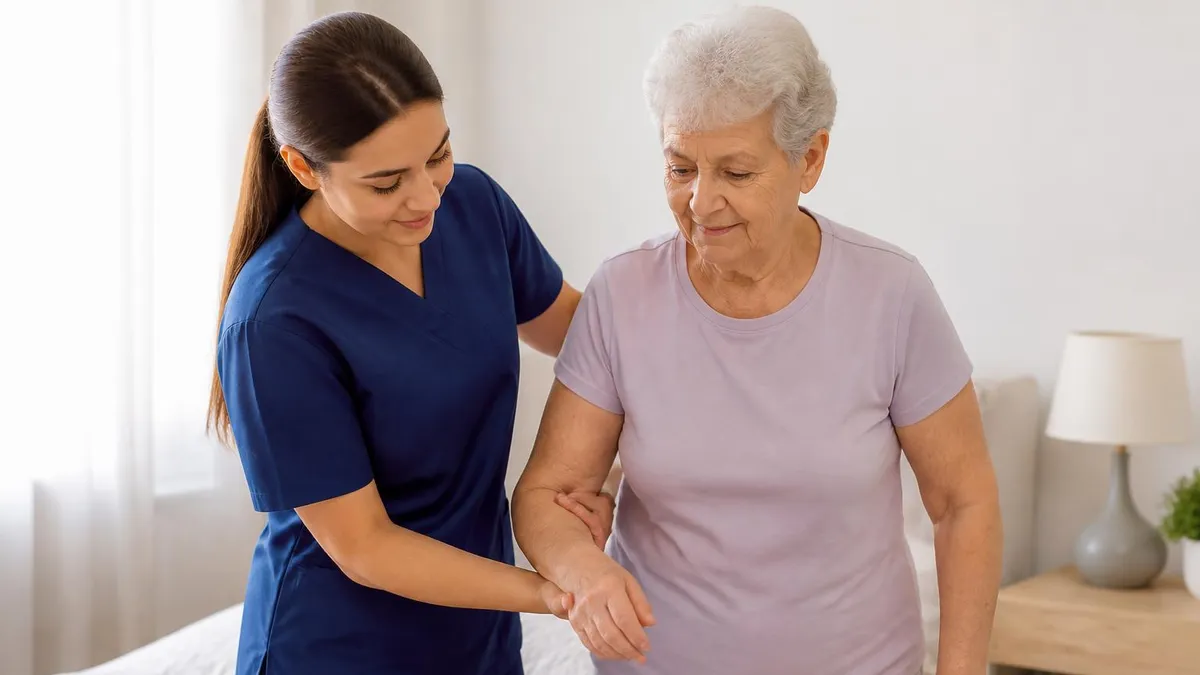
Home Health Aide Training Online: Complete 2026 Guide to Certification, Cost, and Career Launch
How this page was made: written with AI tools and published by Nathan Beja, founder of Practice Test Geeks, who is responsible for its content. Exam facts are checked against the official sources listed below. Not reviewed by a subject-matter expert. Editorial policy
Sources & references
Exam facts on this page (fees, format, dates, passing scores) are checked against these official sources; the date is our last check. Editorial policy
- health.ny.gov — Eligibility, fees · verified Oct 2026
- njconsumeraffairs.gov — Late registration, renewal, fees · verified Oct 2026
- ecfr.gov — Test delivery, eligibility, exam format, passing score, renewal, retake policy, score validity · verified Oct 2026