
HHA Exchange & Home Health Aide Liability Insurance: What Every Aide Needs to Know
💡 Learn about home health aide liability insurance, HHA Exchange login, certification, and how to protect your career as a certified home health care aide.

Home health aide liability insurance is one of the most overlooked yet critically important protections for anyone working in the HHA field. Whether you are just beginning a home health aide training program or you have years of experience caring for clients in their homes, professional liability coverage can mean the difference between a manageable incident and a career-ending financial crisis.
The HHA Exchange platform, which connects aides, agencies, and training providers, has made it easier than ever to track certifications, manage compliance documents, and access resources — but even the most organized aide can face unexpected legal claims without proper insurance.
Most people entering the home health aide field focus on earning their HHA certification, completing their clinical hours, and passing their competency evaluations. These are all essential steps, but the conversation about liability protection rarely happens in training classrooms or during onboarding sessions.
A certified home health care aide who works independently or even through an agency can be personally named in a lawsuit if a client is injured, if medications are mishandled, or if a family member believes negligent care contributed to a health decline. Understanding what liability insurance covers — and what it does not — is a foundational part of being a professional in this field.
The home health aide profession has grown dramatically in recent years. The Bureau of Labor Statistics projects faster-than-average job growth through 2032, driven by an aging population and the strong preference among seniors to receive care at home rather than in institutional settings. This growth means more aides are entering the workforce every year, many of them unaware of the professional risks they carry. HHA Exchange has become a widely used platform across the industry, with thousands of aides using it to manage their credentials and stay current on training requirements, but the platform itself does not provide liability coverage.
There are two main types of liability insurance relevant to home health aides: professional liability insurance, also called errors and omissions coverage, and general liability insurance. Professional liability insurance covers claims arising from the actual delivery of care — a client falls while you are assisting them, a medication error occurs during a supervised administration, or a family member claims your actions contributed to their loved one's hospitalization. General liability insurance covers broader incidents like property damage. Both types are worth understanding, and depending on your employment arrangement, you may need one or both.
Aides who work as employees of a licensed home health agency are typically covered by the agency's own liability policy while they are performing assigned duties. However, this coverage has limits. If you accept private clients outside your agency arrangement, if you work as an independent contractor rather than an employee, or if you operate your own small caregiving business, you are almost certainly not covered by anyone else's policy.
Even agency employees sometimes discover that certain activities — driving a client to a doctor's appointment in your own vehicle, for example — fall outside the scope of the agency's coverage.
HHA certification and home health aide training programs teach aides to provide safe, competent care, and completing a rigorous home health aide training program is the best defense against making errors in the first place. But even highly trained, careful aides can face claims. A confused client may sincerely believe something happened that did not.
A family member grieving a difficult outcome may look for someone to blame. In today's litigious environment, having insurance is not an admission that you might do something wrong — it is a professional acknowledgment that unexpected events happen, and you are prepared to handle them responsibly.
This guide covers everything home health aides need to know about liability insurance: what it covers, how much it typically costs, how to obtain it through platforms like HHA Exchange, what to look for in a policy, and how to evaluate whether your current employer's coverage is sufficient. We also cover key differences between independent contractors and employees, the role of HHA certification in demonstrating competency, and practical steps you can take today to protect your career and your financial future.
Home Health Aide Liability Insurance by the Numbers

Types of Liability Insurance Every HHA Should Know
Covers claims arising from errors or omissions in care delivery. If a client is injured during assistance with daily activities or a care procedure goes wrong, this policy pays legal defense costs and any settlement, up to policy limits.
Covers non-professional incidents like accidental property damage in a client's home or a slip-and-fall involving a third party. Many independent aides bundle general and professional liability for broader protection at a lower combined premium.
Provided by agencies to cover employed aides during assigned duties. Important to understand: coverage typically stops at the agency's client list and scheduled hours. Off-the-books or after-hours care is usually excluded from employer policies.
Personal auto insurance rarely covers transporting clients for pay. A commercial rider or hired-auto endorsement is needed when driving clients to appointments. This is one of the most common coverage gaps among home health aides.
Provides additional coverage beyond primary policy limits. If a claim exceeds your base professional liability limit, an umbrella policy prevents out-of-pocket exposure. Recommended for aides managing high-acuity clients or working with multiple families.
The HHA Exchange platform is central to how many aides manage their professional credentials, continuing education records, and compliance documentation. HHA Exchange login gives aides access to their training transcripts, competency evaluations, and employer-assigned modules — all in one place. For agencies, the platform simplifies verifying that every aide on their roster has completed required training and holds a valid home health aide certificate. But the platform's role is administrative, not protective. Using HHA Exchange does not create any form of insurance coverage, and maintaining a complete profile on the system does not substitute for an actual liability policy.
That said, being well-organized on HHA Exchange has indirect value for insurance purposes. If a claim is ever filed against you, having clear, timestamped records of your training completions, competency sign-offs, and continuing education hours strengthens your defense. It demonstrates that you are a diligent, credentialed professional who follows best practices. Insurance underwriters also tend to offer lower premiums to aides who can show documentation of formal training and current certification, so keeping your HHA Exchange records up to date can actually reduce your insurance costs.
Obtaining HHA certification is the first formal step toward professional recognition in this field. The certification process typically involves completing a state-approved home health aide training program, passing a written competency examination, and demonstrating hands-on skills to an evaluator. Many states align their requirements with federal Medicare and Medicaid standards, which require a minimum of 75 hours of training including at least 16 hours of supervised practical training. Some states require significantly more. Once certified, aides must complete ongoing continuing education to maintain their certification — requirements vary by state but typically range from 12 to 24 hours annually.
The home health aide certificate you earn through this process signals to employers, clients, and insurers that you have met baseline competency standards. Insurance companies that offer professional liability policies for home health aides will almost always ask about your certification status during the application process. Certified aides typically receive more favorable rates because their training demonstrates a commitment to safe, standardized care practices. Aides who lack certification or who have let their certification lapse may still be able to obtain coverage, but often at higher premiums.
HHA login access on platforms like HHA Exchange gives aides visibility into their compliance status in real time. This is particularly valuable for aides who work across multiple agencies or who are transitioning between employers. A gap in compliance documentation — an expired CPR card, a missing annual competency module — can create a brief period where an agency's coverage may not apply to you. Monitoring your own records through platforms like HHA Exchange ensures you catch these gaps before they become problems, either with your employer or with a potential insurance claim.
For aides interested in expanding their career, the hha exchange serves as more than a compliance tool. Many agencies post job openings, continuing education opportunities, and training resources through the platform. Some state workforce agencies have integrated their requirements directly into the HHA Exchange system, making it a one-stop destination for tracking everything from initial certification to ongoing professional development. Staying active on the platform signals to current and prospective employers that you take your credentials seriously — a professional characteristic that carries real value in a competitive job market.
Independent aides who are not affiliated with an agency are entirely responsible for their own coverage. This group includes aides who find clients through word of mouth, online caregiving platforms, or local community networks. These aides often underestimate their exposure because they are not running a formal business, but from a legal perspective, providing paid care services — even informally — creates real liability.
A client family can file a civil claim regardless of whether you have a business license or a written contract. Without insurance, you would be personally responsible for every dollar of legal defense costs and any judgment against you.
HHA Certification & Insurance: What Changes at Each Career Stage
Newly certified home health aides often enter the workforce through agency employment, which provides a layer of coverage under the agency's professional liability policy. However, new aides should still understand the scope of that coverage before their first day. Ask your employer for a copy of their certificate of insurance, confirm that your specific job title is listed as a covered position, and find out whether coverage applies only during scheduled shifts or extends to any care-related activities you perform on behalf of clients.
Even agency-covered new aides benefit from carrying their own individual policy. Individual coverage costs as little as $15 to $25 per month for entry-level aides and provides protection during scenarios the agency policy may exclude — like responding to a client emergency outside your scheduled hours or accepting a private shift referred by a coworker. Starting your career with your own coverage in place also builds the habit of professional self-protection that will serve you throughout a long caregiving career.

Agency Coverage vs. Individual Liability Insurance: Key Tradeoffs
- +Individual policy travels with you regardless of employer or client source
- +You control coverage limits and can choose higher protection for complex cases
- +Covers private clients and off-hours care situations agencies exclude
- +Demonstrates professionalism to clients, families, and prospective employers
- +Policy continuity prevents gaps during employment transitions
- +Some individual policies include free legal consultation as a benefit
- −Out-of-pocket premium cost of $300–$600 per year for individual policy
- −Application requires documentation of certification and training history
- −Policies may exclude higher-acuity tasks without endorsements or riders
- −Coverage limits for individual policies may be lower than large agency policies
- −Coordinating between agency and individual coverage can be confusing at claims time
- −Some individual policies have waiting periods before coverage becomes effective
Pros and Cons at a Glance
| Pros | Cons |
|---|---|
| Individual policy travels with you regardless of employer or client source | Application requires documentation of certification and training history |
| You control coverage limits and can choose higher protection for complex cases | Policies may exclude higher-acuity tasks without endorsements or riders |
| Covers private clients and off-hours care situations agencies exclude | Coverage limits for individual policies may be lower than large agency policies |
| Demonstrates professionalism to clients, families, and prospective employers | Coordinating between agency and individual coverage can be confusing at claims time |
| Policy continuity prevents gaps during employment transitions | Some individual policies have waiting periods before coverage becomes effective |
HHA Liability Insurance Checklist: 10 Steps to Full Protection
- ✓Confirm whether your current employer's policy covers you as a named insured or only covers the agency itself.
- ✓Request a copy of your agency's certificate of insurance and check the effective dates and coverage limits.
- ✓Identify any care activities you perform that may fall outside your agency's policy scope.
- ✓Determine whether your HHA certification is current and matches the scope of services you provide.
- ✓Compare at least three individual liability insurance quotes from HHA-specific insurers like HPSO or NSO.
- ✓Choose a professional liability policy with at least $1 million per occurrence and $3 million aggregate limits.
- ✓Add a commercial auto endorsement if you ever transport clients in your personal vehicle.
- ✓Keep your HHA Exchange training records current so insurers can verify your compliance history.
- ✓Review and renew your policy annually, especially after taking on new clients or service types.
- ✓Store your policy documents, certificate of insurance, and insurer contact information in an accessible location.
Your Agency's Insurance Does NOT Follow You Home
Agency liability policies cover aides only during scheduled, authorized, agency-assigned duties. If you assist a neighbor, accept a private client referral, or respond to an off-hours emergency for an existing client, you are likely unprotected. Individual professional liability insurance is the only coverage that goes wherever you go as a caregiver — and it costs less than $50 per month for most aides.
The most common liability scenarios home health aides face fall into a handful of predictable categories, and understanding them helps you evaluate whether your coverage is truly adequate. Falls are by far the most frequent source of claims. An aide who is assisting a client with transfer from bed to wheelchair, helping them bathe, or simply walking alongside them can be named in a claim if the client falls and sustains an injury.
Even if you followed every protocol correctly, a family grieving a loved one's hip fracture may pursue legal action, and defending against a claim — even a frivolous one — requires legal representation that can cost thousands of dollars before the case is ever resolved.
Medication-related claims are the second major category. Home health aides generally are not licensed to administer medications in most states, but they are frequently asked to remind clients to take their medications, assist with organizing pill organizers, or observe that a client has taken their dose.
If a client experiences an adverse event related to medication and you were present, you could be drawn into an investigation or lawsuit even if your actions were entirely appropriate. Documentation of exactly what you did and did not do is critical, and professional liability insurance ensures you have legal support to present that documentation effectively.
Allegations of abuse or neglect represent a third, deeply serious category of liability. These claims can arise from misunderstandings, from clients with dementia who may not accurately remember events, or from family members who are looking for explanations when a loved one's condition declines. Even when allegations are entirely unfounded, they can result in investigations by adult protective services, licensing board inquiries, and civil claims. Professional liability insurance typically covers defense costs in these situations, which can otherwise be financially devastating for an individual aide with no institutional backing.
Property damage is another underappreciated liability. Home health aides work in clients' personal living spaces, surrounded by furniture, electronics, medications, valuables, and sentimental objects. An accidentally broken heirloom, a spilled medication that stains expensive flooring, or a minor electrical issue while helping a client with a device can all generate claims. General liability coverage addresses these scenarios and is often bundled with professional liability in policies designed specifically for home care workers, making comprehensive coverage affordable without the need for multiple separate policies.
Privacy and confidentiality violations are an emerging category of liability concern. HIPAA applies to aides who work for agencies covered under the law, and improper disclosure of client health information — even an offhand comment to a neighbor or a photo shared on social media — can trigger regulatory complaints and civil claims. Some professional liability policies now include coverage for privacy-related claims and the costs of regulatory response. As social media use in the caregiving context increases, this coverage is becoming increasingly important for aides at every experience level.
Documentation errors can also create liability exposure. An aide who fails to accurately record a client's vital signs, forgets to note a client's refusal to take medication, or does not document a fall that occurred during a shift creates a record gap that can be used against them if a claim is later filed.
Proper documentation practices are taught in every home health aide training program, but the connection between documentation quality and legal protection is not always emphasized. Professional liability insurance does not excuse poor documentation, but it does provide support when a documentation dispute becomes part of a legal proceeding.
Understanding these common risk scenarios makes it easier to have informed conversations with insurance agents about what coverage you actually need. A basic professional liability policy covers most of the scenarios above, but aides who provide care for clients with complex medical needs — post-surgical recovery, dementia, or multiple chronic conditions — should consider higher coverage limits and may want to inquire about policies that include risk management resources such as access to a legal hotline or free practice consultations with a healthcare attorney.
The home health aide salary in many states makes investing in comprehensive coverage very achievable, and the peace of mind it provides is well worth the cost.
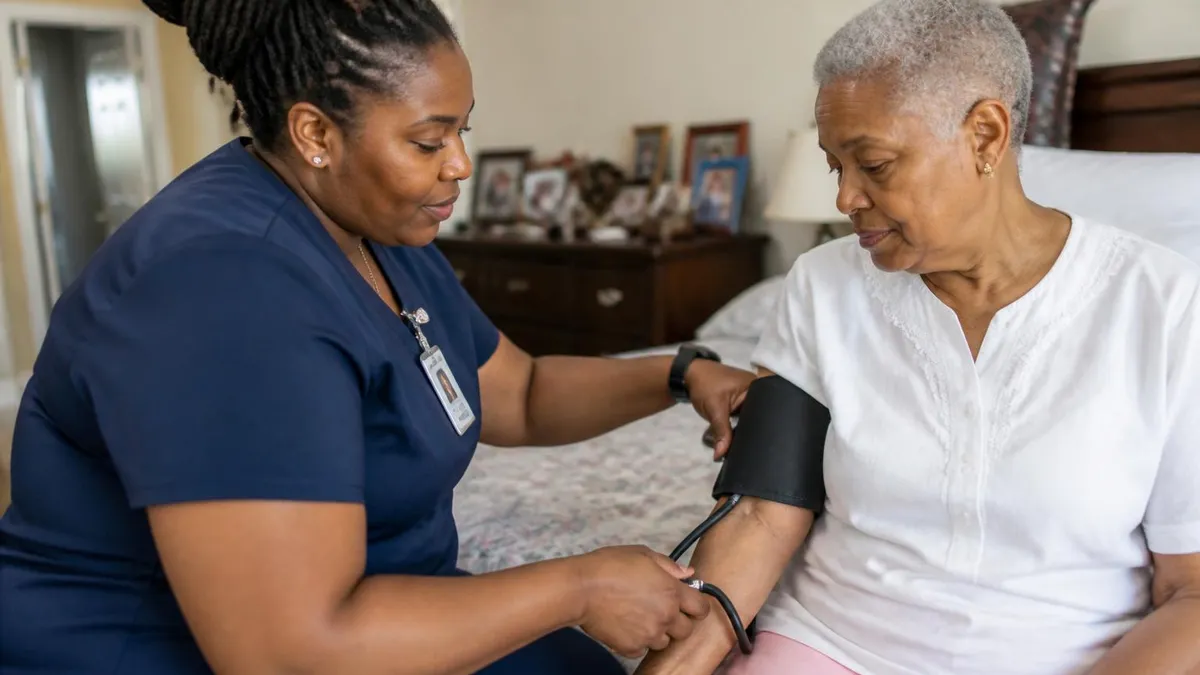
Many home health aides who find clients through online caregiving platforms believe those platforms provide liability coverage. In most cases, platform terms of service explicitly state that the platform is not liable for any actions taken by care providers. Always read the platform's terms carefully and assume you need your own individual policy unless coverage is explicitly confirmed in writing by the platform's insurance documentation.
Building a long, sustainable career as a home health aide requires more than clinical skill and a compassionate approach — it requires deliberate professional infrastructure, and liability insurance is a core part of that foundation. The home health aide job description involves an extraordinary level of trust: clients invite aides into their homes, share their most vulnerable moments, and depend on them for daily functions that most of us take for granted. That trust deserves to be protected from every direction, including the legal and financial risks that come with professional caregiving.
One of the most practical steps you can take toward long-term career stability is to understand the insurance landscape before you ever need to use it. This means reading your employer's policy before you start working, not after an incident occurs.
It means asking specific questions during onboarding — not just whether coverage exists, but what the per-occurrence limit is, whether there is an aggregate cap that could affect you if multiple claims are filed in the same year, and how the claims process works if you need to use it. Agencies that cannot or will not answer these questions clearly are a signal that their coverage may be inadequate.
Home health aide training programs increasingly incorporate discussions of professional liability and risk management into their curricula, recognizing that today's students will face real-world legal exposure from their very first day on the job. If your home health aide training program did not cover this topic, seek out continuing education resources that do.
Many state home care associations, professional nursing organizations, and insurance companies that specialize in home care offer free or low-cost webinars on liability topics. The time you invest in this education today can prevent a situation where you are learning about insurance for the first time in the middle of a crisis.
Networking with other home health aides is another underutilized strategy for career protection. Experienced aides who have been in the field for a decade or more often have first-hand knowledge of how claims are handled, which insurance products work well for aides in your state, and which agencies have particularly strong or weak coverage programs.
Local chapters of home care advocacy organizations, online communities of home care workers, and continuing education events are all places where these conversations happen. The information you gather from peers who have actually navigated the insurance landscape is invaluable in ways that no general guide can fully replicate.
As you advance in your career, consider whether additional certifications might affect your coverage needs and your premium rates. Aides who earn specialized certifications in dementia care, hospice support, or pediatric home health take on higher-acuity cases that carry different risk profiles than standard personal care work.
Your insurance policy should reflect the full scope of what you actually do, not just your baseline certification level. When you earn a new credential or begin working with a new client population, contact your insurer and update your policy accordingly — an outdated policy that doesn't reflect your current practice may fail to cover a claim that falls under your new specialty.
The financial investment in professional liability insurance should be viewed in the context of the alternatives. A single lawsuit, even one that is ultimately decided in your favor, can cost $15,000 to $50,000 in legal fees. A case that goes to settlement might cost many times that.
For an aide earning a median annual salary in the $30,000 to $40,000 range, those costs represent a financial catastrophe that could take years or decades to recover from. An annual premium of $300 to $600 is not just affordable — it is one of the highest-return financial decisions a professional caregiver can make.
Finally, remember that liability insurance is not just about protecting yourself — it is about the quality of care you can provide to your clients. An aide who is worried about potential legal exposure may hesitate to perform necessary procedures, may avoid documenting difficult events accurately, or may distance themselves emotionally from clients in an effort to reduce perceived liability.
When you know you are properly covered, you can focus entirely on what brought you to this profession: providing skilled, compassionate care to people who need it. That clarity of purpose is the ultimate benefit of professional liability insurance, and it is available to every home health aide who takes the time to secure proper coverage.
Practical action steps make the difference between understanding liability insurance conceptually and actually being protected. The first step is to conduct an honest inventory of your current work situation. Write down every client you serve, whether they are agency-assigned or private, the types of care you provide, and whether you transport any clients in your vehicle.
This inventory will reveal your actual exposure, which is almost always broader than most aides initially realize. Once you have a clear picture of your work, you can match coverage options to your actual needs rather than purchasing a generic policy that may leave critical gaps.
Shopping for individual professional liability insurance is simpler than it sounds. Several insurers specialize in allied health and home care workers and offer online applications that take less than 20 minutes to complete. HPSO (Healthcare Providers Service Organization) is among the most widely used for allied health workers, including home health aides.
NSO (Nurses Service Organization), despite the name, also covers many home care worker categories. The Philadelphia Insurance Companies and CNA Financial both offer home care-specific professional liability products. Comparing two or three quotes across these providers will give you a solid sense of the market rate for your coverage profile.
When reviewing quotes, pay attention to four key policy terms beyond the premium amount. First, the per-occurrence limit — the maximum the insurer will pay for any single claim. One million dollars is a standard starting point. Second, the aggregate limit — the total the policy will pay across all claims in a policy year. Three million dollars is a common aggregate for individual policies.
Third, the claims-made versus occurrence policy distinction — occurrence policies cover incidents that happen during the policy period even if the claim is filed later, while claims-made policies require the claim to be filed while the policy is still active. Occurrence-basis policies offer stronger protection and are worth the slightly higher premium. Fourth, look for exclusions carefully — some policies exclude medication-related claims, transportation, or care of specific populations.
Once you have purchased a policy, keep your certificate of insurance accessible. Store a digital copy on your phone and a physical copy with your other professional documents. When you start with a new agency or take on a new private client, it is entirely appropriate — and increasingly expected — to share your certificate of insurance as part of your professional introduction.
Agencies that see you carry your own coverage will view you as a more reliable and professional partner, and private clients and their families may feel greater confidence in your services knowing you have formal professional protection in place.
Continuing education in risk management should be part of your annual professional development plan. Many state nursing aide registries and home care associations offer free webinars specifically on liability topics for aides. Some professional liability insurers provide free risk management resources — including documentation templates, incident reporting guidance, and legal Q&A sessions — as part of your policy benefits. Taking advantage of these resources makes you a more informed, more protected professional and often earns you continuing education credits that count toward your HHA certification renewal requirements.
For aides who are considering starting their own caregiving business — even informally, as a sole proprietor serving a small roster of private clients — the insurance picture becomes more complex and more important simultaneously.
Operating as a business owner rather than an employee triggers additional insurance considerations including workers' compensation if you ever hire anyone to help you, commercial auto if your business involves any driving, and possibly a business owner's policy that bundles general liability, property, and some professional coverages. Consulting with an insurance agent who specializes in home care businesses before you formalize your independent practice can prevent costly coverage gaps from the outset.
The home health aide profession rewards those who take it seriously at every level, from the quality of care they provide to the professional infrastructure they build around their practice. Earning and maintaining your HHA certification, keeping your records current on platforms like HHA Exchange, and securing appropriate liability insurance are three pillars of a sustainable, respected career in home health care.
Aides who invest in all three do not just protect themselves — they set a standard of professionalism that elevates the entire field and builds the kind of trust with clients and families that is the true foundation of excellent home care.
Sample HHA Practice Questions
Try these questions from our free HHA practice tests. The correct answer and an explanation follow each question.
Mr. Stone is 76 years old, he needs help with bathing, and he has a Foley catheter in place. He has great difficulty walking and uses a wheelchair. He is on a law-salt diet. The home health aide is to give Mr. Stone a bed bath. To be sure the water is not too hot what should you, the aide, do?
- A. Ask Mr. Stone to place his hand in the basin to test the water temperature.
- B. Use half hot water and half cold water to ensure the proper water temperature
- C. Test the water temperature on your inner wrist.
- D. Allow the basin of water to stand for onehalf hour so that it reaches room temperature.
Answer: C. Test the water temperature on your inner wrist.
Testing water temperature on your inner wrist is a standard and safe practice to ensure it's not too hot for a client, especially an elderly individual who may have sensitive skin or reduced sensation. This prevents accidental burns and ensures comfort during bathing. Relying on the client's assessment or simply mixing hot and cold water without testing is unsafe.
How should a home health aide assist with toileting needs?
- A. By leaving the patient to manage toileting on their own.
- B. By ensuring the patient’s privacy and assisting as needed
- C. By ignoring the patient’s needs until it becomes urgent.
- D. By rushing the patient through the process.
Answer: B. By ensuring the patient’s privacy and assisting as needed
A home health aide should always prioritize the patient's privacy and dignity when assisting with toileting needs. This involves closing doors or curtains and only providing the necessary level of assistance, respecting their independence as much as possible. This approach builds trust and ensures the patient feels respected, making a potentially vulnerable situation more comfortable.
Miss Ferris, a home health aide, is assigned to care for Mr. Conway. Miss Ferris notices that she feels very angry when she is with Mr. Conway. What should Miss Ferris do because she feels this way?
- A. Tell Mr. Conway how she is feeling.
- B. Find out if other aides have felt this way.
- C. Try to pretend that Mr. Conway is someone she likes.
- D. Talk with the agency supervisor about the situation.
Answer: D. Talk with the agency supervisor about the situation.
Experiencing strong negative emotions towards a client can compromise the quality of care and create an uncomfortable environment. It is unprofessional and potentially harmful to express these feelings to the client or ignore them. The appropriate action is to communicate these feelings to the agency supervisor, who can offer guidance, mediate, adjust the care plan, or reassign the aide if necessary, ensuring both the aide's well-being and the client's right to respectful care.
HHA Questions and Answers

HHA Job Requirements 2026 — What You Need to Become a Home Health Aide

HHA Classes Near Me 2026 — How to Find and Enroll in Training

Medicare Coverage for Home Health Aide Services — What's Covered and What Isn't
How to Become a Home Health Aide — Training, Certification & Requirements

What Does an HHA Do — Complete Guide (2026)
About the Author

Registered Nurse & Healthcare Educator
Johns Hopkins University School of NursingDr. Sarah Mitchell is a board-certified registered nurse with over 15 years of clinical and academic experience. She completed her PhD in Nursing Science at Johns Hopkins University and has taught NCLEX preparation and clinical skills courses for nursing students across the United States. Her research focuses on evidence-based exam preparation strategies for healthcare certification candidates.
Join the Discussion
Connect with other students preparing for this exam. Share tips, ask questions, and get advice from people who have been there.
View discussion (8 replies)