
HHA Supervisory Visit: What Every Home Health Aide Needs to Know 2026 October
Learn what an HHA supervisory visit involves, who conducts it, and how to prepare. Includes HHA exchange, certification, and training tips. ✅
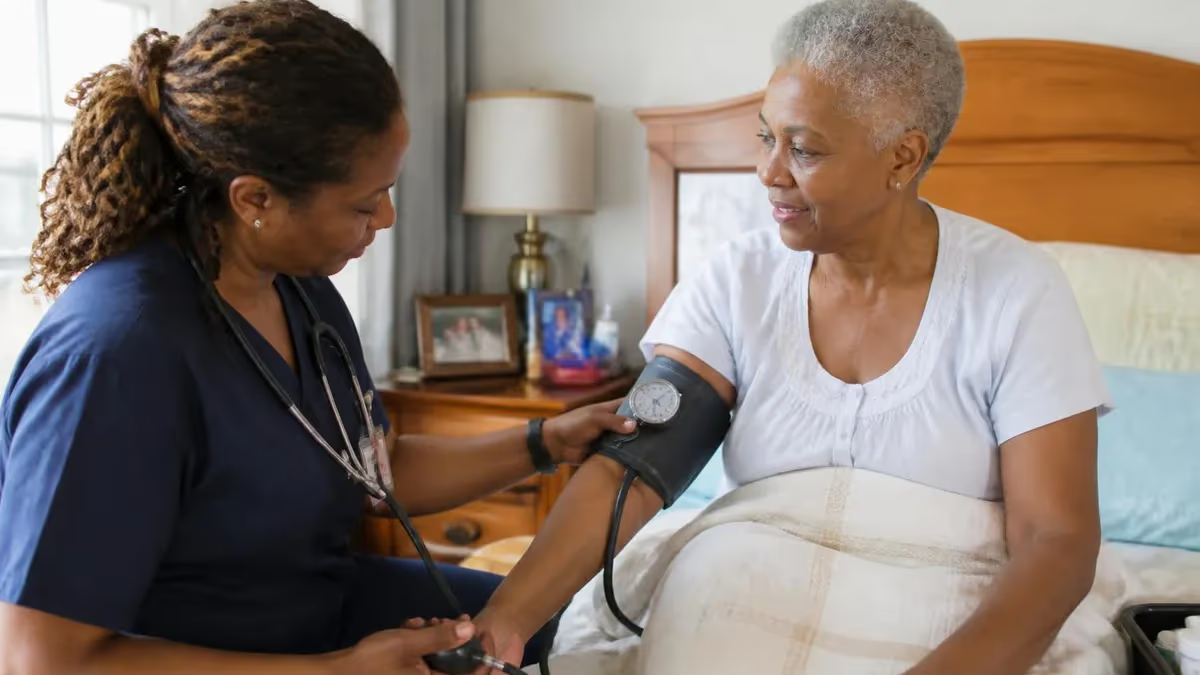
The hha supervisory visit is one of the most important regulatory checkpoints in home health care, yet many aides enter the field without fully understanding what it entails. Whether you are exploring the hha exchange platform for the first time or you are a seasoned certified home health care aide, knowing what supervisors look for during these visits can protect your career, ensure client safety, and keep your agency compliant with state and federal regulations. This guide walks you through everything you need to know.
A supervisory visit is a scheduled or unannounced in-home assessment conducted by a registered nurse (RN) or licensed practical nurse (LPN) to evaluate the quality of care being delivered by the home health aide. Under Medicare Conditions of Participation, an RN must visit every client receiving skilled and aide services at least every 14 days. This is not optional — agencies that skip these visits risk losing Medicare certification and facing significant fines. Understanding the timeline keeps both aides and agencies out of trouble.
During the visit, the supervisor typically reviews the aide's care plan compliance, observes direct care tasks such as bathing, positioning, and mobility assistance, and checks whether accurate documentation is being maintained. For aides who use platforms like hha exchange login portals to log their daily tasks, the supervisor may review digital records on the spot. Accuracy in those logs is just as important as the physical care you provide to the client in their home.
Many aides who are new to home health aide training programs are surprised to learn that the supervisory visit is not punitive in nature. Its primary purpose is quality assurance and professional development. A good supervisor will point out both strengths and areas for improvement, turning the visit into a coaching opportunity. If you approach it with openness rather than anxiety, you will find that supervisory visits help you become a more competent and confident aide over time.
From an agency perspective, the supervisory visit also serves as a risk-management tool. Agencies use visit findings to identify gaps in home health aide training programs, update individualized care plans, and document compliance for state surveys. When a state inspector reviews your agency's records, they will look at supervisory visit notes to confirm that oversight is happening consistently. A well-documented visit history demonstrates that the agency takes its duty of care seriously and is not cutting corners.
For aides who aspire to advance into roles as lead aides, care coordinators, or supervisors themselves, understanding the supervisory visit process is foundational. Many hha certification renewal programs include competency assessments that mirror what supervisors evaluate during visits. By mastering the expectations now, you are building the professional habits that will serve you throughout your entire career in home health care, regardless of which state you work in or which agency employs you.
This article breaks down the supervisory visit from every angle — regulatory requirements, what supervisors actually observe, how to use tools like the hha supervisory visit framework to prepare, common pitfalls to avoid, and how ongoing training through practice tests and certification resources can help you feel confident every time a supervisor walks through the door. Read on to build a thorough understanding of this critical aspect of home health aide work.
HHA Supervisory Visit by the Numbers
Key Facts at a Glance
| Item | Value | Details |
|---|---|---|
| Required RN Visit Frequency | Every 14 Days | Under Medicare CoP for combined skilled + aide services |
| Typical Visit Duration | 30–60 Min | Longer if care plan updates are needed |
| Minimum HHA Training Required | 75 Hours | Federal minimum; states may require more |
How an HHA Supervisory Visit Unfolds Step by Step
Scheduling or Unannounced Arrival
Client Interview & Satisfaction Check
Direct Observation of Care Tasks
Documentation Review
Feedback & Coaching Session
Care Plan Update & Agency Report
Understanding exactly what a supervising nurse looks for during an hha supervisory visit allows you to prepare methodically rather than guess. The observation typically begins before the supervisor even enters the room — they are already assessing whether the environment is clean, safe, and organized. Is there a trip hazard in the hallway? Are medications stored properly? Is the client dressed appropriately and positioned safely? These environmental cues tell a supervisor a great deal about the standard of care being maintained between formal visits.
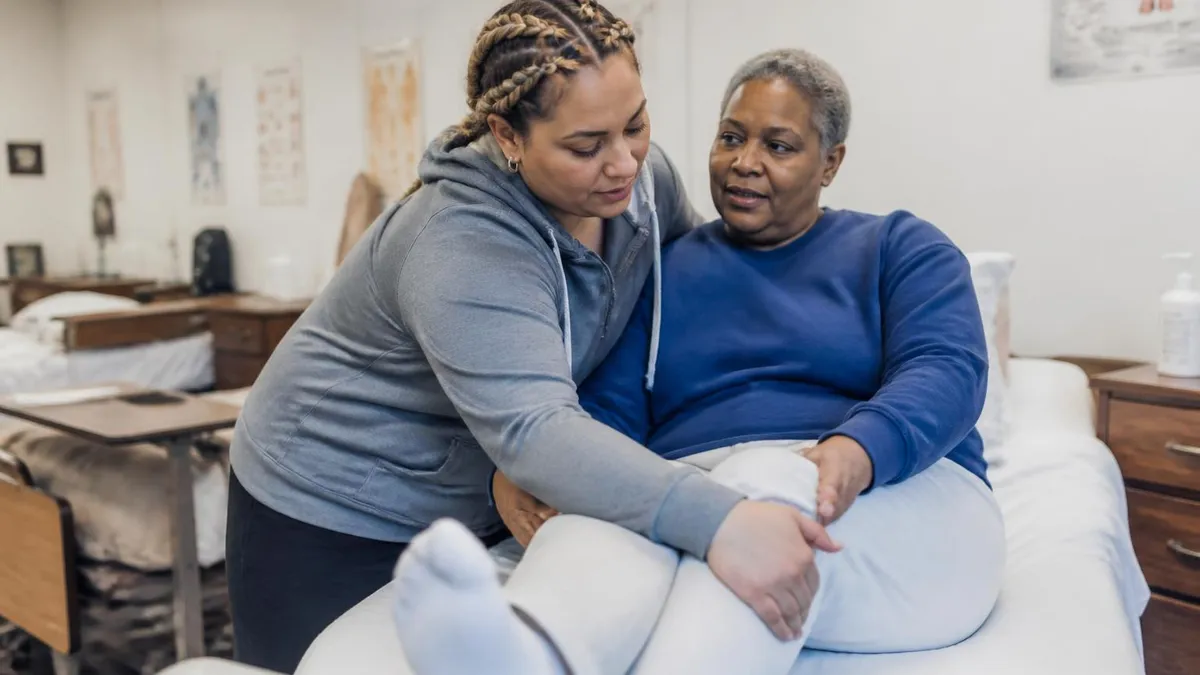
Personal care tasks are the most commonly observed competencies. Bathing and grooming must be performed using proper technique — supporting the client's dignity, maintaining water temperature safety, and preventing skin breakdown. Supervisors check whether the aide uses a gait belt during ambulation, positions the client correctly to prevent pressure injuries, and applies the principles of infection control such as hand washing before and after care. These are not abstract concepts — they are life-safety practices that directly affect vulnerable clients.
Communication is another major observation focus. An aide who speaks to clients respectfully, explains each step before performing a task, and responds to client preferences demonstrates the interpersonal competencies central to quality home health care. Supervisors also watch for red flags such as client withdrawal, signs of depression, or unexplained bruising — findings that may trigger mandatory reporting obligations under elder abuse statutes. Your ability to notice and communicate these changes is part of your professional responsibility as a certified home health care aide.
Documentation accuracy is scrutinized closely because it creates the legal record of care delivered. Aides who use the hha exchange login portal or other electronic visit verification platforms need to ensure that every visit is time-stamped correctly and that all task completions are recorded before leaving the client's home. Supervisors compare what the aide claims to have done with what was actually observed. If your documentation consistently understates or overstates the care provided, it raises compliance and billing concerns that can escalate to termination or referral to licensing authorities.
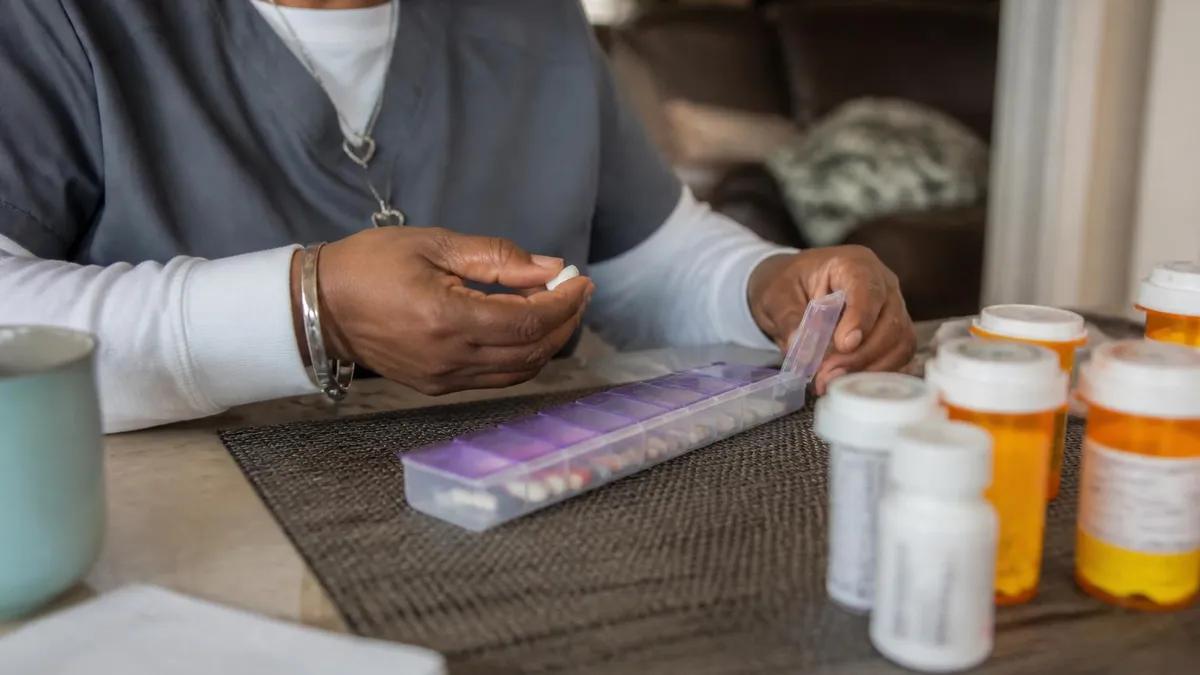
Medication management is a nuanced area for aides. In most states, HHAs are limited to medication reminders — they cannot administer medications. Supervisors check whether aides understand and respect this boundary. If a family member has asked the aide to handle medications beyond their scope of practice, a good aide declines and escalates the request to the supervising nurse. Demonstrating clear scope-of-practice awareness protects both the client and the aide's certification status under state law.
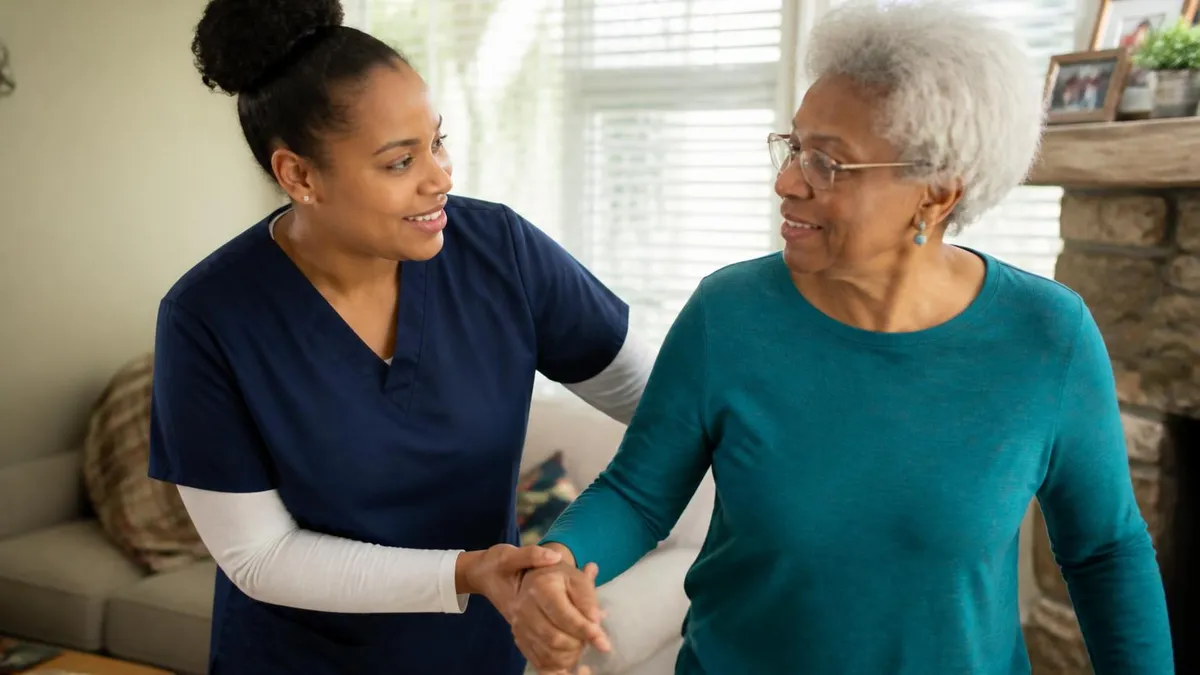
Supervisors also observe how an aide handles unexpected situations. What does the aide do if the client reports new pain? What is the response when a client refuses care? Supervisors want to see that the aide follows the escalation protocol — notifying the supervising nurse rather than improvising solutions. This chain-of-command adherence is a core competency tested in home health aide certification exams and re-evaluated during every supervisory visit throughout your career in the field.
Finally, supervisors evaluate the aide's knowledge of the individualized care plan. Can you describe the client's diagnoses, restrictions, and goals without looking at the paper? Do you know the emergency contact procedure for this specific client? Aides who internalize the care plan rather than glancing at it occasionally demonstrate the professional commitment that leads to excellent supervisory visit outcomes, strong performance reviews, and long-term job security at their agency.
HHA Certification and Training: How They Connect to Supervisory Visits
To become a certified home health care aide in the United States, candidates must complete a minimum of 75 hours of federally mandated training, with at least 16 hours dedicated to supervised clinical practice. Many states require significantly more — New York mandates 120 hours, for example. The curriculum covers personal care, infection control, safety, basic nutrition, and communication skills. After training, candidates must pass a written and skills competency exam administered by a state-approved testing organization.
Once certified, aides must maintain their credential through continuing education requirements that vary by state, typically ranging from 8 to 12 hours per year. These continuing education hours often align directly with the competencies evaluated during supervisory visits, reinforcing skills such as fall prevention, skin integrity monitoring, and documentation accuracy. Aides who stay current with their continuing education consistently perform better during supervisory observations because the skills remain actively practiced rather than dormant.
Pros and Cons of the HHA Supervisory Visit System
- +Ensures consistent quality of care for vulnerable clients in their homes
- +Provides aides with direct professional feedback and coaching from an RN
- +Creates a documented record that protects aides from false complaints
- +Identifies care plan gaps before they become client safety incidents
- +Supports ongoing professional development and skill reinforcement
- +Strengthens agency compliance standing during state and Medicare surveys
- −Unannounced visits can create anxiety and disrupt care routines
- −Supervisory documentation can feel punitive if feedback is not delivered constructively
- −Adds scheduling complexity for both supervisors and agency coordinators
- −Visit frequency requirements increase operational costs for smaller agencies
- −Clients may feel their privacy is repeatedly disrupted by supervisory personnel
- −Inconsistent supervisor training across agencies leads to variable evaluation quality
HHA Supervisory Visit Preparation Checklist
- ✓Review the client's current individualized care plan before every shift, not just the first visit.
- ✓Verify that your hha exchange login is active and that electronic visit verification is working on your device.
- ✓Confirm that the client's home environment is free of fall hazards — clear pathways, secured rugs, and adequate lighting.
- ✓Wash hands upon arrival and before and after every care task to demonstrate infection control compliance.
- ✓Use a gait belt during all ambulation and transfer tasks, even when the client resists.
- ✓Document every completed task in the care record before leaving the client's home — never backfill documentation later.
- ✓Know the names, dosages, and schedules of the client's medications even though you only provide reminders.
- ✓Be prepared to explain any deviation from the care plan — have a clear, documented reason for every change.
- ✓Report any new client symptoms, changes in condition, or safety concerns to the supervising nurse immediately.
- ✓Keep your home health aide certification and continuing education records current and accessible to the agency.
Medicare Requires RN Oversight Every 14 Days — No Exceptions
Under 42 CFR 484.80, agencies providing both skilled nursing and aide services to Medicare beneficiaries must have a registered nurse supervise every aide every 14 days. Missing even one supervisory cycle can trigger a Medicare compliance deficiency that puts the agency's certification at risk. As an aide, knowing this rule helps you understand why supervisory visits are non-negotiable and why your cooperation directly supports the agency's ability to serve Medicare clients.
Electronic documentation platforms have fundamentally changed how supervisory visits work in the modern home health environment. When the supervising nurse arrives at a client's home, she can pull up your complete visit history on a tablet within seconds — every clock-in timestamp, every completed task checkbox, and every note you entered during previous visits. Platforms like the hha exchange system make documentation transparent in real time, which means there is no hiding gaps or correcting omissions after a supervisor starts reviewing your record. Accuracy from day one is the only viable strategy.
The hha login process itself is a compliance checkpoint. Electronic visit verification systems capture not just time but also GPS location, confirming that you were physically present at the client's address when you clocked in. This technology was mandated by the 21st Century Cures Act and has been phased in across all states receiving Medicaid funding. If your phone's GPS is disabled or you clock in from a different location, the system flags the visit as potentially non-compliant. Supervisors are trained to review these flags during their oversight visits.
Beyond time-stamping, documentation quality matters enormously. Your visit notes should describe observable facts rather than vague generalities. Instead of writing "client did well today," a compliant note reads: "Client ambulated 20 feet to bathroom with standby assist, no gait belt refused by client, incident reported to charge nurse per agency protocol. Skin intact on bilateral heels. Client ate 75% of lunch, denied pain." This level of specificity demonstrates clinical observation skills and creates a defensible medical record if a dispute arises later about the care provided.
Care plan updates triggered by supervisory visit findings are documented in the same electronic system and pushed to all care team members simultaneously. When a supervising nurse updates a client's care plan — adding a pressure injury prevention protocol, for example — you should see that update in your hha exchange login portal before your next scheduled visit. Checking the portal before every shift is not optional; it is your professional obligation to provide care that matches the current, authorized plan rather than the version you memorized three months ago.
Agencies use aggregate data from electronic platforms to identify patterns across their entire workforce. If multiple aides at one agency are consistently clocking out before completing all documented tasks, the quality assurance team sees that trend in the dashboard and can investigate. Conversely, aides whose records show consistent full task completion, on-time arrivals, and thorough notes are the candidates agencies promote into lead aide and training roles. Your digital record is effectively your professional portfolio in the modern home health aid industry.
Privacy and data security are also relevant to understanding the electronic documentation environment. Your client's health information is protected under HIPAA, which means you must never photograph care records, share login credentials, or access records for clients not assigned to you. Supervisors verify during their visits that aides understand and respect these privacy obligations. A single HIPAA violation can result in termination and potential civil liability, making data hygiene as important as any physical care skill you demonstrate during a supervisory observation.
For aides preparing for initial home health aide certification or renewal, practicing with realistic documentation scenarios — and using resources like our free practice tests — builds the documentation habits that will serve you well across every supervisory visit in your career. Competence in care is only half the equation; the ability to document that competence clearly and accurately completes the picture that supervisors, agencies, and Medicare auditors all need to see.
Changing, deleting, or backdating electronic visit records — even to fix a genuine clerical error — can be classified as falsification of medical records, a federal offense under Medicare fraud statutes. If you make a documentation error, use your agency's approved correction protocol: draw a single line through the error, initial it, and enter a corrected entry with the current date and time. Never delete or overwrite existing entries, even when a supervisor asks you to correct something. Always follow your agency's written policy for documentation corrections.
Advancing your career in home health care begins with excelling at the fundamentals — and the supervisory visit is one of the clearest windows into your fundamental competencies. Aides who consistently receive positive supervisory visit evaluations are the first candidates considered when agencies recruit for lead aide positions, field trainer roles, or care coordination positions that offer higher pay and more responsibility. Your supervisory visit record is, in essence, your performance review file, and agencies take it seriously when making promotion decisions.
Continuing education is the most direct lever you have for improving supervisory visit outcomes over time. Many states require between 8 and 18 continuing education hours annually for HHA credential renewal, but the most career-focused aides exceed those minimums voluntarily. Specialization areas such as dementia care, palliative care, pediatric home health, and wound care observation each expand both your competency scope and your earning potential. Supervisors are more likely to note special strengths in their visit reports when they observe an aide demonstrating specialty-level knowledge during a routine care task.
Networking within your agency's quality assurance team can also accelerate career growth. The nurses who conduct supervisory visits are often the same professionals who mentor aides pursuing LPN or RN licensing. Building a respectful, communicative relationship with your supervisors — asking questions after visits, requesting feedback proactively, and following through on corrective recommendations — signals professional ambition. Many RNs who began as home health aides describe supervisory feedback as the catalyst that motivated them to pursue advanced credentials in nursing or social work.
Salary progression in home health care is closely tied to credentials and specialized competency. A basic home health aid position in the U.S. pays a median hourly wage around $16 to $18, but aides with specialty certifications in dementia care, medication management (where state-authorized), or pediatric care can earn $22 to $28 per hour or more. Each supervisory visit that documents advanced competencies builds the evidentiary case for reclassification into a higher pay grade within agency compensation structures.
Geographic location also plays a significant role in both supervisory visit frequency and career opportunities. Metropolitan areas with large aging populations — such as New York, Los Angeles, Chicago, and Philadelphia — have the highest concentrations of home health agencies, which translates to more supervisory oversight and also more pathways for career advancement. Aides who work in these high-demand markets and build strong supervisory visit records often find that lateral moves between agencies come with meaningful salary bumps, since their documented performance history transfers as a professional credential.
For those considering the path from aide to supervisor, understanding the supervisory visit from both sides of the equation is invaluable. As a supervisor, you would be responsible for conducting at least one visit every 14 days per Medicare-enrolled client, updating care plans, providing feedback to aides, and documenting findings in compliance with state and federal regulations.
The skills you build as an aide — observation, documentation, communication, and care plan adherence — are exactly the skills that make an effective supervisor. Starting that preparation now, while you are still in the aide role, positions you for a successful transition when the opportunity arises.
Resources like home health aide certification practice tests, continuing education modules, and the structured framework outlined in this article give you a concrete roadmap for professional growth. Every supervisory visit is a data point in your career trajectory — approach each one as an opportunity to demonstrate the depth of your commitment to safe, compassionate, and compliant home health care. The aides who internalize that mindset are the ones who build lasting, rewarding careers in one of America's most essential health care fields.
Preparing for a supervisory visit is not something you should start the night before — it is a continuous practice woven into every shift you work. The aides who perform best during supervisory observations are those who operate as if a supervisor could arrive at any moment, because in many agencies, that is literally true. Building the habit of care-plan compliance, accurate documentation, and professional communication on every visit means you are never caught unprepared. It also means your clients receive consistently excellent care, which is the entire point of the supervisory visit system.
Practice tests and knowledge-check resources play a surprisingly important role in maintaining supervisory visit readiness. The competencies evaluated during supervisory visits — personal care technique, infection control, client communication, documentation, and scope-of-practice awareness — are the same domains covered in hha certification exams and renewal assessments. Regularly practicing with realistic HHA exam questions keeps your theoretical knowledge sharp and helps you articulate the rationale behind your clinical decisions when a supervisor asks you to explain your approach during an observation.
Role-playing difficult care scenarios with colleagues or during agency in-service training sessions is another high-value preparation strategy. Scenarios such as a client refusing care, a family member questioning your technique, or discovering a new skin breakdown during bathing all require calm, competent responses. Supervisors specifically watch for how aides handle these challenging moments because they reveal the depth of training and professional judgment behind the aide's daily performance. Practice builds the automatic responses that hold up under the mild pressure of being observed.
Understanding the regulatory landscape — not just the agency's internal policies — gives you a broader perspective that supervisors respect. Knowing that the 14-day visit requirement comes from federal Medicare Conditions of Participation, that electronic visit verification is mandated by federal law, and that scope-of-practice boundaries are enforced by state nursing boards demonstrates the kind of professional awareness that distinguishes exceptional aides from merely adequate ones. You do not need a law degree; you need to understand the framework within which you work and why each rule exists.
Self-assessment is a powerful tool for ongoing improvement. After each client visit, take two minutes to mentally review: Did I follow the care plan completely? Did I document everything before leaving? Did I communicate with the client respectfully and explain each step? Did I notice anything about the client's condition that I should report? This brief reflective practice catches errors before they become patterns and builds the observational habits that impress supervisors during formal oversight visits. Many experienced aides describe this mental checklist as second nature after just a few months of consistent practice.
Agency orientation and in-service training sessions are valuable resources that many aides underuse. When your agency offers training on topics such as fall prevention protocols, updated EVV procedures, or new care plan documentation requirements, attending and actively participating signals your commitment to professional excellence. Supervisors notice which aides show up for optional training, ask thoughtful questions, and implement new guidance immediately. That engagement record becomes part of your professional reputation within the agency, influencing the quality of supervisory visit feedback you receive and the opportunities offered to you over time.
Finally, do not underestimate the importance of self-care in maintaining the professional performance that supervisory visits measure. Home health aides work in physically and emotionally demanding conditions — managing their own fatigue, stress, and compassion fatigue is essential for sustained competency.
Agencies with strong cultures of staff support tend to produce aides who perform better on supervisory evaluations, have lower turnover rates, and deliver higher client satisfaction scores. As you build your career, seek out agencies whose investment in aide well-being matches their investment in compliance oversight — that combination produces the best outcomes for everyone involved in the home health care equation.
Sample HHA Practice Questions
Try these questions from our free HHA practice tests. The correct answer and an explanation follow each question.
Mrs. Amos has not had a bowel movement for three days. She has always given herself an enema if she does not have a bowel movement for that long a time. Mrs. Amos asks the home health aide to give her an enema. What should the aide do?
- A. Give Mrs. Amos an enema
- B. Tell Mrs. Amos to wait another day.
- C. Suggest that Mrs. Amos take a laxative first.
- D. Contact the agency supervisor to discuss the situation.
Answer: D. Contact the agency supervisor to discuss the situation.
Administering an enema is a medical procedure that typically falls outside the scope of practice for a home health aide unless specifically delegated by a licensed nurse and included in the care plan. Even if the client usually self-administers, the aide should not perform it without explicit instruction and supervision. The correct action is to report the client's condition and request to the supervisor, who can then consult with the physician and provide appropriate directives.
A patient tells the home health aide that they have been feeling very sad and have been thinking about harming themselves. What should the aide do?
- A. Encourage the patient to rest and assure them they will feel better soon
- B. Keep the information confidential since the patient shared it privately
- C. Report the statement to the supervising nurse or appropriate person immediately
- D. Suggest the patient speak with a friend or family member about their feelings
Answer: C. Report the statement to the supervising nurse or appropriate person immediately
Any statement about self-harm is a serious safety concern and must be reported to the supervising nurse or appropriate personnel immediately. This is never information that should be kept confidential, as the patient's safety is the top priority.
. One morning shortly after the home health aide arrives, Mr. Walsh says, “I have had cramping pains in the calf of my right leg for the last two hours. In addition to reporting this complaint to the agency supervisor, what is the best way for the aide to write this on the chart?
- A. “Complains of pain.’
- B. “Right leg hurts.”
- C. “States he has had cramping pains in the calf of his right leg for 2 hours.”
- D. “Says he has leg cramps.”
Answer: C. “States he has had cramping pains in the calf of his right leg for 2 hours.”
Accurate and objective documentation is essential in healthcare. When charting a client's complaint, the home health aide should use the client's exact words or a direct quote to describe symptoms, along with relevant details like location and duration. This method provides the most precise and unbiased information for other healthcare professionals, avoiding interpretation or generalization which could lead to miscommunication or misdiagnosis.
A home health aide is assigned to assist in taking care of Mrs. Amos, an 87yearold woman who is a widow and lives alone. Mrs. Amos needs help with bathing, dressing, making meals, and cleaning her apartment. Mrs. Amos says, “I hate not being able to take care of myself.” To show Mrs. Amos that the home health aide understands her feelings, what should the aide say?
- A. “You shouldn’t feel that way.”
- B. “You should like being taken care of.”
- C. “It is hard to have someone help you when you are used to taking care of yourself.”
- D. “You make me unhappy when you talk like that.”
Answer: C. “It is hard to have someone help you when you are used to taking care of yourself.”
This response demonstrates empathy and validates Mrs. Amos's feelings by acknowledging the difficulty of her situation. It shows the aide understands her perspective and respects her past independence, fostering trust and open communication. Empathetic responses help build rapport and make the client feel heard and understood.
HHA Questions and Answers

What Is HHA? Home Health Aide Duties, Training, and Certification Explained

Home Health Aide Jobs Philadelphia: Your Complete Career Guide

HHA Job Requirements 2026 — What You Need to Become a Home Health Aide

Home Health Aide Scheduling Software and HHA Exchange: The Complete Guide for 2026

HHA Practice Test
About the Author

Registered Nurse & Healthcare Educator
Johns Hopkins University School of NursingDr. Sarah Mitchell is a board-certified registered nurse with over 15 years of clinical and academic experience. She completed her PhD in Nursing Science at Johns Hopkins University and has taught NCLEX preparation and clinical skills courses for nursing students across the United States. Her research focuses on evidence-based exam preparation strategies for healthcare certification candidates.
Join the Discussion
Connect with other students preparing for this exam. Share tips, ask questions, and get advice from people who have been there.
View discussion (8 replies)