
What Is HHA? Home Health Aide Duties, Training, and Certification Explained
Wondering what is hha? Learn home health aide duties, training, certification, salary, and how HHA Exchange works for caregivers in 2026 October. 🗨️
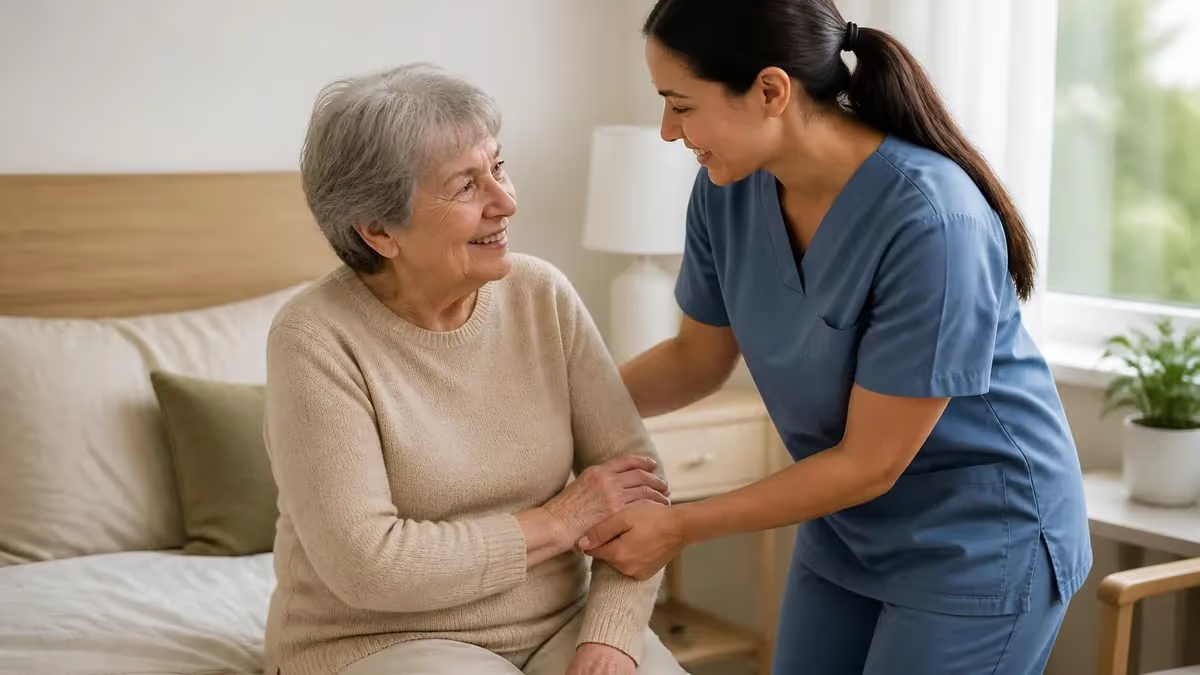
If you have ever asked what is hha, the short answer is that HHA stands for Home Health Aide, a frontline caregiver who helps elderly, disabled, or chronically ill clients live safely in their own homes. The role blends practical personal care with emotional support, and it has become one of the fastest-growing entry points into the American healthcare workforce. Understanding the full picture of an HHA's duties, training, and certification helps you decide whether this rewarding path fits your goals and personal strengths.
A home health aide is not the same as a nurse, but the two work side by side. An HHA carries out daily tasks that keep a client comfortable: bathing, dressing, grooming, light housekeeping, meal preparation, and mobility assistance. Many aides also remind clients to take medication, monitor vital signs, and report changes in condition to a supervising registered nurse. Because aides spend so many hours with the same person, they often notice subtle health shifts long before anyone else in the care team does.
The demand for a home health aid has exploded as the U.S. population ages. The Bureau of Labor Statistics projects employment in this field to grow far faster than the average occupation through the next decade, driven by millions of baby boomers who prefer aging in place over moving to a nursing facility. That demand translates into steady job security, flexible schedules, and a clear ladder toward becoming a certified nursing assistant, licensed practical nurse, or registered nurse for those who want to climb.
Becoming a certified home health care aide usually means completing a short state-approved training program and passing a competency evaluation. Federal rules require a minimum of 75 training hours for aides working at Medicare-certified agencies, though many states such as New York and New Jersey demand more. Once trained, your name appears on a state registry, and employers can confirm your status through an official lookup. You can review how to confirm your standing in our guide to what is hha verification.
Technology now shapes the daily work of every home health aide. Most agencies rely on electronic visit verification software, and the most widely used platform is HHA Exchange. Aides clock in and out of each shift through the app, log the care tasks they completed, and document notes that flow straight to billing and compliance teams. Knowing how the HHA Exchange login works is practically a job requirement in many states, because Medicaid reimbursement depends on accurate electronic records.
This article walks through everything a prospective or working aide needs to know. We cover core duties, the steps to earn home health aide certification, realistic salary figures, the pros and cons of the career, and how the HHA Exchange platform fits into your shifts. Whether you are exploring a first job, returning to the workforce, or supporting a family member, you will leave with a clear, practical understanding of what the role truly involves day to day.
What Is HHA by the Numbers

HHA Duties & Daily Responsibilities
Aides help clients bathe, dress, groom, brush teeth, and use the toilet with dignity. They assist with transfers from bed to chair, prevent falls, and ensure skin stays clean and free of pressure sores during long periods of limited mobility.
Light housekeeping keeps the home safe and sanitary. Aides do laundry, change bed linens, wash dishes, prepare nutritious meals that match dietary needs, and run small errands like grocery shopping or picking up prescriptions for clients who cannot leave.
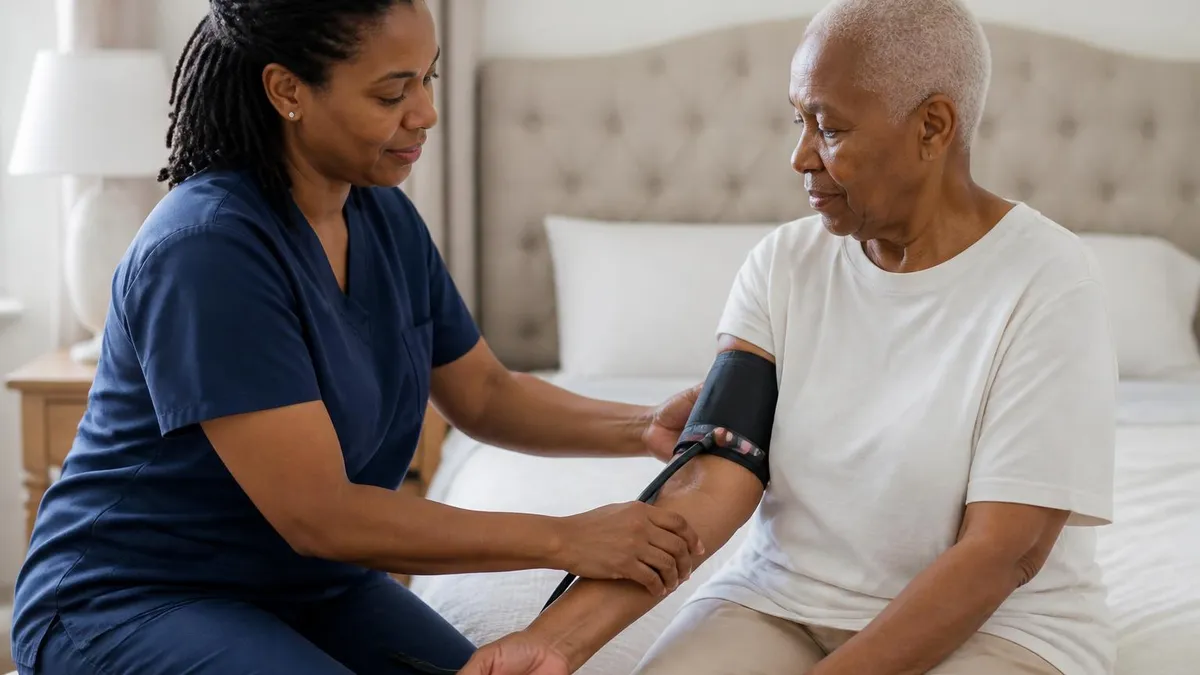
Aides check temperature, pulse, blood pressure, and respiration, then record results. They remind clients to take medication on schedule and watch for warning signs such as confusion, swelling, or shortness of breath that must be reported promptly to nurses.
Loneliness harms health, so aides provide conversation, encourage hobbies, and accompany clients to appointments. This emotional bond often becomes the most meaningful part of the job and helps clients stay mentally engaged and motivated to follow their care plans.
Every visit is logged through electronic visit verification. Aides record arrival and departure times, completed tasks, and observations using software like HHA Exchange, creating an accurate record that supports billing, compliance, and continuity of care across the team.
Home health aide training is the gateway into the profession, and the good news is that it is short, affordable, and widely available. Most programs run between two and six weeks and combine classroom lessons with hands-on lab practice. You learn infection control, body mechanics for safe lifting, basic nutrition, communication techniques, and how to recognize emergencies. By the end, you should feel confident performing every core task a client might need, from a safe bed bath to taking an accurate set of vital signs.
Under federal regulation, a home health aide training program at a Medicare-certified agency must include at least 75 hours of instruction, with a minimum of 16 hours of supervised practical training. Several states raise that bar significantly. New York requires 75 hours but adds rigorous competency testing, while some employers fold HHA preparation into a broader certified nursing assistant curriculum so graduates leave with two credentials. Always confirm that your school is state-approved before paying tuition, because unapproved hours rarely count toward certification.
After class, you must pass a competency evaluation to earn home health aide certification. This typically includes a written or oral knowledge test plus a skills demonstration where an evaluator watches you perform tasks like handwashing, transferring a client, and measuring blood pressure. Passing places your name on the state aide registry, which employers and families can search to confirm your status. This registry check is the same lookup process explained in our dedicated guide to what is hha license verification for your records.
Many people wonder whether they need to pay out of pocket for a certified home health care aide credential. Often the answer is no. Numerous home care agencies offer free training in exchange for a commitment to work for them after you finish. Workforce development grants, community colleges, and the American Red Cross also run low-cost programs. If you are receiving unemployment benefits or public assistance, your state may cover the entire cost as part of a back-to-work initiative, so it pays to ask before enrolling anywhere.
Certification is not a one-time event; it must be maintained. Federal rules require aides to complete at least 12 hours of continuing education each year and to work at least once every 24 months to stay active on the registry. If you let your status lapse, you may need to retest or repeat portions of training before returning to work. Tracking your in-service hours carefully and keeping copies of completion certificates protects you from unpleasant surprises during an agency audit or a job application review.
Choosing the right home health aide training program matters more than many beginners realize. Look for schools with strong job-placement rates, instructors who are licensed nurses, and a curriculum that mirrors the real competency exam. Read reviews, visit the campus if possible, and ask graduates about their experience. A quality program does more than help you pass; it builds the muscle memory and confidence you will draw on during a tough shift when a client falls or suddenly becomes ill and needs calm, competent help.
How the HHA Exchange Login Works
HHA Exchange is the most widely used electronic visit verification platform in home care, connecting aides, agencies, and state Medicaid programs in one system. It records exactly when an aide arrives and leaves a client's home, which tasks were completed, and any notes about the visit. States increasingly mandate EVV to prevent billing fraud, so most agencies require their aides to use it for every single shift they work.
For aides, the platform replaces paper timesheets entirely. Each documented visit feeds directly into payroll and Medicaid billing, meaning accurate entries protect both your paycheck and your agency's reimbursement. Because the data is timestamped and GPS-verified, it also serves as legal proof that care was actually delivered, shielding you and your employer if a client or family member ever disputes whether a scheduled visit took place.
Is Becoming a Home Health Aide Worth It?
- +Short, affordable training gets you working in weeks, not years
- +Strong job security thanks to an aging population and 21% growth
- +Flexible schedules including part-time, weekend, and live-in options
- +Deeply meaningful work building real relationships with clients
- +Clear path to advance into CNA, LPN, or registered nurse roles
- +Many agencies offer free training and paid certification programs
- +Demand exists in every city, suburb, and rural town nationwide
- −Pay starts modestly, often near minimum wage in some states
- −Physically demanding work involving lifting and long hours on your feet
- −Emotionally hard when caring for declining or dying clients
- −Irregular hours and travel between multiple client homes
- −Limited benefits at some agencies for part-time aides
- −Exposure to illness requires strict infection-control discipline
- −Documentation and EVV compliance add administrative pressure
Pros and Cons at a Glance
| Pros | Cons |
|---|---|
| Short, affordable training gets you working in weeks, not years | Pay starts modestly, often near minimum wage in some states |
| Flexible schedules including part-time, weekend, and live-in options | Physically demanding work involving lifting and long hours on your feet |
| Deeply meaningful work building real relationships with clients | Emotionally hard when caring for declining or dying clients |
| Clear path to advance into CNA, LPN, or registered nurse roles | Irregular hours and travel between multiple client homes |
| Many agencies offer free training and paid certification programs | Limited benefits at some agencies for part-time aides |
| Demand exists in every city, suburb, and rural town nationwide | Exposure to illness requires strict infection-control discipline |
Your HHA Certification Checklist
- ✓Confirm you are at least 18 and have a high school diploma or GED if required
- ✓Choose a state-approved home health aide training program near you
- ✓Verify the program includes the federal 75-hour minimum or your state's standard
- ✓Complete classroom instruction and supervised hands-on lab practice
- ✓Pass the written or oral knowledge competency exam
- ✓Pass the skills demonstration in front of a qualified evaluator
- ✓Confirm your name appears on the state aide registry
- ✓Pass any required background check and TB or health screening
- ✓Save copies of your certificate and competency results
- ✓Schedule your annual 12 hours of continuing education to stay active
Free training is more common than you think
Many home care agencies will pay for your entire home health aide training program in exchange for a short work commitment after you graduate. Before spending a dollar on tuition, call two or three local agencies and ask about sponsored, no-cost certification. You could be earning a paycheck within weeks without any upfront expense.
Salary is often the first practical question people ask once they understand what the job involves. Nationally, the median pay for a home health aide hovers around thirty-three thousand dollars per year, but that figure hides a wide range. Aides in high-cost states like California, Massachusetts, and New York frequently earn several dollars more per hour than the national average, while rural areas in the South and Midwest tend to pay closer to the local minimum wage. Experience, certification, and shift type all push earnings higher.
Hourly rates matter more than annual figures because many aides work part-time or split hours across several clients. A typical starting wage falls between fourteen and seventeen dollars an hour, with overnight, weekend, and live-in assignments commanding premiums. Aides who earn additional credentials, such as becoming a certified home health care aide with specialized dementia or hospice training, can negotiate higher pay. Private-pay clients who hire directly, outside of Medicaid agencies, sometimes offer the most generous compensation of all.
Benefits vary widely between employers, and this is worth investigating before you accept a position. Larger agencies often provide health insurance, paid time off, retirement contributions, and mileage reimbursement for travel between clients. Smaller operations may offer little beyond an hourly wage. When comparing offers, calculate the true value of the full package rather than fixating on the headline rate, because a slightly lower wage with solid health coverage and guaranteed hours can be the stronger long-term choice.
The clearest financial advantage of this career is its role as a launching pad. Thousands of nurses began as aides, using the bedside experience and tuition assistance many agencies offer to climb the ladder. The natural next step is becoming a certified nursing assistant, which usually adds only a few weeks of training and a noticeable pay bump. From there, motivated aides pursue licensed practical nurse or registered nurse degrees, often while continuing to work part-time in home care to stay afloat.
Geography shapes both pay and opportunity. Densely populated metro areas have the highest demand and the most agencies competing for reliable aides, which can drive wages up and give you use to choose better assignments. Yet rural communities also struggle to find caregivers, sometimes offering signing bonuses or guaranteed hours to attract talent. If you are willing to travel or relocate, you can often find a market where your skills command a premium and where steady, full-time work is genuinely abundant.
Looking ahead, the financial outlook for aides is strengthening. Chronic caregiver shortages have pushed many states to raise Medicaid reimbursement rates specifically to fund higher wages, and several have enacted home care worker wage floors above the federal minimum. Union representation in states like New York and Washington has also lifted pay and benefits. While no one becomes wealthy as an entry-level aide, the trajectory of the field points toward steadily improving compensation for those who stay and build expertise.

Federal rules require home health aides to complete at least 12 hours of continuing education every year and to perform paid aide duties at least once within any 24-month period. If your status lapses on the state registry, you may have to retest or repeat training before you can work again. Track your in-service hours carefully and keep every completion certificate on file.
Beyond clinical tasks, the best home health aides share a set of human skills that no training program can fully teach. Patience tops the list. Clients with dementia may ask the same question a dozen times, and someone recovering from a stroke may take ten minutes to do what once took one. An aide who stays calm, kind, and unhurried builds trust, and trust is what lets a vulnerable person accept help with the most private parts of daily life without feeling humiliated or afraid.
Communication is the second pillar. A great aide listens closely, explains each step before doing it, and reports observations clearly to the supervising nurse. Sharpening these abilities pays off directly, which is why so many candidates practice with what is hha resources and dedicated communication question sets before testing. Strong communication also prevents dangerous misunderstandings, such as a missed medication or an unreported fall, that can quickly turn a manageable situation into a medical emergency.
Observation skills set exceptional aides apart from average ones. Because you spend more time with a client than any nurse or doctor, you are positioned to catch early warning signs: a new bruise, a change in appetite, slurred speech, or unusual confusion. Knowing what is normal for your specific client lets you spot what is not. Reporting those subtle changes promptly has saved countless lives by catching infections, strokes, and heart problems before they became catastrophic.
Physical stamina and proper body mechanics protect both you and your client. Lifting, transferring, and repositioning people is hard on the back, and injuries end careers. Good training drills safe technique until it becomes automatic, but staying fit and using assistive equipment matters just as much. An aide who hurts themselves cannot help anyone, so learning to lift with your legs, ask for help, and use a gait belt is a professional survival skill, not an optional nicety.
Reliability and integrity round out the profile. Clients and families depend on aides showing up on time, every time, because a missed visit can leave a frail person without food, medication, or help to the bathroom. Honesty in documentation matters too, especially with EVV systems like HHA Exchange tracking every shift. Cutting corners or falsifying records is both unethical and grounds for losing your certification. The aides who thrive treat their commitments as sacred obligations to people who cannot manage alone.
Finally, emotional resilience keeps aides in the field for the long haul. You will grow close to clients and sometimes lose them, and that grief is real. Building healthy boundaries, leaning on coworkers and supervisors, and remembering the meaningful difference you make all help prevent burnout. The aides who last are not those who feel nothing, but those who learn to carry the weight of caring while still protecting their own well-being shift after shift, year after year.
If you are ready to start, a few practical steps will speed your path from curious beginner to working aide. Begin by calling local home care agencies directly and asking two questions: do you sponsor free training, and are you hiring right now. This single phone call often reveals no-cost certification programs that lead straight into a paying job, saving you both tuition money and the uncertainty of wondering whether work will be waiting after you graduate from your course.
While you wait to enroll or test, prepare actively rather than passively. Free practice questions covering basic care, comfort, and communication mirror the real competency exam and reveal exactly where your knowledge has gaps. Working through several quiz sets, reviewing the explanations for every wrong answer, and retaking them until you score consistently high builds genuine confidence. Candidates who practice this way walk into the skills evaluation calm and prepared instead of anxious and guessing.
Get comfortable with the technology before your first shift. Ask your agency to walk you through the HHA Exchange login process, install the mobile app, and practice a mock clock-in so the real thing feels routine. Confirm that your location services work and that you understand how to check off care tasks. Aides who fumble the EVV system on day one risk pay delays and compliance flags, while those who master it early look polished and professional from the very start.
Assemble your documents into one folder so applications move quickly. You will likely need identification, proof of training completion, your competency results, immunization or TB test records, and the results of a background check. Having clean digital copies ready means you can apply to several agencies in an afternoon rather than scrambling for paperwork each time. Organized candidates get hired faster simply because they remove friction from an agency's busy onboarding process.
Once you land a role, protect your future by tracking continuing education from the very beginning. Save every in-service certificate, note the date of each completed training, and calendar your annual twelve-hour requirement well before any deadline. This habit keeps your registry status active, prevents the painful need to retest, and positions you for promotions. Agencies notice aides who manage their own compliance, and that reputation opens doors to better assignments and higher pay over time.
Finally, think about where you want to be in three years and start building toward it now. If nursing appeals to you, ask agencies about tuition assistance and choose employers that support advancement. If you prefer to specialize, seek extra training in dementia, hospice, or pediatric care to command higher rates. The home health aide role is a genuine beginning, not a dead end, and the choices you make in your first year shape how far and how fast your healthcare career can ultimately grow.
Sample HHA Practice Questions
Try these questions from our free HHA practice tests. The correct answer and an explanation follow each question.
How should a home health aide assist with feeding a patient?
- A. By feeding the patient without their participation.
- B. By assisting as needed while promoting independence
- C. By leaving the patient to feed themselves regardless of need.
- D. By rushing the feeding process.
Answer: B. By assisting as needed while promoting independence
A home health aide should assist with feeding by providing necessary help while ensuring that the patient is comfortable, and the feeding process is safe and dignified.
A patient has a pressure ulcer on their coccyx. How often should the home health aide reposition them?
- A. Once every 8 hours
- B. Every 2 hours
- C. Once per shift
- D. Only when the patient requests it
Answer: B. Every 2 hours
Repositioning every 2 hours relieves sustained pressure on bony prominences, the primary cause of pressure ulcer formation and progression.
It is Mrs. Amos’s usual time for lunch, but she says she is not hungry yet. This is the first time that Mrs. Amos has made this type of statement. What should the home health aide do?
- A. Insist that Mrs. Amos eat at this time.
- B. Tell Mrs. Amos to let the aide know when she wants to eat, and remind her that it is important that she have lunch.
- C. Tell Mrs. Amos that if she does not eat by herself, she will have to be fed.
- D. Tell Mrs. Amos that it took a lot of time to prepare the food and that she should eat it while it is fresh.
Answer: B. Tell Mrs. Amos to let the aide know when she wants to eat, and remind her that it is important that she have lunch.
The home health aide should respect Mrs. Amos's preference while still ensuring her nutritional needs are met. By telling Mrs. Amos to let the aide know when she wants to eat and reminding her of the importance of lunch, the aide offers flexibility and maintains a client-centered approach. This balances the client's autonomy with the aide's responsibility for her health.
How should a home health aide report when a patient refuses care?
- A. By not mentioning the refusal in the report.
- B. By reporting the refusal and reasons clearly to the healthcare team
- C. By insisting on providing care despite the refusal.
- D. By waiting until the patient accepts care.
Answer: B. By reporting the refusal and reasons clearly to the healthcare team
The aide should document the refusal accurately, note the patient’s reasons if stated, and inform the appropriate healthcare team members.
HHA Questions and Answers

NJ HHA License Verification: Complete 2026 Guide to Checking, Renewing, and Maintaining Your Home Health Aide Certification

HHA Meaning: What HHA Stands For in Home Healthcare Explained

HHA Jobs Near Me — How to Find, Train, and Start Your Career
Home Health Aide — Your Complete Career and Certification Guide

HHA: Home Health Aide Role, Certification, and Career Guide
About the Author

Registered Nurse & Healthcare Educator
Johns Hopkins University School of NursingDr. Sarah Mitchell is a board-certified registered nurse with over 15 years of clinical and academic experience. She completed her PhD in Nursing Science at Johns Hopkins University and has taught NCLEX preparation and clinical skills courses for nursing students across the United States. Her research focuses on evidence-based exam preparation strategies for healthcare certification candidates.
Join the Discussion
Connect with other students preparing for this exam. Share tips, ask questions, and get advice from people who have been there.
View discussion (8 replies)