
HazMat Endorsement Cost: Complete Breakdown of Fees, Training, and TSA Requirements
How much does a hazardous materials endorsement cost? Full breakdown of TSA fees, state fees, training costs & tips to pass. 🎯

Understanding the full hazmat endorsement cost is one of the first questions every CDL driver asks before starting the process. The total investment varies depending on your state, training provider, and whether you need to retake any portion of the process, but most drivers can expect to spend between $150 and $350 all-in when adding the hazardous materials endorsement to their commercial driver's license. Breaking down each fee category — state application, TSA background check, fingerprinting, and training — helps you budget accurately and avoid surprises at the DMV window.
The CDL hazardous materials endorsement unlocks a significant earning advantage. Drivers who hold an active HazMat endorsement routinely command $5,000 to $15,000 more in annual salary than those without one, and the endorsement opens doors to specialized freight lanes in chemicals, petroleum, explosives, and infectious substances. For many drivers, the cost of obtaining the endorsement pays for itself within the first month of upgraded freight assignments, making the upfront investment extremely worthwhile.
Before you can add the endorsement to your CDL, federal law requires that you pass a TSA threat assessment, complete ELDT HazMat theory training, and pass a state knowledge exam. Each of these stages carries its own fee structure, and the total adds up differently across states. For example, Texas drivers pay a different state application fee than California drivers, and fingerprinting costs can range from $15 to $50 depending on where you get prints taken. Knowing what each piece costs before you start saves time and prevents being caught off guard.
Many first-time applicants underestimate the TSA component of the process. The TSA hazardous materials endorsement security threat assessment fee is set federally at $86.50 per application as of 2026. This fee covers the national criminal history check, immigration verification, and FBI fingerprint processing. It is non-refundable regardless of outcome, so understanding what disqualifiers exist before submitting is important. Reviewing the hazardous materials endorsement requirements in detail before paying ensures you are eligible before spending money.
Training costs represent another variable in the total HazMat endorsement cost. Since the FMCSA made Entry-Level Driver Training mandatory in 2022, new CDL applicants must complete an approved ELDT HazMat theory course before taking the state knowledge test. These courses typically range from $50 to $200 online, or $150 to $400 through an in-person training provider. The price depends on the format, provider reputation, and whether the course includes practice tests and study materials. Choosing a course that bundles practice exams into the price is often the best value for first-time test takers.
The state knowledge exam fee itself is relatively modest — most states charge between $5 and $20 per attempt for the HazMat endorsement test. However, retakes add up quickly if you are not prepared. Failing the test twice means paying the exam fee two additional times, plus potentially rebooking a DMV appointment days or weeks later. This is exactly why thorough preparation using a hazardous materials endorsement study guide is the most cost-efficient investment a driver can make before walking into the testing station.
Renewal costs are also an important part of the total cost picture. The HazMat endorsement must be renewed every five years, and each renewal requires a new TSA security threat assessment — meaning you pay the $86.50 TSA fee again. Some states also charge a separate renewal application fee. Budgeting for renewal from day one, and setting a calendar reminder well before the expiration date, prevents a costly lapse in your endorsement that could mean losing freight contracts and income while the renewal processes.
HazMat Endorsement Cost by the Numbers

Complete HazMat Endorsement Cost Breakdown
The TSA hazardous materials endorsement background check is the most distinctive and federally controlled cost in the entire process. Unlike most DMV fees that vary state to state, the TSA threat assessment fee is standardized at $86.50 across all 50 states. This fee is submitted directly through the TPA (Third Party Administrator) system — currently managed by Idemia — and covers a comprehensive review of your criminal history, immigration status, mental health adjudications, and FBI fingerprint database check. No driver can receive a HazMat endorsement without completing and passing this assessment.
The fingerprinting component of the TSA process is conducted at authorized enrollment centers, and the cost for fingerprinting is separate from the $86.50 TSA assessment fee. Fingerprint collection fees typically range from $15 to $50 depending on the site and location. Some trucking companies partner with enrollment centers to offer discounted rates for their employees, so it is worth checking with your employer before booking independently. The fingerprints are digitally captured and transmitted directly to the TSA and FBI for processing, and the results are typically returned within two to four weeks for most applicants.
Understanding what can trigger a TSA denial is critical before spending any money on the endorsement process. Permanent disqualifiers include convictions for crimes like murder, espionage, treason, and certain terrorism-related offenses. Interim disqualifiers — which can be waived after a waiting period — include felony convictions within the past seven years for crimes like unlawful possession of a firearm, bribery, or dishonesty-related offenses. Drivers who are unsure about their eligibility should consult an attorney or review the TSA's published disqualifier list before submitting the application fee.
The TSA review process also checks immigration status. Applicants must be U.S. citizens, U.S. nationals, or lawful permanent residents to be eligible for the HazMat endorsement. Non-immigrant visa holders, regardless of CDL status, are not eligible. This is a hard federal requirement that cannot be waived by individual states. Reviewing the full hazardous material endorsement eligibility rules before paying the TSA fee prevents wasted expense for applicants who do not meet the citizenship criteria.
Once the TSA approval is granted, it remains valid for five years and is tied to your CDL renewal cycle in most states. However, if your CDL lapses or you allow the HazMat endorsement to expire before renewal, you must go through the full TSA process again — including paying the $86.50 fee and submitting new fingerprints. There is no grace period for expired endorsements when it comes to the TSA component. This makes proactive renewal scheduling an important financial strategy for working drivers who depend on HazMat freight for their income.
Some states also charge an administrative fee on top of the federal TSA fee for processing the endorsement addition to your CDL record. These state-level fees range from as little as $5 in some states to $75 or more in others. For example, California charges a separate licensing transaction fee, while Texas bundles the endorsement fee into the license renewal cost. Checking your specific state DMV fee schedule before starting the process gives you the most accurate total cost estimate and prevents budget surprises at the counter.
It is worth noting that the TSA fee is paid online through the Idemia enrollment portal before your fingerprint appointment. You will receive a confirmation number after payment, which you bring to the fingerprint collection site. Keep this confirmation email and receipt carefully — you may need it if there are any processing delays or if you need to dispute a charge. First-time applicants sometimes overlook this paperwork step and cause unnecessary delays in their endorsement timeline that cost them freight assignments and income during the waiting period.
HazMat Endorsement Test Costs: State-by-State Overview
The Texas hazardous materials endorsement test is administered at DPS Driver License offices across the state. Texas charges $11 for each CDL knowledge test attempt, including the HazMat endorsement exam. The state does not charge a separate endorsement addition fee beyond the standard license transaction costs, which typically run between $24 and $97 depending on your license class and whether you are renewing or upgrading. Texas is one of the more affordable states for the overall endorsement process, making it a good benchmark for comparison.
Texas HazMat applicants must complete TSA fingerprinting at an approved Idemia enrollment center — there are dozens located throughout the state in major cities like Houston, Dallas, San Antonio, and Austin, as well as in many smaller communities. Scheduling an appointment online in advance is strongly recommended, as walk-in availability varies. The total out-of-pocket cost for a Texas driver completing the HazMat endorsement for the first time — including TSA fee, fingerprinting, training, and the exam — typically falls between $165 and $280 depending on training provider choice.

Is the HazMat Endorsement Worth the Cost?
- +Significantly higher earning potential — typically $5,000 to $15,000 more per year
- +Access to specialized freight lanes with less competition and better rates
- +Endorsement is valid for five years, spreading the cost over a long earning window
- +Opens opportunities with chemical, petroleum, and pharmaceutical carriers
- +Makes your CDL profile more attractive to larger, higher-paying carriers
- +The $86.50 TSA fee is modest compared to the annual income increase it enables
- −Non-refundable TSA fee is lost if your background check is denied
- −Processing times of 60 to 90 days mean delayed access to HazMat freight
- −Strict criminal background disqualifiers may bar some drivers from eligibility
- −Renewal every five years requires repeating the full TSA process and fees
- −Increased regulatory burden — HazMat loads carry heavier compliance requirements
- −ELDT training is a mandatory upfront cost for new CDL applicants since 2022
HazMat Endorsement Requirements Checklist
- ✓Confirm you hold a valid CDL (Class A, B, or C) or are applying for one simultaneously
- ✓Verify your citizenship or permanent resident status meets TSA eligibility requirements
- ✓Review your criminal history against the TSA permanent and interim disqualifier list
- ✓Complete an FMCSA-approved ELDT HazMat theory course and obtain your training certificate
- ✓Pay the $86.50 TSA security threat assessment fee through the Idemia enrollment portal
- ✓Schedule and complete fingerprinting at an authorized Idemia enrollment center
- ✓Wait for TSA clearance — allow 30 to 60 days for standard processing
- ✓Schedule your state CDL HazMat knowledge exam at the DMV after receiving TSA approval
- ✓Study using a hazardous materials endorsement practice test until scoring 85%+ consistently
- ✓Pay the state DMV endorsement fee and provide your TSA clearance documentation at the counter
The TSA Fee Is Non-Refundable — Check Eligibility First
The $86.50 TSA security threat assessment fee is paid upfront and is completely non-refundable if your application is denied. Before paying, review the TSA's published permanent and interim disqualifier list carefully. Drivers with felony convictions within the past seven years for specific offenses, or any permanent disqualifier on record, will be denied and forfeit the fee entirely.
The hazardous material endorsement renewal process is an often-overlooked cost that catches many experienced drivers off guard. Unlike a standard CDL renewal that simply requires a vision test and fee payment, renewing the HazMat endorsement triggers a completely new TSA security threat assessment. This means paying the $86.50 TSA fee again, submitting new fingerprints, and waiting through another processing period — which can take 30 to 90 days. Failing to plan for this renewal timeline can result in a lapsed endorsement that temporarily disqualifies you from HazMat freight.
The HazMat endorsement must be renewed every five years, and many states tie the renewal cycle to your CDL expiration date. If your CDL expires and you renew it without also renewing your HazMat endorsement, the endorsement will be dropped from your license. Adding it back later requires starting the full application process from scratch — paying all fees again and waiting through the full TSA review. This makes it essential to renew both your CDL and your HazMat endorsement simultaneously when your renewal date approaches.
Drivers who work for carriers that haul HazMat freight regularly should check whether their employer covers any renewal costs as an employment benefit. Some large carriers and chemical logistics companies pay the TSA fee and fingerprinting costs on behalf of their drivers, particularly for drivers who handle HazMat loads as a primary function of their job. Asking your HR department or fleet manager about HazMat endorsement cost reimbursement before paying out of pocket is always a smart first step.
The renewal process for the hazardous material endorsement renewal also gives drivers an opportunity to verify that their background remains clear of any new disqualifying events. If a driver acquired any criminal convictions in the five years since their last endorsement was issued, those new records will appear in the TSA assessment and could result in denial. This is not a situation most drivers anticipate, but it does occur, and understanding the consequences beforehand helps avoid financial and career disruption.
Some states have specific renewal windows during which you must submit your TSA application to avoid a lapse. For example, in several states, you must submit the renewal TSA application at least 90 days before your CDL expiration to ensure clearance arrives in time. Starting the renewal process early — ideally 120 days before expiration — gives ample buffer for any processing delays, additional documentation requests from the TSA, or scheduling backlogs at fingerprint enrollment centers during busy periods.
The cumulative cost of holding a HazMat endorsement over a 20-year CDL career works out to roughly $600 to $900 in TSA and fingerprinting fees alone across four renewal cycles, plus the state fees and any required refresher training. Against a career income premium of potentially $100,000 to $300,000 in additional earnings attributable to the endorsement, the total cost is extremely modest. This math makes the endorsement one of the highest-return investments available to commercial truck drivers who are willing to complete the process correctly.
Drivers approaching renewal should also verify whether their ELDT training records are still accessible in the FMCSA Training Provider Registry. While ELDT completion is not always required for renewal (it was primarily targeted at new entrants as of the 2022 rule), documentation requirements can vary. Checking with your state DMV and reviewing the hazardous materials endorsement application process details for renewal-specific requirements in your state ensures you do not miss any documentation step that could delay renewal processing.

Do not wait until the month your CDL expires to start your HazMat endorsement renewal. The TSA threat assessment alone can take 30 to 90 days to process, and if your endorsement expires before clearance arrives, you will be unable to transport HazMat loads legally until the renewed endorsement is issued. Start the renewal process at least 120 days before your expiration date to maintain uninterrupted freight access.
Saving money on the hazmat endorsement cost starts with preparation. The single largest controllable expense beyond the mandatory TSA fee is the cost of retaking the state knowledge exam. Each failed attempt means another exam fee, another DMV appointment, and potentially days or weeks of lost time before the next available test slot. Investing in high-quality study materials upfront — specifically hazardous materials endorsement practice tests that mirror the actual exam format — dramatically reduces the probability of a first-attempt failure.
Choosing the right ELDT training provider is another significant opportunity to save money. Prices for ELDT HazMat theory courses range from under $50 for basic online modules to over $400 for in-person classroom programs. For most drivers, a mid-tier online course in the $75 to $150 range that includes practice quizzes, video content, and a completion certificate offers the best balance of cost, convenience, and exam readiness. Comparing multiple FMCSA-registered providers before purchasing ensures you are getting accredited training that counts toward your endorsement, not a non-compliant course that won't be accepted.
Scheduling your fingerprint appointment strategically can also reduce indirect costs. Enrollment centers in major urban areas tend to have shorter wait times and more appointment availability than rural locations. If you live near a large city, booking your fingerprint appointment there — even if it means a short drive — can reduce your total timeline by weeks and get you cleared to haul HazMat freight faster. Time waiting for an available appointment slot is time you are not earning HazMat-rate freight income, which is the real cost of poor scheduling.
Some drivers choose to take their HazMat endorsement knowledge exam at a third-party testing center rather than at a state DMV office. Third-party CDL testing is available in many states and can offer more flexible scheduling and shorter wait times. The exam fee is generally similar to or slightly higher than the DMV option, but the time savings can be worth the marginal cost difference. Checking whether your state permits third-party CDL testing is a quick step that can meaningfully speed up the endorsement process.
Bundling your HazMat endorsement application with other CDL endorsements you plan to acquire — such as tanker (N) or doubles/triples (T) — can sometimes reduce total costs. Some states offer reduced per-endorsement fees when multiple endorsements are added in a single transaction. Additionally, taking the knowledge exams for multiple endorsements on the same day reduces the number of trips to the DMV and the associated time cost. Planning your endorsement roadmap holistically rather than piecemeal is a smart long-term cost strategy.
Employer sponsorship is worth pursuing aggressively. Many carriers who depend on HazMat-certified drivers — particularly those serving chemical plants, oil refineries, and pharmaceutical distribution centers — have active programs to sponsor drivers through the endorsement process. Sponsorship may cover the TSA fee, fingerprinting, training costs, and even compensate for the time spent in training. Searching for carriers with endorsement sponsorship programs before paying any fees out of pocket can effectively bring your total personal cost to zero in some situations.
Finally, using free and low-cost online study resources to supplement your ELDT training is one of the easiest ways to reduce total endorsement cost. The FMCSA's official hazardous materials regulations are publicly available and form the backbone of the state knowledge exam.
Pairing the FMCSA source material with a structured set of hazardous materials endorsement practice test questions gives you both regulatory depth and exam-format familiarity. Drivers who combine both preparation methods consistently outperform those who rely on a single study source, and passing on the first attempt is by far the most effective way to keep the total hazmat endorsement cost as low as possible.
Practical preparation for the hazardous materials endorsement test is the most direct path to minimizing your total investment in the endorsement process. The state knowledge exam typically contains between 30 and 35 questions specific to HazMat regulations, drawn from the FMCSA's official CDL manual Section 9. Topics covered include hazard class definitions, shipping papers requirements, placard rules, loading and unloading procedures, driver responsibilities during emergencies, and bulk packaging regulations. Knowing exactly what to study — rather than reviewing the entire CDL manual — focuses your preparation time efficiently.
Most states require a passing score of 80% on the HazMat knowledge exam, though some states like California set the bar at 83%. This means you can miss no more than six to seven questions on a 35-question exam and still pass. Achieving this score reliably requires understanding not just the facts but the reasoning behind hazmat transportation rules.
Why certain placards are required at specific thresholds, why certain routes are restricted for HazMat loads, and how emergency response information must be kept accessible — these are the kinds of conceptual understanding questions that trip up test takers who memorized facts without grasping the underlying logic.
Hands-on practice with realistic exam questions is the most proven preparation strategy. Using a hazardous materials endorsement practice test that presents questions in the same multiple-choice format as the real exam trains your brain to process HazMat regulatory information under test conditions.
Aim to complete at least 200 to 300 unique practice questions across multiple sessions before your exam date, and track your performance by topic area so you can identify and focus on weaker areas. Many drivers find that 10 to 15 hours of focused study spread over two to three weeks is sufficient to achieve consistent 85%+ scores on practice tests.
Pay particular attention to the HazMat placard rules, as this is one of the most heavily tested topic areas on state exams. Knowing when placards are required (at 1,001 pounds for most materials in non-bulk packaging), which classes require placards regardless of quantity (Classes 1, 2.3, 6.2, and 7 among others), and how to read and apply the Hazardous Materials Table in 49 CFR Part 172 will cover a significant portion of the exam questions. Flashcards for the nine hazard classes, their divisions, and their placard requirements are a highly effective study tool that many successful test takers recommend.
Emergency response preparation questions are another prominent exam category. The exam tests whether drivers know how to use the Emergency Response Guidebook (ERG), what information must be on shipping papers and where those papers must be kept, and what a driver must do if they discover a leak or spill during transport. These questions are highly practical and directly tied to real-world safety scenarios. Practicing them through scenario-based quiz questions — rather than simple fact recall — builds the kind of applied understanding that performs well under exam pressure.
Time management during the exam itself is a skill worth practicing. Most state CDL knowledge tests are not strictly timed per question but have an overall time limit of 60 to 90 minutes for the full testing session. Drivers who have completed many practice tests in timed conditions report feeling significantly more confident and relaxed during the actual exam because the format is already familiar. Aim to complete practice test sessions in under 45 minutes so that the real exam feels unhurried even if you encounter unfamiliar questions that require extra thought.
After passing the knowledge exam, the final step is returning to the DMV with your TSA clearance letter and exam results to have the HazMat endorsement physically added to your CDL. Some states issue a temporary endorsement document immediately, while others mail an updated CDL within 7 to 14 days.
Keep your old CDL valid during this period and carry any temporary documentation provided. Once the updated CDL arrives with the HazMat endorsement listed, you are legally authorized to transport hazardous materials and can immediately begin pursuing HazMat freight assignments that pay the premium rates the endorsement was designed to unlock.
HazMat Questions and Answers

TSA HazMat Endorsement: Complete Guide to the Threat Assessment, Fingerprinting, and Approval Process

HazMat Training Requirements: Complete Guide to Getting Your Hazardous Materials Endorsement

HazMat Classification: Complete Guide to the 9 Hazard Classes for CDL Drivers
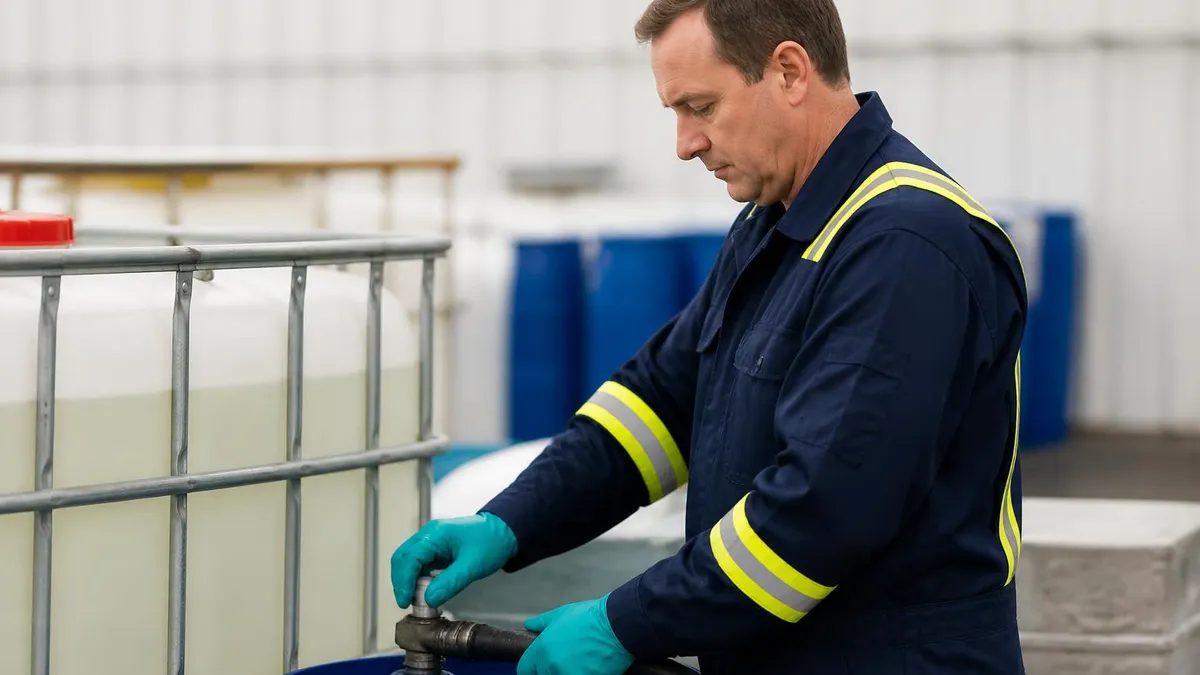
ELDT HazMat Training: Complete 2026 Federal Requirements, Theory Curriculum & Endorsement Path

TSA HazMat Background Check Locations: Complete Guide to Finding a Site, What to Expect, and How to Prepare
About the Author

Educational Psychologist & Academic Test Preparation Expert
Columbia University Teachers CollegeDr. Lisa Patel holds a Doctorate in Education from Columbia University Teachers College and has spent 17 years researching standardized test design and academic assessment. She has developed preparation programs for SAT, ACT, GRE, LSAT, UCAT, and numerous professional licensing exams, helping students of all backgrounds achieve their target scores.
Join the Discussion
Connect with other students preparing for this exam. Share tips, ask questions, and get advice from people who have been there.
View discussion (8 replies)