
HazMat Jobs: How Your Hazardous Materials Endorsement Opens High-Paying CDL Careers
🧠 Explore hazmat jobs available with your hazardous materials endorsement. Learn pay rates, requirements, and how to qualify for top CDL careers in 2026.

If you hold or are pursuing a hazardous materials endorsement, you are positioning yourself for some of the most in-demand and highest-paying careers in commercial trucking. Hazmat jobs span dozens of industries — from fuel delivery and chemical transport to military logistics and emergency response — and drivers who carry this specialized credential consistently earn 15–25% more than their non-endorsed peers. Understanding the full scope of opportunities available is the first step toward maximizing the return on your CDL investment.
The hazardous materials endorsement, often called the HazMat endorsement or H endorsement, is added to a Commercial Driver's License after a driver passes the CDL hazardous materials endorsement knowledge test, clears a TSA threat assessment background check, and pays the applicable state and federal fees. This process creates a meaningful barrier to entry that works in your favor: fewer qualified drivers means stronger employer competition for your skills and, in most cases, a noticeably higher base pay rate from day one on the job.
In 2026, the U.S. Bureau of Labor Statistics estimates that roughly 3.5 million CDL drivers are active nationwide, but only a fraction — estimated at around 600,000 — hold an active hazardous materials endorsement. That supply-demand gap has been widening steadily as regulations tighten, infrastructure ages, and demand for chemical, petroleum, and industrial goods continues to grow. Employers in refining, agriculture, construction, and manufacturing are actively competing for endorsed drivers, often offering sign-on bonuses ranging from $2,000 to $10,000 to attract qualified candidates quickly.
Understanding which specific hazmat jobs are the best fit requires knowing how different cargo classes affect daily work life. A driver hauling Class 3 flammable liquids like gasoline or diesel faces a very different daily routine than a driver transporting Class 6 toxic inhalation hazards or Class 9 miscellaneous hazardous materials like lithium batteries. Each class carries its own placard requirements, emergency response protocols, and loading restrictions, and employers will typically pay a premium that scales with the complexity and risk level of the materials being transported.
Preparation for the hazardous materials endorsement test is the critical foundation of your career trajectory. The written knowledge exam covers topics including proper labeling and placarding, shipping paper requirements, emergency response procedures, loading and segregation rules, and driver responsibilities under federal HazMat regulations. Most state DMVs draw their questions directly from the Federal Motor Carrier Safety Administration's CDL manual, and passing scores are typically set at 80% correct. Investing in quality study materials before your test day dramatically improves your pass rate and speeds up your path to employment.
The financial case for pursuing a hazmat career is compelling even when you factor in the cost and time commitment of earning the endorsement. The TSA background check fee, state application fees, and study materials might total $200–$500 in upfront costs, but the average annual salary premium for a hazmat-endorsed CDL driver compared to a non-endorsed driver is approximately $8,000–$12,000 per year. That means most drivers fully recoup their investment within the first month of driving — and continue collecting that premium for the remainder of their career.
This guide covers everything you need to know about hazmat jobs in 2026: the most lucrative career paths, typical pay ranges by specialty, hiring requirements beyond the endorsement itself, renewal obligations to keep your credential current, and the best study strategies to pass the knowledge test on your first attempt. Whether you are a new CDL holder evaluating which endorsements to pursue or an experienced driver looking to advance into higher-paying specialized freight, this article will give you a clear and actionable roadmap.
HazMat Jobs & Endorsement by the Numbers
Top HazMat Job Categories and Pay Ranges
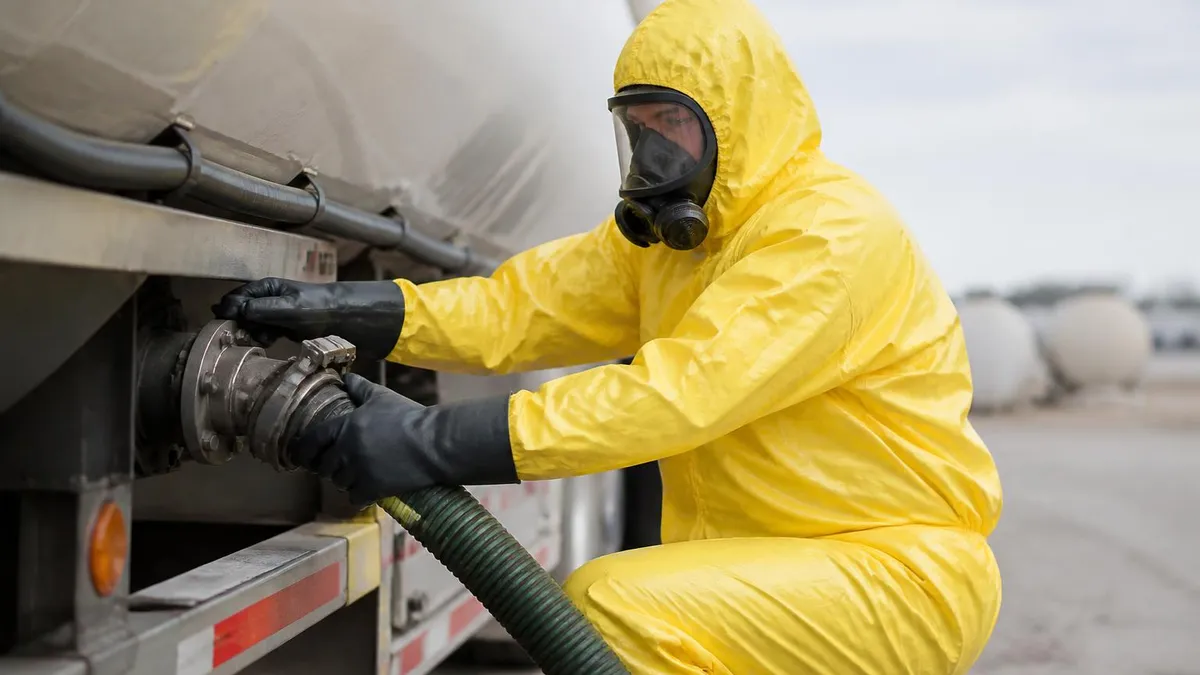
Tanker drivers hauling gasoline, diesel, and heating oil are among the most common hazmat jobs. Average pay ranges from $65,000 to $90,000 annually. Drivers typically work regional or local routes, making home-time predictable and attractive.
Transporting industrial chemicals, acids, and compressed gases for manufacturing and agriculture. Pay ranges from $70,000 to $95,000+ per year. Requires strong knowledge of Class 3, 6, and 8 hazardous materials handling procedures and segregation rules.
Hauling hazardous waste, medical waste, and regulated materials to disposal or treatment facilities. Growing sector with starting pay around $60,000 rising to $80,000 with experience. RCRA training is often required in addition to the CDL endorsement.
Defense contractors and federal agencies hire HazMat-endorsed CDL drivers for ammunition, explosives, and classified cargo transport. Pay can reach $85,000–$110,000 with security clearances. Additional federal background vetting beyond TSA is typically required.
Large national carriers like Schneider, Werner, and Prime actively recruit endorsed drivers for mixed HazMat freight. These jobs offer structured pay scales, strong benefits, and consistent freight lanes, with average annual earnings around $68,000–$80,000.
Before you can compete for any of the well-paying hazmat jobs described above, you need to satisfy all of the hazardous materials endorsement requirements set by both the Federal Motor Carrier Safety Administration and your state's Department of Motor Vehicles. The requirements are layered and involve more steps than a standard CDL endorsement, which is one reason why the credential commands such a strong wage premium in the driver market.
The first requirement is holding a valid Class A, B, or C Commercial Driver's License. The hazardous materials endorsement cannot be added to a learner's permit, and you must have already passed your CDL skills test before you can sit for the HazMat knowledge exam. In most states, you must also be at least 21 years old to transport hazardous materials in interstate commerce, though some intrastate exceptions exist for drivers between 18 and 20 years old depending on state law.
The most distinctive requirement compared to other CDL endorsements is the TSA Hazardous Materials Endorsement Threat Assessment Program background check. Under federal law, any driver wishing to add the H endorsement to their CDL must submit fingerprints through an approved channeling agency and pay a federal fee of approximately $86.50. The TSA then conducts a comprehensive criminal history and terrorism risk assessment. Drivers with certain disqualifying offenses — including felony convictions, immigration violations, and specific misdemeanor convictions — are automatically denied the endorsement regardless of how well they perform on the knowledge test.
The CDL hazardous materials endorsement knowledge test itself covers nine primary subject areas drawn from the HazMat section of your state's CDL manual. Expect questions on the HazMat communication system, including labels, placards, and markings; shipping papers and emergency response information; loading, unloading, and storage restrictions; handling procedures for different hazard classes; and emergency response procedures including first responder notification requirements. Most exams contain between 30 and 40 questions, and you need to answer at least 80% correctly to pass.
Study preparation makes a measurable difference in first-attempt pass rates. Drivers who rely solely on reading the CDL manual one time typically pass at a rate around 55–65%. Those who supplement their reading with practice tests, flashcards, and review of real-world placard identification scenarios see first-attempt pass rates climb to 75–85%. The investment of 15–20 additional study hours pays enormous dividends in avoiding the cost and delay of retaking the exam, which in some states requires a mandatory waiting period of one to seven days between attempts.
Once you have passed the knowledge exam and cleared the TSA background check, your state DMV will add the H endorsement to your CDL. In many states, the endorsement appears as an "H" in the endorsement field of your license. Some states issue a combined "X" endorsement that combines both the tanker (N) and hazardous materials (H) endorsements, which is particularly valuable for fuel and chemical transport careers where tanker endorsement is also standard. The combined X endorsement can open doors that neither endorsement alone would unlock.
Renewal of the hazardous materials endorsement occurs every five years in most states, though some states align it with the CDL renewal cycle which may be shorter. The renewal process requires repeating the TSA threat assessment — including a new fingerprint submission and fee payment — as well as retaking the HazMat knowledge test in many states. Employers who rely on HazMat-endorsed drivers typically track renewal dates carefully and may place drivers out of service for HazMat freight if an endorsement lapses, making timely renewal a professional and financial priority.
HazMat Practice Test Questions
Prepare for the HazMat - Hazardous Materials Endorsement exam with our free practice test modules. Each quiz covers key topics to help you pass on your first try.
HazMat CDL Hazardous Materials (HazMat) En...
HazMat Exam Questions covering CDL Hazardous Materials (HazMat) Endorsement. Master HazMat Test concepts for certification prep.
HazMat CDL Hazardous Materials (HazMat) En...
Free HazMat Practice Test featuring CDL Hazardous Materials (HazMat) Endorsement Trivia. Improve your HazMat Exam score with mock test prep.
HazMat Hazardous Materials (HazMat) Endors...
HazMat Mock Exam on Hazardous Materials (HazMat) Endorsement Awareness. HazMat Study Guide questions to pass on your first try.
HazMat Hazardous Materials (HazMat) Endors...
HazMat Test Prep for Hazardous Materials (HazMat) Endorsement Operations. Practice HazMat Quiz questions and boost your score.
HazMat Hazardous Materials (HazMat) Endors...
HazMat Questions and Answers on Hazardous Materials (HazMat) Endorsement Theory. Free HazMat practice for exam readiness.
HazMat Ultimate CDL Hazardous Materials (H...
HazMat Mock Test covering Ultimate CDL Hazardous Materials (HazMat) Endorsement. Online HazMat Test practice with instant feedback.
HazMat Emergency Response
Free HazMat Quiz on HazMat Emergency Response. HazMat Exam prep questions with detailed explanations.
HazMat Loading, Unloading, and Segregation
HazMat Practice Questions for HazMat Loading, Unloading, and Segregation. Build confidence for your HazMat certification exam.
Hazardous Materials Endorsement Test and Study Guide
The hazardous materials endorsement test evaluates your knowledge across nine subject domains: the HazMat communication system, shipping papers, marking and labeling requirements, placarding rules, loading and segregation restrictions, handling and transporting procedures, bulk packaging standards, cargo tank safety, and emergency response actions. Questions are drawn directly from Section 9 of the FMCSA CDL manual, and many states include scenario-based questions that test your ability to apply rules to real transport situations rather than just recall definitions.
Approximately 35–40% of test questions focus on identification — knowing which placard applies to which hazard class, reading DOT label colors and symbols, and understanding UN/NA identification number formats. Another 25–30% cover loading and segregation rules, which govern which hazardous materials can legally be transported together. The remaining questions address shipping paper completion, emergency notification procedures, and driver responsibilities during incidents. Practicing with realistic test simulations dramatically improves your ability to recognize question patterns and avoid common traps about exception thresholds and quantity limits.
Is a HazMat Endorsement Worth It for Your CDL Career?
- +Earn $8,000–$12,000 more per year on average compared to non-endorsed CDL drivers
- +Qualify for a much wider range of job openings across petroleum, chemical, agricultural, and government sectors
- +Sign-on bonuses of $2,000–$10,000 are common for endorsed drivers due to short supply
- +Greater job security since fewer drivers hold the endorsement and employers cannot easily replace you
- +Pathway to specialized tanker, bulk liquid, and hazardous waste careers with premium pay structures
- +Builds a resume that stands out immediately to dispatchers, fleet managers, and owner-operators
- −TSA background check adds $86.50 in federal fees and 7–14 business days of wait time
- −Disqualifying criminal history can result in automatic TSA denial, blocking the endorsement entirely
- −Additional study time of 20–40 hours required beyond standard CDL exam preparation
- −Must renew every five years including retaking the knowledge test and a new TSA background check
- −Some employers require additional company-specific HazMat training beyond the federal minimum before allowing you to haul
- −Certain HazMat cargo types carry higher physical risk and more stringent driving rules that increase job stress
Pros and Cons at a Glance
| Pros | Cons |
|---|---|
| Qualify for a much wider range of job openings across petroleum, chemical, agricultural, and government sectors | Disqualifying criminal history can result in automatic TSA denial, blocking the endorsement entirely |
| Greater job security since fewer drivers hold the endorsement and employers cannot easily replace you | Must renew every five years including retaking the knowledge test and a new TSA background check |
| Pathway to specialized tanker, bulk liquid, and hazardous waste careers with premium pay structures | Some employers require additional company-specific HazMat training beyond the federal minimum before allowing you to haul |
| Builds a resume that stands out immediately to dispatchers, fleet managers, and owner-operators | Certain HazMat cargo types carry higher physical risk and more stringent driving rules that increase job stress |
HazMat Endorsement Requirements Checklist
- ✓Hold a valid Class A, B, or C CDL before applying for the HazMat endorsement.
- ✓Be at least 21 years old for interstate HazMat transport (check your state for intrastate exceptions).
- ✓Schedule your TSA fingerprint appointment through an authorized IdentoGO or state-approved channeling agency.
- ✓Pay the TSA Threat Assessment fee (approximately $86.50 federally, plus any state-level processing fees).
- ✓Wait for TSA approval notification — typically 7–14 business days after fingerprint submission.
- ✓Study Section 9 of the FMCSA CDL manual thoroughly, covering all nine HazMat subject areas.
- ✓Complete at least five full-length hazardous material endorsement practice tests with a target score of 85%+.
- ✓Schedule and pass the HazMat knowledge test at your state DMV with a minimum score of 80% (70% in Texas).
- ✓Pay your state's CDL endorsement fee and have the H or X endorsement added to your license.
- ✓Track your renewal date and begin the renewal process at least 60 days before your endorsement expires.
The TSA Check Is the Step Most Drivers Underestimate
Many CDL drivers focus entirely on studying for the knowledge test and are surprised to learn that the TSA background check — not the exam — is often the longest part of the endorsement process. Submitting your fingerprints early, ideally before you begin intensive test study, means your TSA clearance often arrives right around the time you are ready to test. This sequencing can shave two to three weeks off your total time-to-endorsement, getting you into higher-paying hazmat jobs sooner.
Landing your first hazmat job after earning the endorsement requires more than simply updating your resume with the new credential. Employers in the hazardous materials transportation sector look for a combination of clean driving history, demonstrated knowledge of federal HazMat regulations, and a professional attitude toward safety compliance. Understanding what hiring managers actually prioritize will help you present yourself as the low-risk, high-value driver they are eager to hire.
Your Motor Vehicle Record (MVR) is typically the first document a HazMat employer will request. Commercial carriers transporting hazardous materials are held to stricter safety standards than standard freight carriers, and many use a three-year or five-year MVR review window. Drivers with no moving violations, no DUI or reckless driving convictions, and no at-fault accidents in that window will be viewed as ideal candidates. If your MVR has minor blemishes, be prepared to address them honestly during interviews and emphasize your current commitment to safe driving practices.
Beyond the MVR, most HazMat employers require a current medical examiner's certificate (DOT physical card), proof of your active endorsement, and completion of a company-specific HazMat orientation that supplements the federal baseline training. Some carriers — particularly those hauling Class 1 explosives, Class 2 compressed gases, or Class 6 toxic inhalation hazard materials — require additional specialized training certificates from FMCSA-approved providers before you can haul their freight independently. Asking about training requirements upfront during the job search process will help you avoid accepting an offer and then discovering that unpaid training weeks are required before your first paycheck.
The ELDT (Entry-Level Driver Training) federal rule, which took effect in February 2022, added new requirements for first-time HazMat endorsement applicants. Drivers adding the H endorsement for the first time must now complete a theory training curriculum from an FMCSA-registered training provider before taking the knowledge test. This requirement does not apply to drivers renewing an existing endorsement, but it is a critical consideration for new CDL holders who are planning their endorsement path. Choosing an FMCSA-registered ELDT provider ensures your training is compliant and your endorsement application will not be rejected on procedural grounds.
Networking with established HazMat drivers through trucking associations, online CDL driver forums, and local union halls can accelerate your job search significantly. Drivers with endorsements are a relatively small community, and word-of-mouth referrals carry substantial weight in this industry. Many carriers prefer to hire through driver referral programs, and endorsed drivers who refer other qualified endorsed drivers often receive referral bonuses. Joining organizations like the American Trucking Associations or participating in state trucking association events puts you in direct contact with fleet managers and recruiters who are actively looking for your skills.
Online job platforms including CDLjobs.com, TruckersReport, Trucking Truth, and standard job boards like Indeed and LinkedIn are all viable channels for finding hazmat job listings.
When applying through these platforms, use specific search terms that match the job categories you are targeting: "tanker driver," "chemical transport," "fuel hauler," or "HazMat Class 3 driver" will return more relevant results than broad searches for "CDL driver." Many carriers also post exclusive opportunities on their own websites weeks before they appear on third-party job boards, so developing a target list of 15–20 preferred carriers and monitoring their careers pages directly can give you first-mover advantage on the best openings.
Salary negotiation is an area where many new HazMat drivers leave money on the table. Because the endorsement represents a verifiable, government-certified credential, you have a concrete and objective basis for requesting pay above the standard CDL rate.
Before negotiating, research current pay rates for your target cargo type and region using resources like the Trucking Truth salary database and the BLS Occupational Employment Statistics tool. Walking into a negotiation knowing that the median HazMat tanker driver in your region earns $X per mile or $Y per year gives you a factual foundation that is much more persuasive than simply asking for more money without supporting data.
An expired hazardous materials endorsement means you are legally prohibited from transporting any HazMat freight until the renewal is complete. Most carriers will immediately reassign you to non-HazMat loads — at lower pay rates — until your endorsement is restored. Because the TSA background check portion of the renewal process takes 7–14 business days, begin your renewal at least 60 days before your current endorsement expiration date to avoid any gap in your earning power.
The hazardous material endorsement renewal process is a recurring professional obligation that every HazMat driver must manage proactively throughout their career. Unlike a standard CDL renewal, which in most states is primarily a vision test and fee payment, the HazMat endorsement renewal requires repeating the full TSA Hazardous Materials Endorsement Threat Assessment — including submitting new fingerprints and paying the federal fee again — and in many states retaking the HazMat knowledge examination. Treating renewal as a low-stakes formality is a common mistake that catches experienced drivers off guard and results in costly downtime.
State renewal cycles vary. Texas renews the HazMat endorsement every five years, aligned with the CDL renewal cycle. California also uses a five-year cycle. Some states, however, require renewal every two years as part of a shorter CDL renewal cycle. Check your state DMV's specific schedule and set a calendar reminder 90 days before your renewal deadline — 90 days gives you enough buffer to schedule fingerprinting, wait for TSA clearance, schedule the knowledge test, and handle any unexpected delays without ever letting the endorsement lapse.
For the knowledge test portion of renewal, most drivers find that a focused review of 10–15 hours is sufficient if they have been actively hauling HazMat freight and staying current with FMCSA regulatory updates. If you have spent several years driving non-HazMat routes or if significant regulatory changes have occurred since your last test, budget more review time. The FMCSA periodically updates the HazMat regulations, and new topics — such as updated lithium battery transport rules or revised toxic inhalation hazard distance requirements — may appear on current tests that were not on your original exam.
One important update that affects renewal applicants is the expanded TSA hazardous materials endorsement vetting criteria that were updated in recent years. The TSA's threat assessment now cross-references a broader range of federal databases, and drivers who have had name changes, address changes, or international travel since their last renewal should be prepared to provide documentation to resolve any discrepancies that arise during the background check process. Bringing a government-issued photo ID that matches your current CDL name and address to the fingerprint appointment speeds up this process considerably.
Financial planning for renewal is also worth considering. Between federal TSA fees, state application fees, and in some states a required course completion certificate from an FMCSA-registered ELDT provider for renewal applicants, the total renewal cost can range from $150 to $400 depending on your state and specific circumstances.
Some employers — particularly larger carriers and logistics companies — reimburse all or part of the renewal cost as a retention incentive, recognizing that replacing an experienced HazMat driver costs far more than covering a renewal fee. If your employer does not currently offer this benefit, it is worth raising during your next performance review or contract negotiation.
Drivers who transport radioactive materials (Class 7) or explosives (Class 1) may be subject to additional endorsement requirements beyond the standard H endorsement renewal, including carrier-specific recertification training and annual safety compliance reviews. These specialized commodity segments also typically carry the highest pay rates in the HazMat driver market, so the additional compliance burden is usually worth managing for drivers who are committed to long-term careers in these areas.
Staying organized with a personal compliance calendar that tracks not just endorsement renewal but also annual DOT physicals, employer-required training, and state-specific filing deadlines is one of the hallmarks of the most successful, highest-paid professional HazMat drivers.
Finally, building a relationship with a knowledgeable trucking industry attorney or a CDL compliance consultant can be valuable for drivers who encounter complications during the TSA renewal process — such as an erroneous record match or a disqualifying event from decades past that they were unaware of. These professionals understand the appeals process for TSA denial decisions and can often resolve issues that would otherwise permanently block endorsement renewal. The cost of a single consultation is typically far less than the income you would lose by operating without the endorsement for even a few weeks.
Maximizing your success on the hazardous materials endorsement test requires a structured, disciplined study approach rather than passive reading. The single most effective preparation technique is retrieval practice — actively testing your recall of rules and definitions through practice questions rather than simply re-reading the manual. Research in educational psychology consistently shows that students who study by testing themselves retain information 40–60% more effectively than students who study by reading alone, and this principle applies just as powerfully to CDL exam preparation.
Begin your study plan by downloading the official FMCSA CDL manual for your state and reading the HazMat section twice at a pace slow enough to absorb the content. On your first read, highlight or take notes on the nine hazard class definitions, the four major placard categories, and the key quantity thresholds that determine when placards are required.
On your second read, focus specifically on the rules governing shipping papers: what information must be included, in what order, and where the shipping papers must be kept during transport. Shipping paper questions account for roughly 20% of most HazMat knowledge exams.
Create a study schedule that allocates at least five dedicated study sessions over two to three weeks before your test date. Each session should begin with a 20-minute review of your notes, followed by 30–45 minutes of practice questions, and conclude with a 10-minute review of any questions you answered incorrectly.
This structure — review, practice, analyze errors — builds knowledge systematically and ensures you are identifying and correcting weaknesses rather than repeatedly practicing what you already know. Many successful test-takers keep a running list of topics they miss frequently and review that list at the start of every study session.
Placarding rules are one of the most frequently tested and most commonly misunderstood areas of the HazMat exam. The general rule is that placards are required when you are transporting 1,001 pounds or more of a hazardous material in a single category — but there are important exceptions for Table 1 materials, which always require placards regardless of quantity, and for certain commodity types like poison inhalation hazards that trigger placard requirements at any amount.
Building a reference chart of these exceptions and drilling on it specifically will protect you from the tricky threshold questions that catch many test-takers off guard.
The emergency response section of the exam tests your knowledge of what a driver must do if a HazMat incident occurs during transport. Key topics include when and how to notify the National Response Center (1-800-424-8802), what information must be provided during the notification call, how to use the Emergency Response Guidebook (ERG) to identify initial isolation distances, and what actions are prohibited — such as moving a leaking vehicle through a populated area when doing so would increase public exposure. Practice questions in this area often present scenario-based situations where you must identify the correct sequence of driver actions.
Using a combination of study resources produces better results than relying on any single material. The official state CDL manual is your authoritative source for exam content, but supplementing it with high-quality online practice question banks, flashcard decks for hazard class labels and placards, and video tutorials explaining HazMat communication systems helps you engage with the material from multiple angles. Visual learners particularly benefit from studying actual placard images and label designs rather than text descriptions alone, since many test questions present visual identification scenarios.
On the day of your knowledge test, arrive at the testing location at least 15 minutes early with your required identification documents. Most states require your current CDL, the TSA approval letter confirming your background check clearance, and a secondary form of ID.
Read each exam question carefully and completely before selecting your answer — many incorrect responses are chosen because test-takers skim questions and miss critical qualifiers like "except," "not required," or "only when." If you are uncertain about a question, eliminate obviously wrong answers first, then select the best remaining option rather than leaving it blank. Most HazMat knowledge tests do not penalize for wrong answers, so answering every question is always the right strategy.
Sample HazMat - Hazardous Materials Endorsement Practice Questions
Try these questions from our free HazMat - Hazardous Materials Endorsement practice tests. The correct answer and an explanation follow each question.
How many feet must you leave between your truck and an open flame when parking it with hazardous materials inside?
- A. 50 ft
- B. 100 ft
- C. 200 ft
- D. 300 ft
Answer: D. 300 ft
According to the U.S. Department of Transportation's Hazardous Materials Regulations (HMR), a truck containing hazardous materials must not be parked within 300 feet from an open flame or other sources of ignition. This requirement is outlined in 49 CFR § 177.834, which specifies the conditions for parking and storing hazardous materials in a safe and secure manner. The purpose of this requirement is to minimize the risk of fire or explosion in case of any leakage or release of hazardous materials from the truck.
What is the minimum distance a placarded vehicle must stay from an open fire?
- A. 50 feet
- B. 100 feet
- C. 200 feet
- D. 300 feet
Answer: D. 300 feet
Drivers must not park placarded vehicles within 300 feet of an open fire.
What background investigation is required to obtain a hazmat endorsement on a CDL?
- A. A state criminal background check only
- B. A TSA security threat assessment including an FBI fingerprint-based criminal history check
- C. A credit check and financial background review
- D. A medical examination by a certified DOT physician
Answer: B. A TSA security threat assessment including an FBI fingerprint-based criminal history check
All hazmat endorsement applicants must pass a TSA security threat assessment, which includes an FBI fingerprint-based criminal history records check.
What is the maximum time a placarded hazmat vehicle may be parked on or within 5 feet of a public road?
- A. No time limit as long as it has emergency triangles
- B. Only as long as necessary for loading/unloading
- C. Up to 4 hours with flashers on
- D. Up to 8 hours if attended
Answer: B. Only as long as necessary for loading/unloading
Placarded hazmat vehicles may only be parked on or near a public road for the time necessary for operations — they should not be left unattended on or near roadways.
Take the full HazMat - Hazardous Materials Endorsement practice test
HazMat Questions and Answers
HazMat Endorsement: CDL Requirements, Test, and Cost
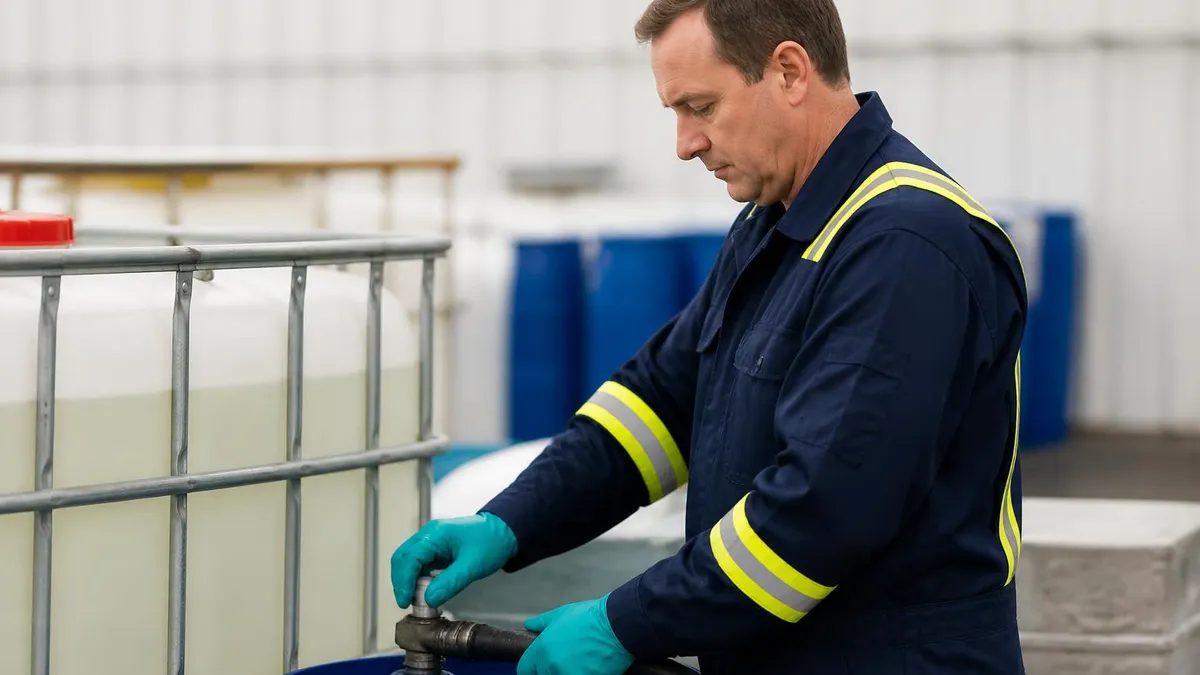
ELDT HazMat Training: Complete 2026 Federal Requirements, Theory Curriculum & Endorsement Path

HazMat Driver Jobs: Careers, Pay, and How to Qualify in 2026

HazMat Code Meanings: Understanding UN/NA Identification Numbers for Your CDL Endorsement

A Comprehensive Guide to HazMat Training
About the Author

Educational Psychologist & Academic Test Preparation Expert
Columbia University Teachers CollegeDr. Lisa Patel holds a Doctorate in Education from Columbia University Teachers College and has spent 17 years researching standardized test design and academic assessment. She has developed preparation programs for SAT, ACT, GRE, LSAT, UCAT, and numerous professional licensing exams, helping students of all backgrounds achieve their target scores.
Join the Discussion
Connect with other students preparing for this exam. Share tips, ask questions, and get advice from people who have been there.
View discussion (8 replies)