
Class 3 HazMat: Flammable Liquids and the Hazardous Materials Endorsement Explained
🔎 Hazardous materials endorsement guide: Class 3 flammables, the HazMat test, requirements, renewal & free practice questions.
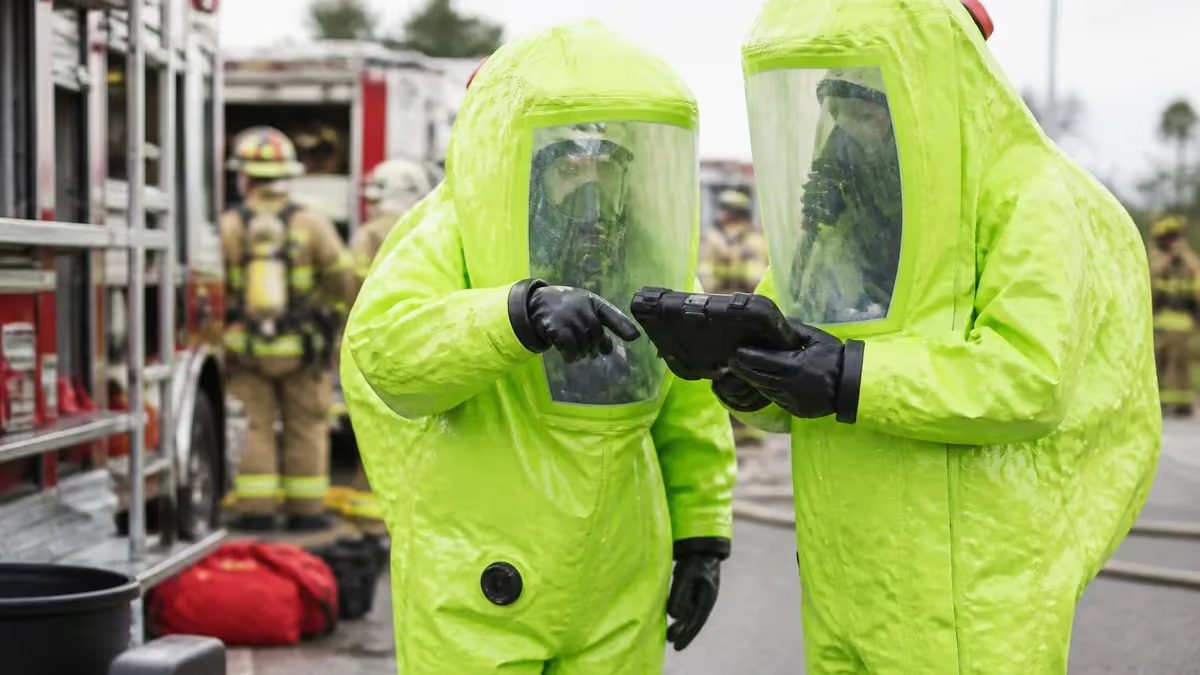
If you haul gasoline, paint, ethanol, or diesel additives for a living, you are working with class 3 hazmat every single day, and the federal government wants proof that you know how to do it safely. Earning a class 3 hazmat qualification means adding the hazardous materials endorsement to your commercial driver's license. This guide explains what Class 3 flammable liquids are, why they matter, and exactly how the endorsement process works from your first application to your renewal years down the road.
Class 3 is the hazard division reserved for flammable and combustible liquids, which makes it one of the most common cargoes on American highways. Tankers full of gasoline, totes of solvents, drums of alcohol, and cases of nail polish remover all fall under this single classification. Because these liquids ignite easily and burn fast, the Department of Transportation regulates how they are packaged, labeled, loaded, and transported. Drivers who move them must understand the science and the paperwork behind every load.
The hazardous materials endorsement is the credential that proves you have learned those rules. Unlike a basic Class A or Class B license, the HazMat endorsement requires a written knowledge exam, a federal background check through the Transportation Security Administration, fingerprinting, and entry-level driver training before you can even schedule the test. It is the only CDL endorsement with a security component, which surprises many new drivers who assume it works like the tanker or doubles endorsement.
Class 3 materials are everywhere in the supply chain, so demand for qualified flammable-liquid haulers stays consistently high. A driver who can legally pull a fuel tanker or deliver chemical solvents commands better pay and more steady work than one limited to dry freight. That earning potential is the main reason so many drivers invest the time and money into studying for the cdl hazardous materials endorsement, even though the process is more involved than other endorsements.
Understanding the difference between flammable and combustible liquids is the foundation of Class 3 knowledge. A flammable liquid has a flashpoint below 140 degrees Fahrenheit, while a combustible liquid sits between 140 and 200 degrees. The flashpoint is the lowest temperature at which a liquid gives off enough vapor to ignite. Gasoline, with a flashpoint around minus 45 degrees, is dangerously flammable, while diesel fuel at roughly 125 degrees is treated with more flexibility under certain reclassification rules.
Throughout this article we will cover the eligibility requirements, the structure of the knowledge test, the TSA background check, placarding and segregation rules specific to flammable liquids, renewal timelines, and the practical study habits that help drivers pass on the first attempt. Whether you are brand new to commercial driving or an experienced trucker finally adding HazMat to your resume, you will find a clear roadmap here that turns a confusing process into a series of manageable steps.
Treat this guide as both an introduction and a reference. The rules around Class 3 cargo are detailed, and the consequences of getting them wrong range from fines to fires, so it pays to learn the material thoroughly rather than memorizing just enough to scrape through the exam. Bookmark it, work through the linked practice questions, and return whenever you need to refresh a specific point before a delivery, an inspection, or your next renewal cycle.
Class 3 HazMat by the Numbers
Key Facts at a Glance
| Item | Value | Details |
|---|---|---|
| Endorsement Validity | 5 yrs | TSA threat assessment cycle |
| TSA Application Fee | $86.50 | Background check and fingerprinting |
| Typical Passing Score | 80% | Varies slightly by state |
| Knowledge Test Questions | 30-60 | Depends on state DMV |
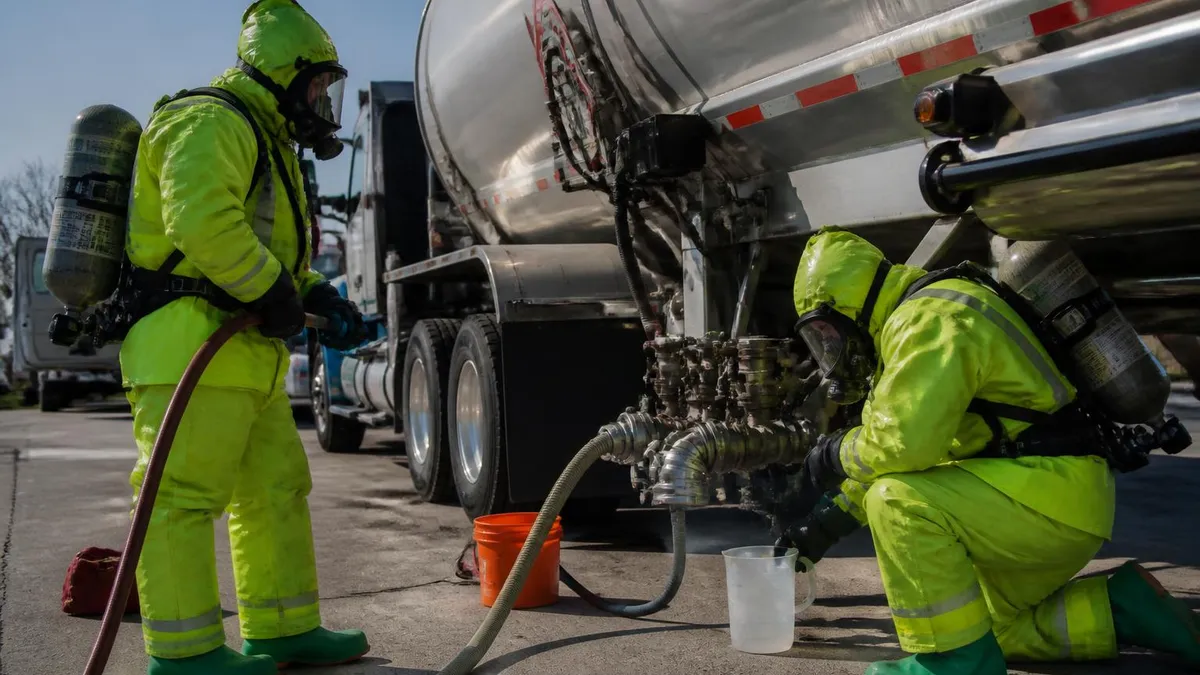
Hazardous Materials Endorsement Requirements
You must already hold or be applying for a Class A, B, or C commercial driver's license. The HazMat endorsement is added to an existing CDL, never issued on its own to a non-commercial driver.
Applicants must be a U.S. citizen, national, or lawful permanent resident. The TSA verifies immigration and citizenship status as part of the security threat assessment before approving the endorsement.
A federal security threat assessment includes fingerprinting and a review of criminal, immigration, and intelligence records. Certain disqualifying felonies block approval permanently or for a set period of years.
Since 2022, first-time applicants must complete entry-level driver training from a registered provider before taking the knowledge test. The training covers HazMat theory and is logged in the federal registry.
Pass the written HazMat knowledge test at your state DMV. Questions cover classification, placarding, loading, segregation, and emergency response drawn from the federal HazMat handbook section.
Class 3 of the hazardous materials classification system covers flammable and combustible liquids, and it is by volume one of the largest categories moving across U.S. roads. The defining characteristic is the flashpoint, the temperature at which a liquid releases enough vapor to ignite when an ignition source is present. Liquids with a flashpoint below 140 degrees are flammable, while those between 140 and 200 degrees are combustible. Vapor, not the liquid itself, is what actually burns when ignited.
Common Class 3 cargoes read like a list of everyday products scaled up to bulk quantities. Gasoline, ethanol, methanol, acetone, toluene, paint thinner, alcohol-based sanitizers, adhesives, and many printing inks all qualify. Even seemingly harmless consumer goods like perfume, hand sanitizer, and certain cleaning products are regulated as Class 3 when shipped in large amounts. This breadth is exactly why the endorsement opens so many doors for a driver willing to learn the rules.
Gasoline is the textbook example of a Class 3 hazard and worth understanding in detail. Its flashpoint sits around minus 45 degrees, meaning it produces ignitable vapor in virtually any climate, even on a freezing winter morning. The vapor is heavier than air, so it pools in low spots like the bottom of a trailer, a loading bay, or a ditch, where a single spark can trigger ignition. Drivers must respect bonding and grounding procedures during loading to prevent static discharge.
Diesel fuel illustrates an important nuance in the rules. With a flashpoint near 125 degrees, diesel technically meets the flammable definition, but federal regulations allow shippers to reclassify it as a combustible liquid in certain non-bulk situations, which changes the placarding obligations. Knowing these reclassification provisions is the kind of detail the knowledge exam tests, and it is also the kind of detail that keeps you compliant during a roadside inspection by a Department of Transportation officer.
Packing groups add another layer to Class 3 handling. The DOT assigns flammable liquids to Packing Group I, II, or III based on how easily they ignite, with Group I being the most dangerous and requiring the most strong packaging. A driver does not personally assign packing groups, but recognizing them on shipping papers helps you verify that a load was prepared correctly before you accept responsibility for moving it down the highway.
The hazards of Class 3 liquids go beyond fire. Many flammable solvents are also toxic to inhale, can cause chemical burns, or pollute waterways if spilled. A leaking tote of methanol presents poisoning and environmental risks on top of its flammability. This is why emergency response planning, spill containment, and knowing how to read the response guide in the Emergency Response Guidebook are all part of the training that supports the hazardous materials endorsement.
Finally, Class 3 interacts with other hazard classes during loading. Flammable liquids cannot be stored next to oxidizers, certain corrosives, or organic peroxides because a leak or reaction could trigger a fire or explosion. Segregation tables in the regulations dictate which materials may share a trailer and which must be physically separated. Mastering these tables protects you, the public, and the cargo, and it forms a core part of why the endorsement exists in the first place.
Inside the Hazardous Materials Endorsement Test
The hazardous materials endorsement test is a written knowledge exam administered at your state DMV, typically containing 30 to 60 multiple-choice questions depending on the state. Most states require a passing score around 80 percent, meaning you can miss only a handful of questions. There is no driving or skills component for HazMat specifically, since the danger lies in handling and paperwork rather than maneuvering the vehicle itself.
Questions are drawn from the hazardous materials section of your state's CDL manual, which mirrors federal regulations closely. You will see items on classification, placarding, shipping papers, loading and unloading, segregation, and emergency response. Reading the official manual cover to cover for the HazMat chapter is the single most reliable way to prepare for the exact wording the test tends to use.
Is the HazMat Endorsement Worth It?
- +Higher pay rates than standard dry-van and dry-freight driving
- +Access to fuel tanker, chemical, and Class 3 flammable hauling jobs
- +More consistent year-round work and freight availability
- +Improves your value and bargaining power with carriers
- +Combines well with the tanker endorsement for premium routes
- +Demonstrates safety knowledge that employers actively seek
- −Requires a TSA background check and fingerprinting fee
- −Knowledge exam adds study time on top of your base CDL
- −Must complete ELDT theory training as a first-time applicant
- −Certain felony convictions can disqualify you entirely
- −Renewal every five years repeats the background check process
- −Stricter rules and liability when hauling flammable loads
Hazardous Materials Endorsement Pre-Application Checklist
- ✓Confirm you hold or are applying for a valid Class A, B, or C CDL.
- ✓Verify your U.S. citizenship or lawful permanent resident status.
- ✓Review your record for any TSA disqualifying felony convictions.
- ✓Enroll with a registered ELDT provider for HazMat theory training.
- ✓Complete and pass the entry-level driver training curriculum online.
- ✓Download your state CDL manual and study the HazMat chapter.
- ✓Work through a hazardous material endorsement practice test repeatedly.
- ✓Submit your TSA security threat assessment application and pay the fee.
- ✓Schedule and attend your fingerprinting appointment promptly.
- ✓Pass the written knowledge exam at your state DMV.
- ✓Pay the endorsement fee and receive your updated CDL.
- ✓Set a calendar reminder for your five-year renewal date.
The background check is the real bottleneck
Most drivers can study for and pass the knowledge test in a few weeks, but the TSA security threat assessment can take 30 to 60 days to clear. Apply for your background check early, before you finish studying, so the slowest part of the process runs in the background while you prepare for the exam.
Placarding is the most visible part of Class 3 compliance, and it is the language emergency responders read from a distance when something goes wrong. A FLAMMABLE placard for Class 3 is a red diamond with white text and a flame symbol, displayed on all four sides of the vehicle. The placard tells firefighters, police, and rescue crews what they are approaching before they ever reach the cab, which can be the difference between a controlled response and a tragedy.
Placards are required when you transport certain quantities of hazardous materials, and the threshold depends on the hazard class. For most Class 3 flammable liquids in bulk, placards are mandatory regardless of amount, while smaller non-bulk shipments may fall under exceptions. Bulk packaging like a cargo tank always carries placards. Knowing exactly when placards are and are not required is a frequent exam topic and an even more frequent inspection point on the road.
The identification number, a four-digit UN or NA code, often appears with the placard or on an orange panel. Gasoline carries UN 1203, for example, while ethanol is UN 1170. These numbers let responders look up the material in the Emergency Response Guidebook and find the correct evacuation distances, firefighting media, and first-aid measures. As a driver, you confirm that the numbers on your placards match the shipping papers in your cab before you roll.
Loading and unloading flammable liquids demand strict procedures to control static electricity. Bonding connects the cargo tank and the receiving container so they share the same electrical charge, while grounding connects the equipment to the earth. Without these steps, the friction of liquid flowing through a hose can build a static charge that discharges as a spark, igniting the vapor. A single skipped grounding cable has caused fatal explosions at loading racks.
Segregation rules keep incompatible cargoes apart inside a trailer. Class 3 flammables must be kept away from oxidizers such as Class 5.1 materials, because an oxidizer feeds a fire and can turn a small leak into an inferno. The segregation table in the regulations spells out which combinations are forbidden and which require physical separation. When you accept a mixed load, checking the table is part of your duty before the doors close.
Attended parking and route rules also apply to flammable liquids in bulk. A loaded cargo tank of gasoline generally cannot be left unattended except in a safe, designated location, and many jurisdictions restrict flammable cargo from tunnels, bridges, and densely populated routes. Planning your route in advance to comply with these restrictions avoids fines, protects the public, and prevents the costly delay of being turned back at a restricted crossing during a delivery.
Emergency response is the final pillar of safe Class 3 handling. If a flammable liquid leaks or a fire starts, your first responsibility is to protect life: warn others, keep ignition sources away, and call emergency services with your location and the UN numbers from your shipping papers. You are not expected to fight a major fire, but you are expected to contain small spills when safe and to provide responders with accurate cargo information immediately.
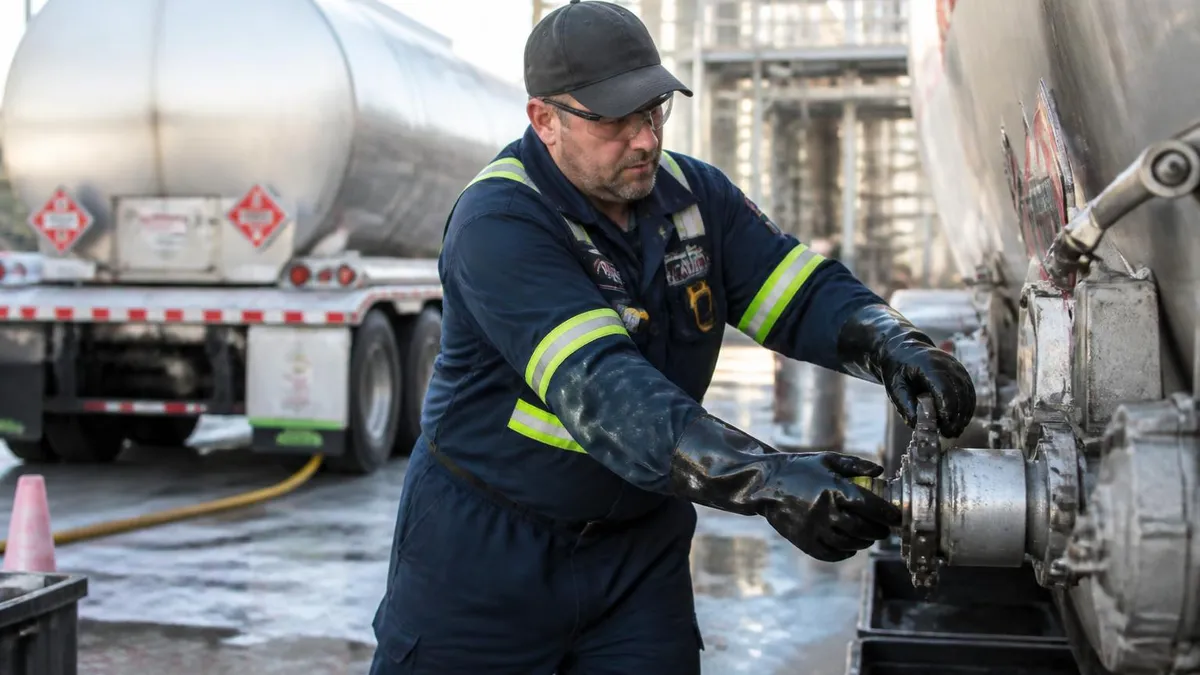
The TSA maintains a list of permanently and temporarily disqualifying crimes for the hazardous materials endorsement, including terrorism, espionage, and certain violent or explosives-related felonies. A disqualifying conviction can deny or revoke your endorsement regardless of how well you score on the written test. Review the TSA's list before paying any fees.
The hazardous materials endorsement is not a one-time achievement; it must be renewed, typically every five years, because the underlying TSA security threat assessment expires on that cycle. The hazardous material endorsement renewal process repeats the core steps of your original application: a new background check, fresh fingerprinting in most cases, and in many states a retake of the written knowledge test. Treating renewal as a formality is a mistake that costs drivers their qualification and, briefly, their income.
Timing your renewal matters more than most drivers expect. Because the TSA threat assessment can take a month or two to clear, you should begin the renewal process well before your endorsement expires, ideally 60 to 90 days ahead. If your endorsement lapses, you cannot legally haul placarded loads, which means a carrier may pull you off flammable routes until your class 3 hazmat credential is reinstated. A short gap can cost weeks of premium-paying work.
State rules vary on whether you must retest your knowledge at renewal. Some states waive the written exam if your endorsement is still active, while others require you to pass it again every cycle. Check your state DMV's specific renewal policy early, because discovering a retest requirement the week your endorsement expires leaves no time to study. The smart move is to keep your knowledge sharp year-round rather than cramming under deadline pressure.
The fees recur at renewal too. You will pay the TSA application fee again, currently around $86.50 in most cases, plus any state endorsement and testing fees. Some states offer a reduced fee for renewal threat assessments if you stay within the same program, so it pays to renew through the same channel rather than starting over as a brand-new applicant. Budgeting for these recurring costs prevents an unwelcome surprise every five years.
Keeping your endorsement active also depends on maintaining your underlying CDL in good standing. A suspended or revoked CDL takes your HazMat endorsement down with it, and serious traffic or drug-and-alcohol violations can trigger that suspension. Because flammable-liquid hauling carries improved liability, carriers watch the records of their HazMat drivers closely, and a clean driving history is part of staying employable in this niche.
Address changes, name changes, and moving to a new state all affect your endorsement. If you relocate, you generally transfer your CDL to the new state and may need to reapply for or transfer the HazMat endorsement under that state's rules, sometimes including a new background check. Notify the relevant agencies promptly when your personal information changes so your records stay accurate and your renewal does not stall over a mismatched address or name.
Finally, build a personal renewal calendar the day you first receive your endorsement. Note the expiration date, then set reminders at 90, 60, and 30 days out. Add the dates you must reapply for the TSA assessment and schedule fingerprinting. Drivers who systematize their renewal almost never face a lapse, while those who rely on memory frequently scramble at the last minute. The endorsement is valuable; protect it with the same diligence you bring to your loads.
Passing the hazardous materials endorsement test on your first try comes down to a disciplined study plan rather than luck. Start with the official source: download your state CDL manual and read the HazMat section completely, twice. The manual is written in the same language the exam uses, so familiarity with its phrasing pays off directly. Highlight the tables, definitions, and numeric thresholds, because those concrete facts are the items most likely to appear as questions on test day.
Layer practice tests on top of your reading. A good hazardous material endorsement practice test does more than quiz you; it shows you which topics you consistently miss so you can target your review. Treat every wrong answer as a lesson, not a failure. Go back to the manual, find the rule you misunderstood, and rewrite it in your own words. This active correction cements the knowledge far better than simply rereading the explanation and moving on to the next question.
Focus extra energy on the high-frequency topics: placarding thresholds, the segregation table, shipping paper requirements, and emergency response basics. These categories generate a disproportionate share of test questions, and they happen to be the rules you will use most often on the job. Mastering them serves you twice, once on the exam and again every time you load a trailer of Class 3 flammables and need to verify the load is compliant before you leave the dock.
Use spaced repetition rather than cramming. Studying 30 to 45 minutes a day for two or three weeks beats a single marathon session the night before. Your brain consolidates information during sleep, so spreading study across multiple days produces stronger recall. Schedule short daily sessions, and use a quick five-minute practice quiz each morning as a warm-up to surface anything you forgot overnight before it costs you points on the real test.
Do not neglect the security side of the process while you study the academic material. The TSA background check runs on its own timeline, so submit that application early and track its status. There is nothing more frustrating than acing the knowledge exam only to wait weeks for a background clearance you could have started sooner. Coordinating the two tracks in parallel is the single biggest time-saver in the entire endorsement process for most applicants.
On exam day, arrive rested and bring the required identification documents. Read each question completely before answering, watching for qualifying words like always, never, except, and only, which flip the meaning of a statement. If a question stumps you, eliminate the obviously wrong answers first to improve your odds, then go with your trained instinct. Do not rush; most states do not impose a tight time limit, so use the time to verify your answers.
After you pass, keep your study materials handy rather than discarding them. The same knowledge that earned your endorsement keeps you compliant on the road and prepares you for renewal years later. Periodically refresh on placarding and segregation, especially if you switch carriers or cargo types. The drivers who treat HazMat knowledge as a living skill rather than a one-time hurdle are the ones who stay safe, stay employed, and stay confident hauling flammable liquids for the long haul.
Sample HazMat - Hazardous Materials Endorsement Practice Questions
Try these questions from our free HazMat - Hazardous Materials Endorsement practice tests. The correct answer and an explanation follow each question.
What must you do before loading or unloading flammable liquids?
- A. Park on a level surface only
- B. Turn off the engine, set the parking brake, and ground the vehicle
- C. Open all cargo doors fully
- D. Notify the fire department
Answer: B. Turn off the engine, set the parking brake, and ground the vehicle
Before loading or unloading flammable liquids, turn off the engine, set the parking brake, and ensure the vehicle is properly grounded to prevent static ignition.
When transporting Class 2.1 (Flammable Gas) materials, which action is prohibited at a loading dock?
- A. Using a hand truck to move cylinders
- B. Smoking within 25 feet of the vehicle
- C. Checking tire pressure before departure
- D. Recording the tank serial number on shipping papers
Answer: B. Smoking within 25 feet of the vehicle
Smoking within 25 feet of a vehicle transporting flammable gases is strictly prohibited due to the ignition risk.
Which of the following statements is accurate for Class 4 flammable solids?
- A. Substances that releases oxygen
- B. A chemical substance that in itself can react to produce a gas at a relatively high temperature and pressure and at such a speed as to damage the surroundings.
- C. Easily ignited and difficult to extinguish
- D. Very reactive with combustibles - spontaneous combustion
Answer: C. Easily ignited and difficult to extinguish
Class 4 flammable solids are materials that are readily combustible or liable to cause fire under conditions encountered in transport. They are characterized by their ease of ignition, often by friction, heat, or contact with moisture. Once ignited, these substances can be difficult to extinguish due to their inherent flammability and potential for rapid, sustained combustion.
Flammable liquids that gave an attraction to water
- A. Miscible liquid
- B. Polar solvent
Answer: B. Polar solvent
A polar solvent is a flammable liquid (such as alcohol, acetone, or ketones) that is attracted to and mixes with water, which is why alcohol-resistant foam is needed to extinguish it. While 'miscible liquid' describes the water-mixing property generally, 'polar solvent' is the correct hazmat term for this class of flammable liquids.
Take the full HazMat - Hazardous Materials Endorsement practice test
HazMat Questions and Answers
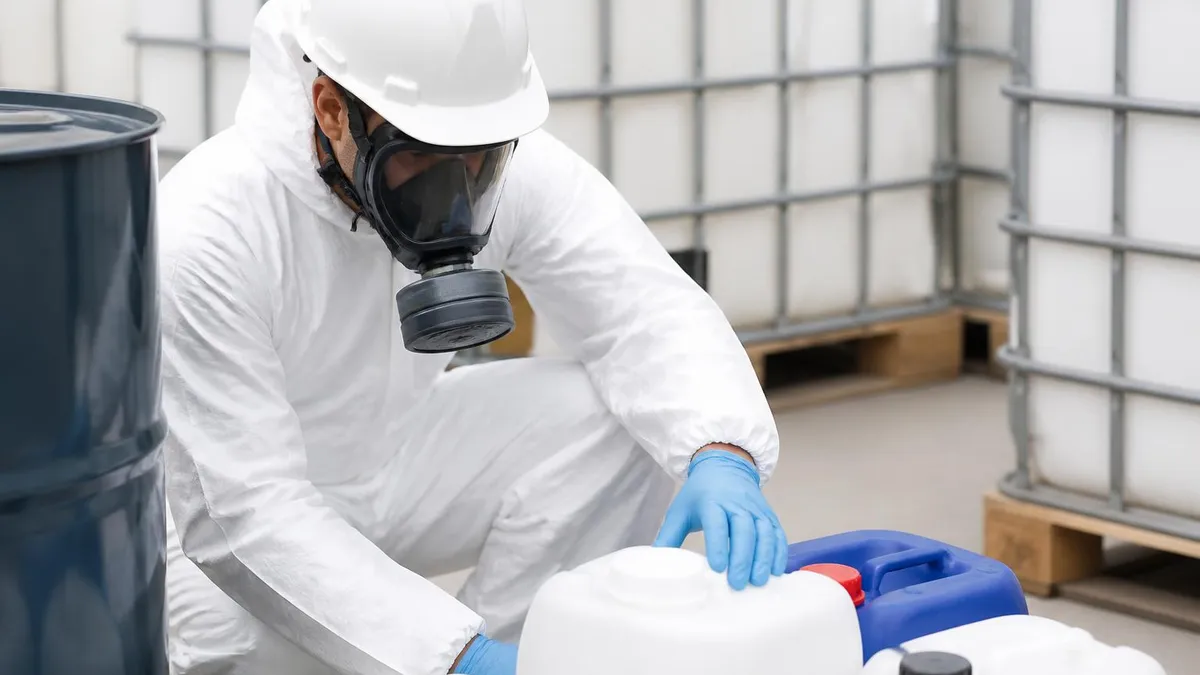
HazMat Endorsement: CDL Requirements, Test, and Cost
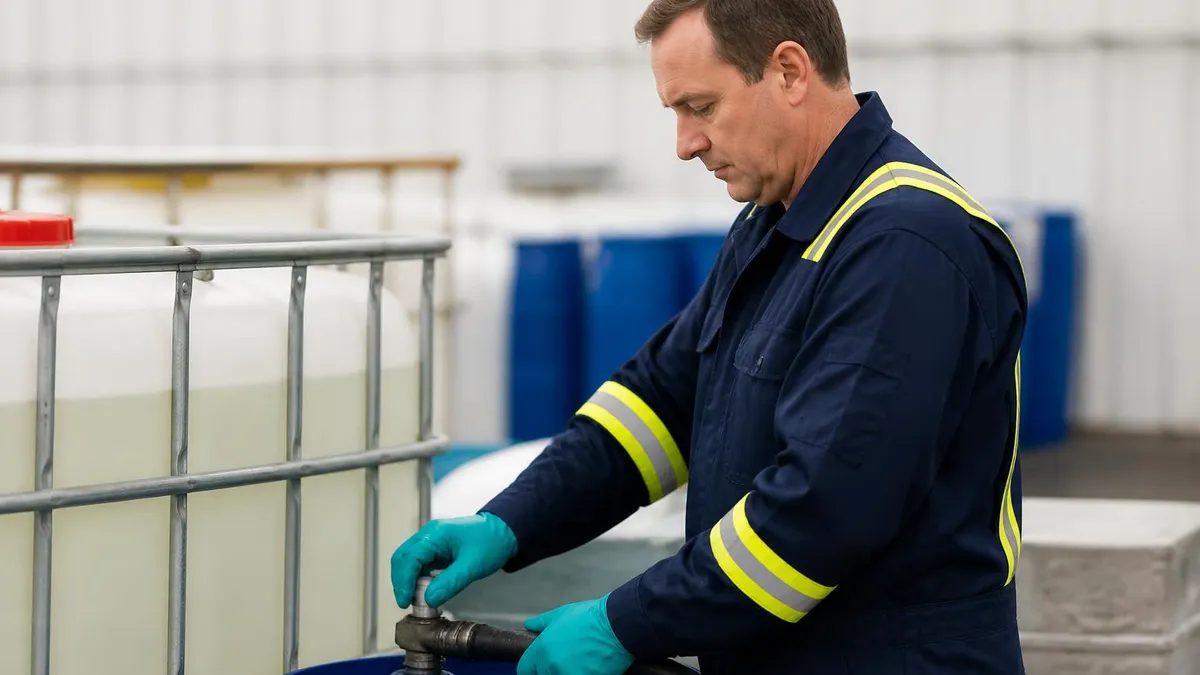
ELDT HazMat Training: Complete 2026 Federal Requirements, Theory Curriculum & Endorsement Path
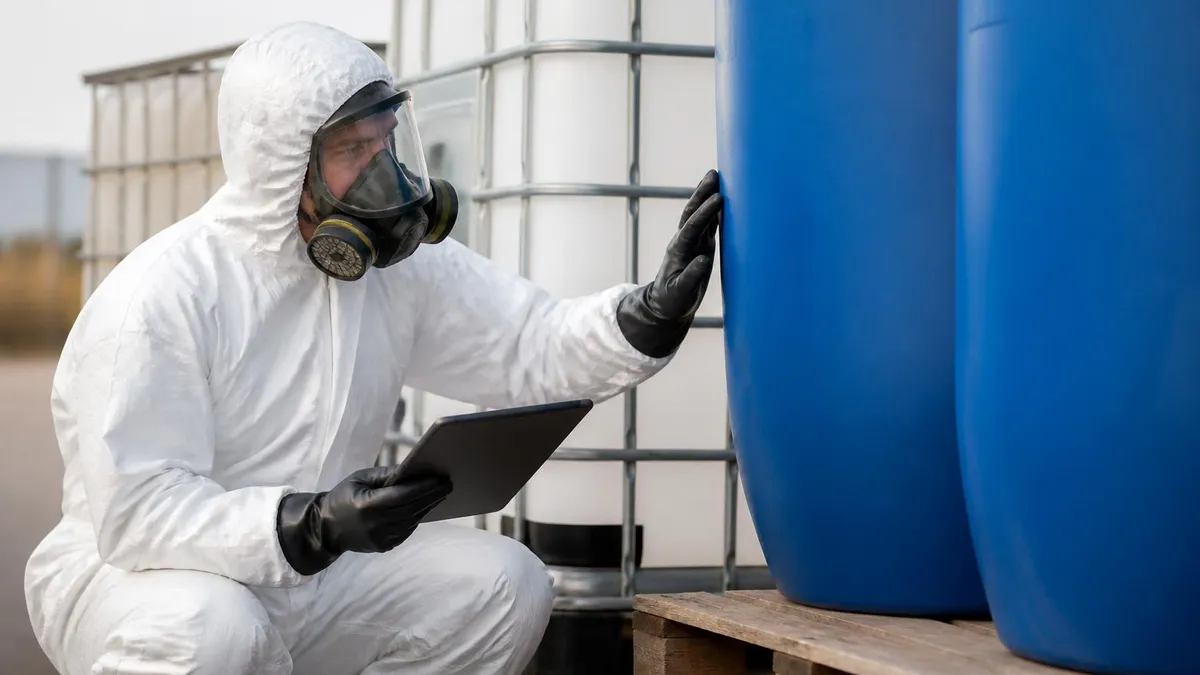
HazMat Code Meanings: Understanding UN/NA Identification Numbers for Your CDL Endorsement

HazMat Driver Jobs: Careers, Pay, and How to Qualify in 2026

A Comprehensive Guide to HazMat Training
About the Author

Educational Psychologist & Academic Test Preparation Expert
Columbia University Teachers CollegeDr. Lisa Patel holds a Doctorate in Education from Columbia University Teachers College and has spent 17 years researching standardized test design and academic assessment. She has developed preparation programs for SAT, ACT, GRE, LSAT, UCAT, and numerous professional licensing exams, helping students of all backgrounds achieve their target scores.