
Level 3 HazMat Incident: What CDL Drivers Need to Know About Hazardous Materials Endorsement
Learn how a level 3 hazmat incident affects your CDL hazardous materials endorsement. Requirements, response steps & free practice tests. 🎯

Understanding what a level 3 hazmat incident means is critical knowledge for every CDL driver pursuing a hazardous materials endorsement. A Level 3 incident is the most severe classification in the PHMSA hazmat incident reporting system — it involves a release of hazardous material that results in death, major injury, or significant property damage exceeding $50,000. For commercial drivers, being prepared to recognize, report, and respond appropriately to such incidents is not just a regulatory requirement; it is a matter of public safety and professional responsibility that directly affects your CDL hazardous materials endorsement status.
The hazardous materials endorsement (HME) is a federally mandated credential required for any CDL holder who transports hazardous materials in quantities that require placarding under 49 CFR Part 172. To earn this endorsement, drivers must pass a state-administered hazardous materials endorsement test covering topics such as incident classification, emergency response, placard requirements, shipping paper documentation, and security plans. The TSA hazardous materials endorsement background check is an additional federal requirement that screens all applicants through the Secure Flight database before the endorsement can be issued.
Level 3 incidents differ fundamentally from Levels 1 and 2 in terms of severity and required response. A Level 1 incident involves minor releases with no injuries and property damage under $5,000. A Level 2 incident involves moderate releases, minor injuries, or property damage between $5,000 and $50,000. By contrast, a Level 3 incident triggers mandatory notification to the National Response Center within 12 hours, immediate isolation of the affected area, and coordination with federal emergency response agencies such as FEMA, the EPA, and the Department of Transportation's Pipeline and Hazardous Materials Safety Administration.
For CDL drivers preparing for the hazardous materials endorsement test, understanding incident levels is frequently tested material. The exam draws heavily from the Federal Motor Carrier Safety Regulations and the Emergency Response Guidebook (ERG), both of which outline driver responsibilities during a hazmat emergency. Questions about when to call 911, how far to establish an isolation perimeter, and which sections of shipping papers to reference during an emergency are all common on state CDL knowledge tests. Failing to understand these concepts can result in a failed endorsement test and delayed career opportunities.
The hazardous materials endorsement requirements go beyond the written test. Drivers must also complete TSA security threat assessment (STA) procedures, provide fingerprints, and pay applicable fees — which vary by state but typically range from $85 to $150 for the background check alone. Many states require hazardous materials endorsement renewal every five years, though the TSA STA must be renewed every five years regardless of state renewal cycles. Texas hazardous materials endorsement test takers, for example, face a 30-question knowledge test administered through the Texas Department of Public Safety.
Knowing incident classification is also essential for hazardous material endorsement renewal. Some states now require evidence of ongoing training or refresher education as part of the renewal process. Federal regulations under 49 CFR Part 172, Subpart H require that HME-holding drivers receive initial and recurrent hazmat training, including function-specific training relevant to their job duties, safety training, and security awareness training. Drivers who have been involved in a Level 3 incident may face additional scrutiny during renewal, including review of incident reports filed with PHMSA.
Whether you are studying for your first hazardous materials endorsement test or refreshing your knowledge before renewal, a solid understanding of incident classification and emergency response procedures will serve you well on the exam and on the road. This article covers everything from the definition and response requirements for Level 3 incidents to the full scope of CDL hazardous materials endorsement requirements, study strategies, and free practice resources available on PracticeTestGeeks.com to help you pass with confidence.
HazMat Endorsement & Level 3 Incidents by the Numbers
Key Facts at a Glance
| Item | Value | Details |
|---|---|---|
| Test Questions (Most States) | 30 | Typical HazMat endorsement written exam length |
| TSA Background Check Fee | $85–$150 | Varies by state; required for all HME applicants |
| Renewal Cycle | 5 Years | Standard HazMat endorsement and TSA STA renewal period |

Level 3 HazMat Incident Response: Step-by-Step
Recognize and Assess the Incident
Secure the Scene and Isolate the Area
Notify Emergency Services Immediately
Provide Shipping Papers to First Responders
Cooperate with Incident Command
File Required Incident Reports
The CDL hazardous materials endorsement is one of the most comprehensive and regulated credentials in the commercial transportation industry. To qualify, a driver must already hold a valid Commercial Driver's License and meet federal eligibility standards set forth under 49 CFR Part 383. The hazardous materials endorsement requirements include passing a written knowledge test, submitting to a TSA security threat assessment, and meeting any additional state-specific requirements such as medical certification or training documentation. Understanding all of these layers is essential before you begin the application process.
The TSA hazardous materials endorsement background check is a mandatory federal requirement that was implemented after the USA PATRIOT Act of 2001. All HME applicants must submit fingerprints through a TSA-approved collection site, provide personal identification documents, and pay the applicable processing fee. The TSA checks the applicant's criminal history, immigration status, and terrorist watchlist records. Applicants who are found to be security threats or who have disqualifying criminal offenses — including certain felonies related to explosives, firearms, or terrorism — will be denied the endorsement.
Disqualifying offenses under TSA rules include crimes such as sedition, treason, murder, and unlawful possession or transfer of explosives. Permanent disqualifying offenses mean the applicant can never obtain an HME, while interim disqualifying offenses may be waivable under specific circumstances after a waiting period. If you are unsure whether your criminal history affects your eligibility, you can submit a pre-application inquiry to the TSA before paying the full assessment fee. This step can save time and money if disqualification is likely.
Once the background check is cleared, the driver must pass the hazardous materials endorsement test administered by the state's Department of Motor Vehicles or equivalent agency. The test covers the full scope of federal hazmat transportation regulations, including how to classify hazardous materials, how to read and interpret placards and labels, how to complete shipping papers, how to respond to spills and accidents, and how to implement a security plan. Most states use a 30-question multiple-choice format with a passing score of 80 percent, meaning a driver must answer at least 24 questions correctly.
The hazardous materials endorsement study guide most commonly used by candidates is the state's CDL Manual, particularly the section on hazardous materials. This section is typically 40 to 60 pages and covers all topics tested on the state exam. In addition to the state manual, drivers should reference the Emergency Response Guidebook (ERG), PHMSA's 49 CFR Parts 171 through 180, and any state-specific addenda. Several commercial study guides and online resources, including the free practice tests on PracticeTestGeeks.com, provide additional preparation material in a test-like format.
The hazardous material endorsement practice test is one of the most effective preparation tools available. Research consistently shows that active recall — practicing questions and reviewing incorrect answers — leads to better test performance than passive reading alone. PracticeTestGeeks.com offers multiple free HazMat practice tests organized by difficulty level and topic area, allowing drivers to identify and focus on their weakest areas. Regular practice with realistic exam-style questions can significantly reduce test anxiety and improve first-attempt pass rates for the hazardous materials endorsement test.
State-specific variations matter when preparing for the HME test. The Texas hazardous materials endorsement test, for example, follows the Texas CDL Handbook and is administered at Texas DPS driver's license offices. Some states, such as California and New York, have supplemental requirements or slightly different test formats. Always verify your state's current requirements before scheduling your exam, as regulations are updated periodically and test content can change. Checking your state DMV website within 30 days of your exam date ensures you are studying the most current version of the material.
Hazardous Materials Endorsement Test: What You Need to Know
The PHMSA hazmat incident classification system divides incidents into three levels based on severity. Level 1 incidents involve minor releases causing no injuries and property damage under $5,000. Level 2 incidents involve moderate releases, minor injuries, or damages between $5,000 and $50,000 and require written reporting within 30 days. Level 3 incidents are the most severe, involving fatalities, serious injuries, or property damage over $50,000, and require both a 12-hour telephone notification to the NRC and a 30-day written report using DOT Form F 5800.1.
Understanding these classifications is tested directly on the hazardous materials endorsement test. Exam questions may present a scenario and ask which level applies, what reporting deadline is triggered, or which agency must be notified. Candidates should memorize the $5,000 and $50,000 damage thresholds, the 12-hour NRC notification requirement for Level 3 incidents, and the types of injuries that improve an incident from Level 1 or 2 to Level 3. The ERG and 49 CFR Part 171.15 are the primary regulatory sources for this material.

Pros and Cons of Earning a CDL Hazardous Materials Endorsement
- +Significantly increases earning potential — HME drivers earn 15–25% more than non-HME CDL holders on average
- +Opens access to a wider range of freight contracts and specialized carriers seeking qualified hazmat drivers
- +Demonstrates professional commitment and regulatory competence to employers and safety officers
- +Provides deep knowledge of emergency response that improves safety for the driver and the general public
- +Allows drivers to transport high-value and high-demand cargo including fuel, chemicals, and industrial gases
- +Satisfies the prerequisite for TWIC cards and other specialized credentials that further expand career options
- −Requires passing an additional written knowledge test beyond the standard CDL exam with an 80% passing threshold
- −Mandatory TSA background check adds $85–$150 in fees and several weeks of processing time to the application
- −Disqualifying criminal offenses can permanently prevent obtaining the endorsement regardless of rehabilitation
- −Renewal every five years requires re-testing and repeat TSA security threat assessment procedures
- −Drivers become subject to additional FMCSA safety regulations, random drug testing pools, and inspection scrutiny
- −Liability exposure is greater — drivers involved in a Level 3 hazmat incident face intensive investigation and possible career consequences
Hazardous Materials Endorsement Requirements Checklist
- ✓Hold a valid Commercial Driver's License (Class A, B, or C) issued by your state
- ✓Confirm you have no permanent disqualifying offenses under TSA 49 CFR Part 1572
- ✓Complete the TSA security threat assessment application online at the TSA website
- ✓Schedule and attend a fingerprinting appointment at a TSA-approved collection site
- ✓Pay the required background check fee ($85–$150 depending on your state)
- ✓Study the hazardous materials section of your state's CDL manual thoroughly
- ✓Use the Emergency Response Guidebook (ERG) as a supplementary study resource
- ✓Complete at least three full-length hazardous materials endorsement practice tests
- ✓Schedule your hazardous materials endorsement test at your state DMV or licensing office
- ✓Bring all required identification documents (proof of citizenship or lawful status, SSN, etc.) to the test appointment
Level 3 Incidents Trigger a 12-Hour Reporting Deadline — Not 24 or 30
Many CDL candidates confuse the reporting deadlines for hazmat incidents. The 30-day deadline applies to written reports for all incidents. However, Level 3 incidents — involving fatalities, serious injuries, or property damage over $50,000 — require an immediate telephone notification to the National Response Center (1-800-424-8802) within 12 hours. Missing this deadline can result in civil penalties of up to $84,467 per violation under current PHMSA enforcement guidelines.
Hazardous material endorsement renewal is a process many experienced CDL drivers underestimate in terms of complexity. Unlike standard CDL renewals, which primarily involve a vision check and license fee, HME renewal requires a repeat TSA security threat assessment every five years. This means returning to a fingerprinting site, resubmitting personal identification documents, and paying the full background check fee again. The TSA does not grandfather previous clearances — each renewal is treated as a new application from a security screening standpoint, which reflects the evolving nature of federal security threat databases.
Most states align the HME renewal cycle with the CDL renewal cycle, but this is not universal. In some states, the HME can expire before the CDL itself, leaving a driver with a valid CDL but no hazmat authorization. Drivers who allow the endorsement to lapse must reapply from scratch, including repeating the knowledge test in many states. To avoid this gap, set a calendar reminder 90 days before your HME expiration date. The TSA processing time alone can take four to six weeks, so early action is critical to maintaining uninterrupted endorsement status.
Federal training requirements under 49 CFR Part 172, Subpart H are often overlooked during the renewal process. Initial hazmat training must cover general awareness and familiarization, function-specific training for the driver's actual duties, safety training, and security awareness training. Recurrent training — required at least every three years — must reinforce the same topic areas. Some carriers provide this training internally, while others require drivers to attend third-party hazmat training programs. Documentation of completed training must be maintained by the employer and made available to DOT inspectors on request.
Drivers who have been involved in a Level 3 hazmat incident face additional scrutiny during the renewal process. PHMSA maintains a public incident database, and carriers are required to report incidents using DOT Form F 5800.1. While a single incident does not automatically disqualify a driver from renewal, a pattern of incidents or evidence of negligent behavior during an incident can be flagged during the TSA's review process. Drivers with incident history should consult with a transportation attorney before submitting their renewal application to understand any potential exposure.
The Texas hazardous materials endorsement test and renewal process illustrates how state variations can affect CDL drivers. Texas requires a passing score on the HazMat knowledge test for initial endorsement, and the DPS applies the standard five-year renewal cycle aligned with CDL renewal. Texas also participates in the Commercial Driver's License Information System (CDLIS), which means HME status is shared nationally. A lapse or denial in one state can affect a driver's ability to obtain the endorsement in another state, making compliance with renewal timelines especially important for drivers who operate across state lines.
For drivers based in states with online renewal options, some steps in the renewal process can be completed digitally. However, fingerprinting must always be done in person at a TSA-approved site. A list of collection sites is available through the state DMV or the TSA website. Plan to visit a site in your area and check current wait times, as some locations experience significant backlogs, especially in urban areas. Completing fingerprinting early in the renewal window — ideally 90 to 120 days before expiration — gives ample buffer time for TSA processing and any follow-up requests for additional documentation.
Keeping accurate records of your HME renewal history, training completions, and TSA clearance letters is a best practice that serves drivers well throughout their careers. These documents may be requested during DOT roadside inspections, employer safety audits, or legal proceedings following a hazmat incident. Create a dedicated file — physical or digital — containing copies of your CDL, HME certificate, TSA clearance letter, training records, and any incident reports you were involved in. This organized approach demonstrates professional diligence and ensures you can respond quickly to any compliance inquiry.

TSA security threat assessment processing can take four to six weeks or longer. If your hazardous materials endorsement expires while the TSA review is pending, you are legally prohibited from transporting hazmat until the new endorsement is issued — even if you have a valid CDL. Begin the renewal process at least 90 days before your HME expiration date to avoid any gap in authorization that could disrupt your employment and income.
Passing the hazardous materials endorsement test on the first attempt requires a structured study approach that goes beyond skimming the CDL manual. Candidates who consistently pass on their first try share several common habits: they study in focused sessions of 45 to 60 minutes rather than marathon cramming, they use active recall through practice tests rather than passive re-reading, and they prioritize topics that are heavily weighted on the exam.
The most frequently tested areas on the HME exam include hazard class recognition, placard requirements, shipping paper rules, and emergency response procedures — all of which are directly connected to understanding how incidents like a Level 3 hazmat release are classified and managed.
The hazardous materials endorsement study guide approach should start with a complete read-through of the hazmat section in your state's CDL manual. Take notes on key rules, thresholds, and definitions. Pay special attention to tables and charts, which are frequently referenced in exam questions. After completing the initial read, take your first practice test without reviewing the answers first, then score yourself and categorize your errors by topic. This diagnostic approach reveals exactly which areas need the most additional study before you are ready for the real exam.
Hazard class memorization is a common sticking point for HME candidates. There are nine primary hazard classes, each with subdivisions: Class 1 (Explosives), Class 2 (Gases), Class 3 (Flammable Liquids), Class 4 (Flammable Solids), Class 5 (Oxidizers and Organic Peroxides), Class 6 (Toxic and Infectious Substances), Class 7 (Radioactive Materials), Class 8 (Corrosives), and Class 9 (Miscellaneous Hazardous Materials). Creating flashcards with the class number, name, placard color, and example materials for each class is one of the most effective memorization strategies used by successful test takers.
Security plans are another heavily tested topic on the CDL hazardous materials endorsement test. Under 49 CFR Part 172, Subpart I, carriers transporting certain categories of hazardous materials — including select agents, explosives, and materials of mass destruction — must develop and implement written security plans. These plans must address personnel security, unauthorized access prevention, and en-route security measures. The HME exam may ask what a security plan must include, when one is required, and what a driver's responsibilities are in implementing the plan during transport.
Emergency response information is required on shipping papers and must also be available in written form in the cab of the vehicle. Under 49 CFR Part 172.602, this information must include the basic description and technical name of the hazardous material, immediate hazards to health, risks of fire or explosion, immediate precautions to take in case of an accident, immediate methods for handling fires, initial methods for handling spills or leaks, and preliminary first aid measures. The HME exam often presents this as a list-completion question, asking candidates to identify the missing required element from a sample document.
Loading and unloading rules are also tested on the hazardous materials endorsement test, particularly the prohibition on leaving a vehicle unattended with hazardous materials in certain locations. For example, a vehicle carrying Division 1.1, 1.2, or 1.3 explosives may not be parked within 300 feet of a bridge, tunnel, or building open to the public. Similar distance rules apply to other high-risk materials. Drivers must also know which materials cannot be transported together in the same vehicle due to incompatibility rules outlined in 49 CFR Part 177.848, which specifies segregation requirements for different hazard class combinations.
One of the most valuable resources for exam preparation is the free hazardous materials endorsement practice test available at PracticeTestGeeks.com. These tests simulate the actual state exam format with multiple-choice questions drawn from the full range of HME topics.
Each question includes a detailed explanation of the correct answer and the regulatory citation that supports it, giving candidates both the correct answer and the reasoning they need to apply that knowledge in slightly different exam scenarios. Using these practice tests consistently in the two to three weeks before your scheduled exam is one of the most reliable paths to first-attempt success.
Practical tips for the day of your hazardous materials endorsement test begin with logistics. Arrive at least 15 minutes early at the DMV or testing center to allow time for check-in, identity verification, and any required paperwork. Bring two forms of identification — typically a passport or birth certificate plus your Social Security card — as most states require proof of both identity and lawful presence.
If your TSA clearance letter is required for same-day endorsement issuance, bring a printed or digital copy. Some states issue the endorsement immediately upon passing; others mail the updated CDL within 10 to 14 business days.
During the test itself, use the process of elimination on any question you find challenging. The HME test is designed around federal regulations, so answer choices that contradict 49 CFR rules are almost always wrong. If two answers seem correct, choose the one that reflects the more conservative, safety-first approach — this aligns with how the regulations are written. Avoid second-guessing your initial instinct on questions you studied thoroughly; research on test-taking consistently shows that first answers are correct more often than changed answers when the candidate has adequate preparation.
After passing the test, your next step is to ensure the endorsement is correctly reflected in the Commercial Driver's License Information System (CDLIS). This system is shared among all states, so your HME status is visible to law enforcement and employers nationwide. Request a copy of your updated driving record within two weeks of passing to verify the endorsement has been added without errors. If you plan to seek employment with a new carrier, you can provide this driving record directly to the carrier's safety department to demonstrate your current HME status and clean safety record.
Building on your HME, consider pursuing additional endorsements that complement hazardous materials transport. The Tank Vehicle endorsement (N) is required for drivers who haul liquid or gaseous materials in cargo tanks. Many hazardous materials — including fuel, chemicals, and industrial gases — are transported in tankers, so combining the HME with the N endorsement dramatically expands the types of loads you can legally haul. The Doubles and Triples endorsement (T) is another valuable addition for drivers hauling tandem trailers carrying hazardous materials across long-haul routes.
Employers in the hazmat transport sector increasingly value drivers who can demonstrate knowledge beyond the minimum endorsement requirements. Completing additional certifications such as HAZWOPER (Hazardous Waste Operations and Emergency Response) training under OSHA 29 CFR 1910.120, or earning a DOT compliance certification through an industry association, signals a higher level of professional commitment. These credentials can distinguish you in a competitive job market and qualify you for supervisory or safety officer roles within a carrier's operations team over time.
Safety culture is the foundation upon which all hazmat transport regulations rest. Drivers who internalize the why behind the rules — understanding that Level 3 incident response procedures exist to protect lives, not just to satisfy regulators — perform better in real-world emergencies.
When a driver understands that a 12-hour NRC notification deadline exists because federal response resources must be mobilized quickly, they are far more likely to make the correct decision under stress than a driver who memorized the rule without understanding its purpose. This deeper understanding also makes exam preparation more efficient, because the rules begin to make logical sense rather than appearing as arbitrary details to memorize.
Continuous professional development is the hallmark of the most respected HazMat drivers in the industry. Subscribing to PHMSA regulatory update notifications, attending annual hazmat safety seminars, and staying current with changes to the Emergency Response Guidebook (which is updated every four years) ensures your knowledge stays sharp between renewal cycles.
The ERG 2024 edition introduced updated initial isolation and protective action distances for several materials, and drivers who use an outdated edition may respond incorrectly in an actual emergency. Treat your hazmat knowledge as a living skill set that requires ongoing maintenance — not a one-time exam you pass and forget.
Sample HazMat - Hazardous Materials Endorsement Practice Questions
Try these questions from our free HazMat - Hazardous Materials Endorsement practice tests. The correct answer and an explanation follow each question.
Which federal agency must be notified when a hazardous materials incident results in a reportable spill?
- A. FMCSA
- B. EPA only
- C. National Response Center (NRC)
- D. OSHA
Answer: C. National Response Center (NRC)
The National Response Center (NRC), operated by the U.S. Coast Guard, is the federal point of contact for reporting HazMat incidents and spills.
What is the minimum distance a hazardous materials vehicle must maintain from other vehicles while being fueled?
- A. 5 feet
- B. 15 feet
- C. 25 feet
- D. 50 feet
Answer: C. 25 feet
When fueling, a hazardous materials vehicle must be at least 25 feet from any other vehicle.
What information is NOT required on a hazardous materials shipping paper?
- A. Proper shipping name
- B. Hazard class or division
- C. Driver's commercial driver's license number
- D. Identification number
Answer: C. Driver's commercial driver's license number
The driver's CDL number is not required on shipping papers; required items include proper shipping name, hazard class, ID number, and packing group.
What action must a driver take if a hazardous materials leak is discovered during a trip?
- A. Continue driving to the nearest repair shop
- B. Stop immediately and call 911 only if the leak is large
- C. Park away from people and buildings, do not move the vehicle further, and call for help
- D. Reduce speed and proceed to the nearest weigh station
Answer: C. Park away from people and buildings, do not move the vehicle further, and call for help
Upon discovering a leak, the driver must park safely away from people and structures and contact emergency responders without moving the vehicle further.
Take the full HazMat - Hazardous Materials Endorsement practice test
HazMat Questions and Answers
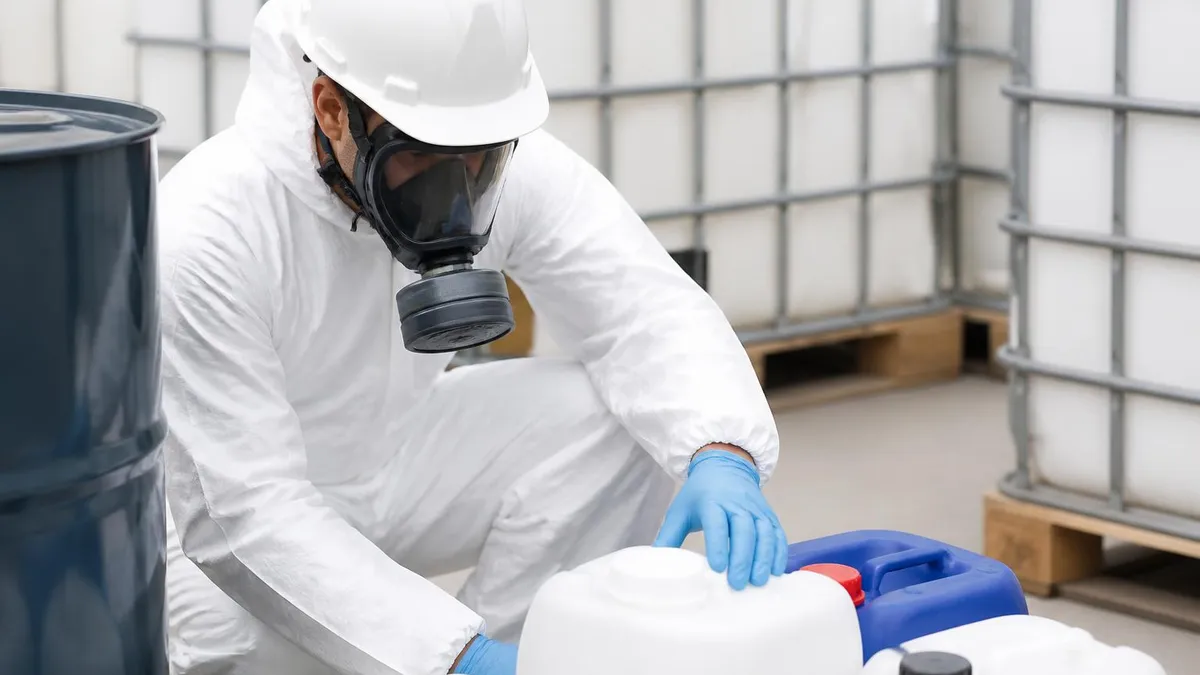
HazMat Endorsement: CDL Requirements, Test, and Cost

HazMat Training Requirements: Complete Guide to Getting Your Hazardous Materials Endorsement

HazMat Team: Complete Guide to Hazardous Materials Endorsement for CDL Drivers

CDL HazMat Practice Test 2026: Free 30-Question Quiz + Study Guide

HazMat Shipping: Complete Guide to Endorsement, Regulations, and Safe Transport in 2026
About the Author

Educational Psychologist & Academic Test Preparation Expert
Columbia University Teachers CollegeDr. Lisa Patel holds a Doctorate in Education from Columbia University Teachers College and has spent 17 years researching standardized test design and academic assessment. She has developed preparation programs for SAT, ACT, GRE, LSAT, UCAT, and numerous professional licensing exams, helping students of all backgrounds achieve their target scores.
Join the Discussion
Connect with other students preparing for this exam. Share tips, ask questions, and get advice from people who have been there.
View discussion (8 replies)