
HazMat Cleanup and the Hazardous Materials Endorsement: What CDL Drivers Need to Know
Learn how hazmat cleanup ties to the hazardous materials endorsement, 🟢 spill response, the test, renewal rules, and study tips for CDL drivers.
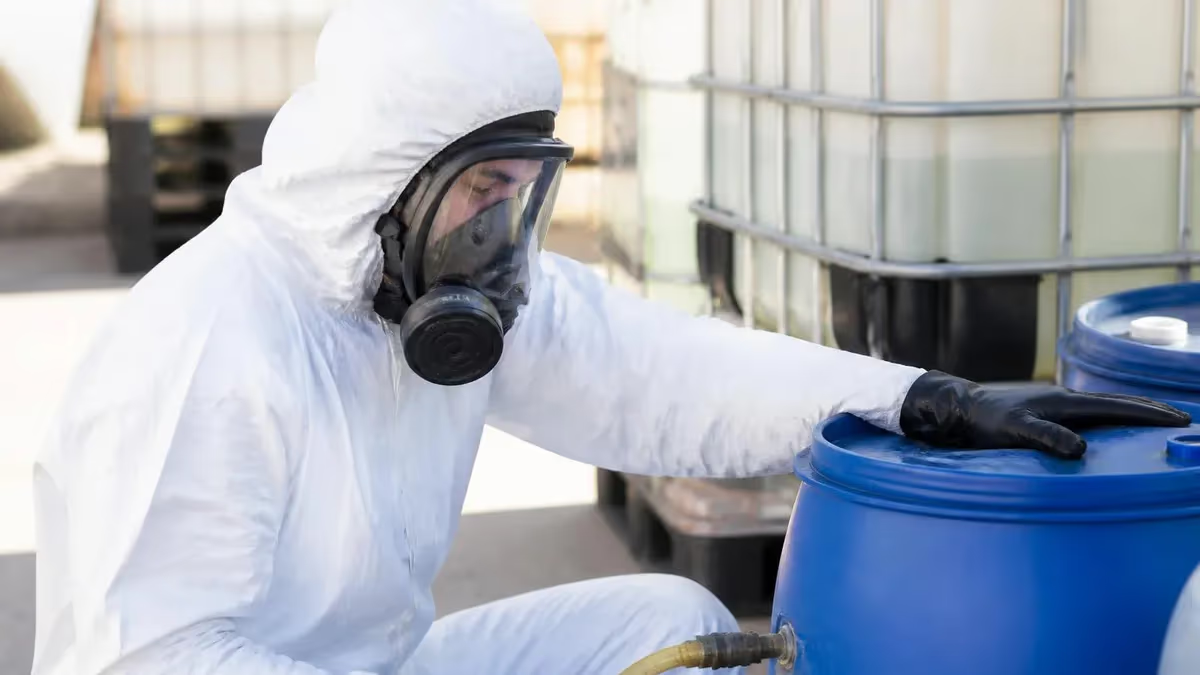
When most people hear the words hazmat cleanup, they picture workers in white suits scrubbing a chemical spill off a highway. For commercial drivers, the reality is broader and more personal. Earning a hazardous materials endorsement means you become part of the safety chain that prevents those cleanups in the first place, and the first responder who has to manage one when prevention fails. Understanding how cleanup, containment, and reporting work is woven directly into the federal knowledge you are tested on.
A hazardous materials endorsement is added to a Commercial Driver's License after you pass a written knowledge exam and clear a Transportation Security Administration background check. The endorsement authorizes you to haul placarded loads of flammables, corrosives, gases, explosives, and other regulated cargo. Because any of those substances can leak, spill, or ignite, the federal curriculum spends real time on what a driver must do in the minutes and hours surrounding an incident, long before professional cleanup crews ever arrive on scene.
That overlap is exactly why awareness of cleanup principles matters even if you never personally mop up a single gallon. The Federal Motor Carrier Safety Administration expects endorsed drivers to recognize a release, isolate the area, protect themselves and the public, notify the right authorities, and preserve evidence. Those duties appear on the test, in roadside inspections, and in the shipping papers you carry. Knowing them keeps you compliant and, far more importantly, keeps people alive when something goes wrong on the road.
This guide walks through the practical relationship between hazmat cleanup and your hazmat cleanup credential. We cover what the endorsement requires, how the knowledge test treats spills and emergencies, the renewal cycle, and how to study so the material sticks. Whether you are a new driver chasing your first endorsement or a veteran facing a renewal deadline, the goal is the same: turn dense regulation into knowledge you can act on instantly under pressure.
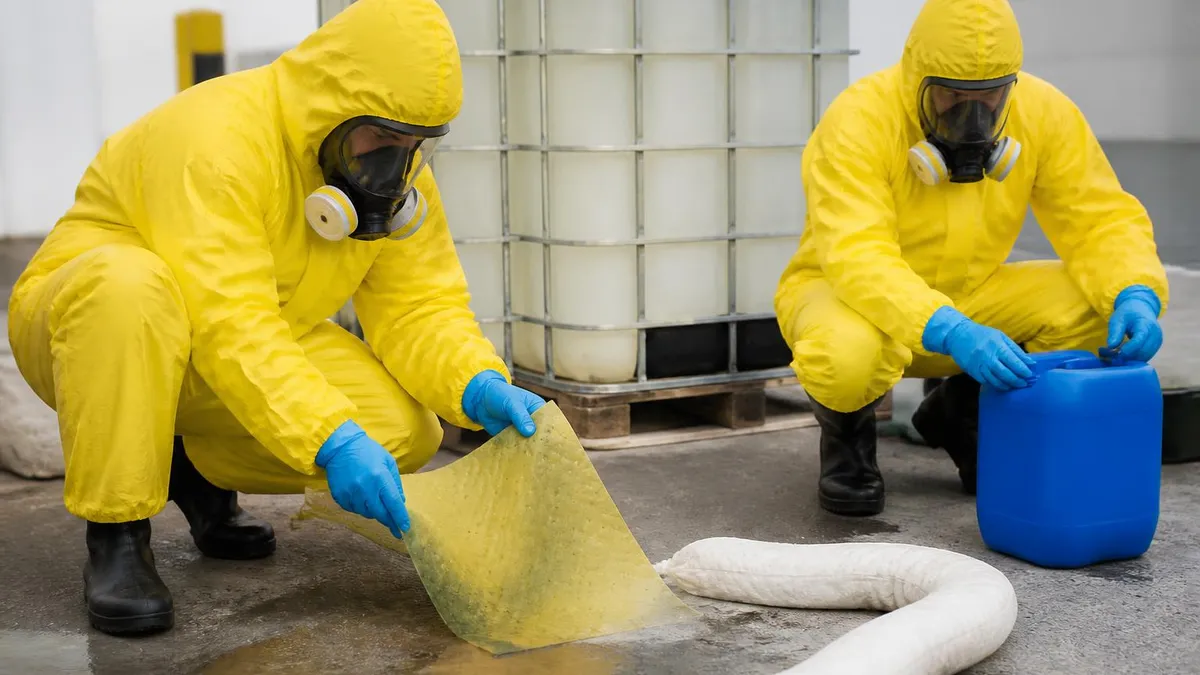
It helps to separate two ideas that often get tangled. Major remediation, the kind that removes contaminated soil or neutralizes a tank-car breach, is handled by certified environmental contractors with specialized training under OSHA's HAZWOPER standard. Drivers are almost never expected to perform that work. What drivers must master is the early-response window: the actions that contain harm, summon qualified help, and stop a small problem from becoming a federal disaster requiring weeks of remediation.
Throughout this article you will find practice question tiles, checklists, and quick-reference tables that mirror the format of the real exam. Treat them as more than filler. The hazardous materials endorsement test rewards drivers who can recall specific thresholds, placard rules, and emergency steps without hesitation. Repetition through realistic questions is the single most reliable way to build that recall, and it is exactly how thousands of drivers pass on their first attempt every year across the United States.
Hazardous Materials Endorsement by the Numbers
- The HazMat endorsement knowledge test requires at least 80 percent correct answers under federal CDL testing standards. (State driver licensing agencies, under Federal Motor Carrier Safety Administration (FMCSA) standards, with Transportatio)
- First-time HazMat endorsement applicants must complete the required entry-level driver training with a registered provider before taking the knowledge test. (State driver licensing agencies, under Federal Motor Carrier Safety Administration (FMCSA) standards, with Transportatio)
Facts verified Oct 15, 2026 against State driver licensing agencies, under Federal Motor Carrier Safety Administration (FMCSA) standards, with Transportatio. Dates that have passed are removed automatically.
Hazardous Materials Endorsement Requirements
You must already have or be applying for a Class A, B, or C commercial driver's license. The endorsement is added on top of your base CDL and cannot stand alone or replace it.
A written exam of roughly 30 questions covers loading, placarding, emergencies, and security. Most states require 80 percent to pass, meaning 24 correct answers out of 30.
Federal law requires a Transportation Security Administration threat assessment, including fingerprints and a criminal, immigration, and watchlist review before the endorsement is granted.
Applicants must be a U.S. citizen or lawful permanent resident. The TSA verifies status as part of the security threat assessment for every hazmat applicant nationwide.
Since 2022, new hazmat applicants must finish Entry-Level Driver Training theory from a registered provider before taking the state knowledge exam.
The cleanup-related duties tied to a cdl hazardous materials endorsement begin the instant a driver suspects a release. Your first obligation is recognition: a wet patch under a drum, an unusual smell, a hissing valve, or a placard that no longer matches the cargo can all signal trouble. The federal materials drill into drivers that early detection saves lives, because many hazardous substances are most dangerous before they are visible. A trained nose and eye are part of your equipment just like brakes and mirrors.
Once a release is confirmed or strongly suspected, the standard sequence is protect, contain, notify, and document. Protecting yourself comes first; a driver who is overcome by fumes cannot help anyone. That means moving upwind and uphill, avoiding contact, and keeping ignition sources far from flammable vapors. Only after personal safety is secured does a driver consider limited containment, such as using a tarp or absorbent if it can be done without risk and within the scope of training.
Notification is where regulation gets specific. Drivers must alert local emergency services, typically by calling 911, and provide the load information found on the shipping papers. The shipping papers list proper shipping names, identification numbers, and emergency response telephone contacts that connect responders to detailed guidance. Many loads also reference the Emergency Response Guidebook, the orange manual that pairs UN identification numbers with isolation distances, protective actions, and firefighting notes for the substance involved.
It is critical to understand the boundary of a driver's role. Federal training does not turn you into a remediation technician. Large or escalating releases require professional contractors operating under OSHA's HAZWOPER standard, equipped with respirators, neutralizing agents, and certified disposal channels. A driver who attempts to mop up a major chemical spill without that training endangers everyone. The endorsement test reinforces this by emphasizing isolation and summoning help over heroic but reckless cleanup attempts.
Documentation closes the loop and frequently appears on the exam. Drivers must preserve shipping papers, note the time and location of the incident, and cooperate with carriers and authorities who file the required reports. Certain releases trigger immediate telephone reports to the National Response Center, while others require written reports within thirty days. Knowing which threshold applies to a death, hospitalization, evacuation, or large dollar-value loss is exactly the kind of detail the knowledge test loves to probe.
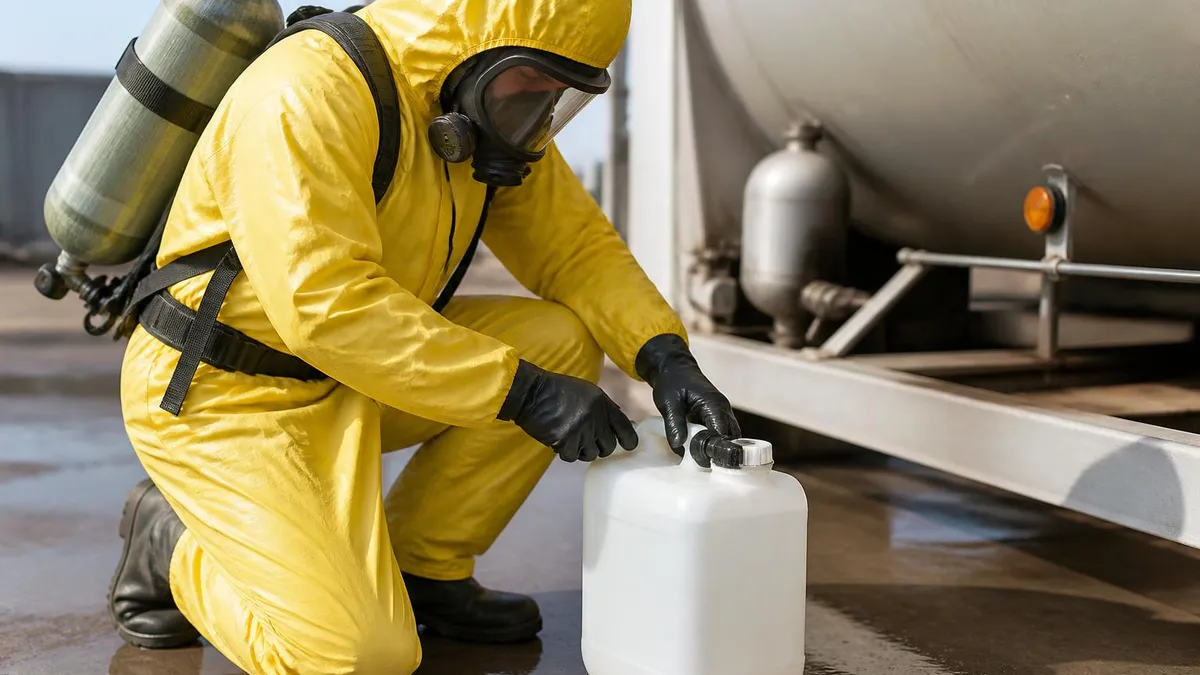
For tank operators and bulk haulers, the stakes climb higher. A breached cargo tank can release thousands of gallons, and the driver's calm execution of isolation distances from the Emergency Response Guidebook can be the difference between a contained incident and a neighborhood evacuation. Practicing these scenarios through realistic questions builds the muscle memory that lets a driver act decisively rather than freeze. That decisiveness is precisely what separates an endorsement holder who merely passed a test from one who is genuinely ready for the road.
How the Hazardous Materials Endorsement Test Covers Emergencies
The exam expects you to identify the warning signs of a release before it becomes catastrophic. Questions describe scenarios such as a leaking drum, a dropping pressure gauge, or vapors near a vent, and ask what a prudent driver does first. The right answer almost always prioritizes personal safety and area isolation over cleanup.
You should be able to connect a placard or identification number to the general hazard class so you know whether a substance is flammable, corrosive, or poisonous. That connection drives every downstream decision, from how far to evacuate to whether water is safe to use, and it appears repeatedly across the hazardous materials endorsement test in different forms.
Is the Hazardous Materials Endorsement Worth Earning?
- +Unlocks higher-paying tanker, bulk, and chemical freight routes
- +Makes you eligible for a broader pool of carrier job openings
- +Often pairs with the Tanker endorsement for premium pay lanes
- +Demonstrates safety discipline that employers actively reward
- +Adds long-term job security as experienced hazmat drivers retire
- +Builds knowledge that protects you and the public in real emergencies
- −Requires a TSA background check with fingerprints and a fee
- −Renewal repeats the security screening every five years
- −Carries more legal and regulatory responsibility on every load
- −Demands stricter pre-trip inspection and paperwork discipline
- −Some states add their own knowledge test and processing fees
- −Disqualifying offenses can permanently bar an applicant
Hazardous Materials Endorsement Pre-Trip Readiness Checklist
- ✓Confirm shipping papers match the placards and cargo loaded.
- ✓Verify the emergency response phone number is present and legible.
- ✓Locate the Emergency Response Guidebook within reach of your seat.
- ✓Inspect placards on all four sides for correct class and condition.
- ✓Check valves, fittings, and drums for leaks, dents, or seepage.
- ✓Ensure required placards are securely fastened and not faded.
- ✓Confirm your endorsement is valid and your CDL is not expired.
- ✓Review evacuation and isolation steps for the specific load class.
- ✓Keep a working phone and know the local emergency number.
- ✓Note carrier emergency contacts and reporting procedures in advance.
Protect yourself before you protect the load
Every emergency sequence on the hazardous materials endorsement test starts the same way: secure your own safety first. A driver overcome by fumes or burned by a corrosive cannot warn the public, call for help, or hand responders the shipping papers they need. Move upwind, uphill, and away before doing anything else.
The hazardous material endorsement renewal process surprises many drivers because it is heavier than a typical license renewal. A hazmat endorsement is valid for five years, tied to the cycle of the TSA security threat assessment. As that window closes you must repeat much of the original process, including a fresh background check, fingerprinting in most cases, and frequently the state knowledge exam again. Treating renewal as a quick rubber stamp is the fastest way to lose your endorsement and the routes that depend on it.
Timing is everything. The TSA and most state licensing agencies recommend starting the renewal at least sixty days before expiration, and some drivers begin even earlier. Background processing can take weeks, and any flag, even a clerical mismatch in your name or immigration record, can stall approval. If your endorsement lapses, you are legally barred from hauling placarded loads until it is reinstated, which can idle your truck and your paycheck during the gap.
The hazardous materials endorsement requirements at renewal mirror the originals. You must still be a U.S. citizen or lawful permanent resident, still clear the threat assessment against criminal, immigration, and terrorism watchlists, and still demonstrate current knowledge of the regulations. Certain felony convictions within defined lookback periods are permanently or temporarily disqualifying, so drivers with a changed legal history since their last cycle should review the disqualifying offense list carefully before applying.
The tsa hazardous materials endorsement screening is the same threat assessment used for the Transportation Worker Identification Credential, and the two can sometimes share processing. Drivers who already hold a valid TWIC may find parts of the hazmat assessment streamlined, though the endorsement still attaches to your CDL through your state agency. Always confirm current procedures with your state's department of motor vehicles, because fees, fingerprint requirements, and retesting rules vary from one state to the next.
State-level differences are real and worth planning around. The texas hazardous materials endorsement test, for example, follows the federal knowledge framework but is administered through Texas DPS with its own scheduling, fees, and identity documentation. Other states layer on their own processing steps. Whatever state issues your license, the federal security check is constant, but the path to sitting for the exam and the cost of doing so can differ noticeably, so verify the specifics where you live.
Plan renewal around your work calendar, not the other way around. Building a sixty- to ninety-day buffer means a delayed background result never forces you to park a loaded trailer or turn down a hazmat run. Keep digital copies of your application receipts, fingerprint confirmations, and exam results, because being able to prove you applied on time can protect you if an agency backlog, rather than anything you did, is the reason approval is running late.

If your hazmat endorsement expires before renewal is approved, you legally cannot transport placarded loads, even with valid shipping papers and a clean record. Background processing can take several weeks, so start at least 60 days early. A lapse can sideline your truck and cost you high-paying hazmat lanes until the endorsement is reinstated.
Building a study plan around the hazardous materials endorsement study guide your state provides is the smartest first move, but a guide alone rarely produces a confident pass. The official CDL manual chapter on hazardous materials is dense, written in regulatory language, and easy to skim without absorbing. Pairing it with active recall, where you answer questions and check yourself rather than just rereading, transforms passive familiarity into the instant recall the exam and the road both demand from an endorsed driver.
Start by mapping the major themes the test always covers: hazard classes and divisions, placarding and marking rules, segregation and loading restrictions, the shipping paper requirements, emergency response, and security awareness. Spend the most time on the areas that combine memorization with judgment, like emergency sequences and reporting thresholds, because those are where casual studiers lose points. A focused two- to three-week schedule with daily practice beats cramming the night before every single time.
Use a quality hazardous material endorsement practice test to diagnose your weak spots early. The first time you take one, treat it as a baseline rather than a verdict. Note every question you miss, look up the underlying rule in the manual, and write the corrected fact in your own words. Then retake similar questions a day or two later. This spaced repetition cycle is far more efficient than rereading the entire chapter, and it directly mirrors how the real exam phrases its scenarios.
Pay special attention to the orange Emergency Response Guidebook, because awareness questions lean on it heavily. Practice looking up a substance by its identification number, finding the initial isolation distance, and reading the protective action recommendations. Being fluent with that book is genuinely useful on the road, not just on the test, and examiners know it. Drivers who can navigate the guidebook quickly tend to handle the emergency-response questions with noticeably more confidence and accuracy.
Do not neglect the security awareness content. After the regulations were strengthened in the early 2000s, the curriculum added material on recognizing suspicious activity, protecting your load from theft or tampering, and the purpose of the security threat assessment behind your endorsement. These questions are usually straightforward, but only if you have read the section. Skipping it to save twenty minutes is a common, avoidable reason drivers fall short of the eighty percent passing threshold.
Finally, simulate test conditions before the real day. Sit down, time yourself, and complete a full-length practice exam without notes or interruptions. The goal is to make the format feel routine so that on test day your energy goes into the questions, not into nerves. If you are also pursuing related credentials, reviewing the broader endorsement landscape through your hazmat cleanup resources helps you see how each piece fits the larger CDL picture and your career path.
On the morning of your hazardous materials endorsement test, a little structure goes a long way. Arrive early with the identity documents your state requires, because a missing proof of residency or an expired ID can cancel an appointment you waited weeks to schedule. Eat something, hydrate, and give yourself time to settle. Drivers who rush in flustered tend to misread scenario questions, and on an exam that rewards careful reading, those small errors add up quickly toward a failing score.
Read every question completely before looking at the answers. The hazmat exam is famous for choices that are all partly correct, where the best answer is the one that fits the specific scenario described. Watch for absolute words like always and never, and for the safety-first principle that underlies most emergency items. When two answers seem equally valid, the one that protects life, isolates the hazard, or summons qualified help almost always wins over the option that involves a driver attempting cleanup alone.
Manage your time without rushing. With roughly thirty questions and no extreme time pressure in most states, you can afford to slow down on the items that combine a hazard class with a required action. Flag anything you are unsure of, answer the rest, and circle back with a clear head. Leaving a hard question to marinate while you bank the easy points is a proven way to protect your score and avoid the panic that snowballs from one confusing item.
If you do not pass on the first try, do not treat it as the end of the road. Most states allow retakes after a short waiting period, and the questions you missed become a precise study list. Pull the topics you struggled with, drill them with focused practice tests, and return when your scores are consistently above the passing line. Many strong drivers needed a second attempt; what matters is the endorsement you eventually hold, not how many tries it took to earn it.
Once endorsed, keep your knowledge fresh between renewals. Regulations evolve, placarding tables get updated, and the Emergency Response Guidebook is revised on a cycle. A driver who reviews the basics a few times a year is far better prepared for a real incident than one who memorized everything for a test and forgot it the next week. Periodic practice questions are an easy, low-effort way to keep the critical thresholds and emergency steps from fading.
Finally, remember why this endorsement carries weight. The hazardous materials you haul keep hospitals supplied, farms fertilized, and industry running, but they also demand respect. Every checklist you complete and every emergency sequence you can recite makes a release less likely and a cleanup less severe if one occurs. Treat the credential as a professional standard rather than a hurdle, and the knowledge will serve you, your employer, and the public on every mile you drive.
Sample HazMat - Hazardous Materials Endorsement Practice Questions
Try these questions from our free HazMat - Hazardous Materials Endorsement practice tests. The correct answer and an explanation follow each question.
The Hazardous Materials Table's entries are displayed in what ways?
- A. In alphabetical order by brand names
- B. In alphabetical order by proper shipping names
- C. In order of quantities being shipped
- D. In order of risk
Answer: B. In alphabetical order by proper shipping names
The Hazardous Materials Table's entries are displayed in alphabetical order by proper shipping names. The Hazardous Materials Table (HMT) is a comprehensive list that provides essential information about hazardous substances or dangerous goods used in transportation and shipping. It is used to identify and classify hazardous materials during transportation to ensure proper handling, labeling, and safety measures.
What does the letter 'W' after a hazard class number (e.g., '8W') indicate on a hazardous materials table?
- A. The material is only dangerous when wet
- B. The material reacts dangerously with water
- C. The material must be transported in waterproof packaging only
- D. The material is a water-based solution
Answer: B. The material reacts dangerously with water
The 'W' modifier indicates that the material reacts dangerously with water, producing heat, fire, or toxic gases.
What is the name of the four-digit code that first responders use to identify hazardous materials and which is preceded by the letters "NA" or "UN"?
- A. Hazmat approval number
- B. Hazard class
- C. Chemical composition
- D. Identification number
Answer: D. Identification number
The four-digit code preceded by the letters "NA" (for North America) or "UN" (for the United Nations) which is used by first responders to identify hazardous materials is called the identification number. The identification number is assigned to each hazardous material based on its chemical composition, physical characteristics, and potential hazards. The identification number is used on shipping papers, labels, and placards to identify the hazardous material being transported. It is also used by first responders to quickly identify the hazardous material and take appropriate actions in case of any incidents or accidents.
What is 'compatibility' as it relates to hazardous materials loading?
- A. The ability of packaging to withstand pressure changes during transport
- B. The requirement that certain hazardous materials must not be loaded together because of dangerous reactions
- C. The matching of placards to the hazard class of the cargo
- D. The agreement between shipper and carrier on delivery terms
Answer: B. The requirement that certain hazardous materials must not be loaded together because of dangerous reactions
Compatibility rules prohibit loading certain hazardous materials together because they could react dangerously if they come into contact.
Take the full HazMat - Hazardous Materials Endorsement practice test
HazMat Questions and Answers
HazMat Endorsement: CDL Requirements, Test, and Cost
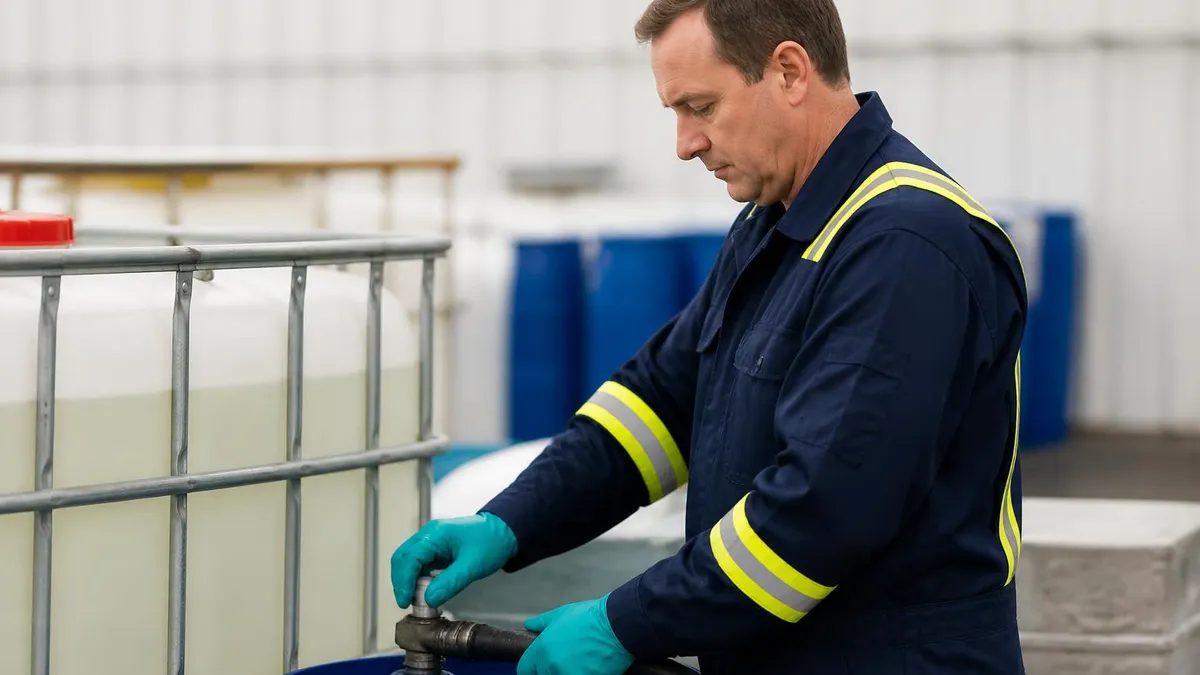
ELDT HazMat Training: Complete 2026 Federal Requirements, Theory Curriculum & Endorsement Path
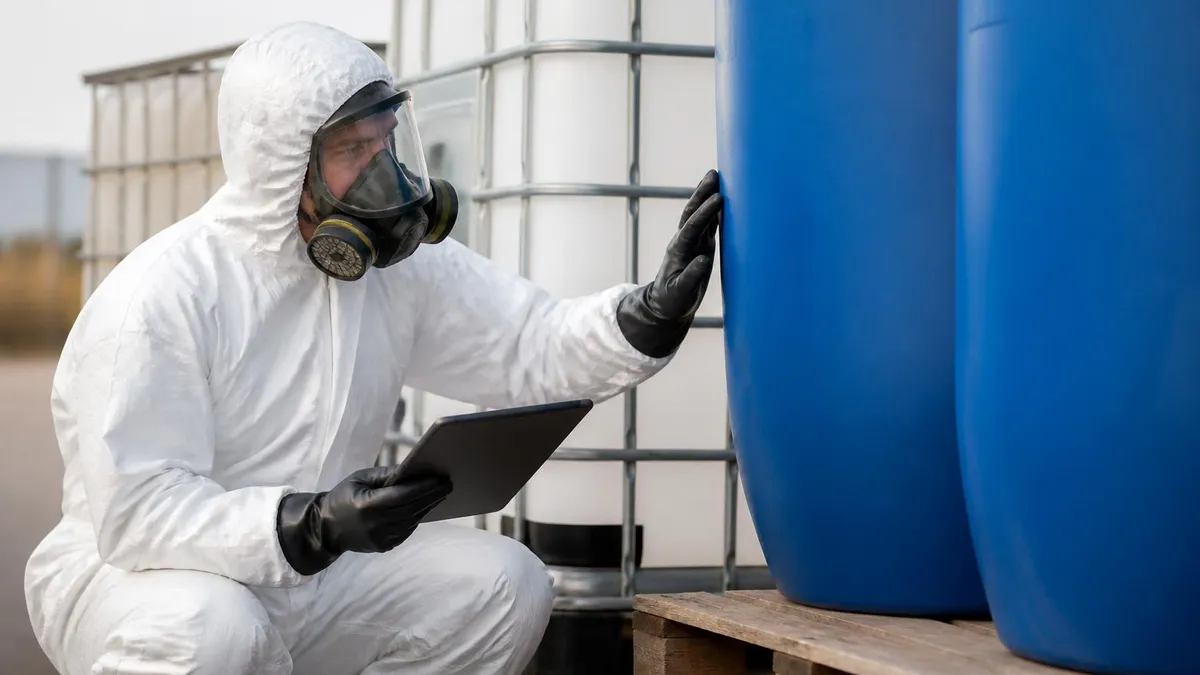
HazMat Code Meanings: Understanding UN/NA Identification Numbers for Your CDL Endorsement

HazMat Driver Jobs: Careers, Pay, and How to Qualify in 2026

A Comprehensive Guide to HazMat Training
About the Author

Educational Psychologist & Academic Test Preparation Expert
Columbia University Teachers CollegeDr. Lisa Patel holds a Doctorate in Education from Columbia University Teachers College and has spent 17 years researching standardized test design and academic assessment. She has developed preparation programs for SAT, ACT, GRE, LSAT, UCAT, and numerous professional licensing exams, helping students of all backgrounds achieve their target scores.