
How Much Does an Air Brake Endorsement Cost? Complete 2026 October Guide
How much does an air brake endorsement cost? 💡 State fees, training costs, CDL test tips & savings strategies. Complete 2026 October US guide.
If you have been asking yourself how much does an air brake endorsement cost, you are not alone. Thousands of commercial drivers across the United States research this question every year before beginning the licensing process. The short answer is that total costs typically range from $50 to $500 or more, depending on your state, training needs, and testing fees. Understanding every line item before you commit helps you budget accurately and avoid surprise expenses that derail your timeline.
Air brakes are the dominant stopping system on heavy commercial vehicles, school buses, motor coaches, and many specialty trucks. Mastering these systems is not just a regulatory requirement — it is a genuine safety imperative. The federal and state governments recognize this, which is why the knowledge test covering air brake systems is one of the most detailed and technically demanding sections of the entire CDL exam process. Candidates who underestimate the difficulty often fail on their first attempt, adding re-test fees to their overall costs.
The endorsement itself is technically a restriction removal in most states rather than a separate add-on credential. When you obtain a Commercial Driver's License without completing the air brake knowledge test, your license carries a restriction code — most commonly the letter L — that prohibits you from operating any vehicle equipped with a full air brake system. Removing that restriction requires passing a written knowledge test and, in some states, a skills demonstration as well.
State DMV fees for the air brake knowledge test vary considerably. In lower-cost states, the written test alone can cost as little as $10 to $20. In higher-cost markets such as California, New York, or Washington State, application and testing fees can reach $75 to $150 just for the official exam. If you need to retest after a failure, most states charge an additional per-attempt fee, so first-time pass rates matter financially as well as professionally.
Training programs represent the largest variable in your total cost. If you already hold a CDL and simply need to remove the air brake restriction, you may be able to self-study using free resources like the new york air brake practice materials and pass the test with minimal expense. However, if you are enrolling in a full CDL training program that includes air brake instruction, the program tuition — which can range from $3,000 to $10,000 — effectively covers your air brake endorsement as part of a bundled package.
Study materials are a smaller but meaningful cost category. Quality CDL prep books typically run $20 to $60, while online question banks and practice test subscriptions often cost $10 to $40 per month. Free government resources, including your state's official CDL manual, provide foundational content at no charge. The Federal Motor Carrier Safety Administration also publishes study guidance that drivers can access without cost, making self-directed study a genuinely viable path to passing on the first attempt.
This guide breaks down every cost component in detail — from state-by-state testing fees to training program pricing, study tools, and strategies for minimizing your total investment. Whether you are a first-time CDL applicant or an experienced driver looking to remove an existing restriction, the information here will help you plan your budget and your study approach with confidence.
Air Brake Endorsement: Key Numbers
Key Facts at a Glance
| Item | Value | Details |
|---|---|---|
| Typical Total Cost Range | $50–$500 | State fees + study materials |
| Minimum Pass Score | 80% | Required in most US states |
| Knowledge Test Questions | 25–50 | Varies by state |
| Re-test Fee Per Attempt | $10–$75 | If you fail the first try |

Air Brake Endorsement Cost Breakdown
State-by-state fee differences are among the most significant factors determining how much you will ultimately spend on your air brake endorsement. The United States does not have a single federal fee schedule for CDL knowledge tests; instead, each state sets its own pricing structure, which creates a wide range of costs from one jurisdiction to the next. Knowing where your state falls on this spectrum is the first step toward building an accurate budget.
In the Southeast and Midwest, where cost of living is generally lower and DMV operations are funded through different budget models, air brake knowledge test fees tend to be on the lower end. States like Tennessee, Arkansas, Missouri, and Ohio often charge $20 to $40 for a CDL knowledge test, including the air brake section. These states also tend to have reasonable re-test fees, meaning that even if you need a second attempt, your total testing cost remains manageable.
Western and Northeastern states typically charge more. California's DMV charges a commercial driver license fee that, combined with applicable endorsement testing costs, can push your testing-only expenses to $100 or higher. New York has its own structure, and drivers seeking to understand the specific requirements and costs in that state should review the official guidelines carefully. The air in brake line troubleshooting knowledge tested in these states is just as rigorous regardless of the fee level, so preparation standards should remain consistent.
Some states bundle the air brake knowledge test into the base CDL testing fee, meaning there is no separate charge to take the air brake portion — it is simply part of the overall CDL written exam package. In these states, your marginal cost for adding air brake coverage to your license may be close to zero beyond your study time investment. Other states charge a distinct line-item fee for each CDL knowledge test section, making it more expensive to take multiple components in the same visit.
Waiting period policies also affect total cost indirectly. States that require a mandatory waiting period between failed test attempts — sometimes 24 hours, sometimes up to 7 days — affect how quickly you can complete the process if you do not pass on the first try. Longer waiting periods extend the time you spend without the endorsement, which can have real income implications if your employer needs you driving a full air brake-equipped vehicle on a specific schedule.
Interstate drivers and those who split time between states should be aware that the air brake endorsement on your CDL is recognized nationally once issued. You do not need to re-test in every state where you operate. Your endorsement or restriction removal is attached to your home-state CDL and remains valid as long as your license is in good standing. This federal reciprocity means you only pay the testing fees once, regardless of how many states you will eventually drive through.
For drivers already holding a CDL in one state who relocate and need to transfer their license, most states honor existing air brake endorsements without requiring a re-test. The transfer process typically involves paying a standard license transfer fee — usually $20 to $60 — rather than retaking the full knowledge exam. However, policies vary and it is always advisable to confirm with your new state's DMV before assuming your credentials transfer automatically.
CDL Air Brake Test: What to Expect
The CDL air brake knowledge test typically consists of 25 to 50 multiple-choice questions drawn from your state's CDL manual air brakes section. Most states set the passing threshold at 80 percent, meaning you can miss no more than 5 questions on a 25-question exam. Questions cover compressor function, air pressure governor settings, dual air systems, spring brakes, brake fade, and proper pre-trip inspection procedures for air brake systems.
The test is usually administered on a computer at your local DMV or a third-party testing center. Results are immediate, and if you pass, the restriction is removed from your CDL record that same day in most states. Time limits are typically generous — 30 to 60 minutes for the air brake section alone — so most candidates complete well within the allotted window without feeling rushed.

Air Brake Endorsement: Is the Investment Worth It?
- +Removes the L restriction and qualifies you to drive the full range of air-brake-equipped commercial vehicles
- +Expands your job market significantly — most Class A and B trucking jobs require unrestricted CDL
- +One-time testing cost with national reciprocity across all 50 states
- +Higher earning potential — unrestricted CDL holders often command 5–15% higher pay
- +Required for school bus, motor coach, and hazmat tanker positions in most states
- +Knowledge gained directly improves on-road safety and vehicle control in emergencies
- −Upfront cost of $50–$500 depending on training needs and state fees
- −Requires dedicated study time — typically 2 to 4 weeks for first-time candidates
- −Re-test fees accumulate quickly if you fail multiple attempts without adequate preparation
- −Some states require a skills demonstration in addition to the written exam
- −Training programs that include air brake instruction can cost thousands if you need formal schooling
- −Knowledge test content is technically detailed and more demanding than general CDL sections
Air Brake Endorsement Prep Checklist
- ✓Download your state's official CDL manual and read the complete air brakes chapter at least twice
- ✓Schedule at least 2–4 weeks of study time before booking your DMV appointment
- ✓Complete a minimum of 200 practice questions spread across multiple study sessions
- ✓Achieve consistent scores of 85% or higher on timed practice exams before testing
- ✓Verify your state's specific air brake test format — question count, passing score, and skills requirements
- ✓Confirm the exact fee amount at your local DMV and bring the correct payment method
- ✓Bring all required documents: CDL, state ID, medical certificate, and any required forms
- ✓Review the pre-trip inspection procedure for air brakes and practice it on an actual vehicle
- ✓Study air brake antifreeze systems and dual air brake system components specifically
- ✓Learn the FMCSA pressure thresholds: governor cut-in (100 psi), cut-out (125 psi), and low-pressure warning (60 psi)
- ✓Arrive at the DMV 15–20 minutes early to complete paperwork and settle your nerves
- ✓Plan your re-test strategy in advance — know the waiting period and re-test fee in your state
Know Your Pressure Numbers Cold
The single most tested topic on every state's CDL air brake knowledge exam is air pressure thresholds. Memorize these before test day: the air compressor governor cuts out at approximately 125 psi and cuts back in at 100 psi; the low air pressure warning light or buzzer activates at or before 60 psi; and spring brakes (parking brakes) apply automatically when system pressure drops to 20–45 psi. Candidates who have these numbers memorized correctly answer 4–6 questions without hesitation.
Passing the CDL air brake test on your first attempt is the single most effective way to control your total endorsement cost. Re-test fees, additional study material purchases, and the time cost of scheduling another DMV appointment all add up quickly. Understanding what the test actually covers — and targeting your study time accordingly — gives you the best chance of walking out with a cleared restriction after just one visit.
The air brake knowledge test draws questions from several core topic areas. System components are always heavily represented: candidates must understand the function of the air compressor, the governor, air tanks, the F-750 air brake treadle valve (also called the foot valve), the service brake system, the parking brake system, and the emergency brake system. Each component has specific pressure thresholds and operational characteristics that the exam tests in isolation and in combination.
Dual air brake systems are a particularly important topic because they represent how virtually all modern commercial vehicles are designed. In a dual system, there are two separate air circuits — the primary circuit typically controls the rear axle service brakes, while the secondary circuit controls the front axle brakes. If one circuit fails, the other maintains partial braking ability. Exam questions often present failure scenarios and ask candidates to identify which brakes remain functional and what the driver should do in response.
Spring brakes, also called parking brakes or emergency brakes, are tested both for their mechanical function and their operational thresholds. Drivers must know that spring brakes are held in the released position by air pressure — typically 60 psi or more — and that if air pressure drops below a critical threshold (usually 20 to 45 psi depending on the system), the spring brakes apply automatically as a fail-safe. This design means a catastrophic air loss does not result in a vehicle with no brakes at all, but drivers must understand the system to operate safely.
The air brake test cdl section also covers brake fade and heat buildup, which is particularly relevant for drivers operating in mountainous terrain. Brake fade occurs when brake drums overheat due to prolonged application — a common risk on long downhill grades. The proper technique to avoid fade involves using engine braking (downshifting) to control speed on grades rather than riding the service brakes continuously. Exam questions frequently test candidates on when and how to use engine braking and what signs indicate overheated brakes.
Pre-trip inspection knowledge is another major component of air brake testing. Candidates must demonstrate understanding of the correct procedure for testing the air brake system before putting a vehicle in service. This includes checking that air pressure builds to governor cut-out within the specified time (typically within 3 minutes from 50 psi with the engine at operating RPM), verifying that the low-pressure warning activates at or above 60 psi, confirming that the parking brake holds the vehicle stationary, and checking for audible air leaks throughout the system.
Air brake antifreeze — technically called alcohol evaporators or air dryer antifreeze — is a smaller but testable topic that catches some candidates off guard. In cold climates, moisture in the air brake system can freeze and block valves or lines. Air dryers help remove most moisture, but in very cold conditions, an alcohol evaporator injects isopropyl alcohol into the system to prevent freezing. Candidates should know what this system does, where it is located, and what maintenance it requires to keep it functioning effectively through winter operation.
Many candidates book their DMV appointment too soon — before they have achieved consistent passing scores on practice tests — and end up paying re-test fees that could have been avoided. Most states impose a waiting period of 24 hours to 7 days between failed attempts, and each re-test costs additional money. Only schedule your official exam when you are scoring 85 percent or higher on timed practice tests consistently across multiple sessions. One week of extra study is far cheaper than a re-test fee.
Saving money on your air brake endorsement requires a clear-eyed look at where your costs are actually coming from and which of those costs are avoidable with better planning. For most candidates, the biggest single cost driver is not the DMV fee itself — it is the training they need before they can pass the knowledge test. Understanding your starting knowledge level honestly helps you choose the right preparation path without overspending.
Self-study is the most cost-effective preparation route for candidates who already have hands-on experience with commercial vehicles or who have a strong mechanical aptitude. Your state's CDL manual is free to download from the DMV website and contains every piece of information covered on the official exam. Supplementing the manual with free online resources — including YouTube videos explaining air brake system operation — can build a solid conceptual foundation without spending a dollar on commercial study products.
When free resources are not enough, targeted paid practice test subscriptions offer strong value at modest cost. Paying $10 to $30 for a one-month practice test subscription gives you access to hundreds of exam-style questions with detailed explanations for each answer. This is typically sufficient for candidates who have read the manual thoroughly and simply need to verify their comprehension and practice exam-format question phrasing. The return on this investment — avoiding even one $30 re-test fee — is immediate.
Formal classroom courses make financial sense when you have no prior air brake experience and need structured instruction. Many community colleges offer CDL preparation courses for $200 to $500 that include air brake instruction as a module. These courses provide hands-on vehicle time, which is particularly valuable if your state requires a skills demonstration in addition to the written test. Before enrolling, confirm that the course includes actual vehicle practice time — some classroom-only programs provide the knowledge without the hands-on component you may need.
Employer-sponsored training is the most underutilized cost-saving strategy available to working drivers. Many trucking companies, transit agencies, and school districts will pay for their employees to complete CDL air brake training and testing as part of workforce development programs. If you are currently employed or seeking employment with a company that operates air-brake vehicles, ask directly whether they offer training support before committing to out-of-pocket expenses. The answer may surprise you.
Understanding the air brake system components in depth before your test not only improves your pass rate — it also reduces the likelihood of costly vehicle maintenance mistakes after you earn your endorsement. Drivers who genuinely understand how their brake systems work are better positioned to identify problems early, before a minor issue becomes a major repair. This practical knowledge translates into real savings over the course of a commercial driving career.
Finally, timing your test strategically can reduce indirect costs. Scheduling your DMV appointment early in the morning on a weekday typically means shorter wait times, fresher mental focus, and less risk of arriving stressed. Some states experience backlogs at popular testing times — late afternoon on Fridays, for example — that mean longer waits and potentially rescheduled appointments if the testing center reaches capacity. A well-timed, well-prepared single visit is almost always cheaper than a rushed attempt followed by a re-test.
Practical preparation tips can make the difference between a confident first-time pass and a costly cycle of retesting. The most effective study strategies combine reading comprehension, active recall practice, and real-world observation — a combination that builds the kind of durable knowledge that holds up under exam pressure rather than fading the moment you close the study book.
Start your preparation by reading your state's CDL manual air brakes chapter from beginning to end without stopping to memorize. The goal of this first read is to build a mental map of the content — understanding how all the pieces fit together — before drilling individual facts. Many candidates make the mistake of trying to memorize specific numbers on the first read, which leads to isolated facts without the contextual understanding needed to answer application-based exam questions correctly.
On your second read, use active annotation. Highlight or note every specific number, threshold, or pressure value mentioned in the text. These quantitative facts — governor cut-out pressure at 125 psi, low-pressure warning at 60 psi, spring brake application below 45 psi — are the most heavily tested content and the most likely to be answered incorrectly by candidates who studied casually. Creating a simple one-page reference sheet of all numerical values is one of the most effective study tools you can make.
Practice questions should begin after your second full read of the manual, not before. Starting with practice tests before you have read the source material trains you to recognize answer patterns rather than understand concepts — a strategy that works well for low-stakes trivia but fails badly on exams designed to test genuine comprehension. Once you begin practicing questions, review every incorrect answer in detail, reading the explanation and returning to the relevant manual section to understand why the correct answer is right.
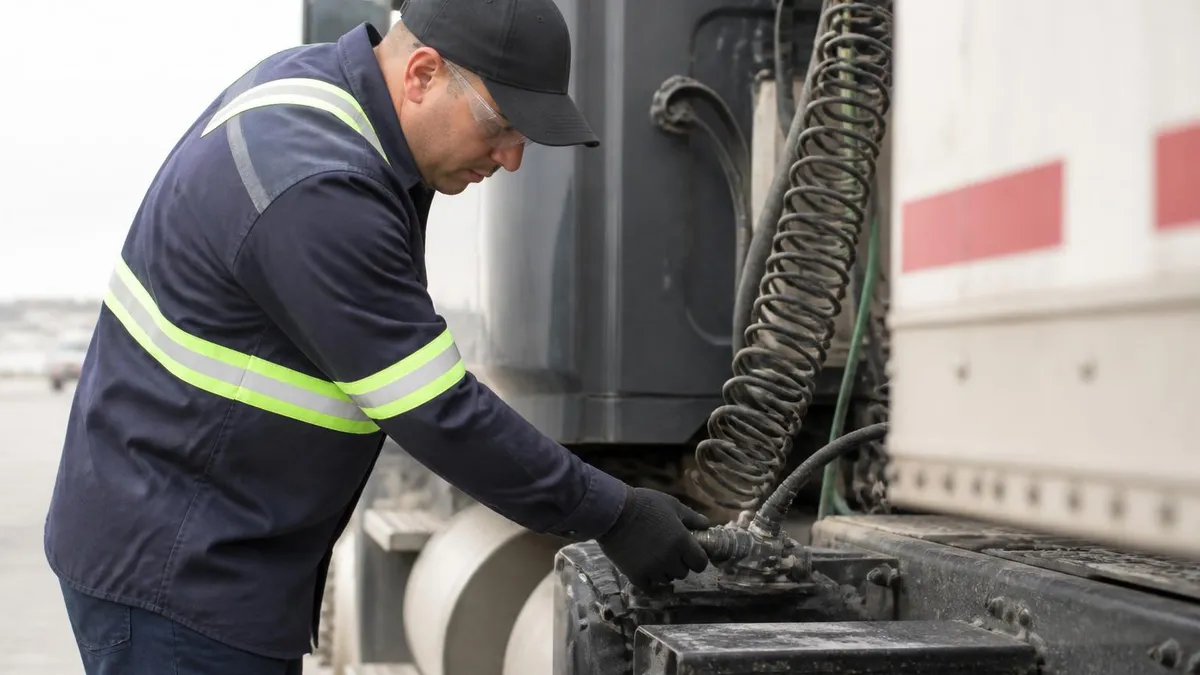
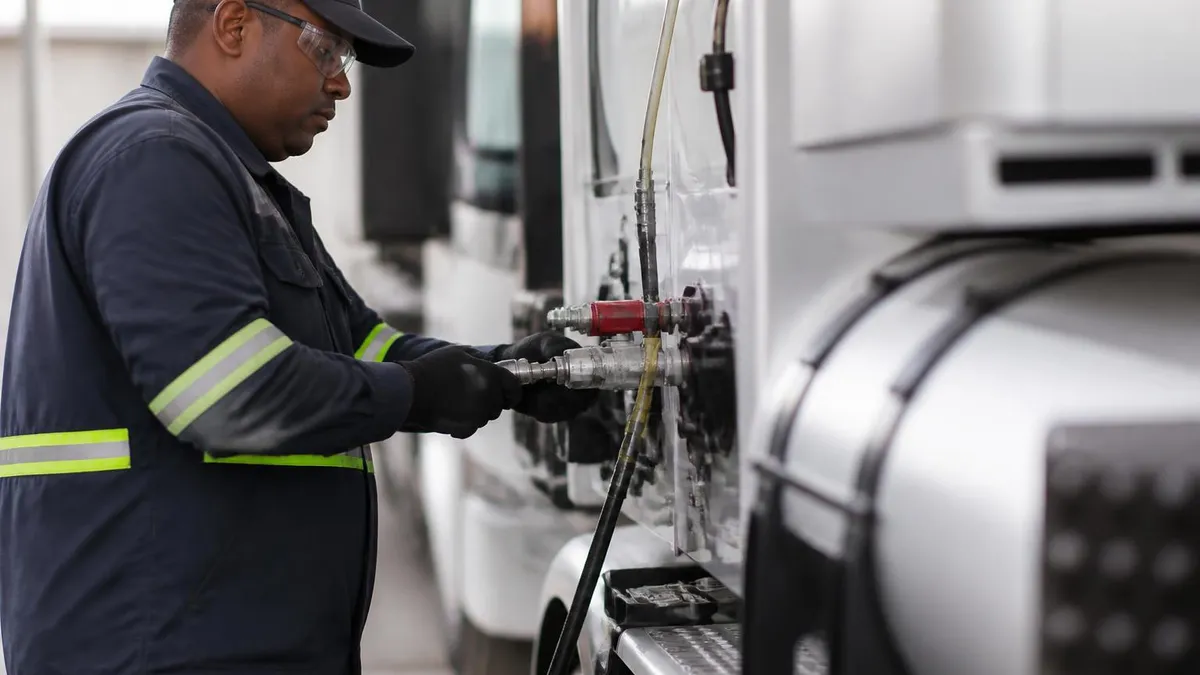
If you have access to a commercial vehicle with an air brake system — through your employer, a training school, or a CDL-holding colleague — spend time in the vehicle following the pre-trip inspection procedure step by step. Physically checking the air pressure gauges, listening for the low-pressure warning at the right threshold, feeling the parking brake engagement, and hearing normal versus abnormal air system sounds builds sensory memory that supplements your book knowledge in ways that pure reading cannot replicate.
On the day before your exam, avoid heavy cramming sessions. A light review of your numerical reference sheet and one 25-question timed practice test is sufficient. Heavy cramming in the final 24 hours increases anxiety without meaningfully improving recall for material you have already studied adequately. Instead, prioritize sleep — cognitive performance on test day is significantly affected by fatigue, and a well-rested brain recalls information more reliably than an exhausted one trying to push through on caffeine.
When you arrive at the DMV for your official exam, read every question carefully before selecting an answer. Air brake exam questions are often written with deliberate precision — words like always, never, typically, and usually change the correct answer significantly. Candidates who rush through questions and miss qualifying language frequently answer incorrectly on questions they actually understood. Take your time, eliminate obviously wrong answers, and commit to your best choice with confidence built from solid preparation.
After you earn your air brake endorsement, treat it as the beginning of your safety education rather than the end. The knowledge you gained preparing for the exam — about pressure thresholds, brake fade, emergency procedures, and inspection protocols — makes you a materially safer driver from your first day operating an air-brake vehicle. Staying current with FMCSA guidelines and periodically refreshing your knowledge through resources like free practice quizzes ensures your skills remain sharp throughout your commercial driving career.
Sample Air Brake Practice Questions
Try these questions from our free Air Brake practice tests. The correct answer and an explanation follow each question.
What role does the air brake system play in compliance with legal requirements?
- A. It reduces the time needed to apply the brakes.
- B. It ensures that the vehicle operates in a safe and legal manner according to regulatory standards.
- C. It increases the vehicle's load capacity.
- D. It prevents air leaks from occurring.
Answer: B. It ensures that the vehicle operates in a safe and legal manner according to regulatory standards.
The air brake system is fundamental to a heavy vehicle's safe operation, directly impacting its ability to stop effectively and reliably. Compliance with legal requirements for air brakes ensures that the vehicle meets established safety standards, reducing the risk of accidents and protecting all road users. This adherence is critical for maintaining operational legality and public trust in commercial transportation.
What is 'brake fade' and when does it most commonly occur?
- A. Loss of air pressure due to a system leak
- B. Reduced braking effectiveness caused by overheated friction materials
- C. Automatic reduction of brake force by the ABS system
- D. Gradual wear of brake linings over tens of thousands of miles
Answer: B. Reduced braking effectiveness caused by overheated friction materials
Brake fade occurs when friction materials overheat, reducing their ability to create the friction needed to slow the vehicle.
What does it indicate if the air pressure does not rise from 50 to 90 psi within 3 minutes at engine idle?
- A. There is a problem with the air compressor or a significant air leak in the system
- B. The governor needs adjustment
- C. The air tanks are full and do not need to charge
- D. Normal operation for cold weather conditions
Answer: A. There is a problem with the air compressor or a significant air leak in the system
FMCSA requires pressure to build from 50 to 90 psi within 3 minutes at idle, indicating the compressor is working properly; failure to do so signals a compressor or major leak problem.
If you double your speed from 20 mph to 40 mph, by approximately how much does your braking distance increase?
- A. Braking distance increases approximately four times
- B. Braking distance doubles
- C. Braking distance triples
- D. Braking distance increases by one and a half times
Answer: A. Braking distance increases approximately four times
Braking distance increases with the square of speed; doubling speed from 20 to 40 mph quadruples the braking distance because kinetic energy is proportional to velocity squared.
Air Brake Questions and Answers


About the Author

Educational Psychologist & Academic Test Preparation Expert
Columbia University Teachers CollegeDr. Lisa Patel holds a Doctorate in Education from Columbia University Teachers College and has spent 17 years researching standardized test design and academic assessment. She has developed preparation programs for SAT, ACT, GRE, LSAT, UCAT, and numerous professional licensing exams, helping students of all backgrounds achieve their target scores.