
Ham Radio Study Guide: Pass the Technician License Test in 2026 October
Free ham radio study guide for the Technician license test. 🗨️ Exam format, study schedule, frequencies, bands, and practice questions to pass first try.
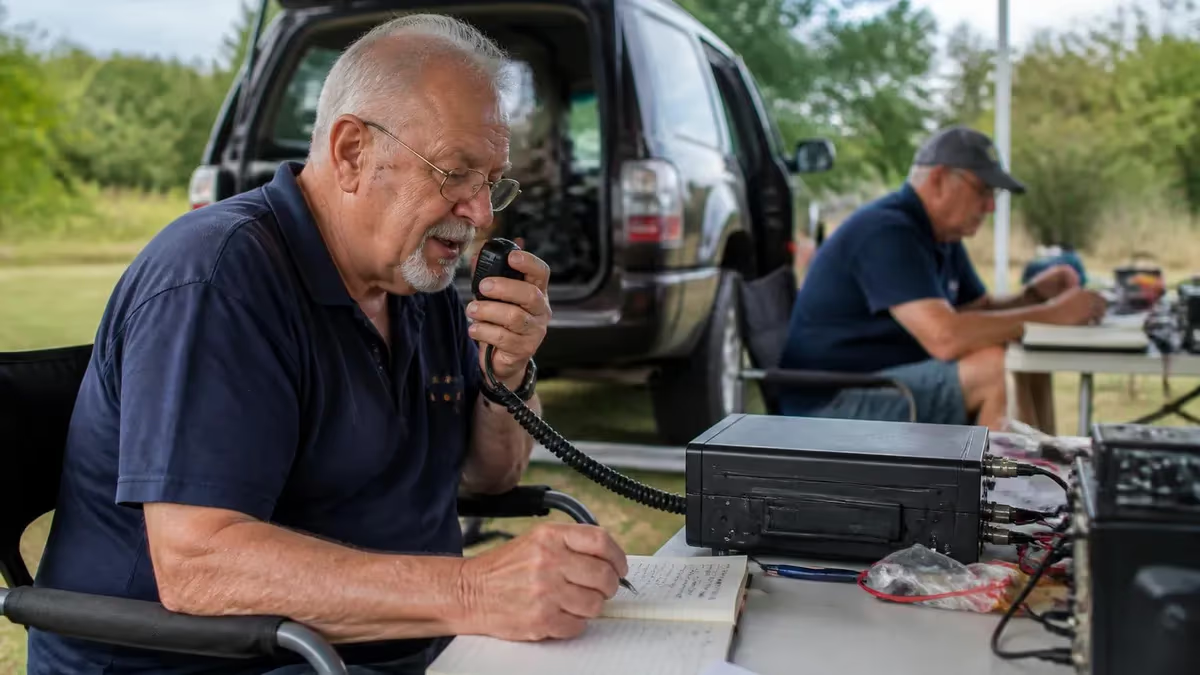
This ham radio study guide is built to take you from complete beginner to a licensed operator who passes the Technician exam on the first attempt. Earning a ham radio license opens the door to emergency communication, experimentation, and a worldwide hobby that millions enjoy. The Technician class is the entry-level United States amateur license, and the written test is the only thing standing between you and your call sign. With a focused plan, most newcomers pass in four to six weeks of casual study.
The Technician exam draws from a public question pool of exactly 411 questions, and your test pulls 35 of them at random. You need 26 correct answers, which is a 74 percent score, to pass. Because the pool is published word for word, you are never surprised by a trick question. The challenge is volume, not difficulty. This guide breaks the pool into digestible topic blocks so you study the right material in the right order instead of memorizing blindly and hoping it sticks.
Many first-timers assume they need an electronics degree or years of tinkering. They do not. The math on the Technician test is limited to basic Ohm's law and a handful of power formulas you can solve with a simple calculator. Roughly two-thirds of the exam covers rules, operating practices, and safety rather than circuit theory. If you can read a chart and follow band-plan rules, you already have the core skills the exam rewards. Confidence comes from repetition, not raw intelligence or prior experience.
Where you buy gear and find resources matters too. A trusted ham radio outlet can bundle your first handheld transceiver with a study book, and many run free license classes on weekends. You do not need expensive equipment to study or even to test. A free question-pool app and this guide are enough to walk into your exam session fully prepared. We will cover the gear question in detail later so you spend money only when it actually helps you.
This guide is organized the way a good instructor teaches: an honest look at the exam format, a realistic study schedule, deep dives into frequencies and bands, the gear decision, and a battery of practice questions. Each section ends with links to free quizzes so you can test yourself the moment you finish reading. Active recall, not passive reading, is what moves answers from short-term memory into the kind of instant recognition the timed exam demands of every candidate.
By the end, you will understand exactly what to study, how long it takes, what it costs, and how to register for an exam session near you or online. Treat this page as your home base. Bookmark it, work through the practice quizzes between sections, and return whenever you need a refresher on bands, privileges, or test logistics. Thousands of operators started right where you are now, and a structured plan is the single biggest predictor of passing on the first attempt.
The Technician License by the Numbers
Key Facts at a Glance
| Item | Value | Details |
|---|---|---|
| Questions on Exam | 35 | Pulled from a 411-question pool |
| Passing Score | 74% | 26 of 35 correct |
| Typical Prep Time | 4-6 wks | At about 1 hour per day |
| Exam Session Fee | $15 | Plus $35 FCC license fee |
Your Week-by-Week Study Schedule
- ▸Read FCC Part 97 overview
- ▸Learn license classes and privileges
- ▸Take a baseline practice test
- ▸Start daily flashcards
- ▸Study repeater operation and offsets
- ▸Learn phonetic alphabet and Q-codes
- ▸Practice band-plan questions
- ▸Quiz: general operating
- ▸Memorize the Ohm's law triangle
- ▸Practice power and resistance math
- ▸Identify schematic symbols
- ▸Quiz: basic electronics
- ▸Learn antenna types and SWR
- ▸Study feedline loss basics
- ▸Review propagation modes
- ▸Quiz: antennas and feedlines
- ▸Study RF safety and grounding
- ▸Take three full practice exams
- ▸Re-drill missed questions
- ▸Register for a test session
Understanding the Technician exam format removes most of the anxiety beginners feel. The ham radio license test is a single 35-question multiple-choice exam administered by Volunteer Examiners, who are licensed hams trained to proctor sessions. Every question has four answer choices labeled A through D, and only one is correct. There is no penalty for guessing, so you should answer every question even if you are unsure. The published pool means each question on your sheet is identical, word for word, to one you studied beforehand.
The 35 questions are not random across all topics. They are distributed across ten subelements, each covering a defined area such as rules, operating, electrical principles, components, station equipment, antennas, and safety. The number of questions from each subelement is fixed, so you know in advance that, for example, several questions come from regulations and several from electrical principles. This structure lets you weight your study time toward the heaviest subelements rather than treating all 411 pool questions as equally important to your final score.
You face little time pressure in practice; most sessions allow ample time, and candidates finish a Technician exam in 20 to 40 minutes. The test is paper-based at in-person sessions or delivered through a secure online platform for remote exams. Online sessions use a proctor watching through your webcam, and you will need a quiet room, a government photo ID, and a stable internet connection. Both formats use the same pool and the same 26-of-35 passing threshold, so your preparation is identical regardless of which you choose.
Math on the exam is gentle. You will see a few Ohm's law problems, a couple of power calculations, and questions about decibels and wavelength, but nothing requiring calculus or memorized constants beyond a wavelength shortcut. Examiners permit a basic, non-programmable calculator with memory cleared. Most candidates solve every math question in under a minute once they have practiced the formulas. If math intimidates you, remember it represents only a small slice of the 35 questions and is the most predictable portion of the entire test.
When you finish, the Volunteer Examiners grade your answer sheet on the spot at in-person sessions, so you usually learn whether you passed within minutes. If you pass, the team files your results electronically with the coordinating organization, and your call sign typically appears in the FCC database within a few business days. You can watch the official ham radio license test walkthrough videos to see exactly how a session runs before you ever show up, which calms nerves considerably for nervous first-timers.
A frequent question concerns failing. If you do not reach 26 correct, you may retake the exam at the same session in many cases, though policies vary by team and a second session fee may apply. Because each retake pulls a fresh random set of 35 questions, a slightly different test could land in your favor. That said, walking in with solid practice-test scores above 85 percent makes a retake almost never necessary. Aim to consistently score in the low 90s on full practice exams before you register.
Understanding Ham Radio Frequencies and Bands
Technician operators get full privileges on the popular VHF and UHF bands, including 2 meters (144 to 148 MHz) and 70 centimeters (420 to 450 MHz). These ham radio frequencies are where most new operators spend their time, talking through local repeaters and simplex. The 2-meter band is the workhorse for emergency communication and daily chats, offering reliable line-of-sight coverage across a town or county with a modest handheld and a decent antenna.
UHF at 70 centimeters penetrates buildings better and pairs well with repeaters in dense urban areas. Both bands support FM voice, digital modes, and even satellite contacts. Because Technician privileges on these bands are unrestricted by mode, they are the practical home base for nearly every new ham. Learning the band edges and the standard repeater offsets for each is a guaranteed cluster of easy exam points worth drilling early in your study plan and revisiting often before test day.
Self-Study vs. a Licensing Class: Which Is Right for You?
- +Self-study is free or nearly free using public question pools and apps
- +You set your own pace and study around work or school
- +Practice-test apps track your weak areas automatically
- +No travel required until exam day itself
- +Online proctored exams let you test from home
- +Repetition builds the instant recall a timed test rewards
- −A live class offers an expert to answer your confusing questions
- −Classes provide built-in accountability and a fixed deadline
- −Group study makes electronics concepts click faster for some
- −Many clubs run free weekend classes that end with an exam session
- −Self-study can stall without external motivation or structure
- −Hands-on gear demonstrations are hard to replicate alone at home
Your Ham Radio Prep Readiness Checklist
- ✓Score 85 percent or higher on three consecutive full practice exams
- ✓Memorize the Ohm's law triangle and basic power formula
- ✓Know the 2-meter and 70-centimeter band edges by heart
- ✓Recall standard repeater offsets and the simplex calling frequency
- ✓Understand RF exposure and station grounding safety rules
- ✓Review the license classes and their respective privileges
- ✓Confirm your FCC Registration Number (FRN) is created in advance
- ✓Locate a local or online exam session and register early
- ✓Prepare a valid government photo ID for test day
- ✓Pack a basic calculator with cleared memory and a pencil
Take practice exams until you bore yourself
The published pool means the test is fully predictable. Candidates who take full-length practice exams daily until they consistently score in the low 90s almost never fail. Active recall beats re-reading every time, so spend most of your study hours answering questions, not just reading explanations.
Registering for your ham radio license test is simpler than most newcomers expect, but a little preparation prevents delays on exam day. The first step is obtaining an FCC Registration Number, or FRN, from the FCC's CORES system. This free number identifies you in the federal database and is now required before you test, because the FCC charges a separate license fee that you pay online after passing. Setting up your FRN takes about ten minutes and saves a frantic scramble when the examiners ask for it.
Next, find a session. In-person exams are hosted by local radio clubs, often monthly, and you can search by ZIP code through the major Volunteer Examiner Coordinator websites. Online exams run nearly every day through several remote VEC teams, which is ideal if no club meets near you or your schedule is tight. Online sessions typically cost a modest fee, require a webcam and a clear desk, and use a live proctor. Both routes lead to the exact same Technician license, so choose whichever fits your life best.
On exam day for in-person sessions, arrive early with a photo ID, your FRN, a pencil, and a simple calculator. The team will check you in, collect the session fee, and hand you a test booklet and answer sheet. You fill in bubbles, return the sheet, and three examiners grade it independently. If you pass, you sign paperwork and the team submits your results electronically. Most candidates leave knowing they passed, even though the official call sign appears in the database a few days later.
After your results are filed, watch the FCC's Universal Licensing System for your new call sign. Once it appears, you must also pay the FCC license fee through their portal within the deadline they email you, or your application can be dismissed. This step trips up some new hams who assume the session fee covered everything. Set a reminder. The moment your call sign is active and the fee is paid, you are legally allowed to transmit on all of your Technician privileges across the bands.
If you want to see real exam sessions, hands-on gear, and licensing help in one place, a visit to a local store can be invaluable. Curious hobbyists sometimes wander into trivia rabbit holes like did ed gein talk to ilse on a ham radio, but the practical value of a brick-and-mortar shop is the staff who answer setup questions face to face. Many stores host VE sessions, sell study books, and let you handle radios before buying, which shortens the gap between passing and getting on the air.
Plan your timeline realistically. Most disciplined beginners go from zero to licensed in four to six weeks at roughly an hour a day. If you cram, a long weekend of intensive practice testing can work, but the knowledge fades faster and you miss the deeper understanding that makes operating enjoyable. Whichever pace you choose, register for a specific session early. A fixed date on the calendar is the strongest motivator for finishing your study plan and walking in genuinely prepared and confident.
Passing the exam is not the final step. The FCC charges a $35 license fee that you must pay online after your application is filed. If you miss the payment deadline in the FCC email, your application can be dismissed and you may have to test again. Set a calendar reminder the day you pass.
Choosing your first radio is where many new hams overthink and overspend. The good news is that a capable handheld transceiver, or HT, suitable for a Technician costs surprisingly little, and you do not need any equipment to study or pass the exam. Buy gear after you have a clear sense of how you want to operate, whether that is local repeater chatting, emergency preparedness, or experimenting with digital modes. A trusted ham radio bands reference will help you confirm a radio covers the segments you actually plan to use.
For most beginners, a dual-band 2-meter and 70-centimeter handheld is the perfect starter. It covers the bands where Technician privileges are unlimited, fits in a pocket, and runs all day on a rechargeable battery. Pair it with a better aftermarket antenna, because the stock rubber-duck antenna on budget radios is the single biggest performance limiter. Upgrading just the antenna often doubles your usable range, a far better first investment than a more expensive radio paired with the same weak antenna attached.
As you grow, you may add a mobile radio for your vehicle or a base station at home with a rooftop antenna for greater range. A good ham radio antenna mounted high and clear of obstructions outperforms raw transmitter power almost every time, which is why experienced operators say to spend on antennas before amplifiers. Coaxial feedline quality matters too, since cheap, lossy cable can waste much of your signal before it ever reaches the antenna, especially at higher UHF frequencies.
Programming your first radio intimidates newcomers, but it is a learnable skill. Most modern HTs can be programmed by computer using free software and an inexpensive cable, which is far faster than entering frequencies by hand. Load your local repeaters, the simplex calling frequency, and a few National Weather Service channels, and you are ready to listen and learn. Spend a week simply monitoring before you transmit; you will absorb local operating customs and gain confidence about when and how to call other stations.
Budgeting helps you avoid both overspending and false economy. A complete beginner station of a dual-band HT, an upgraded antenna, and a programming cable runs a modest amount and covers years of enjoyable operating. Resist the urge to buy an expensive HF base station before you have any HF experience or a General class license. Grow your shack as your interests sharpen over time. Many lifelong hobbies began with one inexpensive handheld and a simple curiosity about what was crackling through the speaker.
Finally, lean on the community. Local clubs welcome new licensees, run nets where you can practice, and often loan equipment or help you build antennas. The hobby's culture is built on mentorship, traditionally called Elmering, where seasoned operators guide newcomers patiently. Joining a club accelerates your skills faster than any gear purchase and turns a solitary study grind into a social hobby. Once you are licensed and on the air, you will understand why so many describe ham radio as a lifelong pursuit rather than a single exam to pass.
With your study plan underway, a few practical habits separate candidates who pass comfortably from those who scrape by or fail. The most important is consistency: an hour a day for five weeks beats a frantic ten-hour weekend every time. Spaced repetition is how the brain converts unfamiliar terms into instant recognition, and the timed exam rewards recognition far more than deep reasoning. Block a set time daily, even just 30 minutes, and protect it. Momentum, not marathon sessions, is what carries you to a passing score.
Lean heavily on full-length practice exams rather than topic quizzes alone in your final week. Topic quizzes build foundations, but full exams simulate the real distribution of questions and surface weak spots you would otherwise miss. After each practice test, do not just note your score; review every missed question and read the explanation until the correct answer feels obvious. Keep a running list of stubborn questions and re-drill them daily. By exam day, that list should be empty and your scores parked firmly in the low 90s.
Memorize the handful of must-know facts that appear in nearly every exam: the 2-meter and 70-centimeter band edges, standard repeater offsets, the simplex calling frequency, the Ohm's law triangle, and the basic RF safety rules. These high-frequency topics are guaranteed points and take little effort to lock in. Make flashcards for them and review during idle moments, like waiting in line or commuting. Reliable points on predictable questions free your attention for the few genuinely trickier items you may face on test day.
Manage exam-day logistics so nothing rattles you. Sleep well the night before, eat a normal meal, and arrive early to your in-person session or set up your online testing room without rushing. Bring your photo ID, FRN, a pencil, and a calculator with cleared memory. For online exams, test your webcam and internet the day before. Small failures in logistics cause far more stress than the questions themselves, and they are entirely preventable with a simple checklist you run the night before your session.
During the test, answer the easy questions first and flag the rest, then circle back. Never leave a question blank, because there is no guessing penalty and a blind guess still has a one-in-four chance. If two answers seem plausible, eliminate the obviously wrong choices first to improve your odds. Trust your preparation; the answer you studied is usually your first instinct. Overthinking and second-guessing change more right answers to wrong than the reverse for well-prepared candidates, so resist the urge to keep changing answers.
After you pass, keep the momentum going. Get on the air within your first week, even if it is just listening and a single nervous call on a local repeater. The longer you wait, the more the study knowledge fades and the harder it is to start. A practical first step is checking into a local net, where a friendly control operator guides you through the procedure. The license is the beginning, not the finish line, and the real learning starts the moment you key up that microphone.
Finally, consider your next license. The General and Amateur Extra classes unlock vast HF privileges and worldwide contacts. Many hams study for General within months of passing Technician, while the material is fresh and their momentum is high. You do not have to rush, but knowing the path exists keeps the hobby exciting. For now, focus on the Technician, follow this study guide, take the practice quizzes, and register for a session. Thousands have done exactly this, and with a plan, so will you.
Ham Radio Technician Questions and Answers
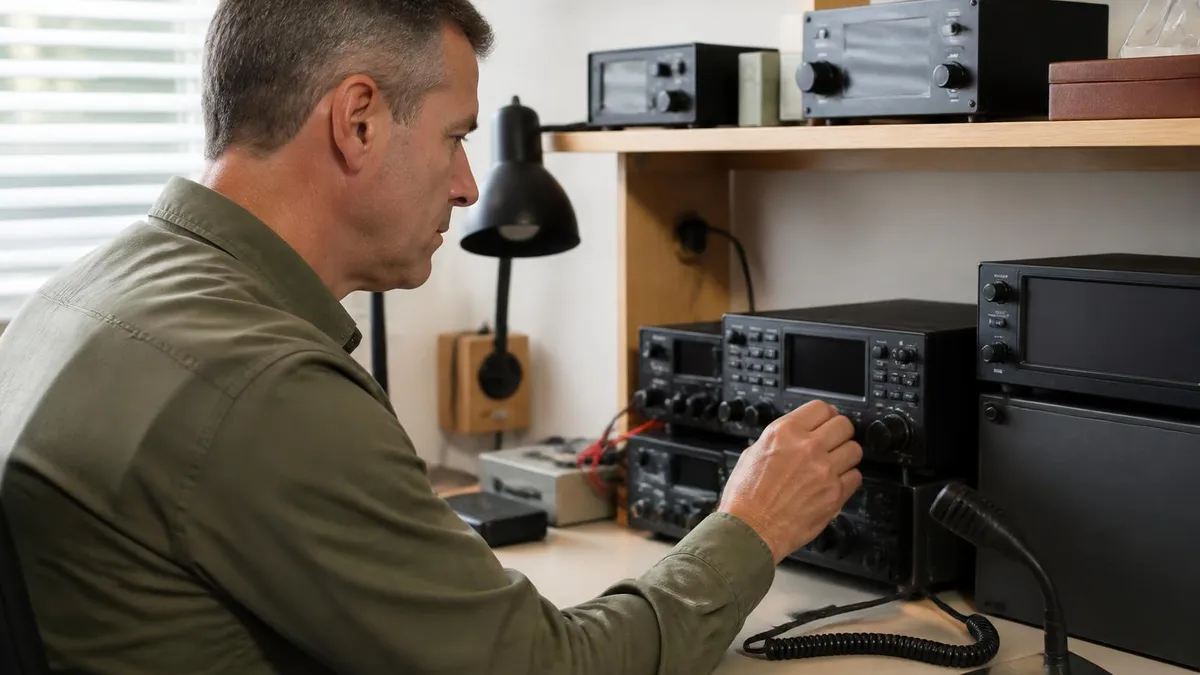
Ham Radio License Online: The Complete Guide to Getting Licensed in 2026
Ham Radio Technician
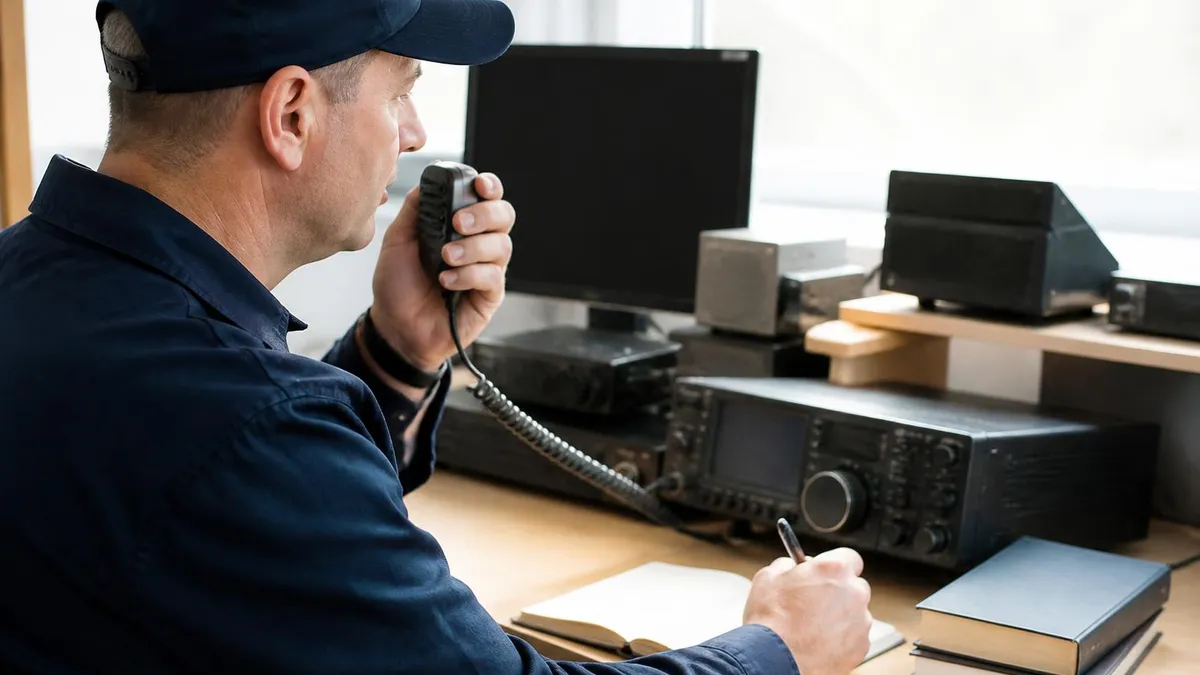
Ham Radio Repeaters: Complete Guide for Technician License Holders
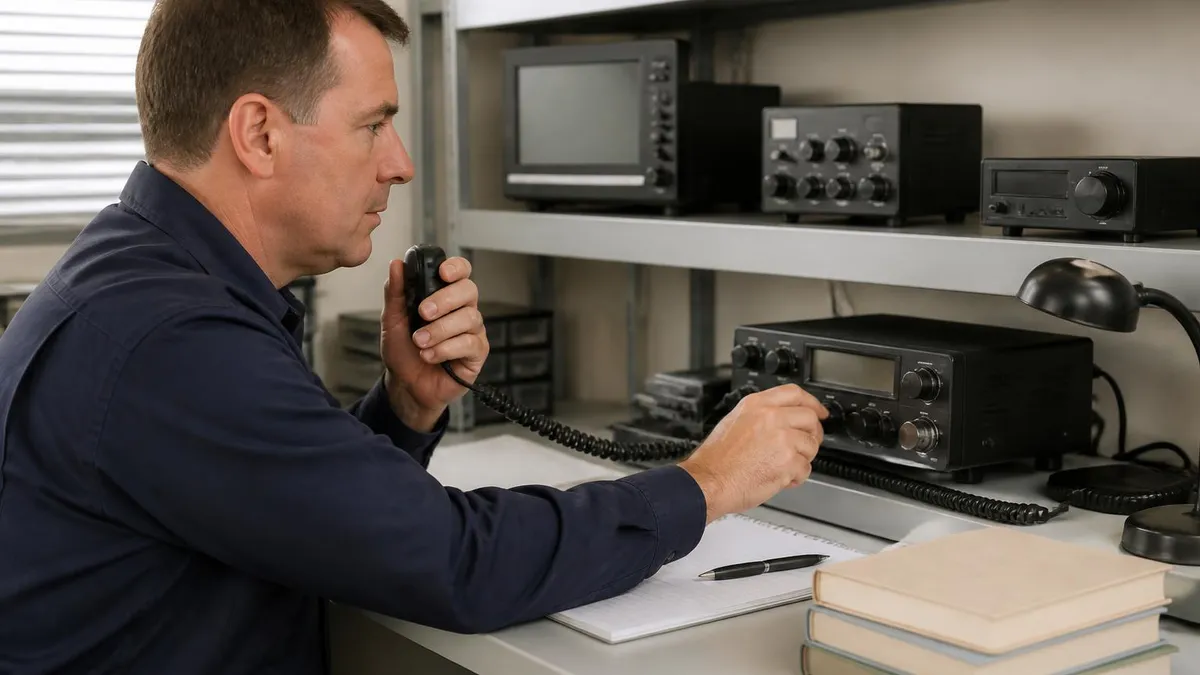
Ham Radio Stores: Where to Buy Ham Radio Equipment, Gear, and Get Your License
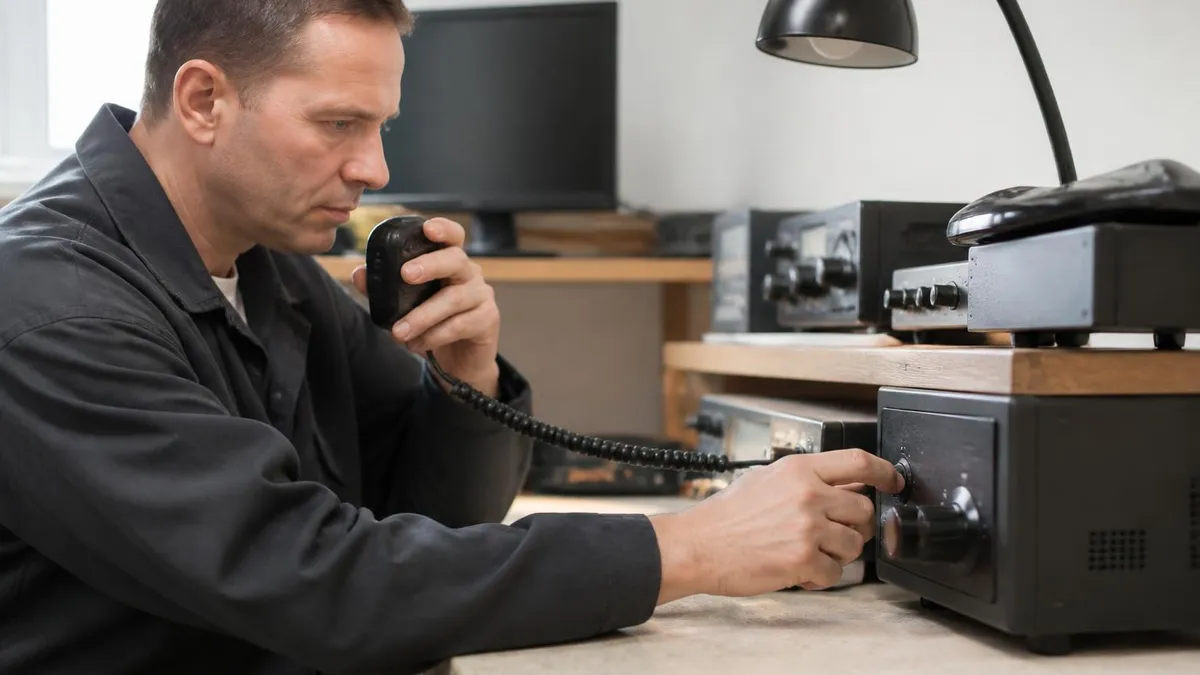
Ham Radio Handheld: Complete Guide to HT Selection, Programming, and Technician License Use
About the Author

Educational Psychologist & Academic Test Preparation Expert
Columbia University Teachers CollegeDr. Lisa Patel holds a Doctorate in Education from Columbia University Teachers College and has spent 17 years researching standardized test design and academic assessment. She has developed preparation programs for SAT, ACT, GRE, LSAT, UCAT, and numerous professional licensing exams, helping students of all backgrounds achieve their target scores.
Join the Discussion
Connect with other students preparing for this exam. Share tips, ask questions, and get advice from people who have been there.
View discussion (3 replies)