
Past Papers Arabic GCSE: Where to Find Real Edexcel Papers, Mark Schemes and Mocks
🎓 Past papers Arabic GCSE are free from the exam board. See where to find real papers, how to run mocks, and why leaked papers are a trap.
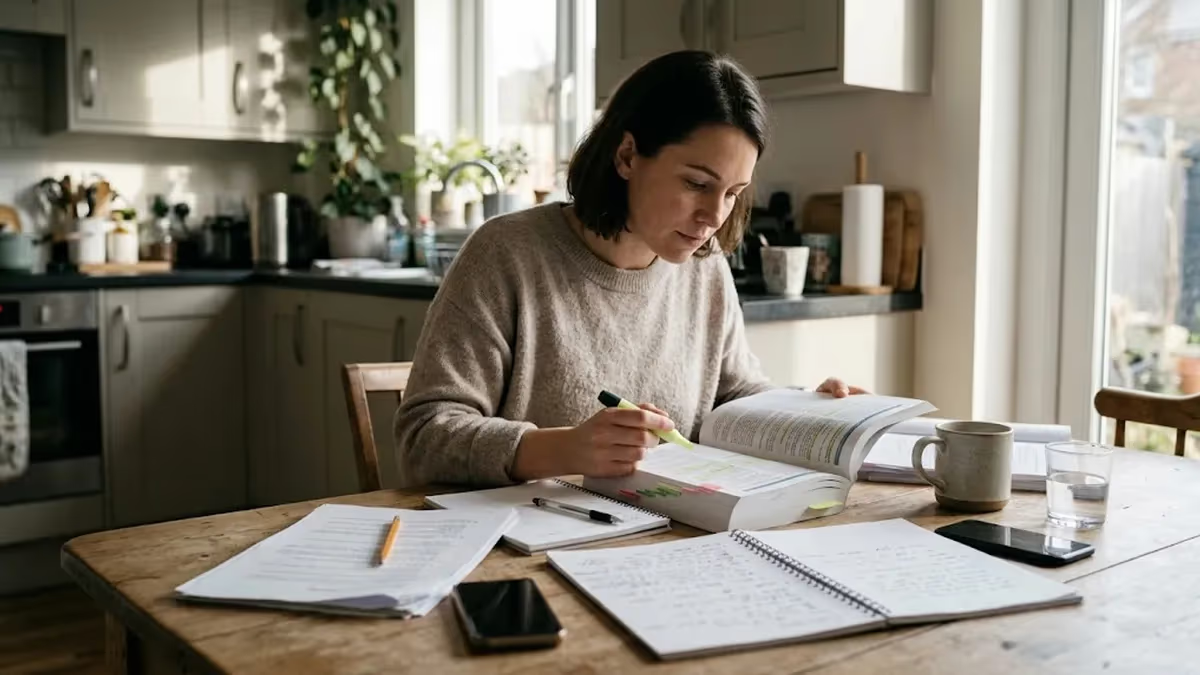
Past papers for Arabic GCSE are the real exam papers and mark schemes from previous series, published free by the exam board, mainly Pearson Edexcel. Practicing with them under timed conditions is the most reliable way to prepare for listening, speaking, reading and writing, and far safer than chasing so-called leaked GCSE papers.
Past Papers Arabic Gcse: Key Facts (Updated October 2026)
| Fact | Details | Source |
|---|---|---|
| Exam board for Arabic | Pearson Edexcel is the board most students use; confirm the specification code with your school | Pearson Edexcel |
| How exams are delivered | Two-year course; students sit all written exams in one series at the end, at their school or college exam centre | GOV.UK |
| Grading and pass mark | Graded 9 to 1 in England; students aged 16 to 19 without a grade 4 in English or Maths must keep studying that subject | GOV.UK |
| Summer 2026 results | 67.3% of UK GCSE results were graded 4/C or above, compared with 67.4% in 2025 | JCQ |
| Resit rules | In England the only GCSE resits outside summer are English Language and Maths in November, so an Arabic resit waits for the next summer series | GOV.UK |
| Example entry fee | AQA charges UK centres £52.85 per entry for June 2027 English Language or Maths; fees for other boards and subjects differ, so ask your school | AQA |
| Late entry penalty | AQA late fee applies from 22 February 2027 and very late fee after 21 April 2027, at 100% and 150% of the entry fee on top | AQA |
Start with a plain definition of GCSE, since the term confuses many US readers. GCSE stands for General Certificate of Secondary Education, and the meaning of GCSE is simple: it is the main subject qualification that students in England, Wales and Northern Ireland sit around age 16. Think of it as a subject-by-subject exit exam, similar to a mix of high school finals and AP tests. Our gcse hub explains the whole system.
Arabic is a modern foreign language at GCSE, and it is one of the smaller entries, with typically only a few thousand candidates each summer compared with hundreds of thousands in French or Spanish. That small cohort has two consequences. First, fewer commercial textbooks and revision guides exist, so official past papers carry more weight than usual. Second, many students are heritage speakers who must learn formal Modern Standard Arabic for the written papers, not just the dialect spoken at home.
Searchers often type phrases like gcse past papers arabic or gcse arabic past papers edexcel because Pearson Edexcel is the board most students use for the subject. The board publishes past papers, mark schemes, examiner reports and listening audio on its website, free to download. A smaller number of students take an International GCSE or another board's course through their school, so always confirm your exact specification code before you download anything.
Why does this page push back on leaked GCSE papers? Because searches for them spike every spring, and almost every result is a scam, a fake PDF or a relabeled copy of a paper that was already public. Summer 2020 exams were cancelled in the UK because of COVID-19, so any claim about leaked gcse papers 2020 cannot describe a genuine paper. Real papers are never legally released early.
The good news is that the real material is better than any rumor. A single past paper gives you the exact layout, command words, mark allocation and timing, plus a mark scheme that shows how examiners reward answers. Working through five or six full papers across several years, ideally under timed conditions, gives most students a more accurate picture of their level than any textbook can. This guide shows where to find them, how to use them and how to schedule your mocks.
Here is how the rest of the article works. You will see headline numbers, a breakdown of the four skills papers, practical steps for sourcing papers, a comparison of study methods, a checklist, a mock strategy and answers to common questions about languages like German, Italian and Chinese. Free practice quizzes sit throughout the page for the core subjects. Use them to warm up, then move to full timed Arabic papers once your vocabulary base is secure.
How Big Is the GCSE Picture in Numbers?
How Is GCSE Arabic Structured?
Students hear recordings of native speakers and answer questions on gist and detail. Numbers, times, places and opinions are common targets. Because recordings are played a limited number of times, practicing with the real audio files from past papers is essential for building speed.
The speaking assessment usually combines tasks such as a role play, a picture-based task and a general conversation. It is marked on communication, range of language and accuracy, so rehearsing flexible answers beats memorizing long scripts word for word.
Candidates read Arabic texts of rising difficulty and answer comprehension questions, with a short translation task into English. Knowing common word roots helps you guess unfamiliar vocabulary and keeps your reading speed steady across the whole paper.
Writing tasks ask for structured responses and a short translation into Arabic. Marks reward accurate grammar, varied vocabulary and clear organization, including correct letter connections and dots. Time spent proofreading often saves several marks on each response.
Where Can I Find GCSE Past Papers Arabic Students Can Trust?
The safest place to find past papers Arabic GCSE candidates need is the exam board's own website. Pearson Edexcel hosts question papers, mark schemes, examiner reports and, for listening, the audio recordings, usually under the past papers tab on the Arabic GCSE page. Everything is free, needs no account and is exactly the document students saw on exam day. If your school used another board, search that site instead, because papers are never interchangeable.
Start by checking your specification code, which your teacher or exams officer can give you in one message. Codes matter because a board may run several Arabic qualifications, and a paper from the wrong one will use different timings or question types. Write the code on the front of your folder. Then filter the archive by series, such as June of each year, and download the question paper, any insert, the mark scheme and the audio together.
Beware of third-party sites that repackage papers behind sign-ups, pop-ups or paywalls. Most simply copy the board's files, so you pay for something that is free. Some add watermarks or leave out the audio, which makes the listening paper useless. Unofficial forums also host edited or incomplete files, and rumors about leaked gcse papers 2019 still circulate there. If you cannot trace a file back to the board, do not trust it.
Your teacher is a second source worth using. Schools often hold back the most recent papers as internal mocks, and teachers can access secure materials, extra speaking prompts and sample answers that are not public. Ask whether your department keeps a bank of papers marked by previous cohorts. If you are tutored, request a tailored set: two speaking role plays, one picture task and a handful of writing prompts at your target grade, plus confirmation of which papers apply to you.
Because Arabic entries are small, the pool of papers is shallower than in French or Spanish. Expect only a handful of full series since the current specification began. Do not burn through them all in October. Keep the two most recent papers for last as final mock gcse rehearsals, and use older papers, plus specimen and sample assessment materials, for early practice. Sample materials come from the same board and show what examiners expect, even if marks differ slightly.
Supplement papers with topic-based questions when you run out. Our functions maths gcse questions page shows how a structured bank of exam-style questions can be used for drilling, and the same method works for Arabic vocabulary sets, grammar patterns and short translations. Build your own bank from past papers by tagging each item with its theme, such as family, school, travel or work, so you can revise by topic instead of by date.
Finally, keep an organized folder. Name files with year, series, paper number and component, and store mark schemes beside them. Print the listening transcripts only after you have attempted the audio. Record your score for every paper in a simple table, and note the question types where you lost marks. After four or five papers, the pattern of weak spots becomes obvious, and that pattern should drive your revision plan much more than the order of textbook chapters.
Which Mock GCSE Method Works Best for Arabic Practice?
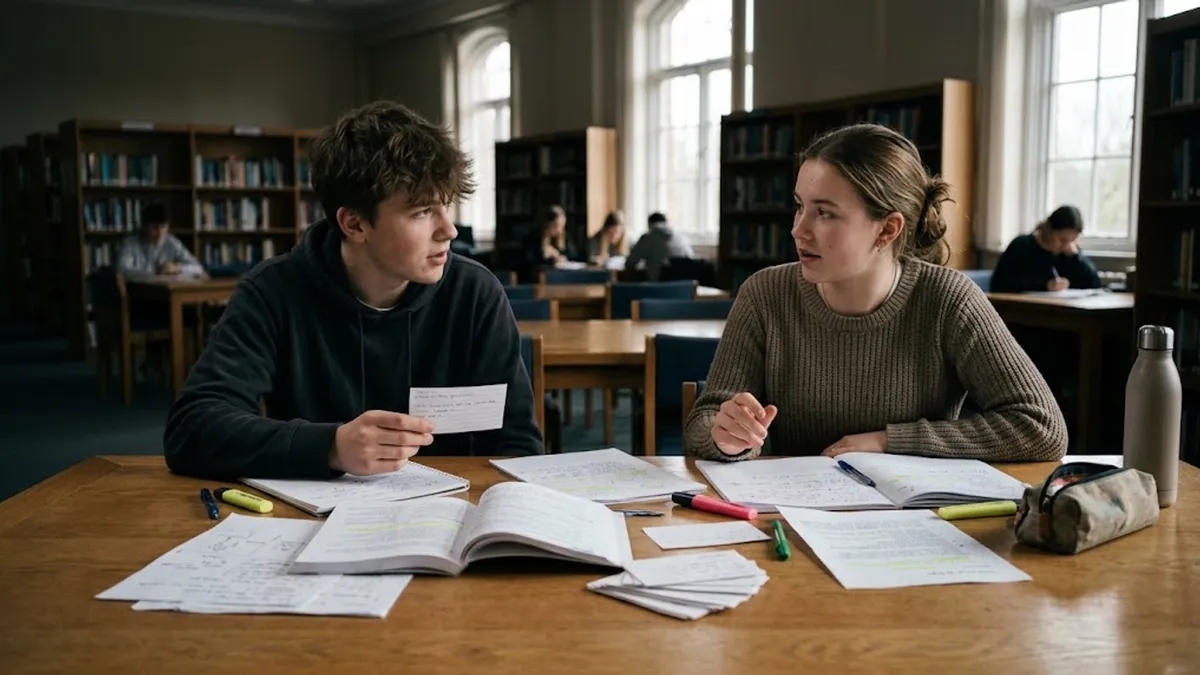
Timed full papers are the closest thing to a real mock gcse. Sit the whole component in one go, using the printed time allowance, with no notes and no pausing. For Arabic reading and writing, that means a quiet room, a clock on the desk and a single attempt. Mark afterwards with the official scheme and log your score, so you can see whether your results climb across weeks.
Use this method every two to three weeks, not daily, because it is tiring and the number of genuine papers is limited. Between sessions, work on the errors it reveals. Timed practice is strongest for fixing pacing problems, such as spending too long on the first reading text, and for building stamina so the final writing task gets the same energy as the first question.
Are Past Papers Better Than Textbooks for GCSE Arabic?
- +Past papers show the exact format, timing and command words you will meet on exam day.
- +Mark schemes reveal precisely how examiners award each mark.
- +Official papers from the exam board are free to download.
- +Listening audio lets you rehearse real speed and accents.
- +Scores across several papers give an honest estimate of your grade.
- +Repeated practice exposes weak spots early, while there is time to fix them.
- −Arabic has few papers, so you can run out of fresh material quickly.
- −Papers do not teach new grammar or vocabulary from scratch.
- −Grade boundaries change by series, so converted grades are only estimates.
- −Speaking papers cannot be self-marked reliably without a teacher or tutor.
- −Starting papers too early can feel discouraging for beginners.
- −Unofficial copies online may be incomplete, edited or missing audio.
What Should I Do Before Sitting a Mock GCSE Arabic Paper?
- ✓Confirm your exam board and specification code with your teacher.
- ✓Download the paper, mark scheme and listening audio together.
- ✓Clear a quiet space and silence your phone.
- ✓Set a timer to match the printed time allowance exactly.
- ✓Put away notes, dictionaries and translation apps.
- ✓Read every instruction twice before writing.
- ✓Plan each writing answer with a quick bullet outline.
- ✓Mark the paper in a different color using the official scheme.
- ✓Record your score and the question types you missed.
- ✓Add each unfamiliar word and its root to your flashcards.
Real papers are public only after the exam
Genuine GCSE papers are released only after the exam series ends, and summer 2020 exams were cancelled entirely. Any page claiming to hold a leaked paper is either fake or a relabeled public paper. Download official past papers from the exam board instead.
How Should I Use GCSE Mocks and a Mock GCSE for Arabic?
The answer is to treat each mock as a rehearsal, not a verdict on your ability. A mock GCSE is a practice exam that mirrors the real one in timing, format and rules, normally set by your school in November or January of Year 11, with a second round in spring. Mocks give teachers evidence for predicted grades, and they give you data about what to fix while months remain.
Schools differ, so ask which papers your gcse mocks will use and which skills they cover. Some departments run all four Arabic components, while others test only writing and reading to save time. If a skill is skipped, run it yourself at home using a past paper. Write the date in your calendar and treat it as real: phone away, no dictionary, no pausing the audio, and the exact time printed on the paper.
Marking is where the learning happens. Mark your own paper in a different color pen using the official mark scheme, and be strict: if the scheme demands a specific verb form or detail, partial credit may not apply. For writing tasks, compare your answer with any sample responses and tick off each criterion. Then convert marks to a rough grade using the boundaries for that series, remembering that boundaries move from year to year.
Keep an error log. Create three columns: what went wrong, why it went wrong and how to fix it. Typical entries in Arabic include misreading a question word, mixing up masculine and feminine agreement, forgetting how sun letters change the definite article, or running out of time on the last writing task. Revisit the log weekly, and before your next mock, read the top five mistakes aloud. This habit often adds more marks than another hour of new vocabulary.
Speaking mocks need a different approach, because you cannot mark yourself reliably. Record the tasks your specification uses, such as a role play, a picture-based task and a conversation, then listen back with the mark scheme beside you, scoring communication, vocabulary range and accuracy separately. Better still, ask a teacher, a fluent relative or a tutor to play examiner. Practice describing a picture until you can speak for the full time using connectives like because, however and in addition.
Listening mocks should be done once, in exam conditions, because the real exam allows limited replays. Afterward, replay the audio with the transcript and note which words you missed. Arabic listening is hard because of fast speech and unfamiliar root patterns, so build a personal list of sound-alike words. When a word is unfamiliar, learn its root and related forms, since one three-letter root can unlock six or more words in the reading and writing papers.
Plan your mock season backward. If your first mock is in November, finish at least two timed papers in October, and book teacher feedback for the week after results. Between mocks, repeat only your weakest component, rather than the full exam each time. Aim to improve by about one grade between the first and second mock. By the final exam, the format should feel boringly familiar, which is exactly the point of practicing with real papers.
Arabic papers from the wrong qualification may use different timings, tasks and mark schemes. Confirm your board and code with your teacher first, and download only from the exam board's own website. Never pay for papers that are free.
Are Leaked GCSE Papers Real, and How Does Arabic Compare With Other Languages?
No, leaked GCSE papers are not a legitimate study resource, and in practice most are fake. Exam boards keep papers in secure storage until the morning of the exam, and schools must lock them away. When people search leaked gcse papers each spring, they typically find click-bait pages, malware downloads or old public papers relabeled as new. A real leak is an investigation matter, not a free download, and boards can take action against anyone involved.
Rumors about the 2020 series show how easily the myth spreads. Summer 2020 GCSE exams were cancelled across the UK because of COVID-19, and grades were awarded through centre assessment instead, so searches for gcse 2020 papers leaked can only lead to fakes or unrelated files. The same is true for summer 2021, when exams were also replaced by teacher-assessed grades. If a site claims to hold papers from those years, it is not telling the truth.
Using stolen material carries real risk. The Joint Council for Qualifications, known as JCQ, sets malpractice rules that every board follows. Candidates found with advance knowledge of a paper can lose results in that subject or more, and schools can face sanctions. For a subject like Arabic, where a strong grade can support a university application or recognize a heritage language, no shortcut is worth that risk. Real papers and steady habits are cheaper, safe and effective.
Now compare Arabic with other options, since many Bing searchers look at several languages at once. GCSE Chinese and GCSE Arabic share a script challenge: learners must master a new writing system as well as grammar. GCSE Spanish, French, German and Italian use the Latin alphabet, so beginners progress faster in reading and spelling. Arabic's distinctive hurdle is the gap between spoken dialects and Modern Standard Arabic, which the written papers typically favor.
That gap shapes preparation. A heritage speaker raised in a Levantine, Egyptian or Gulf-speaking home may speak fluently yet struggle with formal verb forms, the dual, broken plurals and case endings. A learner from an English-only home faces the opposite problem: solid grammar knowledge but weak listening speed. Be honest about which profile fits you, and tilt past paper practice toward the weaker paper. Most students gain quickly by working on one weak skill for three weeks.
Schools abroad also matter to some searchers. International and British-curriculum schools in places like Dubai often run GCSE or International GCSE courses in several languages, including Arabic and Italian, but the offer varies by school and by year. If you are enrolled at such a school, ask for the exact board, tier and specification code, because those details decide which past papers apply. Never assume a course name equals a specification, since one language can appear under more than one code.
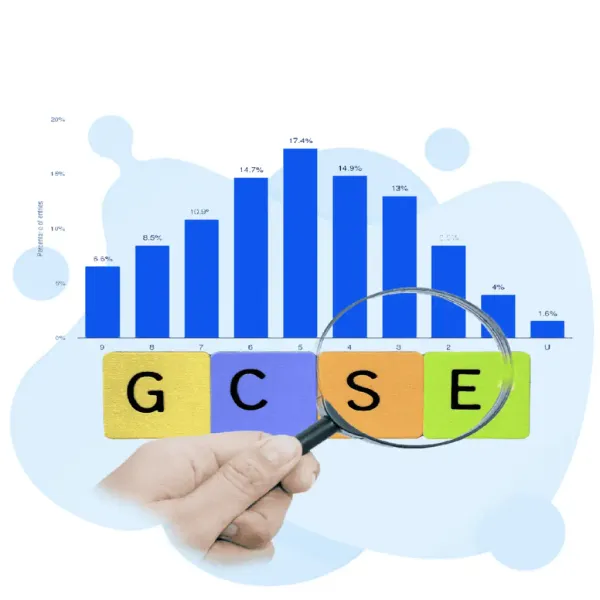
Finally, keep the grading system in mind. In England, GCSEs are graded 9 to 1, with 9 the highest, and grade 4 is the standard pass. In summer 2026, 67.3% of UK GCSE results were graded 4/C or above, according to JCQ, almost the same as 2025's 67.4%. Percentages like these are averages across all subjects, so they say little about Arabic specifically. Use them as context, but base your plan on your own paper scores.
What Are the Best Final Tips for Passing GCSE Arabic?
The best tip is to practice the exact tasks you will face, often and early. Candidates who treat past papers Arabic GCSE material as a weekly habit, rather than a last-minute panic, tend to show steadier gains. A sensible rhythm is one timed paper section every two or three days in the final two months, with the remaining days for vocabulary, grammar drills and speaking aloud. Short, regular sessions beat one eight-hour weekend cram almost every time.
Build vocabulary through roots and themes. Arabic words cluster around three-letter roots, so learning k-t-b, the root of writing, helps with book, office, library, writer and written. Group words by exam themes such as identity, local area, school, future plans and global issues, and learn 15 new words per session using spaced repetition. Say each word aloud and write it by hand, because handwriting reinforces letter forms, which change shape by position in the word.
For reading, use a three-pass method. First, skim the title and questions for context. Second, read the text and underline the words you recognize by root. Third, answer each question using evidence from the text and avoid long copying. In translation tasks, read the whole sentence before choosing a word, since Arabic word order and verb-subject agreement differ from English. Check that your English sounds natural, because marks are lost for literal but meaningless phrasing.
For writing, plan before you write. Spend two minutes listing the points for each bullet, and choose two or three advanced structures you can use correctly, such as a conditional sentence, a relative clause or a verbal noun. Accuracy matters as much as ambition, so avoid structures you cannot control. Leave time to proofread for dots, letter connections, agreement and the hamza, as a missing dot can change a word completely and cost you marks.
For speaking, prepare answers you can adapt rather than scripts you must recite. Examiners notice rehearsed paragraphs that do not answer the question asked. Practice giving opinions with reasons, referring to past and future events, and reacting to the unexpected. Record yourself weekly and listen for hesitation, flat intonation and repeated words. If you can, practice with a native speaker, even for ten minutes, because rhythm and pronunciation improve fastest through live conversation.
On exam day, protect your basics. Sleep properly, bring the right pens and ID if your centre requires it, and arrive early. Read every instruction carefully, then divide time by marks, not by gut feeling. If you freeze on a question, circle it and move on; you can return later. For listening, use the reading time to predict likely answers, such as numbers, times or place names. Never leave a response blank when a plausible attempt is possible.
A last note on mindset and honesty. Use official sources, mark yourself strictly and ask for help early. Pair your language practice with other subjects through free quizzes so you keep balance across your timetable, and visit our leaked gcse papers guide for the safe, legitimate alternative: free past papers, mark schemes and revision plans. Steady progress, honest review and calm habits will serve you better than any rumor or shortcut ever could.
GCSE Questions and Answers
GCSE 2026

GCSE Practice Tests: Past Papers & Question Banks

GCSE Exam Prep: Mocks, Past Papers & Revision

GCSE Past Papers: Free Downloads, Mark Schemes & Revision Guide (2026)
Gcse Drama: Meaning, Exam Format, Key Words and Revision Guide
Periodic Table GCSE: Groups, Trends, Electrons and Revision Guide
GCSE Spanish: Exam Format, Past Papers, Mocks and Revision Guide

GCSE Subjects 2026: Compulsory, Optional & How to Choose
Sources & references
Prepared by the Practice Test Geeks editorial team using AI-assisted drafting; exam facts are checked against the official sources below. Editorial policy
- gov.uk — Test delivery, retake policy · verified Oct 2026
- gov.uk — Passing score · verified Oct 2026
- aqa.org.uk — Exam format · verified Oct 2026
- jcq.org.uk — Exam information · verified Oct 2026
- aqa.org.uk — Fees, late registration, retake fee · verified Oct 2026
- aqa.org.uk — Fees · verified Oct 2026