
GCSE Spanish: Exam Format, Past Papers, Mocks and Revision Guide 2026
🎯 Gcse Spanish is a UK exam of listening, speaking, reading and writing, each worth 25%. See format, grades, past papers, mocks and revision tips.
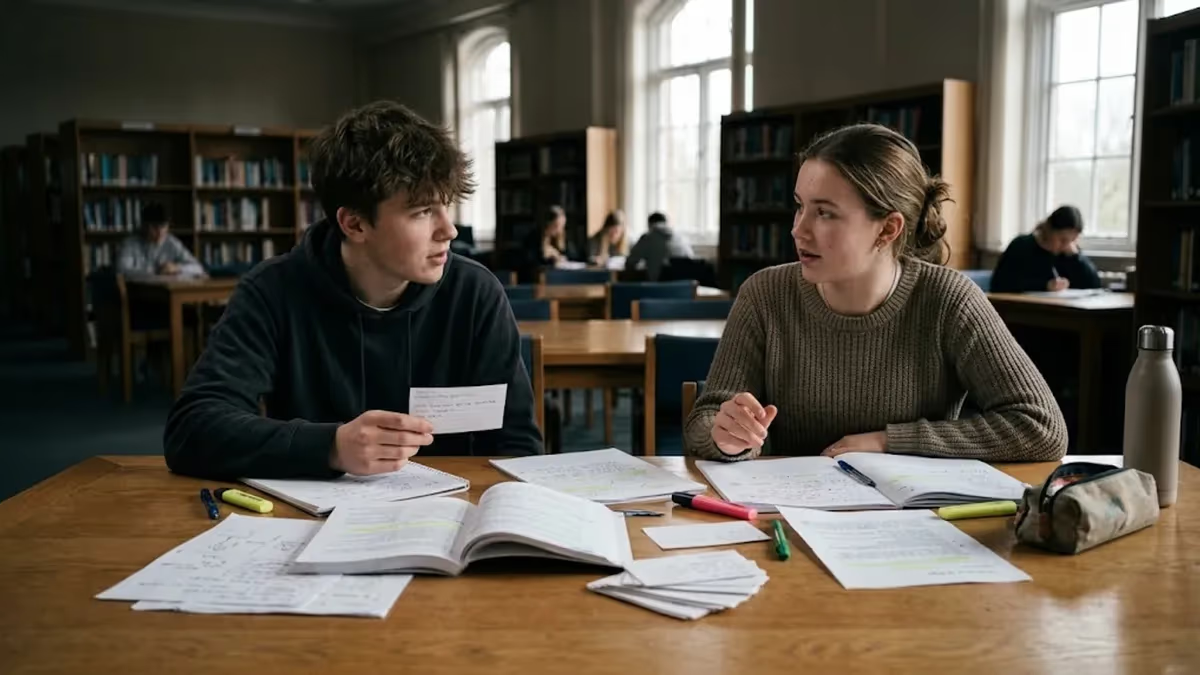
GCSE Spanish is a UK qualification for 14-to-16-year-olds that tests Spanish in four equally weighted papers: listening, speaking, reading and writing. It is taken at Foundation or Higher tier, graded 9 to 1, and examined at the end of a two-year course. A grade 4 is the standard pass.
Gcse Spanish: Key Facts (Updated October 2026)
| Fact | Details | Source |
|---|---|---|
| Course delivery | GCSEs are two-year courses. Students sit all their written exams in one series at the end of the course, at their school or college exam centre. | GOV.UK (Department for Education) |
| Grading scale | GCSEs in England are graded 9 to 1. Grade 4 is the standard pass. | GOV.UK 16 to 19 funding guidance |
| Spanish papers | Four skills are assessed: listening, speaking, reading and writing. Each is worth 25% of the grade. | AQA, Pearson Edexcel and WJEC Eduqas specifications |
| Tiers | Foundation covers grades 1 to 5 and Higher covers grades 4 to 9. Students take all four papers at the same tier. | Exam board specifications |
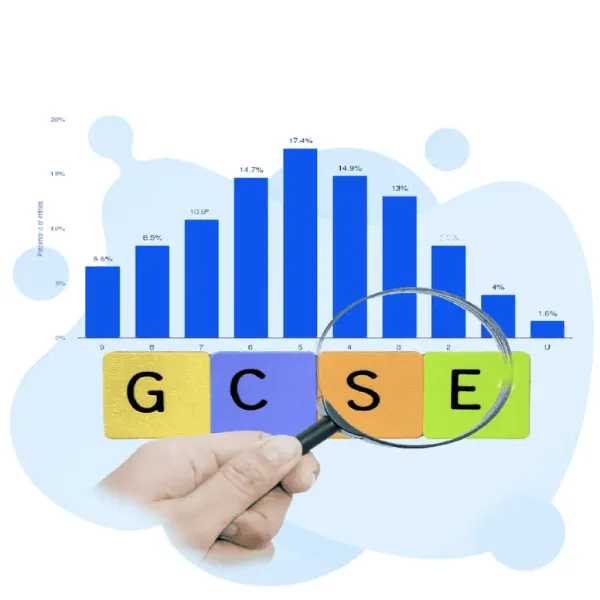
| 2026 UK results | In summer 2026, 67.3% of UK GCSE results (all subjects) were graded 4/C or above, compared with 67.4% in 2025. | JCQ |
| Late entry (AQA, June 2027) | A late entry fee applies from 22 February 2027 and a very late fee after 21 April 2027. They equal 100% and 150% of the normal entry fee, on top of that fee. | AQA |
| Resits | In England the only GCSE resits outside the summer series are English Language and Maths in November. A Spanish resit means waiting for the next summer series. | Department for Education |
This guide sits inside our gcse hub, which covers every subject, grade boundary and revision strategy. For American readers, the definition of GCSE is General Certificate of Secondary Education, the main school-leaving qualification in England, Wales and Northern Ireland. Students usually sit it at 16, after two years of study. The meaning of GCSE is closest to a set of separate subject exams, each graded on its own, rather than one overall diploma.
Spanish is one of the most popular modern foreign languages at GCSE, usually alongside French and German. Exam boards such as AQA, Pearson Edexcel and WJEC Eduqas each publish their own specification, but all four skills carry equal weight. That means a strong speaking grade can offset a weaker writing paper, and no single exam decides your result. Students who practise all four skills evenly tend to finish with the most reliable grades overall, and the structure rewards steady habits over last-minute cramming.
Searches for leaked gcse papers appear every exam season, but real leaks are rare and chasing them is a bad bet. Files sold on social media are usually fake, outdated or scams, and using genuine exam content early can lead to disqualification from the whole qualification. The legitimate route is the free archive of past papers and mark schemes that each board publishes, plus a structured plan built from a skills checklist.
This article answers the questions students and parents ask most: what the GCSE Spanish exam contains, how the papers are marked, where to find past papers, and how mock exams fit in. It also explains how grades convert into progression options. Each section opens with a direct answer, then adds examples, numbers and common mistakes. Whether you are choosing options in year 9 or revising in the final spring term, you can jump straight to the section that matches your stage.
A quick note on timing helps. Exams run in the May and June summer series, and papers for different subjects are spread across about five weeks. Spanish speaking tests are usually conducted by your own teacher and recorded for the board in the spring, before the written papers begin. Because exam centres set their own speaking dates, students should confirm the schedule with their school's exams officer at the start of the spring term rather than assuming a fixed calendar date.
The final point is cost and access. Schools normally enter students and pay the exam fees, so families rarely see a bill unless a candidate is a private entrant. Private candidates must find a centre that accepts external entries, which takes planning because speaking tests need an examiner. If you miss a deadline, boards add late fees equal to the original entry fee or more, so early registration protects your budget.
How Big Is GCSE Spanish by the Numbers?
What Is on the GCSE Spanish Exam?
Students hear recordings of native speakers and answer questions in English, Spanish or by choosing options. Content spans three broad themes: identity and culture, local and global areas of interest, and current and future study and employment. Worth 25% of the final grade.
A teacher-conducted, recorded test with a role-play, a photo card and a general conversation. It rewards fluency, pronunciation, range of language and the ability to respond to unexpected follow-up questions. Worth 25% of the final grade and taken before the written papers.
Texts rise in difficulty from short messages to longer extracts, and the paper includes a translation from Spanish into English. Students answer in English or Spanish depending on the question. Accurate comprehension of verbs and connectives matters. Worth 25% of the final grade.
Students produce structured written responses to prompts and translate a passage from English into Spanish. Marks reward communication, range of vocabulary and grammar, and accuracy. The tasks differ by tier, with Higher expecting longer, more complex answers. Worth 25% of the final grade.
Where Can You Find GCSE Spanish Past Papers?
Free GCSE Spanish past papers are on each exam board's website, where AQA, Pearson Edexcel and WJEC Eduqas publish question papers, mark schemes and examiner reports for recent series. Start with the board your school uses, because command words and task types differ slightly. Download papers from the official page rather than third-party sites, since official files carry the right tier, the right audio and the right mark scheme for self-marking.
Before you start, check which board and tier you sit. Your teacher can confirm both, since your school registers every entry. Print the paper or open it full screen, set a timer to the exact allowance, and work without a dictionary, because none is allowed in the exam. After you finish, mark using the scheme line by line and note every dropped mark in a simple error log.
Students sometimes search for leaked gcse papers 2020, but there is nothing to find: summer 2020 GCSE exams were cancelled in England because of the pandemic, and grades were awarded without written papers. No genuine 2020 Spanish papers were ever sat, so none can be leaked. Anyone selling them is selling fiction, and buyers lose money and risk their own data. The same logic applies to every year: real papers become public only after the series ends.
Past papers are best used in stages. In the first term of year 11, complete single sections, such as one reading text or one photo card, untimed. By January, move to full timed papers. In the final six weeks, sit a full paper under exam conditions every few days, rotating between listening, reading and writing, and rehearse speaking aloud daily. This staged approach builds accuracy first and speed second, which matches how marks are earned in languages.
Aim for a realistic number of papers rather than a heroic one. A sensible target is four to six full papers per skill across the year, reviewed properly. Reviewing matters more than volume: spend at least as long analysing mistakes as you did sitting the paper. If a spelling, tense or gender error appears three times, it becomes a flashcard, a rule on your revision sheet and a target for the next paper you attempt.
If your school uses AQA, the specification 8698 and its vocabulary lists are your master document. Our aqa gcse checklist shows how to turn a specification into a tickable list, and the same method works for Spanish: list every theme, tense and vocabulary topic, then rate your confidence red, amber or green. Revisit red items weekly until they move to amber and then green, and keep the list visible on your desk.
Finally, treat mark schemes as teaching material. They show exactly which answers earn credit, which Spanish phrases are accepted, and how many marks each part of the writing task carries. Read the high-scoring sample answers aloud, copy useful structures such as opinion phrases and subjunctive triggers, and adapt them to your own topics. Doing this for a handful of papers gives you a ready bank of language you can reuse under pressure.
What Are GCSE Mocks and How Do Mock GCSE Exams Work?
GCSE mocks are practice exams sat in school, usually in December or January of year 11, with a second round sometimes in March. A mock GCSE follows the real format, so Spanish students sit listening, reading and writing papers and a speaking test. Schools often use older live papers, which is why they ask you not to share questions. The timetable is set locally, so check your own school calendar.
Treat your first mock as a diagnostic rather than a verdict. Many students score a grade below their target in the first round because they have not yet covered the full vocabulary list or practised the translation tasks. That is normal and useful. Write down the date, the paper, your marks per question and how you felt, so the second mock can be compared against real evidence rather than memory.
Is GCSE Spanish Worth Taking?
- +Builds a widely valued skill that supports sixth-form, university and career options
- +Four equally weighted papers let strengths in one skill offset weaker areas
- +Task types, themes and vocabulary lists are published, so the exam is predictable
- +The speaking test is taken in advance, so it spreads the pressure across the spring
- +Spanish is among the most useful world languages for travel, business and culture
- +Regular short practice sessions produce steady, measurable improvement
- −Needs consistent weekly practice, because forgotten vocabulary quickly drags marks down
- −Grammar accuracy is rewarded, so tense and agreement errors cost marks across all papers
- −Listening recordings cannot be paused, which creates real time pressure
- −All four papers must be taken at the same tier, limiting flexibility
- −Speaking nerves can reduce performance even when the language is strong
- −No dictionary is allowed, so vocabulary has to be memorised in full
How Should You Prepare for the GCSE Spanish Exam Before Mocks?
- ✓Confirm your exam board, specification code and tier with your teacher.
- ✓Download the official vocabulary list and tick off words you already know.
- ✓Learn the main tenses: present, preterite, imperfect, near future and conditional.
- ✓Record yourself answering photo-card questions and listen back for errors.
- ✓Complete one timed listening paper and mark it against the scheme.
- ✓Practise translating short passages in both directions without a dictionary.
- ✓Write a 90-word answer with an opinion, a past event and a future plan.
- ✓Start an error log for spelling, accents, gender and verb endings.
- ✓Review the log twice a week and turn repeated errors into flashcards.
- ✓Book your mock timetable into your calendar and plan revision backwards from it.
Little and often beats cramming
Twenty focused minutes a day on vocabulary, listening or speaking builds more lasting skill than a single weekend marathon. Spacing your practice lets memory strengthen between sessions, and every GCSE Spanish paper rewards recall under pressure.
How Hard Is the GCSE Spanish Exam?
The GCSE Spanish exam is moderately hard for most students because it tests four skills at once and rewards accuracy. Unlike a subject with a single paper style, you must listen, speak, read and write under timed conditions. The good news is that the content is predictable: three broad themes, a published vocabulary list and a fixed set of task types. Students who learn those task types early usually find the exam far less intimidating.
Grades run from 9 to 1, with 4 treated as a standard pass and 5 as a strong pass. Across all UK subjects, JCQ reported that 67.3% of results in summer 2026 were 4 or above, compared with 67.4% in 2025. That figure covers every subject, so treat it as context, not a Spanish-specific pass rate. Language grade boundaries are published separately by each board after results day in August.
Tier choice shapes difficulty more than anything else. Foundation covers grades 1 to 5 with shorter, more scaffolded tasks, while Higher covers grades 4 to 9 with longer texts, more complex grammar and unseen vocabulary. Students must take all four papers at the same tier, so a decision made in spring affects every skill. Teachers typically recommend Higher when a student is working consistently around a 5 or above in mocks.
Grammar is where most marks are won or lost. Expect to use the present, preterite, imperfect, near future and conditional tenses accurately, and to recognise the perfect and subjunctive in reading and listening at Higher. Gender agreement, adjective endings and the difference between ser and estar appear constantly. A practical drill is to write ten sentences a week using one target structure, then ask a teacher or tutor to correct them.
Context matters if you are comparing systems. In the gcse uk system, a language is not compulsory for every student, though many schools strongly encourage it and England's EBacc measure includes one. Spanish also counts as a modern foreign language when sixth forms and universities check entry requirements, so a solid grade keeps options open for courses such as languages, international relations and business. Our subjects guide explains how to weigh Spanish against other options.
Time pressure is the hidden difficulty. Listening recordings play at a fixed pace with limited repeats, so you cannot pause to think, and writing tasks leave little time for planning. Practise with a timer and plan every written answer in two minutes: choose your opinion, one past event and one future plan, then write. Candidates with a plan produce more accurate Spanish and avoid rambling or repeating the same phrases.
Finally, remember what counts as a good result. A grade 4 can be a victory for a student who started year 10 with little Spanish, while a grade 8 or 9 demands near-flawless accuracy and wide vocabulary. Set a target based on your starting point and mocks, then work backwards into weekly tasks. Progress in languages is cumulative, so ten focused minutes every day for six months beats occasional long weekend sessions.
Exam boards and JCQ treat possessing or sharing secure exam content as malpractice, and penalties can range from lost marks to disqualification. Files advertised as leaked are usually fake, so use only official past papers, mark schemes and your teacher's guidance.
What Does a Spanish GCSE Paper Look Like?
Another common search is leaked gcse papers 2019, which usually turns up forum posts and paid files that cannot be trusted. The 2019 series did take place, but its genuine papers and mark schemes are now freely archived by exam boards as past papers. You can legitimately practise on them without any risk. Our exam preparation guide shows how to pair old papers with mock exams and a revision timetable.
A Spanish GCSE paper for listening plays recordings of native speakers in short dialogues, announcements and interviews. Questions begin simply and rise in difficulty, and some require answers in English while others need a short Spanish response or a letter choice. Read the question stems during the pause, underline the key nouns and numbers, and predict possible answers. Numbers, times, dates and negatives are the most common traps, so drill them separately.
Most boards structure the speaking exam as a role-play, a photo card and a general conversation. The role-play tests short, practical exchanges such as ordering food or asking directions. The photo card asks you to describe a picture and answer follow-up questions. The conversation covers more than one theme, so prepare flexible answers across all themes, with opinions, reasons and a past and future example in each.
The reading paper mixes short texts of increasing length, from signs and messages to literary extracts at Higher. It also contains a translation from Spanish into English, where accuracy matters more than elegance. Do not leave gaps: a sensible guess based on context earns marks that a blank cannot. Practise by reading short news items in Spanish for ten minutes a day and highlighting unfamiliar verbs, since verb recognition drives comprehension.
In the writing paper, task choices depend on tier, but all students produce structured responses to bullet-pointed prompts and translate a short passage from English into Spanish. Cover every bullet, vary tense and add opinions with reasons. A 90-word answer that covers all points accurately usually outscores a 150-word answer riddled with errors. Reserve the final five minutes for checking verb endings, accents, gender agreement and the spelling of key words.
To sharpen all four skills, combine board papers with question banks from a reliable gcse test resource. Short, topic-specific questions let you spot patterns quickly, while full papers build stamina. Alternate the two: a topic set on Monday and Wednesday, a full paper at the weekend. Track scores in a spreadsheet to see whether accuracy improves, and share the sheet with a teacher or tutor.
Pay attention to accents and spelling in writing. A missing accent can change meaning, as in si and sí, or el and él, and examiners notice repeated slips. Build a list of twenty high-frequency words that you misspell, test yourself weekly and fold them into your error log. Small corrections across a whole paper can add several marks, which is often the difference between adjacent grades.
How Do You Revise for GCSE Spanish Step by Step?
Start revision by building a weekly timetable with short daily slots. Four 20-minute sessions on separate days outperform one 80-minute block because spacing strengthens memory. Assign each day a skill: Monday vocabulary, Tuesday listening, Wednesday grammar, Thursday reading, Friday speaking, and rotate writing on weekends. Write the plan on paper and place it where you study, so the next task is obvious and decisions do not drain your energy.
For vocabulary, use retrieval rather than rereading. Cover the Spanish side of a flashcard, say the word aloud, then check. Group words by theme, such as school, holidays, health and environment, and add a sample sentence to each. Apps with spaced repetition help, but a paper box system works too. Aim for twenty new words a week plus a review of older cards, and use new words in speaking within days.
Speaking improves only by speaking. Record yourself answering photo-card questions on your phone and listen for hesitations, flat intonation and repeated phrases. Write three alternative ways to say 'I think that' and use them. Practise with a partner, parent or tutor who can ask unexpected follow-ups, since the exam conversation moves beyond rehearsed answers. Even a five-minute daily voice note builds the fluency examiners reward.
Consider tutoring if you stall. A GCSE Spanish tutor can correct verbs in real time, model pronunciation and set personalised homework, which is hard to replicate alone. Search carefully, as the phrase gcse 2020 papers leaked brings up dubious sellers, while legitimate tutors show qualifications, references and sample lessons. Our tutoring guide explains typical formats, what to ask before booking and how to judge progress after four weeks.
In the final week, shift from learning new material to rehearsing. Reread your error log, rework three weak mark-scheme questions and do one light listening session daily. Prepare your exam kit: black pens, a spare, any ID your centre requires and a clear plan for getting there. Sleep matters; students who sleep seven to nine hours consolidate vocabulary better than those who cram late. Check start times and room details the day before.
During the exam, read every instruction carefully. In listening, note answers while the recording plays and never leave blanks. In reading, underline question words and answer in the language requested. In writing, plan for two minutes, then check tenses and endings at the end. If you freeze in speaking, use a filler such as 'bueno' or 'a ver' and rephrase simply; examiners credit communication, not perfection.
After the exams, results arrive in August. If your grade is below 4 and you want to resit, the next opportunity is the following summer series for Spanish, since only English Language and Maths have November resits in England. Talk to your sixth form or college about alternatives, including post-16 language courses. Whatever the result, the skills transfer: language learning builds memory, communication and cultural awareness that support later study and work.
GCSE Questions and Answers
GCSE 2026

AQA GCSE Biology Checklist: The Complete Skills & Revision List for 2026

GCSE Subjects 2026: Compulsory, Optional & How to Choose

GCSE Practice Tests: Past Papers & Question Banks

GCSE Exam Prep: Mocks, Past Papers & Revision

GCSE Tutors & Tuition: Find the Right Programme

GCSE Practice Test PDF (Free Printable 2026)
About the Author

Educational Psychologist & Academic Test Preparation Expert
Columbia University Teachers CollegeDr. Lisa Patel holds a Doctorate in Education from Columbia University Teachers College and has spent 17 years researching standardized test design and academic assessment. She has developed preparation programs for SAT, ACT, GRE, LSAT, UCAT, and numerous professional licensing exams, helping students of all backgrounds achieve their target scores.