
Gcse Drama: Meaning, Exam Format, Key Words and Revision Guide 2026
🎓 GCSE Drama is a two-year course graded 9 to 1, with 60% practical work. Learn the exam format, key words, mocks and revision tips for 2026.
GCSE Drama is a two-year UK qualification, usually taken at ages 14 to 16, that tests devising, performing from scripts and a written theatre exam. It is graded 9 to 1, and boards such as AQA, Edexcel and Eduqas split marks between practical work and a written paper.
Gcse Drama: Key Facts (Updated October 2026)
| Fact | Details | Source |
|---|---|---|
| Course length and delivery | GCSEs are two-year courses, and students sit all their written exams in one series at the end of the course, at their school or college exam centre. | Department for Education |
| Grading scale | GCSEs in England are graded 9 to 1. Students aged 16 to 19 without at least a grade 4 in English or Maths must keep studying that subject. | Department for Education |
| Summer 2026 results | 67.3% of UK GCSE results (all subjects) were graded 4/C or above, compared with 67.4% in 2025. | JCQ |
| Practical weighting | 60% of the grade comes from practical work (devising and performing from a text) and 40% from a written exam on AQA, Edexcel and Eduqas. | AQA, Pearson Edexcel and WJEC Eduqas specifications |
| AQA Drama (8261) | Understanding Drama (written, 1 hour 45 minutes, 80 marks, 40%), Devising Drama (40%) and Texts in Practice (20%). | AQA |
| Late entry (AQA, June 2027) | A late entry fee applies from 22 February 2027 and a very late fee after 21 April 2027, set at 100% and 150% of the original entry fee. | AQA |
| Resits | In England the only GCSE resits outside the summer series are English Language and Maths in November, so Drama is resat the following summer. | Department for Education |
What Is the GCSE Drama Meaning?
The GCSE drama meaning is simple once you break the name down. GCSE stands for General Certificate of Secondary Education, so the definition of GCSE is a subject-based qualification taken in England, Wales and Northern Ireland at about sixteen. Drama is one of the optional subjects. To define GCSE in one sentence: it is a two-year course that ends with externally marked assessment. For the full overview, start with our gcse hub before choosing your options.
Many students arrive here after typing leaked gcse papers into a search bar, so let us be direct. Genuine leaked papers do not circulate in any form you can trust, and anything labelled that way is usually a scam, a fake or recycled old material. Using one is exam malpractice, and boards can void results. Drama also has no secret paper to chase, because 60% of the grade comes from practical work that cannot be leaked.
What you need instead is a clear map of the course. Every specification divides the grade into three parts: devising original theatre from a stimulus, performing extracts from published play texts, and a written exam on theatre practice. The written paper lasts 1 hour 45 minutes with AQA and Edexcel, and it rewards students who have watched live theatre and can explain how actors, designers and directors create meaning. Mocks let you practise all three parts under pressure.
Mock exams matter more in drama than most students expect. A school typically runs gcse mocks in the autumn or spring of Year 11, and a mock gcse in drama usually contains a past written paper plus a rehearsed practical extract. Teachers use the result to predict your grade and to decide which students need extra support. Treat a mock gcse as a rehearsal rather than a verdict, because the real marks depend on the final performance and the summer paper.
Choosing the board changes the details, so check your school's specification early. AQA calls its units Understanding Drama, Devising Drama and Texts in Practice. Edexcel uses Devising, Performance from Text and Theatre Makers in Practice, and Eduqas follows a similar three-part pattern. All three share the same 40/20/40 balance of devising, text performance and written work, so the skills you build in class transfer easily between boards if you ever change school or centre.
This guide walks through the course structure, the key words examiners expect, the most common mistakes and a realistic revision plan. It also explains how drama compares with subjects such as sociology and psychology, since many students pick it alongside them. Use the quizzes below to check your general exam technique, then return to your own specification for the practical details. By the end you should know exactly what to rehearse, what to write and how to protect your marks.
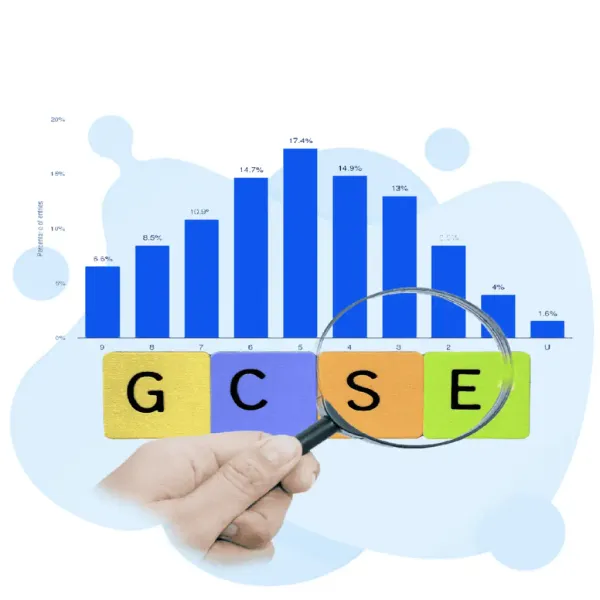
GCSE Drama by the Numbers
Drama GCSE: What Are the Three Components?
You create an original piece of theatre from a stimulus with a small group, perform it, and document the process in a log or portfolio that explains your choices, rehearsal changes and evaluation.
You perform two extracts from a published play, either as an actor or as a designer. A visiting examiner usually marks this unit, so accuracy, characterisation and control matter on the day.
A 1 hour 45 minute paper covers theatre roles and terminology, a set text studied as a performer, director and designer, and a review of a live production you have watched.
Sixty percent of the grade is practical and forty percent is written, so steady attendance at rehearsals and consistent notes are worth more than last-minute revision of terminology.
What Are GCSE Drama Key Words?
GCSE drama key words fall into four groups: performance skills, rehearsal techniques, stage design and theatre practitioners. Examiners reward precise vocabulary, so write 'I used a low status posture and a slow vocal pace' rather than 'I acted sad'. Learn around forty terms and be able to define each with an example from your own work. In an aqa gcse drama paper, one well-chosen term often turns a descriptive answer into an analytical one.
Voice terms include pitch, pace, pause, volume, tone, accent and intonation. Physical terms include posture, gait, gesture, facial expression, eye contact, proxemics and levels. A strong answer links each skill to meaning: a slow pace and long pauses might show grief, while sharp gestures and a wide stance might show anger. Practise describing one moment from your devised piece using at least three of these terms, then state the effect on the audience.
Rehearsal techniques are the second group. Hot-seating means questioning a character in role, thought-tracking lets a character speak private thoughts aloud, and role on the wall maps a character's traits on a drawing. Others include improvisation, freeze frame, cross-cutting, flashback, split stage, marking the moment and forum theatre. Examiners want you to name the technique, explain how you used it and say what it taught you about the character or scene.
Design terms cover the stage and everything on it. Know the main configurations: proscenium arch, thrust, in the round, traverse and end on. For lighting, learn wash, spotlight, gobo, cross-fade and colour gels. For sound, know underscore, sound effects and live or recorded music. Add set, props, costume and make-up. When answering, always connect a design choice to atmosphere, period, character or meaning rather than simply listing what appeared on stage.
Practitioners complete the vocabulary. Stanislavski is linked to naturalism, objectives, given circumstances and the magic if. Brecht is linked to epic theatre, gestus, direct address, placards and breaking the fourth wall to make audiences think. Artaud's Theatre of Cruelty, Berkoff's physical style and Frantic Assembly's movement-led work may also appear. You only need to apply those named in your specification, but a clear sentence on each helps in evaluation answers.
Students still search for leaked gcse papers 2020 in the hope of spotting question patterns, yet official past papers on the exam board websites show the same patterns legitimately. Across recent series, the live theatre section has asked you to analyse and evaluate acting or design, and the set text section has asked how you would perform or direct specific moments. Practising those task types is more useful than hunting for unofficial files.
A word list alone earns few marks, so use a point, evidence, effect structure. State the technique, give the exact moment, and explain the impact on the audience. For example: 'In the courtroom scene the actor used a rising pitch and a pointed finger to show accusation, making the audience feel uneasy.' Build flashcards with the term on one side and a definition, an example and an effect on the other, then test yourself weekly.
How Do GCSE Mocks Work for Each Drama Component?
Devising means creating an original piece of theatre from a stimulus such as a poem, photograph, song or news story. In a group of two to five performers, you research the stimulus, test ideas through improvisation and shape them into a structured performance. Most boards assess both the final performance and a written log or portfolio, so the process counts as much as the show. Start the log in week one, not week twelve.
Marks reward clear intention, effective use of performance skills and evidence of development. Keep dated notes on what you tried, what failed and why you changed it. Include sketches of staging, rehearsal photographs and comments on how audience response shaped later decisions. A common trap is creating an exciting group scene but writing a thin log. Balance your effort, because the written evaluation can carry as many marks as the performance itself.
Is GCSE Drama Worth Taking?
- +Builds confidence, public speaking and teamwork that employers and colleges value
- +Sixty percent of the grade is practical, which suits students who learn by doing
- +Opens a pathway to A level drama, theatre studies and performing arts courses
- +Develops analytical writing about performance, design and audience response
- +Offers a creative balance alongside exam-heavy subjects such as sociology and psychology
- +Includes live theatre trips that many students remember long after school
- −Group work means your marks can depend on classmates turning up and rehearsing
- −Rehearsals often run after school and at weekends, adding to your workload
- −Performing a live assessed piece can be stressful for shy or anxious students
- −The written paper still demands accurate terminology and strong essay technique
- −Theatre trips and costume or prop costs can add up for families
- −Some universities and employers rank drama below traditional academic subjects
How Do You Prepare for GCSE Mocks in Drama?
- ✓Download the latest specification from your exam board and read the assessment objectives.
- ✓Print one past written paper and its mark scheme from the board website.
- ✓Sit the paper under timed conditions with no notes at least once before the mock.
- ✓Learn forty key words and write a definition, example and effect for each.
- ✓Annotate your set text with ideas for acting, directing and design in three key scenes.
- ✓Write detailed notes on a live production within 24 hours of seeing it.
- ✓Record each rehearsal and review it against the marking criteria.
- ✓Update your devising log weekly with dated notes, sketches and evaluations.
- ✓Ask your teacher for one specific target after every practice run.
- ✓Plan sleep, food and travel the night before so nerves do not cost marks.
Fix the log and the live theatre review first
These two pieces of writing are the most common places for students to drop marks, because they depend on notes made weeks earlier. Keep your devising log up to date and write your live theatre review straight after the trip, with named moments, technical terms and audience effects.
Drama GCSE: How Is It Marked and What Grade Do You Need?
Drama GCSE is marked partly by your teacher, partly by a visiting examiner and partly by an examiner who never meets you. The written paper is sent away and marked externally, and the text performance is usually marked by a visiting examiner. Devised work is normally marked by your teacher and then moderated by the board, which samples recordings to check standards are consistent between schools. Consistent practical effort across the whole course matters as much as exam-day nerves.
Results come as grades 9 to 1, with grade 4 treated as a standard pass and grade 5 as a strong pass. In summer 2026, JCQ reported that 67.3% of UK GCSE results were grade 4 or above, down slightly from 67.4% in 2025. Subject results vary, and grade boundaries shift every year depending on how demanding the written paper proves, so any raw mark target you set should be treated as an estimate rather than a promise.
Colleges set their own entry requirements, and these matter more than the national pass mark. Sixth forms offering A level drama often ask for a grade 5 or 6 in GCSE drama or English, while some accept a strong audition instead. Remember too that students aged 16 to 19 without a grade 4 in English or Maths must keep studying those subjects, though drama itself carries no such requirement. Check each prospectus before choosing a target grade.
In the gcse uk system, drama is unusual because its assessment is performed rather than only written. Among all gcse's, that makes it harder to catch up in the final months, since a devised piece takes weeks of rehearsal to polish. Students who plan well often gain a full grade by treating the practical units like coursework: attending every rehearsal, keeping the log current and asking for feedback after each run-through.
Entry timing is another practical point. For AQA's summer 2027 series, a late entry fee applies from 22 February 2027 and a very late fee after 21 April 2027, equal to 100% and 150% of the original entry fee. AQA charges UK centres £52.85 for each English Language or Maths entry in that series; drama fees differ, so ask your exams officer. Private candidates also need a centre willing to host the practical assessment.
Resits work differently from what many families expect. In England, the only GCSE resits outside the summer series are English Language and Maths in November, so a drama grade can only be improved the following June, and the practical work must be done again. Students sometimes search for leaked gcse papers 2019 to prepare, but official past papers released by the board are free, safe and far more accurate than anything circulated unofficially.
A sensible target plan works backwards from the grade you need. Look up last year's grade boundaries on your board's website, convert them into a percentage across all components, and aim to match that figure in each mock. Track your marks in a simple table after every assessment, and focus revision time on the component with the lowest percentage rather than the one you enjoy most. Small, steady gains in each unit add up quickly.
Using or sharing leaked exam material can lead to disqualification from the whole qualification, and most files sold online are fakes. Use only past papers, mark schemes and specimen materials published by your exam board, and report suspicious offers to your teacher or exams officer.
How Does GCSE Drama Compare With GCSE Sociology and Psychology?
GCSE sociology and GCSE drama sit at opposite ends of the timetable. Sociology is assessed entirely by written exams, usually two papers of 1 hour 45 minutes at AQA, covering topics such as families, education, crime and social stratification. Drama gives you rehearsal rooms, audiences and group work. Students who enjoy debating social issues often pair the two, because texts like An Inspector Calls and Blood Brothers raise the same questions about class and inequality.
Psychology topics at GCSE usually include memory, perception, development, research methods, social influence and psychological problems. Like sociology, psychology is exam-only, so it rewards precise definitions and evaluation. Drama students benefit from psychology because Stanislavski's system is built on motivation, emotion memory and objectives, ideas that echo cognitive psychology. If you plan to study acting, directing or drama therapy later, the combination is a genuine advantage rather than a random pairing.
What Is a Statement of Intent in Media GCSE?
A statement of intent in media GCSE coursework explains your target audience, genre choices and creative decisions before or alongside the product you make. Drama's devising log does the same job: it records your intentions, your rehearsal changes and your evaluation. Learning to write a clear statement of intent for media teaches you to justify choices, and that habit improves drama written answers. Both subjects reward explaining why you did something, not only what you did.
Film studies GCSE, offered by Eduqas, shares drama's focus on analysing how creators build meaning through performance, cinematography and sound. If you are choosing between them, ask whether you want to perform or to analyse. Drama assesses both, while film studies assesses analysis and a short production. Students who enjoy live theatre trips usually prefer drama, whereas those who like screenwriting or editing often lean towards film.
Workload differs too. Exam-only subjects concentrate revision into the final term, whereas drama spreads effort across two years of rehearsals, logbooks and performances. Expect after-school rehearsals, weekend theatre visits and group deadlines that depend on classmates. Many students balance this by choosing at least one lighter-practical option elsewhere. Think about your timetable honestly before choosing, since a no-show in a group performance affects everyone's marks, not just your own.
Whichever mix you choose, practise under realistic conditions. A proper gcse test means a timed paper, a quiet room and no notes, repeated every few weeks. Do not waste hours chasing gcse 2020 papers leaked on forums, because those files are unreliable and the 2020 summer series was cancelled in England anyway. Official specimen papers and past papers from the board cover exactly the same content.
A simple decision rule helps. Pick drama if you enjoy performing, can commit to rehearsal outside lessons and are prepared to write analytically about theatre. Pick sociology or psychology if you prefer reading and essay writing. Many students take one practical and one exam-based option so that their workload stays balanced across the year. Talk to subject teachers, ask to see last year's devising logs and watch a live performance before you commit.
How Should You Revise for GCSE Drama Questions?
Start revision for the written paper at least ten weeks before the exam and divide it into three blocks: the set text, live theatre and performance roles. Spend about three one-hour sessions per week, with the longest session reserved for one timed answer. Keep practical rehearsals separate from written revision so that neither suffers. A wall planner showing performance dates, mock dates and the exam date helps you see where pressure peaks and plan around it.
For the set text, annotate a copy of the script with ideas for acting, directing and design. Choose three key scenes and plan how you would perform a character in each, noting voice, movement and stage position. Examiners ask how you would perform or direct specific lines, so practise answering with a technique, a reason and an effect. Learn two or three short quotations per scene so that answers stay anchored to the script.
Live theatre review is the most underprepared section. Pick one production, ideally recent, and write notes immediately afterwards while memory is fresh. Record the cast, director, venue, stage configuration, a memorable acting moment, a design moment and the audience reaction. Prepare two paragraphs on acting and two on design, each with specific evidence. Filmed productions are useful for practising analysis, but base your exam answer on a genuine live performance.
Time management wins marks. In a 1 hour 45 minute, 80-mark paper there are roughly 1.3 minutes per mark, so a 12-mark question deserves about 15 minutes. Read the question twice, underline the command word and plan three points in the margin. Use point, evidence and effect in every paragraph. Leave two minutes at the end to add a technical term where an answer feels thin, and never leave a long question blank.
For practical work, record every rehearsal on a phone and watch it back with the marking criteria beside you. Check projection, eye line and pace first, because these are the most frequent weaknesses. Ask a partner to give one positive and one target after each run. Learn lines early enough that rehearsal time goes into character rather than memory. A secure script lets you take risks, and examiners reward confident, controlled choices.
Use gcse mocks to find weaknesses, not to prove readiness. After a mock, rewrite your weakest answer using teacher feedback, then attempt a similar question two weeks later. Keep an error log of missing technical terms, vague effects and over-long introductions. Seeing patterns turns frustration into action. If your school offers a mock in the practical unit too, treat it as a dress rehearsal, with full costume, props and performance conditions.
On exam day, eat properly, bring spare pens and arrive early. Avoid last-minute cramming, which tends to blur similar terms such as naturalism and Brecht's epic theatre. In the practical, breathe and focus on your first line, because a strong start settles nerves. If something goes wrong mid-performance, stay in character and recover; examiners expect live theatre to be imperfect. Afterwards, rest, then check your results date with your school.
GCSE Questions and Answers
GCSE 2026

AQA GCSE Biology Checklist: The Complete Skills & Revision List for 2026

GCSE Subjects 2026: Compulsory, Optional & How to Choose

GCSE Practice Tests: Past Papers & Question Banks

Periodic Table GCSE: Groups, Trends, Electrons and Revision Guide
GCSE Spanish: Exam Format, Past Papers, Mocks and Revision Guide

GCSE Exam Guide 2026: Dates, Format, Rules & What to Expect
Sources & references
Prepared by the Practice Test Geeks editorial team using AI-assisted drafting; exam facts are checked against the official sources below. Editorial policy
- gov.uk — Test delivery, retake policy · verified Oct 2026
- gov.uk — Passing score · verified Oct 2026
- aqa.org.uk — Exam format · verified Oct 2026
- jcq.org.uk — Exam information · verified Oct 2026
- aqa.org.uk — Fees, late registration, retake fee · verified Oct 2026
- aqa.org.uk — Fees · verified Oct 2026