
How Many People Take the Gaokao? Yearly Numbers and Retake Rules 2026
🎓 About 13.35 million people took the gaokao in 2026, down slightly from 13.42 million in 2026. See yearly numbers, retake rules and key facts.
About 13.35 million people registered to take the gaokao in 2025, according to China's Ministry of Education, down slightly from the record 13.42 million in 2024. That means roughly one in every hundred people in China sits the national college entrance exam during the same two days each June.
How Many People Take the Gaokao: Key Facts (Updated October 2026)
| Fact | Details | Source |
|---|---|---|
| Latest confirmed national total (2025) | 13.35 million registered candidates, down from 13.42 million in 2024 | China Ministry of Education |
| Who administers it | The Ministry of Education sets national policy; provincial examination authorities run registration, scoring and results | China Ministry of Education |
| Exam dates | Held every year starting June 7; many provinces run two to four days | China Ministry of Education |
| Delivery | In person at designated examination centers and rooms, with identity checks on entry | China Ministry of Education |
| Fee example (Shandong) | CNY 155 in total for Chinese, mathematics, written foreign language and foreign language listening | Shandong Education Admissions and Examinations Authority |
| Score release | Each provincial authority announces the release time and official lookup channel after the exam | Shandong Education Admissions and Examinations Authority |
| Retake rules | No national cap on attempts; age and marital-status limits were lifted in 2001 | China Ministry of Education |
| Total score | 750 points in most provinces; Chinese, mathematics and foreign language are 150 each | Provincial examination authorities |
The gaokao exam decides university placement for most Chinese students, so its headcount works as a yearly barometer of the country's education system. The Ministry of Education usually announces the national figure in late May or early June, shortly before the test begins on June 7. Provinces then publish their own registration numbers, which can differ slightly depending on how repeat candidates and vocational-track applicants are counted. Always check which definition a source uses.
The headline number is a registration count, not the number of people who actually walk into an exam room. Some registrants withdraw, fall ill, or switch to other pathways such as study abroad. China rarely publishes a national no-show rate, so most reports, including this one, rely on registrations. For a US audience, a useful comparison is that the gaokao cohort is more than three times the roughly 3.8 million students who graduate from US high schools each year.
Gaokao registrations fell for several years after 2008, bottoming out near 9.12 million in 2013 as the pool of eighteen-year-olds shrank and more families explored overseas study. Then the trend reversed. Registrations climbed from 10.31 million in 2019 to 10.78 million in 2021, 11.93 million in 2022, 12.91 million in 2023, and 13.42 million in 2024. Analysts often attribute the rise to expanded vocational-track entry, which counts toward the total, and to a steady flow of repeat candidates.
The 2025 figure of 13.35 million was the first year-over-year dip after six straight annual increases, a drop of about 70,000 from the 2024 record. That is a change of roughly half of one percent, so it is far too early to call it a trend. China's youth population is shrinking, and demographers expect the pool of eighteen-year-olds to fall later this decade, which would pull registrations down unless more repeat candidates or vocational applicants fill the gap.
What does that mean in plain terms? If every 2025 candidate sat in one stadium, you would need about 270 football stadiums of 50,000 seats to hold them all. Hundreds of thousands of invigilators, police officers, and volunteers support the event, and many cities adjust traffic, pause construction near test centers, and monitor radio signals. The sheer scale explains why China treats the two days in June as a national event rather than a routine school exam.
How you read the number also depends on what you compare it to. The total covers every pathway: fresh high-school seniors, repeat candidates, vocational students, and adult applicants. Only a portion of it competes for places at elite universities such as Tsinghua and Peking University, which admit a tiny fraction of candidates. The sections below explain who sits the exam, how often a person can retake it, and how to read these statistics responsibly.
How Many People Take the Gaokao by the Numbers
Who Counts Among the Millions Who Take the Gaokao?
Most registrants are students finishing their final year of senior high school. They sit the exam in the province where their school record and household registration are held, and they make up the largest single group in every annual total.
Repeaters, called fudu students, take the exam again after a gap year of focused preparation. There is no national limit on attempts, and only the score from the year you apply counts toward admission.
Graduates of vocational schools and adult applicants also register, often for specialized colleges and skills-based programs. Their inclusion helps explain why recent totals have grown faster than the number of regular high-school graduates.
Large provinces such as Henan register well over a million students, while Tibet and Qinghai register only tens of thousands. Quotas are set by province, so each candidate competes mainly against local peers.
How Has the Number of Gaokao Test-Takers Changed Over Time?
The number of gaokao test-takers has changed dramatically since the exam returned in 1977. After the Cultural Revolution ended, about 5.7 million people sat the winter 1977 exam, many in their twenties or thirties, and only a small share won places. Registrations stayed below 5 million through the 1980s and 1990s. After universities expanded enrollment in 1999, the total passed 7 million by 2002 and reached roughly 10.5 million in 2008.
The peak around 2008 and the slide that followed show how demography and choice interact. Registrations fell to about 9.12 million in 2013, when the pool of eighteen-year-olds shrank and many families began sending students abroad. From that low, growth resumed slowly, reaching 10.31 million in 2019. For readers searching for how many people take the gaokao, the fair summary is a decade-long rise from roughly 9 million to over 13 million candidates.
Numbers alone do not capture how demanding the test is. Candidates in most provinces face Chinese, mathematics, and a foreign language, each worth 150 points, plus elective subjects. If you want a feel for the quantitative section, review these gaokao math questions, which show the range from routine algebra to multi-step conic-section problems. Understanding the content makes the enrollment figures more meaningful, because every one of those millions of students prepares for the same style of questions.
Year-by-year totals matter because they set the level of competition. In 2021 about 10.78 million students registered; in 2022 the figure was 11.93 million, an increase of more than a million in a single year. That kind of jump tightens competition for places at 'double first-class' universities, because the number of seats grows more slowly than the number of candidates. Parents and teachers watch the annual announcement closely for exactly that reason.
Regional differences are large. Provinces such as Henan, Guangdong, and Shandong are among the biggest, with Henan registering well over one million candidates in recent years, while Tibet and Qinghai register only tens of thousands. Because admission quotas are allocated by province, the same score can lead to very different outcomes depending on where the candidate lives. That is why national totals are interesting but local rank is what families actually use to plan.
Another factor is the exam's structure. Since 2014 a reform has rolled out province by province, replacing the old split between science and liberal arts with flexible combinations such as 3+3 and 3+1+2. The change affects which subjects candidates choose, not the headline count, but it explains why newer data are often published by subject combination. If you want to see the style of paper involved, start with a short set of gaokao test questions before reading deeper.
Looking ahead, the Ministry of Education will publish the 2027 total in spring, and many analysts expect figures to hover around 13 million before the demographic decline arrives. Treat any forecast cautiously, because policy shifts such as expanded vocational admission can move the numbers faster than birth rates. The 2026 total appears in the Ministry's June 2026 announcement, and this page's Key Facts table is the place to compare it with earlier years.
How Many Times Can You Take the Gaokao Exam?
China places no national cap on how many times you can take the gaokao exam. Anyone who meets the registration requirements, which include holding a high-school diploma or equivalent, can sign up again each year. The age limit of 25 and the restriction on married applicants were removed in 2001, which opened the door for adult learners. A few candidates have sat the exam more than ten times and become well known for it.
Registration runs through provincial education examination authorities, usually in the autumn or early winter before the June test. Repeaters register through their home province with the same identity documents as first-time takers. Nothing negative is recorded for retaking, and universities see only the score from the year you apply, which is why retaking is a common and socially accepted path for students who miss their target.
Can You Take the Gaokao Multiple Times: Is Retaking Worth It?
- +There is no national limit on the number of attempts
- +You can aim for a higher-ranked university with a better score
- +Only the latest score counts, so a weak first result does not follow you
- +Another year lets you fix specific weak subjects
- +Age and marital-status limits no longer apply
- +Repeat classes give structured, full-time preparation
- −You lose a year of university study or early income
- −Cram school and repeat-class fees can reach tens of thousands of yuan
- −Your new score may be lower, with no way to keep the old one
- −Social and family pressure is intense for repeaters
- −You must generally register in your home province
- −A 50-point gain is hard and many repeaters improve by much less
How Do You Prepare to Take the Gaokao Examination?
- ✓Confirm your province's registration window and required documents.
- ✓Look up last year's cutoff rank for your target universities.
- ✓Take one full timed paper in each core subject as a baseline.
- ✓Start an error log with the cause of every missed question.
- ✓Practice with real gaokao questions under exam timing.
- ✓Schedule weekly reviews of Chinese essay structures and model answers.
- ✓Memorize key formulas and keep a one-page summary for each subject.
- ✓Run at least four full mock exams on the real two-day schedule.
- ✓Fix your sleep schedule at least two weeks before June 7.
- ✓Plan a backup path such as a vocational college or study abroad.
No cap, no age limit
China sets no national limit on how many times you can take the gaokao, and the age and marital-status restrictions were dropped in 2001. Only your newest score counts, so the real limit is time, cost, and whether another year can realistically raise your province rank.
Can You Take the Gaokao Multiple Times and Still Get Into a Top University?
Yes. China sets no national cap on how many times you can take the gaokao, so you can sit the exam every year until you reach a score you want. Candidates who retake it are called repeaters, or fudu students, and they typically spend a year in a special prep class at their old high school or a private cram school. Older rules limited applicants to age 25 and unmarried status, but those restrictions were dropped in 2001.
Retaking has a real cost, though. Your new score replaces the old one entirely, and there is no combining the best subjects from two attempts. A repeater also gives up a year of income or study and may face social pressure from peers who have already started university. Candidates generally must register in the province where their household registration and school record sit, so moving to chase easier cutoffs is restricted. Families weigh a good-enough admission now against a gamble on a better one.
The link between repeating and elite outcomes is real but small. Tsinghua and Peking University enroll only a sliver of each province's candidates, and cutoff scores in competitive provinces can sit above 680 of 750. Our profile of china's gaokao top scorers shows that many winners are first-time takers, although some are repeaters who climbed from a strong rank to an exceptional one. A retake can help, but it is never a guarantee of a place.
Consider a concrete, illustrative example. A student in Henan scores 590 and ranks around 150,000th in the province, which may secure a mid-tier provincial university. Retaking and reaching 640 could move that rank into the top 40,000, opening more 'double first-class' universities. These numbers are examples rather than official data, but they show why rank, not raw score, drives the decision. A 50-point gain is hard, and most repeaters improve by far less.
Before deciding, test yourself honestly. Work through sample gaokao questions under timed conditions and compare your results with the score needed for your target school, such as the figures in our Tsinghua analysis. If your practice results still sit far from the target after several weeks of focused study, a second attempt may not change the outcome without a different study method, a better tutor, or a new school environment.
International readers are in a different position. Americans do not need the gaokao for US admission, but a few universities abroad, including some in the UK, Australia, and Hong Kong, accept gaokao scores as an entry credential, which gives Chinese students a second use for the result. Foreign nationals generally cannot register as ordinary candidates, so the exam is mainly relevant to students enrolled in Chinese schools and their families.
A balanced conclusion is that retaking is legal, common, and sometimes rewarding, but it is a gamble. The question is not whether you may retake the exam but whether another year of preparation can plausibly move your rank. Discuss the decision with teachers, compare provincial cutoff trends over several years, and consider alternatives such as vocational universities, Sino-foreign programs, or studying abroad, which may offer better outcomes than a repeat year for some students.
Registration deadlines, document requirements, and fees are set by each provincial examination authority and change from year to year. Confirm them with your local authority before the autumn registration window opens, because a missed deadline means waiting a full year.
How Do Gaokao Questions and Scores Decide Who Gets In?
The total score in most provinces is 750 points: Chinese, mathematics, and a foreign language at 150 each, plus 300 from elective subjects. Under the common 3+1+2 model, students pick physics or history as a primary subject worth 100 points, then two more from chemistry, biology, politics, and geography at 100 each. Some provinces, such as Shanghai, use different totals, so check your province's own rules before comparing numbers with candidates elsewhere.
Scores are not compared nationally. Each province receives a quota of places from each university, and applicants compete only with others from their own province. That is why a score of 600 might clear the bar for a top university in one province yet fall short in another. Admission offices focus on rank within the province, which is why news reports talk about 'rank' and 'cutoff line' as often as they talk about raw points.
The highest scores draw enormous attention. To see how perfect-score claims work, read our breakdown of the gaokao highest score; the short version is that very few candidates exceed 700 points, and officials have discouraged publicizing individual top scorers for years. Media hype around 'zhuangyuan', the provincial champions, can distort how families understand the exam, since most successful candidates never come close to a perfect result.
The questions themselves are designed to separate candidates at every level. A typical chinese gaokao language paper combines classical Chinese reading, modern text analysis, and an essay of about 800 characters worth 60 points. Mathematics mixes multiple-choice, fill-in-the-blank, and long-form solution questions across algebra, geometry, probability, and calculus. English focuses on reading, cloze, and writing, with listening tested in many provinces, including Shandong, as part of the foreign language score.
Fees are modest by US standards. The verified Shandong example for the summer exam is CNY 155 in total, covering Chinese, mathematics, written foreign language, and foreign language listening. That is roughly 22 US dollars at recent exchange rates, though provinces set their own fees and surcharges. Check with your local authority about fee waivers for low-income families. Cost is rarely the main barrier; the real expense is years of preparation, tutoring, and the opportunity cost of study time.
After the exam, each provincial examination authority announces the score release time and official lookup channel; results typically arrive in late June. Candidates then work out their provincial rank, fill in university preferences, and wait for batch admission results through July and August. The order of preferences matters, because provinces use either parallel-choice or sequential systems, and a poor strategy can place a high-scoring student at a lower-ranked school than their score deserves.
Cheating and fairness deserve a mention. Since 2015, organized cheating on the gaokao has been a criminal offense in China, punishable by up to seven years in prison. Exam rooms use identity checks, metal detectors, and signal-blocking equipment, and in 2025 several major Chinese AI companies disabled image-recognition features during exam hours. These measures aim to give every one of the millions of candidates an equal chance, which matters when a single score shapes a person's educational path.
How Should You Use These Gaokao Statistics and Prepare Smartly?
Start by treating the registration number as context, not a prediction. Thirteen million candidates sounds intimidating, yet you are only competing with students in your own province and subject combination. Look up the cutoff for your target school in the most recent year, convert it to a province rank, and set a target rank that is realistic. This turns an abstract national statistic into a concrete study goal that you can track every single week.
Build a diagnostic baseline in week one. Take a full timed paper in each core subject, record your raw score, and note which question types cost you the most points. For many students, the long-form mathematics solutions and the Chinese essay are the largest swing categories. Reviewing a set of gaokao example questions early helps you identify gaps before you invest hundreds of hours in the wrong topics.
Allocate your time by marginal return. A student at 520 points often gains more from fixing careless errors in multiple-choice sections than from chasing the hardest final problem in mathematics. Use an error log: write down each missed question, the reason for the miss, and the corrected method. Review the log every Sunday. Over a semester, this simple habit typically yields larger gains than adding extra hours of brand-new material that you may never fully absorb.
Practice under real conditions. The gaokao runs on strict clocks, with roughly 150 minutes for Chinese, 120 for mathematics, and 120 for the foreign language in many provinces, beginning on June 7. Simulate this schedule at least four times before the exam, using the same start times and quiet rooms. Training your stamina and pacing matters as much as content mastery, especially for the essay, where running out of time can cost dozens of points.
Protect your health. Sleep seven to eight hours, keep regular meals, and avoid last-minute cramming the night before. Many Chinese families pay extra attention to nutrition and quiet at home, but the evidence-based basics are what help most. In the final two weeks, switch from learning new material to reviewing your error log, formula sheets, and model essays. Calm candidates make fewer careless mistakes, and careless mistakes cost more points than almost any hard question.
If you are not a Chinese candidate, adapt the strategy. US students interested in comparative education can use gaokao questions as a challenge set for mathematics or reading analysis, and teachers sometimes use the conic-section and organic chemistry items for enrichment. Try the free practice quizzes linked on this page, read the explanations, and note how Chinese test writers build multi-step reasoning into a single problem. Even a few hours reveals why the exam is considered so demanding.
Finally, plan for the outcome, whatever it turns out to be. Decide in advance what score would lead you to accept an offer, what range would lead you to consider a retake, and what alternatives you would explore, including vocational universities, Sino-foreign programs, or study abroad. Writing these thresholds down prevents panic decisions after results arrive. Since there is no official limit on attempts, a disappointing first result is a data point, not a verdict.
Gaokao Questions and Answers

China's Gaokao Exam: Your Guide to College Entrance
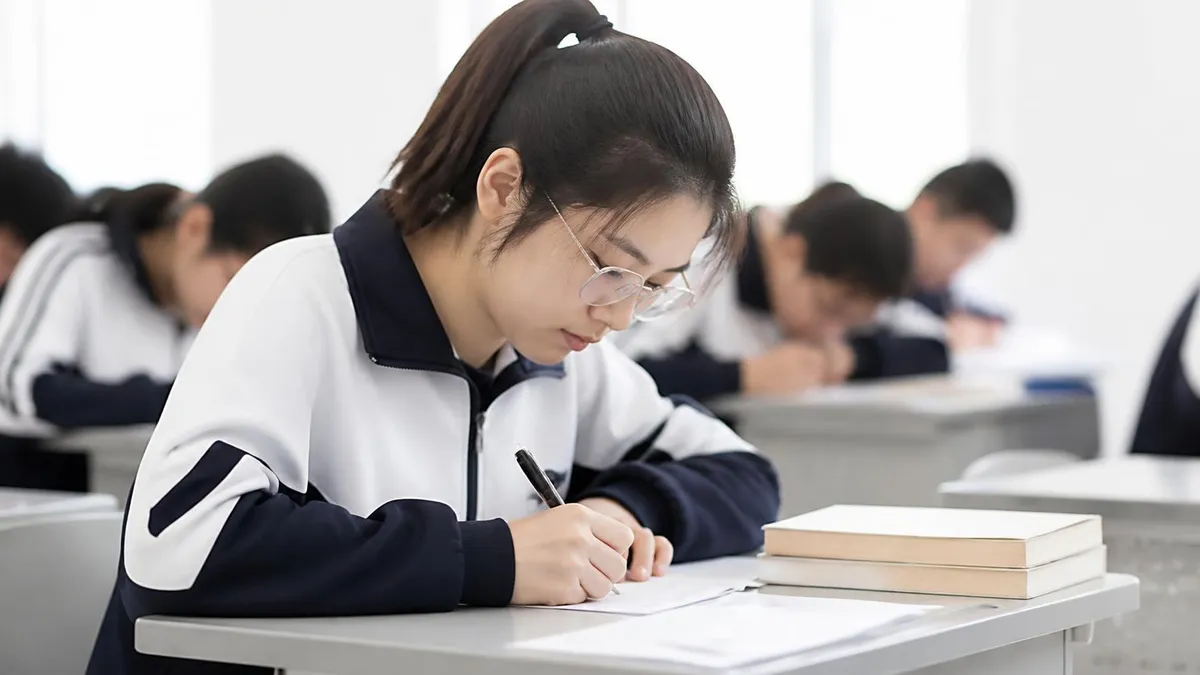
Gaokao Math Questions: Topics, Difficulty, and Sample Problems

Gaokao Top Score: What It Takes to Ace China's Most Competitive Exam

Gaokao Subjects and Scoring 2026: How the 750 Points Work

Gaokao Pronunciation: How to Say It Correctly

Tsinghua Gaokao Score: What Score Do You Need to Get In?
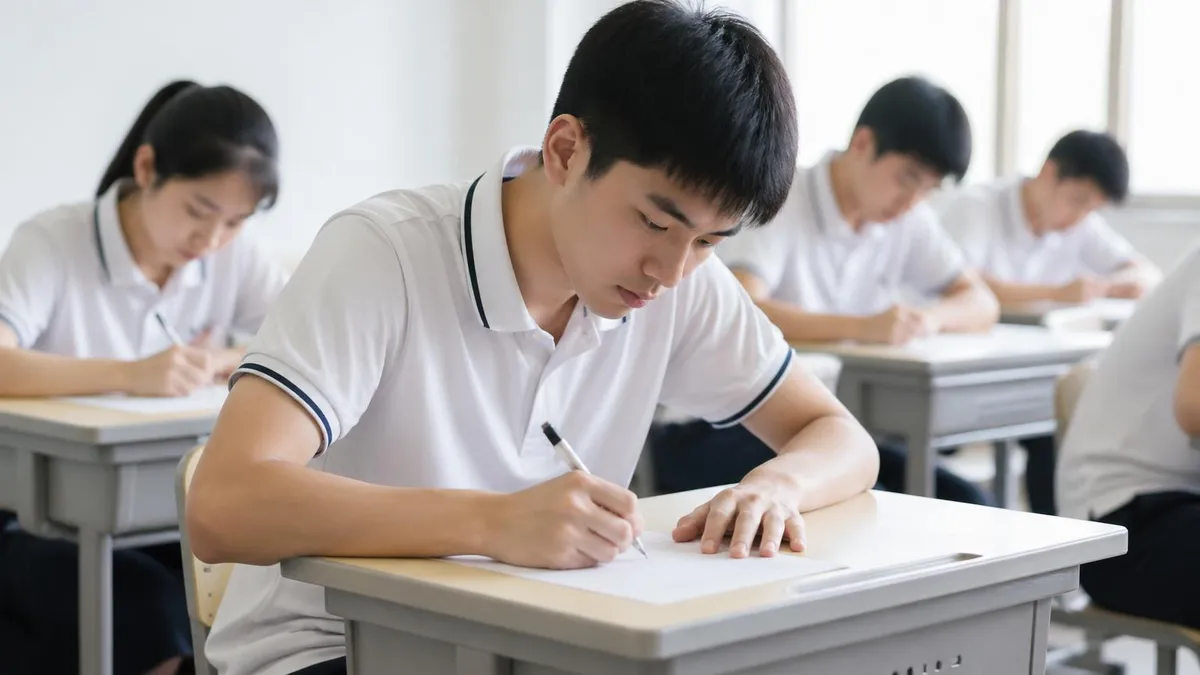
Gaokao 2026: China's National College Entrance Exam Explained
How this page was made: written with AI tools. Exam facts are checked against the official sources listed below. Not reviewed by a subject-matter expert. Editorial policy
Sources & references
Exam facts on this page (fees, format, dates, passing scores) are checked against these official sources; the date is our last check. Editorial policy
- moe.gov.cn — Test delivery, score release · verified Oct 2026
- sdzk.cn — Fees · verified Oct 2026