
Gaokao Subjects and Scoring 2026: How the 750 Points Work
Gaokao scoring explained: 750-point system, 3 core + elective subjects, 3+1+2 and 3+3 reform models, provincial cutoff lines, and score tables. 📗

Gaokao: upcoming dates and official changes
- Updated Oct 19, 2026: Delivery is now In-person examination centers (previously In-person examination centers).
- Updated Oct 19, 2026: Score release is now Announced by each province after the exam (previously Release dates and channels announced provincially).
Facts verified Oct 19, 2026 against Ministry of Education of the People's Republic of China (national policy owner). Each provincial examination authority r. Dates that have passed are removed automatically.
- The Gaokao is taken in person at designated examination centers (考点) and rooms, with identity checks on entry. (moe.gov.cn)
- Each provincial examination authority announces the Gaokao score release time and official lookup channel after the exam. (moe.gov.cn)
Facts verified Oct 19, 2026 against Ministry of Education of the People's Republic of China (national policy owner). Each provincial examination authority r. Dates that have passed are removed automatically.
Gaokao by the Numbers
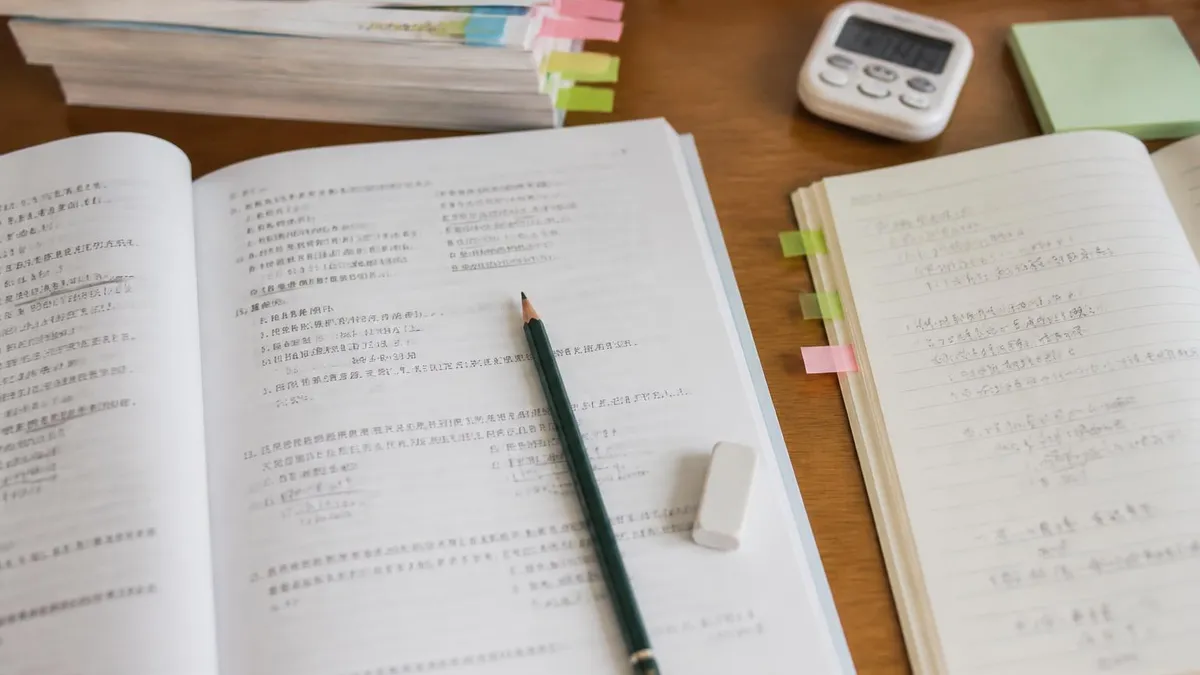
The 750-Point Total: How It Adds Up
Seven-hundred and fifty. That's the ceiling for the Gaokao exam, and it drives the educational trajectory of roughly 13 million Chinese students every June. But the number itself doesn't tell you much until you understand the architecture beneath it. Practice with the free Gaokao practice test on PracticeTestGeeks (7 questions with answer explanations).
The Gaokao's scoring system splits into two distinct layers. First, there are three compulsory core subjects — Chinese Language and Literature, Mathematics, and a Foreign Language (almost always English) — each worth 150 points. Add those up and you get 450 points from the core alone. The remaining 300 come from three elective subjects, each contributing up to 100 points. That's where the structure gets complicated, and where the difference between reform and traditional provinces starts to matter.
The 750 total has been standard across every province in China for decades. It gives universities a uniform denominator when comparing students from Guangdong, Sichuan, and Heilongjiang on equal terms — or at least in theory. Provincial score distributions, quota allocations, and admission cutoffs mean the same raw number carries very different weight depending on where you sat the exam. More on that below.
Here's a critical point many outsiders miss: a score of 650 in Henan, where competition is fierce and university seats are scarce relative to test-takers, is a very different achievement from 650 in Shanghai or Beijing, where per-capita university spots are significantly higher. The 750-point scale is uniform. The stakes behind it are not. And that gap matters enormously in practice.
One more structural note: the 150-point cap on each core subject is intentional. In earlier exam iterations, subject weightings varied by province and track. The standardization to 150 per core subject happened as part of national curriculum reform in the early 2000s, creating the familiar 3×150 + 3×100 = 750 formula used everywhere today. Reform provinces have since modified how those 300 elective points are allocated (more on that in the 3+1+2 and 3+3 section), but the 750 ceiling has remained untouched.
Free Gaokao Exam Study Tools
Interactive Gaokao Exam resources on PracticeTestGeeks, free to start:
- Gaokao Exam flashcards — review key terms and concepts card by card
- Gaokao Exam study guide — topic-by-topic overview of what the exam covers
- Gaokao Exam cheat sheet — one-page printable summary for last-minute review
Three Core Subjects: The 450-Point Foundation
The most culturally demanding paper. 150 points. Covers classical Chinese, modern prose, poetry analysis, and a major essay (usually 60 points). The essay prompt often references philosophy, current events, or national themes. Many students consider this the hardest to maximize because top markers are subjective.
- Duration: 150 minutes
- Essay weight: 60 points
- Key sections: Classical prose, modern text, composition
150 points. Separate versions for science-track and humanities-track in many provinces, though some reforms have unified them. Covers functions, probability, statistics, trigonometry, derivatives, conic sections, and solid geometry. The last two questions (often 14 marks each) are designed to separate top students.
- Duration: 120 minutes
- Top-end difficulty: Final 2 questions, 14 pts each
- Tracks: Science/Humanities variants in some provinces
150 points. English is chosen by the vast majority of candidates. Other approved languages include Japanese, French, German, Russian, and Spanish. Covers reading comprehension, cloze test, grammar correction, and writing. Listening carries 30 points. Reform provinces allow two sittings per year — the better score counts.
- Duration: 120 minutes
- Listening: 30 points
- Most chosen language: English (95%+ of candidates)
Elective Subjects: Science Track vs. Humanities Track
The 300 elective points come from three subjects the student selects — and the available pool depends on which track they followed through high school. Under the traditional model (still used in some provinces), students chose between Science Track and Humanities Track at the start of senior high school, locking in their elective subjects years before the exam itself.
Science track (理科) electives are Physics, Chemistry, and Biology. Humanities track (文科) electives are Politics (政治 — essentially civic ideology and philosophy), History, and Geography. Each elective contributes 100 raw points in the traditional model. Three subjects × 100 points = 300 elective points. Combined with the 450 core points, the total is 750.
This binary split has real consequences. Science-track students compete for engineering, medicine, and natural science programs; humanities-track students feed into law, economics, education, and social sciences. Universities publish separate score cutoffs for the two cohorts, which means a science student and a humanities student at the same provincial university can have arrived there with significantly different raw scores. That's not a design flaw — it's an intentional recognition that different academic pathways require different preparation.
The 100-point cap per elective sounds simple, but it obscures something important: in provinces still using raw scores for electives, getting 95 out of 100 in Biology requires a very different level of mastery than getting 95 in Geography. That imbalance — some subjects being easier to max out than others — was a major driver behind the reform models now being rolled out nationally. Practice your Gaokao exam questions across both tracks to gauge where your strongest subject combinations lie before committing to a path.
One thing worth noting: even within the science track, the difficulty gap between Physics and Biology is substantial. Physics provincial averages often land below 60%, while Biology averages are closer to 70–75%. That 10–15 percentage point gap was precisely what motivated the 赋分 scaling reform — so that choosing the harder subject doesn't systematically penalize capable students who would have scored higher on the easier alternatives.
Elective Subject Breakdown by Track
Physics (物理) — 100 points
Covers mechanics, kinematics, electromagnetism, thermodynamics, optics, and modern physics. Widely regarded as the toughest elective. Provincial averages on Physics papers routinely fall below 60/100. Practice with our Gaokao Physics practice test to benchmark your mechanics and kinematics readiness.
Chemistry (化学) — 100 points
Covers organic chemistry, electrochemistry, equilibrium, periodic trends, and reaction rates. Calculation-heavy. Organic synthesis problems in the last question commonly award only partial marks even among top students. Try our Gaokao Chemistry practice questions focused on organic fundamentals.
Biology (生物) — 100 points
Covers genetics, evolution, ecology, cell biology, and metabolism. More accessible than Physics or Chemistry for most students. Genetics and evolution represent roughly 40% of the marks — our Gaokao exam questions on this topic are a good starting point.

3+1+2 and 3+3: The New Reform Models
China has been dismantling the binary Science/Humanities split since 2014, rolling out reform models in waves across provinces. The two dominant frameworks now are the 3+3 model and the 3+1+2 model. Both keep the three compulsory core subjects (Chinese, Math, Foreign Language). Where they differ is in how students choose their electives — and how those elective scores are calculated.
The 3+3 model (first adopted in Shanghai and Zhejiang, now in Beijing, Tianjin, Hainan, and others) lets students choose any three subjects from a menu of six: Physics, Chemistry, Biology, Politics, History, and Geography. No mandatory Science or Humanities designation. A student can combine Physics + History + Geography if they want. Each elective still contributes 100 points, but here's the twist: in most 3+3 provinces, elective scores are converted from raw points into a standardized rank-based scale before being added to the total. That conversion — called 赋分 (fùfēn) — is explained in the next section.
The 3+1+2 model (adopted in Guangdong, Hunan, Hubei, Liaoning, Chongqing, Fujian, Jiangxi, and Henan among others) takes a middle path. Students must choose Physics or History as a required elective (the "1" in the name). Then they pick any two more from the remaining five subjects (the "2"). This preserves some differentiation between science-leaning and humanities-leaning candidates — particularly important for university programs that require Physics — while still expanding choice beyond the old rigid tracks.
Under 3+1+2, the required subject (Physics or History) is scored on raw points out of 100. The two additional electives are converted using the 赋分 (fùfēn) scaled-score system. This is a significant distinction: it means your raw score on Physics or History counts directly, while Chemistry and Biology (or Geography and Politics) don't — their contribution is determined by where you rank relative to all other students who sat that paper in your province.
The Problem With the Old Binary System
Under the old binary model, students rushed into the Humanities track because Politics, History, and Geography were widely seen as easier to max out than Physics and Chemistry. That created severe grade inflation on the humanities side and disadvantaged science-track students with harder papers. The reform models — particularly the 赋分 scaling — correct this by converting raw elective scores into a province-wide percentile rank, so that a 90 in Physics and a 90 in Geography reflect the same relative standing, not the same raw difficulty.
Raw vs. Scaled Scoring: How 赋分 (Fùfēn) Works
The 赋分 system is one of the most misunderstood features of the reformed Gaokao. Here's the short version: your raw score on a scaled elective doesn't appear on your final report card. Instead, your raw score is converted into a position on a fixed 21-level scale from 100 down to 30, based on your rank among all students who chose that subject in your province.
The top 1% of Physics test-takers get 100. The next 2% get 97. The following 3% get 94. The scale continues down in steps, with each band converting a range of raw scores into a single standardized value. The bottom 1% receive 30, regardless of their actual raw score. The conversion table is published by each provincial examination authority after the exams — you won't know your converted score until the official results release, since the conversion requires knowing the full provincial distribution for that year.
Why does this matter? Suppose you scored 82 out of 100 on Chemistry, but Chemistry is historically hard in your province and only 15% of test-takers scored above you. You might end up with a converted score of 91 or 94. Meanwhile, a student who scored 85 on Geography in a province where 30% scored higher than them might receive a converted score of 86. Two different raw scores, two different subjects — but the converted scores reflect true relative performance across all candidates who sat each paper. That's the goal: equal difficulty for equal percentile.
The implication is real strategic calculation. Choosing Chemistry over Geography isn't purely about aptitude — it's also about whether the likely student pool in your province makes a high converted score more achievable. Top students often stick with Physics and Chemistry regardless, because selective universities in medicine and engineering require them.
But for students in the 580–650 range, subject selection can legitimately shift their total by 10–20 points. That's a meaningful gap when every point determines your position in the provincial ranking queue. Brush up on individual subjects with our Gaokao exam questions to identify where you have the most room to gain before committing to an elective combination.
How Your Gaokao Score Is Calculated: Step by Step
Sit the Three Core Papers
Complete Your Three Elective Papers
Provincial Grading and Raw Score Assignment
Apply 赋分 Conversion (Reform Provinces)
Calculate Total and Publish Score
University Application and Admission
一分一段 Score Tables: What They Tell You
Once scores are released, every province publishes a 一分一段表 (yī fēn yī duàn biǎo) — literally a "one-point-one-segment table." This document lists, for every possible score from 750 down to 0, exactly how many students achieved that score and how many students scored at or above it. It's the primary tool for understanding where you stand in your province's admission hierarchy.
The cumulative rank column is the number that matters most. If the table shows that a score of 630 puts you in cumulative position 5,412 in a province with 700,000 test-takers, that means roughly 5,400 students scored the same or higher than you — and those are the students ahead of you in the queue for university seats. Universities fill seats in descending score order, so a score of 630 in Shandong (population 100 million+, over 800,000 Gaokao takers) has very different implications than a 630 in a smaller province.
Students and families use these tables obsessively during the application period. A difference of just 2–3 points can mean jumping thousands of places in the provincial ranking, which can be the difference between admission to a first-tier university and a second-tier one. That's why the system is called "one-point-one-segment" — every single point separates students into distinct bands. Ties do exist but are rare enough that each score point effectively creates its own cohort. Explore our gaokao score range article for a deeper breakdown of provincial percentile distributions and what each score tier unlocks.
Reform provinces publish separate tables for each combination of required elective (Physics-path vs. History-path in 3+1+2) because these cohorts apply to different program pools. A student on the Physics path in Guangdong is ranked against other Physics-path students, not against History-path students who never took the same set of papers.
How do you use the table practically? After your scores release, find your total score in the left column of the 一分一段表 for your province. The cumulative count column tells you exactly how many students scored at or above you. Match that number against university enrollment plans (招生计划) published by each institution — those plans list how many seats each school offers in your province and in what subject direction.
If a university enrolls 50 Physics-path students from your province and your cumulative rank is 3,000 in that cohort, you need to check whether 50 seats are filled before your rank in the queue. This is the core logic of the entire Gaokao application process. Everything else is context.

Admission Cutoff Lines (批次线) by Tier
The 一本 cutoff line in Henan may be 594 one year and 601 the next — it floats based on that year's exam difficulty, provincial quota allocations, and the full score distribution of all test-takers. Never plan your application strategy around a cutoff from three years ago. Always check your province's official enrollment authority website (招生考试院) for the most recent official 批次线 (admission threshold lines) in the same year you're applying.
Provincial Differences: Why the Same Score Means Different Things
Highest per-capita university seat allocation. Both cities have long had their own exam versions. Reform models adopted early (2014 Shanghai pilot). A score of 600 in Beijing carries much stronger admission prospects than 600 in Henan or Guangdong.
- Model: 3+3 reform
- Key feature: Scaled elective scores
Highest absolute test-taker numbers. Competition is most intense here. Students here fight harder for every point. A 640 in Henan often beats applicants from smaller provinces with 660+ because the sheer rank position matters, not just raw score.
- Test-taker volume: 900K–1.3M per province
- Impact: Lower effective odds for top schools
Tibet, Xinjiang, Inner Mongolia, and several other designated regions receive bonus points (加分) and separate quota allocations under preferential admission policies. Ethnic minority candidates can receive score bonuses ranging from 5 to 20+ points depending on province and ethnic group.
- Bonus range: 5–20+ points
- Separate quotas: Yes, at most universities
Practice These Gaokao Subjects Now
Gaokao Physics: Mechanics and Kinematics
Practice Gaokao Physics questions on mechanics and kinematics. Free exam questions, instant answers.
Gaokao Chemistry: Organic Fundamentals
Practice Gaokao Chemistry questions on organic fundamentals. Free questions, no signup needed.
What Is a Good Gaokao Score?
There's no universal answer — it depends on province, chosen elective combination, and target university tier. But there are rough benchmarks that hold relatively consistent across years and regions. Think of it as three thresholds that define meaningful achievement levels. The national score distribution is more compressed than most expect: the bottom half of all test-takers scores below 450, and the top 5% sits above 600.
A score above 600 (out of 750) generally clears the 一本 line in most provinces, giving access to respectable four-year universities. In competitive provinces like Henan and Guangdong, that threshold creeps up to 610–620. Scoring above 650 puts you in contention for key national universities — the 211 Project schools that represent roughly 3% of Chinese institutions but produce a disproportionate share of corporate leaders, civil servants, and postgraduate researchers.
Only the top 2–3% of test-takers nationally clear 680 — the rough floor for the most selective 985 universities including Tsinghua and Peking University. These schools don't have open enrollment above a score threshold; they set quotas per province, which means even a 690 in one year might not guarantee admission to a particular faculty if the provincial quota fills above that mark. Subject selection matters too. Medicine at a top-10 school routinely requires science-track scores near 700+, while humanities faculties at the same institution might admit at 660.
The phrase gaokao highest score gets searched constantly — and every year, a handful of students in various provinces achieve perfect or near-perfect totals. Provincial champions (状元, zhuàngyuán) typically score in the 730–750 range, depending on difficulty that year. These outliers are national news. The average national Gaokao score, by contrast, typically falls in the 420–460 range — which means half of all test-takers score below 450, and the competition for top universities is genuinely extreme.
For international students trying to contextualize what a Gaokao score means: a 650 would be roughly equivalent to scoring in the top 5–8% of a highly competitive national cohort. A 700 is top 0.5%. In terms of raw intellectual demand, the Mathematics and Chinese papers at the top end compare favorably to the hardest standardized tests anywhere. Start preparing with our Gaokao exam questions practice pages for subject-level drills. For the full exam structure and format context, visit the gaokao examination guide.
Gaokao Scoring System: Strengths and Limitations
The 750-point system has genuine advantages and real structural problems worth understanding.
- +Single standardized score allows transparent cross-provincial comparison
- +Reform models (3+1+2, 3+3) expand subject choice and reduce forced track selection at age 15
- +赋分 scaling corrects for subject difficulty imbalances between electives
- +一分一段 tables provide full transparent ranking data — no hidden black box
- +The exam is free of tuition-based advantage for the multiple-choice component
- +Score release is fast (~20 days) with immediate university application windows
- −Provincial quota allocations mean equal scores don't guarantee equal access across regions
- −一考定终身 (one exam determines your life) leaves zero room for bad days
- −赋分 conversion punishes students who pick competitive subjects with smarter peer groups
- −Bonus points (加分) for ethnicity and other factors add non-score variables to admissions
- −High-stakes pressure creates mental health crises — documented spike in anxiety and depression during exam season
- −Strong correlation between family income, private tutoring investment, and final score
Pros and Cons at a Glance
| Pros | Cons |
|---|---|
| Single standardized score allows transparent cross-provincial comparison | Provincial quota allocations mean equal scores don't guarantee equal access across regions |
| 赋分 scaling corrects for subject difficulty imbalances between electives | 一考定终身 (one exam determines your life) leaves zero room for bad days |
| 一分一段 tables provide full transparent ranking data — no hidden black box | 赋分 conversion punishes students who pick competitive subjects with smarter peer groups |
| The exam is free of tuition-based advantage for the multiple-choice component | Bonus points (加分) for ethnicity and other factors add non-score variables to admissions |
Sample Gaokao Exam Practice Questions
Try these questions from our free Gaokao Exam practice tests. The correct answer and an explanation follow each question.
In Gaokao essay scoring, which criterion is weighted most heavily?
- A. Content (内容) including the depth and clarity of the central argument
- B. Handwriting neatness
- C. Essay length
- D. Number of literary quotations used
Answer: A. Content (内容) including the depth and clarity of the central argument
Gaokao essay grading prioritizes content (内容) — the quality, depth, and clarity of the central argument — as the most heavily weighted criterion. Language and structure are also important but secondary to having a strong, clear thesis.
In the reformed Gaokao system (新高考, implemented in most provinces from 2021), students in '3+1+2' provinces choose their elective subjects as:
- A. 3 required subjects (Chinese, Math, English) + 1 required choice (Physics or History) + 2 electives from remaining 4 subjects
- B. 3 required + 1 foreign language + 2 science subjects
- C. All 9 subjects with no choice
- D. 3 required + 3 freely chosen from all subjects
Answer: A. 3 required subjects (Chinese, Math, English) + 1 required choice (Physics or History) + 2 electives from remaining 4 subjects
'3+1+2' means: 3 required (语数英) + 1 mandatory choice (Physics or History, graded on absolute score) + 2 freely chosen from Chemistry, Biology, Geography, Politics (graded on rank-conversion score).
How many points is the major composition (作文) section worth on the Gaokao Chinese language paper?
- A. 30 points
- B. 40 points
- C. 50 points
- D. 60 points
Answer: D. 60 points
The Gaokao Chinese paper totals 150 points, and the major essay accounts for 60 of those points — making it the single highest-value item on the paper and a decisive factor in overall Chinese scores.
What is the significance of Tier 1 and Tier 2 universities in the Gaokao system?
- A. Tier 1 universities have higher cut-off scores and more prestigious programs.
- B. Tier 2 universities are only for international students.
- C. Scoring above the Tier 1 threshold guarantees admission to a university.
- D. Tier 2 universities offer vocational training rather than academic degrees.
Answer: A. Tier 1 universities have higher cut-off scores and more prestigious programs.
Tier 1 universities in China represent the most elite and competitive institutions, demanding significantly higher Gaokao scores for admission. They are recognized for their academic prestige, comprehensive research programs, and often receive more government funding. This distinction guides students in setting their academic aspirations and application strategies based on their expected performance.
Take the full Gaokao Exam practice test
Many readers pair this guide with the gaokao questions to check their readiness before exam day.
Gaokao Questions and Answers
More Gaokao Resources

Gaokao Exam Guide 2026: Format, Subjects & What to Know

Gaokao Score Range: What Scores Mean and How to Interpret
Gaokao Exam PDF 2026: Free Chinese College Entrance Exam Practice Questions
Gaokao 2026: China's National College Entrance Exam Explained

How Hard Is the Gaokao? China's Toughest Exam Explained
How this page was made: written with AI tools and published by Nathan Beja, founder of Practice Test Geeks, who is responsible for its content. Exam facts are checked against the official sources listed below. Not reviewed by a subject-matter expert. Editorial policy
Sources & references
Exam facts on this page (fees, format, dates, passing scores) are checked against these official sources; the date is our last check. Editorial policy
- moe.gov.cn — Test delivery, score release · verified Oct 2026
- sdzk.cn — Fees · verified Oct 2026