
Gaokao Exam Highest Score: What a Perfect Score Means and How to Achieve It
What is the gaokao exam highest score? Learn scoring, top marks by province, and proven prep strategies. 🎯 Full guide for US students & curious learners.

The gaokao exam highest score is one of the most discussed benchmarks in global education, representing the pinnacle of academic achievement in China's National College Entrance Examination. The gaokao, known formally as the Putong Gaodeng Xuexiao Zhaosheng Quanguo Tongyi Kaoshi, is administered each June to approximately 13 million students annually. The maximum possible score on the national version is 750 points, though the exact ceiling varies slightly depending on which province and examination format a student follows. Understanding the scoring system is essential for anyone studying the gaokao exam or helping a student navigate the process.
Scoring on the gaokao is divided across multiple compulsory and elective subjects, with each section contributing a defined number of points toward the final total. The three compulsory subjects — Chinese Language, Mathematics, and a Foreign Language (usually English) — each carry a maximum of 150 points, totaling 450 points. The remaining 300 points come from either a Science bundle (Physics, Chemistry, Biology) or a Humanities bundle (History, Politics, Geography), depending on the student's track. This structure means that every point in every subject genuinely matters when competing for places at elite universities like Peking University or Tsinghua University.
Perfect or near-perfect scores on the gaokao examination are extraordinarily rare. In a typical year, fewer than 100 students nationwide achieve a score of 740 or above, and a genuine 750 out of 750 is virtually unheard of. Most provincial-level top scorers, known as zhuangyuan, land in the 720–748 range. The cutoff scores for China's most prestigious universities shift each year based on the difficulty of that year's paper and overall performance, so students must always track current thresholds rather than relying on outdated benchmarks.
For students outside China, the gaokao exam's highest score context is valuable for understanding where a Chinese applicant stands in the global academic landscape. Many US universities now request gaokao transcripts as supplementary materials for Chinese applicants. A raw score of 700 or above in a province like Guangdong typically places a student in the top 1% of test-takers, which is roughly equivalent — in terms of selectivity — to scoring in the 99th percentile on the SAT or ACT. This comparison helps admissions officers contextualize Chinese academic credentials alongside familiar US standardized tests.
The gaokao test differs from US college entrance exams in one crucial respect: there are no retakes in most provinces. Students sit the exam once per year, and in most regions a second attempt is allowed only after waiting a full year. This high-stakes, one-shot nature amplifies the psychological pressure on students and families alike, making thorough preparation over two to three years the standard approach. Preparation typically begins in earnest in Grade 10 and intensifies dramatically during the final year of high school, known as Grade 12 or the gaosan year.
Achieving the gaokao exam highest score requires not only deep subject mastery but also exceptional test-taking strategy, time management under pressure, and the ability to handle essay-based open-response questions that demand nuanced reasoning. Gaokao exam questions range from straightforward multiple-choice items in Mathematics to complex analytical essays in Chinese Language, meaning a student must be both precise and creative within tight time constraints. Practicing with real past-paper gaokao exam questions is the single most reliable preparation method recommended by top scorers and educators alike.
This comprehensive guide breaks down everything you need to know about the gaokao exam highest score — from the full scoring structure and provincial variations, to what top scorers do differently, and how non-Chinese students and researchers can use this knowledge productively. Whether you are a student aiming for a top Chinese university, a US educator advising Chinese applicants, or simply curious about one of the world's most demanding academic assessments, the sections below provide detailed, accurate, and actionable information.
Gaokao Highest Score by the Numbers
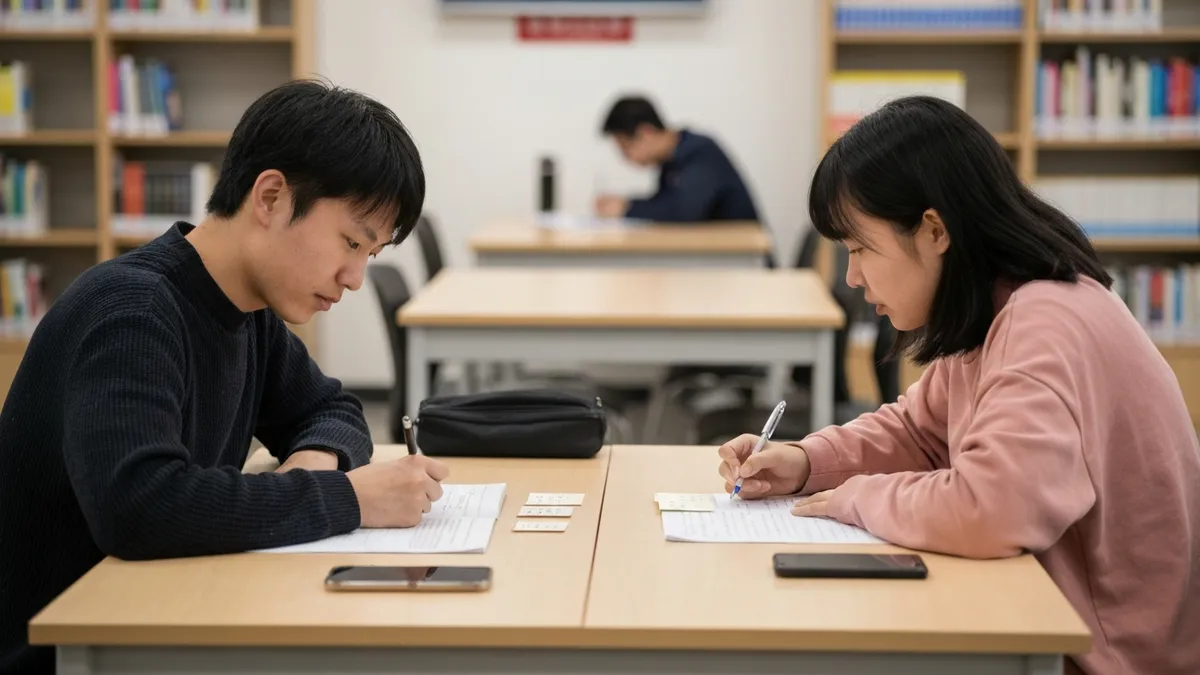
Gaokao Exam Scoring Structure
| Section | Questions | Time | Weight | Notes |
|---|---|---|---|---|
| Chinese Language (语文) | 23 | 150 min | 20% | Includes classical reading, modern prose, and argumentative essay |
| Mathematics (数学) | 22 | 120 min | 20% | Science and Humanities tracks have separate papers |
| Foreign Language (外语) | 25 | 120 min | 20% | Usually English; listening section is 30 points |
| Science Bundle (理综) | 40 | 150 min | 40% | Physics 110 pts, Chemistry 100 pts, Biology 90 pts |
| Humanities Bundle (文综) | 40 | 150 min | 40% | History, Politics, Geography — 100 pts each |
| Total | 150 | ~9 hours total | 100% |
Provincial top scorers — universally called zhuangyuan (状元) — occupy a singular place in Chinese cultural life. Each June, immediately after results are released, newspapers and social media platforms publish the names and scores of the highest-scoring students in every province. A zhuangyuan is not a nationally unified title: every province crowns its own top scorer based on that province's test results. This means there are roughly 31 provincial zhuangyuan each year across mainland China, and their scores vary significantly by region because provincial exam papers, grading curves, and overall candidate pools differ.
In provinces with extremely competitive pools such as Beijing, Shanghai, Henan, and Shandong, the zhuangyuan score is often in the 730–748 range. In less competitive provinces, the highest provincial score may be 715–725. This does not mean those students are less talented; it reflects differences in how the exam is administered and graded at the provincial level. Understanding these provincial dynamics is critical for anyone comparing gaokao scores across regions, because a 680 in Henan (one of the most competitive provinces with over one million candidates) may be more impressive than a 690 in a smaller province.
The concept of a national gaokao exam highest score is complicated by the fact that China runs a partially decentralized examination system. While the Ministry of Education releases a unified national exam — the Quanguo Juan (National Paper 1, 2, and 3) — some major provinces like Beijing, Shanghai, and Tianjin create their own provincial papers with different total marks and structures. For example, Shanghai's gaokao totals 660 points rather than 750. Students and parents must therefore always reference the specific paper format for their province rather than assuming a uniform 750-point ceiling.
Perfect scores, meaning 750 out of 750 on the national format, are documented but vanishingly rare. Verified reports of 750/750 appear approximately once every several years across all of China, and they generate enormous national media attention. In practice, even a score of 749 is headline news. The difficulty of achieving a perfect score stems partly from the essay component of Chinese Language, which is graded subjectively: even the best essays rarely receive full marks because graders apply a sophisticated rubric that rewards originality and insight in ways that make 150/150 nearly impossible to award consistently.
When reviewing gaokao exam questions from recent years, analysts consistently identify Mathematics and Chinese Language as the subjects where the highest achievers separate themselves. In Mathematics, the final two or three questions of the paper are designed explicitly to challenge even the strongest students, featuring multi-step proofs, spatial reasoning, and advanced calculus-level problems that require both speed and precision. In Chinese Language, the argumentative essay prompt changes every year and is intentionally ambiguous, requiring students to construct a coherent argument under time pressure without any reference materials.
Top scorers consistently report that their success came not from memorizing more content but from drilling on official past-paper gaokao test questions until they could complete each section comfortably within the time limit. They also describe developing a strategic approach to the order in which they answered questions — typically securing all achievable marks first, then returning to the hardest items with remaining time. This time-management discipline is what separates students scoring in the 680–710 range from those breaking into the 730+ bracket.
For US educators and admissions professionals working with Chinese applicants, the key takeaway from provincial scoring data is that raw scores must always be interpreted alongside provincial context. Admissions offices at leading US universities typically request a certified score report from the Chinese Ministry of Education or the relevant provincial exam board, which includes both the raw score and the provincial percentile rank. A raw score without percentile context is significantly less informative, especially when comparing applicants from different provinces with different exam formats and candidate populations.
Gaokao Exam Questions: Subject-by-Subject Breakdown
Gaokao math questions are structured across three difficulty tiers: foundational items testing core formulas and procedures, mid-level application problems requiring multi-step reasoning, and challenge problems at the end of the paper designed to differentiate the highest-scoring students. The Science track Mathematics paper covers sequences, trigonometry, vectors, probability, derivatives, and spatial geometry. Students aiming for the highest scores must be able to complete all foundational items in under 60 minutes, leaving a full hour for the harder application and challenge problems where the most points are won or lost.
One distinctive feature of gaokao math questions is that they test both procedural fluency and conceptual understanding simultaneously. A typical challenge problem might ask students to prove a geometric relationship using coordinate geometry, then use that result as a stepping stone for a follow-up optimization question. This layered structure means that a student who cannot solve the first part is locked out of subsequent parts, making early accuracy critical. Top scorers practice past gaokao math questions from at least the previous ten years, tracking which question types appear most frequently and identifying the specific proof techniques that examiners favor.

Pursuing the Gaokao Highest Score: Benefits and Challenges
- +Direct pathway to China's most elite universities, including Peking University and Tsinghua University
- +A high gaokao score opens merit scholarship opportunities at top institutions, reducing tuition costs significantly
- +Provincial top scorer status (zhuangyuan) brings substantial social recognition and career networking advantages
- +Mastery of gaokao content builds a rigorous academic foundation that translates well to university-level coursework
- +High gaokao scores are increasingly recognized by select US and UK universities as evidence of strong academic preparation
- +Achieving a top score demonstrates discipline and resilience — qualities valued in graduate school admissions globally
- −Preparation demands 8–12 hours of daily study during the final year, leaving little time for extracurricular development
- −The one-shot nature of the exam in most provinces means a single bad day can permanently affect university placement
- −Extreme pressure contributes to documented mental health challenges among high-achieving students during the gaosan year
- −Provincial score disparities mean the same raw score yields different university access depending on where a student lives
- −The exam's heavy emphasis on memorization and test technique may not reflect the full range of a student's abilities
- −University acceptance is determined almost entirely by the gaokao score, unlike US admissions which weigh multiple factors
Pros and Cons at a Glance
| Pros | Cons |
|---|---|
| Direct pathway to China's most elite universities, including Peking University and Tsinghua University | The one-shot nature of the exam in most provinces means a single bad day can permanently affect university placement |
| A high gaokao score opens merit scholarship opportunities at top institutions, reducing tuition costs significantly | Extreme pressure contributes to documented mental health challenges among high-achieving students during the gaosan year |
| Provincial top scorer status (zhuangyuan) brings substantial social recognition and career networking advantages | Provincial score disparities mean the same raw score yields different university access depending on where a student lives |
| Mastery of gaokao content builds a rigorous academic foundation that translates well to university-level coursework | The exam's heavy emphasis on memorization and test technique may not reflect the full range of a student's abilities |
| High gaokao scores are increasingly recognized by select US and UK universities as evidence of strong academic preparation | University acceptance is determined almost entirely by the gaokao score, unlike US admissions which weigh multiple factors |
Gaokao High-Score Preparation Checklist
- ✓Download and complete the last 10 years of official past-paper gaokao exam questions for each subject on your track.
- ✓Time yourself strictly during every practice session — always replicate real exam conditions including no phone access.
- ✓Identify your lowest-scoring section and dedicate at least 40% of daily study time to closing that gap.
- ✓Build a personal error log: after every practice test, record every mistake with its root cause and the correct method.
- ✓Memorize the score thresholds (control lines) for your target universities in your province from the past three years.
- ✓Practice writing full-length gaokao essays under timed conditions at least three times per week during the final semester.
- ✓Review classical Chinese vocabulary and grammar patterns systematically — at least 20 new characters or phrases per day.
- ✓Complete at least one full six-subject mock exam per month, graded under realistic conditions, from Grade 11 onward.
- ✓Study the gaokao math questions categorized by type — conic sections, sequences, probability — and master each type fully.
- ✓Sleep at least seven hours every night during the preparation period — cognitive performance degrades measurably with sleep debt.

The Last 15 Points Are Harder Than the First 700
Statistical analysis of gaokao results consistently shows that moving from 700 to 715 requires as much targeted effort as moving from 600 to 700. The highest-difficulty questions at the end of each paper are specifically designed to separate the top 0.5% of students, meaning they require not just subject knowledge but elite-level problem-solving speed. Students aiming for a zhuangyuan-range score should spend disproportionate preparation time on the hardest question types rather than reinforcing already-mastered content.
What actually separates a student who scores 680 from one who scores 730? The answer, based on interviews with zhuangyuan published in Chinese education journals and national media, is consistently a combination of deliberate practice strategy, psychological resilience, and strategic resource selection — not raw intelligence alone. Nearly every top scorer describes spending the majority of their study time in active problem-solving rather than passive review, specifically working through official past-paper problems under timed conditions and rigorously analyzing every error afterward.
The concept of deliberate practice is central to gaokao success at the highest level. Deliberate practice means working at the edge of your current ability, in conditions that closely simulate the real exam, with immediate feedback on errors. For the gaokao, this translates to completing full subject papers under strict timing, scoring them accurately using official answer keys, and spending twice as long analyzing wrong answers as it took to produce them. Students who practice this way for two to three years consistently outperform peers who study more hours but in a passive, unfocused manner.
Subject-specific strategies for the highest possible scores are well-documented. In Mathematics, top scorers recommend mastering the fundamental theorem of calculus and all standard proof techniques by the end of Grade 10, leaving Grade 11 and Grade 12 free for advanced problem types and speed drills. In Chinese Language, spending 30 minutes per day reading classical texts builds the pattern recognition needed for the translation and comprehension sections without feeling like rote memorization. In English, immersion through reading English-language news articles and watching English-language videos with subtitles builds vocabulary in context far more efficiently than vocabulary lists alone.
Mental preparation is an underappreciated dimension of gaokao high-score strategy. China's top educational coaches increasingly emphasize that students who score in the 730+ range are not just academically superior — they are exceptionally good at managing anxiety on exam day. Techniques include rehearsing the exact morning routine of exam day dozens of times before the actual event, practicing breathing exercises that reduce cortisol spikes under pressure, and deliberately exposing themselves to high-stakes mock exam conditions throughout the preparation period. The gaokao test is as much a psychological challenge as an academic one.
Resource selection is another area where high-achieving students make smarter choices. The Chinese education market offers an overwhelming array of preparation books, apps, online courses, and tutoring services, many of which are of marginal quality. Top scorers and their teachers consistently recommend prioritizing official materials published by provincial exam boards and the national Ministry of Education, supplemented by the collected past papers published by recognized academic publishers. Third-party prep books are used selectively for targeted practice on specific question types, not as primary study resources.
Peer learning and study group dynamics play a meaningful role in reaching the highest score levels. Many zhuangyuan describe participating in small study groups of three to five students with complementary subject strengths, where each member teaches the others in their strongest area. This peer-teaching approach reinforces understanding more deeply than solo review because explaining a concept to someone else forces the teacher to identify and fill gaps in their own knowledge. It also builds the kind of collaborative academic relationships that continue to pay dividends in university and beyond.
Finally, understanding the grading process itself helps students optimize their answers. Gaokao open-response questions are graded by trained examiners working from detailed rubrics that award partial credit for correct intermediate steps even when the final answer is wrong.
This means that on difficult problems where full marks are unlikely, students who show their working systematically — even if they cannot complete the final step — earn significantly more points than those who skip work or attempt mental shortcuts. Top scorers are trained to write out every logical step explicitly, understanding that the examiner is evaluating their reasoning process, not just their final answer.
Gaokao registration typically closes in late November or early December for the following June exam, and provincial education bureaus do not grant exceptions for missed deadlines regardless of circumstances. Students must also verify their hukou (household registration) documentation well in advance, as students are generally required to sit the exam in their province of household registration, not their current province of residence. Missing the registration window means waiting an entire year for the next examination cycle.
The relationship between gaokao scores and university admission in China is more precisely calibrated than almost any other admissions system in the world. Each year, after results are released, universities announce their official minimum admission scores — called control lines or cut-off scores — for each province.
These cut-off scores are not set in advance; they are determined dynamically based on the distribution of scores in each province and the number of places allocated to that province by each university. This system means a student's chance of admission to a specific university depends not only on their own score but on how every other student in their province performed that year.
For China's most selective institutions — Peking University (PKU) and Tsinghua University (THU), collectively known as Beiqing — the effective admission threshold in competitive provinces like Henan, Shandong, and Hubei has in recent years hovered between 680 and 710 for Science track students.
Humanities track thresholds are typically 10–20 points lower due to the smaller number of applicants on that track at the highest score levels. Even a single point below the cut-off for a specific faculty can redirect a student to their second-choice institution, which is why the final few weeks before the gaokao are devoted almost entirely to reducing careless errors rather than learning new material.
Volunteer reporting (志愿填报, zhìyuàn tiān bào) is the process by which students submit their university preferences after receiving their scores, and strategy at this stage is as important as the score itself. Students choose not just a university but a specific faculty and major within that university, and acceptance is conditional on both the overall university cut-off and the faculty-specific cut-off.
High-scoring students sometimes miss their preferred university because they misjudged the competition for a popular faculty like Computer Science or Finance, while a slightly lower-scoring peer who applied to a less competitive faculty at the same university secured a place. Sophisticated score reporting strategy — studying years of historical cut-off data and modeling probability of admission — is a significant part of the college preparation industry in China.
The gaokao score also determines scholarship eligibility at nearly every Chinese university. Students admitted above a certain score threshold — typically 30 to 50 points above the university's cut-off line — automatically qualify for merit-based scholarship packages that can cover partial or full tuition plus a living allowance. At some provincial universities, students with scores approaching zhuangyuan level are actively recruited with substantial financial incentives, making a high gaokao score financially significant even beyond the prestige of a top-tier university placement.
International universities are increasingly integrating gaokao scores into their China admissions processes. Several leading US universities, including Harvard, Yale, and MIT, now formally recognize the gaokao as one of their accepted standardized test inputs for Chinese applicants, though they still require supplementary materials such as teacher recommendations, personal essays, and extracurricular profiles. The UK's UCAS system similarly accepts gaokao results, with most Russell Group universities publishing gaokao score requirements for Chinese applicants. Understanding these conversion frameworks is essential for Chinese students considering applying abroad alongside or instead of domestic university applications.
Score preservation and verification is a formal process managed by China's provincial education examination authorities. Every student receives an official score certificate that includes their raw score, provincial ranking, and the specific examination paper version they took. These documents are secured against tampering with cryptographic seals and can be verified by universities worldwide through official channels. For Chinese students applying to US graduate programs years after their undergraduate studies, gaokao score records remain accessible through provincial archives, making the gaokao a permanent credential in Chinese academic history rather than a test that fades from official records over time.
Looking at score trends over the past decade, average gaokao performance has gradually improved at the top of the distribution as preparation resources have become more sophisticated and widely accessible. However, the highest possible score has remained consistent at 750 on the national format, meaning the exam's absolute ceiling creates natural compression at the top.
Universities and employers have responded by developing increasingly nuanced ways to evaluate candidates with similar gaokao scores — through university entrance interviews, faculty-specific tests, and comprehensive talent assessments — recognizing that a single number, however precise, cannot fully capture the range of abilities a student brings to higher education.
If you are preparing for the gaokao and targeting a score in the top percentile, the most important thing you can do in the 12 months before the exam is build a systematized, data-driven preparation routine. Begin by taking a full-length diagnostic test under timed conditions for each subject, then use those scores to create a priority map: rank each subject by your current score relative to the maximum, and allocate study time inversely proportional to your current performance.
The subjects where you score 75–85% of maximum deserve the most attention because incremental improvement there yields more total points than perfecting subjects where you already score above 90%.
Practice with official gaokao questions as the core of your preparation. Provincial education authorities and the national Ministry of Education publish official past papers, and reputable education platforms compile them with answer keys and model answers. When you work through these materials, focus especially on the model answers for open-response questions: these reveal exactly what examiners consider a complete, creditable response. Many students discover through this process that their intuitive answers are substantively correct but formatted poorly — missing the specific structural elements (defining terms, stating methodology, showing intermediate steps) that the rubric requires for full marks.
The month before the gaokao requires a deliberate shift in strategy. This is not the time to introduce new content; it is the time to consolidate, review, and reduce error rates on content you have already studied. Most experienced gaokao teachers recommend a schedule during the final four weeks that consists of 60% review of previously studied material, 20% full-length timed practice papers, and 20% targeted drilling on question types where errors persist.
Avoid the temptation to cram new topics: the cognitive cost of learning genuinely new material in the final weeks is high, and it risks disrupting the recall reliability of content you have already mastered.
Sleep and physical condition in the final weeks are not secondary concerns — they are preparation variables that directly affect exam performance. Research on high-stakes testing consistently shows that students who sleep fewer than seven hours per night in the two weeks before a major exam score measurably lower than their preparation level would predict. Gaokao coaches who work with top-scoring students uniformly report that their highest achievers treat sleep as non-negotiable during the gaosan year, often going to bed earlier and reducing evening study time to protect sleep quality even when they feel the pressure to study more hours.
On exam day itself, professionals recommend arriving at the exam venue at least 30 minutes early to allow time to settle, locate your specific seat, and complete a brief mental warm-up.
Many top scorers describe spending the first five minutes of each paper reading all the questions before answering any of them — this allows the brain to begin processing harder items in the background while completing easier ones in the foreground, a technique that consistently improves performance on the hardest end-of-paper questions. Answer all questions even if uncertain: the gaokao does not penalize wrong answers on multiple-choice sections, so a reasoned guess is always better than a blank.
After the exam, regardless of how you feel the performance went, avoid the common trap of immediately discussing answers with classmates between paper sessions. Research on testing psychology shows that post-exam answer comparisons create unnecessary anxiety that degrades performance on subsequent papers, and they are often based on misremembering rather than actual responses. Top scorers describe a firm personal rule: no answer discussion until the entire gaokao examination cycle is complete. Focus instead on a brief physical rest, a nutritious meal, and a positive mental reset before the next paper begins.
Finally, understand that the gaokao exam highest score is a meaningful milestone but not the only measure of potential. Many of China's most successful scientists, entrepreneurs, and public intellectuals did not achieve perfect or near-perfect gaokao scores. The exam measures a specific set of academic skills under specific conditions, and while a high score opens important doors, what students do with those opportunities over the years that follow is what ultimately determines their impact and success. Use this exam as a springboard, prepare as thoroughly as possible, and approach it with both ambition and perspective.
Sample Gaokao Exam Practice Questions
Try these questions from our free Gaokao Exam practice tests. The correct answer and an explanation follow each question.
What distinguishes a '话题作文' (topic-essay) prompt from a '命题作文' (titled-essay) prompt in the Gaokao?
- A. 话题作文 requires students to use a fixed title provided in the prompt
- B. 话题作文 gives a broad theme or topic but allows the student freedom to choose the title, angle, and genre
- C. 话题作文 always includes a lengthy reading passage to analyze
- D. 话题作文 restricts students to writing only argumentative essays
Answer: B. 话题作文 gives a broad theme or topic but allows the student freedom to choose the title, angle, and genre
The key feature of '话题作文' is its openness: the prompt supplies a theme or concept (e.g., 'sincerity') but grants students autonomy over the title, genre, and argumentative angle. '命题作文', by contrast, fixes the title and narrows the scope significantly.
A car of mass 1000 kg travels at a constant speed of 20 m/s over a convex bridge with a radius of curvature of 100 m. What is the normal force exerted by the bridge on the car at the highest point? (Assume g = 10 m/s²)
- A. 10000 N
- B. 4000 N
- C. 6000 N
- D. 14000 N
Answer: C. 6000 N
At the highest point, the net force provides the centripetal force, which is directed downwards towards the center of the circle. The forces acting on the car are gravity (mg, downwards) and the normal force (N, upwards). The net force is mg - N. Therefore, mg - N = mv²/R. Solving for N: N = mg - mv²/R = (1000)(10) - (1000)(20²)/100 = 10000 - 4000 = 6000 N.
In the framework of Gaokao argumentative essays, what is '论据' (lùnjù)?
- A. The central claim or thesis the essay argues for
- B. The evidence, examples, or reasoning used to support the thesis
- C. The concluding paragraph that restates the main argument
- D. The topic sentence that opens each body paragraph
Answer: B. The evidence, examples, or reasoning used to support the thesis
'论据' means 'argument evidence' — it encompasses the facts, historical examples, logical reasoning, or literary allusions a writer deploys to substantiate the '论点' (thesis). Strong Gaokao essays are expected to feature varied and well-chosen '论据' to earn high marks in the content dimension.
If a Gaokao applicant's score meets a university's general 投档线 but falls short of their chosen major's internal cutoff, and they checked '服从专业调剂' (willing to accept major reallocation) on their application, what is the most likely outcome?
- A. They are immediately 退档 (file withdrawn) and must participate in 征集志愿 rounds
- B. The university may enroll them in a different major that still has available spots
- C. Their application is frozen until a student in their preferred major voluntarily withdraws
- D. They are guaranteed entry but receive reduced scholarship eligibility for the unwanted placement
Answer: B. The university may enroll them in a different major that still has available spots
Checking '服从专业调剂' gives the university permission to place the student in any other major with remaining capacity, rather than rejecting them outright. Students who do NOT check this box and whose score is insufficient for their stated major face 退档 (file withdrawal), which can be a serious setback if no better 征集志愿 options remain in that batch.
gaokao Questions and Answers



About the Author

Educational Psychologist & Academic Test Preparation Expert
Columbia University Teachers CollegeDr. Lisa Patel holds a Doctorate in Education from Columbia University Teachers College and has spent 17 years researching standardized test design and academic assessment. She has developed preparation programs for SAT, ACT, GRE, LSAT, UCAT, and numerous professional licensing exams, helping students of all backgrounds achieve their target scores.