
Gaokao Exam Guide 2026: Format, Subjects & What to Know
Complete Gaokao exam guide 2026: ⏳ subjects, total score (750), structure, tracks, university admission, and how to prepare with free practice tests.
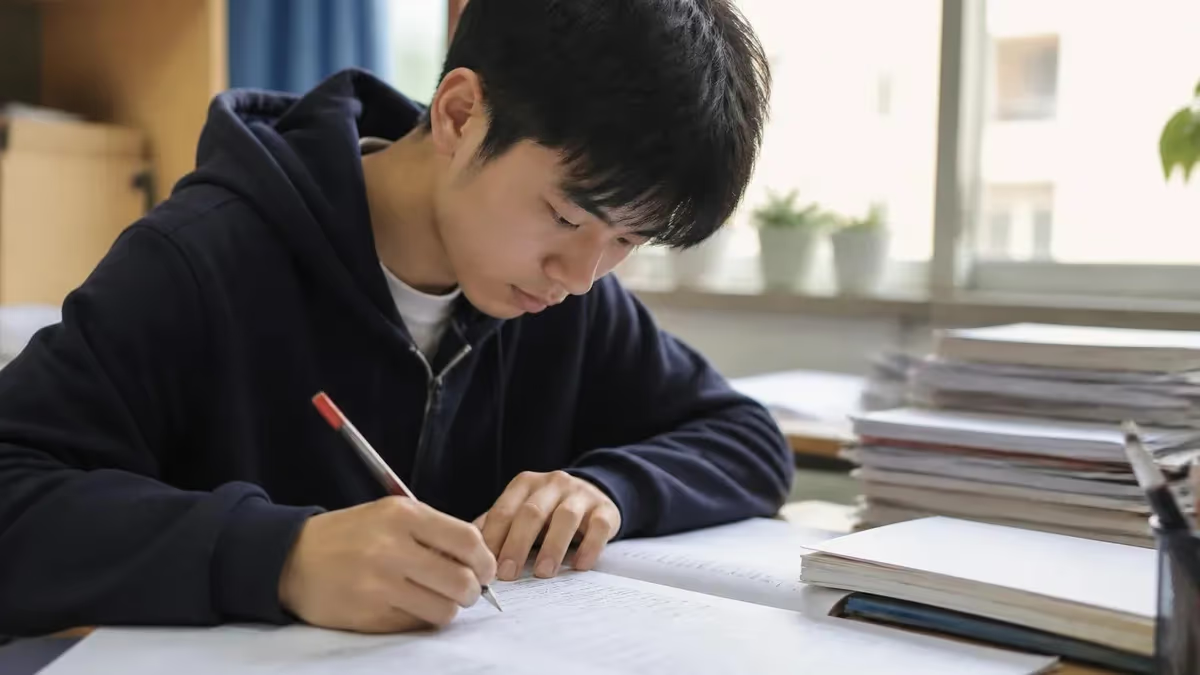
Gaokao at a Glance

What Is the Gaokao?
The Gaokao — officially the National College Entrance Examination (普通高等学校招生全国统一考试) — is China's standardized university admissions test, taken by high school seniors at the end of Grade 12. It's the single most consequential exam in the Chinese education system. A student's entire university future hinges on two days of testing in early June. No retakes mid-year, no portfolio admissions, no legacy spots. Your score is your application.
The exam's roots go back to the imperial keju civil service examination, discontinued in 1905. The modern Gaokao launched in 1952, was suspended during the Cultural Revolution from 1966 to 1977, and was reinstated by Deng Xiaoping in 1977 — attracting 5.7 million candidates that first year after the ban lifted. Today over 12 million students sit the exam annually, making it the largest high-stakes test on earth.
For international observers, the Gaokao is often cited as an example of extreme meritocracy. Admission to China's elite universities — Peking University and Tsinghua University chief among them — can require scores in the top 0.01% nationally. The competition isn't just between students in the same city; it's a national ranking exercise where a single point can mean the difference between a top-tier university and a significantly lower-ranked one.
Foreign nationals and overseas Chinese can also attempt the Gaokao under specific conditions, and some international universities — particularly in Hong Kong and increasingly in Southeast Asia — now accept Gaokao scores as part of admissions. That's made understanding the exam relevant well beyond China's borders.
The Gaokao's influence extends far beyond test day. It shapes the entire K-12 experience for Chinese students. Elementary school students start preparing for it indirectly — competitive parenting drives enrollment in after-school tutoring (supplementary education centers, or xuexiban) from as early as age 6 or 7. By middle school, the shadow of the Gaokao is explicit. By senior high school, it consumes almost everything.
China's government has repeatedly tried to soften the Gaokao's iron grip on education. The 2021 "double reduction" policy banned for-profit academic tutoring for K-9 students specifically to reduce pressure. The new exam format reforms — the 3+1+2 and 3+3 systems — were designed to let students specialize more authentically rather than craming subjects they hate. Whether these reforms are meaningfully changing the culture is still an open question; the underlying competition for university seats hasn't changed.
Students can check their scores and explore historical cutoff data through our gaokao score range guide, which breaks down provincial first-tier and second-tier lines from recent years. Understanding where historical cutoffs fall is essential for strategic school list preparation — Chinese university applications require committing to a prioritized school list, and that list is useless without a realistic sense of where your score places you in the provincial ranking.
The gaokao examination also increasingly attracts interest from education researchers worldwide. Its ability to drive extremely high math and science outcomes — China consistently leads international PISA rankings in Shanghai and Beijing samples — is studied by education policymakers in the US, UK, and other countries looking to improve STEM performance. Whether the Gaokao model is transferable to other cultural contexts is debated, but its academic results aren't in question.
Key Fact for International Readers
The Gaokao is not a qualifying exam — it's a ranking exam. Every test-taker gets a score, and that score determines which universities you can apply to. There's no pass/fail line; there are provincial cutoff scores (called fenshuxian) set each year, which shift based on how difficult the exam was and how many seats are available in each tier.
The Three Compulsory Subjects
The hardest paper for most students. Three hours, 150 points. Covers classical Chinese prose, poetry analysis, modern literary reading, argumentative writing, and a major essay. The writing prompts are notorious for their philosophical complexity.
- Classical texts: Pre-modern prose and poetry
- Essay: 800+ characters required
- Difficulty: Highest of all papers
Two hours, 150 points. All students sit Mathematics, though the syllabus historically differed slightly between science-track and arts-track students. Under current reforms, a unified maths paper applies to both tracks.
- Functions & calculus: Core content area
- Geometry: Solid and analytic geometry
- Statistics: Probability, distributions
Two hours, 150 points. English is by far the most common choice, taken by over 95% of candidates. Other permitted languages include French, German, Japanese, Russian, and Spanish. Tests listening, reading comprehension, cloze, and writing.
- Listening: ~30 pts in most provinces
- Reading: Multiple passages, 60+ pts
- Writing: Short and long composition
Who Takes It & When
Chinese high school students take the Gaokao at the end of Year 3 (Grade 12), typically at age 17–18. Registration is mandatory for all students intending to attend domestic universities; skipping it means forgoing mainstream higher education entirely. The exam is held every year on June 7 and 8 as the core two-day window, with some papers extending into June 9 depending on the province and whether the student has selected certain electives. The dates are fixed nationally — June 7 starts with Chinese Language and Math on most provincial schedules.
About 12.87 million students registered for the 2024 Gaokao, the highest figure on record. That number keeps climbing as China's high school graduation cohort grows and as the stigma around vocational pathways persists. Results are typically announced in late June, with university applications processed during July and August. Students who are unhappy with their scores can retake the exam the following year — called a gaokao fudu, a repeat year — which is common among students who narrowly missed their target school's cutoff.
There's a regional dimension that surprises many foreigners: each province administers slightly different exam papers and sets its own admission cutoff lines. Students from Beijing and Shanghai historically faced lower cutoff scores to get into top universities than students in more populous provinces like Henan, Shandong, or Hebei. This provincial quota system has been a source of ongoing political controversy, and reform efforts continue.
Overseas Chinese students (huaqiao) and children of Chinese nationals residing abroad can apply to sit a separate but related examination, or may be eligible under special admission categories. A small number of non-Chinese international students at Chinese high schools also sit the exam, though most international applicants to Chinese universities use separate foreign student admissions pathways that do NOT require the Gaokao.
The Gaokao calendar dictates family life in China. Exam day traffic near test centers is rerouted by police. Construction sites near schools are shut down weeks in advance to prevent noise. Parents and grandparents wait outside exam halls for hours. Hotels adjacent to major exam centers charge double rates on June 6-8, booked out months ahead by families traveling from rural areas. It's not just an exam - it's a national event treated with the gravity of a major religious observance.
Preparation infrastructure in China is massive. The gaokao prep industry — including tutoring centers, intensive summer camps, and online platforms — generates tens of billions of yuan annually. But official policy has tried to rein this in. The 2021 restrictions on for-profit tutoring companies specifically targeted the Gaokao prep arms of major companies. Despite this, private tutoring continues through informal channels and high-end one-on-one tuition. The gap between what a wealthy urban family can spend on Gaokao prep and what a rural student's family can afford remains enormous.
Science Track vs Humanities Track
Classic Science Track — In provinces still using the older system, science-track students (理科, lǐkē) select Physics, Chemistry, and Biology as their three elective subjects.
Physics — 90 minutes, covers mechanics, electromagnetism, thermodynamics, optics, and modern physics. One of the most difficult papers overall.
Chemistry — 90 minutes, covers atomic structure, chemical bonds, organic chemistry, equilibrium, and electrochemistry. High memorization load alongside calculation problems.
Biology — 90 minutes, covers genetics, evolution, cell biology, ecology, and physiology. Heavy on diagram interpretation and multi-step application questions.
Science-track graduates typically apply to engineering, medicine, computer science, physics, and natural science degree programs.
Gaokao Exam Structure by Paper
| Section | Questions | Time | Weight | Notes |
|---|---|---|---|---|
| Chinese Language & Literature | ~22 | 150 min | 150 pts | Classical texts, modern reading, major essay |
| Mathematics | ~22 | 120 min | 150 pts | Unified paper in most provinces |
| English (Foreign Language) | ~55 | 120 min | 150 pts | Includes listening section |
| Physics / History (mandatory elective) | ~14–20 | 90 min | 100 pts | Must choose one under 3+1+2 |
| Chemistry / Biology / Politics / Geography (free electives) | ~14–20 each | 90 min each | 100 pts each | Choose 2 under 3+1+2; total 2×100=200 pts |
| Total | ~130+ | 9+ hrs across 2–3 days | 100% |
Total Score, Cutoffs & University Admission
The maximum total score under both the classic system and the new 3+1+2 model is 750 points (three compulsory subjects at 150 each = 450, plus three elective or elective-equivalent papers at 100 each = 300). Under the 3+3 model used in Shanghai, Beijing, and a few other provinces, the calculation differs slightly — electives are graded on a standardized scale rather than raw scores to account for varying difficulty across subjects.
Each province publishes its own fenshuxian (score lines) after the exam. These cutoffs are divided into tiers: the highest tier for prestigious universities, a second tier for ordinary four-year universities, and a third tier for junior colleges. A student whose score lands above the first-tier line can apply to China's top schools, but getting accepted at Peking University or Tsinghua University requires being in the very top percentile nationally — often above 700 out of 750.
University applications are submitted through a provincial centralized system. Students list their school preferences in order — sometimes committing before results are announced (voluntary before scores), sometimes after (voluntary after scores). The system, called pingxing zhiyuan or shunxu zhiyuan depending on the province, determines final placements by matching student scores against available seats. A misjudged school list — either too ambitious or too conservative — can cost a student their best opportunity. That's why Chinese families spend enormous resources on gaokao score range analysis and historical cutoff data before filling in preference forms.
Top universities like Peking University and Tsinghua University typically receive students scoring 700–750 in most provinces. Mid-tier 985-project universities (China's equivalent of the Ivy League expansion) admit students in the 640–690 range. The 211 project universities (next tier down) see cutoffs in the 580–640 range. Students below the first-tier line typically aim for second-tier schools or junior colleges offering two-to-three-year associate programs. You can explore gaokao practice test questions across subjects to benchmark where you stand before exam day.
One important nuance: the 3+3 model used in Shanghai, Beijing, Tianjin, Zhejiang, and Hainan converts elective subject raw scores to standardized percentile-band scores (called sanji fenshi or "level scoring"). Instead of a raw Chemistry score of 112/150, a student might receive a converted score of 78/100 adjusted against how all Chemistry takers performed.
This levels the playing field between harder and easier elective subjects. It also means students can't fully know their exact score until the provincial conversion tables are released. Under 3+1+2, most provinces use raw scores for the mandatory Physics/History elective and converted scores for the two free-choice subjects.
For international families considering Chinese universities, the Gaokao admission process through the gaokao channel is largely closed to non-Chinese citizens — Chinese universities have separate international student admissions that don't require the exam. However, understanding the Gaokao's scoring helps contextualize how Chinese applicants at global universities are competing. A Chinese student scoring 720/750 — top percentile nationally — is demonstrating academic horsepower comparable to a 1580+ SAT scorer. Our free Gaokao exam questions practice sets let you explore the actual content difficulty across subjects.
Bottom line: the Gaokao is hard in both content and context. The exam itself is demanding across all subjects. The competition is even more demanding. For Chinese students, understanding the format in detail — subjects, time limits, scoring, track options — is the first step toward a realistic preparation strategy. For international readers, the Gaokao offers a window into how one of the world's largest education systems allocates opportunity.
Gaokao Score Range & University Tiers
Cutoffs shift every year based on exam difficulty and provincial seat quotas. These ranges are approximate national averages.
Difficulty & Competition — What Actually Makes It Hard
Calling the Gaokao "hard" undersells it. The competition isn't just about content complexity — it's about competing against 12 million other students who've spent three years doing almost nothing else. Chinese high school students in competitive provinces routinely study 12–16 hours a day in the final year. Night study sessions until midnight aren't unusual; summer and winter vacations are consumed by cramming. The psychological pressure is extraordinary.
The content itself is genuinely challenging. The gaokao math questions include multi-step problems combining functions, calculus, probability, and solid geometry that would challenge first-year college students elsewhere. The Chinese Language essay prompts require sophisticated philosophical reasoning, often framed around contemporary Chinese values and policy themes. The Physics and Chemistry papers test deep problem-solving ability, not just formula recall. In the English paper — which you can practice through our gaokao english questions sets — the reading comprehension and cloze passages are drawn from sophisticated authentic texts.
The difficulty is compounded by the stakes. One bad day means an entire year lost if you want to retake. For students in rural areas or lower-income families, there's often only one shot — a repeat year is financially and socially very costly. This high-stakes structure produces extraordinary academic performance but also drives documented mental health concerns among Chinese high schoolers, which is why recent reform efforts have focused on reducing drilling and rote memorization in favor of applied reasoning.
Provincial competition also matters. A student in Henan — China's most populous province, with over 130 million residents — faces a brutal provincial competition with relatively few elite university seats allocated to their province. A student in Beijing or Shanghai faces far fewer competitors for the same top school slots. Critics have called this the Gaokao's biggest fairness problem.
Recent Gaokao reforms have tried to shift content toward higher-order thinking. The 2020 reforms added more "open-ended" essay prompts and application problems that require reasoning rather than recall. Exam designers explicitly state that they aim to reward students who can apply knowledge flexibly rather than those who have memorized the most content. Critics argue this change benefits already-advantaged students who attend better schools with more critical thinking instruction — not the average rural student whose school still drills rote answers.
One preparation strategy that consistently works: working through Gaokao exam questions from official past papers under timed conditions. Past-paper practice is the single most evidence-based preparation method, partly because the question formats and difficulty calibration are highly consistent from year to year despite the content reforms. Students who complete 5+ years of past papers in each subject almost always score higher than those who rely on textbooks alone.
International observers — particularly those from the US or UK — sometimes dismiss the Gaokao as "just memorization." That misreads it. Yes, Chinese Language requires students to have memorized hundreds of classical poems and passages. Chemistry and Biology have heavy knowledge loads. But Mathematics and Physics require genuine problem-solving ability that goes well beyond formula recall. The final-year Mathematics curriculum covers content that many Western students don't encounter until university. A student who scores 145/150 on Gaokao Math hasn't just memorized — they've developed real mathematical fluency.
The English paper is also more sophisticated than many assume. Reading comprehension passages come from published academic and journalistic sources. The writing tasks — a short description-writing task plus a longer composition — require proper argumentation structure, not template-filling. Students who practice with our gaokao english exam pdf sets quickly discover that the cloze test (fill-in-the-blank passage) is particularly demanding in terms of vocabulary depth and contextual reasoning.
Bottom line: the Gaokao is hard in both content and context. The exam itself is demanding across all subjects. The competition is even more demanding. For Chinese students, understanding the format in detail — subjects, time limits, scoring, track options — is the first step toward a realistic preparation strategy. For international readers, the Gaokao offers a window into how one of the world's largest education systems allocates opportunity.
For a fuller set of questions on this topic, see our gaokao practice test resource.
For a fuller set of questions on this topic, see our gaokao example questions resource.
Gaokao vs SAT vs A-Levels: What's Different?
- ▶Taken once per year — one attempt defines your future (or take a repeat year)
- ▶Covers 3–5 subjects tested over 2–3 consecutive days
- ▶Maximum 750 points, provincial percentile ranking determines admission
- ▶Administered by the state; no private test prep industry shapes the test
- ▶No writing portfolio, no extracurriculars, no interviews — only the score
- ▶Questions are more complex and multi-step — focuses on deep application
- ▶Chinese Language essay requires philosophical analysis of ~800 characters
- ▶Provincial quotas mean geography of birth affects university access
- ▶SAT can be taken multiple times; A-levels retaken per module — more flexibility
- ▶SAT covers two subjects (Evidence-Based Reading/Writing + Math)
- ▶SAT max 1600, used alongside GPA, essays, extracurriculars, recommendations
- ▶Large private test-prep industry (Kaplan, Princeton Review) shapes test strategies
- ▶A-levels: 3–4 subjects studied in depth over two years, strong specialization
- ▶Both systems allow more holistic admissions beyond a single score
- ▶A-levels require extended project work (EPQ) in some curricula
- ▶Geographic background has limited impact on university access
How to Prepare for the Gaokao
- ✓Start early — Gaokao prep begins in earnest in Grade 10 (Year 1 of senior high school), not just the final year
- ✓Master the compulsory three first: Chinese Language, Mathematics, and English form the largest score block (450 pts)
- ✓Choose your elective subjects strategically — pick what you're genuinely strong at, not what seems "easier"
- ✓Use official past papers — the Ministry of Education releases past years' national exam papers; these are the gold standard for practice
- ✓Practice Gaokao exam questions by subject using our free online quizzes (links below)
- ✓Focus on application over memorization — modern reforms reward reasoning and analysis more than rote recall
- ✓Simulate exam conditions — timed practice under real test settings reveals weak spots that relaxed review misses
- ✓Pay attention to essay structure — both the Chinese Language essay and argumentative writing sections have explicit scoring rubrics
- ✓Track provincial cutoff trends — historical score lines help set realistic university targets and calibrate preparation goals
- ✓Manage exam-week logistics — sleep, travel timing, and ID documentation are all stress points that derail candidates
Gaokao Practice Tests by Subject
Authentic reading comprehension passages mirroring the Gaokao English paper. Covers vocabulary in context, inference, and detail questions across academic and literary texts.
- Format: Multiple choice + short answer
- Weight: Part of 150-pt English paper
Multi-step problems in functions, derivatives, integrals, and applications — the backbone of the Gaokao math paper. Eight full sets covering all difficulty tiers.
- Topics: Functions, calculus, sequences
- Weight: Core of 150-pt Maths paper
Science-track students: electromagnetism is one of the highest-weighted Physics topics. Practice problems on fields, circuits, induction, and wave theory with worked solutions.
- Topics: Fields, circuits, induction
- Weight: Major section of 100-pt Physics
Chemical equilibrium, Le Chatelier's principle, reaction rates, acid-base theory, and electrochemistry. High-yield area for both 3+1+2 and classic science-track students.
- Topics: Equilibrium, rates, redox
- Weight: Core of 100-pt Chemistry
Covers the Republican era, revolutionary period, reform and opening up, and contemporary China — the humanities-track equivalent of Physics in terms of essay weight.
- Topics: 1840–present, world history
- Weight: Core of 100-pt History
Pre-modern Chinese prose and poetry comprehension — one of the most distinctive sections for international readers. Tests grammar, classical vocabulary, and textual analysis.
- Topics: Classical prose, poetry, rhetoric
- Weight: Part of 150-pt Chinese Language
The Gaokao: What It Gets Right and What Critics Say
International observers often debate whether China's exam system should be admired or reformed. Here's the honest picture.
- +Pure meritocracy — a student from a rural family can outperform a wealthy city student if they're smart enough and work hard enough
- +Transparent and standardized — no subjective essays about 'who you are,' no favor from school reputation or networks
- +Drives extremely high academic achievement — Chinese students consistently outperform OECD peers on PISA math and science
- +Single national test reduces the gaming and inefficiency of multiple application processes
- +Covers a genuinely broad and rigorous curriculum spanning sciences, humanities, and language
- −Extreme pressure causes documented mental health problems — anxiety, burnout, and depression among high school students
- −Encourages rote memorization and drilling over genuine creative thinking in many subjects
- −Provincial quota system disadvantages students from populous provinces with fewer university seats per capita
- −Socioeconomic inequality persists — wealthy urban families can afford better schools and more tutoring
- −One exam on two days — illness, test anxiety, or a bad day has lifelong consequences with no recourse
Gaokao Questions and Answers
More Gaokao Guides
Gaokao Exam Questions: Practice Tests for China's College Entrance Exam
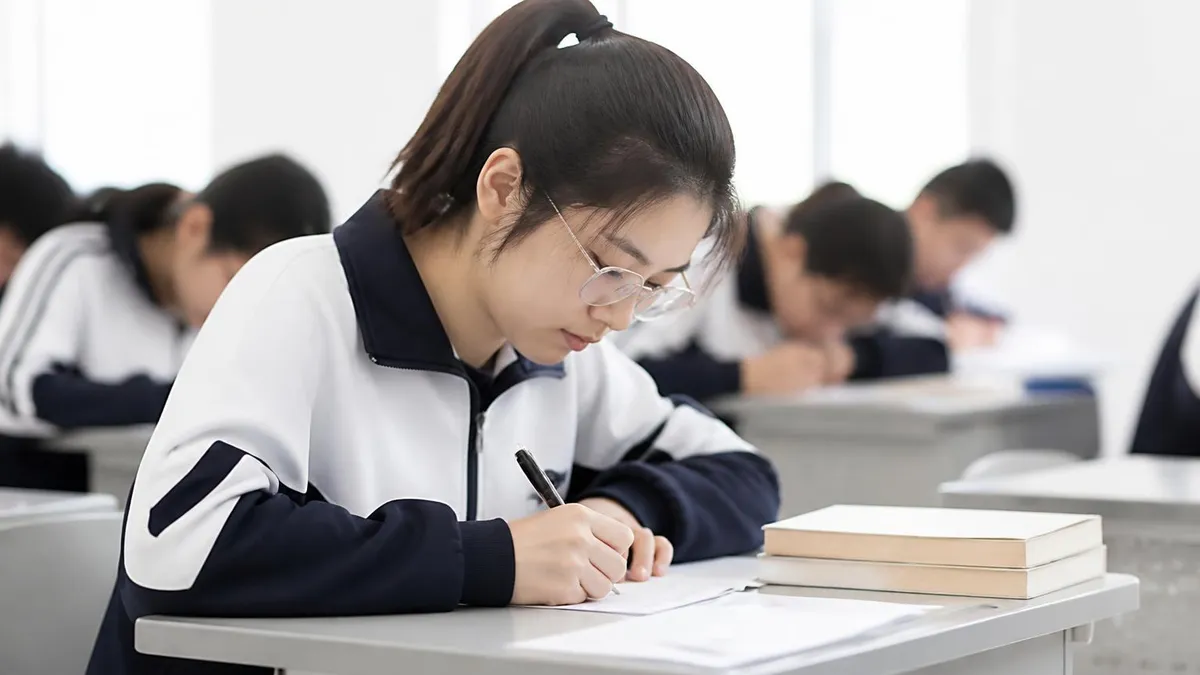
Gaokao Math Questions: Topics, Difficulty, and Sample Problems
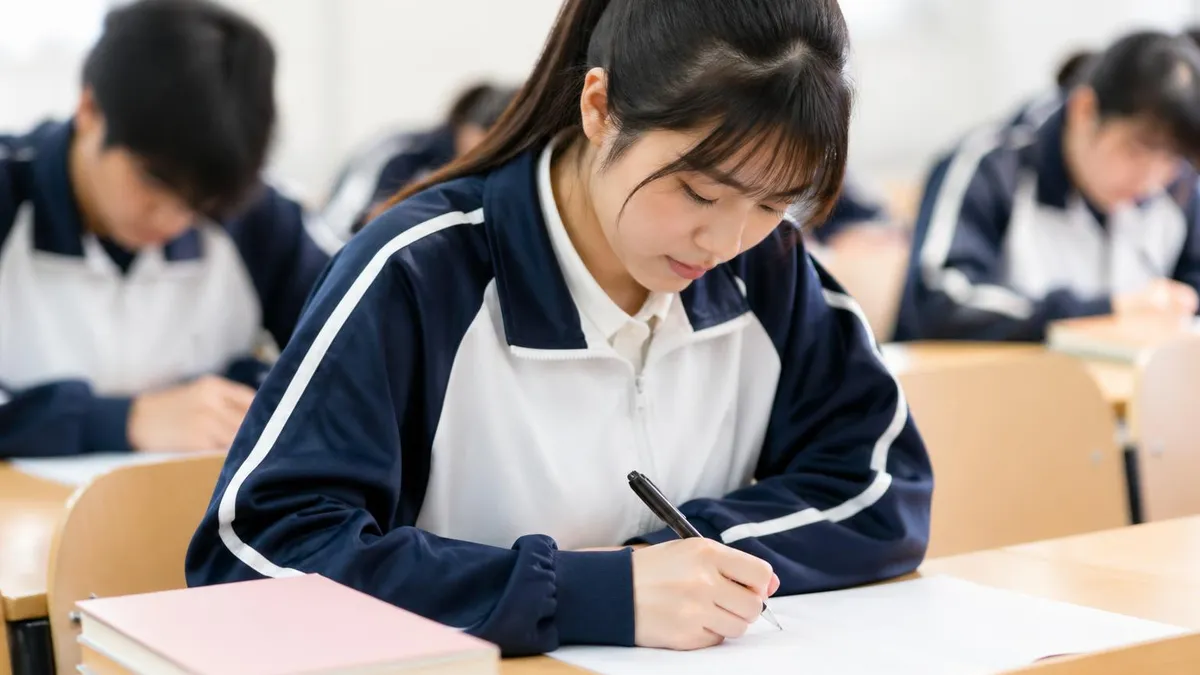
Gaokao Exam Guide: China's National College Entrance Examination Explained
Gaokao Exam Questions: Practice Test Guide for 2026

Gaokao Math: Topics, Difficulty, and How to Prepare
How this page was made: written with AI tools and published by Nathan Beja, founder of Practice Test Geeks, who is responsible for its content. Exam facts are checked against the official sources listed below. Not reviewed by a subject-matter expert. Editorial policy
Sources & references
Exam facts on this page (fees, format, dates, passing scores) are checked against these official sources; the date is our last check. Editorial policy
- moe.gov.cn — Test delivery, score release · verified Oct 2026
- sdzk.cn — Fees · verified Oct 2026