
Forklift Basket OSHA Rules: When You Can Lift Workers, Required Safeguards, and Operator Training
🎯 Forklift basket OSHA rules: when a work platform is allowed, required guardrails, operator training, and pre-lift checks before anyone leaves the ground.

A forklift basket OSHA question usually starts the same way: a supervisor needs to change a light, inspect racking, or pull inventory from a high bay, and a ladder or scissor lift is not available. Someone suggests putting a pallet on the forks and lifting a worker. OSHA does not ban lifting people with forklifts outright, but it narrows the practice sharply. Understanding where the line sits protects workers, keeps your facility out of citation territory, and clarifies what every forklift operator must know.
The governing rule is 29 CFR 1910.178, OSHA's powered industrial truck standard for general industry. Paragraph (m)(12) covers elevating personnel. In plain terms, a worker may be raised only on a safe work platform that is securely attached to the lifting carriage or forks, and only when the truck is suited for the job. A pallet, a loose crate, or standing on bare forks is never a compliant substitute for a properly built platform.
Why is the rule so strict? Forklifts are designed to carry loads, not people. They steer with the rear wheels, tip forward when weight shifts, and offer no built-in fall protection for riders. OSHA estimates that forklift incidents cause roughly 85 deaths and 34,900 serious injuries each year, and falls from elevated forks are a recurring pattern. A basket adds height and a moving center of gravity, so a small mistake turns into a serious fall very quickly.
Think of the basket as a temporary, engineered workaround rather than a standard tool. If an aerial lift, scaffold, or cherry picker forklift built for order picking can do the job, OSHA expects you to prefer it. A cherry picker forklift, usually a stand-up order picker with an operator platform, carries its own guardrails and harness anchor points. The basket is meant for cases where the work is brief and no purpose-built access equipment is practical.
This guide walks through the rule language, platform design features, operator duties, and inspection routines in order. You will also see how forklift training and certification of forklift operators connect to basket work, what to ask when forklift rental or forklift for sale listings advertise a work platform, and how truck types, from an electric forklift to a stand up forklift, change the risk. For a broader overview, review the forklift osha regulations before you plan any lift.
Keep in mind that OSHA is the floor, not the ceiling. Truck manufacturers publish their own rules, and many forbid personnel lifts unless a specific factory-approved platform is installed. Your employer may add stricter policies, and states with approved OSHA plans, such as California, can apply additional requirements. When these sources disagree, follow the most restrictive one, and record the decision in a written lift plan that every crew member has read and understood.
By the end you should be able to answer three questions before every lift: is a basket truly necessary, is this truck and platform combination approved, and is the operator trained and standing at the controls? If any answer is no, stop and choose another method. Quick, informal fixes are exactly how falls happen, and a ten-minute delay to bring in the right equipment costs far less than a single injury claim or citation.
Forklift Basket Safety by the Numbers

What OSHA Requires for a Forklift Basket
Workers may be elevated only on a platform designed for the purpose, with standard railings and a secure floor. Pallets, loose crates, and bare forks do not qualify. The platform must be rated for workers, tools, and its own weight within the truck's capacity.
The platform must be firmly attached to the lifting carriage or forks so it cannot slip, tilt, or lift off. Pins, chains, or manufacturer locking brackets are typical. Gravity alone never counts as attachment, and every connection should be checked before each lift.
A trained operator must stay at the controls whenever the platform is raised, or the occupant must be able to shut off power. Raising and lowering happens with the truck stationary, on a firm, level surface, with brakes set and the mast vertical.
A means for the occupant to shut off power, protection from falling objects where a hazard exists, and fall protection based on the employer's hazard assessment all apply. Manufacturers often require a harness and lanyard tied to a platform anchor point.
Platform Design and Truck Requirements for Forklift Baskets
A compliant platform starts with its construction. OSHA expects a standard railing on all open sides, including a top rail roughly 42 inches above the floor, a midrail, and a toe board where tools or materials could fall. The floor must be slip-resistant, and the platform must be rated for the combined weight of workers, tools, and the platform itself. Homemade baskets welded from scrap steel rarely meet these tests and should never be accepted.
Attachment is the next test. The platform must be secured to the carriage or forks so it cannot tilt, slide, or lift off, typically with chains, pins, or a manufacturer's locking bracket. Gravity alone is not enough. Many approved cages use a lock-and-pin system with a gate that blocks entry until the platform is locked down. Before every use, tug the platform by hand and watch for movement, bent forks, or worn fasteners.
Truck capacity matters just as much. The nameplate rating assumes the load center listed there, usually 24 inches, and a tall mast, side shifter, or attachment lowers that capacity. Subtract the platform weight first, then add workers and tools. If a derated capacity at full height is 3,500 pounds, a 600-pound basket, two 200-pound workers, and 100 pounds of gear leave margin. Always verify the numbers against the actual data plate.
Truck type changes the equation. A counterbalanced electric forklift offers smooth, quiet controls that help precise positioning, while internal combustion trucks vibrate and release exhaust that tires a worker in a cage. A stand up forklift, such as a reach truck, has a narrow footprint and different stability characteristics, and many manufacturers prohibit personnel platforms on it. Rough-terrain trucks are sometimes better suited, but always according to the data plate and the operator manual.
Controls and shutoff deserve attention. OSHA wants a means for the occupant to shut off power to the truck, and a trained operator at the controls the entire time the platform is raised. That usually means the operator remains seated with the parking brake set, and some jobs add a platform-mounted emergency stop. Never leave the seat to assist the worker, and never let the person in the basket run the lift unless the truck was designed for it.
If a falling-object hazard exists, protection is required, such as the truck's overhead guard plus screening or a canopy on the platform. Overhead clearance matters too. Keep a safe distance from energized power lines, commonly at least 10 feet for lines up to 50 kilovolts, and check for sprinkler heads, ducts, conduit, and low beams. A worker in a basket has little room to dodge, so the route and height must be surveyed first.
The surface under the truck must be firm, level, and free of debris, holes, wet spots, and dock edges. Slopes shift the center of gravity and shrink the stability triangle. Raise and lower the platform with the truck stationary. Travel with workers elevated should be limited to minor repositioning at walking speed, if the manufacturer allows it at all, and many employers prohibit any travel. When in doubt, lower the platform fully, then move the truck.
Forklift Rental, Forklift for Sale, and Cherry Picker Forklift Options
Forklift rental is the fastest way to get a truck suited to elevated work without a purchase commitment. When you search forklift rental near me, ask the dealer whether the unit is approved for a personnel platform, because many rental fleets are rented for pallet handling only. Request the manufacturer's written approval, the data plate capacity with the platform attached, and a copy of the operator manual before the truck leaves the yard.
Daily rates for a standard electric forklift or small rough-terrain unit often run from about $150 to $450, with weekly and monthly discounts, plus delivery and fuel or charging. A rental company does not train your people. OSHA places that duty on you as the employer, so schedule forklift training and an evaluation on the specific rental model before anyone operates it. Also confirm who supplies the work platform and who inspects it.

Is a Forklift Basket Worth It Compared With an Aerial Lift?
- +Uses a truck you already own or rent, avoiding a second machine
- +Fast to deploy for short, one-off tasks in tight warehouse aisles
- +Lower cost than renting a boom lift for a single quick job
- +Operator can lower the worker quickly in an emergency
- +Works in spaces where larger aerial lifts cannot maneuver
- +Approved platforms are inexpensive compared with new equipment
- −Many truck manufacturers prohibit or restrict personnel platforms
- −Requires strict compliance with 1910.178(m)(12) and written planning
- −Operator cannot leave the controls, so a second person is often needed
- −Stability drops as the platform rises and the load center shifts
- −Improvised baskets are a common source of OSHA citations
- −Purpose-built lifts offer better fall protection and platform controls
Pre-Lift Checklist for Forklift Training and Basket Work
- ✓Confirm no purpose-built access equipment can do the job.
- ✓Verify the manufacturer approves a personnel platform on this truck.
- ✓Check the data plate capacity with the platform attached.
- ✓Inspect the platform railings, toe board, floor, and gate.
- ✓Confirm locking pins or chains hold the platform to the forks.
- ✓Complete and document the daily truck inspection.
- ✓Make sure the operator holds current training and evaluation records.
- ✓Walk the route and check floors, overhead hazards, and power lines.
- ✓Agree on stop signals and brief everyone on the lift plan.
- ✓Set the brake, keep the mast vertical, and test lift to a low height first.
Platform first, then the lift
OSHA's core message is simple: never raise a person on bare forks or a pallet. If you cannot show a secured, railed platform, an approved truck, and a trained operator at the controls, the lift does not happen.
Operator Training and Certification of Forklift Operators for Basket Lifts
OSHA's training rule, 29 CFR 1910.178(l), is the backbone of forklift operator compliance and applies to basket work as much as pallet moving. Only trained and authorized employees may operate a powered industrial truck. The employer, not a rental company or an online course provider, carries that responsibility. If your crew will lift workers on a platform, training must cover that task specifically, including the truck's capacity with the attachment installed and the platform's rated load.
Training has three required parts: formal instruction, practical hands-on training, and an evaluation of performance in the workplace. Formal instruction can be delivered in a classroom, by video, or online, and covers controls, stability, load handling, and the hazards of the operating environment. Practical training means demonstrations and exercises under a qualified trainer's supervision. An online-only forklift training course never satisfies the rule alone, because nobody observed the operator driving.
Evaluation is where many programs fall short. The employer must evaluate each operator's performance at least once every three years, and sooner when the operator is observed driving unsafely, is involved in an accident or near-miss, receives a failed evaluation, or is assigned a different type of truck. Moving from a sit-down counterbalanced truck to a stand up forklift is a classic trigger for refresher training. Adding basket work is another, since the hazards differ.
People often ask about certification of forklift operators and whether a license exists. OSHA does not issue forklift licenses. Instead, the employer certifies that each operator has been trained and evaluated, and the certification must include the operator's name, the training date, the evaluation date, and the identity of the person who performed the training or evaluation. Wallet cards are common, but the written record on file is what an inspector asks to see.
A typical new-operator course runs four to eight hours, combining classroom or online modules with a driving evaluation. Online providers often charge about $50 to $100 per person for the formal instruction portion, while on-site programs and third-party trainers cost more. Workers must also be physically able, and federal child labor rules generally keep anyone under 18 from operating forklifts in most workplaces. Schedule the practical evaluation promptly so knowledge stays fresh.
Basket lifts add a second group to train: the workers riding on the platform. They need instruction on fall protection, safe entry and exit, staying inside the rails, keeping tools secured, and the hand signals or radio calls used with the operator. Agree on a stop signal that anyone can give, and rehearse it. Poor communication is a frequent factor in incidents because the operator's view of the platform edge is often partly blocked by the mast.
Finally, keep records current. Maintain a roster that lists each operator, truck classes authorized, last evaluation date, and next due date. Audit it quarterly, because three years passes quickly and expiration dates are easy to miss. If a rental truck arrives, add a short familiarization session on that model and document it. Treat the paperwork as part of safety, not an afterthought, since it proves the training happened if something goes wrong.
You can continue preparing with the automated forklifts, which includes answer explanations for every question.
You can continue preparing with the mitsubishi caterpillar forklift america, which includes answer explanations for every question.

Standing on a pallet, a crate, or the forks themselves is a serious OSHA violation and a leading cause of falls. If your employer asks you to ride unprotected forks, you can decline and report the hazard to OSHA without fear of retaliation.
Inspections, Maintenance, and Common OSHA Violations
Under 29 CFR 1910.178(q)(7), trucks must be examined before being placed in service, at least daily, and after each shift if used around the clock. Any truck found unsafe must be removed from service until repaired. For basket work, extend the inspection to the platform, its fasteners, and the forks. Look for cracks near the heel of each fork, bent or worn chains, leaking hydraulic fittings, tire damage, and a working horn, brakes, and lights.
A good pre-use routine takes about ten minutes and follows a fixed order. Walk around the truck, then check fluids or battery charge, test steering and brakes, raise and lower the mast through its full travel, and tilt it forward and back. Next, attach the platform and confirm that locking pins or chains are engaged. Finally, perform a short unloaded test lift to a low height and check for drift, unusual noise, or jerky movement before anyone steps in.
Document findings on a written checklist and keep it. Inspectors often ask for these records, and they reveal patterns such as a recurring hydraulic leak or a tire worn unevenly on one side. If a defect affects lifting, steering, or braking, tag the truck out of service and notify maintenance. The platform needs a documented inspection too, and manufacturers usually call for periodic inspection by a qualified person and repair only with approved parts.
Powered industrial truck rules generate many citations. The standard appears on OSHA's annual list of most frequently cited standards, and operator training is a repeat offender. Typical basket-related citations involve lifting workers on pallets, platforms without railings, trucks operated by untrained workers, and missing inspection records. Each one points to a gap in planning, not bad luck, and each is preventable with the steps described earlier in this guide.
Penalties add up quickly. As of recent annual adjustments, a serious violation can cost roughly $16,000 or more per item, and willful or repeated violations can exceed $160,000 each. Those figures rise a little every January with inflation, so check OSHA's current table. Beyond fines, an injury brings workers' compensation costs, lost productivity, higher insurance premiums, and possible civil claims, which often dwarf the proposed penalty.
Weather and site conditions create hidden violations. Wind, rain, ice, poor lighting, and uneven pavement all reduce stability and visibility. Many manufacturers set wind limits for personnel lifts, and some employers stop work above about 20 miles per hour. Outdoors, check for soft ground, buried utilities, and overhead lines, and keep at least 10 feet from lines up to 50 kilovolts unless the utility confirms otherwise. Indoors, watch for sprinkler heads, pipes, and low beams.
When something does go wrong, report it. Investigate near-misses as seriously as injuries, because they expose the same weaknesses without the harm. Document what happened, which procedure failed, and which fix you adopted. Then retrain affected operators, since an incident triggers a refresher under the standard. Employers who treat reports as learning opportunities, rather than reasons to blame workers, build a culture where hazards surface early and stay fixed.
Practical Tips to Stay Compliant and Prepare for Your Forklift Exam
Start every project by asking whether a forklift basket is the right tool. Compare it with a scissor lift, boom lift, order picker, or scaffold. Most of the time, purpose-built access equipment is safer and often faster once setup is counted. Reserve forklift platforms for short, low-frequency tasks where the right equipment cannot reach, and write down why. That record shows an inspector the choice was deliberate and that you followed OSHA's intent.
Build a one-page lift plan for each basket job. Include the truck ID, platform ID, rated capacity, combined weight of workers and tools, lift height, route, surface conditions, nearby hazards, and the names of the operator and the workers. Add emergency steps, such as how to lower the platform if the truck loses power. Review the plan in a short huddle before work begins, and have everyone initial it.
If you are preparing for a forklift exam, study the concepts that connect to basket work: the stability triangle, load centers, capacity plates, and the effect of attachments. Written tests commonly ask about speed limits, pedestrian right of way, fueling and charging safety, and what to do when a truck tips. Memorizing numbers helps, but understanding why a rule exists helps more, because scenario questions test judgment, not trivia.
Use practice questions in short, frequent sessions. Twenty minutes a day for two weeks beats one long weekend of cramming. After each quiz, review every wrong answer and write down the rule in your own words. Then attempt a mixed set so topics do not blur together. Pair the reading with real equipment time whenever possible, because hands-on practice builds the muscle memory that a written test cannot measure.
On the practical evaluation, evaluators watch habits more than tricks. Do a full pre-use inspection aloud, sound the horn at intersections, look in the direction of travel, keep forks low while moving, and stop smoothly. Do not rush. Slow, deliberate operation scores better than speed. If your test truck is an electric forklift, show correct battery safety, including proper charging area procedures and awareness of the nearest eye wash station.
Treat the price of non-compliance as a study aid. A modest investment in forklift training, a rented approved platform, and a few extra minutes of planning is small next to a six-figure penalty or a life-changing injury. If your employer pushes you to lift someone on bare forks or a pallet, you can decline and report your concerns to OSHA, which protects workers from retaliation under Section 11(c) of the OSH Act.
Finally, keep learning after you pass. Re-read your employer's policies annually, watch manufacturer bulletins on your truck models, and join safety meetings. Mentor new operators, because teaching reinforces your own habits. Whether you drive a stand up forklift, an electric counterbalanced model, or a rented unit, the same habits protect you: inspect, plan, communicate, and refuse shortcuts that put a person in danger.
Forklift Questions and Answers
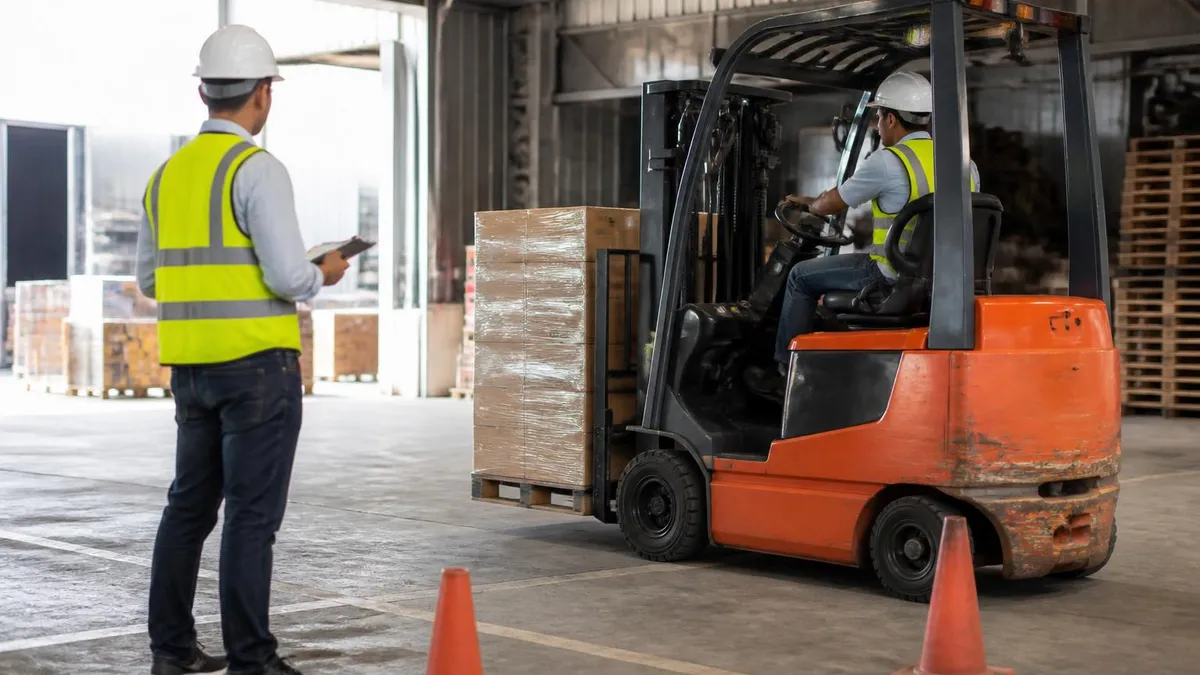
Forklift Stability Triangle: Complete Guide to Safe Operation, Physics, and Certification
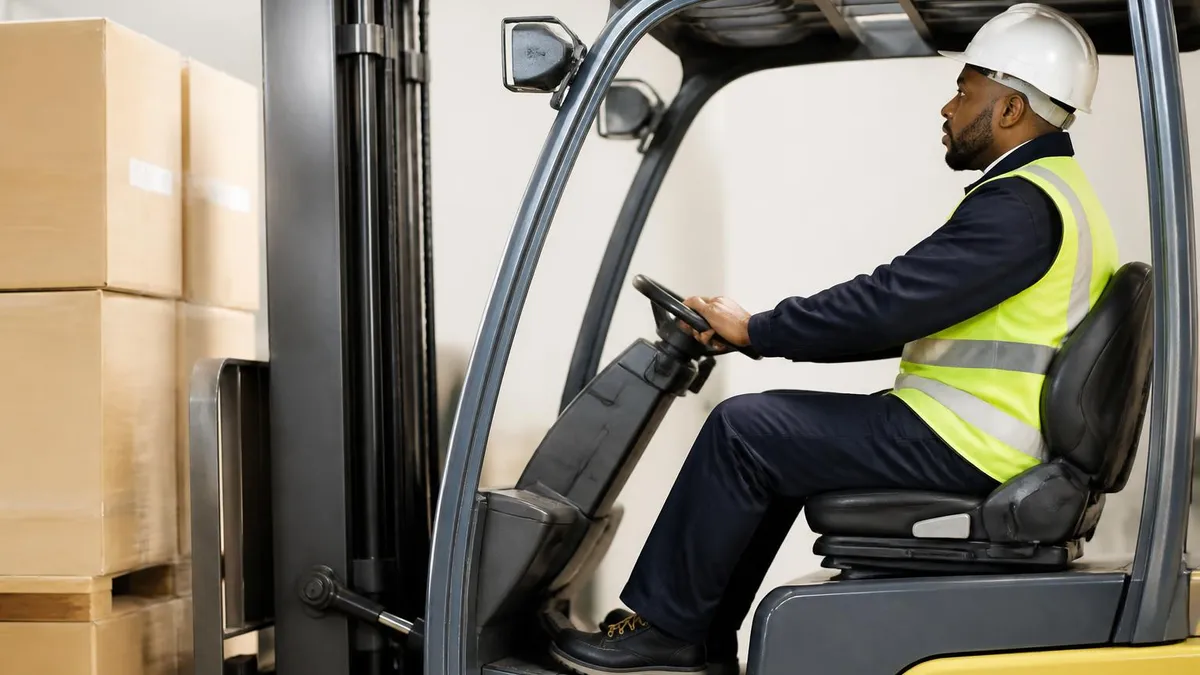
How to Get a Forklift License: Complete Training Guide and Certification Requirements
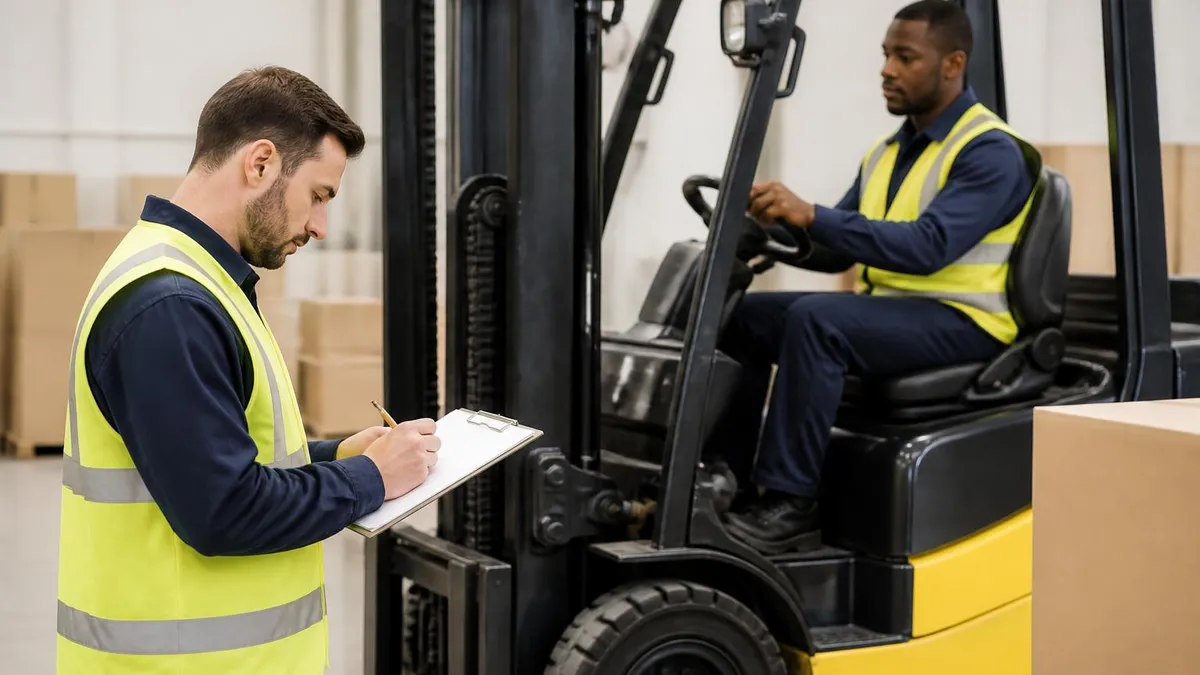
Forklift Driver Salary: Complete Pay Guide for 2026
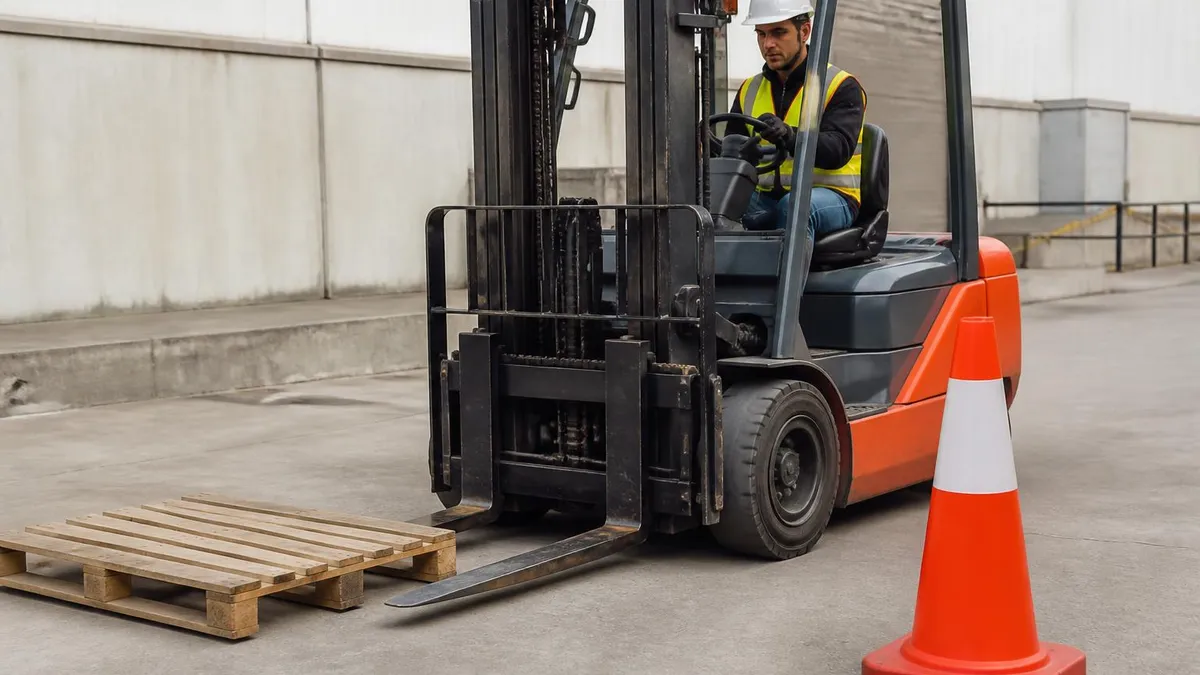
Forklift Types: Complete Guide to Classes, Uses, and Certification
Forklift License vs Certification: OSHA Requirements, Cost, and Training
Written and edited by Nathan Beja, founder of Practice Test Geeks, with AI assistance. Exam facts are checked against the official sources linked below. Editorial policy
Sources & references
Exam facts on this page (fees, format, dates, passing scores) are checked against these official sources; the date is our last check. Editorial policy
- osha.gov — Test delivery, eligibility, renewal · verified Oct 2026