
Firefighter Entry Exam: Requirements, Salary, and How to Become a Firefighter
🎯 Firefighter entry exam guide: how to become a firefighter, firefighter salary, CPAT, written test topics, and what the job demands.
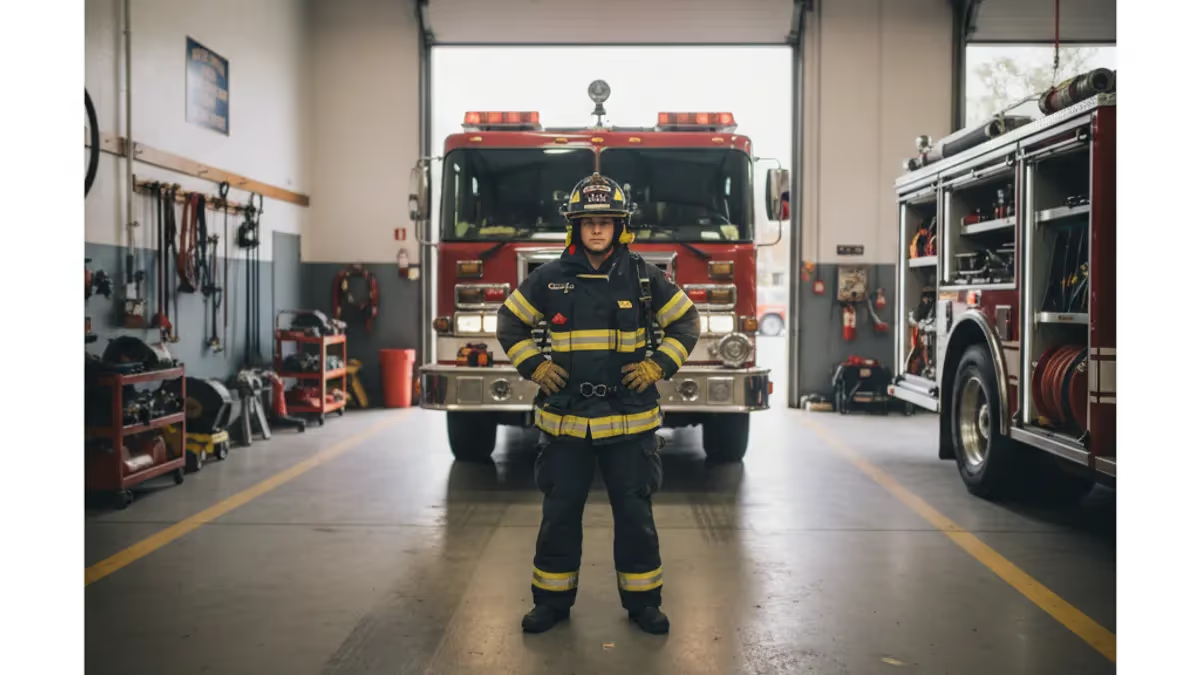
The firefighter entry exam is the first real gate between you and a fire department badge, and it is more than a single test. Most departments in the United States combine a written aptitude exam, a physical ability test, an interview, a background check, and a medical screening into one hiring process. Candidates who understand how each stage works, and who start preparing months ahead, finish far ahead of those who simply show up and hope for the best.
Interest in the career spikes whenever firefighters make national headlines. Searches such as idaho firefighters shot and idaho firefighter shooting rose sharply after the 2025 ambush near Coeur d'Alene, where two firefighters died and another was wounded while responding to a wildfire. We mention it here with respect. It is a sober reminder that the job carries real risk, and that serious candidates should understand that reality before they apply.
That reality is also why departments screen so carefully. The entry exam tests whether you can learn quickly, follow instructions under pressure, read a situation correctly, and keep working when conditions turn chaotic. Fire departments are not only hiring people who are strong. They want recruits who stay calm, communicate clearly, and put crew safety first. Every stage of the process is built to measure those traits, starting with the written test most applicants take first.
If you are asking how to become a firefighter, the short answer is a sequence of steps. You must meet basic eligibility rules, usually age 18 or older, a high school diploma or GED, a valid driver's license, and a clean record. Then you pass the written exam, clear the physical test, impress an oral board, and survive background and medical checks. Many departments also expect an EMT card before or soon after hire.
Pay matters too, and candidates often ask how much do firefighters make. According to the Bureau of Labor Statistics, the median firefighter salary is around $57,000 a year, though big-city departments in California, Washington, and New Jersey often start well above $70,000 once overtime is included. Smaller towns may start near $40,000. A volunteer firefighter earns little or nothing, but the experience and training can open the door to a paid position later.
This guide walks through the full firefighter entry exam: what the written test covers, how scoring and eligibility lists work, how the physical test fits in, what you will earn, and how to study efficiently. You will find a sample exam format, a pros and cons breakdown, a preparation checklist, and links to free practice questions on building construction and emergency medical care so you can start practicing today instead of waiting for an application window to open.
Use the table of contents to jump to any section, but if you are early in your journey, read from top to bottom. The order mirrors the real hiring process. Treat the written exam as the filter that decides whether the rest of your hard work even gets seen, because most departments rank candidates by score and only call the top group forward. Preparation is a measurable advantage here, and it is entirely within your control.
Firefighter Entry Exam by the Numbers
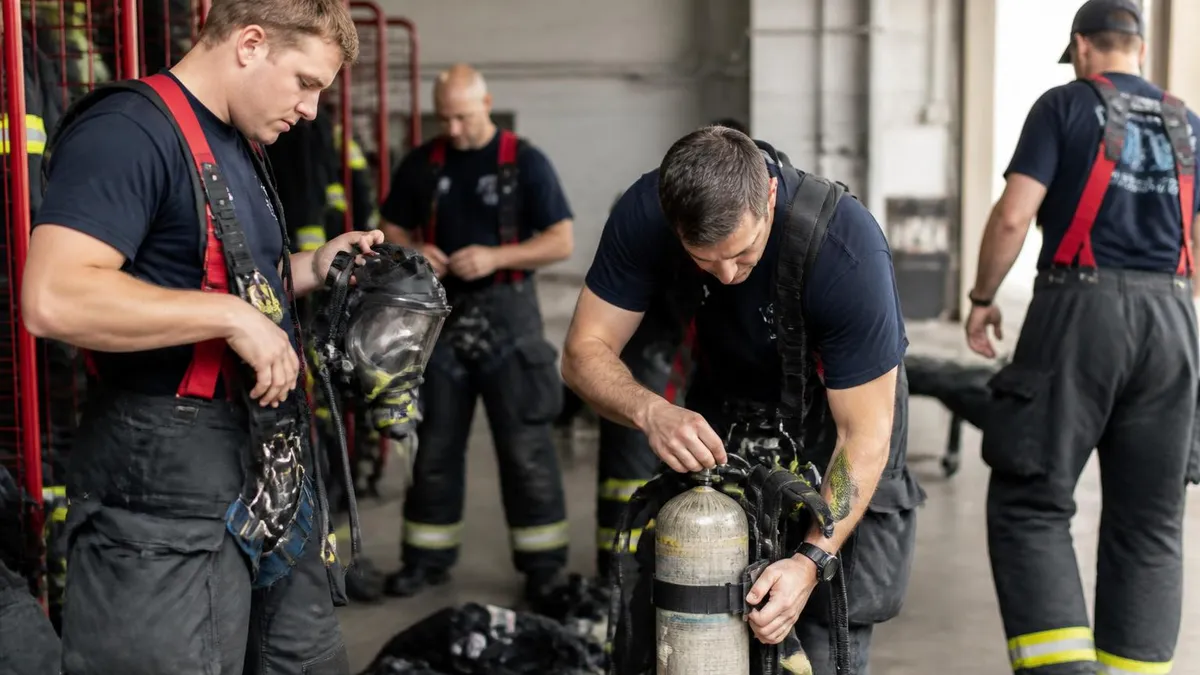
Typical Firefighter Entry Exam Format
| Section | Questions | Time | Weight | Notes |
|---|---|---|---|---|
| Reading Comprehension | 30 | 40 min | 25% | Passages on procedures, policies, and incident reports |
| Math and Arithmetic | 25 | 35 min | 20% | Fractions, ratios, percentages, and word problems |
| Mechanical Aptitude | 25 | 30 min | 20% | Pulleys, levers, gears, and water pressure |
| Spatial Orientation and Memory | 20 | 25 min | 15% | Floor plans, map reading, and recall of details |
| Situational Judgment | 20 | 20 min | 20% | Safety-first decisions in realistic scenarios |
| Total | 120 | 2.5 hours | 100% |
Understanding how the hiring pipeline works helps you spend preparation time wisely. Most departments open applications during a short window, sometimes only two weeks, then invite every qualified applicant to a testing date. Thousands of people may compete for twenty or thirty openings. Your written score, plus any bonus points for veteran status, residency, or certifications, places you on a ranked eligibility list that remains active for one to two years.
Scoring is usually straightforward. Most written exams require a 70 percent to pass, but passing is not the goal. Because lists are ranked, a 92 can be called months before a 78, and a 78 may never be called at all. Treat the cutoff as a minimum. Aim for the high eighties or nineties by practicing timed sections until reading, arithmetic, and mechanical questions feel automatic rather than stressful.
The physical stage often follows within weeks. Many departments use the Candidate Physical Ability Test, which has eight events and must be finished in ten minutes and twenty seconds while you wear a weighted vest. Others design their own course. Either way, the test is pass or fail, so you cannot make up for a slow time with a high written score. Both halves need attention from the first day of training.
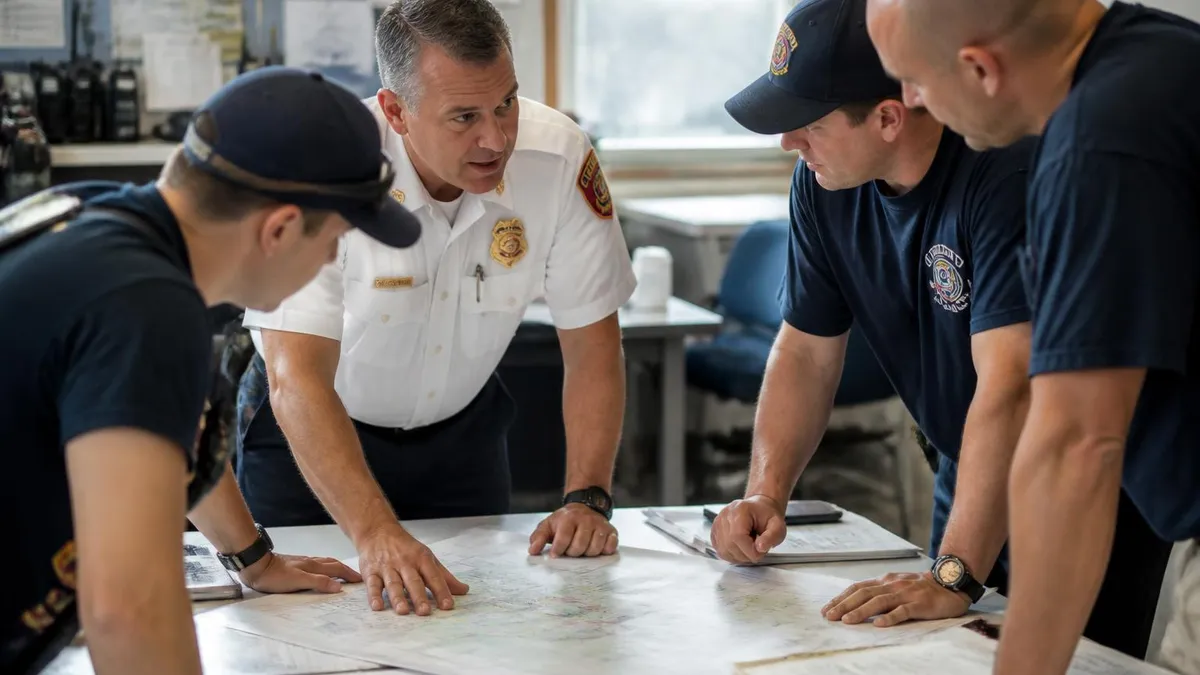
Next comes the oral interview, where a panel of officers asks situational and character questions. They want to hear about teamwork, integrity, and service, not rehearsed slogans. After that, finalists receive a conditional offer, then a polygraph or detailed background investigation, a drug screen, and a medical exam that checks vision, hearing, lung function, and cardiovascular health. Honesty throughout is essential, because one hidden problem found later can end an otherwise perfect application.
Not every route runs through a municipal department. A wildland firefighter, for example, may be hired by the U.S. Forest Service, the Bureau of Land Management, or a state forestry agency, often as a seasonal employee. Entry requirements are lighter, usually age 18 and a fitness test known as the pack test, which means hiking three miles with a 45-pound pack in under 45 minutes. Many structural firefighting careers begin with a few wildland seasons.
Volunteer and career paths also differ. Combination departments mix paid and volunteer staff, and many volunteer agencies pay for your Firefighter I training and EMT course. Because roughly two thirds of U.S. firefighters serve as volunteers, these roles are plentiful in rural areas. They give you real fireground time, letters of reference, and a reputation in the local fire community, all of which help when a paid position finally opens up.
Finally, plan for the academy. Hired candidates, often called probies, usually attend twelve to sixteen weeks of training that covers fire behavior, hose handling, ladders, search and rescue, ventilation, and live-fire evolutions. Recruits graduate with Firefighter I and II certification under NFPA 1001 standards. The written exam is just the entry point, so the knowledge you build now will keep paying off through academy testing and your first years on the job.
How to Become a Firefighter: Written, Physical, and Interview Stages
The written exam is typically a multiple-choice test of 80 to 150 questions given over two to three hours. It measures reading comprehension, basic math, mechanical aptitude, spatial reasoning, memory, and sometimes firefighting concepts. Some departments use national vendor tests, while others write their own. Check the candidate guide for your target department, because content and weighting differ more than most applicants expect.
Prepare by practicing each question type separately. For reading, summarize every passage in a sentence. For math, drill fractions, ratios, and unit conversions without a calculator. For mechanical questions, review pulleys, levers, gears, and water pressure. For spatial items, practice rotating shapes and reading floor plans. Finish with mixed timed sets so your pace holds steady through the final, tired stretch of the exam.
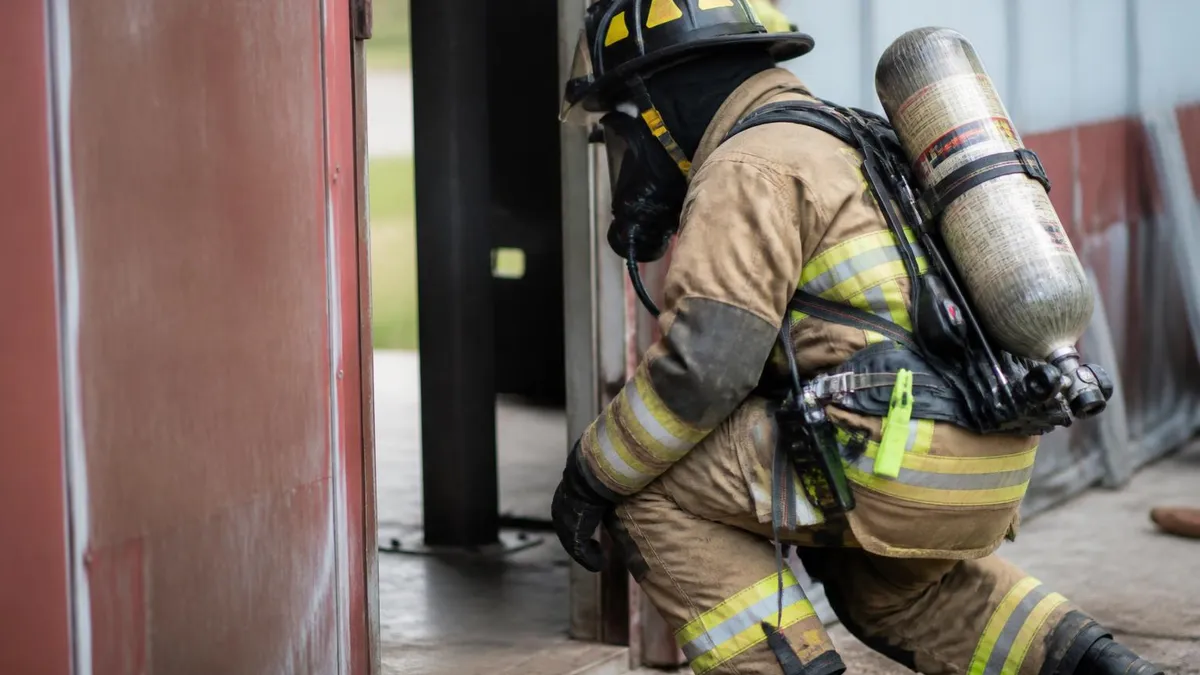
Is a Firefighter Career Worth the Effort?
- +Strong job stability with pensions and employer-paid health insurance
- +Meaningful work that directly helps your community every shift
- +Clear promotion path from firefighter to engineer, lieutenant, and captain
- +Schedules such as 24-on, 48-off leave long blocks of free time
- +Entry often requires only a diploma plus certifications, not a degree
- +Close team culture and lifelong friendships built at the station
- −Highly competitive hiring with thousands of applicants per opening
- −Physical danger from fire, collapse, smoke, crashes, and violence
- −Repeated exposure to traumatic calls can affect mental health
- −Long shifts, holidays, and nights disrupt family and sleep routines
- −Starting pay in small departments can be modest
- −Long-term health risks including cardiac events and occupational cancers
Firefighter Entry Exam Preparation Checklist
- ✓Confirm age, education, license, and residency requirements for your target department.
- ✓Take a full-length diagnostic practice test before you start studying.
- ✓Build an eight to ten week study schedule with five sessions weekly.
- ✓Drill fractions, percentages, and ratios without a calculator.
- ✓Review pulleys, gears, levers, and water pressure for mechanical questions.
- ✓Practice floor plan reading and spatial rotation under a timer.
- ✓Complete free building construction and emergency medical care quizzes.
- ✓Train four days a week with stairs, loaded carries, and grip work.
- ✓Prepare written answers for common interview and oral board questions.
- ✓Gather your ID, diploma, certifications, and references before applications open.
Your rank on the list matters more than a pass
Most departments call candidates in score order, so a 70 percent pass can leave you waiting for years. Aim for 90 or higher, and stack bonus points from veteran status, EMT certification, and Fire Fighter I training wherever they are offered.
Few questions drive more searches than firefighter salary, and the honest answer is that it varies widely. The Bureau of Labor Statistics reports a national median near $57,000, with the lowest ten percent earning under $34,000 and the top ten percent above $90,000. Location, department size, rank, overtime, and certifications all push the number up or down, so always compare the specific department you are applying to rather than relying on national averages.
To see how much firefighters make in practice, look at base pay plus extras. Many career firefighters work 24-hour shifts with 48 hours off, which produces about 2,900 scheduled hours a year and built-in overtime under federal fire-protection rules. Add holiday pay, paramedic stipends, education incentives, and specialty pay for hazmat or technical rescue, and total compensation in large departments can exceed $100,000 for experienced members.
Benefits often matter as much as the paycheck. Career firefighters commonly receive employer-paid health insurance, a defined-benefit pension, and the ability to retire in their fifties after twenty to thirty years of service. Many departments add tuition reimbursement, deferred compensation plans, and generous sick leave. When you compare an offer from a city with a lower base wage against one with a stronger pension, run the numbers over a full career.
Rank creates the next big jump. A probationary firefighter might start at $48,000, reach top firefighter pay after four or five years, then earn a promotion to engineer, lieutenant, or captain with raises of ten to fifteen percent at each step. Promotional exams are competitive, and they reward the same study habits that carried you through the entry exam, including technical reading, fire behavior, building construction, and incident command.
Wildland and volunteer roles pay differently. Federal wildland crews have received higher base pay in recent years, with many seasonal positions starting in the high teens to low twenties per hour plus hazard pay and overtime on fires, though seasons can be short. A volunteer typically earns no wage, though some departments pay per-call stipends, tuition help, or length-of-service awards. These roles make sense as stepping stones or as meaningful service alongside another career.
Cost of living deserves a place in your math. A $60,000 salary goes much further in a mid-sized Midwestern city than in the San Francisco Bay Area, where even higher base pay can feel tight. Also consider commute, housing near the station, and whether the department requires residency. Candidates sometimes test in several states, so ranking offers by take-home pay after housing costs gives a clearer picture than gross salary alone.
Treat pay as a reason to prepare more seriously, not a reason to rush. A single ranked eligibility list may open a role worth well over a million dollars in lifetime earnings and benefits. Spending two or three months on disciplined study and fitness is a small investment against that return. Candidates who view preparation as a job, with set hours each week, consistently outperform those who cram the night before.
Many departments accept applications for only one to three weeks, and late submissions are rejected without exception. Verify the dates on the official city or district website, and have your documents ready before the window opens.
A realistic firefighter entry exam article has to talk about danger. Fire, collapse, smoke, vehicle crashes, and medical calls are the hazards most recruits expect. Violence is less discussed but very real. In June 2025, two firefighters were killed and a third wounded in an ambush while responding to a wildfire near Coeur d'Alene, Idaho. Searches for idaho firefighters shot and firefighters shot in idaho reflect the public grief that followed, and the profession's shared sense of loss.
Incidents like this change training, not the calling. Departments now teach scene awareness more explicitly: approach from a safe direction, notice anything unusual, stage when police say the scene is unsecure, and never hesitate to withdraw. During an active threat or a SWAT firefight style police response, firefighters wait at a safe staging area until law enforcement declares the area secure. Retreating is not cowardice. It is protocol that protects the crew.
Entry exams reflect this priority on judgment. Situational judgment questions describe a scene with competing pressures and ask what you would do first. Strong answers put personal and crew safety ahead of property, follow the chain of command, and communicate clearly. A candidate who charges ahead heroically often scores lower than one who pauses, assesses, and calls for help. The test rewards the discipline that experienced officers want from every new member.
Behavioral health is part of readiness as well. Firefighters face repeated exposure to traumatic calls, irregular sleep, and the stress of losing colleagues. Many departments now offer peer support teams, critical incident debriefs, and confidential counseling, and the interview panel may ask how you handle stress. Honest, mature answers about leaning on family, training, exercise, and professional help show self-awareness, which departments value more than a claim of being unaffected.
For a green firefighter, the first year is where habits form. Rookies are expected to show up early, keep their gear and station spotless, ask questions, and learn every apparatus compartment. Our guide to the Firefighter 1 practical exam shows what skills evaluators watch, such as donning gear quickly and operating nozzles safely. Mastering these basics builds the trust that eventually earns more responsibility at the scene.
Health and fitness protect you long term. Cardiac events are a leading cause of on-duty deaths, which is why the medical exam checks blood pressure, cholesterol, and aerobic capacity. Build a routine that mixes cardio, strength, and mobility, and keep it for your entire career. Hydrate, sleep well, avoid tobacco, and get regular physicals. Starting those habits during exam preparation gives you a head start on the lifestyle the work demands.
Knowing the risks should not discourage you. It should make you a better candidate. Departments are looking for people who see the whole picture and still choose service. In your interview, you can speak honestly about why the work matters, what you have done to prepare, and how you will support teammates. That clear-eyed commitment, backed by solid test scores, is exactly what hiring boards hope to find.
Start with a diagnostic. Take a full-length practice test before studying anything, then sort your misses into categories: reading comprehension, math, mechanical reasoning, spatial orientation, firefighting knowledge, and situational judgment. This baseline shows where each study hour pays off most. Many candidates discover that arithmetic with fractions and percentages, not firefighting knowledge, drags down their score, which is easy to fix with focused practice and a little patience.
Build a weekly schedule you can keep. Eight to ten weeks is typical, with five study sessions of 45 to 60 minutes each week. Rotate topics so nothing fades, and end each session by re-answering the questions you missed. Free quizzes on building construction and emergency medical care are a smart addition, because many tests include questions on construction types, collapse hazards, patient assessment, and basic life support.
Practice under realistic conditions. Time yourself, sit at a desk, silence your phone, and use only the calculator or scratch paper permitted at the real test. Speed matters because most exams give roughly one minute per question. Learn to skip a hard item, mark it, and return later. Candidates who spend three minutes on one puzzle often lose five easier points, which can drop them dozens of places on the eligibility list.
Train the body alongside the mind. Four days a week, combine stair climbing with a weighted pack, farmer carries, sled drags, dummy drags, and grip work. Practice ladder raises, hose pulls, and ceiling-pull simulations if a local gym or fire academy offers CPAT prep days. The CPAT guide on this site covers each event in detail. Rest days matter too, because fatigue and overuse injuries are the most common reasons candidates miss test day.
Prepare your paperwork and story early. Gather your diploma, driver's license, certifications, discharge papers, and references before applications open, since deadlines can be brief. Write short answers about why you want this career, a time you worked on a team, and a mistake you learned from. Practice aloud, preferably with a friend or mentor, until your answers sound natural, specific, and honest instead of memorized.
Protect your record. Departments check social media, driving history, financial issues, prior employment, and references. Clean up public posts, resolve outstanding tickets, and be candid about anything on your record, because a past mistake you explain is far less damaging than one you hide. If you have used certain substances, learn the department's lookback policy ahead of time and follow it carefully when you answer every question.
On test day, sleep well, eat a balanced breakfast, arrive early, and bring valid ID and required forms. Read each question fully, eliminate wrong answers, and keep an eye on the clock. Afterward, send a short thank-you if an interview followed, and stay ready for the next stage. If you miss the cutoff, request your score report, analyze the gaps, and test again with another department. Persistence is itself a hiring signal.
Firefighter Questions and Answers

Firefighter Interview Questions: Complete Prep Guide 2026

Firefighter CPAT Test: Complete Guide to Passing the Candidate Physical Ability Test

Firefighter Skills: Complete Guide to Core Competencies, Training & Career Success

Firefighter 1 Practical Exam: Stations, Scoring, Pay and Prep Guide
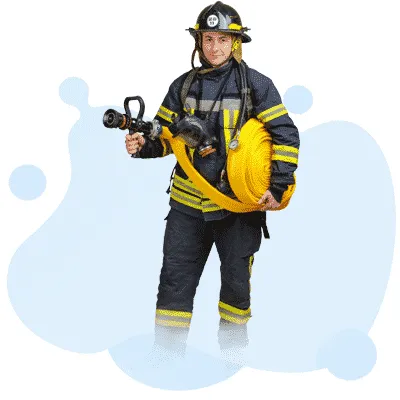
What is the Firefighter Exam?
About the Author
Emergency Manager & FEMA Certification Specialist
Naval Postgraduate SchoolCommander Lisa Foster holds a Master of Science in Emergency Management from the Naval Postgraduate School and is a FEMA-certified emergency manager and Certified Emergency Manager (CEM). With 18 years of emergency response coordination experience across federal and state agencies, she coaches emergency management professionals through ICS, NIMS, and FEMA Independent Study certification programs.
Join the Discussion
Connect with other students preparing for this exam. Share tips, ask questions, and get advice from people who have been there.
View discussion (6 replies)