
Firefighter 1 Practical Exam: Stations, Scoring, Pay and Prep Guide 2026 October
🎯 Firefighter 1 practical exam guide: skill stations, scoring, timing, pay and how to prepare, with free practice questions for US candidates.
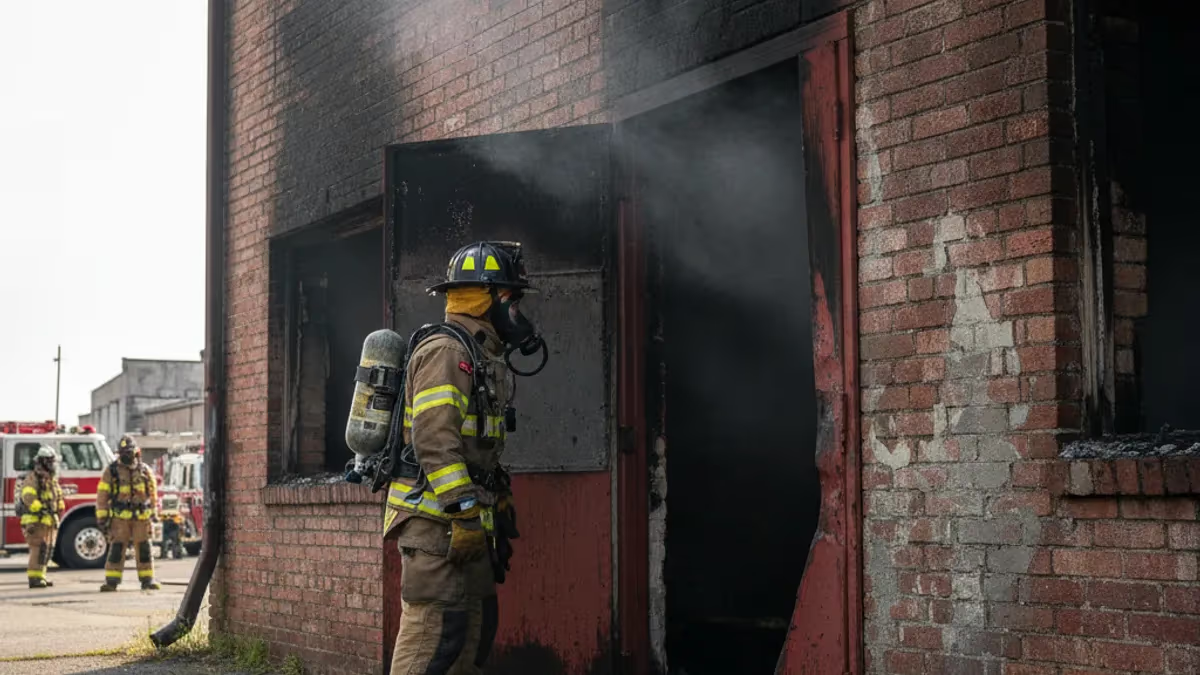
The firefighter 1 practical exam is the hands-on half of certification, and it is where many recruits learn whether weeks of classroom study translate into smooth, safe, timed performance. Unlike a written test, you cannot guess your way through a ladder raise or an SCBA emergency. Evaluators watch every step, from how you lift to whether you communicate. This guide explains what the exam covers, how it is scored, and how to prepare.
Searches around firefighting are broad. Some readers arrive after news such as the Idaho firefighters shot story from 2025, a tragedy in which crews responding to a wildfire near Coeur d'Alene were ambushed and which reminded everyone of the risks firefighters accept. Others are chasing a firefighter salary number or a SWAT firefight headline that has nothing to do with the fire service. Whatever brought you here, this page is about passing the Firefighter I skills evaluation.
If you are still at the very beginning, start with our walkthrough on how to become a firefighter, which covers applications, interviews, and academy selection. This article picks up later, once you are enrolled in a Firefighter I course or preparing for a state or agency skills test. Most programs follow NFPA 1001, the national professional qualifications standard, and certifying bodies build their skill sheets around it.
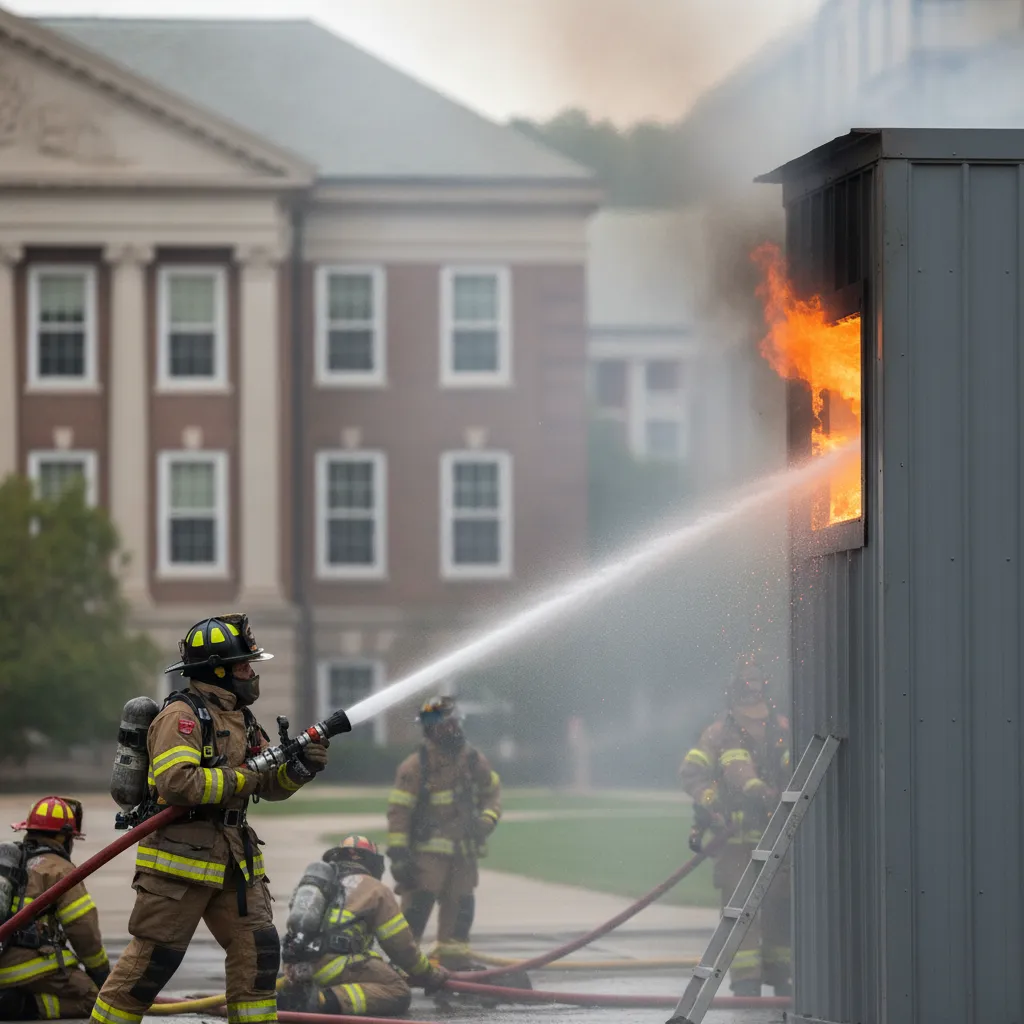
Expect the practical exam to be a series of stations. At each one, an evaluator reads from a skill sheet listing the required steps, a time limit when one applies, and the critical failure points. You might don full protective gear, advance a charged hose line, throw a ladder, force a door, search a room, ventilate, tie knots, and operate an extinguisher. Each station is usually scored pass or fail, with a limited number of retests allowed.
Candidates often underestimate how much of the grade is process rather than speed. Evaluators want to see safe lifting mechanics, correct personal protective equipment, clear verbal communication, and awareness of hazards. A fast ladder raise that ignores an overhead power line fails, while a slightly slower, textbook raise passes. Think of the exam as a demonstration that you can be trusted on a real fireground without constant correction from a company officer.
Preparation has three parts: knowing the skill sheets cold, building the physical capacity to repeat each task under fatigue, and managing nerves. You can sharpen your knowledge with free practice questions on topics like building construction and emergency medical care, because the written and practical components reinforce each other. Physical capacity comes from steady conditioning. Nerves improve only with repetition, so practice every evolution until the sequence runs without conscious thought.
The sections below walk through the exam-day flow, typical stations, pay prospects, the pros and cons of the path, a prep checklist, and final-week advice. Pay close attention to the failure points listed for each skill, since those cause more retests than any other factor. Rules differ by state and agency, so confirm details with your academy, training officer, or certifying body before test day, and treat this guide as a framework rather than a rulebook.
Firefighter 1 Practical Exam by the Numbers
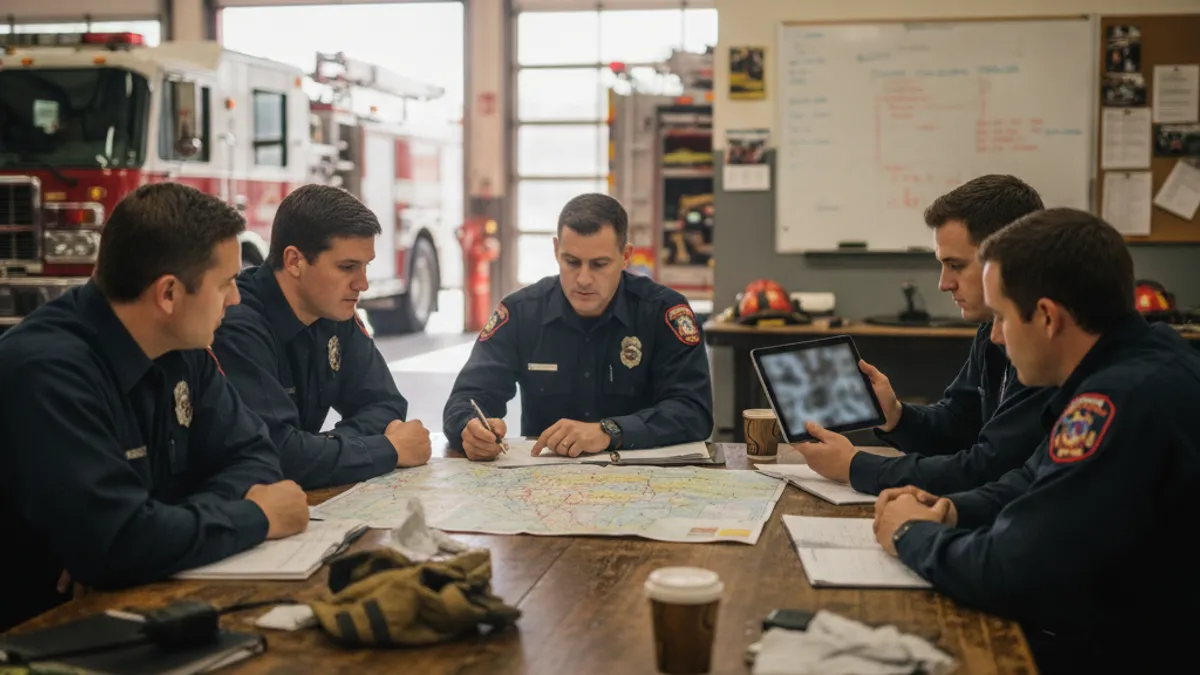
Firefighter 1 Practical Exam Day: Step by Step
Check-In and Orientation
Gear Inspection and PPE
Rotating Skill Stations
Scoring and Debrief
Retest or Certification
Most Firefighter I practical exams are built from individual skill sheets rather than a single continuous scenario. Each sheet lists the steps in order, and the evaluator marks whether you completed them correctly. Some steps carry time limits, such as donning protective clothing and SCBA, while others are judged on technique alone. Because the sheets are public in many states, there is no excuse for being surprised. Print them, read them aloud, and rehearse in sequence.
Scoring is typically binary at the skill level. You either meet every required step and avoid every critical failure, or you do not pass that skill. Critical failures usually involve safety: breaking the facepiece seal, ignoring a hazard, dropping a ladder, or using unsafe lifting technique. Minor sequence errors may be tolerated on some sheets, but you should never count on leniency. Aim to perform every step exactly as written.
Retest rules differ widely, so ask early. Some programs allow one retest per failed skill on the same day, others require a separate session weeks later, and a few require remedial training before another attempt. Failing the same skill twice often triggers a formal review. Know your limit before test day, because it changes how aggressively you should push for speed. A calm, correct performance beats a rushed one that risks a critical failure.
Many candidates come to the academy after serving as a volunteer firefighter, and that background helps but does not replace the formal sheets. Volunteer departments sometimes teach shortcuts that work locally yet fail a standards-based evaluation. If you have field experience, spend extra time unlearning habits that differ from the skill sheet. Evaluators grade against the written procedure, not against what has worked for you on past calls.
Evaluator behavior is another variable worth understanding. Most are experienced instructors who want you to succeed, but they are not allowed to coach during a graded evolution. Expect silence, a stopwatch, and a clipboard. Do not interpret quiet as disapproval. If you are unsure whether you completed a step, repeat it cleanly and say what you are doing. Verbalizing actions often reassures evaluators and helps you keep your own sequence straight under pressure.
A green firefighter, meaning a rookie or probationary member, is judged just as strictly as a veteran on these sheets, and that is intentional. The goal is a consistent baseline across every department that accepts the certification. Treat the exam as a chance to build habits you will use for decades. Candidates who prepare only to pass tend to forget the skills within months, while those who prepare to be competent keep them.
Documentation matters too. Keep copies of your skill sheets, your signed evaluations, and your course completion records. Departments hiring from the certified pool often ask for proof of Firefighter I and sometimes Hazmat Awareness and Operations. If a clerical error delays your certificate, those records speed up the fix. Scan everything, store it in two places, and update it each time you add a certification, whether structural, wildland, or EMS-related.
Firefighter 1 Practical Exam Core Skills Breakdown
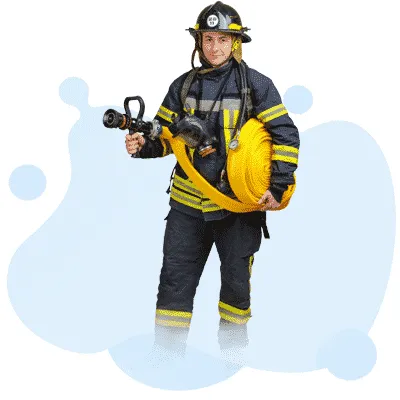
Donning protective clothing and SCBA is usually the first timed skill, and it sets the tone for the day. Evaluators check that the hood covers all exposed skin, the coat closure is complete, and the helmet strap is secure. For SCBA, you must open the cylinder, check pressure, and confirm the low-air alarm works. Lay gear out in the same order every time so your hands know the sequence.
The facepiece seal is the most common critical failure. A beard, a pulled hood, or a misrouted strap can break it. Practice donning until you can do it without looking, then practice again while tired. Many candidates also face an emergency air or mask-off scenario, where calm breathing and clear communication matter more than speed. Know your department's procedure for a low-air emergency.
Is the Firefighter 1 Path Worth It?
- +Certification is recognized by many departments across the country
- +Skills transfer to structural, wildland, and industrial fire brigades
- +Stable public-sector jobs often include pensions and health benefits
- +Hands-on training builds confidence you will use on every call
- +Career ladders lead to driver, officer, inspector, and instructor roles
- +Meaningful work with a strong sense of team and community
- −Hiring is competitive, and many departments list long waiting lists
- −Academy training is physically and mentally demanding
- −Shift work includes nights, weekends, and holidays
- −Exposure to trauma and hazardous conditions is part of the job
- −Pay and benefits vary sharply between departments and regions
- −Failing a critical skill can delay certification by weeks or months
Firefighter 1 Practical Exam Prep Checklist
- ✓Download and read every skill sheet for your certifying body.
- ✓Mark each critical failure point in highlighter.
- ✓Practice donning PPE and SCBA until the sequence is automatic.
- ✓Rehearse every evolution with a partner and a stopwatch.
- ✓Say each step aloud while you practice to build verbal habits.
- ✓Inspect your gear for fit, wear, and missing components.
- ✓Train grip, legs, and core with loaded carries and stair work.
- ✓Review hose, ladder, and forcible entry safety rules the night before.
- ✓Sleep at least seven hours and eat a real breakfast on exam day.
- ✓Arrive early, hydrate, and write down evaluator feedback afterward.
Verbalize every safety check
Evaluators cannot read your mind. When you check overhead lines, confirm a seal, or verify a ladder angle, say it out loud in a calm voice. Candidates who narrate their safety checks often avoid critical failures that silent candidates receive for the same actions.
Passing the practical exam opens the door to paid work, so it helps to understand the money. Candidates constantly ask about firefighter salary and how much do firefighters make, and the honest answer is that it depends on location, department type, rank, and overtime. The Bureau of Labor Statistics reports a national median in the high $50,000s, but entry pay in a small rural department may sit well below that, while large metro departments can exceed it.
Overtime changes the picture significantly. Many career firefighters work 24-hour shifts with scheduled days off, and mandatory or voluntary overtime can add thousands of dollars per year. Holiday pay, specialty pay for paramedic or hazmat certification, and educational incentives also raise totals. When comparing offers, look at total compensation, including pension contributions, health coverage, take-home vehicles, and retiree benefits, rather than just base salary posted on a job listing.
Volunteer and paid-on-call roles pay little or nothing, though some departments provide stipends, tuition help, or property tax breaks. A volunteer position can still be strategic, because it gives you real call experience and references for career applications. Many career firefighters started in volunteer service. If you take that route, protect your time and health, and make sure your department provides proper training and equipment so that the experience actually moves you toward certification.
Wildland firefighting is its own pathway with different pay rules. A wildland firefighter working for a federal agency or state forestry service typically starts as seasonal staff, earning hourly wages with significant overtime and hazard pay during active fire seasons. Seasonal work can be lucrative in a busy summer but offers fewer benefits than a permanent structural job. Many people use wildland seasons to gain experience and then transition into year-round municipal roles.
Your Firefighter I certification matters for each of these routes, even though some wildland agencies use their own qualification systems. Employers see it as proof that you can safely operate on a fireground and follow a standard. Pairing it with EMT or paramedic training makes you much more competitive, since most calls in modern departments are medical. Candidates holding both certifications often advance to interviews faster than those holding only one.
Regional differences are large. Cost of living in coastal metro areas pushes salaries up, but housing costs absorb much of the difference. Smaller departments in lower-cost regions may offer a better ratio of pay to expenses and quicker promotion opportunities because fewer people compete for each slot. Research local salary schedules, which are usually public, and compare them across departments within commuting distance before you commit to an academy or application.
Finally, think long term. Promotions to driver, lieutenant, captain, and chief come with higher pay and more administrative duty. Many departments reward education with incentive pay for associate or bachelor's degrees in fire science or related fields. Fire inspector, investigator, and training officer roles offer alternatives to shift work. The practical exam is just the first gate, but passing it cleanly gives you a credential that supports decades of career growth.
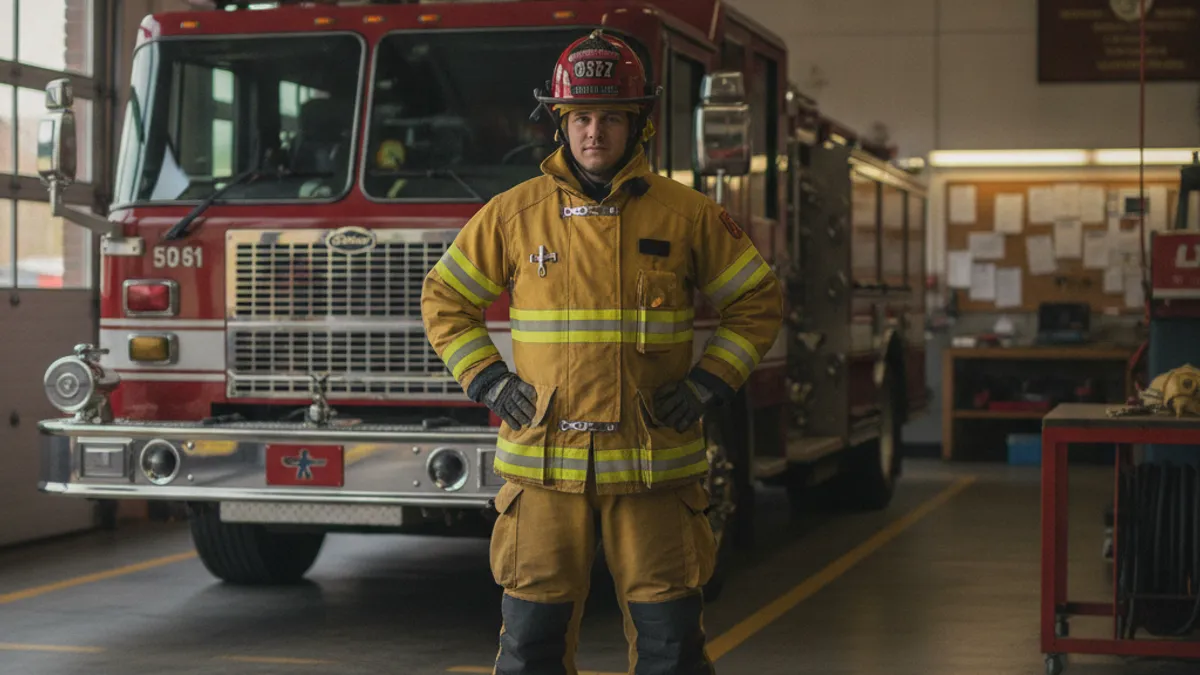
Skill sheets, time limits, retest policies, and fees differ between state fire marshals, IFSAC, Pro Board, and individual academies. Always confirm requirements with your own program before test day, and do not rely on a friend's experience from another state.
Physical readiness is the foundation of every skill on the exam. Many departments also require the Candidate Physical Ability Test, which is separate from Firefighter I but builds the same capacities. Our guide to the CPAT explains the events in detail. Even coverage like the idaho firefighter shooting reports, which highlight how unpredictable the job can be, reminds candidates that fitness and situational awareness are part of the profession, not optional extras.
Build your conditioning around the movements you will actually perform. Hose drags, stair climbs with weight, dummy drags, ladder carries, and overhead lifts are more useful than generic gym routines. Train three or four days per week with at least one session dedicated to loaded carries and one to cardiovascular work at moderate intensity. Add mobility work for shoulders and hips, since restricted movement leads to poor technique and injuries during practical stations.
Pacing matters on exam day. The practical often runs for several hours, and fatigue accumulates. Candidates who sprint through early stations may have shaking arms by the time they reach forcible entry or ladder work. Aim for controlled, efficient movement at every station. Drink water between evolutions, breathe steadily, and use any rest time to reset your grip and posture. Consistency across all stations earns more points than a perfect first half and a poor second.
Safety culture is part of the evaluation, even when it is not written as a separate step. Evaluators notice whether you lift with your legs, keep your head up, maintain three points of contact on ladders, and use your partner for heavy items. They also notice how you respond to mistakes. If you realize you skipped a step, stop, correct it, and continue calmly. Hiding an error is worse than fixing it openly.
Mental readiness deserves equal attention. Fire service work involves stress, fear, and quick decisions, and the practical exam is your first controlled exposure. Use visualization the night before: mentally walk through each station, imagine the commands, and picture a calm finish. Breathing techniques such as slow four-count inhalations can lower heart rate before a timed evolution. If anxiety is severe, talk with your instructor early rather than waiting until a failed attempt.
Injury prevention is the final piece. Warm up before any practice session, cool down afterward, and listen to pain signals instead of pushing through them. Sprains and shoulder strains are common among recruits who add volume too fast. If you are recovering from an injury, get medical clearance and tell your instructors. A short delay to heal is far better than aggravating an injury before a certification test or, worse, early in your career.
Gear familiarity also affects physical performance. New boots that rub, gloves that are too bulky, or a helmet that shifts can slow you down and cause frustration. Break in equipment early and make adjustments well before exam day. If your academy supplies loaner gear, practice in that exact gear whenever possible. Small comfort issues become big distractions under pressure, so eliminate them in advance and keep your focus on technique.
In the final week, stop learning new techniques and start polishing. Run through every skill sheet at least twice, with a partner acting as evaluator and reading steps aloud. Have them mark deviations strictly, because a friendly partner who ignores mistakes does you no favors. Record a few evolutions on video if allowed, and watch for small errors like foot placement, hand position, or skipped verbal commands that you cannot see while performing.
Plan logistics ahead of time. Confirm the test location, start time, parking, and what gear you must bring. Pack your PPE, water, snacks, a copy of your identification, and a notebook. Lay out clothing the night before, including base layers appropriate for the weather. Arriving rushed raises your heart rate before you touch any equipment. Aim to be early enough to walk the site, locate restrooms, and settle your nerves.
Nutrition and sleep are underrated performance tools. Eat a balanced meal the night before with carbohydrates and protein, and avoid heavy, greasy foods. On exam morning, have a moderate breakfast and drink water steadily, not all at once. Skip excessive caffeine, which can raise anxiety and shake your hands. Aim for seven to nine hours of sleep for the three nights leading up to the test, not just the last one.
During the exam, focus on one station at a time. Do not replay a previous mistake while you are working on the next skill. If you stumble, acknowledge it, correct it if the rules allow, and move on. Listen carefully to the evaluator's instructions, repeat commands back when required, and ask clarifying questions before the clock starts rather than after. Treat evaluators with respect, since they are future colleagues and often references.
After the exam, review your results honestly. If you passed, thank your instructors and update your resume with the certification date and issuing body. If you failed a skill, request specific feedback and build a short, targeted practice plan. Most retest failures come from the same one or two habits, such as rushing a seal check or skipping a verbal command. Fixing those habits is usually faster than candidates expect.
Keep learning after certification. Pair your skills with EMT training, hazmat operations, driver/operator courses, or wildland qualifications to broaden your options. Study building construction, fire behavior, and medical care regularly using free practice questions so that knowledge stays fresh. Departments value members who treat training as a career-long habit rather than a box to check once. That mindset is what turns a certificate into long-term credibility.
Finally, remember why you are doing this. The work is demanding, and the exam is meant to be. Every drill, every early morning, and every repeated sequence prepares you to protect strangers on their worst day. Stay humble, respect your instructors, support your classmates, and keep your standards high. If you prepare with discipline and treat the practical as the start of a professional habit, you will walk out ready for the fireground.
Firefighter Questions and Answers


About the Author
Emergency Manager & FEMA Certification Specialist
Naval Postgraduate SchoolCommander Lisa Foster holds a Master of Science in Emergency Management from the Naval Postgraduate School and is a FEMA-certified emergency manager and Certified Emergency Manager (CEM). With 18 years of emergency response coordination experience across federal and state agencies, she coaches emergency management professionals through ICS, NIMS, and FEMA Independent Study certification programs.
Join the Discussion
Connect with other students preparing for this exam. Share tips, ask questions, and get advice from people who have been there.
View discussion (6 replies)