
FDNY Requirements: Complete Guide to Becoming a New York City Firefighter
Learn all FDNY requirements to become a NYC firefighter — 📝 age, education, physical fitness, exam, and hiring process explained step by step.

Understanding the FDNY requirements is the first and most important step toward joining one of the most respected fire departments in the world. The Fire Department of the City of New York protects more than 8.3 million residents across five boroughs, and the standards set for entry reflect the immense responsibility that comes with the badge. Candidates must meet a combination of age, education, physical, and character requirements before they can even sit for the written exam.
The FDNY competitive civil service exam, known as the Firefighter Exam, is administered periodically by the New York City Department of Citywide Administrative Services. The exam filing period typically opens every few years, and candidates who miss it must wait for the next cycle. This makes preparation critical — there are no second chances if you are not ready when the exam window opens. Understanding all fdny requirements well in advance gives you a significant edge over unprepared applicants.
One of the most frequently overlooked aspects of the application process is the sheer number of stages involved. Unlike many government jobs that hire after a single test, the FDNY hiring process includes a written exam, a Candidate Physical Ability Test (CPAT), a medical evaluation, a psychological evaluation, and a thorough background investigation. Each stage is a filter, and failing any one of them removes you from the candidate list entirely, regardless of how well you performed at earlier stages.
Candidates must be at least 17 years and 6 months old to file for the exam, but they cannot be appointed to the Fire Academy until they are at least 21 years old. There is also an upper age limit: candidates must be under 29 years of age at the time of appointment, though certain military veterans may receive age waivers. These age windows create a narrow corridor that demands strategic planning, particularly for candidates who are on the younger end of the eligible range.
Education requirements mandate that candidates hold a high school diploma or a General Educational Development (GED) equivalency certificate. While some municipal fire departments require college coursework, the FDNY currently maintains the high school diploma standard, making the department accessible to a broad range of qualified New Yorkers. However, candidates with emergency medical technician (EMT) certification or prior firefighting experience often have a meaningful advantage during the academy training phase.
The written exam tests cognitive abilities including reading comprehension, logical reasoning, spatial orientation, and memory — not fire science knowledge. This surprises many candidates who expect the test to cover firefighting techniques. The exam is designed to assess whether a candidate has the mental aptitude to learn and apply the complex information taught at the Fire Academy. Scoring in the top percentile is essential because appointments are made in rank order from the eligibility list.
Beyond the formal requirements, the FDNY looks for candidates who demonstrate integrity, community commitment, and the emotional resilience needed to work in high-stress, life-or-death situations. The background investigation reviews criminal history, financial responsibility, prior drug use, and truthfulness throughout the application process. Dishonesty on any form — even a minor omission — is grounds for immediate disqualification, a standard that underscores the department's emphasis on character as much as capability.
FDNY by the Numbers

Core FDNY Eligibility Requirements
Candidates must be at least 17 years and 6 months old to file for the exam. Appointment to the Fire Academy requires being at least 21 and under 29 years old. Military veterans may qualify for an age waiver extending this limit.
A high school diploma or GED equivalency is required. Candidates with an associate's or bachelor's degree, EMT certification, or prior emergency services experience often have an advantage during academy training and unit assignments.
Candidates must be United States citizens or permanent resident aliens authorized to work in the US. There is no boroughresidency requirement to apply, but NYC residency can affect appointment priority in certain civil service scenarios.
A thorough background investigation covers criminal history, credit, prior drug use, employment record, and all information submitted on application forms. Felony convictions typically disqualify candidates, and dishonesty at any stage results in immediate removal.
Candidates must possess a valid New York State driver's license by the time of appointment. A clean driving record is strongly preferred, and certain serious traffic violations can impact the character review stage of the process.
The physical demands of firefighting are extraordinary, and the FDNY's standards for physical fitness reflect the realities of the job. Firefighters regularly carry 50 to 75 pounds of equipment up multiple flights of stairs, operate heavy tools in zero-visibility environments, and perform sustained aerobic work for extended periods during active fires. The Candidate Physical Ability Test, universally known as the CPAT, is the standardized tool used to assess whether applicants can meet these baseline physical demands before they enter the Fire Academy.
The CPAT consists of eight timed events performed sequentially while wearing a 50-pound vest that simulates the weight of firefighting gear. The eight events are: stair climb, hose drag, equipment carry, ladder raise and extension, forcible entry, search, rescue, and ceiling breach and pull. Candidates must complete the entire course in 10 minutes and 20 seconds or less. There is no partial credit — missing the cutoff time by even one second results in a failing score, and the candidate must reapply for the next test cycle.
Physical preparation for the CPAT should begin months before the test date. Most fitness experts recommend a minimum of 12 to 16 weeks of structured training that combines cardiovascular conditioning, strength training, and job-specific movements. Stair climbing with weight is particularly important because the first event sets the tone for the entire test, and fatigue accumulated on the stair climb affects performance on every subsequent station. Candidates who underestimate this event frequently fail even when they are otherwise physically capable.
The medical examination follows successful completion of the CPAT and written exam. The FDNY's medical standards are governed by department guidelines and New York State civil service law. The exam covers cardiovascular health, pulmonary function, vision, hearing, musculoskeletal integrity, and neurological status. Candidates with certain pre-existing conditions may be disqualified, though the department evaluates each case individually based on the nature and severity of the condition and its potential impact on duty performance.
Vision requirements specify correctable visual acuity of at least 20/30 in each eye, with normal color vision required to distinguish warning signals, hose colors, and gas indicator readings. Hearing standards require candidates to detect tones within specified frequency ranges without hearing aids. These sensory requirements are non-negotiable because both vision and hearing are essential to safe fire ground operations, navigation in smoke-filled structures, and radio communication with incident command.
Drug testing is conducted at the medical evaluation stage, and a positive result for any controlled substance — including marijuana, regardless of New York State's recreational legalization — disqualifies a candidate. The FDNY operates under federal workplace safety standards and its own departmental drug-free policy. Candidates who have used marijuana in the past should be aware that the background investigation may also ask about prior drug use, and truthful disclosure is evaluated alongside the test result itself.
The psychological evaluation assesses emotional stability, stress tolerance, judgment under pressure, and suitability for a career involving repeated exposure to trauma, death, and catastrophic events. Licensed psychologists conduct structured interviews and may administer standardized psychological assessments. The evaluation is not designed to screen for perfection — it screens for the presence of serious psychological conditions that would impair safe and effective duty performance under the extreme conditions firefighters routinely face.
FDNY Written Exam, CPAT, and Academy: What to Expect
The FDNY written exam is a civil service examination administered by the NYC Department of Citywide Administrative Services (DCAS). It measures cognitive aptitude through sections on reading comprehension, logical reasoning, spatial orientation, and memorization of diagrams and passages. The exam does not test firefighting knowledge directly — it tests the mental tools needed to absorb and apply that knowledge during academy training. Scoring is competitive, and only candidates who score at or near the top of the eligibility list receive appointment offers within a reasonable timeframe.
Preparation strategies that work include timed practice exams, spatial reasoning drills, and memory exercises using maps and building schematics. Many candidates purchase official NYC civil service study guides or enroll in FDNY-specific prep courses offered by community organizations. The exam is offered at a set location on a specific date — arriving late means forfeiting your opportunity. Bring required identification and your exam number, and budget extra time for security screening at the test site.

Pros and Cons of Pursuing an FDNY Career
- +Exceptional job security as a unionized NYC civil service position with strong employment protections
- +Competitive salary that reaches over $103,000 after five years, plus overtime opportunities
- +Comprehensive health insurance and dental coverage for firefighters and their families
- +Pension plan with defined benefits allowing retirement after 22 years of service
- +Deep sense of purpose and community impact serving New York City's 8.3 million residents
- +Strong camaraderie and brotherhood within firehouses and across the department
- −Highly competitive application process with thousands of applicants for limited openings each cycle
- −Strict age window of 21 to 29 at appointment requires careful timing of your application strategy
- −Physically demanding career with elevated long-term injury and occupational illness risks
- −Shift work requires working nights, weekends, and holidays on a rotating 24-hour schedule
- −Exposure to traumatic incidents creates significant mental health challenges over a career
- −The multi-year hiring process from exam to appointment can span three to five years or longer
Pros and Cons at a Glance
| Pros | Cons |
|---|---|
| Exceptional job security as a unionized NYC civil service position with strong employment protections | Highly competitive application process with thousands of applicants for limited openings each cycle |
| Comprehensive health insurance and dental coverage for firefighters and their families | Physically demanding career with elevated long-term injury and occupational illness risks |
| Strong camaraderie and brotherhood within firehouses and across the department | Exposure to traumatic incidents creates significant mental health challenges over a career |
FDNY Application Process Checklist
- ✓Monitor the NYC DCAS website for the official announcement of the Firefighter Exam filing period.
- ✓File your application and pay the exam fee during the open filing window — late submissions are not accepted.
- ✓Begin CPAT-specific physical training at least 12 weeks before your scheduled test date.
- ✓Gather required documents: birth certificate, high school diploma or GED, driver's license, and military discharge papers if applicable.
- ✓Register for and attend the CPAT orientation session offered by the FDNY prior to the official test.
- ✓Study for the written exam using NYC civil service prep materials focusing on reading, logic, and spatial reasoning.
- ✓Pass the written exam and retain your official score letter for the eligibility list confirmation.
- ✓Complete the CPAT within the required 10 minutes and 20 seconds wearing the 50-pound weighted vest.
- ✓Undergo the FDNY medical evaluation including vision, hearing, pulmonary, cardiovascular, and drug screening.
- ✓Complete the psychological evaluation conducted by a licensed FDNY-approved psychologist.
Score Rank Determines Appointment — Not Just Passing
Passing the FDNY written exam does not guarantee an appointment offer. Candidates are placed on an eligibility list ranked by exam score, and appointments are made in strict rank order. A score that barely passes may leave you ranked so low that the list expires before your number is reached. Aim for the highest possible score, not just a passing grade, to maximize your chances of actually being called.
The FDNY Fire Academy on Randall's Island is where the real transformation from civilian to firefighter begins. The 18-week probationary training program is one of the most comprehensive fire service education programs in the United States, combining classroom instruction, skills training, and live fire exercises into a demanding daily curriculum. Probationary firefighters, called probies, arrive each morning in uniform and are expected to perform at high standards from day one. The academy experience is deliberately designed to be challenging because the streets and firehouses of New York City demand nothing less.
Academic coursework at the academy covers a wide range of subjects essential to urban firefighting. Building construction is one of the most critical subjects, as New York City's building stock spans more than two centuries and includes dozens of construction types, each with unique fire behavior characteristics and collapse risks. Understanding whether a building uses ordinary construction, heavy timber, or noncombustible steel framing is not an academic exercise — it is the information that determines where firefighters position themselves and when they must evacuate a structure during operations.
Hose operations training teaches probies how to advance attack lines, control nozzle pressures, and apply water effectively in confined and smoke-filled spaces. Ladder operations cover placement, climbing techniques, aerial device operation, and the use of ground ladders for rescue and ventilation. Both hose and ladder skills require significant repetition to become automatic, which is why the academy devotes substantial training hours to hands-on practice under the supervision of experienced FDNY instructors who have managed real emergencies across the city's five boroughs.
Search and rescue training prepares probies for one of the most dangerous tasks in firefighting: locating and removing civilian victims from burning structures with limited or zero visibility. Trainees learn to navigate dark, smoke-filled rooms by feel, maintain orientation using wall-following techniques, and communicate position to their partner and command. The FDNY's thermal imaging camera training complements these skills, though probies are taught never to rely solely on technology in environments where equipment can fail or become damaged during fire ground operations.
Hazardous materials awareness training is mandatory for all probationary firefighters because FDNY units respond to a wide variety of hazmat incidents in addition to structure fires. New York City's dense infrastructure includes fuel storage facilities, chemical manufacturing operations, port terminals, and an extensive subway system that transports hazardous cargo. Probies learn to recognize hazmat indicators, establish hot and warm zones, request specialized FDNY hazmat units, and protect themselves during the initial response phase before technical specialists arrive on scene.
Emergency medical training at the academy prepares all probationary firefighters to function at a minimum of first responder level, with many candidates arriving with or obtaining EMT certification during the process. The FDNY operates a dual role — structural firefighting and emergency medical response — across most of its engine and ladder companies. In a city where medical emergencies vastly outnumber structure fires, the EMS component of a firefighter's role is not secondary; it is an equally essential part of daily operations throughout every borough.
Upon academy graduation, probies are assigned to firehouses based on department needs and begin a one-year probationary period working alongside veteran firefighters. During this probationary year, they are evaluated continuously on their technical skills, physical fitness, attitude, and ability to function as part of a team under pressure. Probationary firefighters who demonstrate the skills and character expected by the department earn full firefighter status and begin building seniority toward future promotions, specialty assignments, and leadership roles within the FDNY's organizational structure.

The FDNY appointment age limit of 29 years old is strictly enforced by New York City civil service law. If the eligibility list expires before your number is reached and you have passed your 29th birthday, you cannot be appointed regardless of your exam score. Candidates in their mid-to-late twenties should carefully assess the current list timeline and consult with DCAS to understand realistic appointment probabilities before the age cutoff applies.
FDNY salary and benefits represent one of the most comprehensive compensation packages available to uniformed civil service employees in New York City. Entry-level firefighters begin at a base salary of approximately $45,000 during academy training, which increases significantly upon graduation and continues to rise through a structured step schedule. After five years of service, firefighters reach the top base salary of approximately $103,000 annually, not including overtime, differentials, and additional compensation for specialty assignments or promotional ranks.
Overtime is a significant component of total FDNY compensation. New York City's 911 call volume, staffing requirements, and the 24-hour nature of emergency services mean that overtime opportunities arise consistently throughout a firefighter's career. Many experienced firefighters earn total annual compensation well in excess of their base salary, with some positions in specialized units or supervisory ranks generating additional income through assignment pay and differential schedules negotiated by the Uniformed Firefighters Association (UFA), the union that represents FDNY firefighters.
Health benefits through the NYC employee health plan cover medical, dental, and vision care for firefighters and their eligible dependents. The coverage options available through the city's health insurance program are extensive, and the department's contribution to premiums reduces the out-of-pocket cost for firefighters significantly compared to private sector equivalents. For a family with two adults and children, the value of FDNY health coverage represents a substantial component of the total compensation package beyond the base salary figures.
The FDNY pension plan, administered through the New York City Fire Pension Fund, allows firefighters to retire with a defined benefit pension after 22 years of service. At retirement, firefighters who meet the years-of-service threshold receive a percentage of their final average salary for life, providing financial security through retirement regardless of stock market performance or investment decisions. This defined benefit structure is increasingly rare in both the private sector and in many municipal governments, making the FDNY pension a particularly valuable long-term benefit.
Line-of-duty death benefits provide financial protection for the families of firefighters who die in the performance of their duties. These benefits include a lump-sum payment, continuation of health coverage for survivors, and pension survivor benefits that ensure the firefighter's family is not left without income. The FDNY and the UFA have historically advocated for strong survivor benefits in recognition of the genuine life-safety risks that firefighters accept as part of their profession serving New York City's communities.
Promotional opportunities within the FDNY follow a structured civil service promotional exam system. Firefighters can take the Lieutenant exam after four years of service, and successful candidates are promoted based on exam rank combined with seniority. Further promotions to Captain, Battalion Chief, Deputy Chief, and ultimately Chief of Department are available through additional promotional exams and appointment processes. Each rank carries increased responsibility, authority, and compensation, providing a clear career ladder for ambitious firefighters who wish to move into leadership positions within the department.
In addition to traditional compensation and benefits, FDNY firefighters have access to department-sponsored training programs, specialty unit assignments including hazmat, technical rescue, marine operations, and air mask units, and educational assistance programs that support continuing education and professional development. The combination of financial security, meaningful work, career advancement opportunities, and the profound sense of serving the public makes the FDNY one of the most sought-after employers in New York City, with demand for positions consistently exceeding the number of available openings in each hiring cycle.
Preparing effectively for the FDNY written exam requires a strategic approach that begins well before the filing window opens. The most successful candidates treat the exam preparation process the same way they treat physical training — with structure, consistency, and measurable goals. Purchasing or borrowing official NYC civil service study guides is the logical starting point, followed by identifying your weakest areas through diagnostic practice tests and concentrating your study time on those specific cognitive domains rather than reviewing material you already handle comfortably.
Reading comprehension preparation should focus on practice with technical and procedural texts — the type of material that appears on civil service exams — rather than narrative fiction or general news articles. Government reports, operational procedures, and instructional manuals are ideal practice material because they mirror the style and density of the passages you will encounter on exam day. Time yourself as you read and answer questions, because the exam is administered under strict time constraints and slow readers frequently struggle to complete all sections.
Spatial orientation is one of the most challenging sections for many candidates, particularly those who have not recently worked in environments requiring map reading or three-dimensional navigation. Practicing with building floor plans, isometric diagrams, and compass-based navigation problems significantly improves spatial reasoning performance. Free resources are available online, and several test preparation books include substantial spatial orientation drill sections specifically designed around the format used in New York City civil service firefighter examinations.
Memory and observation exercises prepare candidates for the exam sections that require them to study a diagram or passage for a limited time and then answer questions from memory after the material is removed. These sections test the same cognitive skills used by firefighters who must memorize the layout of a building during a pre-incident survey and recall that information accurately during an active fire. Daily practice with memory games, map memorization exercises, and timed observation drills builds this skill over time more effectively than any single concentrated study session.
Physical preparation for the CPAT should run parallel to academic preparation. A 16-week training program that includes stair climbing with a weighted vest, equipment carries, overhead pulling exercises, and cardiovascular conditioning gives most candidates sufficient time to develop the specific fitness needed to pass. Neglecting physical preparation while focusing only on the written exam is a common mistake — both components must be passed, and arriving at the CPAT undertrained after months of academic study is an avoidable failure that derails many otherwise well-prepared candidates.
Community preparation resources in New York City include FDNY outreach programs, firefighter cadet programs that provide early exposure to the profession, and veterans' preference counseling for eligible military candidates. Several organizations in the city specifically serve aspiring FDNY firefighters from underrepresented communities, providing mentorship, study groups, and physical training partnerships that improve both exam performance and the overall candidate experience throughout the lengthy hiring process. Connecting with these resources early multiplies your preparation effectiveness.
Finally, managing the long timeline between exam and appointment requires patience and sustained motivation. Candidates who score well may still wait 12 to 36 months or longer before receiving an appointment call, depending on their rank on the eligibility list and the pace of department hiring. Using that waiting period productively — earning EMT certification, maintaining peak physical fitness, completing community service, and deepening your knowledge of FDNY operations and New York City geography — positions you to excel immediately once you enter the Fire Academy and begin your career with one of the world's premier fire departments.
Sample Fire Department New York Practice Questions
Try these questions from our free Fire Department New York practice tests. The correct answer and an explanation follow each question.
How does the FDNY coordinate with other city agencies during large-scale emergencies?
- A. By operating independently without collaboration
- B. Through the Citywide Incident Management System (CIMS)
- C. By delegating responsibilities to private contractors
- D. By contacting federal agencies directly
Answer: B. Through the Citywide Incident Management System (CIMS)
The FDNY coordinates with other city agencies during large-scale emergencies through the Citywide Incident Management System (CIMS). CIMS provides a standardized framework for inter-agency communication, resource allocation, and unified command, ensuring a cohesive and efficient response to complex incidents involving multiple city departments.
During an elevator entrapment rescue in New York City, what is the first action FDNY personnel should take upon arrival?
- A. Force open the elevator doors immediately
- B. Contact the building's elevator mechanic or management to shut down power
- C. Cut the elevator cables to lower the car
- D. Break through the elevator cab roof
Answer: B. Contact the building's elevator mechanic or management to shut down power
Before any physical intervention, FDNY protocol requires contacting building management or the elevator mechanic to shut down power and prevent the car from moving during rescue.
What is the name of the FDNY's water rescue team stationed on the waterways surrounding New York City?
- A. Marine Division
- B. Harbor Unit
- C. Water Rescue Squad
- D. Coastal Response Team
Answer: B. Harbor Unit
The FDNY Marine Division, informally known as the Harbor Unit, operates fireboats and rescue vessels on the Hudson River, East River, and other surrounding waterways.
How many boroughs does the FDNY divide New York City into for administrative purposes?
- A. 3
- B. 4
- C. 5
- D. 6
Answer: C. 5
The FDNY organizes its operations across all five NYC boroughs: Manhattan, Brooklyn, Queens, The Bronx, and Staten Island.
FDNY Questions and Answers
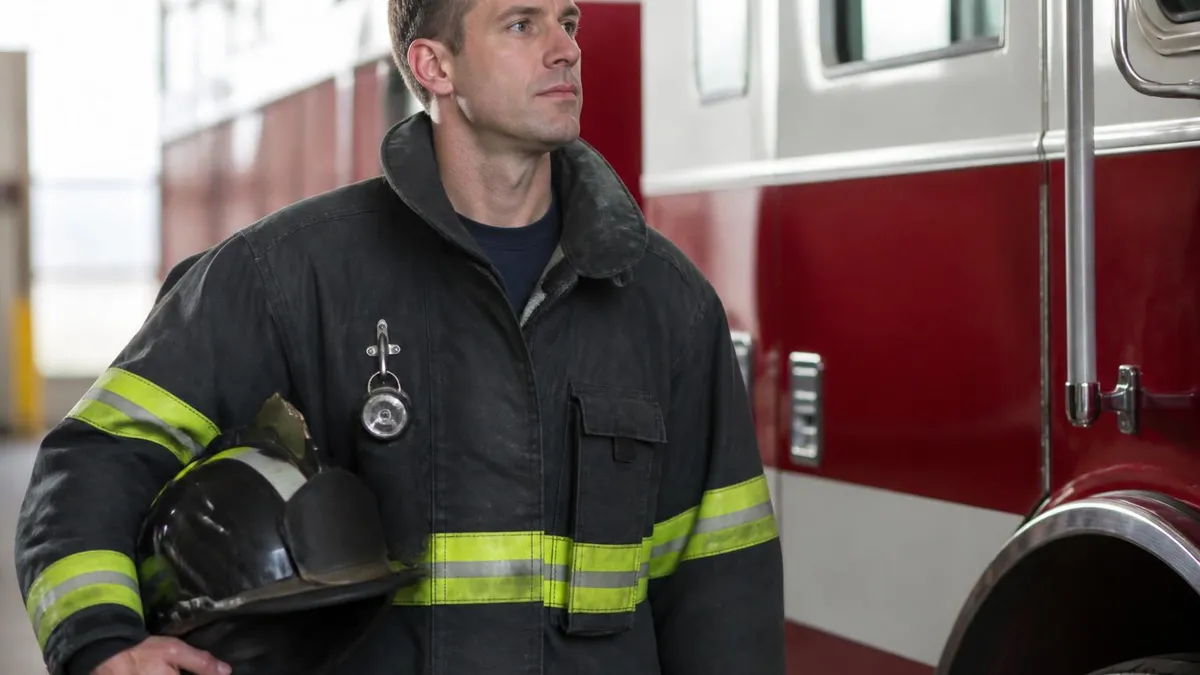
FDNY Stations, Engine & Ladder Companies
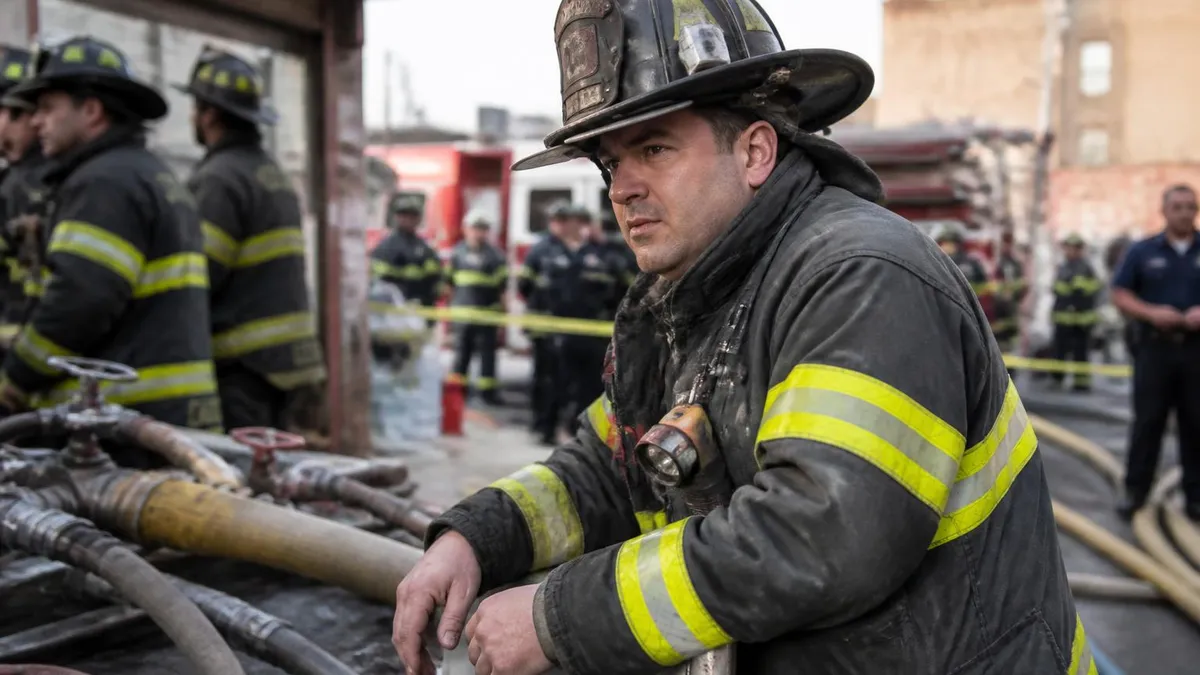
FDNY 10 Codes: Complete Guide to Fire Department Radio Communication
FDNY Logo: History, Meaning, and Symbolism of the Fire Department of New York Emblem
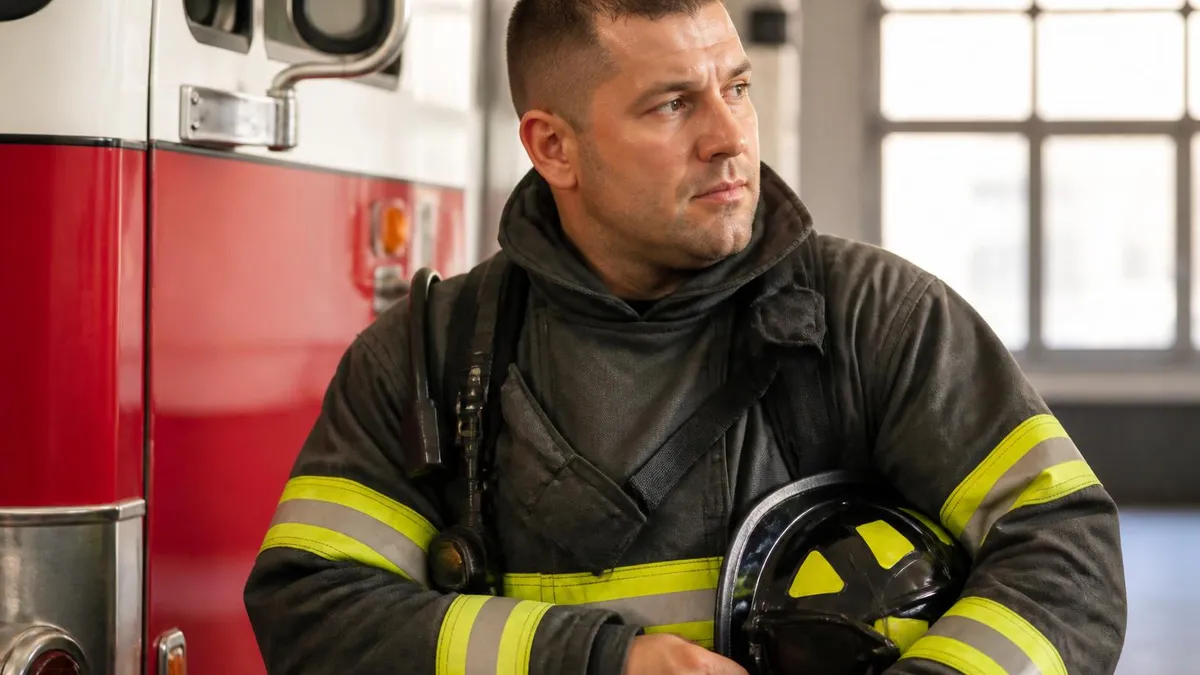
FDNY vs NYPD Hockey Game: Inside New York's Bravest vs Finest Heroes on Ice Rivalry
FDNY Marine Units: Inside the Fire Department of New York's Fireboat Fleet and Marine 6
About the Author

Law Enforcement Trainer & Civil Service Exam Specialist
John Jay College of Criminal JusticeMarcus B. Thompson earned his Master of Arts in Criminal Justice from John Jay College of Criminal Justice and served 12 years as a law enforcement officer before transitioning to full-time academy instruction. He is a POST-certified instructor who has prepared candidates for police entrance exams, firefighter assessments, and civil service examinations across dozens of agencies.
Join the Discussion
Connect with other students preparing for this exam. Share tips, ask questions, and get advice from people who have been there.
View discussion (9 replies)