
FAA - Federal Aviation Administration: Complete Guide 2026 September
❓ FAA - Federal Aviation Administration regulates US civil aviation. Learn roles, careers, exams, certifications, registration, and drone rules.

The FAA - Federal Aviation Administration is the agency that quietly shapes nearly every flight you take. From the moment a plane is built to the second its wheels touch the runway, the FAA writes the rulebook, watches the airspace, and certifies the people who keep it all moving. Most travellers only hear the agency's name during weather delays or after an incident, but for pilots, controllers, mechanics, and drone operators, the FAA is a daily reality.
This guide breaks down what the FAA does, how it's organized, the credentials it issues, and the exams candidates must clear to work in US aviation. Whether you're studying for the Private Pilot written test, eyeing an Air Traffic Controller career, or just curious why that ground stop happened last week, you'll get clear answers here. No jargon dump, just the parts that matter.
The agency sits inside the US Department of Transportation. It employs roughly 45,000 people across nine regional offices, an academy in Oklahoma City, and dozens of certification field offices. Its budget runs around $19 billion annually, funded largely by airline ticket taxes and aviation fuel fees rather than general revenue. That funding model is why the FAA keeps operating during partial shutdowns, but it also means staffing pressures don't disappear when Congress fights over appropriations.
One thing to know up front: the FAA is huge, slow-moving, and conservative by design. A rule change can take five years from notice of proposed rulemaking to final implementation. That frustrates innovators in the drone, eVTOL, and commercial space communities, but it's also why US aviation safety statistics are the best in the world. The agency would rather take an extra year than approve something that puts passengers at risk. If you're entering the industry, understanding that culture saves a lot of confusion.

Established: 1958 (as Federal Aviation Agency); renamed Federal Aviation Administration in 1967.
Headquarters: 800 Independence Ave SW, Washington DC.
Budget: ~$19 billion annually, funded by aviation user fees and ticket taxes.
Workforce: ~45,000 employees nationwide.
Scope: Civil aviation regulation, air traffic control, airman certification, aircraft registration, drone integration, commercial space launch oversight.
FAA by the Numbers
Aviation in America wasn't always federally regulated. Through the 1920s, pilots flew where they wanted with whatever maintenance they felt like. After a string of crashes, the Air Commerce Act of 1926 created a small bureau inside the Department of Commerce, the FAA's direct ancestor. Two midair collisions in 1956 over the Grand Canyon and 1960 over New York City pushed Congress to consolidate aviation oversight, and the Federal Aviation Agency was born in 1958.
The agency moved into the Department of Transportation in 1967 and picked up its current name: Federal Aviation Administration. Since then, its scope has expanded with each technology shift, jets, computerized radar, GPS navigation, and now commercial drones and electric vertical takeoff aircraft. Every expansion brought new rule parts, new certifications, and new exams. That's why the FAA's regulatory codebook (Title 14 of the Code of Federal Regulations) now runs more than 1,400 pages.
Each major rewrite of the rules has followed an accident or a technology shift. Part 121 governs the airlines, Part 135 covers charter operations, Part 91 covers everyone else flying for fun or business. The 1996 ValuJet crash triggered a rewrite of cargo and maintenance oversight; the 1999 EgyptAir crash and 2009 Colgan Air crash prompted new pilot fatigue and qualification standards.
The Boeing 737 MAX crashes in 2018 and 2019 forced the FAA to overhaul aircraft certification procedures and gave Congress a stick to reform the agency. History inside the FAA isn't decorative trivia, it's the reason every paragraph of every rule looks the way it does.
FAA Organizational Branches
Operates the national airspace. Runs control towers, TRACONs, and en route centers. Employs about 14,000 controllers.
- ▸Tower controllers
- ▸TRACON approach/departure
- ▸ARTCC en route
- ▸Flight Service Stations
Certifies aircraft, repair stations, pilots, and mechanics. Owns the rule-writing for most operational rules.
- ▸Flight Standards
- ▸Aircraft Certification
- ▸Aerospace Medicine
- ▸Rulemaking
Administers AIP grants and approves layout/safety changes at federally-funded airports.
- ▸AIP grants
- ▸Part 139 certification
- ▸Airport layout plans
- ▸Noise compatibility
Licenses launch and reentry of commercial rockets. Reviews SpaceX, Blue Origin, and Rocket Lab operations.
- ▸Launch licenses
- ▸Spaceport permits
- ▸Safety inspections
Builds drone rules and integration plans. Owns Part 107 and Remote ID.
- ▸Part 107 rulemaking
- ▸Remote ID
- ▸BVLOS rulemaking
- ▸LAANC airspace authorization
Internally, the FAA splits into several major lines of business. The Air Traffic Organization runs the controllers who guide flights, about 14,000 of them across towers, TRACONs, and en route centers. The Aviation Safety branch certifies aircraft, repair stations, and the humans who fly or fix them. The Office of Commercial Space Transportation licenses rocket launches; yes, every SpaceX launch crosses an FAA desk.
Then there's the Airports division, which doles out federal grants and approves layout changes at the 3,300+ airports in the national system. Drone integration falls under the UAS Integration Office, a relative newcomer that has been writing rules at a sprint since 2016. Knowing which branch issues your credential matters: a Part 107 drone certificate runs through the Aviation Safety line, while controller hiring goes through a completely separate process under the ATO.
FAA Certificate Families
Airman certificates progress from Student Pilot through Sport, Recreational, Private, Commercial, and Airline Transport Pilot. Each level adds privileges, and each requires its own knowledge test, oral exam, and checkride with a Designated Pilot Examiner. Instrument and multi-engine ratings layer on top.
Most candidates start with the Private Pilot certificate. Minimum 40 hours of flight time, knowledge test, oral exam, checkride. Total cost typically $12,000-$18,000 at a Part 61 school.

The FAA issues dozens of credentials, but most fall into four families. Airman certificates cover pilots, from Student Pilot through Airline Transport Pilot. Mechanic certificates (Airframe and Powerplant, or A&P) cover the people who turn the wrenches. Air Traffic Control Specialist certificates cover controllers, and Remote Pilot certificates cover commercial drone operators under Part 107.
Each family has its own exam structure: a written knowledge test, sometimes an oral exam, and a practical (or "checkride") with a Designated Pilot Examiner. The written tests are computer-based, multiple-choice, and taken at PSI testing centers nationwide. Pass marks vary; 70% is standard, though some specialty exams require higher. Scores expire too: a written test result is valid for 24 calendar months, so you can't take the knowledge test in 2024 and finish your checkride in 2027.
Commercial drone work in the US runs through Part 107, a rule set the FAA finalized in 2016. To fly a drone for any kind of compensation (real estate photos, roof inspections, wedding videos), the pilot needs a Remote Pilot Certificate. That requires passing a 60-question knowledge test covering airspace, weather, regulations, and crew-resource management. The exam runs $175 and the certificate is valid for 24 months before you need to take a free online recurrent test.
Hobbyist drone flying is governed by the older "Recreational Flyer" framework. Anyone flying a drone over 0.55 lb must register it through the FAA's online portal ($5 every three years) and pass the free TRUST test. The Remote ID rule, fully enforced as of March 2024, requires most drones to broadcast their location and operator info, a requirement that caught a lot of casual flyers off guard.
The FAA also runs LAANC (Low Altitude Authorization and Notification Capability), the system that lets Part 107 pilots get near-instant approval to fly in controlled airspace around airports. Before LAANC, drone flights near towered airports required a manual waiver that took weeks. Today it's a phone-app tap. The next major rule the FAA is working on is BVLOS (Beyond Visual Line of Sight), which would let drones legally fly out of sight for package delivery and large-area inspections. Final rule expected in 2026.
Part 107 Application Checklist
- ✓Be at least 16 years old
- ✓Read, speak, write, and understand English
- ✓Be in physical and mental condition to safely fly a drone
- ✓Pass the 'Unmanned Aircraft General - Small (UAG)' knowledge exam at a PSI center ($175)
- ✓Complete FAA Form 8710-13 online via IACRA after passing the test
- ✓Complete TSA security background check (automatic, takes 1-6 weeks)
- ✓Receive temporary certificate via email; permanent card by mail
- ✓Renew via free online recurrent training every 24 calendar months
Air Traffic Controllers are some of the highest-paid federal employees who don't require a college degree. The median pay sits north of $137,000, and senior controllers at busy facilities clear $200,000. The catch: the job is notoriously stressful, mandatory retirement is age 56, and the path in is brutally competitive. The FAA opens hiring bids only periodically; the last few "bids" drew tens of thousands of applicants for a few thousand slots.
Successful applicants are sent to the FAA Academy in Oklahoma City for several months of initial training, then assigned to a facility for years of on-the-job certification. Attrition during training is real, about 30-40% of academy attendees don't make it through. For candidates considering this path, prepping for the ATSA (Air Traffic Skills Assessment) is the first hurdle, well before academy.
Facility assignments after academy are not negotiable. You go where the FAA sends you. That might be a quiet contract tower in Idaho or one of the busiest TRACONs in the country, like the one feeding LaGuardia, Kennedy, and Newark traffic into the New York metroplex. Pay scales with facility difficulty, so the high earners are concentrated at the highest-volume centers. Many controllers transfer between facilities over their careers to chase pay bumps or quality of life, but transfers are competitive too and require certifications at the new sector.
Air Traffic Controller hiring is among the most competitive federal entry pipelines. A single recent bid drew 50,000+ applications for under 2,000 academy seats. Successful candidates typically prepared months in advance for the ATSA aptitude test, met age requirements (under 31 at hire), and accepted relocation to wherever the FAA assigned them. Plan for a multi-year path before you're earning controller pay.
The written exams the FAA administers are where most candidates do their preparation. The structure varies by certificate, but the format is consistent: multiple choice questions, drawn from a publicly available test bank, taken at a PSI Testing Services center. Knowing the question bank doesn't guarantee a pass; questions are paraphrased and reference figures from FAA-issued supplements, but it gets you close.
Pass rates run higher than you might expect. The Private Pilot written has a first-attempt pass rate around 90%, and Part 107 is similar. The challenging exams are the ATP (Airline Transport Pilot), the various Instrument tests, and the A&P General/Airframe/Powerplant sequence; those reward people who actually studied the material rather than just drilled question banks.

Aircraft registration is another high-volume FAA function. Every civil aircraft based in the US must be registered with the agency. The famous N-number painted on the tail traces back to FAA records. Registration runs $5, must be renewed every three years, and changes hands through a paperwork process that takes 4-6 weeks at the Aircraft Registry in Oklahoma City. Drone owners do this online; manned aircraft owners still mail paper forms.
The N-number lookup tool on the FAA website lets anyone search the registry by tail number, owner name, or serial number. This database is public, which is why aviation journalists can identify suspicious flights and competitors can track each other's fleet. For everyday pilots, the registry mostly matters when they buy an aircraft and need to verify the title is clean.
FAA Medical Certificate Classes
Required for Airline Transport Pilots (ATP). Strictest standards.
- ▸Valid 12 months under 40
- ▸Valid 6 months age 40+
- ▸ECG required at first issuance and age 35+
- ▸Cost: $100-$200 via AME visit
Required for Commercial Pilots earning compensation.
- ▸Valid 12 months all ages
- ▸Downgrades to Third Class after expiration
- ▸Same exam scope as First minus ECG
- ▸Cost: $100-$175
Required for Private and Sport Pilots without BasicMed.
- ▸Valid 60 months under 40
- ▸Valid 24 months age 40+
- ▸Basic physical and vision exam
- ▸Cost: $75-$150
Alternative to Third Class for qualifying Private Pilots.
- ▸No FAA medical exam required
- ▸State-licensed physician exam every 4 years
- ▸Free online course every 2 years
- ▸Limited to aircraft <6,000 lbs, 6 occupants, 18,000 ft
Most pilot certificates require a current medical certificate, and that means working with an Aviation Medical Examiner (AME). The application goes through the FAA's MedXPress portal: you fill out your medical history online, then visit an AME for the physical exam. Three classes of medical (First, Second, Third) cover different operations, with stricter standards for First Class (which ATPs need).
BasicMed, introduced in 2017, lets some private pilots fly without a full FAA medical. They just need a regular state-licensed physician's exam every four years plus an online course. This pathway opened recreational flying to thousands of older pilots whose medications would have triggered Special Issuance hassles under the old rules. BasicMed has limits, you can't carry passengers commercially, can't fly above 18,000 feet, and the aircraft can't carry more than six occupants, but for the typical Saturday-morning flyer it eliminates a lot of friction. Note that ATPs and most commercial operations still need a First Class medical, not BasicMed.
Reasons the FAA Issues Ground Stops
- ✓Thunderstorms blocking arrival or departure corridors
- ✓Low ceilings or visibility forcing reduced approach spacing
- ✓Runway closures from construction, maintenance, or incidents
- ✓Equipment outages — radar, navigation aids, or communications
- ✓Volume exceeding safe controller workload at peak times
- ✓Special events such as VIP movement requiring TFRs
- ✓Disabled aircraft blocking active runway
You've probably heard about FAA ground stops or traffic management programs. These are tools the FAA uses to manage congestion when weather, equipment outages, or runway closures reduce capacity at major airports. A ground stop means flights destined for a specific airport can't depart their origin yet. They wait at the gate to avoid orbiting in holding patterns.
The FAA's Air Traffic Control System Command Center near Washington DC coordinates these programs nationwide. Decisions are visibly recorded on the public Operations Plan and the OIS (Operational Information System), and weather routing changes ripple through to every airline's dispatch desk within minutes. When you hear "FAA delays" on the news, it almost always means a TMU (Traffic Management Unit) is actively metering arrivals into one or more airports.
Common reasons for an FAA program: thunderstorms blocking arrival corridors, low ceilings forcing reduced approach spacing, runway construction, equipment outages, or volume that simply exceeds what controllers can safely handle. The FAA also issues NOTAMs (Notices to Air Missions, formerly Notices to Airmen) for temporary flight restrictions, runway closures, navigation aid outages, and special events. Pilots are required to review NOTAMs for their route before every flight, and dispatchers do the same on the commercial side.
FAA Career Pros and Cons
- +FAA careers offer federal pension, health coverage, and TSP matching that private aviation employers rarely match
- +Aviation Safety Inspectors and controllers can earn $137,000-$200,000 without requiring a college degree
- +Job security is strong, civil aviation is essential infrastructure and FAA roles rarely face layoffs
- +Multiple entry pathways accommodate former military, A&P mechanics, pilots, and engineers
- +Geographic flexibility, nine regional offices and dozens of field locations let you build a career across the country
- −ATC mandatory retirement at age 56 forces a hard career-end date that can be financially disruptive
- −Hiring windows are unpredictable and competitive, strong candidates wait years for the next bid
- −Pay tops out lower than equivalent senior roles at major airlines or aerospace manufacturers
- −Federal hiring bureaucracy is slow, expect 9-18 months from application to start date
- −Shift work, including overnight and holiday coverage, is standard for controllers and many inspectors
Beyond the obvious pilot and controller paths, the FAA itself employs aerospace engineers, safety inspectors, lawyers, IT specialists, and educators. Aviation Safety Inspectors (the people who audit airlines and certify pilots) typically come in with prior aviation experience and earn $90,000-$160,000 depending on grade and locality. Aerospace engineers working on certification projects can hit similar pay bands.
The agency runs its own management training pipeline through the FAA Academy. New hires often start in field offices, rotate through headquarters assignments, and build careers spanning multiple aviation sectors. Federal benefits, FERS pension, TSP matching, health coverage, round out the package, though pay tops out lower than equivalent private-sector roles in the major airlines or manufacturers.
Getting hired by the FAA goes through USAJOBS, the federal hiring portal. Roles are posted as "vacancy announcements" with strict window dates. The agency uses competitive grade levels (GS-7 through GS-15 for technical roles, SES for executives), and pay locality adjustments matter, an FAA engineer in San Francisco earns roughly 35% more than the same role in Oklahoma City. Veterans get a measurable hiring preference under federal rules. The interview process can take 60-120 days, security clearance adds time, and a typical start date lands four to nine months after the application deadline.
For people who prefer the operational side without controlling traffic, Flight Service Specialists at the older FAA Flight Service Stations handle weather briefings and search-and-rescue coordination. Most of that work is now contracted out, but residual federal positions remain.
Designees are another underrated pathway: experienced pilots, mechanics, and engineers who pass FAA review can become Designated Pilot Examiners, Designated Engineering Representatives, or Designated Airworthiness Representatives, performing FAA-delegated work as independent contractors. It's a steady second career for many retired airline captains and senior mechanics. Compensation varies but a busy DPE running checkrides can clear well over $100,000 a year on a flexible schedule, billing per applicant rather than punching a clock.
FAA Questions and Answers
About the Author
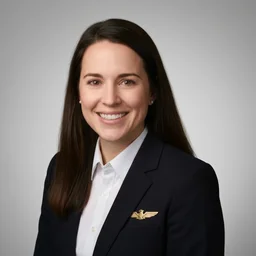
Commercial Pilot & FAA Certification Specialist
Embry-Riddle Aeronautical UniversityCaptain Jennifer Walsh graduated with honors in Aerospace Engineering from Embry-Riddle Aeronautical University and holds FAA Airframe & Powerplant and Airline Transport Pilot certificates. With 11 years of commercial aviation experience and 6 years as a ground school instructor, she guides aviation mechanics and student pilots through FAA written exams and practical tests.
Join the Discussion
Connect with other students preparing for this exam. Share tips, ask questions, and get advice from people who have been there.
View discussion (9 replies)