
FAA Cracking Down on Carry-On Bags: What Pilots and Travelers Need to Know
FAA cracking down on carry-on bags in 2026 September. Size limits, gate-check fees, $37,000 fines, Part 121.589 rules, and what pilots must know. ✍🏼
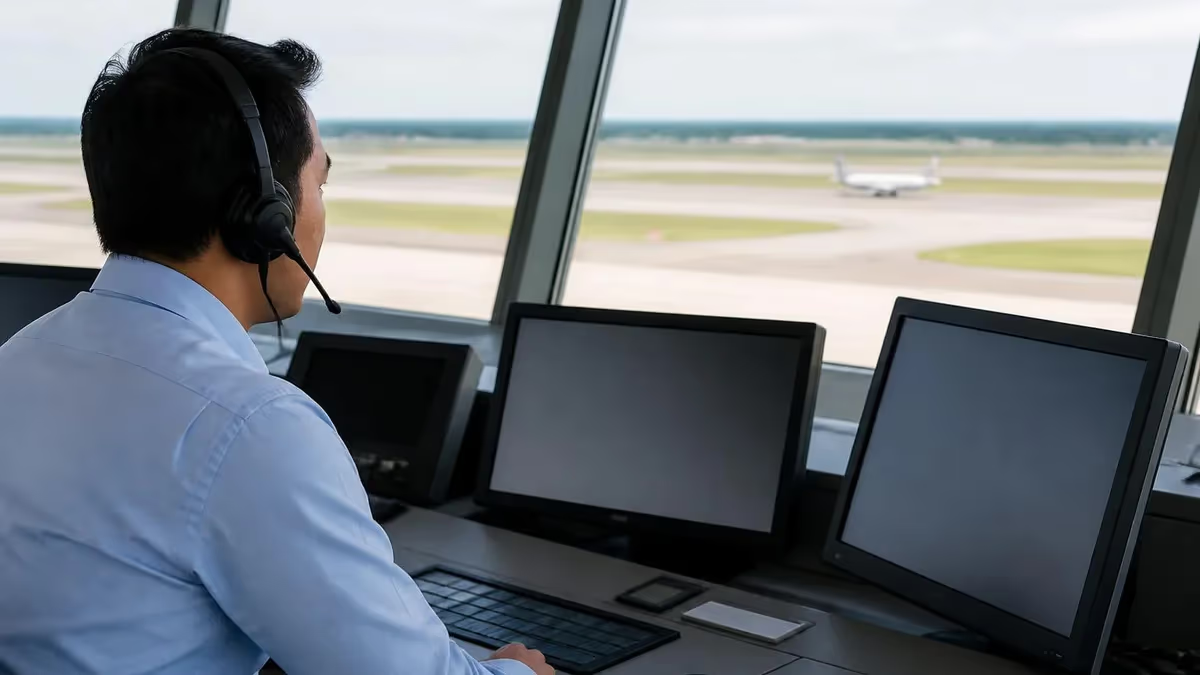
If you flew in the last six months, something probably felt different at the gate. Bag tags. More gate-checks. Sharper enforcement at the jet bridge. The headlines call it the FAA cracking down on carry-on bags, and travelers are not wrong. Cabin safety enforcement is tighter than it has been in a decade. For student pilots studying for the FAA written, this matters too: cabin baggage rules sit inside the same regulatory framework you will be tested on.
Here is the short version. The FAA itself does not measure your roller bag at the gate. Airlines do. But the FAA writes the rules airlines must enforce, and in 2026 those rules carry sharper teeth. 14 CFR Part 121.589 governs cabin baggage on scheduled airliners. It says every carry-on must fit a stowage location approved for that aircraft, be properly restrained, and never block an exit, aisle, or row. Sound dry? It is the reason your overstuffed duffel got pulled at the jet bridge last month.
For decades, that rule was loosely enforced. Then came near-miss evacuations. Then came the 2024 door-plug incident on Alaska 1282, where passengers grabbed bags during a rapid depressurization. Investigators flagged cabin clutter and oversized carry-ons as a survivability factor. The FAA responded with stronger guidance, and the airlines, fearful of fines, started measuring.

Carry-On Enforcement by the Numbers
Key Facts at a Glance
| Item | Value | Details |
|---|---|---|
| Required evacuation time | 90 sec | |
| Governing FAR section | 121.589 | |
| Common gate-check fee | $80-$100 |
14 CFR 121.589 requires every carry-on on a scheduled airliner to be stowed in an approved location, properly restrained, and clear of aisles and exits. The captain cannot release the brake until this is verified by the cabin crew. Airlines that fail to enforce face civil penalties up to $37,000 per violation per aircraft, and the FAA has been collecting more of these penalties in 2026 than in any year since the rule was last revised.
The regulation runs only six clauses but it controls behavior at every gate in the country. It sets the standard for approved stowage locations, places primary responsibility on the certificate holder, makes the captain accountable for compliance before pushback, and gives crewmembers final authority on bag placement once the door closes. Passengers who interfere with that authority can be cited personally under a related rule, 14 CFR 121.580.
The biggest shift in 2026 is enforcement, not the law. Carry-on dimension limits did not change. What changed is that airlines now face sharper FAA scrutiny when cabin baggage causes a delay, a slide deployment failure, or an injury. That has pushed gate agents to be strict. If your bag does not fit the sizer, it goes below.
Three things are different in 2026 compared to 2023. First, more airlines now charge a gate-check fee for oversized carry-ons rather than letting them slip through. Second, personal items are being measured, not just rollers. Third, FAA inspectors are riding more flights and writing more findings on aircraft where bins are jammed shut or items are stacked under seats incorrectly.
For private pilots and Part 91 operators, none of this changes your day. Part 121.589 is air carrier law. But the principle, that you cannot fly with unsecured loose items in the cabin, runs all the way down through the FARs. You will see versions of it on the FAA Private and Commercial written exams under weight-and-balance and loose-article rules.
What Counts as Approved Stowage
Enclosed compartment rated for a listed load. Bag must fit fully inside with the door latched and not block the latch mechanism.
- ▸Rated 80-100 lb on 737
- ▸Door must fully close
- ▸Load wheels-first in pivot bins
Personal item zone in front of your seat. Must not block egress from the row in front of you or extend into the aisle.
- ▸~18x14x8 inches typical
- ▸Exit row often forbidden
- ▸Must clear bulkhead floors
Forward or aft enclosed closet rated for specified items. Used for crew bags, garment bags, and oversize gear.
- ▸Crew approval required
- ▸First-class only on most jets
- ▸Rated load posted inside
Anything that does not fit the above must travel below deck as checked or gate-checked baggage.
- ▸Gate-check fees apply
- ▸Tag at jet bridge
- ▸Retrieved planeside or carousel
The FAA does not publish a single national carry-on size. Each airline sets its own dimensions, then files them with their FAA-approved Operations Specifications. The dimensions must match the actual stowage on each aircraft type. That is why a bag that fits a 737-800 may not fit a regional CRJ-200, and why some itineraries surprise you on the connecting leg.
The common industry standard is 22 by 14 by 9 inches for the overhead bag and roughly 18 by 14 by 8 inches for the under-seat personal item. Some carriers go smaller. Frontier, Spirit, and Allegiant publish tighter limits because they fly tight-pitch cabins. International carriers vary, and codeshare flights default to the operating carrier's rules, which is where many travelers get caught out.
Weight matters too. Many international carriers cap carry-on weight at 7 or 8 kilograms. United States carriers historically did not weigh carry-ons, but in 2026 a few have started spot-weighing for purely structural reasons: an overhead bin door that pops open in turbulence is the FAA's nightmare scenario.
Carry-On Rules by Carrier Type
Major US carriers use roughly 22x14x9 inches for the overhead carry-on and 18x14x8 inches for the personal item. Weight is rarely enforced on dimensions are. American, Delta, United, Southwest, and JetBlue all publish near-identical limits, though Southwest still allows two free checked bags.
Enforcement of dimensions is much stricter in 2026 than at any point in the last decade. Gate sizers are used routinely on full flights, and gate agents are tracked on their gate-check rate.

This is where the answer surprises most travelers. The FAA cares about cabin baggage for one reason: survivability in an emergency egress. Federal certification standards require that a full airliner can be evacuated in 90 seconds with half the exits blocked. Every loose bag in the aisle is a second lost. Every bin door that flies open scatters debris.
That 90-second rule, 14 CFR 25.803, is the bedrock of cabin design. When investigators look at why a survivable accident kills people, cabin baggage is one of the top three contributing factors. Aisle blockage, slide damage from sharp edges, passengers stopping to grab a bag, these are well-documented killers. The FAA cracking down on carry-on bags is not bureaucratic theater. It is one of the few interventions backed by hard NTSB data.
Arguing with a flight attendant, refusing to stow a bag, or blocking the aisle can trigger a civil penalty against you personally under 14 CFR 121.580. The maximum is $37,000 per violation, and the FAA has been more willing to assess it in 2026. Federal criminal charges are possible in severe cases that escalate to physical contact, threats, or repeated refusal of crew instructions.
Comply at the time, complain afterward. The crew has lawful authority during all phases of flight, not just airborne. The customer service desk, the airline's executive contact, the Department of Transportation complaint portal, and federal court are all available routes after the fact. None of them are available if you are detained by police at the destination or banned from future travel on the airline.
The gate is the last filter. Agents are trained to spot four problems. A bag that visibly bulges past the sizer frame. A bag with hard items hanging off it, like helmets or tripods. A passenger carrying three items when the fare allows two. A personal item that is really a small suitcase pretending to be a backpack.
If they catch one of these, you have three options. Repack at the counter. Pay the gate-check fee. Or get pulled aside while the flight closes. The third option ends with you on the next plane. In 2026, gate agents have less discretion than they used to. The system tracks their gate-check rate. Letting too many oversized bags through gets them flagged in the audit.
What Gate Agents Look For
- ✓Bag visibly bulges past the metal sizer frame when set inside it
- ✓Hard items hanging off the bag such as helmets, tripods, instrument cases, or sports gear
- ✓Passenger carrying more items than the fare class allows, including a coat counted as a bag
- ✓Personal item that is actually a small suitcase pretending to be a backpack with stiff sides
- ✓Carry-on overweight for international weight-checking carriers using 7 or 8 kg limits
- ✓Bag with sharp protrusions or exposed metal that could damage slide rafts during evacuation
- ✓Two passengers attempting to combine bag allowances by transferring items at the podium
- ✓Garment bags hung over the shoulder that obscure the actual carry-on count
- ✓Pet carriers exceeding under-seat dimensions on aircraft without an approved alternative
You as a passenger almost never get fined for a carry-on. The airline gets fined. FAA civil penalties for cabin baggage violations run up to $37,000 per violation per aircraft, and the agency has been collecting more of them. That is the financial engine driving the enforcement push. Airlines that get cited start gate-checking aggressively because the math is unforgiving.
Where passengers do get hit is on interference. If you argue with a flight attendant over a bin, refuse to stow a bag, or block the aisle, you can be cited under 14 CFR 121.580 for interfering with a crewmember. That penalty runs to $37,000 against you personally. The fine list is published on the FAA website and updates yearly, and the agency has been more willing to assess it in 2026.
What the Crackdown Fixes and Costs
- +Faster boarding once bins fill up because aisles stay clear
- +Reduced injury risk from bags falling out of overstuffed bins
- +Better evacuation flow in emergencies, the core safety goal
- +Fewer mid-flight bin failures from over-rated loading
- +Crew can stow safety equipment without fighting passenger bags
- +Consistent enforcement reduces gate-agent abuse and arguments
- −More gate-check fees, especially on low-cost carriers, often $80 to $100
- −Slower gate processing as agents measure bags and personal items
- −Frustration when personal items get reclassified as a carry-on
- −Higher chance of separation from your bag on tight connections
- −Inconsistency between airlines and aircraft types confuses travelers
- −Extra time at the gate that frequent flyers were not used to budgeting

Overhead bins look simple. They are not. Each bin is rated for a maximum load, listed inside the lid in pounds and kilograms. A typical 737 bin holds 80 to 100 pounds. When passengers cram too many bags above one row, the bin can fail in turbulence. There are documented incidents of bins opening mid-flight and dropping luggage on passengers below.
Aircraft makers redesigned bins in the last decade to hold more bags vertically. Those new pivot bins fit more rollers per row, but only if loaded wheels-first. Flight attendants will turn your bag the right way if you load it wrong. That is not them being picky. It is them protecting the bin's structural rating during turbulence and hard landings.
For years, no one measured personal items. In 2026, several airlines installed a second sizer at the gate just for them. The reasoning is straightforward: travelers learned to game the system by carrying a small suitcase as a backpack. When everyone does that, the under-seat space runs out, and bags end up in the aisle, which is the exact scenario the FAA wants to prevent.
If your personal item does not fit the under-seat space, it gets reclassified as a carry-on. If you already have a carry-on, the personal item gets gate-checked or charged. This is the single biggest change frequent travelers notice in 2026, and it is the rule most likely to bite you on a tight connection.
Critical Compliance Timeline
Student pilots taking the FAA Private, Commercial, or ATP written will see baggage and weight-and-balance questions. The exam will not quiz you on roller bag dimensions, but it will test the principles underneath them. Expect questions on aircraft weight limits, center of gravity shifts caused by improperly loaded baggage, and the certificate holder's responsibility to secure cargo before takeoff.
For Part 121 ATP candidates, expect direct questions on Part 121.589: who is responsible for cabin baggage compliance, what counts as approved stowage, and what the captain's duties are if a passenger refuses to stow a bag. These are not trick questions, but they require you to know the regulation, not guess from common sense alone.
Three habits cure 90 percent of the pain. Use a soft-sided bag, not a hard-shell, because soft bags compress to fit the sizer. Pack your essentials in your personal item, not your overhead bag, so if the carry-on goes below you still have phone, charger, meds, and ID with you. Show up at the gate with the bag already compact, wheels out, telescope handle in.
If you fly a tight-pitch carrier like Spirit or Frontier, measure your bag at home with a tape. The sizers at these gates are unforgiving and the fees are higher than the bag is worth. Frequent flyers report fees of $80 to $100 for a gate-checked oversize. That is a one-way ticket on some routes.
To understand why 2026 feels different, look at the trajectory. Cabin baggage rules go back to the 1950s, but until deregulation in 1978, airlines did not really compete on baggage policy. Bags went in the hold. Carry-ons were briefcases. Then the industry unbundled, jet bridges replaced air stairs, and travelers learned they could skip the carousel by hauling everything aboard. By the 1990s, the average passenger was bringing twice as much into the cabin as a decade earlier.
The FAA kept the regulation simple: bags must be stowed in an approved location. Enforcement was left to the airlines. For most of the 2000s, that worked because cabin space had been redesigned around larger bins. But the rise of basic-economy fares in the 2010s changed the math. When checked bag fees jumped to $30 or more per direction, every traveler tried to avoid them, and the overhead bins filled up before half the cabin had boarded.
By 2018 some carriers were gate-checking 40 to 60 bags per full flight. By 2022, after pandemic disruption, that number climbed again as travelers fought to keep bags with them. Then came the door plug, then came the slide failure incidents, then came the political pressure. The FAA now had data and motive. The rule did not change. The enforcement appetite did.
Captain and Crew Authority Chain
Once the door closes, the captain holds final authority on every cabin compliance issue, including bag stowage.
- ▸Granted by federal law
- ▸No supervisor required
- ▸Backed by enforcement history
Acts on the captain's behalf. Instructions carry the same legal weight as a direct cockpit order.
- ▸Lawful crewmember instruction
- ▸Documented in flight log
- ▸Enforced by federal law
Final filter before the jet bridge. Tracked on gate-check compliance and bag enforcement rates.
- ▸Pre-boarding only
- ▸Loses authority at door close
- ▸Audited on sizer use
Handle gate-checked bags below the wing. Have no role in deciding which bags qualify as carry-on.
- ▸Receive tagged bags
- ▸No decision authority
- ▸Coordinate with crew
14 CFR 121.589 has six clauses worth memorizing. The carrier must ensure each bag is stowed where it can be retained. Bags must be in an approved location, which means under a seat, in an enclosed bin, or in a closet rated for the load. Items too large for any approved location must be carried as cargo. The aircraft cannot move until cabin baggage is secured. Crewmembers, not gate agents, have the final word once the door closes.
That last point matters. If a flight attendant tells you to stow your bag a certain way, that is a lawful crewmember instruction. Ignoring it crosses into interference territory. The FAA does not need to prove malice. It only needs to show that you failed to comply with a lawful instruction during a critical phase of flight, and the burden of proof is low.
Smart packing for the 2026 enforcement environment starts with what you stop bringing. Hard-shell bags that are exactly 22 by 14 by 9 inches will fail more sizers than they pass because the sizer is the same size and a hard shell does not compress. Soft-sided bags with a degree of give get through. Backpacks designed for travel almost always fit the personal item slot, while small wheeled carry-ons marketed as personal items often do not.
Inside the personal item, put everything you cannot afford to lose. Phone, charger, wallet, ID, medication, glasses, keys, a change of underwear, and any work device you need at your destination. If your overhead bag gets gate-checked, you will see it again only at the destination carousel. Treat that as inevitable when packing rather than as an emergency when it happens at the jet bridge.
Frequent travelers in 2026 have also adopted what they call the 90-second test. Before zipping the carry-on, ask: if I had to evacuate the aircraft right now, would this bag stay where I put it? If the answer is no, it has no business being in the cabin. The same test the FAA applies to the airline applies to your packing choices, just with smaller stakes.
The single biggest mistake travelers make in 2026 is arguing the dimensions at the gate. The sizer is the standard. If the bag does not fit, it does not fit, regardless of how it fit on the flight out, how it fit last year, or how it fits according to the manufacturer's tag. Disputing this with the agent burns time you do not have and ends with the same result: gate-check, fee, or denied boarding.
The right move is to pull essentials out of the bag immediately, accept the gate-check tag, and move on. Save the complaint for after the trip. Customer service refunds on gate-check fees are rare but possible when escalated through written channels.
The FAA cracking down on carry-on bags fits a larger 2026 enforcement trend. The agency has been more visible on cabin safety, runway incursions, and crew rest. After a string of high-profile near-misses, Congress pushed for tougher oversight. Cabin baggage is the most visible piece because it touches every passenger. But the same regulatory energy is showing up in pilot fitness checks, maintenance recordkeeping, and air traffic procedures.
For pilots in training, this is a useful moment to study. The exams are unchanged, but the way the FAA is enforcing existing rules tells you which sections of the FARs the agency considers a priority. Cabin baggage, crewmember authority, and emergency procedures sit at the top of that list right now. Knowing them is not just exam prep. It is professional fluency, and it shows up on every checkride oral.
The bottom line: the FAA is not banning carry-ons. It is enforcing the rules that have always been on the books. Travelers should pack lighter, measure twice, and stop arguing with gate agents. Pilots should know Part 121.589 cold, because it is the most enforced cabin safety reg in the country right now. The era of looking the other way is over, and the airlines are not going to absorb $37,000 fines so you can keep an oversized bag at your feet.
FAA Questions and Answers
About the Author
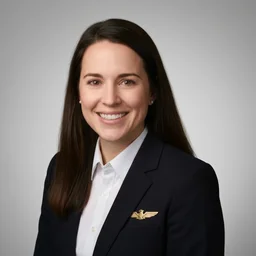
Commercial Pilot & FAA Certification Specialist
Embry-Riddle Aeronautical UniversityCaptain Jennifer Walsh graduated with honors in Aerospace Engineering from Embry-Riddle Aeronautical University and holds FAA Airframe & Powerplant and Airline Transport Pilot certificates. With 11 years of commercial aviation experience and 6 years as a ground school instructor, she guides aviation mechanics and student pilots through FAA written exams and practical tests.
Join the Discussion
Connect with other students preparing for this exam. Share tips, ask questions, and get advice from people who have been there.
View discussion (9 replies)