
Microsoft Excel: Formulas, Functions, Certifications, and Skills You Need in 2026 September
Get ready for your Microsoft Excel: 📚 Formulas, Functions, certification. Practice questions with step-by-step answer explanations and instant scoring.

Microsoft Excel is the world's most widely used spreadsheet application — and knowing it well is one of the most transferable professional skills you can develop. Whether you're tracking budgets, analysing data, or building automated reports, Excel's depth rewards everyone from beginners to advanced users. If you've ever searched for pirate microsoft excel, you're not alone — but free legitimate routes exist, and they're far more valuable for your career.
The microsoft excel world championship — the Financial Modeling World Cup and the Excel World Championship — highlights just how seriously professionals take Excel mastery. Competitors tackle complex financial models, dynamic dashboards, and creative data solutions under time pressure. You don't need to compete at that level, but understanding what elite Excel users can do gives you a useful benchmark for what's genuinely possible with the tool.
This guide covers the full Microsoft Excel landscape: what features matter most, how to get certified for free, what's different on Mac, how to handle common errors, and which practice tests will sharpen your skills fastest. Whether you're preparing for a job interview, building your first dashboard, or studying for a Microsoft Excel certification exam, you'll find what you need here.
The microsoft excel world championship draws thousands of competitors annually — and the gap between recreational Excel users and serious practitioners is enormous. Championship-level competitors use array formulas, dynamic named ranges, Power Query, and advanced charting techniques that most everyday users never encounter. You don't need championship-level skills for most jobs, but knowing these features exist helps you understand where to invest your learning time.
The microsoft excel budget template is one of the most searched Excel resources on the internet — and Excel's built-in template library is genuinely underused. Budget templates in Excel can track income, expenses, savings goals, and variances automatically using simple formulas. The SUMIF function alone — which totals values based on a condition — is behind most household and business budget spreadsheets. Learning it properly transforms Excel from a table-maker into a real financial tool.
Understanding Excel's version history matters more than most users realise. Features like dynamic arrays (introduced in Excel 365 and 2019), XLOOKUP (which replaced VLOOKUP), and the UNIQUE, SORT, and FILTER functions don't exist in older versions. If you're preparing for a certification exam or a job that uses Excel heavily, knowing which version you'll encounter — and which features are available — prevents frustrating surprises when your formulas don't work as expected.
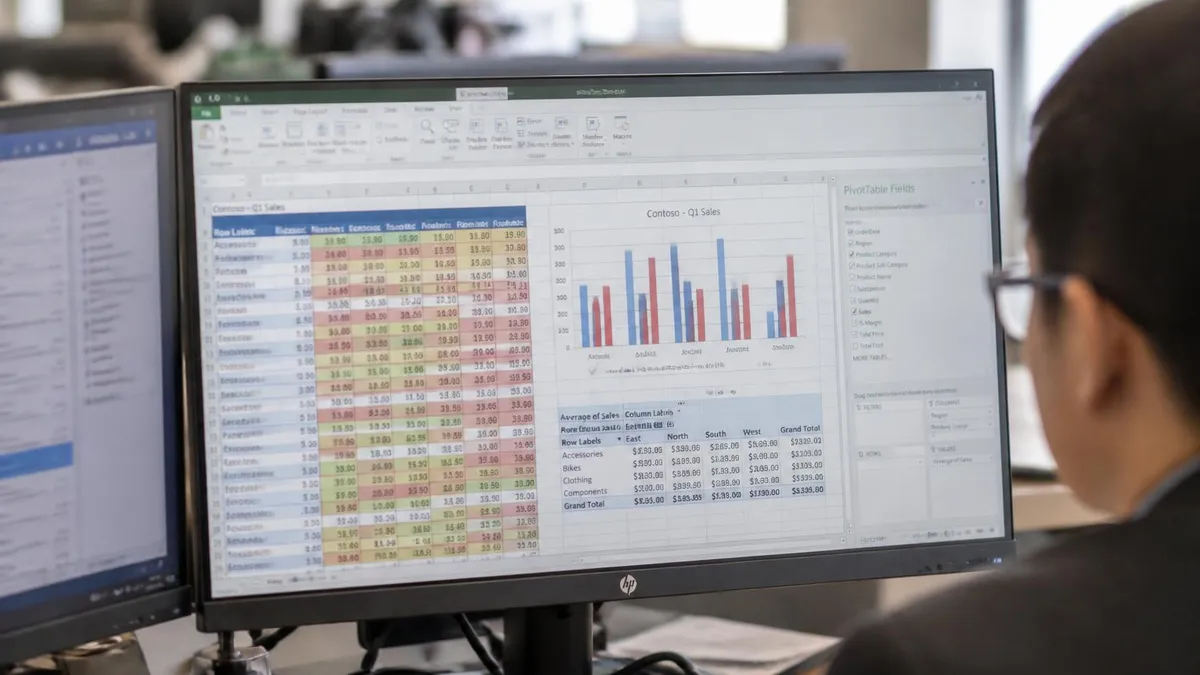
Microsoft Excel certifications are among the most practically valuable credentials in the professional world. The Microsoft Office Specialist (MOS) certification for Excel validates your ability to work with formulas, data management, charts, and automation — and it's recognised by employers across industries. If you're wondering about microsoft excel budget template work, that's exactly the kind of applied skill MOS tests cover.
The microsoft excel logo has appeared on CVs and LinkedIn profiles as a soft skill for decades — but having a formal certification turns that into a verifiable credential. The MOS Excel exam costs around £120–£130 in the UK, but Microsoft Learn and many third-party platforms offer free preparation resources that cover the full exam syllabus. Completing a free course before paying for the exam maximises your return on the certification investment.
Microsoft Excel classes range from beginner YouTube tutorials to structured LinkedIn Learning courses to formal Microsoft Learn pathways. The best approach depends on your current skill level. Beginners benefit most from structured courses that build systematically from cell references and basic formulas up to PivotTables and conditional formatting. Intermediate users tend to learn faster from project-based practice — building real spreadsheets that solve actual problems — than from watching more lectures.
Microsoft Excel Study Tips
What's the best study strategy for Microsoft Excel?
Focus on weak areas first. Use practice tests to identify gaps, then study those topics intensively.
How far in advance should I start studying?
Most successful candidates begin 4-8 weeks before the exam. Create a structured study schedule.
Should I retake practice tests?
Yes! Take each practice test 2-3 times. Focus on understanding why answers are correct, not memorizing.
What should I do on exam day?
Arrive 30 min early, bring required ID, read questions carefully, flag difficult ones, and review before submitting.
Microsoft Excel: Key Feature Areas
Microsoft Excel's formula library contains over 500 functions — but most professional work relies on a core set of around 30. The most important are: SUM, AVERAGE, COUNT, IF, VLOOKUP (and the newer XLOOKUP), INDEX/MATCH, SUMIF, COUNTIF, TEXT, DATE, and IFERROR. Mastering these gives you the ability to build almost any practical spreadsheet a business or analyst needs.
Nested functions — formulas inside other formulas — are where intermediate Excel users separate themselves from beginners. An IF formula that contains a VLOOKUP, or an IFERROR wrapped around a complex lookup, is the kind of construction that appears in real-world spreadsheets and in certification exams. Practice building these deliberately, not just copying templates from the internet.
Microsoft Excel classes are available at every level, and the free options are genuinely competitive with paid courses. Microsoft's own Learn platform provides structured Excel learning paths at no cost. LinkedIn Learning, Coursera, and Google Skillshop all offer Excel content, and many community colleges and libraries provide free access to online learning platforms including Excel courses.
The error message "microsoft excel cannot paste the data" is one of the most Googled Excel problems — and it has several possible causes. The most common: you're trying to paste into a protected sheet, the destination range has a different number of columns or rows than the copied selection, or you're attempting to paste non-contiguous cells. The fix depends on the cause, but starting by pressing Escape and retrying the copy-paste operation resolves most cases instantly.
One underrated learning approach for Excel is reverse-engineering spreadsheets you receive at work or find online. When you encounter a formula or formatting technique you don't recognise, look it up immediately rather than ignoring it. This habit accelerates practical learning far more effectively than working through abstract exercises, because the context is immediately clear and the motivation to understand is genuine. Most people find that their Excel skills improve noticeably within just a few weeks of this approach.

The "microsoft excel is waiting for ole action" error is another frequently encountered problem — particularly for users running Excel alongside other Microsoft Office applications. OLE (Object Linking and Embedding) is the technology that allows Excel to communicate with Word, Outlook, and other applications. The error usually appears when a background process hasn't finished and Excel is waiting for it to respond. Closing other Office applications, disabling COM add-ins, or restarting Excel typically resolves it.
Microsoft Excel on Mac — microsoft excel certifications are valid regardless of platform — has closed much of the gap with the Windows version in recent years, but a few meaningful differences remain. The Mac version doesn't support certain VBA features (particularly those that interact with the Windows file system), and Power Query was a late addition that still lacks some Windows-only connectors. For most non-developer users, the Mac version is functionally identical.
Excel's collaboration features have improved dramatically with Microsoft 365. Co-authoring lets multiple people edit the same workbook simultaneously, with changes appearing in near real-time. Version history — accessible from the File menu — lets you roll back to any previous state of the workbook. These features make Excel a viable collaboration tool even for complex, shared documents that previously required specialist database or BI software to manage safely.
Microsoft Excel: Strengths and Limitations
- +Universally recognised in virtually every industry and job function worldwide
- +Free certification preparation available via Microsoft Learn and open courseware
- +Handles datasets up to ~1 million rows with powerful analysis tools built in
- +Deep formula library covers everything from basic arithmetic to statistical modelling
- +PivotTables and Power Query automate data summarisation and transformation
- +Microsoft 365 subscription includes real-time collaboration and cloud autosave
- −Large datasets beyond ~100,000 rows become slow — databases handle scale better
- −No built-in version control for formulas — complex spreadsheets are hard to audit
- −VBA automation is fragile and platform-dependent, particularly on Mac
- −Not designed for multi-user concurrent editing on complex models without conflicts
- −"microsoft excel cannot paste the data" and OLE errors frustrate intermediate users
- −Free Excel download for Mac and PC is not available — subscription or one-time purchase required
Microsoft Excel download for Mac is available through the Microsoft 365 subscription or as a standalone one-time purchase. There's no legitimate free desktop version — but Microsoft Excel Online is entirely free via a browser, and it handles most everyday tasks without any installation required. It's a solid option for students and occasional users who don't need advanced features like Power Query or VBA.
Microsoft Excel certification free preparation is widely available, even if the exam itself costs money. Microsoft Learn's Excel learning paths cover the MOS exam syllabus at no cost. Many public libraries provide free access to LinkedIn Learning, which includes full Excel courses up to advanced level. If you're considering the certification, completing a free preparation course before booking the exam is straightforward and significantly improves your pass chances.
The MOS Excel exam is divided into two tiers: MOS Excel Associate (covering core skills) and MOS Excel Expert (covering advanced formulas, macros, and data tools). Both are widely recognised by employers, and the Expert certification is increasingly listed as a preferred qualification in data analyst, accountant, and operations manager job descriptions. Getting certified demonstrates commitment to professional development in a way that self-reported Excel skills on a CV simply can't replicate.

Microsoft Excel Skills Checklist
- ✓Master the core formula set: SUM, AVERAGE, IF, VLOOKUP or XLOOKUP, SUMIF, COUNTIF, IFERROR
- ✓Build and format a PivotTable from a raw dataset with at least three row/column/value fields
- ✓Apply conditional formatting — colour scales, data bars, and rule-based highlighting
- ✓Create a combination chart overlaying a bar chart and a line chart on dual axes
- ✓Use data validation to create dropdown lists and restrict cell input to valid values
- ✓Connect to an external data source using Power Query and load it into a worksheet
- ✓Write a basic nested IF formula with at least three logical conditions
- ✓Protect a worksheet and allow editing in specific unlocked cells only
- ✓Use XLOOKUP or INDEX/MATCH to retrieve data from a separate table on another sheet
- ✓Explore Microsoft Excel certification free resources on Microsoft Learn before booking the MOS exam
Microsoft Excel download for free (desktop version) isn't possible legitimately — but Microsoft 365 Personal starts at around £6/month and includes the full Excel desktop app alongside Word, PowerPoint, and 1TB of OneDrive storage. For students, Microsoft 365 Education is available free through many universities and colleges. And for users who only need basic functionality, Excel Online at office.com handles most tasks without any cost at all.
Microsoft Excel for data entry is one of the tool's oldest and most widespread uses — and it's a perfectly valid application. Excel's data entry forms, dropdown validation lists, and cell locking features make it a capable tool for structured data collection. For small to medium datasets (under 50,000 rows), Excel's data entry and management capabilities are entirely adequate. The microsoft excel logo appears on more job descriptions than any other software skill.
Understanding when Excel is the right tool — and when it isn't — is itself a valuable skill. For very large datasets, relational databases like SQL Server or PostgreSQL are more appropriate. For collaborative, real-time data collection, Google Sheets or purpose-built forms tools work better. For statistical analysis at scale, R or Python are more powerful. Excel's strength is the combination of accessibility, flexibility, and depth — it's the tool that bridges the gap between simple data tasks and specialised analytical software.
A Microsoft Excel class — whether taken online or in person — is most valuable when it includes hands-on exercises rather than passive video instruction alone. The difference between watching someone use a VLOOKUP and building one yourself is significant. If you're evaluating courses, prioritise those with downloadable practice files, project-based assignments, and assessments that test application rather than recall.
Microsoft Excel 2007 was a landmark release that introduced the ribbon interface, replacing the traditional menu bar. It also significantly expanded the maximum row count (from 65,536 to 1,048,576) and the column count (from 256 to 16,384). The .xlsx file format — still the default format today — was introduced in Excel 2007, replacing the older .xls binary format. If you're working with files from very old systems, understanding the difference between .xls and .xlsx matters for compatibility.
The Excel certification landscape has expanded beyond Microsoft's own MOS program. Coursera, edX, and LinkedIn Learning all offer Excel certificates that, while not from Microsoft directly, are recognised by many employers as proof of structured learning. For roles where Excel is a supporting tool rather than the primary skill, these certificates often provide sufficient credential — and many can be completed in a single weekend.
Searching for pirate microsoft excel puts your device at serious risk. Pirated Office software is a leading vector for malware, ransomware, and credential theft. Microsoft offers completely free legitimate alternatives: Excel Online (browser-based, no install required), Microsoft 365 for Students (free via most universities), and a 30-day free trial of Microsoft 365 for everyone. For light use, Excel Online handles formulas, charts, and PivotTables without any cost or security risk.
Coding in microsoft excel through VBA (Visual Basic for Applications) is one of the most powerful things you can learn if you work with repetitive spreadsheet tasks. VBA lets you automate almost any action you'd normally perform manually — formatting, data entry, report generation, email sending via Outlook, and more.
You don't need to be a developer to write useful macros; the Excel macro recorder captures your actions and converts them to VBA automatically, which you can then edit and refine. Even a basic macro that formats and saves a weekly report can save hours over a year of repetitive work.
If you're wondering how do you use microsoft excel effectively at work, the answer usually comes down to three habits: learn keyboard shortcuts (Ctrl+Shift+L for filters, Ctrl+T to create a table, Alt+= to autosum), use named ranges to make formulas readable, and keep your data in proper table format rather than informal ranges. These three habits alone separate efficient Excel users from those who spend twice as long doing the same work. Keyboard shortcuts in particular have an outsized impact — the time saved on repetitive actions compounds significantly over the course of a working week.
Excel's table feature — created with Ctrl+T — is probably the most underused productivity tool in the application. Tables automatically expand when you add rows, apply consistent formatting, allow structured references in formulas (like =Table1[Sales] instead of =C2:C100), and integrate seamlessly with PivotTables and Power Query. If you're still working with informal data ranges, switching to tables is one of the highest-impact changes you can make immediately. It's the kind of small habit that distinguishes users who've had structured Excel training from those who learned entirely through trial and error.
Microsoft Excel Practice Test Questions
Prepare for the Microsoft Excel exam with our free practice test modules. Each quiz covers key topics to help you pass on your first try.
Microsoft Excel Excel Basic and Advance
Microsoft Excel Exam Questions covering Excel Basic and Advance. Master Microsoft Excel Test concepts for certification prep.
Microsoft Excel Excel Formulas
Free Microsoft Excel Practice Test featuring Excel Formulas. Improve your Microsoft Excel Exam score with mock test prep.
Microsoft Excel Excel Functions
Microsoft Excel Mock Exam on Excel Functions. Microsoft Excel Study Guide questions to pass on your first try.
Microsoft Excel Excel MCQ
Microsoft Excel Test Prep for Excel MCQ. Practice Microsoft Excel Quiz questions and boost your score.
Microsoft Excel Excel
Microsoft Excel Questions and Answers on Excel. Free Microsoft Excel practice for exam readiness.
Microsoft Excel Excel Trivia
Microsoft Excel Mock Test covering Excel Trivia. Online Microsoft Excel Test practice with instant feedback.
Microsoft Excel Advanced Data Analysis Tools
Free Microsoft Excel Quiz on Advanced Data Analysis Tools. Microsoft Excel Exam prep questions with detailed explanations.
Microsoft Excel Advanced Formula and Macro...
Microsoft Excel Practice Questions for Advanced Formula and Macro Creation. Build confidence for your Microsoft Excel certification exam.
Microsoft Excel Advanced Formulas and Macros
Microsoft Excel Test Online for Advanced Formulas and Macros. Free practice with instant results and feedback.
Microsoft Excel Basic and Advance Question...
Microsoft Excel Study Material on Basic and Advance Questions and Answers. Prepare effectively with real exam-style questions.
Microsoft Excel Creating and Managing Charts
Free Microsoft Excel Test covering Creating and Managing Charts. Practice and track your Microsoft Excel exam readiness.
Microsoft Excel Data Visualization with Ch...
Microsoft Excel Exam Questions covering Data Visualization with Charts. Master Microsoft Excel Test concepts for certification prep.
Microsoft Excel Formulas and Functions
Free Microsoft Excel Practice Test featuring Formulas and Functions. Improve your Microsoft Excel Exam score with mock test prep.
Microsoft Excel Formulas and Functions App...
Microsoft Excel Mock Exam on Formulas and Functions Application. Microsoft Excel Study Guide questions to pass on your first try.
Microsoft Excel Formulas Questions and Ans...
Microsoft Excel Test Prep for Formulas Questions and Answers. Practice Microsoft Excel Quiz questions and boost your score.
Microsoft Excel Functions Questions and An...
Microsoft Excel Questions and Answers on Functions Questions and Answers. Free Microsoft Excel practice for exam readiness.
Microsoft Excel Managing Data Cells and Ra...
Microsoft Excel Mock Test covering Managing Data Cells and Ranges. Online Microsoft Excel Test practice with instant feedback.
Microsoft Excel Managing Tables and Data
Free Microsoft Excel Quiz on Managing Tables and Data. Microsoft Excel Exam prep questions with detailed explanations.
Microsoft Excel Managing Tables and Table ...
Microsoft Excel Practice Questions for Managing Tables and Table Data. Build confidence for your Microsoft Excel certification exam.
Microsoft Excel Managing Worksheets and Wo...
Microsoft Excel Test Online for Managing Worksheets and Workbooks. Free practice with instant results and feedback.
Microsoft Excel MCQ Questions and Answers
Microsoft Excel Study Material on MCQ Questions and Answers. Prepare effectively with real exam-style questions.
Microsoft Excel Questions and Answers
Free Microsoft Excel Test covering Questions and Answers. Practice and track your Microsoft Excel exam readiness.
Microsoft excel news in 2025 and 2026 has been dominated by Copilot integration — Microsoft's AI assistant built into Excel that can write formulas, generate PivotTables, and summarise data from natural language prompts. Copilot is available with Microsoft 365 Business and Enterprise subscriptions. While it doesn't replace Excel knowledge (you still need to understand what you're asking for and evaluate the output), it meaningfully accelerates work for users who know how to use it.
The microsoft excel budget sheet is one of the most practical applications for newcomers. Excel's built-in budget templates provide starting structures for personal finance, project budgets, and business expense tracking. The real skill is modifying those templates — adding new categories, writing formulas that automatically calculate variances, and creating charts that show spending trends over time. Starting from a template and then customising it is one of the best ways to develop practical Excel skills while producing something immediately useful.
Whatever your goal with Microsoft Excel — passing the MOS certification, improving at work, building a personal finance tracker, or just understanding the tool better — consistent practice with real spreadsheets is the fastest route. The practice tests on this page cover formulas, functions, data tools, and general Excel knowledge across all difficulty levels. Use them regularly, track your weak areas, and focus your revision where it matters most. Progress in Excel is faster than most people expect — within a few weeks of deliberate practice, you'll notice a real difference in how quickly and confidently you work.
Excel Questions and Answers

PDF to Excel: How to Convert, Insert, and Save Excel Files as PDF

Excel Online: Open, Edit, and Master Spreadsheets Free in 2026

Google Excel: How to Convert Excel to Google Sheets and Back

Excel Spreadsheet Guide: Create, Protect, Print, and Master Excel

Excel Skills Guide: Formulas, Functions, and Spreadsheet Mastery
About the Author

Business Consultant & Professional Certification Advisor
Wharton School, University of PennsylvaniaKatherine Lee earned her MBA from the Wharton School at the University of Pennsylvania and holds CPA, PHR, and PMP certifications. With a background spanning corporate finance, human resources, and project management, she has coached professionals preparing for CPA, CMA, PHR/SPHR, PMP, and financial services licensing exams.