
Esthetician Manchester: Career Guide, Salary, Licensing, and Job Opportunities
🏆 Esthetician Manchester career guide covering salary, licensing requirements, schools, employment opportunities, and how to become a licensed skincare...
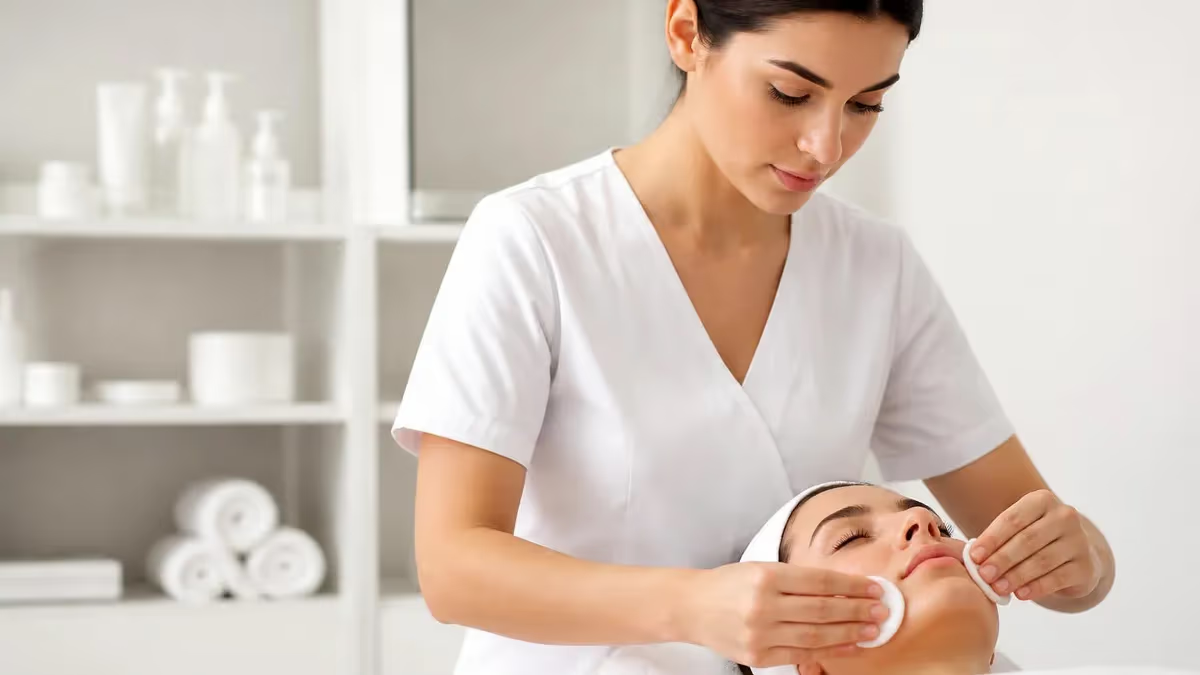
If you are searching for esthetician Manchester opportunities, you are entering one of the most dynamic skincare markets in the Northeast. Manchester, New Hampshire and the surrounding Hillsborough County region have seen a 14% jump in licensed skincare professionals over the past three years, driven by booming medical spas, dermatology partnerships, and luxury day spas along Elm Street and the South Willow corridor. Whether you are pivoting careers, finishing cosmetology school, or relocating from Boston, Manchester offers a competitive salary floor and a manageable cost of living.
An esthetician is a licensed skincare specialist trained to perform facials, chemical peels, waxing, microdermabrasion, lash and brow services, and pre and post-operative skin care under medical supervision. In New Hampshire, the practice is regulated by the Board of Barbering, Cosmetology, and Esthetics, which requires 600 hours of approved training before you can sit for the state and national exams. Manchester hosts three approved training programs within a 20-minute drive, making entry into the field unusually accessible compared to rural New England.
The local market splits into three distinct lanes. The first is traditional spa work at established locations like The Place Hair Design and several Bedford-based wellness centers, where senior estheticians earn $45,000 to $58,000 plus tips. The second lane is medical esthetics, which has exploded thanks to Manchester Plastic Surgery, Dermatology Professionals of New England, and several injector-led clinics that hire estheticians to handle laser treatments, HydraFacials, and post-procedure care. The third lane is independent booth rental, popular with experienced practitioners who want creative and pricing freedom.
Demand in Manchester outpaces supply right now, particularly for estheticians with advanced certifications in chemical peels, dermaplaning, and laser-assisted treatments. Job postings on Indeed, ZipRecruiter, and the New Hampshire Employment Security board consistently show 60 to 90 open esthetician roles within a 25-mile radius of downtown Manchester at any given time. Signing bonuses of $500 to $2,000 are not unusual for candidates willing to commit to medical spa work, and several employers now cover continuing education costs as a retention strategy.
This guide walks through everything you need to know to launch or grow an esthetician career in Manchester, from licensing requirements and school selection to salary benchmarks, employer expectations, and the credentialing path that opens medical esthetics doors. We have also pulled together specific information on local pay scales, top employers, and the niche specialties commanding the highest hourly rates. If you want to broaden your search beyond Manchester proper, you can find esthetician near me options across all of New Hampshire and northern Massachusetts.
One quick note on terminology before we dive in. You will see both "esthetician" and "aesthetician" spelled in Manchester job listings, and while many people use them interchangeably, the distinction can matter in a medical setting. We cover that in depth below, alongside details on the state exam, reciprocity from other states, and what to expect during your first 90 days on the job. By the end of this guide you will have a realistic, numbers-backed picture of what a skincare career in Manchester actually looks like.
The skincare industry nationally is projected to grow 9% through 2032 according to the Bureau of Labor Statistics, faster than the average for all occupations. Manchester is tracking ahead of that curve because of a steady influx of Boston-area clients seeking lower-cost premium services and a local population that has embraced wellness spending as a year-round routine rather than a luxury splurge. That demand stability is one reason esthetician roles here have shorter time-to-hire windows than comparable markets in Connecticut or Vermont.
Esthetician Manchester by the Numbers

New Hampshire Esthetician License Requirements
Applicants must be at least 18 years old and hold a high school diploma or GED. Proof of identification and a Social Security number are required at application. Out-of-state high school transcripts are accepted with notarized translation when applicable.
Complete 600 hours of esthetics training at a Board-approved New Hampshire school. Hours must include theory, sanitation, facial techniques, hair removal, makeup, and chemistry. Schools file completion paperwork directly with the Board on your behalf.
Pass both the NIC written theory exam and the practical skills exam administered through PSI testing centers. Manchester candidates typically test at the Bedford or Salem testing locations. The combined exam fee is approximately $172 in 2025.
Submit the New Hampshire esthetician license application with a $110 initial license fee. Background checks are required for medical esthetics positions. Licenses are renewed every two years with 0 hours of mandatory continuing education currently required.
Esthetician salary in Manchester sits comfortably above the New Hampshire state median for skincare professionals, thanks in large part to the concentration of medical spas and high-end dermatology practices in the metro area. The Bureau of Labor Statistics reports a New Hampshire median annual wage of $47,820 for skincare specialists as of the most recent data, with Manchester-specific pay running between $44,000 and $62,000 base before tips, commissions, and product sales bonuses. Top performers in medical settings routinely clear $75,000 once retail commissions and laser treatment bonuses are factored in.
Pay structure matters enormously in this industry, and Manchester employers use four primary models. Hourly plus commission is the most common at spas, typically $16 to $22 per hour plus 10% to 15% of service revenue once you hit a weekly threshold.
Straight commission, often 40% to 55% of service price, is standard at independent salons and rewards experienced estheticians with strong rebooking rates. Booth rental at $150 to $325 per week gives you 100% of revenue but requires you to build and maintain your own clientele. Medical spas often use a salaried model with quarterly performance bonuses tied to treatment package sales.
Tips add a meaningful layer to take-home pay. Manchester clients tip an average of 18% to 22% on facial services, slightly above the national average, and gratuities on packages or memberships can push annual tip income above $8,000 for full-time estheticians. Retail commissions are another lever, with most spas paying 10% on product sales and medical practices paying 15% to 20% on physician-grade skincare lines like SkinMedica, ZO Skin Health, and Alastin. Estheticians who consistently educate clients on home care often add $400 to $900 per month in retail commission alone.
Experience level dramatically shifts earning potential. A newly licensed esthetician in Manchester typically starts at $35,000 to $42,000 in the first year while building a book of repeat clients. By year three, with a steady clientele and one or two advanced certifications like chemical peels or microneedling, pay rises into the $50,000 to $58,000 range. Senior estheticians with a decade of experience, laser certification, and a loyal following frequently earn $65,000 to $85,000, particularly when they have negotiated favorable commission splits or moved into lead esthetician or spa director roles.
Setting choice influences both income and lifestyle. Day spas offer predictable schedules and steady walk-in traffic but cap upside. Medical spas pay better and offer continuing education, but pace is faster and treatment protocols are strict. Resort and hotel spas like those at Bedford Village Inn pay well but can be seasonal. Independent booth rental offers the highest ceiling but requires marketing skills, accounting discipline, and a willingness to absorb slow weeks. We have a detailed breakdown of esthetician employment opportunities and how each setting affects long-term earnings.
Benefits vary widely. Larger Manchester employers like Renew MediSpa and Seacoast Skin Spa offer paid time off, health insurance contributions, 401k matches, and free or discounted services for staff. Smaller independent salons may only offer commission splits and product discounts, which is fine if you are early in your career and prioritizing flexibility over benefits. Always ask explicitly during interviews about supply provision, since some spas charge estheticians for their own back-bar products, which can quietly erode take-home pay by $100 to $300 per month.
Negotiation is normal and expected. Manchester employers are accustomed to candidates asking about commission tiers, retail bonuses, education stipends, and signing bonuses. Coming to an interview with a clear sense of your minimum acceptable pay, your preferred pay structure, and your one-year and three-year income goals positions you as a professional and frequently results in better offers. Even new graduates have use right now given the open-role volume, so do not undersell yourself in the first job conversation.

Esthetician Practice Practice Test Questions
Prepare for the Esthetician Practice Exam exam with our free practice test modules. Each quiz covers key topics to help you pass on your first try.
Esthetician Practice Advanced Facial Treat...
Esthetician Practice Exam Questions covering Advanced Facial Treatments. Master Esthetician Practice Test concepts for certification prep.
Esthetician Practice Anatomy and Physiology
Free Esthetician Practice Practice Test featuring Anatomy and Physiology. Improve your Esthetician Practice Exam score with mock test prep.
Esthetician Practice Chemistry and Product...
Esthetician Practice Mock Exam on Chemistry and Product Ingredients. Esthetician Practice Study Guide questions to pass on your first try.
Esthetician Practice Client Consultation a...
Esthetician Practice Test Prep for Client Consultation and Analysis. Practice Esthetician Practice Quiz questions and boost your score.
Esthetician Practice Esthetics Chemistry a...
Esthetician Practice Questions and Answers on Esthetics Chemistry and Ingredients. Free Esthetician Practice practice for exam readiness.
Esthetician Practice Exam Esthetician Prac...
Esthetician Practice Mock Test covering Exam Esthetician Practice Advanced Facial Treatments Questions and Answers. Online Esthetician Practice Test practice with instant feedback.
Esthetician Practice Exam Esthetician Prac...
Free Esthetician Practice Quiz on Exam Esthetician Practice Anatomy and Physiology Questions and Answers. Esthetician Practice Exam prep questions with detailed explanations.
Esthetician Practice Exam Esthetician Prac...
Esthetician Practice Practice Questions for Exam Esthetician Practice Chemistry and Product Ingredients Questions and Answers. Build confidence for your Esthetician Practice certification exam.
Esthetician Practice Exam Esthetician Prac...
Esthetician Practice Test Online for Exam Esthetician Practice Client Consultation and Analysis Questions and Answers. Free practice with instant results and feedback.
Esthetician Practice Exam Esthetician Prac...
Esthetician Practice Study Material on Exam Esthetician Practice Esthetics Chemistry and Ingredients Questions and Answers. Prepare effectively with real exam-style questions.
Esthetician Practice Exam Esthetician Prac...
Free Esthetician Practice Test covering Exam Esthetician Practice Facial Treatments and Massage Questions and Answers. Practice and track your Esthetician Practice exam readiness.
Esthetician Practice Exam Esthetician Prac...
Esthetician Practice Exam Questions covering Exam Esthetician Practice Hair Removal Methods Questions and Answers. Master Esthetician Practice Test concepts for certification prep.
Esthetician Practice Exam Esthetician Prac...
Free Esthetician Practice Practice Test featuring Exam Esthetician Practice Infection Control and Safety Questions and Answers. Improve your Esthetician Practice Exam score with mock test prep.
Esthetician Practice Exam Esthetician Prac...
Esthetician Practice Mock Exam on Exam Esthetician Practice Skin Analysis and Conditions Questions and Answers. Esthetician Practice Study Guide questions to pass on your first try.
Esthetician Practice Exam Esthetician Prac...
Esthetician Practice Test Prep for Exam Esthetician Practice Skin Histology and Disorders Questions and Answers. Practice Esthetician Practice Quiz questions and boost your score.
Esthetician Practice Exam FREE Esthetician...
Esthetician Practice Questions and Answers on Exam FREE Esthetician Knowledge Questions and Answers. Free Esthetician Practice practice for exam readiness.
Esthetician Practice Exam FREE Esthetician...
Esthetician Practice Mock Test covering Exam FREE Esthetician MCQ Questions and Answers. Online Esthetician Practice Test practice with instant feedback.
Esthetician Practice Exam FREE Esthetician...
Free Esthetician Practice Quiz on Exam FREE Esthetician Practice Anatomy and Physiology Questions and Answers. Esthetician Practice Exam prep questions with detailed explanations.
Esthetician Practice Exam FREE Esthetician...
Esthetician Practice Practice Questions for Exam FREE Esthetician Practice Cosmetic Chemistry and Ingredients Questions and Answers. Build confidence for your Esthetician Practice certification exam.
Esthetician Practice Exam FREE Esthetician...
Esthetician Practice Test Online for Exam FREE Esthetician Practice Facial Treatments and Devices Questions and Answers. Free practice with instant results and feedback.
Esthetician Practice Exam FREE Esthetician...
Esthetician Practice Study Material on Exam FREE Esthetician Practice Hair Removal Procedures Questions and Answers. Prepare effectively with real exam-style questions.
Esthetician Practice Exam FREE Esthetician...
Free Esthetician Practice Test covering Exam FREE Esthetician Practice Infection Control and Safety Questions and Answers. Practice and track your Esthetician Practice exam readiness.
Esthetician Practice Exam FREE Esthetician...
Esthetician Practice Exam Questions covering Exam FREE Esthetician Practice Skin Analysis and Conditions Questions and Answers. Master Esthetician Practice Test concepts for certification prep.
Esthetician Practice Exam FREE Esthetician...
Free Esthetician Practice Practice Test featuring Exam FREE Esthetician (Reading) Questions and Answers. Improve your Esthetician Practice Exam score with mock test prep.
Esthetician Practice Facial Treatments and...
Esthetician Practice Mock Exam on Facial Treatments and Massage. Esthetician Practice Study Guide questions to pass on your first try.
Esthetician Practice Hair Removal Methods
Esthetician Practice Test Prep for Hair Removal Methods. Practice Esthetician Practice Quiz questions and boost your score.
Esthetician Practice Infection Control and...
Esthetician Practice Questions and Answers on Infection Control and Safety. Free Esthetician Practice practice for exam readiness.
Esthetician Practice Skin Analysis and Con...
Esthetician Practice Mock Test covering Skin Analysis and Conditions. Online Esthetician Practice Test practice with instant feedback.
Esthetician Practice Skin Histology and Di...
Free Esthetician Practice Quiz on Skin Histology and Disorders. Esthetician Practice Exam prep questions with detailed explanations.
Esthetician Practice Esthetician Knowledge
Esthetician Practice Practice Questions for Esthetician Knowledge. Build confidence for your Esthetician Practice certification exam.
Esthetician Practice Esthetician MCQ
Esthetician Practice Test Online for Esthetician MCQ. Free practice with instant results and feedback.
Esthetician Practice Cosmetic Chemistry an...
Esthetician Practice Study Material on Cosmetic Chemistry and Ingredients. Prepare effectively with real exam-style questions.
Esthetician Practice Facial Treatments and...
Free Esthetician Practice Test covering Facial Treatments and Devices. Practice and track your Esthetician Practice exam readiness.
Esthetician Schools and Training Paths Near Manchester
Empire Beauty School operates a Manchester campus on South Willow Street offering the full 600-hour esthetics program in both day and evening schedules. Day students typically complete the program in five months, while evening students finish in nine to ten months. Tuition runs approximately $13,500 and includes a complete student kit with back-bar products, implements, and uniforms.
Empire's curriculum emphasizes hands-on clinic work starting in week six, giving students real client exposure earlier than many competing programs. Federal financial aid is available for qualifying students, and Empire maintains a placement office that actively connects graduates with Manchester-area spas. Empire alumni hold senior positions at several local medical spas, which can be useful for networking after licensure.
Working as an Esthetician in Manchester: Pros and Cons
- +Strong demand with 85+ open positions in the metro area at any given time
- +Lower cost of living than Boston while serving overflow Boston-area clients
- +Growing medical esthetics sector offers higher pay and advancement
- +Manageable licensing path with only 600 required training hours
- +Tipping culture is strong, averaging 18 to 22 percent on services
- +Multiple booth rental options available for experienced practitioners
- −Winter months can slow walk-in traffic at non-medical spas
- −Standing for long shifts can cause back and foot strain over time
- −Booth rental requires marketing skills many new grads lack
- −Some independent salons charge estheticians for back-bar supplies
- −Medical spa roles often require evening and weekend availability
- −Continuing education costs add up if employer does not subsidize
Pros and Cons at a Glance
| Pros | Cons |
|---|---|
| Lower cost of living than Boston while serving overflow Boston-area clients | Winter months can slow walk-in traffic at non-medical spas |
| Growing medical esthetics sector offers higher pay and advancement | Standing for long shifts can cause back and foot strain over time |
| Multiple booth rental options available for experienced practitioners | Booth rental requires marketing skills many new grads lack |

Manchester Esthetician Job Search Checklist
- ✓Verify your New Hampshire esthetician license is active and in good standing
- ✓Update your resume with specific service skills, certifications, and treatment protocols
- ✓Build a portfolio of before-and-after photos with written client consent
- ✓Create profiles on Indeed, ZipRecruiter, and StyleSeat for Manchester-area searches
- ✓Identify your top 10 target employers across spa, medical, and resort categories
- ✓Research each employer's pay structure, hours, and benefits before applying
- ✓Prepare a 90-second professional introduction highlighting your specialty
- ✓Schedule working interviews to perform a facial demonstration when offered
- ✓Ask explicit questions about commission tiers, retail bonuses, and supply provision
- ✓Follow up within 48 hours of every interview with a thank-you note
Working interviews matter more than your resume
Nearly every Manchester spa and medical practice will ask you to perform a working interview, typically a 45-minute facial on a staff member or paid model. This is where offers are made or withdrawn. Practice a polished signature facial protocol that demonstrates analysis, technique, product knowledge, and client communication. Bring your own implements and arrive 15 minutes early to set up.
The split between medical esthetics and traditional spa work is the single most important career decision facing Manchester estheticians today. Medical esthetics, sometimes called medi-spa or clinical esthetics, takes place under physician supervision and involves treatments that go deeper than what is allowed in a standard spa. A medical esthetician in Manchester might perform laser hair removal, IPL photofacials, deeper chemical peels, microneedling with PRP, post-surgical wound care, and prep work for injectable appointments handled by a nurse injector or physician.
Pay reflects the higher skill ceiling. A medical esthetician in Manchester typically starts at $48,000 to $55,000 and can reach $80,000 with experience, laser certification, and a strong retail attachment rate. The work environment is more clinical, with stricter protocols, electronic health records, and team-based care alongside physicians, nurse practitioners, and physician assistants. Many medical estheticians describe the work as intellectually engaging because it requires understanding skin conditions, contraindications, and how treatments interact with prescription medications.
Traditional spa esthetics is fundamentally different in pace and feel. The focus is on relaxation, wellness, and consistent maintenance facials rather than aggressive results-driven treatments. Service menus typically include signature facials, back treatments, body wraps, waxing, lash and brow services, and makeup application for events. Spa estheticians often build deeper personal relationships with regular clients, which produces steady tip income and strong rebooking rates. The downside is a lower income ceiling and fewer pathways to advanced certifications without employer support.
The aesthetician vs esthetician distinction comes up most often in medical settings. Functionally, both spellings refer to the same licensed skincare professional in most US states, including New Hampshire. However, some medical practices specifically use "medical aesthetician" as a job title to signal a clinical orientation, and a few states like Washington and Virginia maintain a separate "master esthetician" credential with additional required hours. New Hampshire does not have a master esthetician tier, so the spelling difference in Manchester is essentially marketing rather than a credentialing distinction.
Hybrid roles are becoming more common. Many Manchester practices now hire estheticians for a mix of clinical work in the morning and traditional facials in the afternoon, which keeps the role varied and broadens skill development. Bedford Plastic Surgery and several dermatology offices in Hooksett follow this model. If you are early in your career and unsure which lane fits your personality, a hybrid role is an excellent way to sample both before committing to one specialty.
If you are considering nursing as a parallel credential, the nurse esthetician path is worth exploring. Registered nurses with esthetics training can perform injectables, sclerotherapy, and certain laser treatments that go beyond what a standard esthetician license allows in New Hampshire. The training investment is significant but the pay ceiling is dramatically higher. We cover the full path in our guide to esthetician schools and the nurse esthetician credential.
Choosing between medical and traditional spa work should come down to personality and goals. If you are detail-oriented, enjoy clinical environments, and want maximum earning potential, medical esthetics is the smart bet. If you are wellness-focused, love the ritual of a relaxing facial, and prioritize work-life balance with a predictable schedule, traditional spa work offers a more sustainable long-term fit. Many successful Manchester estheticians start in spa work to build technique and confidence, then transition to medical settings after two or three years.
New Hampshire esthetician licenses renew every two years on the last day of your birth month. Missing the renewal deadline triggers a $50 late fee and can suspend your ability to work legally. Set a calendar reminder 60 days in advance and submit renewal documents through the Board's online portal to avoid processing delays.
Career growth for Manchester estheticians follows several well-worn paths, each with distinct income and lifestyle trade-offs. The most common progression is from junior esthetician to senior or lead esthetician within two to three years, then to spa director, treatment manager, or independent owner by year five to seven. Each step typically brings a 15% to 30% pay bump and meaningful changes in daily responsibilities. Understanding these paths early helps you make smart decisions about certifications, employer selection, and how aggressively to build your personal brand.
Specialization is the single highest-use way to accelerate income growth. Estheticians who specialize in acne treatment using Face Reality, DMK, or Vivant protocols often build cash-pay practices with 80% rebooking rates and waiting lists. Specialists in lash extensions can charge $150 to $300 per full set and complete two to three sets per day. Brow artists offering microblading or nano brows charge $400 to $900 per service. Each specialty requires upfront training investment of $1,000 to $5,000 but typically pays back within six months of consistent bookings.
Booth rental and salon suite ownership represent the entrepreneurial path. Manchester has several salon suite buildings including Sola Salon Studios and Phenix Salon Suites where estheticians rent private rooms for $200 to $325 per week and operate fully independent businesses. The math can work beautifully for experienced estheticians with a strong existing clientele, often producing $80,000 to $120,000 in annual take-home income. The trade-off is full responsibility for marketing, scheduling, supplies, insurance, and slow weeks with no employer safety net.
Education and brand work offer another growth lane. Experienced Manchester estheticians often supplement service income with teaching gigs at local schools, manufacturer education roles with brands like Dermalogica or HydraFacial, and freelance content creation for skincare brands. These side roles typically pay $30 to $75 per hour and provide professional visibility that drives client referrals. A few Manchester estheticians have built substantial Instagram and TikTok followings that translate into product collaborations and paid education contracts.
Moving into management or ownership is a longer timeline but offers the highest income potential. Spa directors at established Manchester properties earn $65,000 to $95,000 plus performance bonuses. Owning a small spa or skincare studio can produce $100,000 to $250,000 in owner take-home pay once the business stabilizes, though startup costs of $50,000 to $150,000 and the first 18 to 24 months of cash flow stress are real obstacles. SBA loans and equipment financing are widely available for licensed practitioners with strong business plans.
Geographic flexibility within New England is another advantage of the Manchester base. With a New Hampshire license, you can pursue reciprocity in Maine, Vermont, and Massachusetts relatively easily, opening up additional employment markets within a two-hour drive. Several Manchester estheticians maintain dual licensure to work part-time in Boston medical spas where pay is even higher. The full reciprocity process and application timelines are covered in our guide on how to become an esthetician.
Finally, do not overlook the value of continuing education for long-term career resilience. Skincare ingredients, devices, and treatment protocols evolve quickly, and estheticians who invest in ongoing learning consistently out-earn those who rely on their original training. Budgeting $1,500 to $3,000 per year for advanced classes, industry conferences like IECSC Las Vegas, and trade publication subscriptions is a smart investment that pays back through higher service pricing, stronger client retention, and more job offers when you want to make a move.
Practical preparation makes the difference between landing your first Manchester esthetician role in two weeks versus two months. Start by getting your professional documentation in order before you begin applying. This means a clean copy of your New Hampshire license, two forms of ID, your training transcript, proof of liability insurance if you have it, and a one-page resume formatted for skincare hiring managers. Most Manchester employers want to see your specific training hours, any advanced certifications, and the brands and equipment you have hands-on experience with.
Build a working portfolio even if you are a new graduate. Photograph your school clinic work with written model consent, organize images by service type, and store them in a free Google Drive folder you can share via link during interviews. Include a mix of facials, waxing, makeup, and any advanced services. Hiring managers respond to visual evidence of technique because resumes and licenses alone do not show your eye for skin or your finishing quality. A portfolio of 15 to 25 strong images outperforms a longer collection of mediocre work.
Research each target employer before you apply. Read recent Google reviews, scroll the spa's Instagram to understand their aesthetic and service menu, and identify the senior esthetician or owner by name. When you reach out, reference specific things you noticed about their work and explain why you are a fit. Generic applications get filtered out quickly in a crowded market, while thoughtful personalized outreach almost always gets a response, even from spas not actively advertising openings. Many Manchester roles are filled through this informal channel rather than job boards.
Prepare for the working interview seriously. Practice your signature facial protocol on friends and family until you can perform it confidently in under 45 minutes including consultation, double cleanse, exfoliation, extractions, mask, massage, and finishing products. Time yourself with a stopwatch. Bring your own implements in a clean sanitized organizer. Wear clean professional attire with closed-toe shoes and minimal jewelry. Speak through your decisions out loud during the service so the evaluator understands your reasoning, not just your hands.
Negotiate your offer with specific numbers in mind. Walk into salary conversations knowing your minimum acceptable hourly rate, your target commission tier, and which benefits matter most to you. If the initial offer is below your target, ask politely for the rationale and counter with a specific number rather than vague disappointment. Manchester employers expect negotiation from experienced candidates and increasingly from new graduates as well. The worst outcome is the offer stays the same, so there is essentially no downside to a respectful counter.
Plan your first 90 days carefully. Use this period to learn the spa's protocols exactly as written, build relationships with front desk staff who control your booking density, and identify two or three regular clients you can begin to build a personal connection with. Avoid the trap of immediately suggesting changes to how things are done, even if you see obvious improvements. Demonstrating that you can execute the existing system before proposing changes builds credibility quickly and makes your eventual ideas land better.
Finally, invest in your physical and mental sustainability from day one. Esthetics is physically demanding, with repetitive hand and shoulder motions, long periods of standing, and constant client emotional labor. Build a stretching and strength routine targeted at your back, shoulders, and forearms. Set strict boundaries around your schedule to prevent burnout. The estheticians who build 15 and 20 year careers in Manchester are not the ones who work the hardest in year one. They are the ones who pace themselves, invest in their bodies, and keep learning steadily across decades.
Sample Esthetician Practice Questions
Try these questions from our free Esthetician practice tests. The correct answer and an explanation follow each question.
Which type of skin condition is characterized by open and closed comedones?
- A. Rosacea
- B. Acne vulgaris
- C. Eczema
- D. Psoriasis
Answer: B. Acne vulgaris
Acne vulgaris is defined by the presence of comedones, including blackheads (open) and whiteheads (closed), caused by clogged hair follicles.
What is the primary function of melanocytes in the skin?
- A. Produce keratin for skin strength
- B. Produce melanin for UV protection
- C. Regulate body temperature
- D. Facilitate wound healing
Answer: B. Produce melanin for UV protection
Melanocytes produce melanin, which absorbs ultraviolet radiation and protects deeper skin layers from sun damage.
A client with inflamed, grade III acne has an appointment for a signature facial. Which step of the service should the esthetician significantly modify or completely avoid?
- A. Applying a clay-based mask.
- B. Performing a double cleanse.
- C. Vigorous massage movements over the affected areas.
- D. Using a high-frequency wand after extractions.
Answer: C. Vigorous massage movements over the affected areas.
Vigorous massage is contraindicated for inflamed or cystic acne as it can exacerbate irritation, spread bacteria to other areas of the face, and increase inflammation.
A formulator wants to create an oil-in-water (O/W) emulsion. Which of the following emulsifiers would be most appropriate?
- A. An emulsifier with a low HLB value (3–6)
- B. An emulsifier with a high HLB value (8–18)
- C. A purely hydrophobic wax such as carnauba wax
- D. A silicone-based occlusive agent
Answer: B. An emulsifier with a high HLB value (8–18)
HLB (Hydrophilic-Lipophilic Balance) values indicate an emulsifier's affinity for water versus oil. Emulsifiers with high HLB values (8–18) are more hydrophilic and stabilize oil-in-water emulsions, while low HLB emulsifiers (3–6) are better suited for water-in-oil emulsions.
Esthetician Questions and Answers

Esthetician Practice Exam 2026
Esthetician Salary: Pay by State, Setting, and Experience (2026)
Nurse Esthetician: Career Overview, Training Path, Salary, Job Duties, and How to Become One

How to Become an Esthetician: Requirements, Training Hours, Costs, and Career Paths
Esthetician vs Cosmetologist: Complete Career Comparison Guide for 2026
About the Author
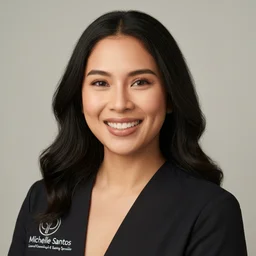
Licensed Cosmetologist & Beauty Licensing Exam Specialist
Paul Mitchell SchoolsMichelle Santos is a licensed cosmetologist with a Bachelor of Science in Esthetics and Salon Management from Paul Mitchell School. She has 16 years of salon industry experience and 8 years preparing students for state cosmetology board exams in theory, practical skills, and sanitation. She specializes in licensure preparation for cosmetologists, estheticians, and nail technicians.
Join the Discussion
Connect with other students preparing for this exam. Share tips, ask questions, and get advice from people who have been there.
View discussion (4 replies)