
Esthetician License in Virginia: Complete Requirements Guide for 2026 October
⏳ Complete guide to the esthetician license in Virginia: training hours, exams, fees, reciprocity, renewal, and step-by-step licensing requirements for 2026 October.
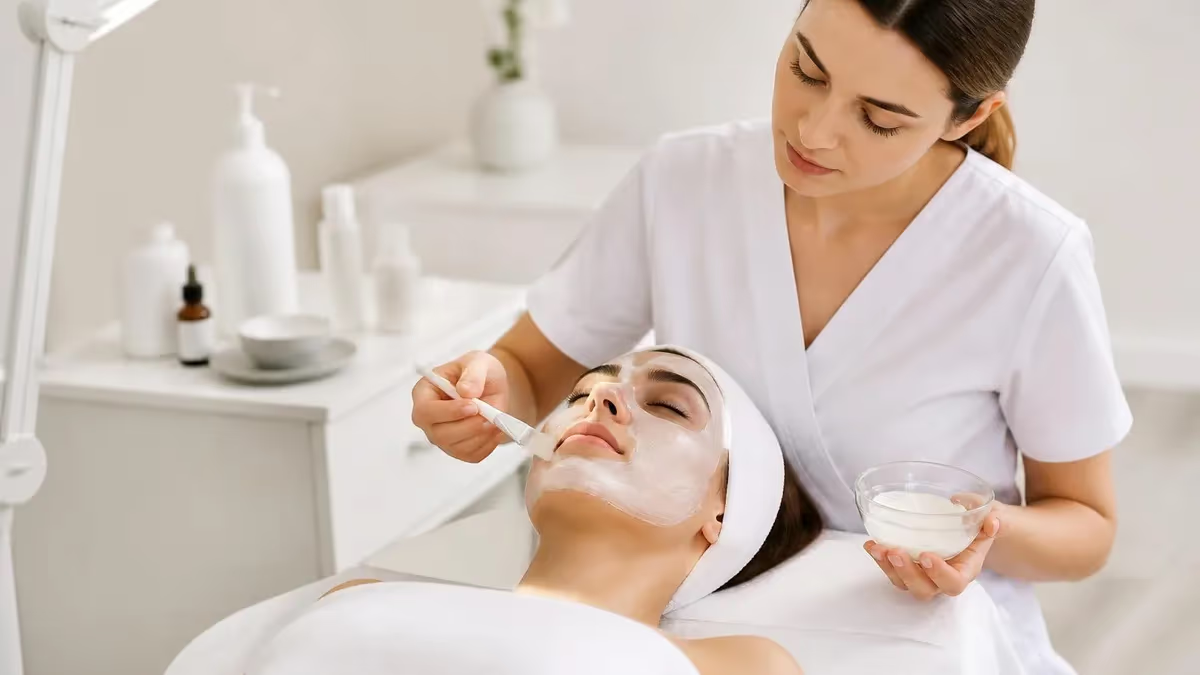
Earning your esthetician license in Virginia opens the door to one of the fastest-growing beauty and wellness careers in the Mid-Atlantic, with skincare specialists in Richmond, Norfolk, Arlington, and Virginia Beach commanding strong wages and steady demand. The Virginia Board of Barbers and Cosmetology regulates the credential, sets training hour minimums, and approves the written and practical examinations every applicant must pass before working with paying clients. Understanding the rules now saves months of confusion later.
Virginia recognizes two distinct skincare credentials: the standard esthetician license, which requires 600 hours of approved training, and the master esthetician license, which requires an additional 600 hours focused on advanced modalities like microdermabrasion, chemical exfoliation, and lymphatic drainage. This two-tier structure is unusual nationally and gives Virginia practitioners a clear pathway to higher-paying medical spa work without crossing into nursing scope. Choosing the right tier early matters.
The job market backs up the investment. Bureau of Labor Statistics data shows Virginia employs more than 4,800 licensed skincare specialists, with metropolitan Washington D.C. suburbs reporting median wages roughly 18 percent above the national average. Searching for an esthetician near me in Northern Virginia returns hundreds of medical spas, dermatology clinics, and wellness centers actively hiring, especially for licensees comfortable with chemical peels and LED therapy.
Compared with neighboring states, Virginia sits in the middle of the regulatory spectrum. North Carolina requires 600 hours, Maryland requires 600 hours, but neither offers a separate master credential. West Virginia requires only 600 hours and has more limited scope rules. Knowing how your Virginia credential compares matters if you plan to move, work near a state border, or apply for reciprocity later in your career, because each board interprets training documentation differently.
This guide walks through every step: choosing an approved school, completing 600 (or 1,200) hours, registering for the Virginia Board examination, paying fees, submitting fingerprints, and maintaining the license through biennial renewal. We cover medical esthetician pathways, salary benchmarks, employment opportunities, and the differences between aesthetician and esthetician terminology that still confuse hiring managers and applicants in 2026.
You will also find direct comparisons with cosmetology and nursing credentials, because Virginia allows multiple routes into advanced skincare. Some applicants combine an esthetician license with a registered nursing credential to perform injectables under physician supervision; others stack the master esthetician credential to maximize earning potential without additional schooling. The right path depends on your timeline, budget, and long-term career goals across the Commonwealth.
By the end of this article, you will know exactly what Virginia requires, how much the process costs, how long it takes, and what the exam looks like. We finish with frequently asked questions, practice quiz links, and related career guides so you can move from research to enrollment without guesswork or wasted application fees this licensing cycle.
Virginia Esthetician License by the Numbers
Key Facts at a Glance
| Item | Value | Details |
|---|---|---|
| License Application Fee | $105 | Plus exam fees |
| Minimum Passing Score | 75% | Written and practical |
| Minimum Age | 17 | 10th grade education |
Virginia Licensing Steps at a Glance
Confirm Eligibility
Enroll in Approved School
Complete Training Hours
Apply and Test
Receive License
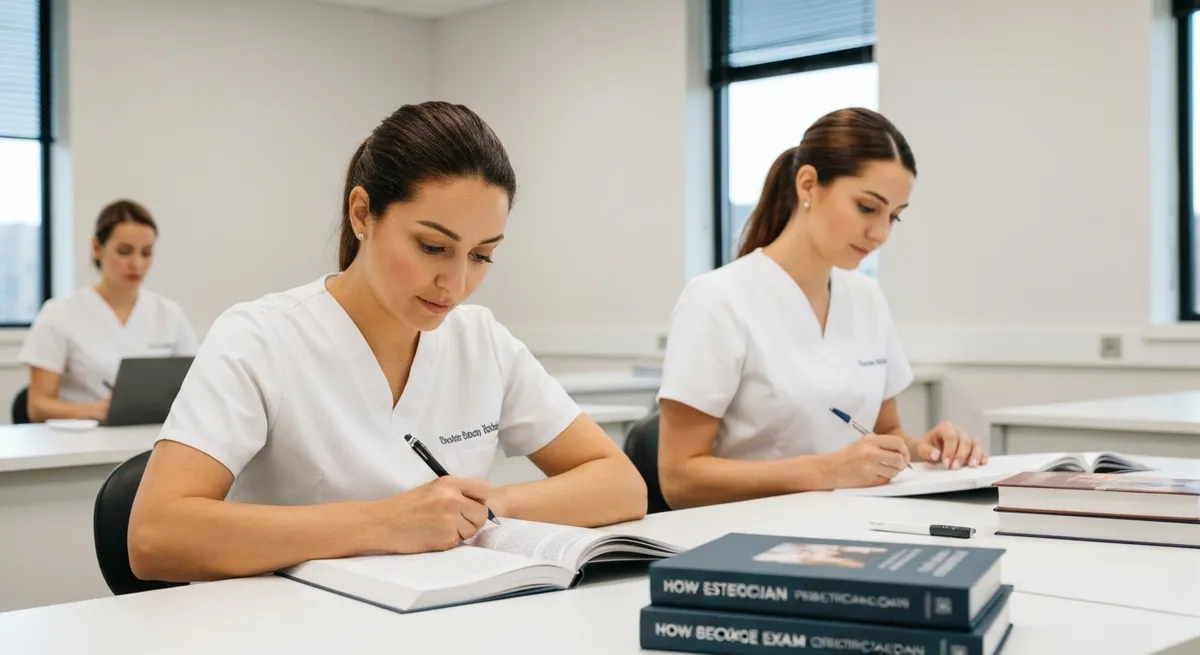
Virginia requires every esthetician candidate to complete 600 hours of instruction at a school licensed by the Virginia Board of Barbers and Cosmetology. The curriculum is divided between theory and hands-on practical work, with mandatory units covering skin anatomy, physiology, infection control, electricity in the treatment room, product chemistry, and Virginia-specific laws and regulations. Schools that omit any required topic risk losing approval, which would invalidate transcripts. Always confirm a school is listed as currently approved.
For students pursuing the master credential, the requirement jumps to 1,200 total hours, with the second 600 hours focused on advanced modalities such as chemical exfoliation beyond superficial depth, microdermabrasion, advanced electrical modalities, light-based therapies, and advanced manual lymphatic drainage. Master programs cost more but unlock medical spa employment at salaries 20 to 35 percent higher than standard licensees command in the Richmond and Tysons Corner markets. Plan tuition carefully.
Tuition at approved esthetician schools in Virginia ranges from roughly $6,000 at community colleges to $18,000 at private beauty academies in Northern Virginia. Federal financial aid is available at accredited programs, and Virginia Workforce grants occasionally cover skincare training for displaced workers. Always request a full cost breakdown including kits, books, uniforms, and exam fees before signing enrollment paperwork, because hidden fees frequently add $1,500 to advertised tuition prices.
Approved program formats include full-time daytime, part-time evening, and limited hybrid schedules where theory is delivered online while practical hours remain on campus. Virginia does not currently permit fully online esthetics training because hands-on supervision is required for every practical hour. Be skeptical of any out-of-state online program claiming to satisfy Virginia requirements; the Board has rejected hundreds of such transcripts in recent years, costing applicants thousands in wasted tuition.
Apprenticeship is also legal in Virginia, but only under tightly supervised conditions. A registered esthetics apprentice must train at least 1,500 hours under a licensed master esthetician who maintains daily logs and submits quarterly progress reports to the Board. The apprenticeship route takes roughly twice as long as school but eliminates tuition. Few salons sponsor apprentices today because of the documentation burden, so confirm placement availability before counting on this option.
Schools must teach Virginia-specific subjects including Title 54.1 chapter 7 of the Code of Virginia, the Board's regulations on sanitation, draping, and infection prevention, and the rules governing chemical exfoliation depth. These topics appear heavily on the written examination, so students should not skip Virginia law lectures even when they overlap with general theory. Approximately 15 percent of exam questions test state-specific knowledge that out-of-state textbooks frequently omit entirely.
Finally, document every hour. Virginia requires schools to maintain attendance records signed by both student and instructor, and the Board may audit these records years after graduation. Keep personal copies of attendance logs, practical service sheets, and quizzes. If your school closes unexpectedly, which has happened several times in Virginia, your personal records become the only proof of completion when applying for licensure through the Board's school-closure provisions.
Esthetician Practice Practice Test Questions
Prepare for the Esthetician Practice Exam exam with our free practice test modules. Each quiz covers key topics to help you pass on your first try.
Esthetician Practice Advanced Facial Treat...
Esthetician Practice Exam Questions covering Advanced Facial Treatments. Master Esthetician Practice Test concepts for certification prep.
Esthetician Practice Anatomy and Physiology
Free Esthetician Practice Practice Test featuring Anatomy and Physiology. Improve your Esthetician Practice Exam score with mock test prep.
Esthetician Practice Chemistry and Product...
Esthetician Practice Mock Exam on Chemistry and Product Ingredients. Esthetician Practice Study Guide questions to pass on your first try.
Esthetician Practice Client Consultation a...
Esthetician Practice Test Prep for Client Consultation and Analysis. Practice Esthetician Practice Quiz questions and boost your score.
Esthetician Practice Esthetics Chemistry a...
Esthetician Practice Questions and Answers on Esthetics Chemistry and Ingredients. Free Esthetician Practice practice for exam readiness.
Esthetician Practice Exam Esthetician Prac...
Esthetician Practice Mock Test covering Exam Esthetician Practice Advanced Facial Treatments Questions and Answers. Online Esthetician Practice Test practice with instant feedback.
Esthetician Practice Exam Esthetician Prac...
Free Esthetician Practice Quiz on Exam Esthetician Practice Anatomy and Physiology Questions and Answers. Esthetician Practice Exam prep questions with detailed explanations.
Esthetician Practice Exam Esthetician Prac...
Esthetician Practice Practice Questions for Exam Esthetician Practice Chemistry and Product Ingredients Questions and Answers. Build confidence for your Esthetician Practice certification exam.
Esthetician Practice Exam Esthetician Prac...
Esthetician Practice Test Online for Exam Esthetician Practice Client Consultation and Analysis Questions and Answers. Free practice with instant results and feedback.
Esthetician Practice Exam Esthetician Prac...
Esthetician Practice Study Material on Exam Esthetician Practice Esthetics Chemistry and Ingredients Questions and Answers. Prepare effectively with real exam-style questions.
Esthetician Practice Exam Esthetician Prac...
Free Esthetician Practice Test covering Exam Esthetician Practice Facial Treatments and Massage Questions and Answers. Practice and track your Esthetician Practice exam readiness.
Esthetician Practice Exam Esthetician Prac...
Esthetician Practice Exam Questions covering Exam Esthetician Practice Hair Removal Methods Questions and Answers. Master Esthetician Practice Test concepts for certification prep.
Esthetician Practice Exam Esthetician Prac...
Free Esthetician Practice Practice Test featuring Exam Esthetician Practice Infection Control and Safety Questions and Answers. Improve your Esthetician Practice Exam score with mock test prep.
Esthetician Practice Exam Esthetician Prac...
Esthetician Practice Mock Exam on Exam Esthetician Practice Skin Analysis and Conditions Questions and Answers. Esthetician Practice Study Guide questions to pass on your first try.
Esthetician Practice Exam Esthetician Prac...
Esthetician Practice Test Prep for Exam Esthetician Practice Skin Histology and Disorders Questions and Answers. Practice Esthetician Practice Quiz questions and boost your score.
Esthetician Practice Exam FREE Esthetician...
Esthetician Practice Questions and Answers on Exam FREE Esthetician Knowledge Questions and Answers. Free Esthetician Practice practice for exam readiness.
Esthetician Practice Exam FREE Esthetician...
Esthetician Practice Mock Test covering Exam FREE Esthetician MCQ Questions and Answers. Online Esthetician Practice Test practice with instant feedback.
Esthetician Practice Exam FREE Esthetician...
Free Esthetician Practice Quiz on Exam FREE Esthetician Practice Anatomy and Physiology Questions and Answers. Esthetician Practice Exam prep questions with detailed explanations.
Esthetician Practice Exam FREE Esthetician...
Esthetician Practice Practice Questions for Exam FREE Esthetician Practice Cosmetic Chemistry and Ingredients Questions and Answers. Build confidence for your Esthetician Practice certification exam.
Esthetician Practice Exam FREE Esthetician...
Esthetician Practice Test Online for Exam FREE Esthetician Practice Facial Treatments and Devices Questions and Answers. Free practice with instant results and feedback.
Esthetician Practice Exam FREE Esthetician...
Esthetician Practice Study Material on Exam FREE Esthetician Practice Hair Removal Procedures Questions and Answers. Prepare effectively with real exam-style questions.
Esthetician Practice Exam FREE Esthetician...
Free Esthetician Practice Test covering Exam FREE Esthetician Practice Infection Control and Safety Questions and Answers. Practice and track your Esthetician Practice exam readiness.
Esthetician Practice Exam FREE Esthetician...
Esthetician Practice Exam Questions covering Exam FREE Esthetician Practice Skin Analysis and Conditions Questions and Answers. Master Esthetician Practice Test concepts for certification prep.
Esthetician Practice Exam FREE Esthetician...
Free Esthetician Practice Practice Test featuring Exam FREE Esthetician (Reading) Questions and Answers. Improve your Esthetician Practice Exam score with mock test prep.
Esthetician Practice Facial Treatments and...
Esthetician Practice Mock Exam on Facial Treatments and Massage. Esthetician Practice Study Guide questions to pass on your first try.
Esthetician Practice Hair Removal Methods
Esthetician Practice Test Prep for Hair Removal Methods. Practice Esthetician Practice Quiz questions and boost your score.
Esthetician Practice Infection Control and...
Esthetician Practice Questions and Answers on Infection Control and Safety. Free Esthetician Practice practice for exam readiness.
Esthetician Practice Skin Analysis and Con...
Esthetician Practice Mock Test covering Skin Analysis and Conditions. Online Esthetician Practice Test practice with instant feedback.
Esthetician Practice Skin Histology and Di...
Free Esthetician Practice Quiz on Skin Histology and Disorders. Esthetician Practice Exam prep questions with detailed explanations.
Esthetician Practice Esthetician Knowledge
Esthetician Practice Practice Questions for Esthetician Knowledge. Build confidence for your Esthetician Practice certification exam.
Esthetician Practice Esthetician MCQ
Esthetician Practice Test Online for Esthetician MCQ. Free practice with instant results and feedback.
Esthetician Practice Cosmetic Chemistry an...
Esthetician Practice Study Material on Cosmetic Chemistry and Ingredients. Prepare effectively with real exam-style questions.
Esthetician Practice Facial Treatments and...
Free Esthetician Practice Test covering Facial Treatments and Devices. Practice and track your Esthetician Practice exam readiness.
Virginia Esthetician License Exam Format
The Virginia written examination is delivered by PSI and contains 110 multiple-choice questions drawn from skin sciences, infection control, product chemistry, electrical modalities, and Virginia laws and regulations. Candidates have 120 minutes to complete the test. You need at least 75 percent correct to pass, which works out to 83 right answers out of the scored items, since some questions are unscored pilots.
Topics are weighted unevenly. Roughly 30 percent of items cover skin treatments and procedures, 20 percent focus on safety and infection control, 15 percent address Virginia state laws, and the remaining items split among anatomy, electricity, and chemistry. Plan your study time accordingly. Most failing candidates report underpreparing on the state law section, which has no national textbook equivalent and requires direct study of Board regulations.

Is the Virginia Esthetician License Worth It?
- +Two-tier system lets you earn more with the master credential
- +Strong Northern Virginia salaries driven by D.C. metro demand
- +Reciprocity available with several neighboring states
- +600-hour standard is achievable in under seven months full-time
- +Medical spa job market growing rapidly across all metros
- +Lower tuition than most cosmetology programs
- +Self-employment and booth rental are explicitly legal statewide
- −Master credential requires an additional 600 training hours
- −State law section trips up many out-of-state textbook users
- −Apprenticeship path is technically allowed but rarely sponsored
- −Fully online programs do not satisfy Virginia hour requirements
- −Biennial renewal includes mandatory continuing education hours
- −Some advanced devices remain restricted to medical professionals
- −License does not transfer automatically to every other state
Virginia Esthetician License Application Checklist
- ✓Confirm you are at least 17 years old on application date
- ✓Obtain proof of 10th grade education or equivalent
- ✓Choose an approved Virginia esthetics school and verify school number
- ✓Complete all 600 (or 1,200) clock hours with signed attendance records
- ✓Request an official school transcript sent directly to the Board
- ✓Complete the Virginia Board application form with current address
- ✓Pay the $105 application fee by check, money order, or online portal
- ✓Submit fingerprint background check through the approved vendor
- ✓Register and pay separately for the PSI written and practical exams
- ✓Pass both exams with a minimum 75 percent score on each section
- ✓Provide a model and proper kit for the practical examination day
- ✓Wait four to six weeks for license issuance and verification mail
Order your transcript early and pay the rush fee.
The single most common reason Virginia license applications stall is a missing or delayed school transcript. Schools sometimes take two to three weeks to send official copies, and the Board will not schedule your exam until the transcript arrives. Request the transcript on your last day of class, pay any rush fee available, and confirm receipt with the Board before booking PSI test dates.
Earning power varies sharply across Virginia. The Bureau of Labor Statistics reports a statewide median of roughly $42,300 for licensed skincare specialists, but the Washington-Arlington-Alexandria metropolitan area pushes that figure to $51,800 and the Richmond metro reports $44,100. Rural areas of southwest Virginia and the Eastern Shore report medians closer to $34,000. Knowing your local market before signing a salon lease or accepting a first job protects against years of underpayment in this skincare field.
Compensation structures also vary. The typical how to become an esthetician guide presents salary as a single number, but in Virginia most licensees earn through a hybrid model combining base hourly wage, service commission, retail commission, and tips. Booth renters keep all service revenue but pay weekly rent ranging from $150 in small towns to $450 in Tysons Corner. Medical estheticians at dermatology practices typically earn straight salary plus quarterly performance bonuses tied to retention.
Master estheticians command the highest hourly rates. Medical spas in Reston, Charlottesville, and Virginia Beach routinely advertise master positions starting at $28 per hour plus commission, putting annual gross earnings near $70,000 for full-time clinicians who maintain a strong book. Standard licensees in the same facilities typically start at $18 to $22 per hour. The wage gap explains why so many Virginia students return for the additional 600 master hours within two years of initial licensure.
Beyond traditional salons, Virginia estheticians find esthetician employment opportunities in resort spas at Wintergreen and Williamsburg, cruise lines departing Norfolk, corporate wellness programs in Northern Virginia, plastic surgery practices, OB-GYN clinics offering postpartum skincare, and increasingly in hotel chains adding spa amenities. Each setting offers different schedules, benefits, and ceilings. Hospital-affiliated medical spas typically include retirement plans and health insurance, which independent salons rarely provide to their licensees in any meaningful form.
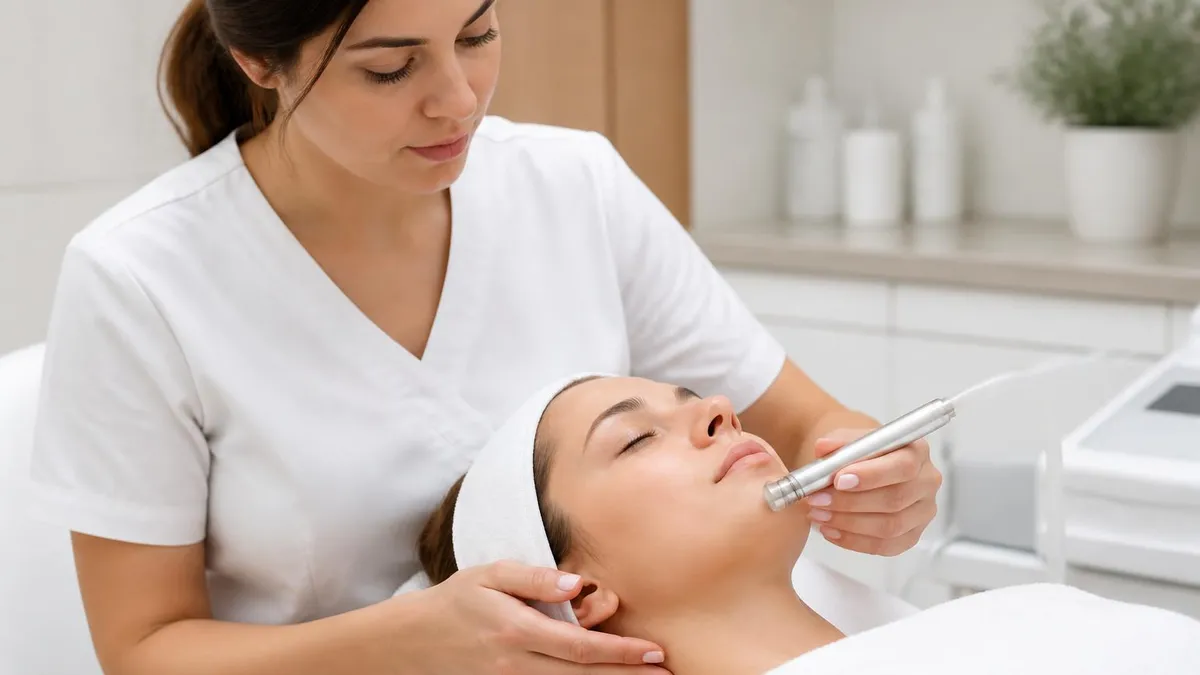
The medical esthetician pathway deserves special attention in Virginia. Working alongside dermatologists, plastic surgeons, and nurse practitioners, medical estheticians perform pre and post-procedure skincare, advanced peels, microneedling under supervision where allowed, and product recommendations tied to medical treatment plans. Virginia does not require an additional credential to call yourself a medical esthetician, but employers strongly prefer the master license plus relevant continuing education in oncology esthetics, post-surgical care, or laser safety certifications.
Self-employment is popular but requires planning. Virginia allows licensed estheticians to operate as sole proprietors, LLCs, or booth renters, but you must register a salon with the Board separately from your personal license. Salon registration requires a Board inspection, written sanitation plan, and liability insurance verification. Skipping this registration is the most common reason new business owners face fines, even when their personal license remains in perfect standing throughout the inspection period.
Career growth typically follows a predictable path. Years one and two focus on building a client book and refining technique. Years three through five add master credentialing, specialty certifications, and possibly a small lease. By year seven, many Virginia estheticians own their own studio, train apprentices, or move into education at one of the state's approved schools. The credential itself never expires as long as renewal and continuing education obligations remain current throughout your working career.

Virginia law prohibits any skincare service for compensation before your license number is officially issued and on display at your work location. Performing facials, waxing, or makeup application for paying clients while still awaiting license issuance results in fines starting at $500 and can permanently bar you from licensure. Wait for the physical license card before accepting your first paying client.
Virginia licenses must be renewed every two years on a schedule tied to your initial issuance date. The renewal fee is currently $105, and renewal opens 60 days before expiration through the Department of Professional and Occupational Regulation online portal. Late renewal within 30 days adds a $25 penalty; renewal between 30 days and one year late carries a $50 penalty plus possible reinstatement requirements. Licenses lapsed more than one year require reapplication and often retesting under current Board rules.
Virginia does not currently mandate continuing education hours for renewal, but the Board has signaled this could change before 2028. Many employers, particularly medical spas and dermatology practices, require their licensees to complete 8 to 16 hours of relevant continuing education annually as a condition of employment. Common topics include bloodborne pathogens, laser safety, advanced peel chemistry, and oncology esthetics. Tracking these voluntary hours protects your professional standing and your value to employers.
Reciprocity rules are nuanced. Virginia accepts licenses from states with substantially equivalent training requirements, which generally means at least 600 hours of approved instruction plus a passing score on an examination considered comparable to PSI's Virginia content. Maryland, North Carolina, and the District of Columbia licensees usually transfer smoothly. Florida, Texas, and California licensees may need to document additional hours or sit for the Virginia state law portion of the written exam to complete the reciprocity process.
The terminology question of aesthetician vs esthetician still creates confusion in Virginia paperwork. The Board uses the spelling esthetician on all official documents and forms. Aesthetician, with the leading a, refers historically to European training and in some clinical contexts to medical skincare professionals, but Virginia recognizes only the spelling esthetician for licensure. Use the official spelling on all applications, renewal forms, and business signage to prevent processing delays at the Board office.
Address and name changes must be reported to the Board within 30 days. Failure to update can result in missed renewal notices and accidental license lapses. The Board sends physical renewal reminders to your address of record, so always keep it current even when you move within Virginia. Name changes after marriage or divorce require a copy of the legal document plus a $25 update fee, processed through the same online portal used for renewals.
If you let your license lapse beyond one year, you must reapply as a new candidate, which may include retaking the entire examination depending on how long the lapse continued. Estheticians returning after lengthy career breaks for parenting or other reasons should contact the Board directly before reapplying. The Board occasionally grants partial credit for previous training, especially when applicants can document continuous practice in a state with equivalent requirements during the lapse period in Virginia.
Disciplinary actions, including out-of-state actions, must be reported on renewal. Virginia maintains a public license lookup that displays current status, any sanctions, and any continuing education compliance issues. Employers and clients increasingly check this lookup before hiring or booking, so maintaining a clean record is both a legal and professional necessity. Honest disclosure of past issues typically results in better outcomes than discovery later through routine Board audits or client complaints.
Final preparation in the last six weeks before your Virginia exam should focus on the three areas most candidates underestimate: state law, sanitation protocol, and timed practical execution. Set aside one hour per day for state law review using the Board's regulations document directly, not just textbook summaries. Build flashcards on infection control timelines, draping requirements, and prohibited services. Rehearse the full practical protocol at least three times per week with a stopwatch to build muscle memory under time pressure.
Assemble your practical kit two weeks before exam day and verify every item against the PSI candidate bulletin. Common missing items that cause point losses include unopened single-use applicators, properly labeled spray bottles, a working timer, and adequate clean towels. Bring backup supplies of everything disposable. Examiners cannot lend equipment, and arriving without a required item means automatic point deductions or, in extreme cases, dismissal from the testing center without a refund of fees paid.
Choose your model carefully. The model must be at least 18, willing to sign a consent form, free of obvious skin conditions that would prohibit treatment, and prepared to arrive with clean skin and no makeup. Many candidates lose points because their model arrives wearing heavy makeup that consumes valuable cleansing time. Brief your model the night before about expectations, attire, jewelry removal, and the importance of remaining still and quiet throughout the examination period.
Practice sample multiple-choice questions daily. Most Virginia candidates report that the actual written exam is slightly easier than the hardest practice questions but trickier than basic textbook quizzes. Use a mix of national content questions and Virginia-specific state law items. Track which categories give you trouble and dedicate extra study time to those topics. Two thousand practice questions across the final eight weeks is a reasonable target for confident first-attempt success.
Sleep, nutrition, and travel logistics matter more than candidates expect. Schedule your written and practical exams on separate days if possible to reduce fatigue. Drive to the testing center route at least once before exam day if you have not been there before, especially in Northern Virginia where traffic can add 90 minutes unexpectedly. Arrive 30 minutes early with all documentation, a backup photo ID, and your payment confirmation in case the testing center cannot locate your registration.
If you do not pass on the first attempt, do not panic. Virginia permits retesting after a brief waiting period and an additional examination fee. Use the score report to identify weak areas and address them directly before booking your retake. Most candidates who fail their first attempt pass on the second when they target the specific subsections that pulled their score below 75 percent. Persistence and focused remediation, not raw talent, distinguish licensees from applicants who give up too soon.
After licensure, your first year shapes the rest of your career. Choose your first workplace carefully. A high-volume salon teaches speed and client communication; a medical spa teaches advanced protocols and documentation; a small studio teaches business fundamentals. Each path develops different skills, and switching later is straightforward. The license itself is portable across all settings within Virginia, so use the early years to discover which environment matches your personality and long-term financial goals.
Sample Esthetician Practice Questions
Try these questions from our free Esthetician practice tests. The correct answer and an explanation follow each question.
What should an esthetician do FIRST if a client's skin is accidentally nicked during a service and begins to bleed?
- A. Continue the service and address it afterward
- B. Apply antiseptic and continue working
- C. Stop the service, put on gloves if not already wearing them, and apply pressure with sterile gauze
- D. Ask the client to apply pressure themselves while you clean your tools
Answer: C. Stop the service, put on gloves if not already wearing them, and apply pressure with sterile gauze
The esthetician must immediately stop, ensure gloves are on, and apply pressure with sterile gauze to control bleeding and prevent cross-contamination.
An esthetician recommends a product containing hyaluronic acid and glycerin for a client with dehydrated skin. What is the primary function of these ingredients?
- A. To provide broad-spectrum protection against UV radiation.
- B. To dissolve the intercellular cement holding dead skin cells together.
- C. To create a physical barrier to prevent transepidermal water loss.
- D. To attract and bind water to the skin from the air and deeper dermal layers.
Answer: D. To attract and bind water to the skin from the air and deeper dermal layers.
Hyaluronic acid and glycerin are powerful humectants. Their primary function is to attract water molecules from the environment and the dermis and bind them to the epidermis, thereby plumping and hydrating the skin.
While performing an extraction, a client's skin begins to bleed slightly. What is the immediate, first action the esthetician should take according to proper blood exposure protocol?
- A. Blot the area with a tissue.
- B. Apply an antiseptic to the area.
- C. Stop the service and put on gloves.
- D. Immediately discard the used lancet.
Answer: C. Stop the service and put on gloves.
If not already wearing them, the esthetician's first priority in a blood exposure incident is to protect themselves by stopping the service and donning gloves. This prevents direct contact with potentially infectious materials. After putting on gloves, they can then manage the bleeding, clean the area, and properly dispose of contaminated materials.
During a high-frequency treatment, the esthetician uses a glass electrode that produces a violet-colored light. This type of electrode is typically used for what skin type and concern?
- A. Mature, aging skin
- B. Sensitive, couperose skin
- C. Oily, acne-prone skin
- D. Dry, dehydrated skin
Answer: C. Oily, acne-prone skin
The violet high-frequency electrode is filled with Argon gas and is used for treating oily and acne-prone skin. The current creates ozone gas at the skin's surface, which has a germicidal, antibacterial effect that helps to kill acne-causing bacteria and heal blemishes.
Esthetician Questions and Answers

Esthetician Practice Exam 2026
Nurse Esthetician: Career Overview, Training Path, Salary, Job Duties, and How to Become One
How to Become an Esthetician: Requirements, Training Hours, Costs, and Career Paths
Esthetician vs Cosmetologist: Complete Career Comparison Guide for 2026
Esthetician School Online: Programs, Hours, Costs & How Hybrid Training Actually Works in 2026
About the Author
Licensed Cosmetologist & Beauty Licensing Exam Specialist
Paul Mitchell SchoolsMichelle Santos is a licensed cosmetologist with a Bachelor of Science in Esthetics and Salon Management from Paul Mitchell School. She has 16 years of salon industry experience and 8 years preparing students for state cosmetology board exams in theory, practical skills, and sanitation. She specializes in licensure preparation for cosmetologists, estheticians, and nail technicians.
Join the Discussion
Connect with other students preparing for this exam. Share tips, ask questions, and get advice from people who have been there.
View discussion (4 replies)