
EEG Research News: What an EEG Test Is, How It Works, and the Latest Science
📗 EEG research news explained: what an EEG test is, how it works, what it costs, side effects, and the latest brain-wave science in plain English.
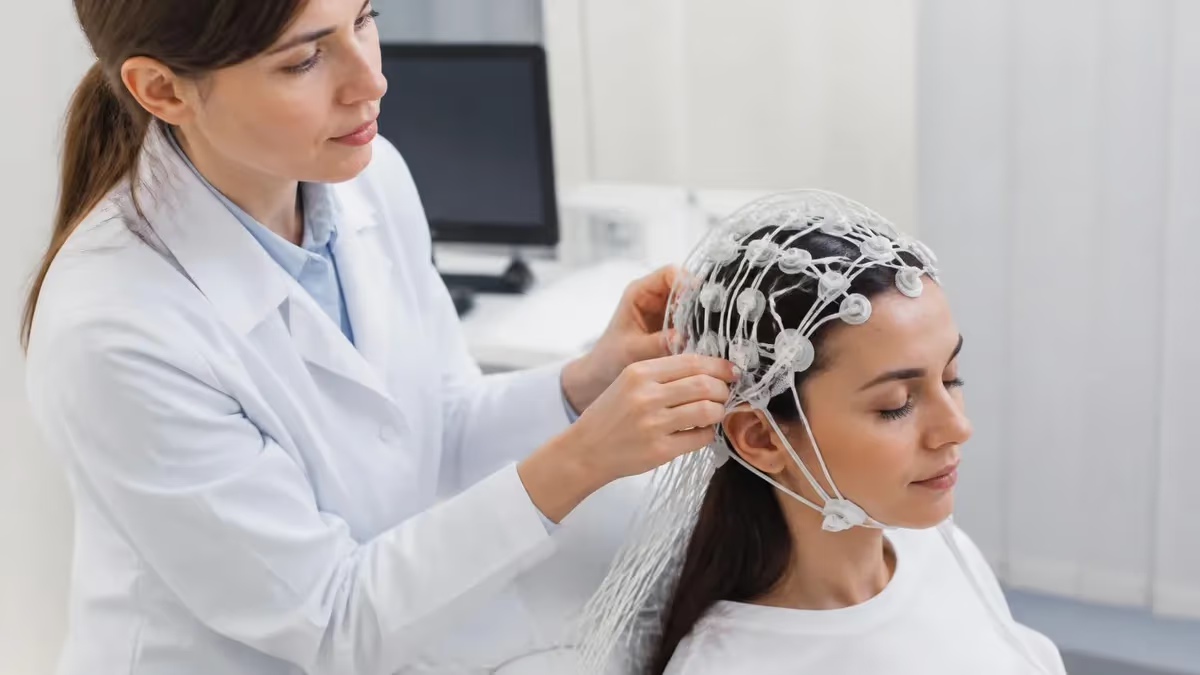
If you follow eeg research news, you have probably seen headlines about brain implants, sleep tracking, and machines that read intentions. Behind almost every one of those stories sits a single, century-old technology: the electroencephalogram. An eeg test records the tiny electrical signals your neurons produce, turning the brain's hidden activity into wavy lines a clinician can read. Understanding the test itself is the fastest way to separate real science from hype in the news you scroll past every day.
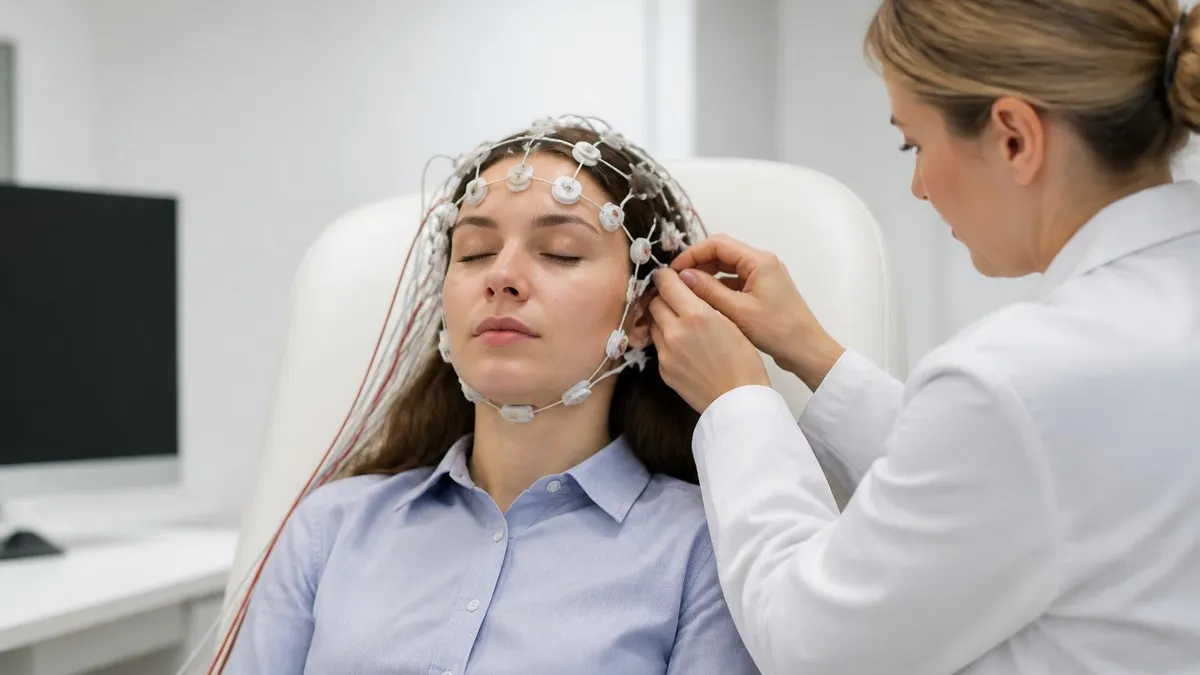
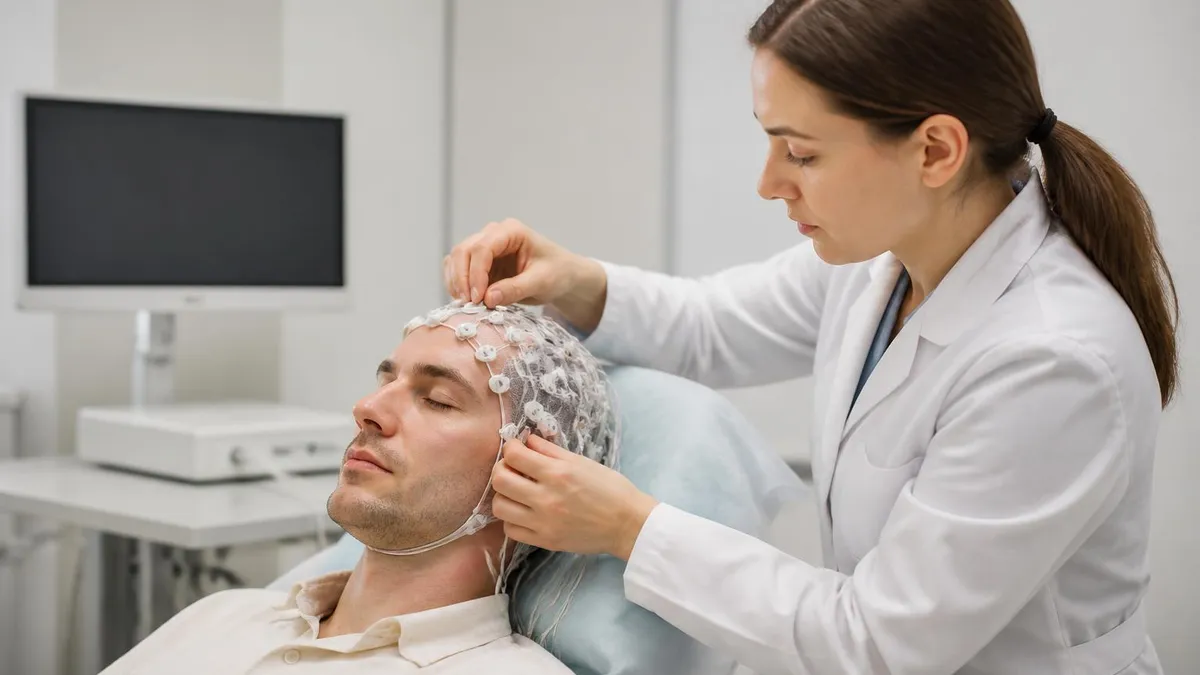
So what is an eeg test in practical terms? A technician places small metal discs called electrodes on your scalp, usually around 20 of them, held in place with paste or a snug cap. Those electrodes pick up voltage changes measured in microvolts and feed them to an amplifier. The result is a continuous trace showing rhythms like alpha, beta, theta, and delta waves. Doctors use these patterns to diagnose epilepsy, sleep disorders, and other conditions affecting the brain.
The same recording method that helps a neurologist spot a seizure also powers cutting-edge laboratories. Researchers studying memory, attention, anesthesia, and consciousness all rely on EEG because it captures activity millisecond by millisecond, something MRI scanners simply cannot match. That speed is exactly why eeg research news keeps appearing: the tool is cheap, non-invasive, and fast enough to track thought as it unfolds. For anyone curious about careers behind these studies, the field of eeg research offers a surprising range of roles.
This guide is written for a general US audience, not specialists. We will walk through what the test feels like, how long it takes, what it costs, and which side effects, if any, you should expect. We will also translate the research headlines, explaining where the science is genuinely advancing and where companies are overselling. By the end you should be able to read an EEG study summary and judge for yourself whether the claims actually hold up under scrutiny.
One reason EEG dominates the brain-science conversation is accessibility. A hospital MRI suite can cost millions of dollars to build and maintain, while a research-grade EEG system fits on a cart and runs on a laptop. Universities, sleep clinics, and even startups can afford the gear, so the volume of published EEG work has exploded. More studies mean more press releases, and more press releases mean the steady stream of brain-wave headlines you encounter online every week.
EEG is also uniquely tied to consumer technology right now. Wearable headbands promise to improve meditation, track focus, or detect drowsiness while driving. Some of these devices are clinically validated; many are not. Knowing how a real diagnostic eeg test works gives you a yardstick to measure these gadgets against, so you can spend your money and attention wisely when the next viral brain-tracking product appears in your social feed.
Throughout this article we will keep returning to one practical question: what should you actually do with this information? Whether you have an EEG scheduled, you are weighing a career in neurodiagnostics, or you simply want to be a smarter reader of science news, the fundamentals below will serve you. Let's start with the numbers that put the technology in perspective before diving into how the test really works.
EEG Research and Testing by the Numbers
How an EEG Test Works Step by Step
A technician measures your head and marks positions using the international 10-20 system. Around 20 electrodes are attached with conductive paste, ensuring each one sits in a precise, repeatable spot so recordings can be compared across visits and patients.
Once electrodes are connected, you relax with eyes closed while the machine captures voltage changes. The raw signal is amplified thousands of times because brain activity is measured in microvolts, far weaker than a typical AA battery's output.
To provoke hidden abnormalities, the tech may ask you to breathe rapidly for three minutes or watch a flashing strobe light. Some studies add sleep deprivation, since drowsiness can unmask seizure activity that stays silent when fully awake.
A neurologist later reviews the waveforms, looking for spikes, sharp waves, slowing, or asymmetry between brain regions. Software helps, but expert human interpretation remains the gold standard for diagnosing epilepsy and other neurological conditions accurately.
The leap from a clinical eeg test to the eeg research news you read online is shorter than most people assume. The exact same electrodes and amplifiers that detect a seizure in a hospital also let scientists study how the healthy brain learns, sleeps, and pays attention. The difference lies mostly in the questions being asked and the math applied afterward. Clinicians look for abnormalities; researchers hunt for patterns that explain behavior, perception, and cognition across large groups of volunteers.
One of the richest research areas is sleep. EEG is the only practical way to objectively stage sleep, separating light sleep, deep slow-wave sleep, and REM by their characteristic wave signatures. Recent studies have linked the amount of slow-wave activity to memory consolidation, suggesting that deep sleep literally helps cement what you learned during the day. That single finding has spawned countless headlines about apps and devices claiming to boost your nighttime brainpower while you rest.
Brain-computer interfaces, or BCIs, generate the flashiest news. By training algorithms to recognize specific EEG patterns, researchers have helped paralyzed participants move cursors, spell words, and control robotic arms using thought alone. Non-invasive scalp EEG cannot match the precision of surgically implanted electrodes, but it is safe, repeatable, and improving fast. Many of the wearable headsets sold to consumers borrow these same techniques, with wildly varying scientific rigor behind their marketing claims.
Attention and mental workload are another booming field. Pilots, drivers, and surgeons have all been studied with EEG to see whether their brains show measurable signs of fatigue or overload before performance drops. The hope is an early-warning system that flags dangerous drowsiness in real time. While promising, these systems still struggle with the noise and motion artifacts that plague any recording made outside a quiet, controlled laboratory environment with cooperative participants.
EEG also underpins much of what we know about anesthesia and consciousness. Anesthesiologists increasingly use processed EEG monitors to gauge how deeply a patient is sedated, reducing the rare but terrifying risk of awareness during surgery. Researchers studying disorders of consciousness use similar tools to detect hidden awareness in patients who appear unresponsive, occasionally revealing that someone presumed vegetative can actually follow commands inside their own mind.
Crucially, EEG's millisecond timing makes it irreplaceable for studying the brain's rhythms. Oscillations in the gamma, beta, and theta bands appear to coordinate communication between distant regions. Disruptions in these rhythms show up in conditions ranging from schizophrenia to Alzheimer's disease, which is why so many drug trials now include EEG as a sensitive, objective biomarker rather than relying on subjective questionnaires alone to measure whether a treatment is working.
For the everyday reader, the takeaway is that EEG research is broad, legitimate, and genuinely advancing, but also easy to exaggerate. When a headline claims a gadget reads your emotions or unlocks hidden genius, ask whether it was validated against the careful, electrode-by-electrode methods used in real laboratories. The fundamentals you are learning here are the same yardstick that working scientists apply every single day when they evaluate a bold new claim.
EEG Test Cost and EEG Test Price Explained
A standard outpatient eeg test price in the United States typically runs between $200 and $700 before insurance, depending on your region and facility. Hospital-based recordings often cost more than those done in a freestanding neurology clinic. The fee usually covers electrode setup, the recording session itself, and a neurologist's professional interpretation, which is billed as a separate line item on many statements you receive.
With insurance, your out-of-pocket eeg test cost depends on your deductible and copay structure. Many plans cover EEG when ordered for a medically necessary reason such as suspected seizures. Always ask for the CPT code in advance and call your insurer to confirm coverage so you are not surprised by a balance bill weeks after the appointment is over.
EEG vs Other Brain Scans: Strengths and Limits
- +Excellent millisecond timing that tracks brain activity in real time
- +Completely non-invasive with no radiation exposure whatsoever
- +Far cheaper than MRI or PET imaging in most settings
- +Portable enough for bedside, home, and field research use
- +Safe to repeat as often as needed, even daily
- +The only practical tool for objective overnight sleep staging
- −Poor spatial resolution; hard to pinpoint exactly where signals start
- −Highly sensitive to muscle, eye, and movement artifacts
- −Mostly reads surface cortex, missing deep brain structures
- −Requires expert interpretation that varies between readers
- −Electrode setup with paste can be slow and messy
- −A normal result does not fully rule out a seizure disorder
EEG Test Prep Checklist Before Your Appointment
- ✓Wash your hair the night before and skip oils, gels, or sprays.
- ✓Ask your doctor whether to keep taking your regular medications.
- ✓Avoid caffeine for several hours before the test if instructed.
- ✓Follow any sleep-deprivation instructions for a sleep-deprived study.
- ✓Eat a normal meal so low blood sugar does not affect the recording.
- ✓Bring a list of all current medications and supplements.
- ✓Arrange a ride home if you were told to stay awake overnight.
- ✓Wear a comfortable shirt that buttons rather than pulls over your head.
- ✓Bring something to read or watch during electrode setup downtime.
- ✓Ask the technician how long the recording is expected to last.
How long is an EEG test, really?
A routine EEG usually takes 20 to 60 minutes once electrodes are placed, though setup adds another 20 to 30 minutes on top. Sleep-deprived and ambulatory studies run much longer, from several hours to multiple days, because catching rare events requires patience and extended recording time.
One of the most reassuring facts about the eeg test is how few side effects it carries. Because the procedure only listens to your brain's natural electrical activity and never sends current into your body, there is no radiation, no injection, and no surgery involved. For the vast majority of people the recording is completely painless. The biggest complaint is usually that the conductive paste leaves your hair sticky until you wash it out at home afterward.
That said, a handful of mild and temporary eeg test side effects are worth knowing about. Some patients report minor skin irritation or redness where electrodes were attached, especially if their skin was lightly abraded to improve the signal. This typically fades within a day. People with very sensitive skin or known adhesive allergies should mention it beforehand so the technician can choose gentler materials and placement techniques to reduce any reaction.
The activation procedures used during the test deserve their own mention. Hyperventilation, where you breathe rapidly for about three minutes, can cause lightheadedness, tingling in the hands, or a brief sense of dizziness. These sensations resolve quickly once normal breathing resumes. Photic stimulation, the flashing strobe light, is generally harmless but can rarely trigger a seizure in someone with photosensitive epilepsy, which is precisely the abnormality the test is designed to detect.
For people who genuinely have a seizure disorder, the small possibility of a provoked seizure during the study is not a flaw but a feature. Capturing an event under controlled, monitored conditions gives the neurologist invaluable information. Staff are trained to manage any seizure safely, and the recording obtained can shorten the path to an accurate diagnosis and effective treatment, sparing months of uncertainty and additional testing down the line for the patient.
Sleep-deprived EEGs introduce a different kind of side effect: the fatigue of staying awake. If you are asked to limit your sleep the night before, you may feel groggy, irritable, or unsafe to drive. This is why clinics strongly recommend arranging a ride to and from your appointment. The drowsiness itself is intentional, since a tired brain is more likely to reveal the abnormal patterns the doctor is searching for in the recording.
It is also worth dispelling a common fear. An eeg test cannot read your thoughts, control your mind, or implant anything. It is a passive listening device, not a transmitter. The electrodes simply detect voltage at the scalp. No matter how dramatic the eeg research news headlines about mind-reading sound, a clinical recording session is a calm, low-tech experience closer to having stickers placed on your head than anything pulled from science fiction.
Finally, consider the emotional side. Many patients feel anxious waiting for results, and anxiety itself can show up as muscle tension artifacts on the trace. Technicians are used to this and will coach you to relax. Knowing in advance that the procedure is safe, brief, and side-effect-light can ease that worry considerably, which is one more reason understanding the fundamentals before your appointment genuinely pays off in real comfort.
Never stop seizure or psychiatric medications before an EEG unless your physician explicitly tells you to. Abruptly halting some drugs can trigger dangerous withdrawal seizures. Always confirm prep instructions directly with the ordering doctor rather than guessing from online advice.
Now that you understand the test itself, you are equipped to read eeg research news with a sharper eye. The first habit to build is distinguishing the recording method from the claim attached to it. EEG is a mature, trustworthy way to capture brain rhythms, but the conclusions researchers or marketers draw from those rhythms vary enormously in quality. A solid signal does not guarantee a solid interpretation, and that gap is where most overblown headlines quietly live.
When you encounter a study, look for the sample size and the setting. A finding from twelve undergraduates in a quiet lab is a starting point, not a settled fact. Genuine breakthroughs are replicated across hundreds of participants and independent teams. Press releases rarely mention these details, so a quick search for the original paper, its participant count, and whether it was peer-reviewed will tell you far more than the headline ever could about reliability.
Be especially skeptical of consumer wearables that borrow EEG's scientific credibility. A genuine clinical study uses around twenty carefully placed electrodes, abraded skin, and conductive paste to get clean signals. Many headbands use just one or two dry electrodes on the forehead, where muscle and eye-movement artifacts dominate. They may still be fun or motivating, but equating their output with laboratory-grade neuroscience is a marketing leap, not a scientific one you should accept uncritically.
Watch the verbs in any claim, too. There is a vast difference between an EEG study showing a pattern correlates with focus and a product promising it will increase your focus. Correlation headlines are common because EEG excels at spotting associations. Causal claims demand controlled experiments with comparison groups, and far fewer studies actually meet that bar. Training yourself to notice this distinction will immunize you against most of the hype in your feed.
The brain-computer interface field is where realistic optimism is justified. Non-invasive EEG-based BCIs have genuinely helped people with paralysis communicate, and the technology improves yearly. Yet the honest news still acknowledges limitations: slow typing speeds, the need for extensive calibration, and signal quality that degrades with movement. Reports that ignore these caveats and promise telepathy around the corner are selling a story, not describing the careful incremental science actually happening in labs today.
Funding and conflicts of interest matter as well. When a company that sells brain-tracking gadgets also funds the study praising brain-tracking gadgets, treat the result cautiously. This is not unique to EEG, but the consumer neurotech space is crowded with startups eager for validation. Independent replication by researchers with no financial stake is the gold standard, and its absence is a meaningful warning sign worth noticing before you share or believe a flashy claim online.
Ultimately, becoming a literate consumer of eeg research news is its own small skill, much like understanding the test before your appointment. The same curiosity that makes you want to know what those electrodes are doing will serve you well when you read the next viral headline. Apply the test's fundamentals as a filter, and you will find yourself impressed by the real science and unmoved by the surrounding noise.
If you have an eeg test on the calendar, a little practical preparation goes a long way toward a smooth experience and a clean recording. Start the night before by washing your hair thoroughly and skipping conditioner, oils, gels, and hairspray. These products coat the scalp and interfere with electrode contact, sometimes forcing the technician to redo placement. Clean, dry, product-free hair lets the paste grip properly and produces the crisp signal your neurologist needs to read accurately.
Talk to your ordering physician about medications well in advance. Some doctors want you to keep taking everything as usual so the test reflects your normal baseline, while others may adjust certain drugs to increase the chance of capturing abnormal activity. Never make this decision on your own. Stopping seizure medication without guidance can be dangerous, so always confirm the plan directly and write down the instructions so you do not misremember them later.
On the day itself, eat a normal meal beforehand unless told otherwise. Low blood sugar can alter your brain waves and muddy the results, and an empty stomach can make hyperventilation feel worse. Limit caffeine if your clinic requests it, since stimulants can mask or change the patterns being studied. Bring a list of your medications and supplements, and wear a button-up shirt so you can change without disturbing the electrodes afterward easily.
If your study requires sleep deprivation, plan your logistics carefully. Staying up late or rising extremely early leaves most people too drowsy to drive safely, so arrange a ride to and from the appointment. The grogginess is intentional and helps the recording, but it is genuinely impairing. Treat the day like one where you simply cannot operate a vehicle, and you will avoid putting yourself or others at unnecessary risk on the road that day.
During electrode setup, settle in and get comfortable, because it can take twenty to thirty minutes of careful measuring and attaching. Bring something low-key to occupy you, like a book or quiet music, while the technician works. Once recording begins, the most helpful thing you can do is relax your jaw, forehead, and shoulders. Muscle tension creates artifacts that obscure the real signal, so the calmer and looser you are, the better your trace will look.
When the activation procedures arrive, follow the technician's coaching closely. During hyperventilation, breathe deeply and steadily for the full three minutes even if you feel tingly or lightheaded; those sensations are normal and fade fast. For the flashing-light portion, simply keep your eyes closed or open as directed and let it happen. If you feel genuinely unwell at any point, speak up immediately, because the staff can pause and adjust the procedure for you.
After the test, the paste washes out with ordinary shampoo, though it may take two rinses. Results are not instant; a neurologist needs time to review the full recording, so expect a follow-up appointment or a call rather than an answer on the spot. Use the waiting period to write down any questions, and remember that a normal result is reassuring but does not always end the diagnostic journey if your symptoms persist.
EEG Questions and Answers
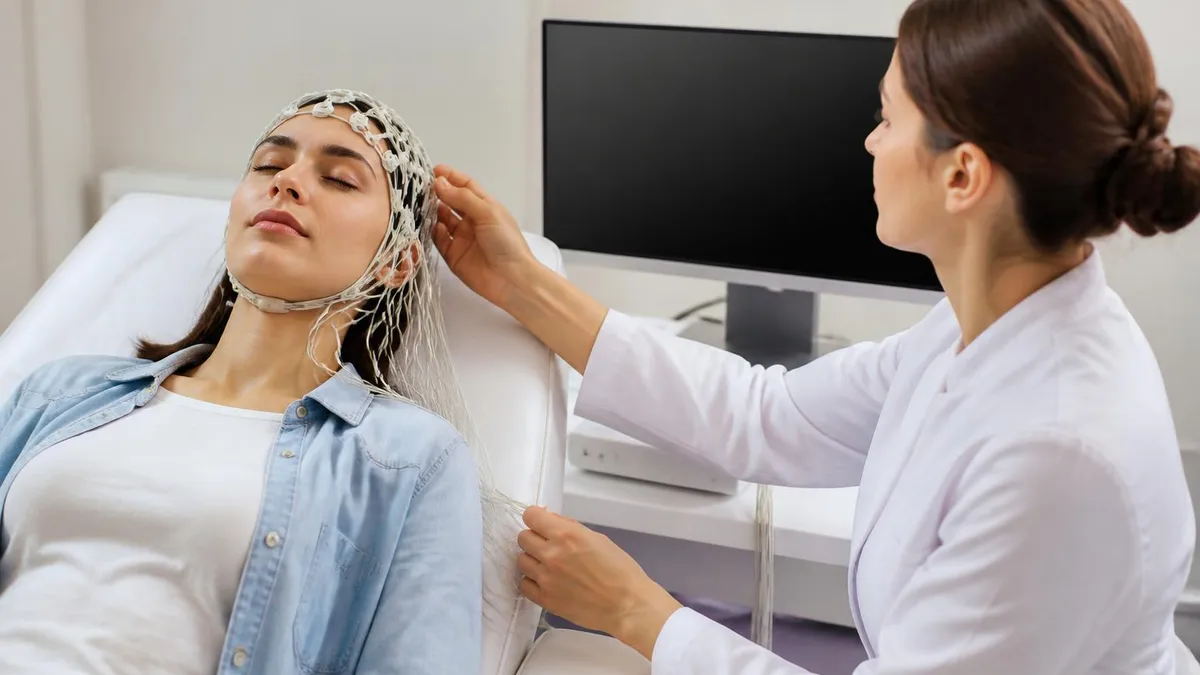
EEG Tech Salary 2026: Pay by State, Experience, and Certification
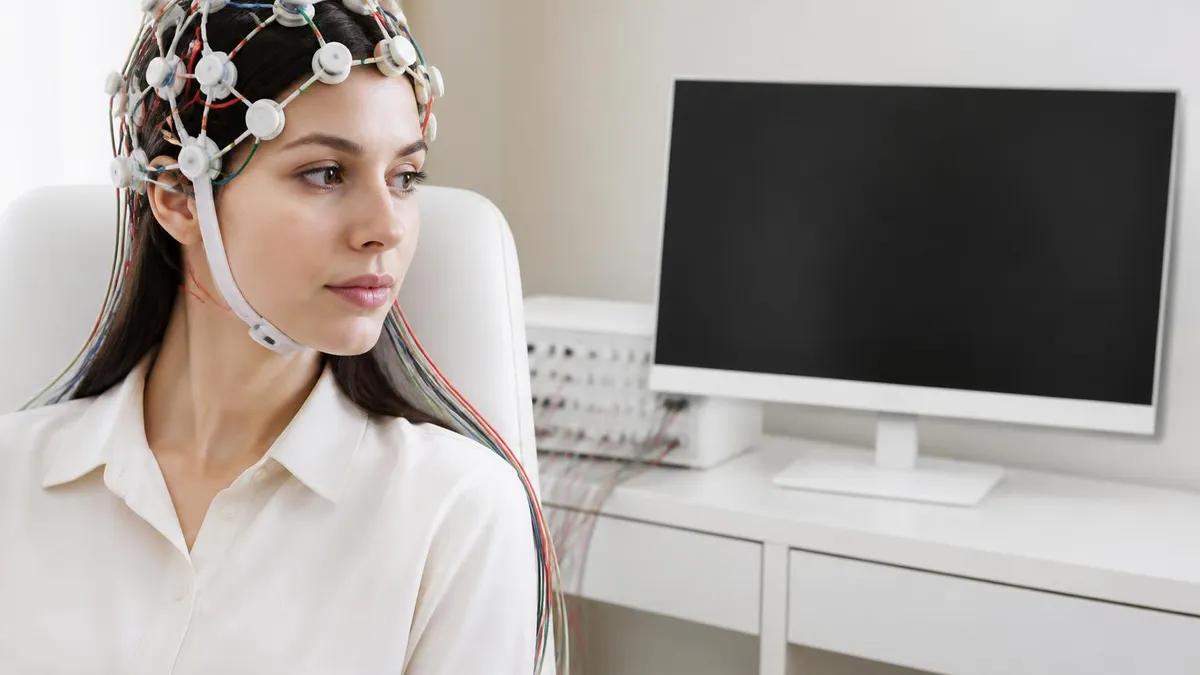
EEG Images: A Visual Guide to Brain Wave Patterns, Recordings, and Test Results
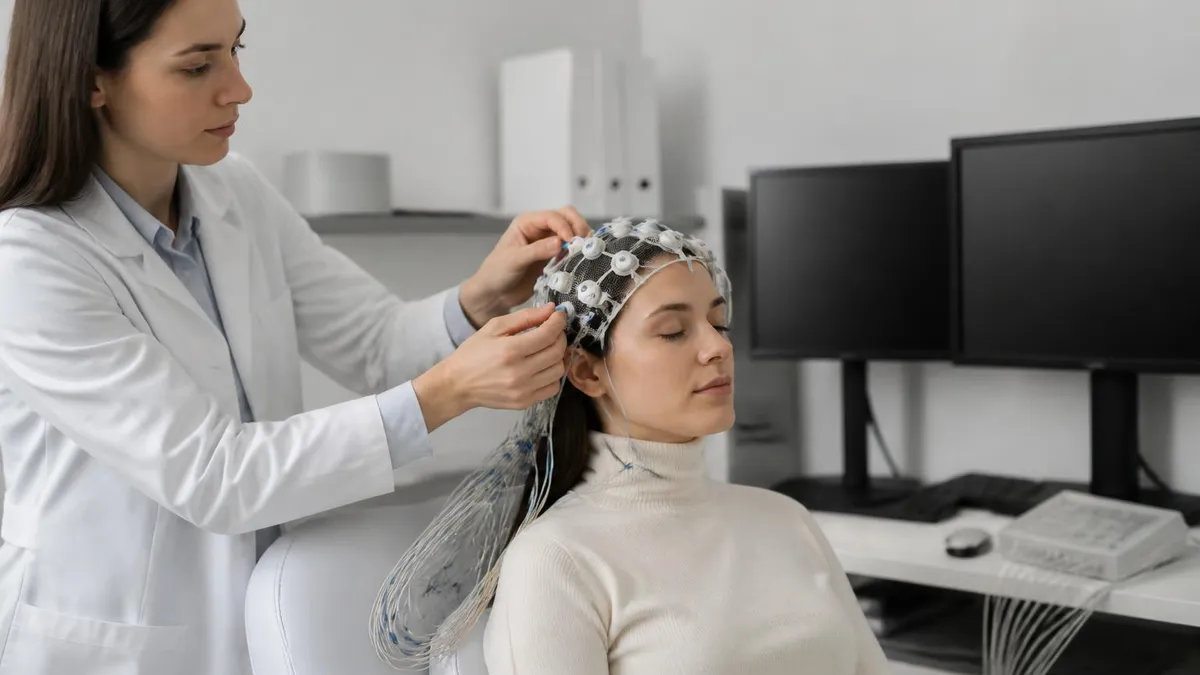
EEG for Seizures: How the Test Diagnoses Epilepsy and What to Expect
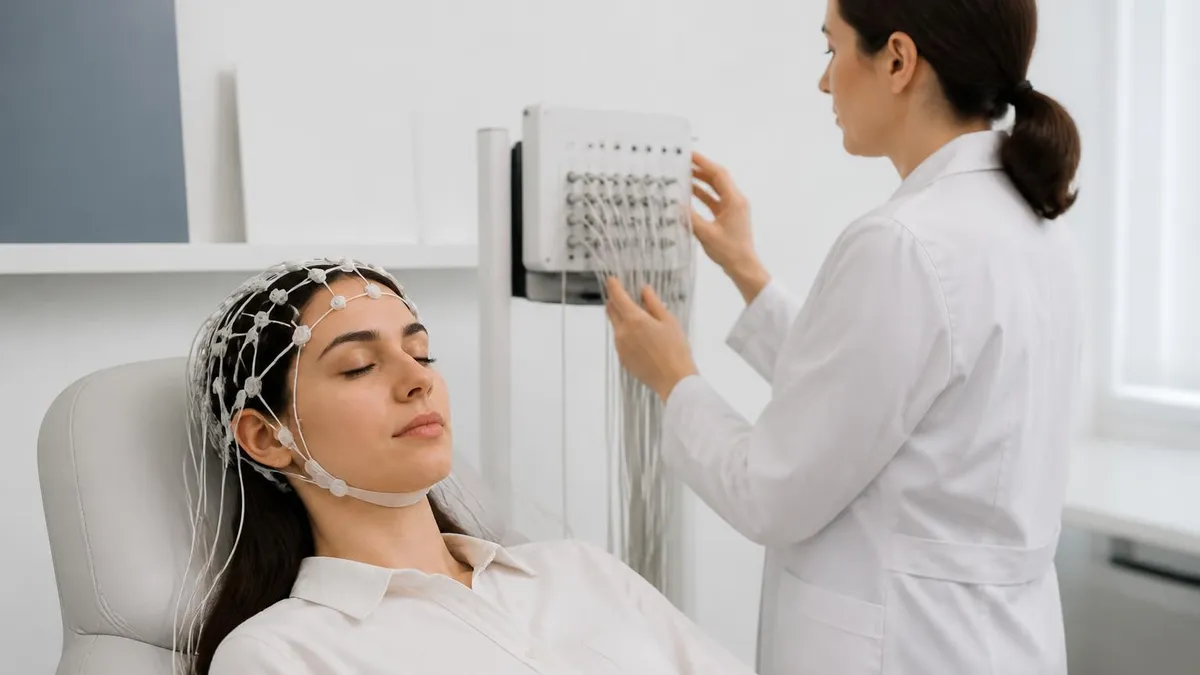
Ambulatory EEG: 24-72 Hour Home Recording for Suspected Seizures
Reading EEG Patterns: A Practical Reference for Techs and Trainees
About the Author

Educational Psychologist & Academic Test Preparation Expert
Columbia University Teachers CollegeDr. Lisa Patel holds a Doctorate in Education from Columbia University Teachers College and has spent 17 years researching standardized test design and academic assessment. She has developed preparation programs for SAT, ACT, GRE, LSAT, UCAT, and numerous professional licensing exams, helping students of all backgrounds achieve their target scores.