
How Much Is a Practical Driving Test? UK Fees 2026 September
How much is a practical driving test? £62 weekday or £75 weekend in the UK. Full DVSA fee breakdown for car, motorcycle, LGV, and instructor tests. 🎓

Wondering how much is a practical driving test in the UK before you click the booking button? Short answer: £62 on weekdays, £75 on weekends, evenings, or bank holidays. That's the DVSA's official rate for a standard category B car practical test, and it's been pegged at that number since 2008. Yes — really. Seventeen years without a hike. But the fee is only one slice of what your driving licence actually costs, and the bigger picture matters if you're budgeting.
Here's the full breakdown most people don't see until they're knee-deep in the booking process. Theory test? £23. Practical test? £62 to £75 depending on slot. Lessons? Anywhere from £900 to £2,500 depending on how many hours you need. Add insurance for L-plate driving, fuel, and the occasional rebook, and the road from provisional to pink licence sits somewhere around £1,200 on the cheap end and £3,000 if you need more hand-holding. That's the honest range.
Now the bit nobody tells you. Weekend tests cost £13 more than weekday tests. Every time. Same examiner, same route, same 40 minutes — just a premium for Saturday-morning convenience. If you can take a Tuesday off work, you save £13 instantly. Some learners book a weekday and treat it like a half-day annual leave; others insist on weekends because they can't shift their schedule. Both choices are valid. The DVSA doesn't care which you pick — but your wallet does.
The fee covers a specific bundle of things, and that bundle is narrower than you'd think. You're paying for examiner time, a vehicle safety check by the examiner, the marking sheet, route fuel for the examiner's clipboard… and that's about it. Not included: the car. Not included: insurance. Not included: the fuel you burn during the test. Not included: any retake fee if you fail. Each of those sits in a separate column on your spreadsheet, and we'll walk through each one in detail below so nothing catches you off guard on the morning of your appointment.
This guide covers car practical fees, motorcycle module 1 and 2 fees, LGV and PCV commercial practical costs, ADI instructor exam costs, the rules around refunds, what your fee actually includes, what's not included, how to use cancellation finder apps to grab earlier slots, and the total real-world budget to pass — including the lessons most learners underestimate by hundreds of pounds. If you've already passed your theory and are now staring at the practical booking page, you're in the right place.
One last framing point before we dive in. The DVSA practical test fee structure is intentionally simple — flat rate, weekday versus premium, no surge pricing, no regional variation. A test in central London costs the same as a test in rural Norfolk. What varies dramatically is the waiting time, the lesson cost in that area, and the route difficulty.
Budget for the fee. Plan for the waiting list. And give yourself a financial cushion for at least one retake, because the national pass rate hovers around 48 percent — which means more than half of all first attempts come back as a fail. That's not a failure of preparation. It's just the maths of the test.
For total cost-of-passing context, our UK theory test cost breakdown explains the £23 theory side of the equation. Once you understand both numbers, you can build a realistic total budget for going from learner to fully licensed driver in 2026.
UK Practical Driving Test Costs by the Numbers
Practical Driving Test Fees Across All Licence Categories
Car (Category B) Weekday
Car (Category B) Premium
Motorcycle Module 1
Motorcycle Module 2
LGV / PCV Practical
ADI Instructor Exams
The £62 weekday and £75 premium-slot rates apply only to category B — the standard car licence most learners are working towards. Motorcycles, lorries, buses, taxis, and instructor qualifications all use a different fee scale, and the differences can be substantial. If you're training for anything beyond a car, the budget shifts considerably and the fee structure becomes a two-stage payment in some cases. Worth knowing before you commit.
Motorcycle riders pay in two parts. Module 1 — the off-road manoeuvres assessment at a Multi-Purpose Test Centre — costs £15.50. That's tested in a closed area where you'll demonstrate slow riding, swerving, and emergency braking. Pass Module 1 and you progress to Module 2: the on-road portion. Module 2 costs £75 on weekdays and £88.50 on evenings, weekends, or bank holidays. Total motorcycle practical cost lands around £90.50 weekday or £104 premium. Both modules must be passed within two years of your theory test.
LGV (Large Goods Vehicle) and PCV (Passenger Carrying Vehicle) candidates pay £115 on weekdays and £141 on weekends. These tests run longer than the car test — typically 90 minutes — and assess vehicle-specific competencies like coupling and uncoupling trailers, reversing manoeuvres in larger vehicles, and managing significant blind spots. The fee reflects the additional examiner time and the specialist vehicle requirements. Drivers training for a CPC qualification will face additional theory and practical modules on top of this base practical fee.
ADI (Approved Driving Instructor) candidates have their own fee structure entirely. Part 1 is a theory test paid the standard £23. Part 2 — the practical driving ability test — costs £111. Part 3 — the instructional ability assessment — costs £124. Total cost just for the three ADI exam stages: £258, before any training, before any car hire for the assessments. Many instructor candidates spend an additional £2,000 to £4,000 on PDI training courses to prepare for Part 3 specifically, since the pass rate sits around 30 percent first-time.
The principle across every category: the DVSA charges flat fees with a weekend premium. There's no regional pricing variation, no surge pricing for popular test centres, no membership discount. What you see on the GOV.UK booking page is what you pay. Beware of third-party booking sites that advertise lower fees — they often add a finder service charge on top of the £62, meaning you pay more, not less, while the test fee itself remains identical. We'll cover the cancellation finder services in detail later, including which ones are worth the small markup.
One quirk worth noting. If you're being examined in a vehicle with adaptations for a disability or specific medical condition, the fee remains the same — £62 or £75 — but you'll need to inform the DVSA at booking. Similarly, if you require an interpreter or extended time, there's no extra charge but the booking process takes a few extra steps. The DVSA cannot legally charge more for accessibility provisions, which is one of the genuinely good things about a centralised public-sector testing system.
DVSA Practice Test Questions
Prepare for the DVSA - UK Driving Theory Test exam with our free practice test modules. Each quiz covers key topics to help you pass on your first try.
DVSA Eco-Friendly Driving and Vehicle Loading
DVSA Exam Questions covering Eco-Friendly Driving and Vehicle Loading. Master DVSA Test concepts for certification prep.
DVSA Hazard Awareness
Free DVSA Practice Test featuring Hazard Awareness. Improve your DVSA Exam score with mock test prep.
DVSA Incidents, Accidents and First Aid
DVSA Mock Exam on Incidents, Accidents and First Aid. DVSA Study Guide questions to pass on your first try.
DVSA Motorway Rules and Smart Motorways
DVSA Test Prep for Motorway Rules and Smart Motorways. Practice DVSA Quiz questions and boost your score.
DVSA Rules of the Road (Highway Code)
DVSA Questions and Answers on Rules of the Road (Highway Code). Free DVSA practice for exam readiness.
DVSA - UK Driving Theory Hazard Awareness ...
DVSA Mock Test covering - UK Driving Theory Hazard Awareness and Perception. Online DVSA Test practice with instant feedback.
DVSA - UK Driving Theory Motorway Rules an...
Free DVSA Quiz on - UK Driving Theory Motorway Rules and Regulations. DVSA Exam prep questions with detailed explanations.
DVSA - UK Driving Theory Road and Traffic ...
DVSA Practice Questions for - UK Driving Theory Road and Traffic Signs. Build confidence for your DVSA certification exam.
DVSA - UK Driving Theory Rules of the Road
DVSA Test Online for - UK Driving Theory Rules of the Road. Free practice with instant results and feedback.
How to Book Your Practical Test on GOV.UK
Before clicking through to gov.uk/book-driving-test, gather these four items: your provisional UK driving licence number, your theory test pass certificate number, a valid debit or credit card, and a clear idea of which test centre and date window you want. The booking flow takes around 10 minutes if all four are to hand. Without them, you'll be reaching for documents mid-booking and risk the session timing out before you finish.
The theory pass certificate is valid for two years from the date you passed. If your practical date falls outside that two-year window, you must retake the theory at £23 before you can book a practical at all. Many learners discover this constraint late — check your theory pass date before you start the practical booking flow, because the system will reject your booking if the theory has expired and you'll have wasted time.
Weekday vs Weekend Practical Test: Which Is Better Value?
- +Weekday £62 saves £13 versus the weekend £75 fee
- +Weekday traffic on test routes is often lighter mid-morning
- +More instructor availability for pre-test warm-up lessons
- +Examiners are typically fresher earlier in the week
- +Easier to schedule a retake quickly if needed
- +Less competition for popular slots at busy centres
- +Pre-test nerves are usually lower at quieter centres
- −Requires a day off work or college — annual leave cost
- −School-run traffic can complicate morning slots
- −Less spousal/parent support available during weekday tests
- −Public transport links to test centres are sometimes worse off-peak
- −Some quieter test centres only operate certain weekdays
- −Weather conditions are unpredictable any day of the week
- −Mid-week tests can feel isolating without a support network
Now for the bit that saves serious money. The DVSA publishes test slots up to 24 weeks in advance. As candidates book, fill the calendar, and then occasionally cancel — slots open up. Sometimes a slot drops at 6pm on a Tuesday and disappears within minutes. Sometimes slots stay free for hours. Cancellation finder apps and websites scan the GOV.UK system constantly and alert you when an earlier slot appears at your chosen test centre, letting you swap your distant date for something much closer.
The two most popular cancellation finders are DTCS (Driving Test Cancellation Service) and Driving Test Cancellation. There's also BookYourTheoryTest, which despite its name handles practical cancellations too. Most charge a one-off fee between £4 and £20 to scan for a fixed period. Some operate on a subscription model. None of them book the slot for you — they alert you to availability, and you then book it yourself through the official GOV.UK service, paying only the standard £62 or £75 fee for the slot itself.
Worth being clear: third-party finder services are not affiliated with the DVSA. The DVSA does not endorse any of them. They simply automate the manual refresh you would otherwise do yourself on the GOV.UK service. Some learners feel uneasy about this and prefer the manual approach. Others say the £4-£20 markup is worth saving four months of waiting. Both views are reasonable. If you do use a finder, pick one with a clear refund policy and avoid sites that ask for your full payment card details upfront beyond their service charge.
A note on scam sites. There are fake "early test" services that charge £100 or more, claim to have insider access to DVSA slots, and either disappear with your money or book a standard slot you could have booked yourself for £62. The DVSA does not give anyone preferential access. If a service charges significantly more than £20, treat it with extreme caution. The actual cancellation finder space is competitive and legitimate operators sit in the £4 to £20 range. Anything above that is almost certainly a scam.
Manual cancellation finding is also possible — and free. Log into the GOV.UK booking management page, click "Change driving test", and the system will show available slots at your chosen centre. Refresh at peak times: early evenings, Sunday afternoons, and the first week of every month tend to have the highest cancellation rates. It takes patience, but plenty of learners have shaved months off their wait by checking manually three or four times a day. The trade-off is your time versus the finder service's £10.
Pre-Booking Checklist: Before You Pay the £62
- ✓Confirm your theory test pass certificate is within its 2-year validity window
- ✓Have your provisional driving licence photocard number to hand
- ✓Choose between weekday (£62) and weekend/evening (£75) — budget impact
- ✓Compare wait times at 2-3 test centres within reasonable travel distance
- ✓Check vehicle availability — instructor's car or private vehicle with valid test insurance
- ✓Build a £100 cushion in your budget for a possible retake fee
- ✓Save the GOV.UK confirmation email and booking reference somewhere accessible
- ✓Plan your journey to the test centre — arrive 10-15 minutes early on test day
- ✓Verify the cancellation finder service (if used) has a clear refund policy
- ✓Add the test date to your calendar with a reminder 3 working days before for refund cutoff
Take a weekday test and save £13 instantly
The £13 weekend premium is the easiest saving in the whole journey to your licence. Same examiner. Same 40-minute test. Same DL25 marking sheet. If your work or college schedule allows even one day's annual leave per quarter, booking a Tuesday or Wednesday morning slot saves you £13 with zero downside to your test experience. Multiply that by the chance of needing a retake and you could save £26 on your route to passing.
The retake policy is more generous than many learners realise. If you fail your practical, you can rebook immediately — there's no waiting period imposed by the DVSA other than a minimum of 10 working days between attempts. That gap exists to give you time to address whatever caused the fail, take a few more lessons, and book a new slot. You pay the standard £62 or £75 fee for each retake. There's no penalty fee for failing. Each attempt is treated as a brand-new booking.
The exception is short-notice cancellation. If you cancel your test less than three clear working days before the appointment, you lose the full fee. Cancel four or more working days in advance and you get a full refund. "Working days" means Monday to Friday excluding bank holidays — so if your test is on a Monday morning, you need to cancel by the previous Tuesday at the latest to get a refund. Cancellation on the morning of the test, or simply not showing up, forfeits the entire £62 or £75. No exceptions even for illness, traffic, or family emergencies.
If your test gets cancelled by the DVSA — typically due to weather, examiner illness, or vehicle issues at the test centre — you receive a free rebook at no additional cost. The DVSA aims to offer the next available slot, though this can still mean a wait of several weeks if you're at a busy centre. You can also claim out-of-pocket expenses if the cancellation was within the DVSA's control: car hire from your instructor, lost earnings if you took unpaid leave, and reasonable travel expenses. Claims are processed through GOV.UK and typically settled within 28 days.
Some learners worry about the long-term consequences of repeated fails. There aren't any from a licensing perspective — the DVSA doesn't cap the number of attempts. You could theoretically fail 50 times and book a 51st test. Financially, of course, that's a different question. The lessons-plus-tests math gets ugly fast if you're failing repeatedly. Most instructors will have an honest conversation about readiness before recommending a retest. Listen to that conversation. Booking a fourth test against your instructor's advice usually ends the same way as the third.
One useful tactic for serial near-misses: take a structured "fail review" lesson. Your instructor goes through the DL25 marking sheet from your most recent test in detail, identifies the specific faults that caused the fail, and designs a one or two-hour focused lesson on exactly those skills. Many instructors charge their standard hourly rate — £30 to £60 — for this. It's cheaper and more effective than a full course of standard lessons, because you're targeting known weak points rather than re-covering everything.
The DVSA refund deadline is strict: cancel at least three clear working days before your test for a full refund. Cancel within three working days — or fail to attend — and the £62 or £75 fee is forfeit with no exceptions. Family emergencies, illness, or transport breakdowns do not unlock a refund. Add a calendar reminder for the cutoff date the moment you book to avoid losing the fee unnecessarily.
What does the £62 fee actually pay for? Two things, mostly: examiner time and a brief vehicle safety inspection by the examiner before the test begins. The examiner spends roughly an hour total on your appointment — about 20 minutes of admin and walk-around, 40 minutes in the car. The DVSA covers their salary, the test centre facilities, the marking infrastructure, the GOV.UK booking platform, and the appeals process. £62 is genuinely modest for the staffing and infrastructure involved. Compare it to driving test fees in some US states, where similar tests run $80 to $150.
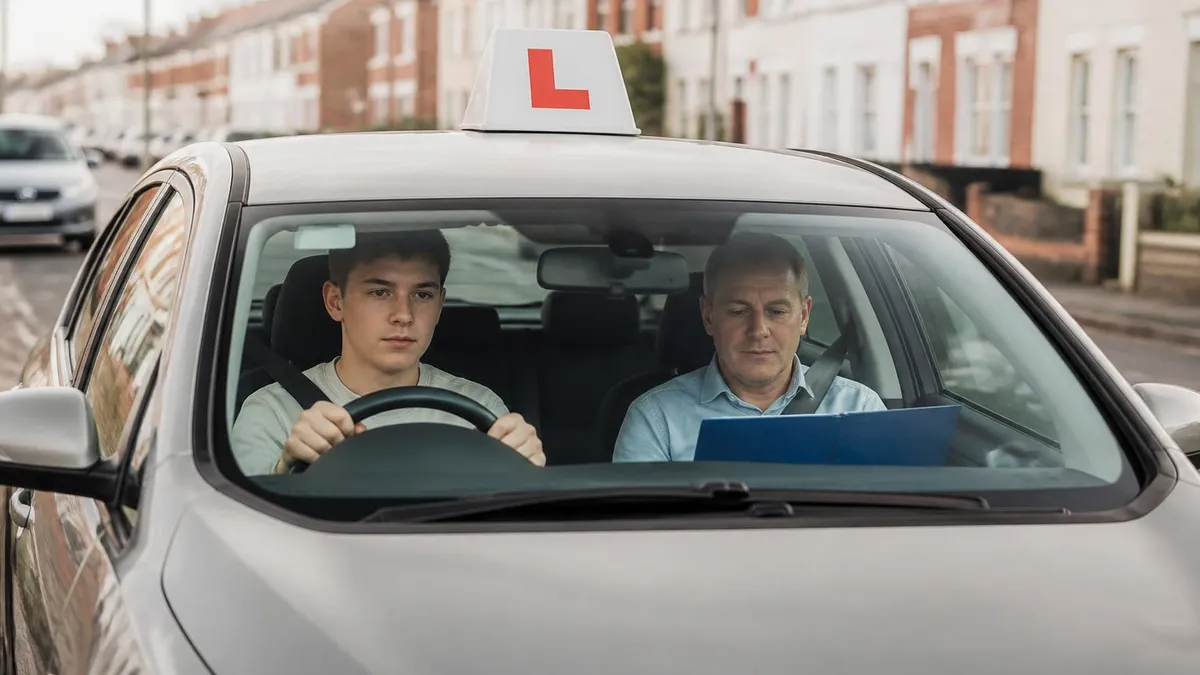
Now what's NOT included. The car. Possibly the biggest gotcha for first-time learners — you must provide a vehicle for the test, and that vehicle must meet specific criteria: roadworthy, taxed, insured (with insurance that covers test-taking), fitted with L-plates, with an additional rear-view mirror for the examiner, and ideally fitted with dual controls. Most learners hire their instructor's car for £30 to £60 per hour or use the instructor's car as part of a lesson-plus-test package. Some bring a parent's car, but the insurance is the sticking point — many private policies exclude driving tests.
Fuel for the test is your cost. The test route uses around five to seven litres depending on test centre geography. That's £8 to £12 at current pump prices. Test centre parking is free at most centres, but some urban centres charge — Mill Hill in north London, for example, has paid parking that's about £3 for the test slot. Insurance for a learner driver varies wildly: £200 to £500 for an annual policy on an instructor's vehicle, often included in their lesson package. Standalone learner insurance like Veygo or Marmalade runs £50 to £80 per month.
Some instructor packages bundle the test fee. "Test bundle" deals from BSM, AA Driving School, or independent instructors typically include the £62 test fee, two hours of pre-test warm-up driving, and use of the car for the test itself — packaged at around £150 to £200 total. That's actually decent value if you're using your instructor's car anyway. Compare it to paying £62 for the fee + £40 for two hours of car hire + £15 fuel = £117 individually. The bundle adds £30-£80 but removes the admin friction of paying everything separately.
Insurance for the lesson period and any practice driving you do at home is a separate calculation. If a parent adds you to their policy as a named driver, expect their premium to increase by £200 to £600 per year depending on their existing rating and the car's insurance group.
Some young drivers pay £1,500 to £2,500 per year for their own first policy after passing. "Post-test pass" insurance products specifically aimed at newly qualified drivers — like Black Box telematics policies — can shave 30 percent off the standard quote and are worth shopping around for after the practical pass.
Adding it all up: total budget to pass the UK practical driving test from a standing start. Theory test (£23) plus practical test (£62) plus 20 to 40 hours of lessons at £30 to £60 per hour — that's £900 on the cheap end and £2,500 on the comprehensive end.
Add learner insurance for the lesson period (£100 to £400 if your instructor doesn't include it), occasional book or app costs (£10 to £30), and a small budget for one potential retake (another £62 to £75). Realistic total range: £1,200 to £3,000 from learner permit to pink licence in your wallet.
For comparison, the same journey looks vastly different in other countries. In the United States, total cost typically runs $50 to $300 depending on state, mainly because no formal lesson hours are required by law in most states. In Germany, total cost is around €1,500 to €2,500 — comparable to the UK but with mandatory minimum lessons. In France, the figure is similar. The UK sits in the middle of the European range, with the practical fee itself being relatively cheap but the recommended lesson volume pushing the total up.
Where do learners typically overspend? Three places. First: not budgeting for retakes. The national pass rate of 48 percent means a coin-flip chance of failing first time, but most learners only mentally budget for one pass. Build a £100 cushion for a possible second attempt. Second: rushing lessons. Some learners take a crash course, fail, and then need another full course of lessons later — paying double. A steady 30-hour learning curve typically costs less than 15 hours of crash course plus a remedial 20 hours after a fail. Third: not shopping around for insurance after the pass.
Where can you genuinely save? Take weekday tests instead of weekends — that's £13 saved instantly. Use a cancellation finder to reduce the lesson cost during your waiting period — fewer weeks of waiting means fewer "keep yourself sharp" lessons. Bundle your test with your instructor's car hire and warm-up lesson — that £30 to £80 saving is real. Buy a second-hand copy of the Highway Code instead of a new one — £5 instead of £15. None of these are huge individually. Together they add up to £100 or more saved across the entire journey.
One genuine money-saver for new drivers: "post-test pass" insurance products. As soon as you have a full licence, telematics-based policies from Marmalade, Black Box, or Veygo can offer year-one premiums £400 to £800 cheaper than a standard policy. The trade-off is they monitor your driving — speed, braking, time of day. If you drive safely, you pay less. If you drive aggressively or at high-risk hours, premiums go up. For most new drivers, the telematics policy works out cheaper and incentivises safer driving habits. Definitely worth comparing alongside standard quotes after you pass.
Final word on cost. The practical test fee — £62 or £75 — is the smallest line item in your total budget. The bigger items are lessons, insurance, and the hidden cost of waiting. Plan for those, budget realistically, and the £62 itself won't feel like a strain when you finally tap the booking button on GOV.UK.
The journey from learner to licensed driver is genuinely affordable in the UK by global standards, but it requires honest financial planning. We covered the rest of the booking process in detail in our book practical driving test guide if you want a step-by-step walkthrough of the actual booking flow.
Where Learners Save vs Where They Overspend
Book weekday slots (£13 saved). Use cancellation finders for £4-£20 to shave weeks off the wait. Bundle test fee + car hire + warm-up lesson from your instructor — typically £30-£80 cheaper than buying separately. Buy a second-hand Highway Code for £5 not £15.
Not budgeting for a retake (national pass rate is 48%). Choosing a crash course over steady learning — failing and then needing more lessons doubles your spend. Not shopping around for post-pass insurance. Booking the closest test centre when a centre 20 minutes away has slots 3 months earlier.
Learner insurance during practice (£200-£500/yr). Fuel for the test route (~£10). Test centre parking at urban centres (£3-£5). Day off work for weekday tests. The £62 fee itself is the smallest line item in your total journey to a UK driving licence.
Realistic total cost from learner permit to pink licence in 2026: £1,200 on the cheap end (minimal lessons, instructor's car, one-pass) to £3,000 on the comprehensive end (40+ lessons, one retake, full insurance package). Most learners land around £2,000.
DVSA Theory Test Questions and Answers
How Much for Theory Test? Complete UK Theory Test Cost Guide 2026
Book Practical Driving Test: How to Pass Your DVSA Exam First Time
How Long Is the UK Practical Driving Test? Complete 2026 Duration Guide
Practice Theory Test: Free UK Driving Practice (2026)
Driving Test Cancellation: How to Cancel Your DVSA Practical Test, Get a Refund & Rebook in 2026
About the Author
Licensed Driving Instructor & DMV Test Specialist
Penn State UniversityRobert J. Williams graduated from Penn State University with a degree in Transportation Management and has spent 20 years as a certified driving instructor and DMV examiner consultant. He has personally coached thousands of applicants through written knowledge tests, skills assessments, and commercial driver licensing programs across more than 30 states.