
Do You Get Your Permit at the DMV? Complete Guide to DMV Permit Issuance 2026
Do you get your permit at the DMV? Yes — learn exactly how DMV permit issuance works, what to bring, and how a DMV representative helps. ✅
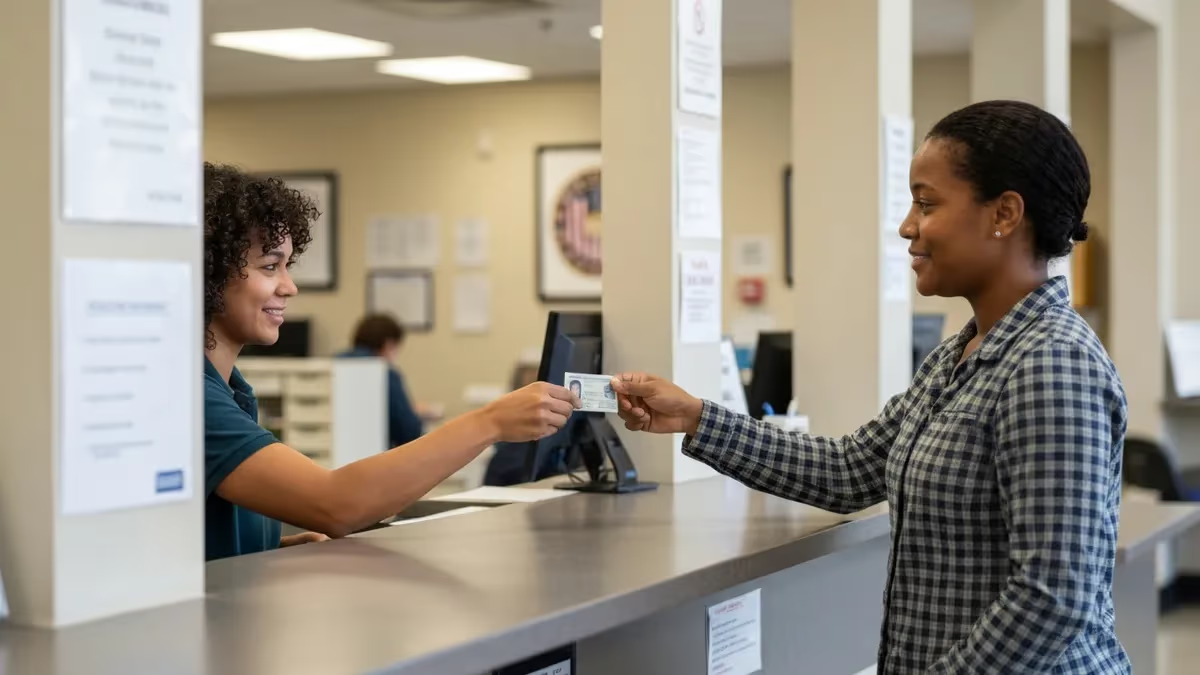
If you're wondering whether a DMV customer service representative will hand you your learner's permit on the spot, the answer is usually yes — but only after you meet every requirement at the counter. Do you get your permit at the DMV? In most states, a DMV representative processes your application, verifies your identity documents, collects your fee, and issues the permit during a single in-person visit. Understanding the exact sequence helps you avoid a wasted trip.
The role of the DMV customer service representative is central to permit issuance. These trained professionals review your proof of identity, Social Security number, and residency documents, then enter your information into the state's licensing database. They also administer or confirm the results of your written knowledge test. If everything checks out, they photograph you, collect your thumbprint in some states, and print or issue a temporary permit before you leave the building.
Permit issuance procedures vary somewhat by state, but the core steps are consistent nationwide. You will need at least one government-issued photo ID or birth certificate, proof of your Social Security number, and at least two documents showing your current residential address. Many states now offer online pre-application portals, but the final permit is almost always issued in person by a DMV representative who physically verifies your originals.
One of the most common reasons people leave without a permit is document failure. A DMV customer service representative cannot accept photocopies, expired IDs, or documents with name mismatches. If your utility bill shows a nickname while your birth certificate shows your legal name, the representative must flag the discrepancy and may ask for a court-ordered name-change document before proceeding. Preparing every document carefully before your visit saves significant time and frustration.
For new teen drivers, parents or legal guardians typically must be present and co-sign the minor's application. The DMV representative will verify the adult's identity as well, so parents should also bring their own valid ID. Some states require a signed parental consent form that you can download and complete in advance — check your state DMV's website the day before your appointment to confirm which form version is current.
The written knowledge test is usually taken on a computer terminal at the DMV office before you approach a DMV customer service representative. You must pass — typically scoring 80 percent or higher — before the representative will process your permit application. If you fail, the representative will explain how soon you can retest, whether a fee applies, and which topics you should review. Getting familiar with dmv permit issuance practice materials before your visit dramatically improves your first-attempt pass rate.
Once the representative completes processing, they will give you either a paper temporary permit valid for 30 to 60 days or, in some states, a plastic card printed on the spot. The permanent card arrives by mail within two to three weeks in most jurisdictions. Keep your temporary permit with you whenever you drive, because law enforcement recognizes it as valid documentation during that interim period.
DMV Permit Issuance by the Numbers

How DMV Permit Issuance Works Step by Step
Gather Your Documents
Schedule or Arrive at the DMV
Take the Written Knowledge Test
Approach the DMV Representative
Photo and Biometric Capture
Receive Your Temporary or Permanent Permit
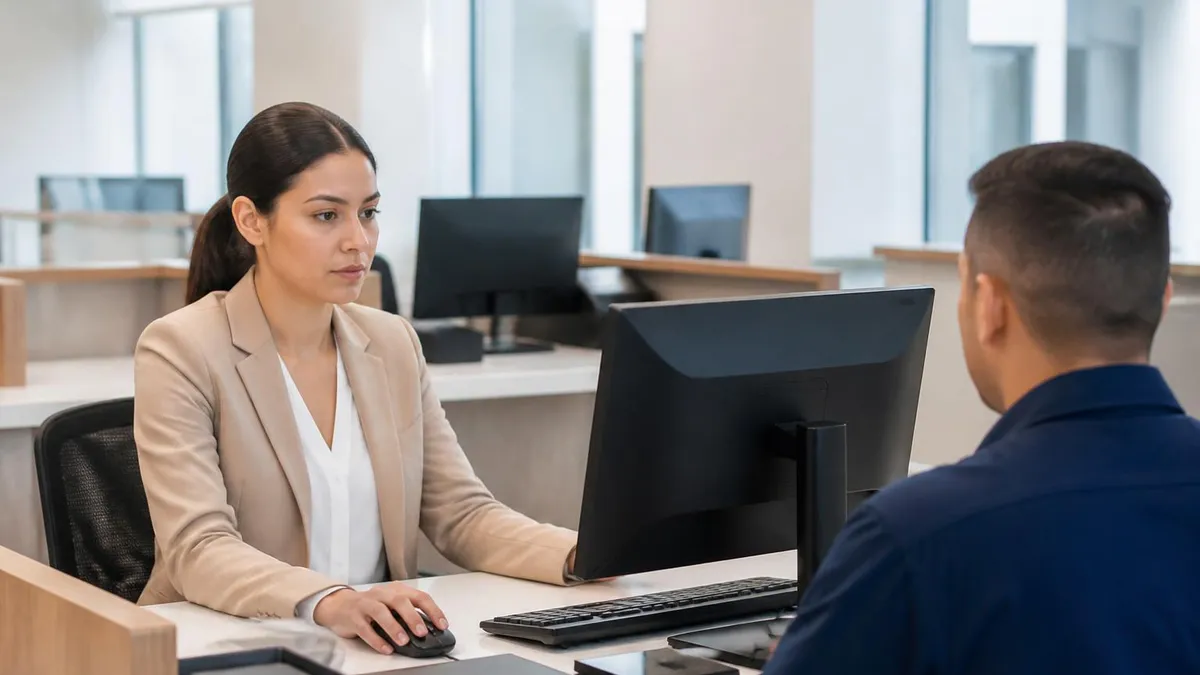
The DMV customer service representative who handles your permit application is not simply a data-entry clerk. These professionals are trained in identity fraud detection, document authentication, and state motor-vehicle law. During a single transaction, a DMV representative must cross-reference your documents against multiple databases, apply REAL ID federal standards, and ensure your application complies with your state's graduated licensing laws — all while maintaining the pace needed to serve dozens of customers per shift.
Document verification is the most critical part of what a DMV representative does at the permit issuance counter. They are trained to detect tampered birth certificates, expired foreign passports, and name discrepancies that may indicate identity issues. Many states now use ultraviolet document scanners and barcode readers that a representative activates at the counter. If a document fails electronic verification, the representative must follow a strict protocol that may include a supervisor review or a referral to the DMV's fraud unit.
Beyond document checks, the DMV representative also serves as your first point of contact for questions about permit restrictions. They will explain your state's graduated driver licensing conditions — such as nighttime driving prohibitions, passenger limits for new drivers under 18, and the minimum number of supervised driving hours you must log before upgrading to a full license. Getting this information directly from a DMV representative at the time of issuance reduces confusion later.
Fee collection is another responsibility of the DMV customer service representative. Permit fees in the United States range from as low as $5 in some states to over $35 in others, and some jurisdictions charge additional fees for REAL ID compliance or road-use funds. Representatives are trained to explain every line item on your receipt. Most DMV offices accept cash, credit cards, checks, and money orders, but policies vary, so confirm accepted payment methods before your visit.
In states with high application volumes, DMV representatives also triage the lobby to keep lines moving. They may conduct a quick pre-screen of your documents at a greeter station before you join the main queue. This pre-screening catches missing items early and lets you step out to resolve issues without losing your place entirely. If you are asked to step aside, follow the representative's instructions calmly — this is standard procedure, not a denial of your application.
DMV representatives are also responsible for flagging holds or suspensions on an applicant's record. If a prior permit was revoked due to a traffic violation, or if there is an outstanding court-ordered fine, the representative will see the hold in the system and cannot issue a new permit until it is cleared. They can tell you which agency placed the hold and how to contact them, but they cannot override the system themselves. Resolving holds often requires a separate visit or a phone call to a court clerk before you return to the DMV.
Understanding what a DMV representative actually does during permit issuance helps you approach the counter prepared. Bring every required document in a folder, organized in the order the representative will need them. Know your Social Security number by heart in case your card is not accepted. Have your payment ready. And if you need extra help, ask the representative politely — they deal with first-time applicants every day and are accustomed to explaining the process clearly.
How Do I Speak to a DMV Representative in NY and Other States
If you are asking how do I speak to a DMV representative in NY, the fastest route is calling the New York DMV contact center at 1-518-486-9786 on weekdays between 8:00 a.m. and 4:00 p.m. Eastern. Wait times are longest on Mondays and the day after a holiday. You can also visit any full-service DMV office in person, where a customer service representative at the front desk will direct you to the correct service window for permit issuance questions.
New York also offers a live-chat option and a callback feature through its DMV website, which allows you to enter your phone number and receive a call when a representative becomes available — avoiding hold music entirely. For complex issues such as name changes on an existing permit or out-of-state license reciprocity, an in-person visit is typically more efficient because the representative can view your documents and access your record simultaneously, rather than relying on your description of the situation over the phone.
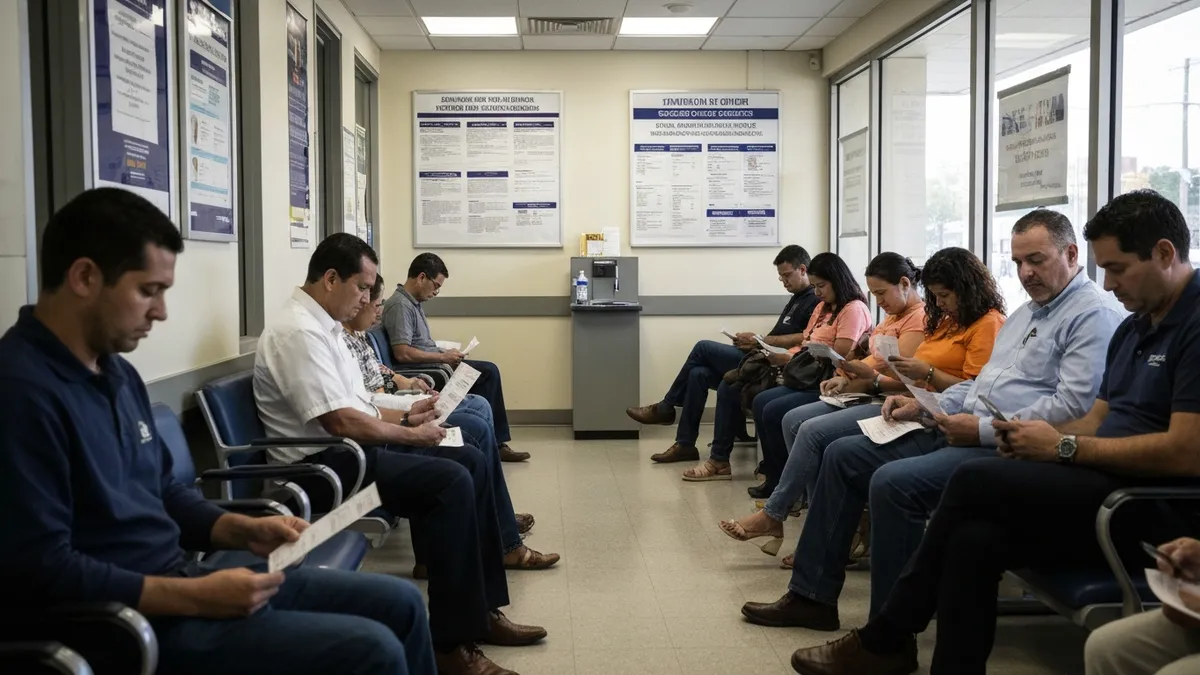
Pros and Cons of In-Person DMV Permit Issuance vs. Online Pre-Application
- +Receive your temporary permit the same day without waiting for the mail
- +A DMV customer service representative can answer your questions on the spot
- +Document errors are caught immediately, giving you a chance to correct them
- +Some states allow you to retake the knowledge test the same day if you fail
- +In-person biometric capture (photo, thumbprint) is completed in one visit
- +Representatives can apply fee waivers or explain exemptions you may not know about
- −Wait times at busy DMV offices can exceed two to three hours
- −Office hours may conflict with school or work schedules
- −Parking at urban DMV locations is often limited and can add significant time
- −Minor document discrepancies require a return visit rather than an online correction
- −Cash-only offices create problems if you arrive without the correct form of payment
- −Appointment slots at popular offices can be booked weeks in advance in some states
Document Checklist Before Your DMV Permit Appointment
- ✓Bring your original birth certificate or unexpired U.S. passport as primary proof of identity.
- ✓Carry your original Social Security card or an official document displaying your full SSN.
- ✓Include two proofs of current residential address, such as a utility bill and a bank statement dated within 60 days.
- ✓If you are under 18, bring a parent or legal guardian with their valid photo ID to co-sign the application.
- ✓Download and complete your state's minor consent form before arriving to save time at the counter.
- ✓Carry the correct permit fee in an accepted form — confirm whether your DMV takes credit cards, cash, or check.
- ✓Make sure every document shows the exact same legal name — no nicknames or initials where full names are required.
- ✓If your name has changed due to marriage or court order, bring the official supporting document such as a marriage certificate.
- ✓Print or save your appointment confirmation number and arrive at least 10 minutes early.
- ✓If you pre-applied online, bring the confirmation email or application reference number to speed up processing.
Pre-Study the Knowledge Test — Failure Delays Same-Day Issuance
Most states limit the number of knowledge test attempts per day to one or two. Failing means you leave without a permit and must return — sometimes after a mandatory waiting period of one to seven days. Applicants who spend at least five hours reviewing their state's driver handbook and completing online practice tests pass on the first attempt at a rate exceeding 80 percent, according to state DMV data.
One of the most avoidable mistakes at the DMV permit counter is arriving with photocopies instead of originals. A DMV representative is required by both state law and federal REAL ID standards to physically inspect original documents — not copies, not photos on a phone screen, and not notarized duplicates unless the state specifically authorizes them. Notarized copies of birth certificates are accepted by some states but rejected by others, so check your state's exact policy before assuming a notarized copy will suffice.
Name mismatches are the second most common reason a DMV customer service representative cannot issue a permit on the same day. If your birth certificate shows your middle name but your Social Security card omits it, or if you recently married and your ID still shows your maiden name, the representative must reconcile the discrepancy. The fix is straightforward — bring supporting documents such as a marriage certificate or a court order — but applicants who show up without those documents leave empty-handed and must schedule a return trip.
Expired documents are another frequent problem. A DMV representative cannot accept an expired passport even if it was once a valid form of ID. Similarly, a utility bill dated more than 60 to 90 days ago — the typical cutoff varies by state — will not count as proof of current residence. Always check the date on every document before you leave home. If your most recent utility bill is from four months ago, bring a bank statement or a piece of official mail dated more recently.
Paying the wrong fee or bringing an unaccepted payment method can also derail your visit. Some DMV offices are cash-only, while others refuse cash and require debit or credit cards. A small number of locations also charge a convenience fee for card payments. Check your specific office's payment policy online the morning of your visit, since policies can change without broad public notice and a single Google search can save you a wasted trip.
Minors who arrive without a parent or legal guardian will not receive a permit, period. A DMV representative has no authority to issue a learner's permit to someone under 18 without the legally required adult co-signer present. This rule applies even if the parent has sent a signed note or permission letter — the adult must be physically present with valid ID. Some states also require the parent to be a licensed driver themselves, so confirm your state's exact co-signer requirements before the appointment.
Residency document problems are often overlooked until the counter. College students living in dorms, young adults who recently moved, and people staying temporarily with relatives frequently struggle to produce two qualifying proofs of address. A dorm assignment letter may not qualify. An informal lease agreement may not qualify. Check your state's exact list of acceptable address documents — most DMV websites publish a clear list — and if your situation is unusual, call the DMV's customer service line before your appointment to confirm what will work in your specific case.
Outstanding holds on your driving record are invisible to most first-time applicants, but a DMV representative will see them immediately. Court-ordered fines, child support payment lapses, and certain traffic violation records can generate holds that prevent permit issuance. If you have any concern about your record, request a driving record check online before your DMV visit. Clearing a hold can take several business days after payment, so discovering the issue a week before your appointment — not at the counter — keeps your timeline on track.
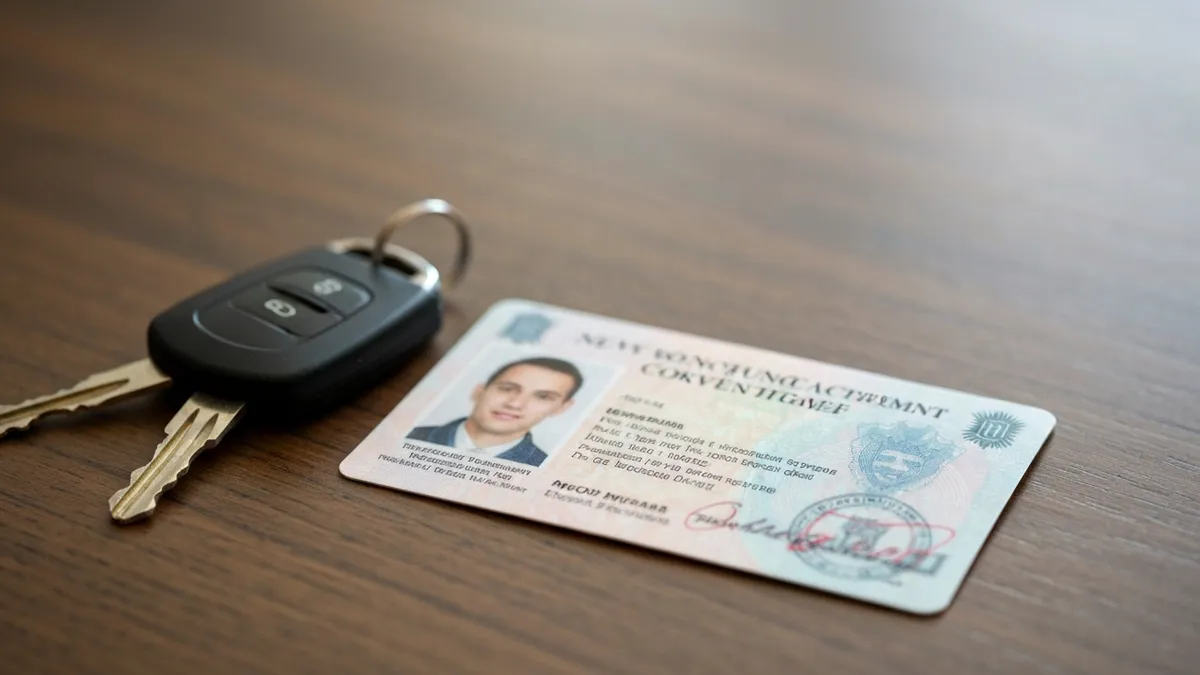
If you fail the written knowledge test, some states allow a same-day retake while others impose a mandatory waiting period of one to seven days before you can try again. A few states also charge a retest fee ranging from $5 to $15. Check your state's retest policy before your appointment so you are not caught off guard — and consider that extra preparation time as motivation to study thoroughly before your first attempt.
Preparing strategically for your DMV visit is the single most effective way to ensure you leave with a permit in hand. The two pillars of preparation are document readiness and knowledge test readiness, and both are completely within your control. Applicants who treat their DMV visit like a scheduled exam — preparing for it days in advance rather than gathering documents the morning of — have dramatically higher same-day success rates than those who show up unprepared and hope for the best.
For document readiness, create a physical checklist based on your state DMV's official requirements page and check off each item as you place it in a folder. Use the REAL ID document checker tool available on the DMV's website to verify each document qualifies. If you are unsure about any document, call the DMV's customer service line and describe what you have — a DMV customer service representative over the phone can tell you definitively whether a specific document is acceptable before you make the trip.
For knowledge test readiness, the state driver handbook is your primary resource, but it should not be your only one. The handbook describes laws and rules; practice tests simulate the actual format and question style of the exam. Most states publish sample questions on their DMV website. Third-party practice test platforms offer hundreds of additional questions organized by topic — road signs, right-of-way rules, speed limits in school zones, and more. Taking practice tests under timed conditions helps build the recall speed you need during the real exam.
Scheduling your appointment strategically also improves your experience. Mid-week mornings — Tuesday through Thursday between 9:00 a.m. and 11:00 a.m. — are consistently the least busy times at most DMV offices nationwide. Monday mornings and Friday afternoons are the most congested. If your state offers online appointment booking, reserve a slot at least a week in advance for popular offices. When you arrive, the DMV representative processing your paperwork will be less rushed during off-peak hours, which means more time for your questions and fewer data-entry errors.
If English is not your primary language, call your local DMV office in advance to ask whether translated written knowledge tests or interpreter services are available. Many states offer the knowledge test in Spanish, Chinese, Vietnamese, Haitian Creole, and other languages. Some offices can arrange telephone interpretation for the counter transaction itself. Knowing these options exist before you arrive allows you to request them confidently rather than struggling through a transaction in a language that is not your strongest.
Teen drivers should also understand that passing the knowledge test and receiving the permit is the beginning of a multi-stage licensing process, not the end. Most states require permit holders to log a specific number of supervised driving hours — commonly 50 hours total, including 10 at night — before they are eligible to apply for a full license. Keep a driving log from day one, because a DMV representative will ask you to certify those hours when you later apply for your license upgrade.
Finally, once you receive your permit, read every restriction printed on it carefully. Common restrictions include mandatory corrective lenses while driving, no highway driving, daytime-only operation, and a requirement that the supervising adult sit in the front passenger seat. Violating a permit restriction is a traffic offense in every state and can result in your permit being suspended before you ever get your full license. If any restriction seems unclear, ask the DMV representative at the counter before you walk out the door — that moment is your best opportunity to get an accurate, official answer.
For anyone considering a career as a DMV customer service representative, understanding the permit issuance process from the inside is essential preparation. DMV representatives are state government employees who undergo formal training before they are authorized to process applications independently. That training covers document authentication, database entry procedures, fee collection, fraud detection, customer service protocols, and knowledge of state motor vehicle statutes. The permit counter is one of the highest-volume and most complex service areas in any DMV office.
The career path for a DMV representative typically begins with a civil service exam or a competitive application process through the state's Department of Motor Vehicles or equivalent agency. Entry-level representatives earn an average of $38,000 to $48,000 annually in most states, with senior representatives and supervisors reaching $55,000 to $65,000 or more depending on location and years of service. Government benefits packages — including health insurance, pension plans, and paid leave — are a significant part of the total compensation for DMV representative positions.
On-the-job responsibilities extend well beyond permit issuance. A DMV customer service representative may also process vehicle title transfers, handle license renewals, issue REAL ID-compliant driver's licenses, conduct road test scheduling, process disabled parking placard applications, and respond to consumer complaints about vehicle dealers. The breadth of the role requires representatives to stay current on frequent changes to state motor vehicle laws, federal REAL ID regulations, and agency policy updates.
Consumer protection is a major component of the DMV representative's professional responsibilities. Representatives are often the first government contact for citizens who have been defrauded by a used car dealer, received an incorrect title, or experienced identity theft involving their driving record. Training in consumer protection law and dispute resolution equips representatives to provide accurate guidance and, when necessary, refer complaints to the appropriate enforcement division within the DMV or state attorney general's office.
For those preparing for the DMV representative civil service exam, topics typically tested include knowledge of state motor vehicle codes, customer service best practices, document verification procedures, basic math for fee calculation, and situational judgment scenarios involving difficult customers or ethical dilemmas. Many states publish a study guide for the exam; others provide a list of reference materials. Supplementing official materials with practice tests that mirror the exam format is the most effective preparation strategy regardless of the state.
Vehicle inspection and safety standards are another domain that DMV representatives must understand, particularly in states where the DMV oversees vehicle registration and safety inspection compliance. Representatives at registration counters routinely process paperwork related to emissions test results, brake and lighting inspection certificates, and VIN verification. Knowing what a valid inspection sticker looks like and when one is required protects both the representative and the agency from processing fraudulent or incomplete documentation.
Whether you are a first-time permit applicant trying to understand what happens at the DMV counter, or a job seeker preparing for a DMV representative career, the permit issuance process is a window into how state government licensing systems function. Every step — from document verification to fee collection to biometric capture — exists to protect the integrity of the driver identification system and to ensure that every permit issued belongs to the person who applied for it.
DMV Questions and Answers
DMV Drivers License: Application, Tests, REAL ID and Renewals

Colorado DMV Walk-In Locations: How to Talk to a DMV Customer Service Representative
DMV License Plate Renewal: Complete Guide to Renewing Your Tabs, Stickers and Registration (2026)

DMV Customer Service Representative: Alcohol Questions, Permit Test Prep & Career Guide
How this page was made: written with AI tools and published by Nathan Beja, founder of Practice Test Geeks, who is responsible for its content. Exam facts are checked against the official sources listed below. Not reviewed by a subject-matter expert. Editorial policy
Sources & references
Exam facts on this page (fees, format, dates, passing scores) are checked against these official sources; the date is our last check. Editorial policy
- calcareers.ca.gov — Test delivery, passing score, registration deadline, retake policy, time limit, score validity · verified Oct 2026