
DMV Customer Service Representative: Alcohol Questions, Permit Test Prep & Career Guide
Master dmv alcohol questions & DMV customer service representative exam prep. Practice tests, study tips & career info. ✅ Start free today!

If you are preparing for a role as a DMV customer service representative, or simply trying to pass your state's driver knowledge exam, understanding alcohol-related questions is one of the most critical areas to master. DMV alcohol questions appear on virtually every state's written permit test, and they are a consistent source of failure for first-time test takers.
These questions cover blood alcohol concentration limits, the legal consequences of driving under the influence, implied consent laws, and how alcohol affects a driver's reaction time, vision, and decision-making. Knowing these topics cold is non-negotiable whether you are sitting for a permit exam or preparing for the DMV representative exam.
The DMV customer service representative position is one of the most visible public-sector jobs in any state's motor vehicle administration. Representatives are the front-line employees who process license applications, vehicle registrations, title transfers, and handle customer inquiries every single day. The knowledge tested on the representative exam reflects exactly what drivers learn on their own permit tests — so a thorough understanding of traffic laws, road safety principles, and alcohol impairment rules gives you a serious advantage when you sit down for the official assessment. Many candidates underestimate how specific and detailed the alcohol-related content can be.
One of the most effective ways to get ready for any DMV examination is to work through realistic practice problems before the official test date. Whether you are a driver studying for your permit or a professional preparing for the DMV representative exam, practicing dmv permit test questions gives you immediate feedback on exactly which topics you understand well and which ones require more focused study time. Repetition with quality practice content is the single most reliable way to build both knowledge and the test-taking confidence you need on exam day.
Alcohol impairment content on the DMV exam is surprisingly detailed. Most states test you on the specific blood alcohol concentration (BAC) threshold of 0.08% for standard drivers, 0.04% for commercial vehicle operators, and 0.01% or 0.02% for drivers under the legal drinking age. Beyond the legal limits, exam questions probe whether you understand that alcohol affects the brain within minutes of consumption, that food slows but does not stop alcohol absorption, and that the only way to sober up is time — not coffee, water, or exercise. Getting even one of these facts wrong can cost you a passing score.
The DMV representative exam covers a broader range of topics than the standard driver's permit test, including consumer protection laws, vehicle inspection standards, and customer service procedures. However, the foundational traffic safety content — which includes the alcohol section — is shared across both exams. This means that anyone who has already studied for and passed their permit test has a head start on the representative knowledge sections. Likewise, candidates preparing for the representative exam benefit from revisiting the same core safety and impairment content that every licensed driver in the country learned during their own licensing process.
Preparing effectively means doing more than reading the driver's manual once. It means using structured practice tests, reviewing wrong answers carefully to understand the reasoning behind correct choices, and timing yourself to simulate real exam pressure. The DMV representative exam can include up to 100 questions or more depending on the state, and the alcohol and safety sections are typically weighted heavily. Candidates who score highest are those who treated the content seriously and used multiple study resources — including official handbooks, state-specific guides, and high-quality online practice platforms — before sitting for the real thing.
This guide covers everything you need to know about DMV alcohol questions, the structure of the DMV customer service representative exam, how to contact a DMV representative in states like New York, and the best study strategies for achieving a high score. Whether you are a first-time driver or a career professional, the information here will help you approach the exam with clarity, confidence, and a concrete study plan designed to produce results on test day.
DMV Representative Exam by the Numbers

DMV Representative Exam Format
| Section | Questions | Time | Weight | Notes |
|---|---|---|---|---|
| Traffic Laws & Safety | 30 | 54 min | 30% | Includes alcohol/DUI content |
| Consumer Protection & Dispute Resolution | 25 | 45 min | 25% | Customer service scenarios |
| Vehicle Inspections & Safety Standards | 25 | 45 min | 25% | Registration and title content |
| DMV Policies & Procedures | 20 | 36 min | 20% | Office processes and compliance |
| Total | 100 | 3 hours | 100% |
Understanding DMV alcohol questions requires mastering both the legal framework and the physiological facts about how alcohol impairs driving ability. Every state in the US has codified a blood alcohol concentration of 0.08% as the per se legal limit for non-commercial adult drivers.
This means that if a breathalyzer or blood test shows your BAC at or above this threshold, you are considered legally impaired regardless of how sober you feel or how well you believe you are driving. The exam will test whether you know this number precisely, because 0.07% or 0.09% — while close — are legally meaningless in the wrong context.
Commercial drivers are held to a stricter standard: 0.04% BAC. This lower limit exists because commercial vehicle operators drive larger, heavier vehicles that require greater skill, faster reaction times, and more precise judgment than a standard passenger car. A single drink can push a smaller person's BAC above this threshold. The exam expects you to know both limits and understand why they differ. Zero-tolerance laws apply to drivers under 21 in most states, setting limits at 0.01% or 0.02% depending on the state — and these limits are tested regularly on both permit exams and representative assessments.
Implied consent is another critical concept for the DMV alcohol section. When you accept a driver's license in the United States, you automatically consent to chemical testing — breath, blood, or urine — if a law enforcement officer has reasonable cause to believe you are driving under the influence.
Refusing a chemical test does not mean you avoid consequences; in most states, refusal triggers an automatic license suspension of 6 to 12 months for a first offense, and the refusal itself can be used as evidence against you in court. The representative exam tests this concept specifically because it involves both the legal and administrative functions of the DMV office.
The physiological effects of alcohol are another major testing area. Alcohol begins affecting the central nervous system within 15 to 30 minutes of consumption, reducing reaction time, impairing coordination, narrowing the visual field, and disrupting judgment and inhibitions.
Even at BAC levels below the legal limit — between 0.02% and 0.07% — a driver may experience reduced tracking ability, increased lane deviation, and impaired divided attention. The exam wants you to know that impairment begins before the legal limit, not at it. Many exam questions are designed to catch students who think that staying below 0.08% means driving is fully safe.
Common myths about sobering up are favorite topics for exam question writers. Coffee does not speed alcohol metabolism. A cold shower does not lower your BAC. Exercise does not flush alcohol from your system. The liver processes approximately one standard drink per hour, regardless of any other actions you take.
A standard drink is defined as 12 ounces of regular beer (5% alcohol), 5 ounces of wine (12% alcohol), or 1.5 ounces of 80-proof distilled spirits — all of which contain roughly the same amount of pure ethanol. The exam will test whether you know these equivalencies and understand the time-based nature of alcohol elimination.
Penalties for DUI convictions are another segment of DMV alcohol content. First-offense DUI typically includes fines of $500 to $2,000, license suspension of 6 to 12 months, possible jail time up to 6 months, mandatory alcohol education programs, and ignition interlock device installation. Repeat offenses carry significantly harsher penalties, including longer suspensions, higher fines, extended incarceration, and permanent license revocation in severe cases. The administrative side — the DMV's role in processing suspensions, reinstatements, and interlock requirements — is exactly what a DMV representative handles, making this knowledge directly relevant to the job role as well as the exam.
Studying the alcohol section thoroughly also means understanding how alcohol interacts with other substances. Combining alcohol with prescription medications, over-the-counter antihistamines, sedatives, or illegal drugs dramatically amplifies impairment. Even a BAC below 0.08% combined with a sedating medication can produce impairment equivalent to a much higher BAC from alcohol alone. The exam recognizes this through questions about polydrug use, and the correct answer is almost always that combining substances makes impairment significantly worse, not just additive. Knowing this nuance separates candidates who studied deeply from those who only skimmed the surface of the driver's manual.
How to Speak to a DMV Representative — NY and Beyond
Many drivers and applicants wonder how do I speak to a DMV representative in NY specifically, because New York's DMV office is one of the busiest in the country. The New York DMV customer service line is available by calling 518-486-9786 during standard business hours, Monday through Friday, 8:00 AM to 4:30 PM Eastern. For specific transactions like license suspensions, title issues, or driving record requests, callers should select the appropriate department menu option to reach the correct representative and minimize hold time.
If calling is not your preferred option, the New York DMV also offers live chat support and an email inquiry system through its official website. Walk-in appointments at a local DMV office are available in most counties, though scheduling an appointment online is strongly recommended to avoid long wait times. New York has also expanded its self-service options through DMV NOW kiosks, which handle many standard transactions without needing to speak with a representative at all — freeing up staff to handle complex cases that genuinely require human assistance.
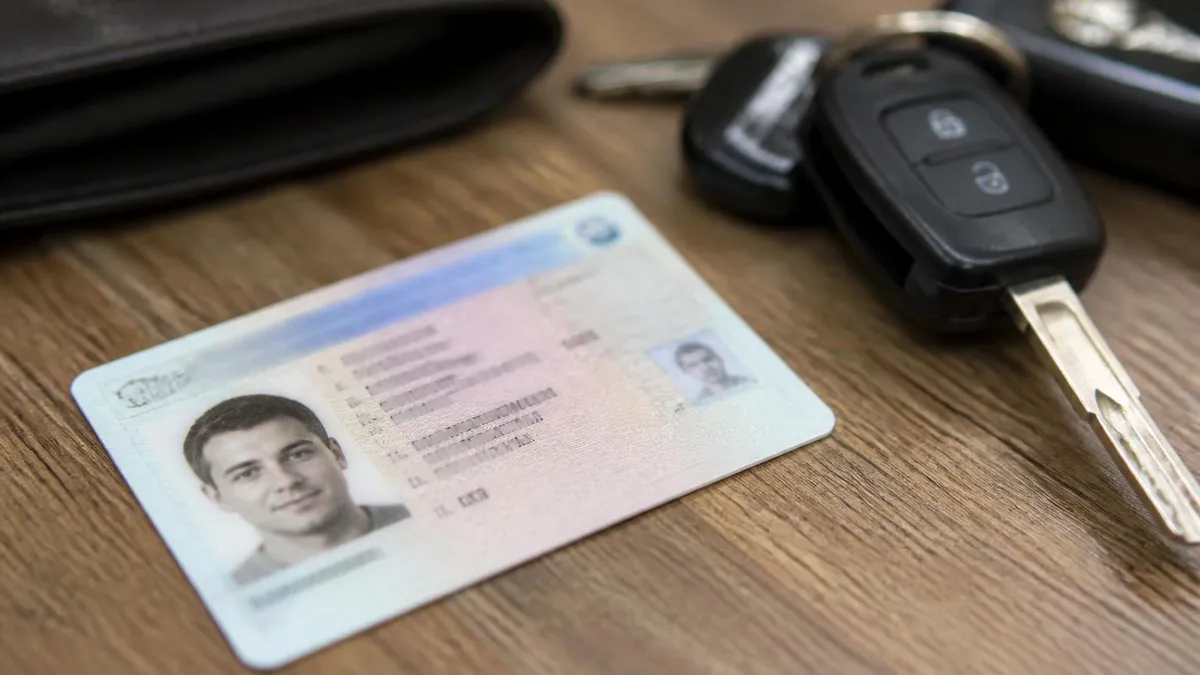
DMV Customer Service Representative: Is It the Right Career?
- +Stable government employment with strong job security and benefits
- +Competitive starting salary averaging $40,000–$64,000 depending on state and experience
- +Clear promotion path with opportunities to advance to supervisor and management roles
- +Meaningful public-facing work that directly helps community members navigate complex processes
- +Predictable work schedule with standard government hours and no weekend requirements in most states
- +Comprehensive benefits packages including health insurance, pension plans, and paid leave
- −High-volume customer interactions can be stressful, especially during peak registration and renewal periods
- −Exam preparation requires significant study investment before you can qualify for the position
- −Government hiring processes are often slow, with months between application and start date
- −Dealing with frustrated or upset customers is a daily reality that requires strong emotional resilience
- −Salary growth can be limited by government pay scales and union agreements in some states
- −Procedures and systems change frequently, requiring ongoing learning to stay current on policies
DMV Exam Day Preparation Checklist
- ✓Review all state-specific BAC limits, including commercial (0.04%) and under-21 (0.01–0.02%) thresholds.
- ✓Memorize implied consent rules and the specific penalty for refusing a chemical test in your state.
- ✓Practice at least 3 full-length timed mock exams before your scheduled test date.
- ✓Study the effects of alcohol at each BAC level from 0.02% up to 0.15% and beyond.
- ✓Review consumer protection laws including lemon law basics and odometer fraud regulations.
- ✓Memorize the vehicle inspection standards your state uses to pass or fail a vehicle.
- ✓Bring valid government-issued photo ID and any required appointment confirmation to the test center.
- ✓Get a full night of sleep before exam day — cognitive performance drops significantly with fatigue.
- ✓Arrive at the test center at least 20 minutes early to complete check-in without rushing.
- ✓Read every exam question twice before selecting your answer to avoid misreading tricky phrasing.
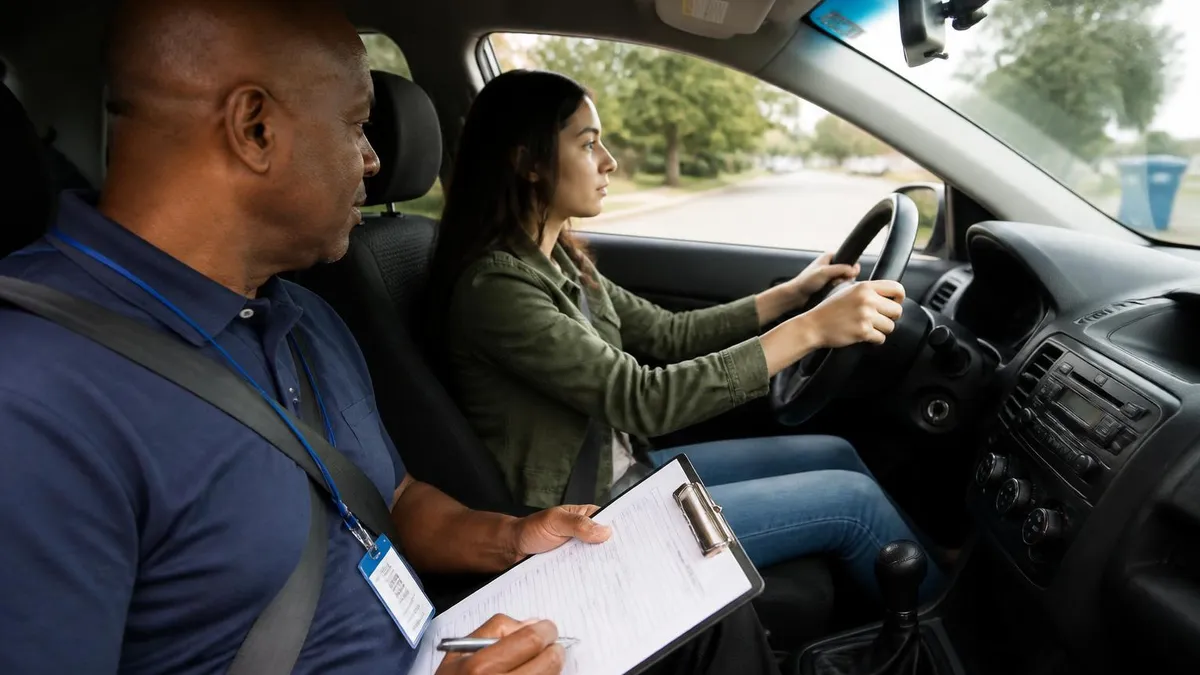
Alcohol Questions Are the #1 Source of Exam Failures
Studies of DMV permit test results consistently show that alcohol and DUI-related questions cause more incorrect answers than any other single topic. The most common mistakes are misremembering BAC limits, confusing implied consent penalties with DUI penalties, and not knowing that alcohol impairment begins below the legal limit. Spending extra study time on these specific areas can make the difference between a passing and failing score.
Building a career as a DMV customer service representative requires more than passing the exam — it demands a genuine understanding of motor vehicle law, customer communication skills, and the administrative systems that states use to manage millions of driver and vehicle records. The role sits at the intersection of law enforcement (through license suspensions and DUI administrative hearings), consumer protection (through vehicle title and lemon law processes), and public service (through the daily processing of licenses, registrations, and permits). Representatives who understand this multi-dimensional role perform better on their exams and in their actual jobs.
The application process for DMV representative positions typically begins with a civil service examination in most states. These exams are often posted on state government job boards and are open to the general public. Scores from the civil service exam place candidates on an eligibility list, and positions are filled based on score rank combined with interview performance. Some states require candidates to complete a background check and driving record review, which makes sense given that the role involves administering driving-related regulations. A clean driving record, while not always legally required, is a practical asset when applying.
Once hired, new DMV representatives go through a structured onboarding and training program that covers the specific software systems, policy manuals, and procedures used in their state. Training periods typically last between 4 and 12 weeks and include both classroom instruction and supervised on-the-job practice at a live service counter. During this period, new hires learn the precise workflows for processing titles, handling rejections, managing holds on accounts, and navigating complex situations like out-of-state transfers or inherited vehicle titles. The foundation of knowledge tested on the pre-employment exam directly supports everything learned during training.
Continuing education is an ongoing feature of the DMV representative role. State DMV offices update their policies and fee schedules regularly — sometimes annually — in response to legislative changes, court rulings, and federal mandates. Representatives are expected to stay current through mandatory training updates, internal memos, and periodic competency assessments. Those who build strong foundational knowledge during their initial exam preparation find it much easier to absorb policy updates throughout their careers, because they already understand the underlying principles that the policies are built upon.
The salary range for DMV customer service representatives varies meaningfully by state, metropolitan area, and seniority level. Entry-level positions in rural areas may start as low as $35,000 per year, while experienced representatives in high cost-of-living states like California, New York, and Washington can earn $70,000 or more annually. Government benefits packages, which typically include health insurance, retirement contributions, and generous paid leave, add substantial value on top of base salary. When total compensation is considered, the DMV representative position competes favorably with comparable private-sector customer service roles, with the added advantage of greater job stability.
Advancement opportunities within the DMV structure are genuinely available for motivated representatives. After gaining experience at the service counter, high performers can advance to lead representative positions, supervisory roles, training coordinator positions, or specialized functions like commercial vehicle compliance or administrative hearings. Some representatives pursue further education or professional certifications in public administration or traffic safety, which opens doors to regional management and policy roles. The career path is not a dead end — it is a structured progression that rewards performance, knowledge, and professional development.
For people who enjoy structured work environments, clear rules and procedures, meaningful public interaction, and the stability of government employment, the DMV customer service representative role offers an excellent career foundation. The exam is the gateway, and the knowledge you build while preparing — including the detailed content around alcohol laws, vehicle safety, and consumer protection — is not just test-taking material.
It is the actual substance of the job you will perform every day if you earn the position. That alignment between exam content and real job duties is one of the strongest arguments for taking exam preparation seriously from the very beginning of your candidacy.
While the 0.08% BAC limit is federal standard for regular drivers, some states have enacted additional administrative per se thresholds, enhanced penalty zones, or zero-tolerance provisions that differ from the federal minimums. Always verify your specific state's alcohol limits and implied consent statutes using your official state driver's manual before taking any DMV examination, since exam questions will reflect your state's laws — not a national average.
Passing the DMV representative exam on your first attempt is absolutely achievable with the right preparation strategy. The most important thing you can do is start early — ideally at least four to six weeks before your scheduled exam date — and use a daily study routine rather than cramming everything into the final few days. Consistent, spaced repetition of exam content is far more effective than marathon study sessions, because it allows your brain to consolidate information into long-term memory rather than short-term recall that fades quickly under exam pressure.
Begin your preparation by downloading the official driver's manual for your state and reading through it completely at least once. This gives you a baseline understanding of the full scope of content before you start drilling with practice questions.
Pay special attention to the sections on alcohol and drug impairment, traffic laws, road signs, and vehicle safety, since these topics appear most frequently on both permit exams and representative assessments. Highlight or annotate the sections where the manual provides specific numbers — BAC limits, following distances, speed limits in school zones — because the exam loves to test precise numerical knowledge.
After your first read-through, shift to active practice using mock exams. Taking timed practice tests simulates the pressure of the real exam and forces you to retrieve information from memory rather than just recognizing it when you see it. Research consistently shows that retrieval practice — actively trying to recall information before checking the answer — produces significantly stronger long-term retention than re-reading or highlighting.
Aim to complete at least one full-length practice exam per day in the final two weeks before your test, and always review every question you got wrong to understand why the correct answer is correct, not just what the correct answer is.
For the alcohol and impairment content specifically, consider creating a simple reference chart that lists the key BAC levels and their associated effects and legal consequences. For example: 0.02–0.04% — some loss of judgment and relaxation; 0.05–0.07% — reduced coordination and impaired tracking; 0.08% — legally impaired, reduced concentration and short-term memory; 0.10–0.12% — significant motor impairment and slurred speech; 0.15%+ — major loss of balance, possible blackout. Reviewing this chart daily for a week will make these thresholds second nature by exam day, so you do not need to reason through each question from scratch under time pressure.
Consumer protection content, which features prominently on the DMV representative exam, requires a different study approach than the traffic safety sections. Instead of memorizing lists of numbers, focus on understanding the logic and purpose behind consumer protection laws. Lemon laws exist because consumers need protection from vehicles with persistent, unfixable defects.
Odometer fraud laws exist because misrepresenting mileage directly deceives buyers about a vehicle's value and condition. Understanding the why behind each law makes it much easier to answer hypothetical scenario questions, which are common on representative exams. These questions present a customer situation and ask what the representative should do — and the correct answer almost always follows logically from the purpose of the relevant law.
Vehicle inspection content is another area where a systematic approach pays dividends. Rather than trying to memorize every single inspection point in isolation, organize the content into categories: safety systems (brakes, steering, tires, lights), emissions controls, structural integrity, and documentation requirements.
Within each category, focus on the specific failure thresholds that your state uses — for example, brake pad minimum thickness, tire tread depth requirements, and the specific codes that trigger mandatory reinspection versus automatic failure. Practice questions in this area often involve identifying whether a described vehicle condition would pass or fail inspection, making precise knowledge of these thresholds essential.
On the day of your exam, manage your mental state as carefully as you manage your knowledge. Arrive early, bring everything you need, and resist the urge to cram in the waiting room — last-minute reviewing tends to create anxiety rather than improve recall. Read each question carefully and completely before looking at the answer choices, since the wording of DMV exam questions is often precise in ways that matter.
If you encounter a question you are unsure about, mark it and move on rather than spending excessive time on it, then return to it after completing the questions you are confident about. This time management strategy ensures that you capture every point you have earned before running out of time on challenging questions.
Building strong test-taking habits is just as important as building content knowledge when preparing for the DMV representative exam. One of the most valuable habits is reading the stem of each question before reading the answer choices, then predicting what you think the correct answer should be before you look at the options. If your predicted answer matches one of the choices, that is a strong signal you are on the right track. If it does not match any option, you know you need to re-read the question more carefully and reconsider your initial understanding of the topic being tested.
Process of elimination is your most reliable backup tool when you encounter a question whose answer you are not certain about. On a multiple-choice exam, incorrect answers are usually wrong for a specific reason — they contain an inaccurate number, describe the wrong procedure, apply a rule to the wrong situation, or describe a common misconception. Identifying why each wrong answer is wrong helps you eliminate options systematically until the correct answer becomes clear even when you are not initially certain. This approach consistently improves performance on questions where pure recall is insufficient.
For the alcohol content specifically, watch out for answer choices that describe common myths. If an answer choice says that coffee helps sober someone up, that exercise burns off alcohol quickly, or that eating food before drinking prevents impairment entirely, those choices are almost certainly wrong. The exam is designed to test whether you know the scientifically accurate facts about alcohol metabolism — and the test writers know exactly which myths are most commonly believed. Recognizing these trick options immediately lets you eliminate them without hesitation.
Group study can be highly effective for DMV exam preparation, particularly for content areas that involve understanding scenarios and making judgment calls. Working through practice questions with a study partner allows you to hear different reasoning approaches, catch each other's misunderstandings, and reinforce correct knowledge through explanation.
Research on learning consistently shows that teaching a concept to someone else is one of the most powerful ways to deepen your own understanding. If you explain to a study partner exactly why an implied consent refusal triggers a license suspension, you are far more likely to remember that fact under exam pressure than if you simply read it once.
Do not neglect the road signs section of the exam, even if it seems basic. Sign recognition questions are among the fastest to answer correctly when you know them, which means they are free points you should not sacrifice.
A systematic review of all regulatory signs (which give orders), warning signs (which alert to hazards), and guide signs (which provide directional and distance information) takes only a few hours and can lock in a meaningful number of correct answers. The color coding system — red for prohibition, yellow for warning, green for guidance, orange for work zones — provides a fast mental shortcut when you encounter an unfamiliar sign on the exam.
In the final week before your exam, shift your practice from learning new content to consolidating what you already know. Review your notes, re-take practice exams you completed earlier to see how your scores have improved, and focus extra time on any categories where you are still scoring below 80%. Most states require a minimum passing score of 70%, but aiming for 80% in practice gives you a safety margin that accounts for the uncertainty of real exam conditions.
Candidates who practice to 80% or above consistently perform better on their actual exams than those who only practice to the minimum threshold.
After the exam — whether you pass or need to retake — take time to reflect on your preparation process. If you passed, note which study strategies were most effective so you can replicate them for future professional development needs. If you did not pass, most states allow retesting after a waiting period of one to three days, and the feedback from your score report can guide you toward the specific content areas that need additional attention.
The DMV representative exam is genuinely passable with adequate preparation, and virtually every candidate who studies seriously and uses quality practice materials succeeds within their first one or two attempts. Your investment in preparation today is a direct investment in your professional future.
DMV Questions and Answers

DMV Customer Service Representative: Complete Career Guide & Permit Test Practice

DMV Drivers License: Application, Tests, REAL ID and Renewals

DMV License Plate Renewal: Complete Guide to Renewing Your Tabs, Stickers and Registration (2026)

CT DMV Road Test Appointment: Complete 2026 Guide to Scheduling, Preparation, and Passing Your Connecticut Driving Exam

DMV Written Test Online: What You Can and Cannot Do Online
About the Author
Licensed Driving Instructor & DMV Test Specialist
Penn State UniversityRobert J. Williams graduated from Penn State University with a degree in Transportation Management and has spent 20 years as a certified driving instructor and DMV examiner consultant. He has personally coached thousands of applicants through written knowledge tests, skills assessments, and commercial driver licensing programs across more than 30 states.
Join the Discussion
Connect with other students preparing for this exam. Share tips, ask questions, and get advice from people who have been there.
View discussion (8 replies)