
What Does TVB Other Mean DMV: Understanding DMV Customer Service Representatives
What does TVB Other mean at the DMV? Learn how DMV customer service representatives handle disputes, hearings & more. ✅ Full guide inside.
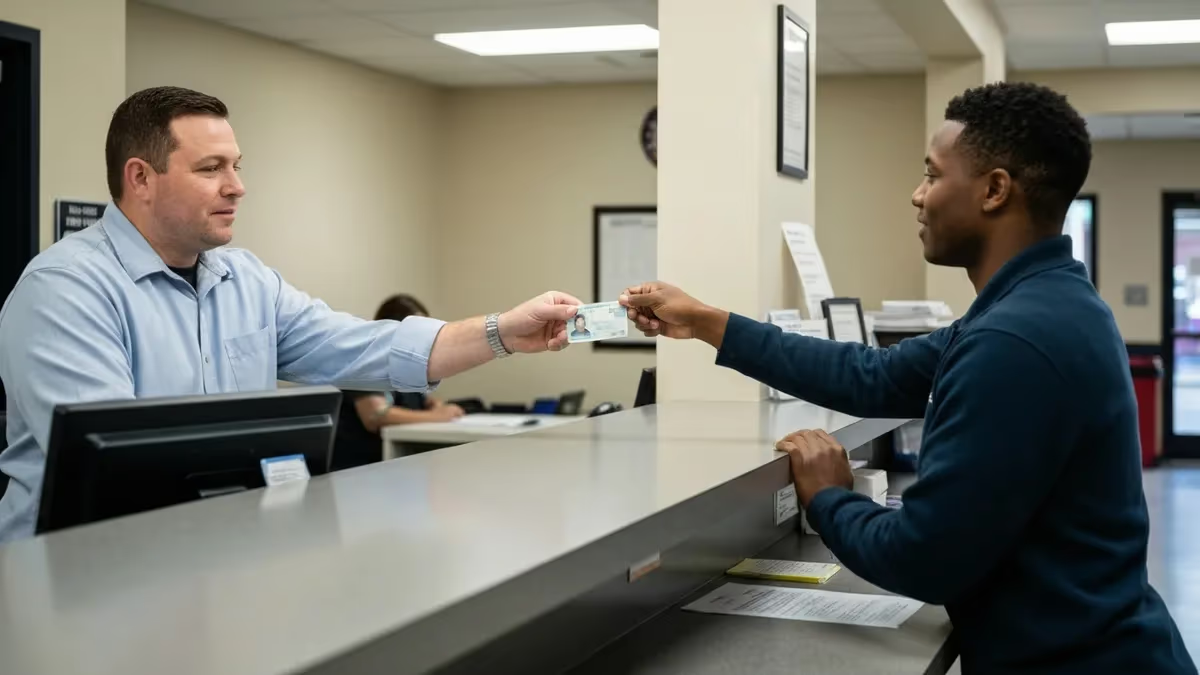
If you have ever received a traffic ticket in New York and searched for ways to contest it, you may have come across the term "TVB Other" on your DMV documentation. Understanding what does TVB Other mean DMV is essential for any driver navigating the Traffic Violations Bureau system. A DMV customer service representative is often the first point of contact who can clarify these designations and guide you through the process of resolving your violation properly.
The Traffic Violations Bureau, or TVB, is the branch of the New York State DMV responsible for handling most traffic tickets issued in New York City and a handful of other urban jurisdictions. Within this system, cases are categorized based on their nature and the specific hearing type required. The label "TVB Other" typically refers to violation categories that fall outside the standard moving violation hearings, including administrative matters, license-related issues, and specialized case types.
Many drivers are understandably confused when they see this classification appear on their summons or DMV records. Rather than guessing what it means, contacting a DMV representative directly is the fastest and most reliable way to get a clear explanation. Representatives at TVB offices are trained to explain case types, hearing procedures, and what options are available to you as a respondent facing a particular charge.
The DMV customer service representative role is broader than most people realize. These professionals not only answer questions about TVB designations but also assist with license reinstatement, point system inquiries, record corrections, and general case guidance. They serve as the human interface between the often-complex DMV bureaucracy and everyday drivers who need to understand their legal obligations and options under state traffic law.
For those preparing to work at the DMV or take the DMV Representative exam, understanding TVB classifications is a core competency. The exam tests your knowledge of dispute resolution procedures, consumer protection laws, vehicle inspection standards, and how cases are categorized within different DMV divisions including the TVB. Knowing the difference between TVB Other and standard moving violation categories is the kind of nuanced knowledge that appears frequently on certification assessments.
If you are a test-taker preparing for the DMV Representative exam, practical knowledge about how the TVB processes cases will be directly tested. Review resources like dmv tvb other practice materials can help reinforce your understanding of these case classifications and hearing procedures in a structured, exam-ready format.
This guide covers everything you need to know about TVB Other designations, how DMV customer service representatives handle these cases, what to expect during a TVB hearing, and how to prepare for the DMV Representative certification exam. Whether you are a driver dealing with a ticket or a professional pursuing a DMV career, this comprehensive resource will give you the clarity and confidence you need to move forward.
DMV TVB Other: Key Numbers

TVB Other Case Types: What Each Category Means
These hearings address issues like license suspension due to point accumulation, failure to appear at prior hearings, or outstanding fines. They are not about a single ticket but about the driver's overall record status with the DMV.
Violations involving driving without a valid license, operating on a suspended or revoked license, or failing to maintain required insurance coverage often fall under TVB Other classifications handled by specialized DMV staff.
Some TVB Other designations cover vehicle equipment violations such as defective brakes, lighting failures, or missing required safety equipment. These cases may require proof of repair before a hearing can be resolved successfully.
DMV customer service representatives also handle consumer protection matters involving auto dealers, repair shops, or title disputes. These cases are categorized separately from moving violations and involve their own resolution process.
A DMV customer service representative serves as the operational backbone of any DMV office, whether working in the TVB context or a standard licensing bureau. Their responsibilities span a wide range of tasks from answering driver inquiries and processing transactions to handling complex dispute resolution procedures. Understanding this role is crucial both for drivers seeking help and for candidates preparing for the DMV Representative certification exam.
In New York City's Traffic Violations Bureau, representatives are specifically trained to manage a high volume of hearings involving all types of traffic violations. They interact directly with respondents — the drivers who have received summonses — explaining their rights, the hearing process, and what evidence they should bring. This customer-facing aspect of the job demands clear communication skills, patience, and a thorough knowledge of New York State Vehicle and Traffic Law.
One of the most important responsibilities of a DMV representative in the TVB context is managing the administrative workflow of hearings. This includes scheduling hearings, maintaining accurate case files, entering disposition data into state databases, and ensuring that all procedural requirements are met before a hearing can proceed. Any error in case management can delay a driver's resolution or even affect the outcome of a hearing, so precision is essential.
Consumer protection is another major pillar of the DMV representative's role. When drivers have disputes with auto dealers — such as issues with odometer fraud, failure to disclose salvage titles, or misleading advertising — they can file complaints with the DMV. Representatives trained in consumer protection investigate these claims, gather documentation, and coordinate with the relevant state agencies to ensure fair outcomes for consumers and accountability for businesses.
Vehicle inspection standards also fall within the purview of many DMV representatives. They may be responsible for verifying that inspection stations comply with state requirements, processing reports of failed inspections, or assisting drivers who have questions about why their vehicle did not pass. A solid understanding of what constitutes a valid inspection and what defects trigger a failure is necessary knowledge for anyone working in a DMV capacity.
The DMV representative role also involves significant record-keeping and compliance duties. Representatives must understand how to handle sensitive personal information in accordance with state privacy laws, how to process payment transactions for fines and fees, and how to manage the documentation required for license reinstatement. Each of these tasks requires a working knowledge of DMV systems, database procedures, and state regulatory frameworks.
For exam candidates, the depth of knowledge expected by the DMV Representative certification test reflects the true complexity of the job. Questions on the exam cover dispute resolution timelines, consumer protection statutes, inspection protocols, and hearing procedures in significant detail. Thorough preparation using practice tests and study guides is the most effective way to internalize this material and perform confidently on test day.
How Do I Speak to a DMV Representative in NY: Your Options
The New York State DMV operates a central call center that connects drivers to DMV customer service representatives during business hours. You can reach the DMV by calling (518) 486-9786 for general inquiries. Have your license number, case number, or summons information ready before calling to help the representative locate your records quickly and provide accurate guidance on your specific situation.
Wait times can vary significantly depending on the time of day and the volume of incoming calls. Mornings early in the week tend to have shorter hold times, while Fridays and the days following holidays often experience longer waits. If you have a TVB-specific question, ask the representative to transfer you to the TVB directly, as that department handles hearing scheduling, adjournments, and case-specific inquiries for traffic violation matters.
Working as a DMV Representative: Pros and Cons
- +Stable government employment with strong job security and predictable schedules
- +Competitive salary with benefits including health insurance, retirement plans, and paid leave
- +Opportunities for career advancement within state government agencies
- +Meaningful public service role that helps drivers navigate complex bureaucratic systems
- +Structured training programs that build expertise in traffic law and consumer protection
- +Diverse daily responsibilities spanning case management, customer service, and compliance
- −High-volume public-facing work can be stressful, particularly in busy urban TVB offices
- −Certification exam is comprehensive and requires significant preparation time
- −Limited flexibility in job duties since many tasks are governed by strict state procedures
- −Dealing with frustrated or upset drivers daily requires strong emotional resilience
- −Salary growth can be slower compared to private sector roles with similar skill requirements
- −Shift work or extended hours may be required at high-traffic locations during peak periods
Pros and Cons at a Glance
| Pros | Cons |
|---|---|
| Stable government employment with strong job security and predictable schedules | High-volume public-facing work can be stressful, particularly in busy urban TVB offices |
| Competitive salary with benefits including health insurance, retirement plans, and paid leave | Certification exam is comprehensive and requires significant preparation time |
| Opportunities for career advancement within state government agencies | Limited flexibility in job duties since many tasks are governed by strict state procedures |
| Meaningful public service role that helps drivers navigate complex bureaucratic systems | Dealing with frustrated or upset drivers daily requires strong emotional resilience |
| Structured training programs that build expertise in traffic law and consumer protection | Salary growth can be slower compared to private sector roles with similar skill requirements |
| Diverse daily responsibilities spanning case management, customer service, and compliance | Shift work or extended hours may be required at high-traffic locations during peak periods |
TVB Hearing Preparation Checklist for Drivers
- ✓Locate your original summons and confirm the court date, case number, and violation code listed
- ✓Research what your specific violation code means using the NYS Vehicle and Traffic Law reference
- ✓Request a copy of your full driving record from the DMV to review your current point total
- ✓Gather all relevant evidence including photos, witness statements, dashcam footage, or repair receipts
- ✓Contact the TVB at least 10 days in advance if you need to request an adjournment of your hearing
- ✓Arrive at the TVB office at least 30 minutes before your scheduled hearing time to check in
- ✓Bring a valid photo ID and your driver's license to present to the administrative staff
- ✓Prepare a clear, concise oral statement describing your version of events without reading from notes
- ✓Review the Administrative Law Judge's role and understand that TVB hearings are non-jury proceedings
- ✓Follow up within 30 days of your hearing to confirm the disposition has been entered on your record
TVB Decisions Cannot Be Appealed to Criminal Court
Unlike traditional traffic court, TVB hearings in New York City result in decisions that are appealed through the DMV Appeals Board, not through the criminal court system. This means the standard legal procedures you might expect from a courtroom setting do not apply. Understanding this distinction is critical for any driver who receives an unfavorable decision and wants to know their options for further review.
Preparing for the DMV Representative exam requires a strategic approach that goes well beyond simply memorizing definitions. The exam is designed to assess your ability to apply knowledge in realistic scenarios, which means you need to understand not just what the rules say but why they exist and how they interact with each other. This depth of understanding is what separates candidates who pass on their first attempt from those who need to retake the test.
The exam covers several major subject areas. Consumer protection and dispute resolution make up a significant portion of the questions, testing your understanding of how to handle complaints from drivers about auto dealers, repair shops, and insurance companies. You need to know the timelines for filing complaints, the evidence standards used in DMV hearings, and the remedies available to consumers who have been wronged by licensed automotive businesses.
Vehicle inspection standards are another major exam topic. Questions in this area focus on what a DMV-licensed inspection station is required to check, what defects constitute a mandatory failure, and how inspection stickers are issued and revoked. You also need to understand the difference between annual safety inspections and emissions inspections, as these two processes have different requirements and are governed by separate regulatory frameworks.
Driver licensing procedures are tested extensively as well. This includes the rules for obtaining a learner's permit, the requirements for a road test, the graduated license system for young drivers, and the procedures for renewing or reinstating a license that has been suspended or revoked. Each of these areas involves specific timelines, fees, and documentary requirements that you need to know with precision.
Point system management is an area where many exam candidates underestimate the complexity. New York's Driver Violation Point System assigns specific point values to different violations, and accumulating 11 or more points within 18 months triggers a license suspension. DMV representatives must understand how points are calculated, how they can be reduced through the Point and Insurance Reduction Program, and how certain commercial driver's license holders face different point thresholds than standard license holders.
Traffic law and the Vehicle and Traffic Law statute are tested across multiple sections of the exam. You need to be familiar with the definitions of moving violations, non-moving violations, and misdemeanor traffic offenses. Understanding which violations are handled by the TVB versus which go through the standard criminal court system is particularly important, as this distinction affects everything from the respondent's rights to the type of penalties that can be imposed.
The best preparation strategy combines reading official DMV study materials with active practice testing. Taking timed practice exams that simulate the actual test format helps you identify weak areas and build the stamina needed to perform well over a multi-hour examination. Focus your review sessions on the topics where your practice scores are lowest, and revisit those areas multiple times over the weeks leading up to your exam date.
If you fail to appear at your scheduled TVB hearing without requesting an adjournment in advance, the Administrative Law Judge will enter a guilty finding in your absence. This default judgment means you will face the maximum fine and full point assessment for the violation, with no opportunity to present your side of the case. Additionally, failure to pay a TVB fine within 90 days can result in a license suspension that stays on your record even after the fine is eventually paid.
Building a career as a DMV customer service representative is a practical and rewarding path for individuals who want to work in public service while developing expertise in traffic law, consumer protection, and administrative procedures. The path typically begins with passing the civil service exam for your state, followed by assignment to a DMV office where on-the-job training supplements your formal exam preparation. Entry-level representatives generally start in transaction-focused roles before advancing to more complex case management positions.
Salary and compensation for DMV representatives vary by state, but in New York the average annual salary for a DMV customer service representative falls in the range of $45,000 to $70,000 depending on experience level, location, and specific assignment. Urban offices such as those in New York City tend to offer slightly higher compensation to reflect the higher cost of living and the increased complexity of caseloads in densely populated jurisdictions where TVB Other classifications are especially common.
Career advancement opportunities within the DMV system are real and structured. Experienced representatives can advance to supervisory roles overseeing teams of customer service staff, move into specialized units focused on fraud investigation or consumer protection enforcement, or transition into policy and training roles that support the broader operation of the department. Each of these pathways requires demonstrated expertise and often additional certification or examination requirements.
The skills developed as a DMV representative also transfer well to other public sector roles. Experience with administrative law, consumer protection enforcement, and high-volume case management is valued by agencies ranging from the Department of Motor Vehicles to state insurance commissions, attorney general consumer protection units, and even federal agencies like the National Highway Traffic Safety Administration. A DMV career can be the foundation for a long and diverse public service trajectory.
Professional development opportunities within the DMV include ongoing training in new state regulations, technology system updates, and customer service best practices. Many states offer formal career development programs for civil service employees that provide tuition assistance for college coursework, access to internal training academies, and mentorship from senior staff members. Taking advantage of these programs is the most effective way to accelerate advancement within the DMV system.
For exam candidates who are also currently working in another field, preparing for the DMV Representative certification while managing existing job responsibilities requires careful time management. Setting aside two to three hours of focused study time each day in the weeks leading up to the exam, combined with weekend review sessions using full-length practice tests, is a schedule that most working adults can sustain without burnout while still achieving a passing score.
Ultimately, the value of passing the DMV Representative exam lies not just in qualifying for the job but in genuinely understanding the systems and laws that govern motor vehicle operation and registration in your state. This knowledge makes you a more effective representative, a more credible resource for the public, and a stronger candidate for advancement throughout your DMV career. Resources for dmv tvb other and related exam preparation are widely available and should be used consistently during your study period.
When it comes to practical tips for succeeding on the DMV Representative exam, the single most important strategy is consistency. Studying a little every day for several weeks is far more effective than cramming all the material into a few marathon sessions right before the exam. The material on the DMV Representative exam is dense and requires repeated exposure to truly internalize, particularly the specific point values, timelines, fees, and regulatory thresholds that appear throughout the consumer protection and vehicle inspection sections.
Use active recall techniques rather than passive re-reading when you study. Instead of reading through your notes and highlighting key passages, close the book and try to write down everything you remember about a topic from memory. This effortful retrieval process strengthens the neural pathways associated with that information and makes it far more likely to surface correctly under the pressure of an actual exam. Flashcards, self-quizzing, and practice test questions all use this same principle.
Pay close attention to the specific language used in DMV regulations and procedures. Exam questions frequently test your ability to distinguish between terms that sound similar but have distinct legal meanings. For example, understanding the difference between a license suspension and a license revocation, or between a mandatory refusal and a permissive refusal in the context of chemical testing, can be the difference between a correct and incorrect answer on questions that otherwise seem straightforward.
Time management during the actual exam is a skill that requires practice. Many candidates find that they run short on time in the later sections of the exam, not because they do not know the material, but because they spent too long on early questions they were uncertain about. A good strategy is to move through the exam at a steady pace, marking questions you are unsure about and returning to them after you have answered everything you are confident about. This ensures that every question you definitely know gets answered correctly before time runs out.
Practice exams are the most valuable preparation tool available for the DMV Representative certification. Taking multiple full-length practice tests under timed, exam-like conditions builds both your content knowledge and your test-taking stamina. After each practice test, review every question you got wrong and make sure you understand not just the correct answer but why the other options were incorrect. This analysis is where the deepest learning happens and where you identify the specific gaps in your knowledge that need targeted review.
On the day of the exam, arrive early and bring all required identification and documentation. Read every question carefully before selecting an answer, and watch for qualifying words like "always," "never," "must," and "may" that significantly change the meaning of a question. These words are often the key to distinguishing the correct answer from a plausible distractor. Trust your preparation — if you have studied consistently and taken multiple practice exams, your knowledge base is solid and you are ready to succeed.
After passing the exam and beginning your career as a DMV representative, continue to engage with the material actively. State regulations change, new procedures are introduced, and technology systems evolve over time. The most effective DMV professionals are those who treat their professional knowledge as something that requires ongoing maintenance rather than a fixed body of information that stops growing on the day they pass their certification exam. Continuous learning is the hallmark of a long and successful DMV career.
Sample DMV - Representative Exam Practice Questions
Try these questions from our free DMV - Representative Exam practice tests. The correct answer and an explanation follow each question.
What does a green arrow traffic signal mean?
- A. Yield to oncoming traffic before turning in the arrow's direction
- B. Proceed in the direction of the arrow; conflicting traffic is stopped
- C. Increase speed before the light changes
- D. The lane is open for U-turns only
Answer: B. Proceed in the direction of the arrow; conflicting traffic is stopped
A green arrow indicates a protected turn; opposing traffic is stopped by a red signal, so drivers may proceed in the arrow's direction.
What does 'park' or 'parking' mean under the Vehicle Code?
- A. Stopping for any reason on a public road
- B. The standing of a vehicle, whether occupied or not, otherwise than temporarily for the purpose of and while actually engaged in loading or unloading
- C. Leaving a vehicle in a designated parking space only
- D. Any stop longer than five minutes
Answer: B. The standing of a vehicle, whether occupied or not, otherwise than temporarily for the purpose of and while actually engaged in loading or unloading
Parking is the standing of a vehicle not temporarily engaged in loading/unloading — it's distinct from stopping or standing.
What does 'right-of-way' mean in the Vehicle Code?
- A. The legal right to proceed first in traffic
- B. The exclusive use of a lane
- C. The privilege of immediate use of the roadway
- D. Priority given only to emergency vehicles
Answer: C. The privilege of immediate use of the roadway
Right-of-way is defined as the privilege of immediate use of the roadway, not an absolute right.
What does 'vehicle' mean under the Vehicle Code?
- A. Only motorized cars and trucks
- B. A device by which any person or property may be propelled, moved, or drawn upon a highway, except a device moved exclusively by human power or used exclusively upon stationary rails or tracks
- C. Any motorized transportation device
- D. A licensed motor vehicle operated on public roads
Answer: B. A device by which any person or property may be propelled, moved, or drawn upon a highway, except a device moved exclusively by human power or used exclusively upon stationary rails or tracks
The Vehicle Code's definition of 'vehicle' is broad, excluding only human-powered devices and rail vehicles.
DMV Questions and Answers

DMV Customer Service Representative: Complete Career Guide & Permit Test Practice

DMV Drivers License: Application, Tests, REAL ID and Renewals

Colorado DMV Walk-In Locations: How to Talk to a DMV Customer Service Representative

What Are 6 Points of ID for NJ DMV: Complete Guide to New Jersey ID Requirements

How to Get a Car Title from DMV: Complete Guide for 2026
About the Author
Licensed Driving Instructor & DMV Test Specialist
Penn State UniversityRobert J. Williams graduated from Penn State University with a degree in Transportation Management and has spent 20 years as a certified driving instructor and DMV examiner consultant. He has personally coached thousands of applicants through written knowledge tests, skills assessments, and commercial driver licensing programs across more than 30 states.
Join the Discussion
Connect with other students preparing for this exam. Share tips, ask questions, and get advice from people who have been there.
View discussion (8 replies)