
DMV Learners Permit Practice Test: Complete 2026 October Prep Guide for First-Time Test Takers
Master the dmv learners permit practice test with proven study methods, ✍🏼 free questions, sign recognition drills, and pass-rate-boosting strategies.

Preparing for the dmv learners permit practice test is the single most important step between you and legally driving on public roads. Every year, more than 4.5 million Americans take this exam, and roughly half fail on their first attempt because they underestimate how technical the questions can be. Whether you're a 15-year-old preparing for a first license or an adult relocating from another country, this guide walks you through every section, every trap, and every smart study habit you'll need to walk out of the testing room with a passing score.
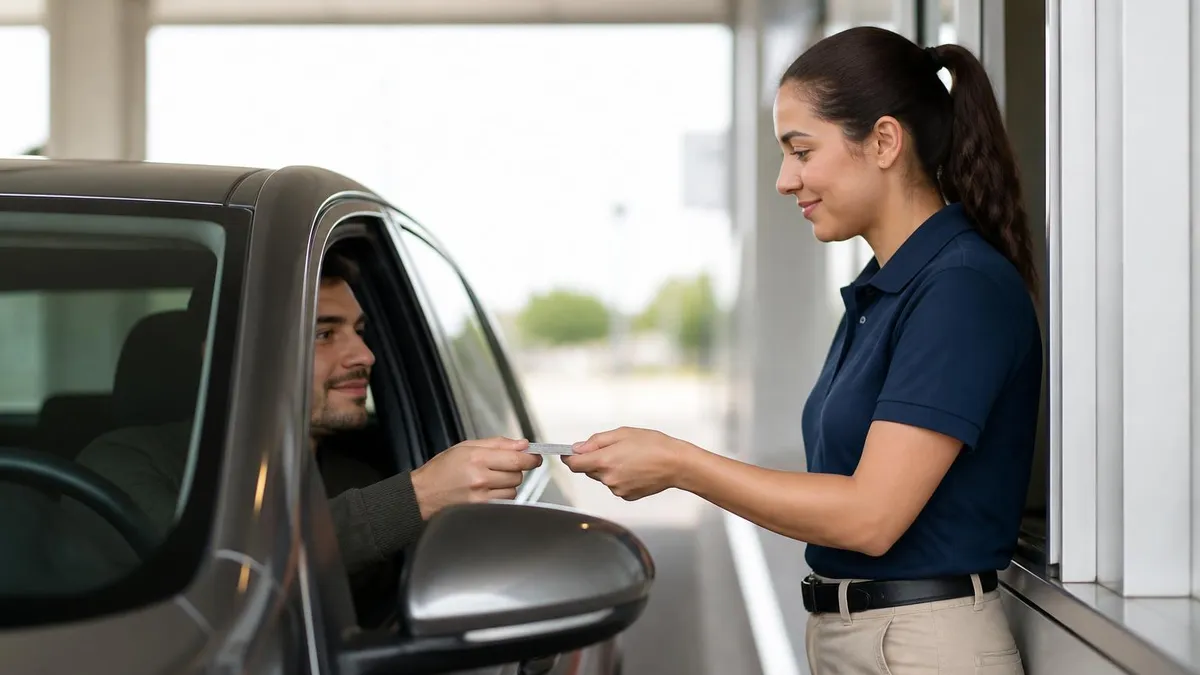
The permit test exists because driving is a privilege governed by state law, and state agencies need a fast, fair way to verify that new drivers understand traffic signs, right-of-way rules, alcohol regulations, and emergency procedures. A well-trained dmv customer service representative at the counter can issue your permit within an hour once you pass, but only if your written exam score meets the state threshold, which is typically 80 percent or higher depending on jurisdiction.
Most state manuals are between 90 and 160 pages long, and the practice tests pull questions directly from that source material. The challenge is that the official handbook is dense, occasionally outdated in tone, and rarely written with study optimization in mind. That's why structured practice tests with explanations consistently outperform passive reading. Repetition, retrieval practice, and immediate feedback are what convert reading time into recall under pressure.
This article assumes you have access to your state's driver handbook and a reliable internet connection. We'll cover the exam format, scoring rules, what types of questions you can expect, the most common reasons people fail, how to schedule and pay for the test, and which study tactics produce the highest first-time pass rates. We also include a 4-week study plan and answers to the questions our readers ask most often.
If you're nervous, that's normal. The good news is that the learners permit test rewards preparation more than intelligence. Students who complete at least 250 practice questions before test day pass at rates above 90 percent, regardless of age, language background, or prior driving experience. Treat the practice test as your textbook, not as a final exam, and you'll build the muscle memory needed for both written and on-road success.
You'll also notice that we link out to specialized quizzes throughout this guide. Each quiz targets a specific exam domain — road signs, right-of-way, alcohol laws, parking rules, and emergency procedures — so you can drill the weakest areas instead of grinding through random questions you already know. Treat these targeted drills as your secret weapon for the final week before your exam date.
DMV Permit Test by the Numbers
Key Facts at a Glance
| Item | Value | Details |
|---|---|---|
| Questions per Exam | 20-50 | Varies by state |
| Minimum Passing Score | 80% | Most states |
| Permit Application Fee | $10-$50 | State-dependent |

Exam Format at a Glance
| Section | Questions | Time | Weight | Notes |
|---|---|---|---|---|
| Road Signs and Signals | 10 | 7 min | 25% | Includes regulatory, warning, and guide signs |
| Traffic Laws and Right-of-Way | 12 | 10 min | 30% | Intersections, merging, pedestrian rules |
| Safe Driving Practices | 10 | 8 min | 25% | Following distance, speed, weather |
| Alcohol, Drugs and Penalties | 4 | 3 min | 10% | BAC limits and zero tolerance |
| Emergency Procedures | 4 | 2 min | 10% | Brake failure, skids, collisions |
| Total | 40 | 30 minutes | 100% |
The permit test content is drawn entirely from your state's official driver handbook, but the depth of coverage per topic varies. Road signs and signals consistently make up the largest single category because they form the foundation of every other rule. You'll be expected to identify regulatory signs like stop, yield, and one-way, warning signs such as curves, school zones, and railroad crossings, and guide signs that point to highways, hospitals, and rest areas. Color and shape recognition matter as much as text.
Right-of-way rules are the second-largest category and the most frequently failed. Questions often involve four-way stops, T-intersections, pedestrians in crosswalks, emergency vehicles, school buses with flashing lights, and roundabouts. The classic trap is the four-way stop where two cars arrive simultaneously: the car on the right always has priority. Memorize that single rule and you'll catch a question that trips up nearly 30 percent of test takers nationwide. Talking with an experienced dmv representative at your local office can help clarify state-specific variations.
Safe driving practice questions test your understanding of speed adjustment, following distance, blind spots, headlights, and adverse weather. The three-second following rule is a high-frequency question, as is the requirement to use headlights during rain even in daylight. Many states quiz on the specific increase in stopping distance on wet pavement, which can double, or on icy pavement, which can multiply by eight or more compared to dry asphalt.
Alcohol and drug questions are short but unforgiving. Every state enforces a 0.08 percent blood alcohol concentration limit for drivers 21 and older, and most states enforce zero tolerance below 0.02 percent for drivers under 21. Implied consent laws mean that refusing a breathalyzer results in automatic license suspension, often for a year. You should also know how prescription drugs and over-the-counter antihistamines can impair driving even when alcohol isn't involved.
Emergency procedure questions are few but high-stakes. Expect questions about brake failure (downshift, pump brakes, use emergency brake gradually), tire blowouts (grip the wheel firmly, do not slam brakes, ease off the gas), and skids (steer in the direction the rear is sliding). These questions are easy points if you've studied them, and they often appear in the final five questions when fatigue is highest.
Finally, expect a small number of state-specific items: HOV lane rules in California, snow tire laws in Colorado, hurricane evacuation protocols in Florida, or the move-over law in New York. These local items rarely exceed five questions but can decide a borderline score, so don't skip the regional chapters of your handbook.
DMV Practice Test Questions
Prepare for the DMV - Representative Exam exam with our free practice test modules. Each quiz covers key topics to help you pass on your first try.
DMV - Representative Consumer Protection a...
DMV Exam Questions covering DMV - Representative Consumer Protection and Dispute Resolution. Master DMV Test concepts for certification prep.
DMV - Representative Vehicle Inspections a...
Free DMV Practice Test featuring DMV - Representative Vehicle Inspections and Safety Standards. Improve your DMV Exam score with mock test prep.
DMV - Representative Advertising and Sales...
DMV Mock Exam on - Representative Advertising and Sales Practices. DMV Study Guide questions to pass on your first try.
DMV - Representative Bonds and Business Re...
DMV Test Prep for - Representative Bonds and Business Records. Practice DMV Quiz questions and boost your score.
DMV - Representative Dealer-Specific Regul...
DMV Questions and Answers on - Representative Dealer-Specific Regulations. Free DMV practice for exam readiness.
DMV - Representative Registration and Tran...
DMV Mock Test covering - Representative Registration and Transfer Fees. Online DMV Test practice with instant feedback.
DMV - Representative Sales Contracts and D...
Free DMV Quiz on - Representative Sales Contracts and Disclosures. DMV Exam prep questions with detailed explanations.
DMV - Representative Salesperson Licensing...
DMV Practice Questions for - Representative Salesperson Licensing Requirements. Build confidence for your DMV certification exam.
DMV - Representative Unlawful Acts and Con...
DMV Test Online for - Representative Unlawful Acts and Conduct. Free practice with instant results and feedback.
DMV - Representative Vehicle Code Definitions
DMV Study Material on - Representative Vehicle Code Definitions. Prepare effectively with real exam-style questions.
DMV - Representative Vehicle Registration ...
Free DMV Test covering - Representative Vehicle Registration Procedures. Practice and track your DMV exam readiness.
DMV Representative Basic Arithmetic
DMV Exam Questions covering Representative Basic Arithmetic. Master DMV Test concepts for certification prep.
How to Speak to a DMV Representative About Your Test
Phone is still the fastest way to resolve specific permit test questions, scheduling problems, or eligibility concerns. Most state DMVs operate phone lines from 8 a.m. to 5 p.m. on weekdays, with shorter Saturday hours. Wait times average 12 to 25 minutes, so call early in the morning or after 3 p.m. when call volume drops. Have your application number, date of birth, and Social Security number ready before dialing.
If you're wondering how do i speak to a dmv representative in ny, the trick is to press 0 or say "agent" repeatedly to bypass the automated menu. New York's DMV also offers a callback option that holds your place in line, so you don't have to stay on hold. Document the agent's name and any reference numbers they provide for later follow-up.
Online Practice Tests vs. Handbook-Only Study
- +Immediate feedback on every wrong answer with detailed explanations
- +Question pools updated regularly to match current state exam content
- +Targeted drills for your weakest categories instead of random review
- +Mobile-friendly, so you can study during commutes or breaks
- +Free or low-cost compared to private driving school courses
- +Tracks your progress and identifies patterns in incorrect answers
- +Simulates real exam timing pressure and digital interface
- −Quality varies wildly between providers — some use outdated questions
- −Free sites often lack explanations, only telling you right or wrong
- −No substitute for understanding the underlying rules in context
- −Some apps push paid upgrades aggressively after a few free questions
- −Cannot replicate the in-person testing environment or proctor pressure
- −Question phrasing may differ from your state's exact official wording
DMV Learners Permit Practice Test Pre-Exam Checklist
- ✓Read your state's driver handbook cover to cover at least once
- ✓Complete a minimum of 250 practice questions across all topic categories
- ✓Score above 90 percent on three consecutive full-length practice exams
- ✓Memorize all regulatory sign shapes and colors, including yield and stop
- ✓Review right-of-way rules at four-way stops and uncontrolled intersections
- ✓Confirm your state's BAC limits and zero-tolerance thresholds for minors
- ✓Gather all required identity, residency, and Social Security documents
- ✓Schedule your test appointment online or by phone at least one week ahead
- ✓Get at least seven hours of sleep the night before your exam
- ✓Arrive at the DMV office 30 minutes before your scheduled test time

Take the test on a real computer, not just your phone
Most DMV offices administer the written permit test on a desktop computer or tablet at a kiosk. Practicing exclusively on a phone trains your eyes for a smaller interface, which can slow you down on test day. Spend at least 30 percent of your practice sessions on a laptop or desktop to match the real testing environment, and use a mouse instead of a touchscreen to mirror the click-based exam interface.
On the morning of your test, eat a balanced breakfast with protein and slow-release carbohydrates — eggs, whole-grain toast, and fruit work well. Avoid heavy caffeine if you don't normally drink it, because anxiety plus stimulants can produce shaky hands and racing thoughts that hurt your concentration. Pack a water bottle, your documents in a folder, and a printed copy of your appointment confirmation. Leave home with at least 45 minutes of buffer time to account for traffic, parking, and unexpected office line lengths.
When you arrive, check in at the front desk or kiosk, and let the staff know you have an appointment. You'll typically receive a numbered ticket and be asked to wait until called. Use this time to do final mental review — recap the three-second following rule, the right-of-way at four-way stops, and BAC limits. Avoid cramming new material at this point; it spikes anxiety without improving recall.
The staff will verify your documents before testing. They'll check your birth certificate, Social Security card, residency proofs, and parental consent form if you're under 18. Any missing item sends you home to come back another day, with your appointment slot lost. Triple-check your folder before leaving the house and again in the parking lot. Photocopies are not accepted in most states — only originals or certified copies.
You'll then be directed to a testing station or kiosk. The proctor will explain the rules: no phones, no smart watches, no talking, and no leaving the room without permission. Questions appear one at a time, and most state systems let you flag questions for review and return to them before submitting. Use this feature; it's better to skip a tough question than to burn three minutes on it and run out of time.
Read each question twice before selecting an answer. The most common mistake is misreading qualifiers like "always," "never," "except," or "first." These words completely change the correct answer, and test writers know this is where careless readers lose points. Underline these words mentally before scanning the answer choices. If two answers seem correct, the question is usually testing a fine distinction — pick the one that's more specific or more conservative.
When you finish, the system typically scores instantly. A passing screen will appear in green, and the proctor will direct you back to the counter for photo and processing. A failing screen sends you home with a retake date, usually one to seven days later depending on your state. Don't be discouraged; first-time failure rates exceed 50 percent in some states, and most people pass on their second attempt with focused review.
Speed limit questions frequently use phrases like "unless otherwise posted" or "in the absence of a sign." These wordings test your knowledge of default state speed limits, which differ between residential, business district, and rural roads. Memorize your state's three default limits — typically 25 mph residential, 25-35 mph business, and 55-70 mph rural — because at least two questions on these defaults appear in every exam version.
Passing on the first try requires a deliberate study system, not just hours of reading. Start by taking a diagnostic practice test cold — no studying — to identify your baseline. Most students score between 50 and 65 percent on their first attempt, which is normal and useful. The questions you missed are your personalized study plan. Group them by category (signs, right-of-way, alcohol, etc.) and prioritize the categories with the most misses.
Next, read the corresponding handbook chapters for your weakest categories. Take handwritten notes, because the act of writing improves recall by roughly 25 percent compared to passive reading. Focus on the boxed summaries and bolded vocabulary terms; these are exactly what test writers convert into questions. Skip the historical or legislative background sections — they rarely appear on the exam and waste study time.
After reading, return to practice questions for that specific category. Aim for at least 50 questions per weak topic before moving on. Track your accuracy after every set of 25 questions. Once you consistently score above 85 percent on a category, mark it as completed and move to the next weakest. This focused rotation is far more efficient than randomly drilling 300 mixed questions, which tends to reinforce what you already know.
In the final week, switch to full-length timed practice exams. Take one per day, scoring above 90 percent each time before you consider yourself ready. The timing pressure is just as important as the content; many students know the material but fail because they run out of time. Pace yourself at roughly 45 seconds per question for a 30-minute, 40-question exam. If you can answer comfortably within that window, you're ready.
For a comprehensive review of practical scenarios, work through the how do i speak to a dmv representative in ny question bank, which covers customer service interactions, document requirements, and procedural questions that increasingly appear on modern exams. These applied-knowledge questions reward students who understand the DMV process, not just rote rules.
The night before, stop studying by 8 p.m. Last-minute cramming produces a sense of confusion rather than confidence. Lay out your documents, set two alarms, and review your three-second following rule, your right-of-way priorities, and your BAC limits in bed. Sleep is your best memory consolidation tool — students who sleep seven to nine hours before the test outperform sleep-deprived peers by an average of 11 percent.
Confidence on test day comes from preparation, not bravado. If you've completed 250-plus questions, scored above 90 percent on three full-length practice exams, and reviewed your weakest category in the final 48 hours, you are statistically more prepared than 80 percent of test takers walking through the door that day. Trust your prep, read carefully, and let your practice carry you through.
Beyond the basics, certain strategies separate first-time passers from repeat test takers. The first is verbal rehearsal: explain each traffic rule aloud to a friend or family member, as if you're teaching them. Teaching forces you to organize information in your brain in ways that pure memorization never does. Students who do this even once per week before the test outperform passive studiers by 15 to 20 percent on tricky scenario questions.
The second strategy is using flashcards for sign recognition. Print or download a deck of all the regulatory, warning, construction, and guide signs in your state's handbook. Shuffle them and quiz yourself for five minutes a day for two weeks. By test day, you'll recognize every sign by shape and color alone — even without reading the text — which saves precious seconds on test day and prevents misreads.
The third strategy is the "two-pass" technique during the exam itself. On your first pass through the questions, answer everything you know instantly and flag anything that takes more than 15 seconds of thought. After completing the first pass, return to flagged questions with fresh eyes and the relief of knowing your easy points are banked. This approach prevents time anxiety and reduces careless errors on questions you actually know.
Many test takers also benefit from group study, especially for right-of-way and emergency procedure questions, which involve scenarios that are easier to visualize when discussed out loud. Form a study group of two to four friends preparing for the same exam, meet twice a week for an hour, and quiz each other from the same question bank. Friendly competition has a measurable effect on long-term retention.
If English isn't your first language, take advantage of bilingual handbooks and exam options. Most states offer the written test in 10 to 30 languages, and many offices provide oral examinations on request. Document your language preference when scheduling your test to avoid the disappointment of arriving and discovering that day's proctor only offers English. Bilingual practice apps are also widely available and can reduce translation friction during study.
For students with documented learning disabilities, ADHD, or test anxiety, ADA accommodations are available. These can include extra time, a separate quiet testing room, oral administration of questions, or breaks during the exam. Submit a request with supporting documentation at least two weeks before your appointment. Approval is typically straightforward when documentation is recent and complete.
Finally, remember that the permit is just the beginning. Once you pass, most states require 30 to 50 hours of supervised driving before you can take the road test for a full license. Use your permit period to practice in varied conditions — daytime, nighttime, rain, highway, and residential — so that your road test isn't your first exposure to those scenarios. The skills you build during practice driving will save your life one day, long after the written exam is forgotten.
Sample DMV - Representative Exam Practice Questions
Try these questions from our free DMV - Representative Exam practice tests. The correct answer and an explanation follow each question.
Text: 'A driver convicted of a DUI for the first time may face license suspension of up to one year, fines, and mandatory alcohol education classes.' Which consequence is NOT listed for a first DUI conviction?
- A. License suspension
- B. Mandatory alcohol education
- C. Vehicle impoundment
- D. Fines
Answer: C. Vehicle impoundment
The passage lists suspension, fines, and education classes but does not mention vehicle impoundment.
A client is registering a vehicle in California for the first time after moving from another state. Which DMV form is the primary application they must complete for this process?
- A. REG 256 (Statement of Facts)
- B. REG 101 (Application for Duplicate or Transfer of Title)
- C. REG 343 (Application for Title or Registration)
- D. REG 4008 (Declaration of Gross Vehicle Weight)
Answer: C. REG 343 (Application for Title or Registration)
The REG 343 form is the standard application used for vehicles being registered for the first time in California, including nonresident vehicles brought into the state.
From a manual: 'When two vehicles arrive at a four-way stop at the same time, the vehicle on the LEFT must yield to the vehicle on the RIGHT.' A and B arrive simultaneously. A is to the left of B. Who goes first?
- A. A, because they arrived at the same time
- B. B, because A must yield to the vehicle on A's right
- C. Whichever driver waves the other through
- D. The vehicle going straight over one turning
Answer: B. B, because A must yield to the vehicle on A's right
A is on B's left, so A must yield to B per the rule that the left vehicle yields to the right vehicle.
Which of the following is typically NOT required when registering a vehicle for the first time in a state?
- A. Proof of auto insurance
- B. Vehicle title or MCO
- C. The vehicle owner's passport
- D. Payment of registration fees
Answer: C. The vehicle owner's passport
A passport is not a standard requirement for vehicle registration; a driver's license or state ID is typically sufficient for identity verification.
DMV Questions and Answers


About the Author
Licensed Driving Instructor & DMV Test Specialist
Penn State UniversityRobert J. Williams graduated from Penn State University with a degree in Transportation Management and has spent 20 years as a certified driving instructor and DMV examiner consultant. He has personally coached thousands of applicants through written knowledge tests, skills assessments, and commercial driver licensing programs across more than 30 states.
Join the Discussion
Connect with other students preparing for this exam. Share tips, ask questions, and get advice from people who have been there.
View discussion (8 replies)