
DMV Permit Practice Test: How to Pass Your Written Exam 2026 September
Use our DMV permit practice test to prep for your written knowledge exam. 🏆 Learn the test format, topics, passing score, and proven study strategies.

What Is the DMV Permit Test?
The DMV permit test — also called the driver's knowledge test or written test — is the examination you must pass before you can get a learner's permit and begin practicing behind the wheel. Every state in the U.S. requires new drivers to demonstrate basic knowledge of traffic laws, road signs, and safe driving practices before issuing a learner's permit. The test is administered at your local Department of Motor Vehicles (DMV) or equivalent state agency.
Unlike the road skills test, which evaluates your actual driving ability, the permit test is entirely knowledge-based. You answer multiple-choice questions about road signs, speed limits, right-of-way rules, safe following distances, driving under the influence consequences, and dozens of other topics covered in your state's official driver's handbook. The test is designed to verify that you understand the rules before you ever sit behind the wheel.
Most states now offer the permit test in multiple languages and on computer terminals at the DMV office. Some states have begun allowing online testing under controlled conditions. Regardless of format, the underlying content comes from your state's driver's manual, which is the single most important study resource you'll use during preparation.
The permit test isn't just a bureaucratic hurdle — it's the foundation of safe driving. Studies consistently show that drivers who understand traffic laws, sign meanings, and right-of-way rules are involved in fewer accidents in their first year of driving. The knowledge you build while preparing for the written test directly translates to safer behavior on the road when you're learning to drive with a licensed adult.
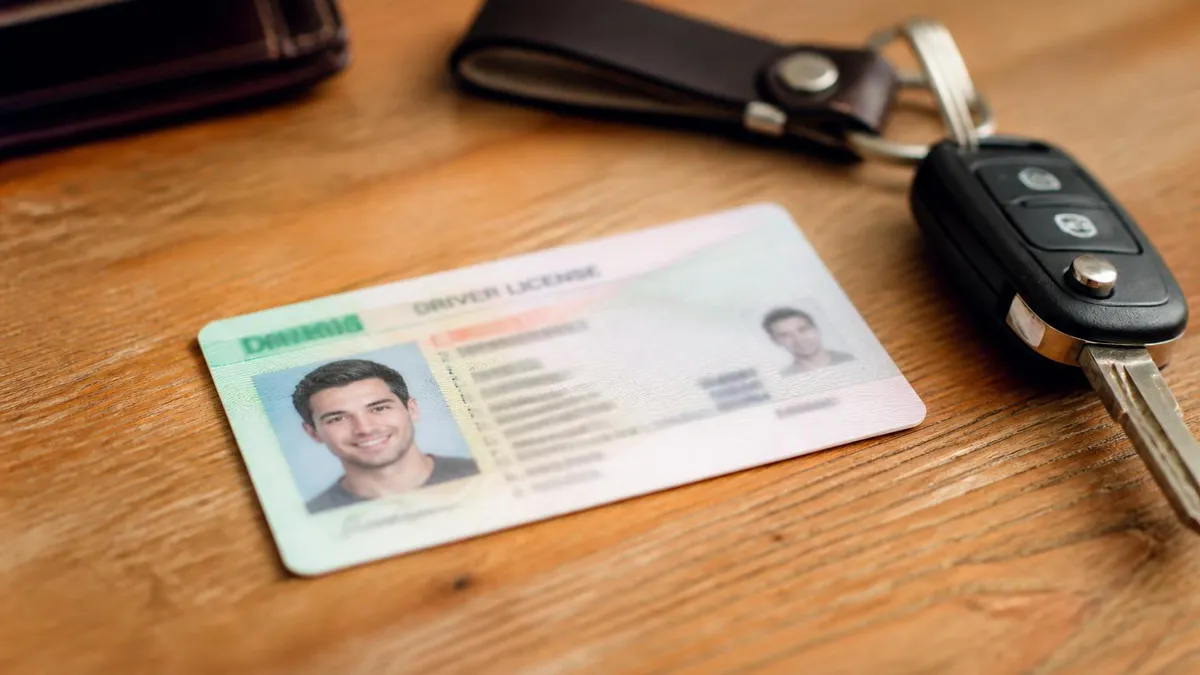
- Questions: Typically 20–50 multiple-choice questions depending on state
- Passing score: Usually 80–85% correct (varies by state)
- Test duration: No time limit in most states
- Minimum age: 15–16 in most states (varies)
- Cost: $5–$35 application fee depending on state
- Retakes: Most states allow 3 attempts before a mandatory waiting period
Test Format and Question Types
The DMV permit test uses multiple-choice questions with either three or four answer options. Each question has only one correct answer. There's no penalty for guessing wrong — your score is simply the number of questions you answer correctly. Because there's no time penalty in most states, you can take your time reading each question carefully before selecting your answer.
Questions fall into several broad categories. A significant portion of the test covers road signs — you'll be shown images of signs and asked what they mean, or given a sign's meaning and asked to identify which sign matches. This includes regulatory signs (stop, yield, speed limit), warning signs (curve ahead, pedestrian crossing, school zone), and informational signs (highway exits, directions, services). Sign recognition questions are some of the easiest to study for because there's a finite set of signs to learn.
Traffic laws and right-of-way rules make up another major section. You'll need to know who goes first at four-way stops, how to handle merging situations, when you must yield to pedestrians and cyclists, and the rules for turning on red. These questions require you to understand the logic behind the rules — not just memorize answers — because the test often presents novel scenarios that require applying principles rather than recalling a specific rule you memorized.
Speed limits and following distance questions test your knowledge of both posted and unposted speed limits, school zone speeds, work zone rules, and safe following distances at various speeds. You should know the three-second rule for following distance, how weather affects stopping distance, and the rules about speed in residential areas, highways, and school zones.
Many states include a section on driving under the influence (DUI) and impaired driving laws. These questions cover legal blood alcohol limits (typically 0.08% for adults, 0.00–0.02% for drivers under 21), implied consent laws, the consequences of refusing a breathalyzer, and how substances beyond alcohol — including prescription medications and marijuana — can affect driving ability and result in DUI charges.
DMV Permit Test by State (Sample)
| Section | Questions | Time |
|---|---|---|
| California | 46 | No limit |
| New York | 20 | No limit |
| Texas | 30 | No limit |
| Florida | 50 | No limit |
| Pennsylvania | 18 | No limit |
| Ohio | 40 | No limit |
Topics Covered on the Permit Test
The DMV knowledge test draws exclusively from your state's official driver's handbook. Every state publishes this handbook for free on the DMV website, and studying it thoroughly is the single most reliable preparation strategy. The handbook covers not just the rules, but the reasoning behind them — understanding that context helps you answer scenario-based questions correctly even when the exact situation wasn't covered in your practice tests.
Road signs are covered in depth in every state's handbook. You should be able to identify all regulatory signs (which establish rules you must follow), warning signs (which alert you to hazards ahead), guide signs (which provide direction and distance information), and work zone signs (which govern behavior in construction areas). Many test-takers are surprised by how many signs exist beyond the familiar stop and yield signs — pavement condition warnings, wildlife crossing signs, and railroad crossing variations are commonly tested.
Traffic control devices beyond signs include pavement markings and traffic signals. You need to know the meaning of solid yellow center lines versus dashed yellow lines, white lane markings, and painted arrows in turn lanes. Signal light meanings go beyond red/yellow/green to include flashing lights, arrow signals, and the rules that apply when a traffic signal is dark or malfunctioning.
Sharing the road is an increasingly important test topic. Questions about interacting with bicyclists, motorcyclists, pedestrians in crosswalks, and large commercial vehicles are common. You should know minimum safe following distances behind large trucks, the blind spots that make motorcycles and bicycles harder to see, and the rules about passing cyclists in states with specific laws about required clearance distance.
Vehicle safety knowledge is tested in most states. This includes understanding your responsibility to ensure all passengers under certain ages wear seat belts, the rules about child safety seats, the consequences of driving with defective lights or brakes, and when you're legally required to use headlights. Many states also test knowledge of basic vehicle maintenance awareness — not mechanical skills, but knowing what warning lights mean and when a vehicle condition requires you to pull over.
Alcohol and drug-impaired driving receives significant attention in most handbooks and on the test. Beyond knowing the 0.08% legal limit, you should understand that impairment can occur at lower BAC levels, that the only thing that removes alcohol from your body is time (not coffee, food, or exercise), and that prescription medications can create impairment that results in DUI charges. Zero-tolerance laws for underage drivers mean that even a small amount of alcohol can result in a DUI for drivers under 21.
DMV Permit Test Pass Rates
Road Sign Categories You Must Know
Regulatory signs establish the rules of the road. They have a white background with black or red text and symbols. Examples include the STOP sign (red octagon), YIELD sign (red and white triangle), NO TURN ON RED sign, speed limit signs, DO NOT ENTER sign, and ONE WAY signs. Violations of regulatory signs can result in traffic citations.
Passing Score Requirements
The passing score for the DMV permit test varies by state. Most states require you to answer at least 70–85% of questions correctly. A few states use a fixed number of correct answers rather than a percentage — for example, some states require you to get at least 16 out of 20 questions right, while others require 39 of 46 correct answers in California. Always check your specific state's requirements before testing, as studying expecting to need 80% when your state requires 83% can make the difference between passing and failing.
States also differ in what happens when you fail. Most states allow you to retake the test the same day or the next business day, but require a waiting period (often 7 days) after a certain number of consecutive failures. A few states require you to pay a new application fee for each attempt. Understanding your state's retake policy before you test reduces stress and helps you plan realistically.
Some states have different passing standards for teen drivers versus adult first-time drivers, though this is less common than state-specific question counts and passing thresholds. A few states also require additional tests for drivers with certain medical conditions or for drivers seeking specialized endorsements like motorcycle or commercial vehicle operation alongside the standard permit test.
Proven DMV Permit Test Study Strategies
- ✓Download and read your state's official driver's handbook cover to cover
- ✓Take at least 5 full-length practice tests before scheduling your test appointment
- ✓Focus extra time on road sign identification — it's the most commonly failed section
- ✓Study the specific rules for your state (speed limits, cell phone laws, right-on-red exceptions)
- ✓Review DUI laws and BAC limits thoroughly — these are frequently tested
- ✓Learn the rules for right-of-way at intersections, roundabouts, and merging lanes
- ✓Practice identifying warning signs versus regulatory signs by function
- ✓Study on different days to allow memory consolidation between sessions
- ✓Use flashcards for road signs — visual repetition builds recognition speed
- ✓Take your final practice test the evening before your appointment
How to Prepare for the DMV Permit Test
The most effective preparation strategy begins with your state's official driver's handbook. This document is the definitive source for test content — every question on the permit test comes directly from the rules, information, and scenarios described in the handbook. You can download a free PDF from your state's DMV website, pick up a physical copy at your local DMV office, or read it in an HTML version online. Whichever format you choose, reading the entire handbook is non-negotiable.
Once you've read the handbook, practice tests become your most powerful study tool. Taking practice tests serves multiple purposes. First, they reveal which topics you've mastered and which need more attention. Second, they familiarize you with the multiple-choice format and the type of language used in official DMV questions. Third, research consistently shows that practice testing is more effective for long-term retention than simply re-reading material — a phenomenon called the testing effect or retrieval practice. Every time you answer a question and check whether you were right, you strengthen the neural pathways for that knowledge.
Road sign study deserves dedicated attention. Many test-takers are surprised to discover how many signs they can't accurately identify on their first practice test. Go through your handbook's sign section systematically, and use flashcard-style review to build recognition speed. You don't just need to know that a sign exists — you need to instantly recognize what it means. Signs with similar shapes or colors (for example, the orange construction warning signs versus the yellow caution warning signs) require extra attention to distinguish correctly.
Scenario-based questions require a different study approach than sign memorization. For these questions — which typically describe a driving situation and ask what you should do — you need to understand the underlying rule, not just memorize a specific answer. Reading the handbook's explanations rather than skipping to answer summaries helps you build the reasoning skills to handle novel scenarios.
Ask yourself "why" whenever you learn a rule: why does traffic yielding to a vehicle already in a roundabout make sense? Why does the right-of-way rule at a four-way stop favor the driver on the right when two vehicles arrive simultaneously? Understanding the logic makes these rules stick.
Online vs. In-Person DMV Permit Test
- +Online testing available in several states — no need to visit DMV office
- +Computer terminals at DMV typically allow easy screen navigation
- +Multiple language options make test accessible to non-English speakers
- +Some states allow scheduling same-day appointments for walk-in testing
- +No time limit reduces pressure compared to timed academic exams
- −Online testing not available in most states — must go to DMV in person
- −DMV wait times can be long without a scheduled appointment
- −Technology failures at DMV terminals can interrupt your testing session
- −Some states require identity verification documents that you may not have ready
- −Failing in person means you must return for another visit, adding travel time
Pros and Cons at a Glance
| Pros | Cons |
|---|---|
| Online testing available in several states — no need to visit DMV office | Online testing not available in most states — must go to DMV in person |
| Computer terminals at DMV typically allow easy screen navigation | DMV wait times can be long without a scheduled appointment |
| Multiple language options make test accessible to non-English speakers | Technology failures at DMV terminals can interrupt your testing session |
| Some states allow scheduling same-day appointments for walk-in testing | Some states require identity verification documents that you may not have ready |
| No time limit reduces pressure compared to timed academic exams | Failing in person means you must return for another visit, adding travel time |
Graduated Driver License (GDL) Stages
Earned by passing the DMV knowledge test. Requires supervised driving with a licensed adult at all times. Most states require 6 months at this stage for teen drivers and a minimum number of supervised driving hours.
Earned by passing the road skills test. Allows unsupervised driving with restrictions — often no nighttime driving and limits on the number of teen passengers. Restrictions vary by state and typically apply until age 17–18.
Earned by completing the restricted license period without violations. Removes nighttime and passenger restrictions. Available to drivers at 18 in most states, or earlier if the GDL requirements are met and the driver has demonstrated a safe record.
What to Expect on Test Day
Knowing what to expect at your DMV appointment reduces anxiety and helps you perform at your best. Arrive with all required documents — typically proof of identity (birth certificate or passport), proof of residency (utility bill or bank statement), and your Social Security number. Many states also require a parent or guardian's signature for applicants under 18. Check your state's specific requirements on its DMV website before you go, because arriving without the right documents means wasted time and another trip.
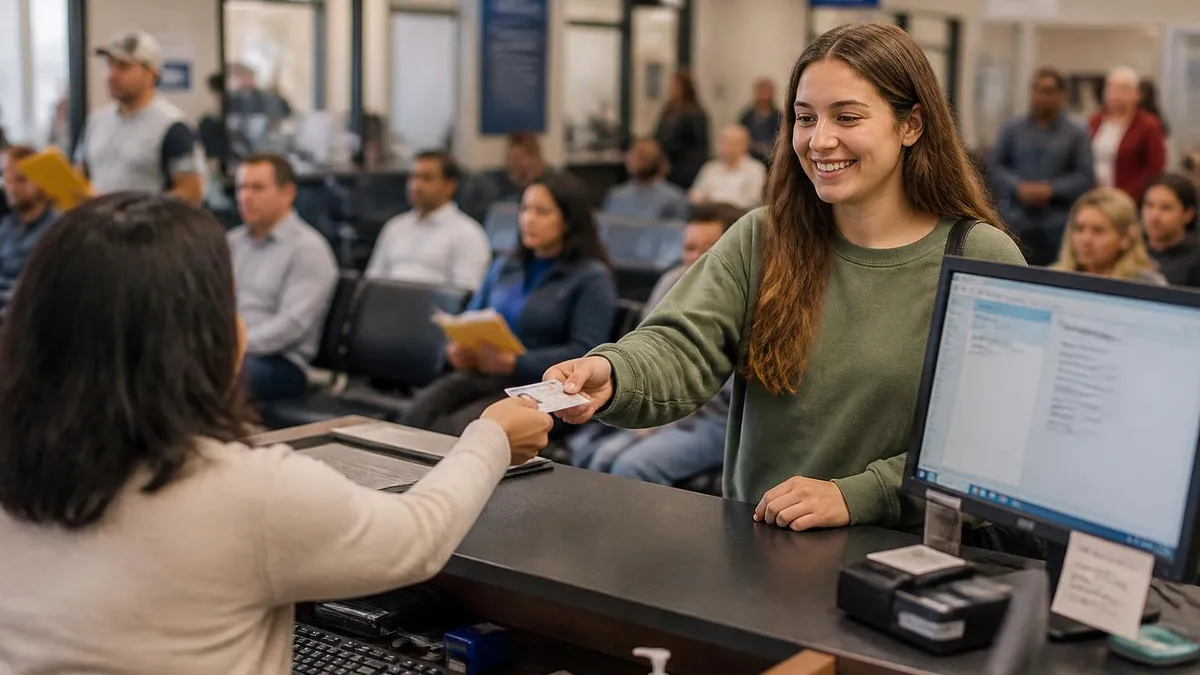
When you check in at the DMV counter, a staff member will verify your documents and collect the application fee. You'll then be directed to a testing station — usually a computer terminal with a touch screen or keyboard. The testing interface will walk you through the instructions before beginning. Read these instructions even if you think you know what to expect, as they'll confirm the number of questions, the passing threshold, and any specific rules about reviewing or changing answers.
During the test, read each question and all answer options completely before selecting. A common mistake is choosing the first answer that seems correct without reading all options — sometimes a later option is more precise and therefore more correct. If you're unsure, use the process of elimination. Rules you know to be wrong eliminate answer choices and improve your odds even when you're uncertain about the right answer.
Most computerized DMV tests show your result immediately when you finish. If you pass, you'll complete paperwork for your learner's permit, get a photo taken, and receive either the permit itself or a temporary document to use until the physical permit arrives by mail. If you don't pass, the system typically shows you which questions you missed by category, giving you targeted information for your next study session before retaking the test.
After You Pass: What Comes Next
Passing the DMV permit test earns you a learner's permit, which allows you to practice driving on public roads with restrictions. In most states, you must be accompanied by a licensed driver who is at least 21 years old (or 18 in some states) while driving on a learner's permit. You must always carry your permit when driving, and you should understand the specific restrictions your state places on permit holders — many states prohibit driving after certain hours or on certain types of roads until you gain more experience.
The learner's permit period is not just a bureaucratic waiting phase — it's when you build the actual driving skills the permit test only tests you on conceptually. Most states require a minimum supervised driving period (often 6 months for teen drivers) before you can apply for a full license. States typically also require a minimum number of supervised driving hours, often 50–65 hours total including a certain number of nighttime hours. Keeping a driving log that documents these hours is standard practice and may be required when you apply for your full license.
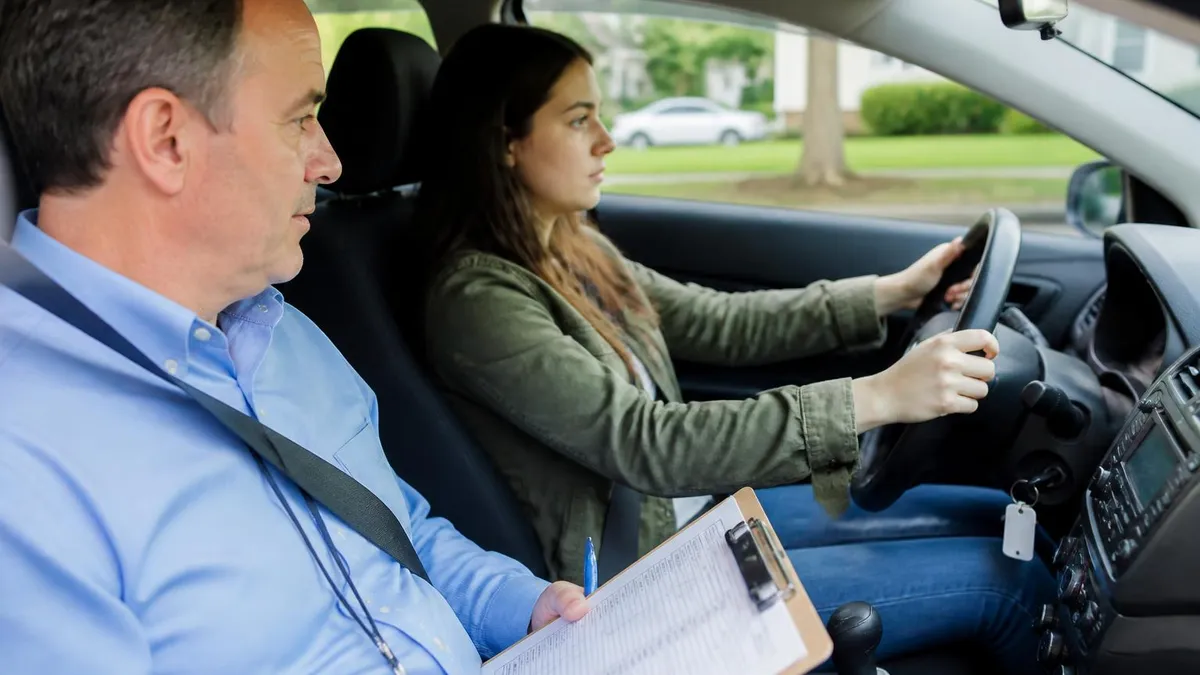
After completing the permit requirements, you'll take the driving skills test — a practical evaluation where a DMV examiner sits in the car while you demonstrate skills including starting and stopping smoothly, making proper turns, checking mirrors and blind spots, parallel parking, and responding correctly to signs and signals. Preparing for the skills test while you have your permit means focusing not just on the mechanics of driving but on demonstrating knowledge of the rules you studied for the written test, since examiners penalize point violations of those same rules during the road test.
Passing both the knowledge test and the skills test, meeting your state's age and supervised driving requirements, paying any applicable fees, and providing required documentation earns you a full driver's license. For drivers under 18, most states issue a graduated driver's license (GDL) with some restrictions that are lifted at 18 or after a certain period of violation-free driving. The GDL program exists because data shows that teens with supervised practice periods have significantly lower crash rates than those who move directly to unsupervised driving without the foundational experience the permit phase provides.
DMV Permit Test Questions and Answers
About the Author
Licensed Driving Instructor & DMV Test Specialist
Penn State UniversityRobert J. Williams graduated from Penn State University with a degree in Transportation Management and has spent 20 years as a certified driving instructor and DMV examiner consultant. He has personally coached thousands of applicants through written knowledge tests, skills assessments, and commercial driver licensing programs across more than 30 states.
Join the Discussion
Connect with other students preparing for this exam. Share tips, ask questions, and get advice from people who have been there.
View discussion (9 replies)