
DMV Motorcycle Test: Written Knowledge, Skills Road Test, MSF Waiver & State Rules
DMV motorcycle test guide: written knowledge test, skills/road test, MSF waiver, state-by-state rules, costs, pass rates, and practical study tips ✏️

The DMV motorcycle test is the state-administered exam you'll need to pass before you can legally ride a motorcycle on public roads in the United States. Most states split it into two parts: a written knowledge test that covers traffic laws and rider safety, plus a skills or road test where an examiner watches you handle the bike. Some states bundle this as a motorcycle endorsement added to your existing driver's license, while others issue a separate motorcycle-only license like an M1 or M2.
Here's the good news. You don't have to walk into this blind. Once you understand what's on each test, what your state actually requires, and whether the Motorcycle Safety Foundation (MSF) waiver works in your favor, the path gets a lot clearer. This guide walks you through everything from written question topics to skills test maneuvers, fees, pass rates, helmet laws, and the common mistakes that trip riders up on test day.
Riding a motorcycle on US roads isn't a casual upgrade from a car license — it's a separate qualification with separate testing because the skills, hazards, and consequences are different. A motorcyclist is roughly 28 times more likely than a car driver to die in a crash per mile traveled, according to NHTSA. The DMV test exists to make sure new riders understand that risk, can quote the rules that keep them alive, and can demonstrate basic control of the bike before being turned loose into traffic.
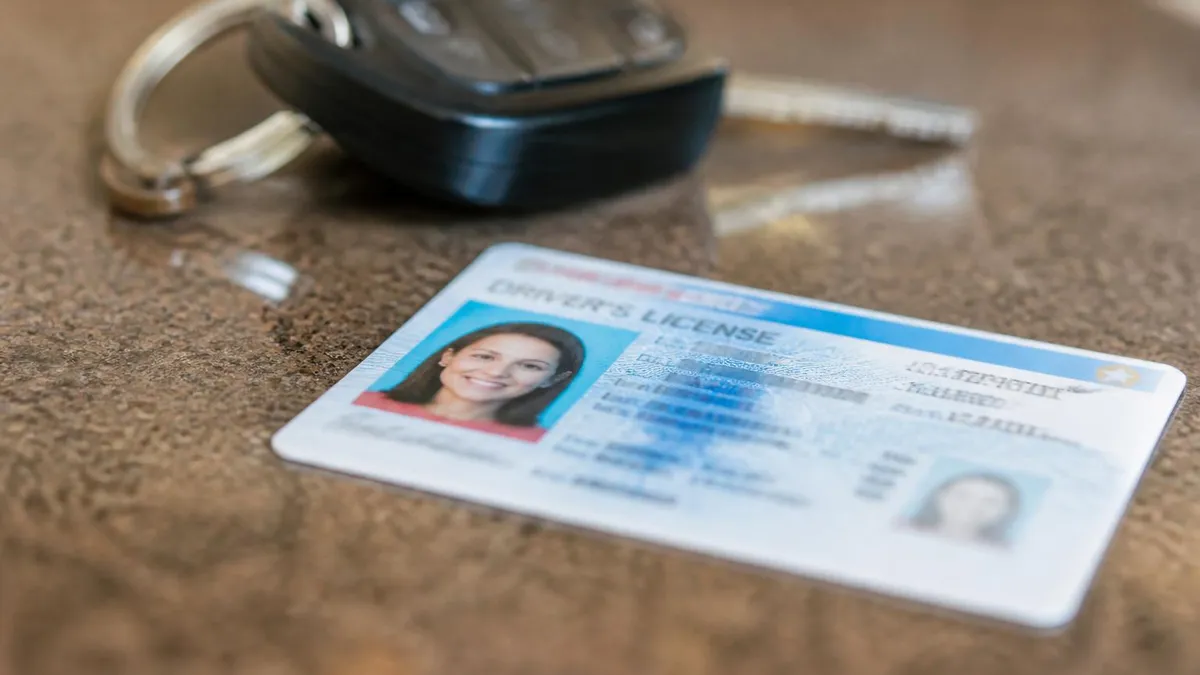
Two tests in most states: a 20-50 question written knowledge test (about 80% to pass) and a skills/road test where you demonstrate maneuvers like cone weaves, U-turns, and quick stops. The MSF Basic RiderCourse (15-20 hours, $200-$400) waives the skills test in most states and earns you a 10-25% insurance discount. Total cost runs anywhere from $25 to $450 depending on which route you take. Always verify rules with your state DMV — Florida, for example, requires MSF and has no DMV skills test option.
Before we get into the weeds, a quick note on license terminology because it varies by state. A motorcycle endorsement (coded "M" on most licenses) is added to your existing driver's license — that's the most common setup. An M1 license covers all motorcycles regardless of engine size and is the go-to in California and a few other states. An M2 license is limited to smaller displacement bikes like scooters under 150cc. A handful of states issue a Class M-only license for new riders who don't already hold a regular driver's license.
Whichever path your state uses, the testing requirements look similar. You'll prove you understand the rules of the road on two wheels, then prove you can actually ride. Try the M1 motorcycle practice test if you're prepping for a California exam — it's a solid warmup before sitting the real thing, and the format mirrors what you'll see on the actual DMV computer.
One more terminology note worth flagging: "motorcycle license test" and "motorcycle permit test" usually mean the same thing in casual conversation, but technically a permit test is the written portion only, and a full motorcycle license test means written plus skills. If a friend tells you they passed their permit test, they likely still have to pass the road test before they can ride solo without restrictions. Don't confuse the two when you're figuring out where you stand.
The Three Test Paths Explained
The written test is usually 20-50 multiple-choice questions drawn directly from your state's motorcycle operator manual. You'll need about 80% correct to pass, though the exact threshold varies — California wants 21 of 25 right, Texas wants 14 of 20, New York also uses 14 of 20.
Topics include traffic laws specific to motorcycles, right-of-way rules, lane positioning, following distance, defensive riding strategies, safe cornering, equipment requirements, helmet laws, group riding etiquette, riding in wet weather, carrying passengers and cargo, and the effects of alcohol or drug impairment. You can usually take it on a computer at the DMV, and many states let you retake it the same day if you fail.
State requirements vary more than you'd think, and getting tripped up on a state-specific rule is one of the most common reasons riders fail their written test on the first attempt. Knowing your local fee, permit duration, and whether MSF is mandatory or optional saves you time and headaches. Below is a quick breakdown of how six of the largest states handle motorcycle licensing in 2026.
Notice how the fees range from $7 in Florida to $39 in California — that's a 5x spread for essentially the same credential. Permit validity also swings wildly, from 180 days in New York to a full year in California and Texas. If you're moving states or comparing options, don't assume your old state's rules apply. Even small administrative details like whether you can schedule online or have to walk in differ from one DMV to the next.
State-by-State Motorcycle Test Requirements
- License type: M1 (all bikes) or M2 (scooters under 150cc)
- Written test: 25 questions, 21 to pass
- Skills test: Required, or waived with CMSP completion
- Fee: $39
- Permit validity: 12 months; CMSP mandatory under 21
- License type: Motorcycle endorsement (Class M)
- Written test: 20 questions, 14 to pass
- Skills test: Required, or waived with MSF completion
- Fee: $26
- Other: MSF mandatory for riders under 18
- License type: Motorcycle endorsement
- Written test: Required (50 questions)
- Skills test: Not offered — MSF BRC mandatory
- Fee: $7 endorsement + course cost
- Other: Mandatory MSF since 2008
- License type: Motorcycle endorsement (Class M or MJ)
- Written test: 20 questions, 14 to pass
- Skills test: Required, or waived with MSF completion
- Fee: $10 + license fee
- Other: 5-hour pre-licensing course required
- License type: Class L (under 150cc) or Class M (all)
- Written test: Required for permit
- Skills test: Required, or waived via IDOT Cycle Rider Safety Program
- Fee: $10 permit + $30-$60 license
- Other: Free MSF-based course for IL residents 16+
- License type: Motorcycle endorsement (Class M)
- Written test: Required, waivable with PAMSP
- Skills test: Required, or waived with PAMSP completion
- Fee: $10.50 endorsement
- Other: Free PA Motorcycle Safety Program
Once you've sorted out which state path you're on, study the written portion seriously. Skipping the manual is the fastest way to fail. Each state publishes a free motorcycle operator manual (usually a PDF on the state DMV site), and the test questions come directly from it. Reading it cover to cover takes maybe two hours. Read it cover to cover twice, and you'll probably ace the written test.
If you want extra reps, online practice tests are your friend. Sites like Practice Test Geeks offer free state-specific question banks, and you can also grab the MSF practice test PDF for a feel of the BRC end-of-course written exam. Speaking of preparation — don't forget that some states bundle a DMV vision test into the motorcycle application, so if you wear corrective lenses bring them along.
Don't ignore the specific language used in the manual either. Test writers love questions that hinge on a single word. "Should" versus "must," "is required" versus "is recommended," "may" versus "shall" — these distinctions matter on multiple-choice questions where two answers look almost identical. When you read the manual, pay attention to bolded text, numbered lists, and any sentence that includes a specific measurement like "100 feet" or "4 seconds." Those are the exact phrasings that show up word-for-word in the question bank.
Written Test Topics You Must Know
- ✓Traffic laws specific to motorcycles and how they differ from cars
- ✓Right-of-way rules at intersections, four-way stops, and roundabouts
- ✓Lane positioning — left, center, right tracks and when to use each
- ✓Following distance (typically 2-4 seconds, more in wet weather)
- ✓Cornering technique and proper turn execution
- ✓Group riding formations and spacing
- ✓Wet-weather riding adjustments and braking distance
- ✓Highway and interstate riding rules
- ✓Carrying passengers and securing cargo safely
- ✓Alcohol and drug impairment effects on riders
- ✓Required equipment: helmets, mirrors, signals, lights
- ✓Pre-ride inspection routine (TCLOCS or similar mnemonic)
- ✓Emergency maneuvers — quick stops, swerves, escape paths
- ✓Defensive riding and the SEE strategy (Search, Evaluate, Execute)
- ✓Lane splitting rules where legal (currently only California)
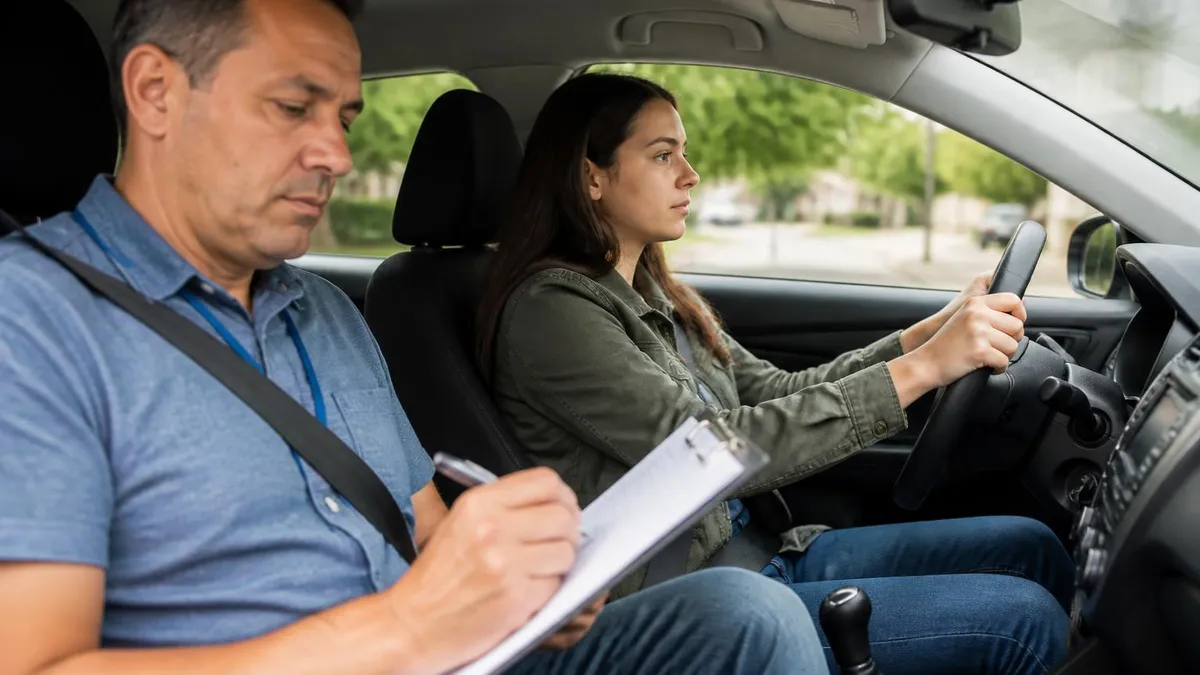
The skills test catches a lot of riders off guard because it's not the open-road experience most people imagine when they picture motorcycling. It's tight, slow, and deliberate. Examiners want to see you can control the bike at parking-lot speeds without dropping it, and that takes real practice. If you've only ever ridden in straight lines on quiet streets, you're going to struggle. Spend at least 5-10 hours practicing the specific maneuvers in an empty parking lot before you book the appointment.
The bike you bring to the skills test also matters more than you'd expect. A big, heavy cruiser is harder to handle at parking lot speeds than a lighter standard or dual-sport. If you have any choice in the matter, borrow or rent a smaller bike — something in the 250-500cc range — for your skills test even if you intend to ride bigger later. Examiners don't care what you're on as long as it's street-legal, registered, and insured. They care whether you can pass the maneuvers.
Tire pressure deserves a mention. Underinflated tires make slow-speed handling sluggish and unpredictable. Check both tires the morning of your test and inflate to the manufacturer's spec stamped on the swingarm or in the owner's manual. A few extra PSI in the rear can also help stability during the quick stop maneuver. Don't show up on tires that feel mushy or look low — small details like that can swing a borderline pass into a fail.
Skills Test Maneuvers You'll Be Graded On
- What it is: Figure-8 pattern inside a marked box
- Common fail: Foot touches ground, exits the box
- Tip: Eyes up and look through the turn, clutch friction zone
- What it is: Weave through 5-7 cones in a straight line
- Common fail: Hitting a cone or skipping one
- Tip: Look two cones ahead, not at the one you're passing
- What it is: Brake hard from 20+ mph in a marked distance
- Common fail: Locking the rear wheel, slow reaction
- Tip: Both brakes firmly, downshift as you stop
- What it is: Avoid an obstacle by swerving left or right
- Common fail: Braking during the swerve
- Tip: Counter-steer, no brakes mid-swerve
- What it is: Complete a U-turn inside a marked area
- Common fail: Foot down, exits the box
- Tip: Slow with rear brake, head turned 180 degrees
- What it is: Start from a stop on an incline without rolling back
- Common fail: Rolling back, stalling
- Tip: Right hand on front brake, ease the clutch out smoothly
Pass rates depend heavily on preparation and which route you take. Roughly 65-80% of riders pass the written test on the first try, and 60-75% pass the skills test on the first attempt at the DMV. MSF Basic RiderCourse pass rates are noticeably higher — around 85-90% — because the course gives you two full days of structured practice before you're evaluated. Combine both tests and you're looking at a 50-65% first-attempt pass rate overall. So roughly half of riders need a retake somewhere.
Confidence on test day is half the battle. The people who fail aren't necessarily the worst riders — they're often the ones who psych themselves out. Sleep well the night before. Eat breakfast. Show up 30 minutes early so you can walk the course mentally. Take a slow lap of the parking lot if the examiner lets you. Most failures happen on the very first maneuver because the rider is still settling in. Treat that first cone weave or figure-8 as a warmup and you'll find the rest comes naturally.
Practice in conditions close to test day, too. If your DMV skills test is in a parking lot, practice in a parking lot. If you'll be tested at 9 AM, train at 9 AM so the sun angle and traffic level match. Some riders also benefit from filming themselves on a phone propped at the edge of their practice lot — watching the footage afterwards reveals habits like dropping the head, dragging a foot, or sloppy clutch control that the rider would never notice in the moment.
Cost of Getting a Motorcycle License (2026)
Key Facts at a Glance
| Item | Value | Details |
|---|---|---|
| DMV application/test fee | $10-$50 | |
| Permit + license issue fee | $25-$50 | |
| Total cost depending on route | $25-$450 |
If MSF is optional in your state, weighing it against the self-study route comes down to time, money, and how confident you feel on a bike already. Experienced riders who grew up riding dirt bikes or scooters often skip MSF and head straight to the DMV. Total beginners — anyone who's never thrown a leg over a motorcycle — should seriously consider MSF. The training pays for itself in skills, and the insurance discount typically recoups $50-$150 a year on premiums. You also get the skills waiver, which removes the single most stressful part of the process.
One detail riders often miss: some MSF courses are subsidized or even free. Pennsylvania's PAMSP is fully funded by the state for residents. New Jersey runs free MotorcycleSafetyEd. Illinois offers free IDOT Cycle Rider Safety Program training to residents 16 and up. Even in states where you pay full price, your employer's health and safety benefits sometimes reimburse the course as preventive safety training. Ask before you swipe a card for the full $400 — you might be leaving real money on the table.
MSF Course vs. DMV Self-Study Route
- +MSF gives 15-20 hours of structured instruction and range time
- +Skills test waived in most states with MSF completion card
- +Insurance discount of 10-25% from most major carriers
- +Statistically safer riders — fewer first-year crashes
- +Bike and helmet provided, no need to own gear day one
- +Comprehensive understanding of motorcycle dynamics and safety
- −Course costs $200-$400 (free in PA, NJ, IL for residents)
- −Requires 2-3 days commitment, often weekends
- −Wait lists can be 1-3 months in busy regions
- −Self-study is cheaper if you already ride confidently
- −DMV-only route can be done in a week if slots are open
- −MSF range can be physically tiring for some students
Now let's talk timeline. The DMV motorcycle license process isn't instant, but it's not painful either. Plan for 1 to 3 months from your first manual download to license in hand, depending on how busy your local DMV is and whether you're doing MSF. The biggest variable is usually appointment lead time — in some metro areas you might wait 6-8 weeks just to get a slot for the skills test, which is yet another reason MSF starts looking attractive.
If you're in a hurry, the fastest path is usually: walk-in written test on a Monday, get the permit same day, find an MSF course running the next weekend, finish Sunday afternoon with the completion card, walk back into DMV Monday for the license. That's a 7-day turnaround if everything lines up perfectly. The slow path — written test, permit, two months of solo practice, schedule DMV skills test, fail, reschedule, finally pass — can drag past 4 months. Plan ahead.
Step-by-Step Application Timeline
Check state requirements
Study the manual
Take online practice tests
Schedule written test
Pass written test, get permit
Practice on permit
Choose path: MSF or DMV skills
Pass skills test or finish MSF
Receive license/endorsement
While you're on a permit, restrictions apply in nearly every state. The most common rules: daylight riding only, no passengers, no interstate highways, helmet required even where adults aren't normally required to wear one, and reflective gear required in a few states. Time limits are usually 6-12 months, after which you'll either need to take the skills test or renew the permit. Plan accordingly — don't get the permit in October if you don't intend to ride until April, because by then it'll be close to expiring.
Test day itself trips up surprisingly many people because they show up without the right paperwork. Bring more than you think you need. The DMV will turn you away over a missing proof of insurance card or a non-DOT helmet, and that means rescheduling weeks out.
The fastest way to spot a DOT-approved helmet is the sticker on the back: it'll say "DOT" in raised letters with the manufacturer's name and model. Novelty helmets — the small "shorty" or "beanie" lids — usually don't carry DOT certification even if they look the part, and examiners are trained to spot them. Get a proper DOT helmet before test day. If you're going to ride anyway, you might as well invest in one that actually protects your head.
What to Bring on Test Day
- ✓Valid driver's license or state ID
- ✓Proof of residency (utility bill, lease, or bank statement)
- ✓Proof of motorcycle insurance (required for the skills test)
- ✓Properly registered motorcycle with current plate and tabs
- ✓DOT-approved helmet (look for DOT sticker on the back)
- ✓Eye protection — sunglasses, goggles, or face shield
- ✓Long pants, long sleeves, sturdy boots over the ankle, and gloves
- ✓Cash, check, or card for DMV fees (varies by office)
- ✓A recent copy of your state motorcycle operator manual
- ✓Your motorcycle permit if applicable
- ✓Completed application paperwork from the DMV website
Universal helmet laws (helmets required for all riders regardless of age) are in effect in 19 states. Partial helmet laws — typically required only for riders under 18 or 21 — apply in 28 states. Three states have no helmet requirement at all: Iowa, Illinois, and New Hampshire. Even in no-helmet states, permit holders are usually required to wear one. Always check your local rules before riding without a lid, and remember insurance premiums are typically lower in helmet-required states.
Even seasoned riders blow the written test occasionally. They usually rely on common sense instead of the state manual's specific wording. The written exam is full of subtle gotchas — the right answer is rarely the one you'd give in casual conversation. Following distance is a great example. You'd say "a few car lengths" in conversation, but the manual wants a specific number of seconds (typically 2 or 4 depending on conditions). Lane positioning questions trip people up too — the manual wants you to know not just "stay visible" but exactly which lane track and why.
On the skills test, the most common fail is putting a foot down during slow maneuvers. Even brushing the ground will rack up demerits in most states, and a full dab can be an automatic fail in some. Practice your slow-speed control until you can hold a figure-8 at idle without paddling. Eyes up, head turned, smooth throttle and clutch. Aim to head into the test with another 30-50 permit test questions reviewed the night before, and your nerves will settle.
A few other written-test traps worth memorizing: motorcycles must have headlights on at all times in most states, even during the day. Lane splitting is only legal in California — every other state's manual says it isn't. Reaction time at 55 mph means you cover roughly 60 feet per second before you even touch the brake. Carrying a passenger requires both a passenger seat and passenger footpegs, plus the passenger must be tall enough to reach the pegs. These specifics are exactly the kind of question writers love.
One more thing worth covering: what happens if you fail. Most states allow same-day retakes on the written portion (or after a 24-48 hour cooldown), and you typically get 2-3 free attempts before having to re-pay the application fee. After three fails some states require you to wait 30 days or re-submit paperwork. There's no lifetime limit, though — you can keep retaking indefinitely until you pass. Don't beat yourself up about it. Plenty of solid riders pass on their second or third try.
If you've already got your motorcycle license sorted and you're managing other DMV paperwork, you might also need to handle DMV registration renewal for your bike — that's a separate process from getting the rider license itself but worth knowing about in advance. And if MSF is in your plan, sign up early. Spring and summer slots fill up fast in most markets, especially in northern states where the riding season is short.
Bottom line: the DMV motorcycle test is very passable if you take it seriously. Read your state's motorcycle manual twice. Run through online practice tests until you're consistently scoring 90% or better. Then pick the path that fits your budget and timeline.
MSF is the safer, smoother route for new riders. Direct DMV testing is fine for experienced ones. Either way, prep matters more than talent. Show up rested, with the right gear and the right paperwork, and you'll likely walk away with your motorcycle endorsement on the first try.
And once you've passed, remember the real learning starts now. The license proves you cleared the minimum bar to ride on public roads, not that you're a polished rider. Spend your first few thousand miles building habits.
Pre-ride inspections every time. Full gear every ride. Mental rehearsal of escape routes at every intersection. Respect for weather and traffic. Riders who treat their motorcycle endorsement as the start of an education — not the end of one — are the ones who stay on two wheels long enough to enjoy it.
DMV Motorcycle Test Questions and Answers
About the Author
Licensed Driving Instructor & DMV Test Specialist
Penn State UniversityRobert J. Williams graduated from Penn State University with a degree in Transportation Management and has spent 20 years as a certified driving instructor and DMV examiner consultant. He has personally coached thousands of applicants through written knowledge tests, skills assessments, and commercial driver licensing programs across more than 30 states.
Join the Discussion
Connect with other students preparing for this exam. Share tips, ask questions, and get advice from people who have been there.
View discussion (9 replies)