
DMV Vision Test: 20/40 Standard, How It Works, and What to Expect 2026 September
❓ DMV vision test guide: what's tested, the 20/40 standard, Snellen vs machine, state minimums, peripheral and color checks, plus what happens if you fail.
The short version: Most states require 20/40 vision in at least one eye (with or without glasses) for an unrestricted driver's license. The DMV vision test is a quick screening — usually 2 to 5 minutes — that checks visual acuity, often peripheral vision, and sometimes color recognition. Wear your glasses or contacts if you use them. If you fail, you're not done — you'll get a doctor's form to fill out and bring back.
What the DMV vision test actually is
The DMV vision test isn't a full eye exam. It's a quick screening to confirm you can see well enough to drive safely. You'll do it when you apply for your first license, when you renew in person in most states, and when you reinstate after a suspension. Some states also retest at certain ages, usually 65, 70, or 75 and up.
The test isn't designed to catch eye disease. It won't diagnose glaucoma or cataracts. All it does is check whether your vision meets the legal floor for driving. That's why every adult should still see an optometrist or ophthalmologist for a real exam every year or two — the DMV check is a pass/fail gate, not a substitute.
Here's the reassuring part: most people pass on the first try, even people who haven't updated their prescription in years. The 20/40 standard is well below 20/20, so you have some room. If you do fail, you don't lose your license on the spot — you just need a doctor's signature to move forward.
DMV Vision Test by the Numbers
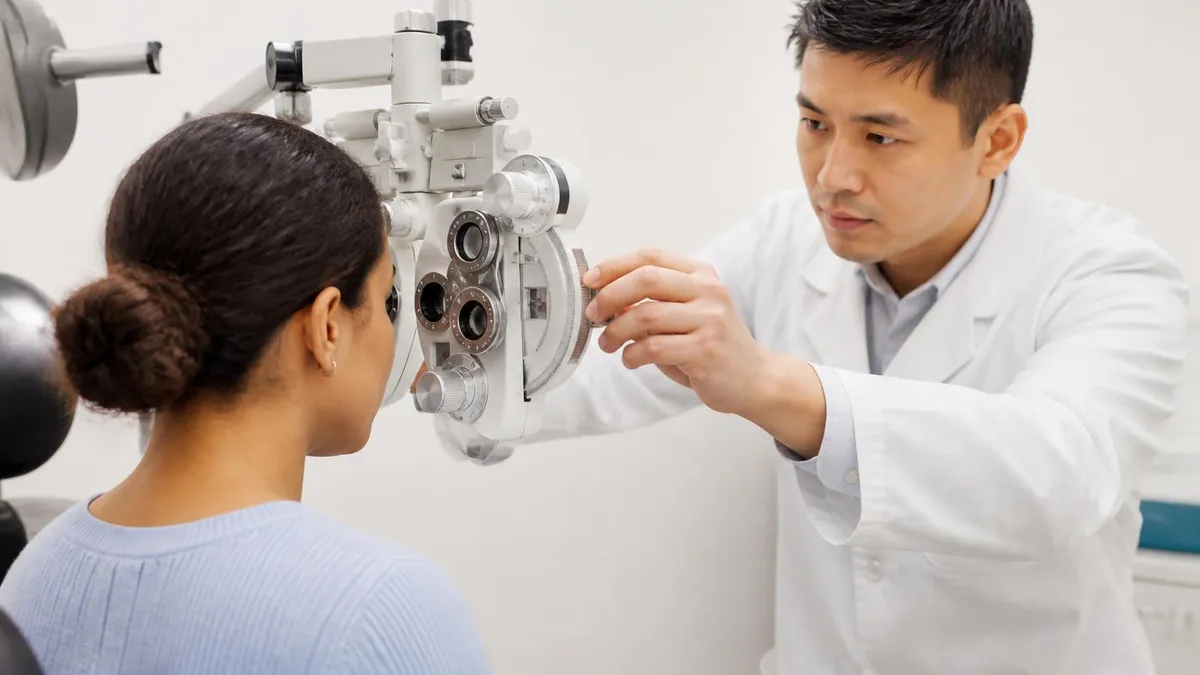
The three things the DMV usually checks
Not every state checks all three, but the menu is the same: visual acuity, peripheral vision, and (sometimes) color or depth. Visual acuity is the headline number — how clearly you see at distance. Peripheral vision is your side vision, the field that catches a kid stepping off a curb or a car drifting into your lane. Color vision matters mostly for traffic signals, and depth perception matters for judging how far away things are.
For a regular Class C license, almost every state focuses on acuity first. Peripheral testing is common but not universal. Color and depth testing is rare for regular licenses, but standard for commercial driver licenses. If you're applying for a CDL, expect a more thorough check, including color recognition of red, green, and amber signals.
What Each Part of the Test Covers
This is the core test. You'll either read a Snellen chart on a wall (the classic eye chart with rows of letters that get smaller) or look into a vision machine — a binocular-style device on the counter. The examiner will ask you to cover one eye, then the other, then read with both eyes together. You'll usually need to read the line marked 20/40 to pass for an unrestricted license.
Some states have moved to digital screens. California started rolling out digital vision testing in 2019. The mechanics are the same — read the line, hit the standard.
The 20/40 standard, explained without jargon
20/40 vision means you can see at 20 feet what a person with normal vision sees at 40 feet. So your distance vision is roughly half as sharp as a 20/20 standard, but it's still good enough to read road signs at a safe distance and react to traffic. That's why states picked it as the unrestricted-license floor.
If you only meet 20/40 with corrective lenses, the DMV adds a restriction code to your license — usually Code B in most states — that requires you to wear glasses or contacts whenever you drive. Drive without them and you risk a citation similar to driving without a license endorsement.
For comparison: 20/20 is normal sharpness, 20/30 is mild blur (often the first sign you need glasses), 20/40 is the legal driving floor in most states, 20/70 is significant impairment usually requiring restrictions, and 20/200 (or worse) in your better eye with correction is the legal definition of blindness.
State Vision Minimums for a Driver's License
- Standard: 20/40 in at least one eye
- Peripheral: Often 140° total field
- States using this: CA, TX, FL, NY, IL, OH, PA, GA, NC, MI, and most others
- Glasses allowed: Yes — restriction code added if needed
- Standard: 20/50 to 20/60 acuity
- Common restriction: Daytime driving only
- States allowing: Many — TX, CA, NC, others on a case-by-case basis
- Doctor's report: Usually required
- Standard: Around 20/70 with correction
- Restrictions: Daytime + no highway + corrective lenses
- Availability: Limited — varies by state and driver review
- Renewal cycle: Often shortened (1-2 years)
- Standard: Worse than 20/100 in best eye even with correction
- Reason: Meets legal blindness threshold
- Path forward: Bioptic telescope program in some states
- Reapplication: Possible if vision improves with treatment or surgery
What happens if you fail the test
Failing the DMV vision test isn't the end of the road. It's a redirect. The clerk will hand you a vision report form — the name varies by state. In Texas it's the DL-62. In California it's the DL-300. In New York you'll see a Vision Test Report (MV-619). The form goes to your eye doctor.
You take it to an optometrist or ophthalmologist, get a real exam, and have them complete the form. They might prescribe new glasses, refer you for cataract surgery, or note a permanent condition. You bring the completed form back to the DMV, sometimes along with new corrective lenses, and finish the licensing process.
One important detail: you typically have a window — often 30 to 90 days — to return with the form. Miss the deadline and you may need to start over. Schedule your eye exam right away if you fail.
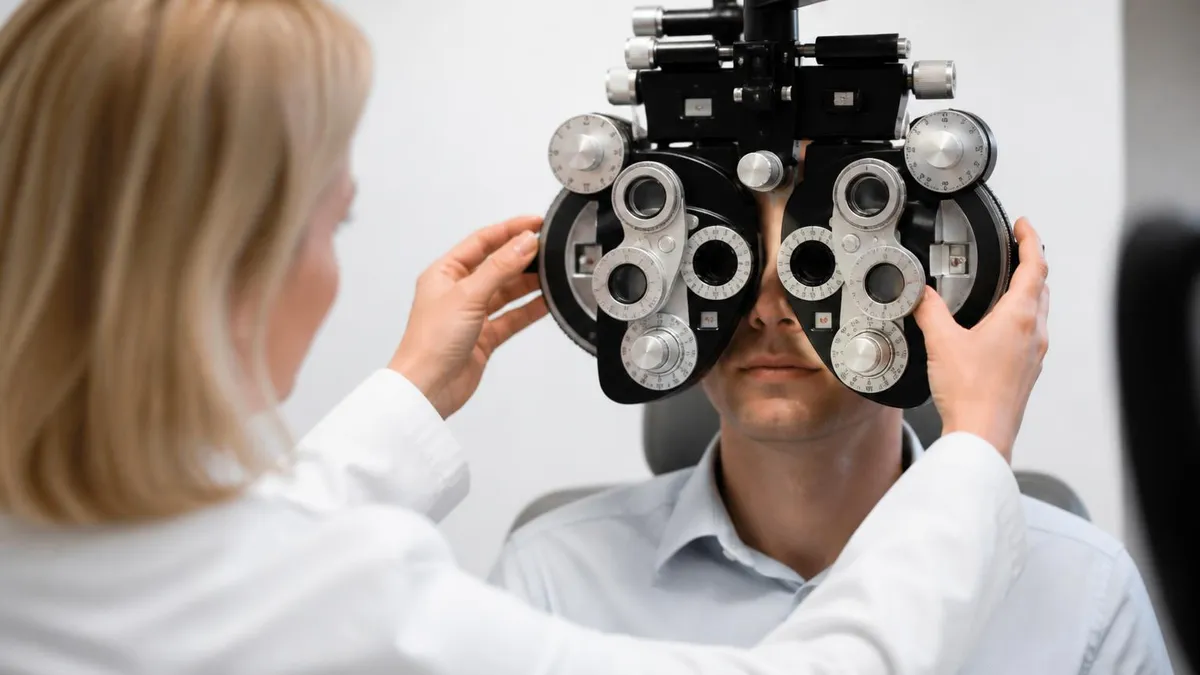
The corrective lens restriction (Code B)
If you pass only with glasses or contacts on, the DMV adds a corrective-lens restriction. On most state licenses this shows up as Code B in the restrictions box. Some states use different letters — California uses "corrective lenses" written out, while other states put "CORR LENS" on the back. The legal effect is the same: you must wear them whenever you drive.
Get pulled over without your glasses or contacts and you can be cited. The fine isn't usually huge — it's similar to other endorsement violations — but it goes on your driving record, and your insurance company may notice at renewal. If your vision improves later (after LASIK, for example, or successful cataract surgery), you can ask for the restriction to be removed at your next renewal by passing the test without correction. Many older drivers pick this up as a permanent restriction by their late 50s and never lose it.
The restriction also affects passport-style ID checks, rental car agreements, and any commercial driving role you might pick up later. It's worth knowing it's on there.
The DMV Vision Test, Step by Step
Step 1 — Wait in line
Step 2 — Form filled at counter
Step 3 — Step up to the vision machine
Step 4 — Cover one eye, read smallest line
Step 5 — Switch to the other eye
Step 6 — Both eyes together
Step 7 — Peripheral check
Step 8 — Result noted on your record
What machine the DMV uses
You'll most likely see a Stereo Optical machine. The Optec line by Stereo Optical is the most common across U.S. DMVs. It looks like a small set of binoculars on a desk. You lean in, rest your forehead and chin on the rests, and the test runs through a sequence of charts inside the device. Total time is usually under three minutes.
Some states still use the traditional Snellen wall chart — the rows of black letters on white that anyone who's been to a school nurse will recognize. You stand at a marked line, cover one eye, and read down the chart. California started rolling out digital vision screening at select offices in 2019, and other states have followed. The standard is the same regardless of equipment.
If the lighting in the office is harsh or there's glare on the chart, ask the clerk to reposition you. They deal with this all day and they'll move you. You can also ask to retake the test if you blink or sneeze through a critical line.
Bring and wear your corrective lenses to the test. If you wear glasses or contacts in daily life, wear them at the DMV. Trying to pass without them only matters if you want to remove an existing restriction. Otherwise you're risking a fail — or worse, a restricted license that doesn't reflect how you actually drive.
State variations worth knowing
Every state runs the vision test slightly differently. California requires a vision check at every in-person renewal, and adds a peripheral test at first license and at age 70+ renewals. Texas requires a vision test at renewal if you're over 79, or if you're not eligible for a mail-in renewal. Florida requires vision for all in-person renewals — every branch has a machine.
New York is the outlier. Instead of testing in the office at every renewal, NY requires a vision report from a doctor or optometrist for first-time licenses, and self-certification of acceptable vision at most renewals. Illinois requires a vision test at renewal for drivers 75 and up. Senior testing is more frequent in most states — every renewal instead of every other, and often in person rather than online.
If you're moving and transferring a license, the new state may require a vision test even if your existing license is current. Check before you go. The same applies if you're trying out-of-state for the first time. Knowing the local rule saves a return trip. For more on transferring or renewing in specific states, our DMV registration renewal guide is a good companion read.
Tips to Pass the DMV Vision Test
- ✓Wear your glasses or contacts to the test — even if you only use them sometimes
- ✓Get a full eye exam in the months before renewal if your vision feels different
- ✓Don't squint. It doesn't sharpen anything and signals strain to the examiner
- ✓Cover the eye fully — no peeking through fingers
- ✓Speak each letter clearly. Mumbled letters get marked wrong
- ✓Ask the clerk to reposition the chart if there's glare or reflection
- ✓If you blink or sneeze on a critical line, ask politely for a retry
- ✓Hydrate the day before — dry eyes blur vision more than people realize
- ✓Avoid heavy screen use the morning of (it temporarily worsens distance focus)
Why people fail (and how to avoid it)
The single most common reason people fail isn't a serious medical issue — it's an outdated prescription. Adult eyes change every one to two years, especially after 40. If your last eye exam was three or four years ago, your current glasses might already be off. That alone causes more DMV vision-test fails than every other cause combined.
Cataracts are the next most common cause, and they often go undiagnosed because they progress slowly. If colors look slightly washed out or headlights produce halos at night, get checked. Macular degeneration and diabetic retinopathy also show up in the DMV chair. Concussion or post-eye-surgery recovery can produce temporary changes that resolve in weeks.
And then there's the simplest cause: forgetting your glasses. People rush to renew on lunch break, leave their glasses on the desk, and walk into the test thinking they'll just get through. Don't do this. If you typically wear them to drive, wear them to the test.
If you have a medical condition
Diabetes, glaucoma, and macular degeneration all require a doctor's report in most states before a license is issued or renewed. The form is the same vision-report form mentioned above, but the doctor will note the underlying condition and any progression. Bioptic telescope wearers — drivers with low vision who use a small telescope mounted to their glasses — go through a separate evaluation in many states, including special on-road testing.
Monocular drivers (those with vision in only one eye) are allowed to drive in most states with a restriction noted. The Federal Motor Carrier Safety Administration also runs a vision exemption program for commercial drivers with monocular vision who can demonstrate safe driving. Color blindness alone isn't disqualifying for a regular license — you identify signals by position, not color, which is why traffic lights are always red on top.
If you've had recent eye surgery, like LASIK or cataract removal, wait until your doctor clears you before testing. Vision can fluctuate for weeks afterward. The DMV will accept a temporary delay if you bring documentation from the surgeon. Bring your post-op report so the clerk knows the situation. Don't risk a permanent restriction code from a temporary blur.
Documents Worth Bringing to the DMV Vision Test
- ✓Your current glasses or contact lenses (worn, not just in your bag)
- ✓Backup pair if you have one — broken frames the morning of are common
- ✓Most recent eye exam summary if you've changed prescriptions in the past year
- ✓Doctor's vision report form if you're returning after a previous fail
- ✓Medical clearance letter if you have diabetes, glaucoma, or recent eye surgery
- ✓Existing license — they'll cross-reference any prior restriction codes
Vision testing for senior drivers
Most states tighten vision-testing rules for older drivers. The age threshold varies — California adds peripheral testing at 70, Illinois requires in-person renewal with vision testing at 75, and many states require shorter renewal cycles for drivers over 65. Some states also require a doctor's certification of fitness to drive at certain ages.
Online and mail-in renewals usually disappear once you cross the senior threshold. You'll need to come in person, take the vision test, and possibly take a knowledge test as well. This isn't punitive — it's the state's way of catching age-related vision loss early. If you're a senior driver supporting a family member through this, encourage them to get a fresh eye exam before the DMV visit. New glasses can rescue a borderline case. Reviewing the permit test questions beforehand can also reduce stress if a written test is required.
Restrictions added at this stage are common: daytime-only driving, no highway driving, or required corrective lenses. They're not a stigma. They're a way to keep older drivers on the road longer with reasonable safety guardrails. Many seniors find that giving up night driving extends their independent driving years by a decade or more, because night vision typically declines well before daytime acuity does.
If you're helping a parent or grandparent through this, sit with them in the waiting area and review what to expect. A calm, prepared driver does noticeably better at the machine than a rushed one juggling paperwork.
What's NOT Tested at the DMV
- Glaucoma: Not tested — needs intraocular pressure measurement at an eye exam
- Cataracts: Not visually examined by the DMV clerk
- Why this matters: Pass-fail on acuity won't catch silent disease
- What to do: See an optometrist annually, especially after age 40
- Retinal exam: Not performed — needs dilation and a real ophthalmologist
- Macular degeneration: Not screened directly
- Diabetic retinopathy: Not detected by acuity test alone
- Bottom line: DMV ≠ eye doctor — both are necessary
CDL vision requirements (different rules)
Commercial driver licenses are governed by federal rules through the Federal Motor Carrier Safety Administration. The standards are tighter than for a regular license. You need 20/40 in each eye separately, with or without correction — not just one eye. You need a 70° peripheral field in each eye. And you need to recognize the colors of standard traffic signals: red, green, and amber.
You also need a federal medical certificate (the DOT physical, valid for up to 24 months) which includes the vision exam. The exam is done by a certified medical examiner from the FMCSA's National Registry, not the DMV clerk. The exam result goes on a Medical Examiner's Certificate (MEC), which you carry along with your CDL.
Drivers with monocular vision (one functional eye) can apply for a federal vision exemption if they can demonstrate three years of safe driving. The exemption program has helped thousands of monocular drivers stay in commercial careers. It's worth knowing about if you're affected.
Cost, frequency, and how often you'll do this
The vision test itself is free. It's bundled into your license fee. There's no separate charge for the screening, the machine time, or the result. If you fail and need a doctor's report, that's a separate cost — usually $25 to $200 depending on whether your insurance covers a routine eye exam and where you live.
Frequency depends on your state and your age. Initial license: yes, always. In-person renewals: usually yes, with a few exceptions. Online or mail-in renewals: usually no test — you self-certify. Reinstatement after a suspension: almost always. At certain ages: yes, with the threshold varying by state. Many people with no vision changes go a decade between DMV vision tests because they renew online. Others, particularly seniors and high-mileage drivers, do it every two to four years.
If you're prepping a teen for their first license, walking through the learners permit practice test a few times before the visit reduces test anxiety significantly. Same idea for the vision test — knowing what to expect cuts stress in half. Some states like North Carolina also publish a thorough study guide; if you're testing there, our NC DMV practice test covers the same content. And if you're moving from out of state to New England, the Connecticut DMV reference walks through transfer requirements and vision rules in detail.
Should You Get an Eye Exam Before the DMV Visit?
- +Catches outdated prescriptions before they cost you a fail at the counter
- +Updates your glasses or contacts so you walk in with current correction
- +Screens for early eye disease the DMV won't catch (glaucoma, cataracts, macular degeneration)
- +Removes test-day anxiety because you already know your numbers
- +Lets you remove an existing restriction if your vision has improved with surgery or new lenses
- +Builds a long-term relationship with an eye doctor — useful as you age
- −Costs $50 to $200 if not covered by insurance
- −Adds a separate appointment to your schedule
- −May delay your DMV visit if a new prescription needs to be filled first
- −Some new prescriptions take a week or two to adapt to — drive carefully during the adjustment
- −Could surface conditions that limit driving, which is hard to hear but better caught early than late
Pros and Cons at a Glance
| Pros | Cons |
|---|---|
| Catches outdated prescriptions before they cost you a fail at the counter | Adds a separate appointment to your schedule |
| Updates your glasses or contacts so you walk in with current correction | May delay your DMV visit if a new prescription needs to be filled first |
| Screens for early eye disease the DMV won't catch (glaucoma, cataracts, macular degeneration) | Some new prescriptions take a week or two to adapt to — drive carefully during the adjustment |
| Removes test-day anxiety because you already know your numbers | Could surface conditions that limit driving, which is hard to hear but better caught early than late |
DMV Vision Test Questions and Answers
About the Author
Licensed Driving Instructor & DMV Test Specialist
Penn State UniversityRobert J. Williams graduated from Penn State University with a degree in Transportation Management and has spent 20 years as a certified driving instructor and DMV examiner consultant. He has personally coached thousands of applicants through written knowledge tests, skills assessments, and commercial driver licensing programs across more than 30 states.
Join the Discussion
Connect with other students preparing for this exam. Share tips, ask questions, and get advice from people who have been there.
View discussion (9 replies)