
How to Deal With BMV Driving Test Anxiety: Proven Techniques
Struggling with BMV driving test anxiety? Proven techniques to calm nerves, prepare effectively, and pass your driving test with confidence.
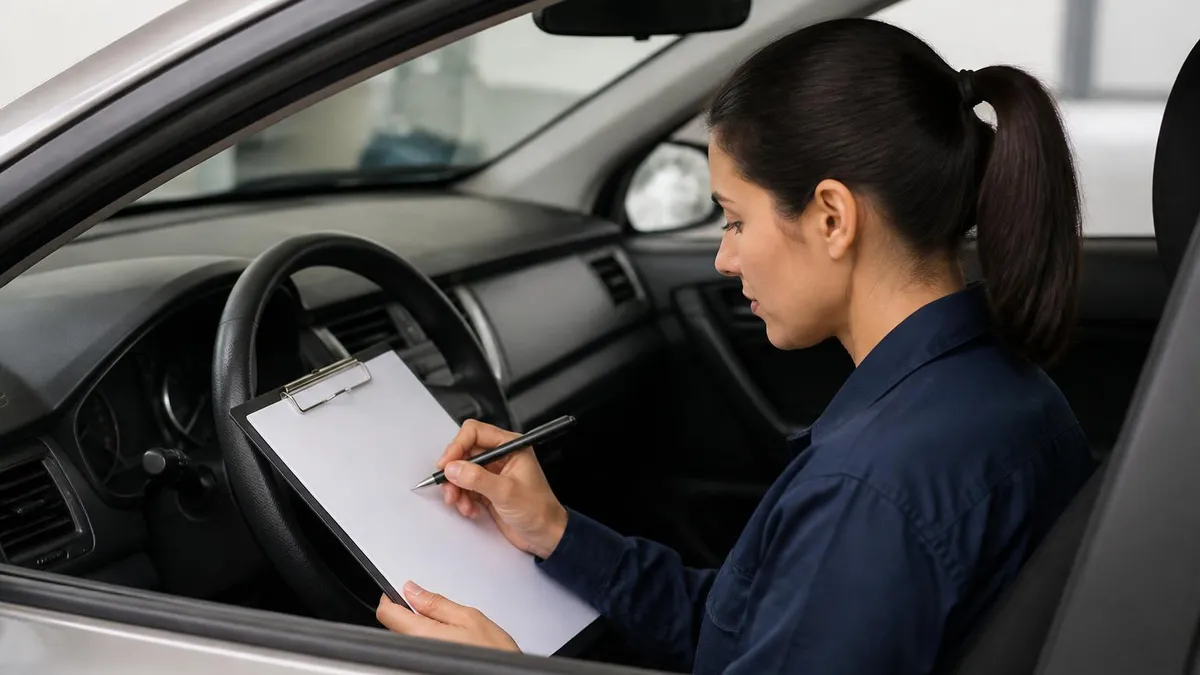
Why BMV Driving Tests Cause Anxiety — and What You Can Do About It
Test anxiety before your BMV driving test is extremely common — and one of the most misunderstood obstacles learner drivers face. Many people interpret nervousness as a sign they aren't ready, or believe anxiety itself will cause them to fail. Neither is necessarily true. A moderate level of arousal before a high-stakes performance can actually sharpen focus and reaction time. The problem arises when anxiety becomes overwhelming, disrupts concentration, and produces errors you wouldn't make on a quiet practice drive.
Driving test anxiety affects somewhere between 40 and 60 percent of learner drivers in some form. Symptoms vary considerably from person to person. Some experience physical reactions — a racing heart, shaky hands, chest tightness, or shallow breathing that makes clear thinking difficult. Others experience cognitive symptoms: mind blanks, difficulty concentrating, or the unsettling feeling that knowledge they've relied on for months has simply vanished the moment the examiner sits down. Many experience both simultaneously, which can feel impossible to manage in the moment.
The encouraging reality is that driving test anxiety responds well to the right preparation and techniques. Research on performance anxiety consistently shows that systematic preparation, environmental familiarity, and specific mental techniques significantly reduce both the intensity of anxiety and its disruptive effects on actual performance. You don't need to eliminate nervousness entirely — that goal is both unrealistic and counterproductive. The aim is to keep anxiety at a level that's useful rather than disabling.
This article covers what specifically triggers driving test anxiety, evidence-based techniques for managing it before and during your test, how targeted preparation directly reduces anxiety, and what to do if anxiety has contributed to a previous test failure. For practice test access across all BMV subject areas, the BMV practice test page has full-length sessions available. Printable study materials are available via the BMV practice test PDF for offline review.
Understanding your specific anxiety pattern — when it spikes, what triggers it, and how it shows up physically — is the foundation for managing it effectively. Generic advice to stay calm is useless without knowing what is activating your anxiety and which techniques work for your particular response profile. The sections below address each stage of the driving test experience in sequence: the days before, the morning of, the test itself, and how to move forward if things don't go as planned.
A useful first step before your test date is identifying whether your anxiety is primarily knowledge-based (uncertainty about what questions or situations will arise), performance-based (fear of making errors while being observed), or physiological (your body's physical stress response disrupting your coordination and thinking). Each type responds to different interventions. The overlap is significant — most candidates experience a combination — but knowing which is most dominant helps you prioritize where to direct your preparation effort in the time you have available.
Another dimension worth acknowledging: test anxiety often has a social component that candidates don't fully recognize. It's not just fear of failing the test abstractly — it's fear of failing in front of someone, with an evaluator watching. This social evaluation component is often what distinguishes the driving test experience from ordinary practice. Understanding this helps you choose the right technique: breathing and cognitive reframing work directly on social evaluation threat, not just on the abstract idea of failure.
BMV Driving Test Anxiety: Key Facts
The Psychology Behind Driving Test Anxiety
Driving tests are inherently anxiety-provoking for several well-understood psychological reasons. The evaluation context alone — being watched and formally scored — activates what researchers call social evaluation threat, which engages your brain's threat-detection system in a way that's neurologically similar to physical danger. Your sympathetic nervous system responds by preparing your body for action: elevated heart rate, increased blood flow to muscles, physical tension throughout your body. This is the fight-or-flight response, and while it evolved for survival, it isn't well-suited to executing a smooth three-point turn.
It's worth distinguishing between situational performance anxiety and general anxiety disorder, because the management approaches differ. Most people who struggle with driving tests are experiencing situational performance anxiety — a normal stress response to a specific high-stakes evaluation — rather than a clinical condition. Situational anxiety is highly responsive to preparation, familiarity, and learned techniques. If anxiety significantly impairs your daily functioning across many life areas rather than just specific evaluations, speaking with a healthcare professional about broader anxiety support is worthwhile.
Driving tests carry meaningful real-world consequences, and that significance amplifies the anxiety response. Passing or failing affects your ability to get to work, transport family, and maintain daily independence. The higher the perceived stakes, the more intensely the anxiety system responds. This explains why students who drive confidently for months can suddenly feel incompetent the moment a formal evaluation is attached to the drive.
The physical symptoms of driving test anxiety can themselves become a source of additional anxiety — a compounding loop that's important to understand. You notice your hands trembling, then start worrying whether the examiner noticed, which elevates anxiety further. Your breathing becomes shallow, reducing oxygen to your brain and impairing concentration, making you more anxious. Breaking this self-reinforcing loop before it escalates is one of the primary goals of the techniques covered below.
Cognitive symptoms are often the least visible but most disruptive. Under high anxiety, the prefrontal cortex — responsible for decision-making, executive function, and retrieval of learned knowledge — operates less efficiently. This is why people who know perfectly well what to do at a junction can suddenly feel uncertain during the actual test. The knowledge is still there; anxiety is temporarily blocking access. Techniques that calm your arousal response restore normal access to what you know.
Previous test failures amplify anxiety considerably. If you've failed before, your brain carries that memory into the next attempt and heightens vigilance to protect you from repeating it — which often manifests as stronger anxiety on retakes. Many candidates who fail their first test due to nerves go on to pass once they address anxiety directly rather than simply rescheduling. For state-specific format context, the Ohio BMV and Indiana BMV pages cover local test requirements in detail.
Understanding the mechanism of your anxiety gives you something actionable to work with. Anxiety driven primarily by evaluation context responds well to systematic desensitization — practice under observation until being watched stops triggering the threat response. Anxiety driven by knowledge uncertainty responds best to content preparation and practice tests. Physical anxiety symptoms respond best to breathing and relaxation techniques. Most candidates experience a combination and benefit from working on all three simultaneously rather than assuming one approach will handle everything.
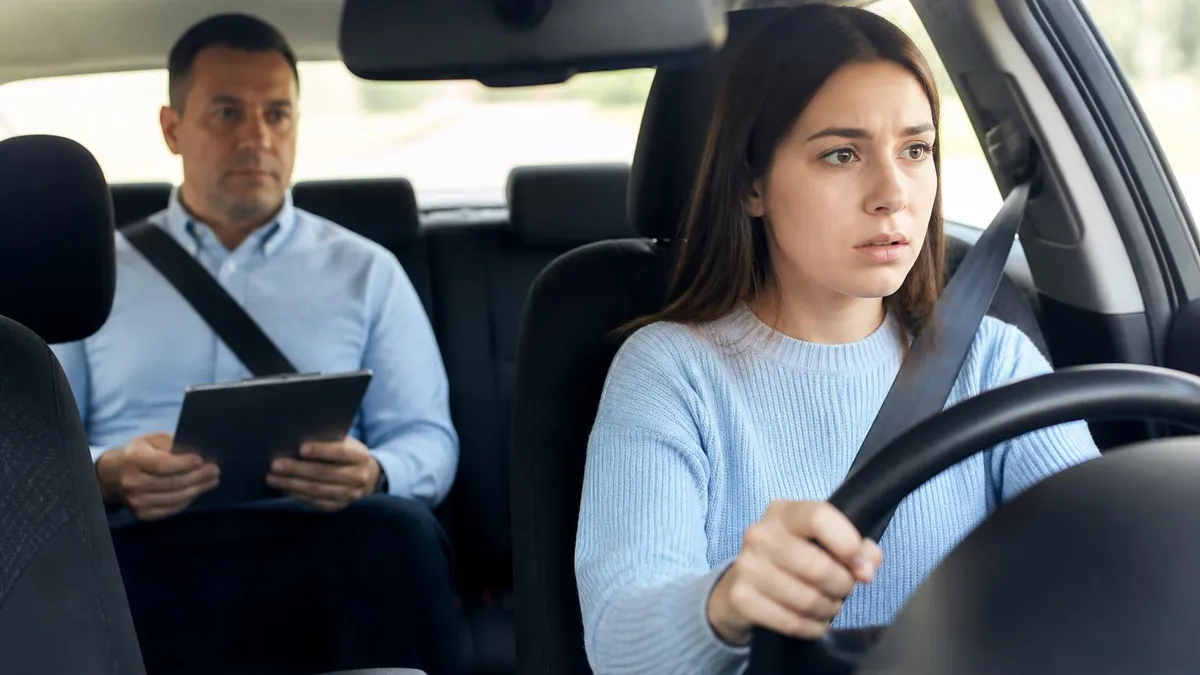
- 4-7-8 Breathing: Inhale 4 counts, hold 7, exhale 8 — the extended exhale activates parasympathetic nervous system response directly
- Cognitive Reframing: Replace catastrophic predictions ('I'll blank') with preparation-grounded statements ('I've practiced this, I know the content')
- Visualization: Spend 10 minutes daily in the week before your test mentally rehearsing a calm, successful drive
- Progressive Muscle Relaxation: Systematically tense and release muscle groups — reduces physical tension before you enter the testing center
- Systematic Desensitization: Gradually simulate test conditions during practice — supervise drives with an evaluative observer to reduce novelty of being watched
Preparation Is the Most Powerful Anxiety Reducer
The most effective thing you can do for driving test anxiety is genuine preparation — not practice in a vague sense, but the kind of systematic, deliberate practice that builds automatic competence. There's a reason experienced drivers don't experience test anxiety around parallel parking: they've done it enough times that the movement sequence runs automatically without conscious attention. Automatic skills are far less accessible to anxiety than effortful, consciously executed skills. Building that automaticity is the core preparation goal.
This has a direct implication for how you structure your practice time. Cover diverse conditions — day driving, different weather, highways, dense urban areas, residential streets with varying speed limits. Practice every maneuver on your state's road test until each feels routine rather than effortful. The number of hours matters less than the variety and quality of what you cover. Most driving instructors recommend 40-50 hours of supervised practice before the road test — treat that as a floor, not a ceiling.
Knowledge preparation reduces anxiety as directly as driving practice does. When you're genuinely confident about traffic laws, road signs, and right-of-way rules, there's simply less to worry about during the test. Uncertainty about content creates background anxiety before you even begin. Taking full-length practice tests — at least five complete sessions covering all subject areas — builds the fluent recall that reduces cognitive load during the real test. Fluent knowledge leaves more mental bandwidth available for managing nerves when they inevitably arise.
Route familiarity is underestimated by most test-takers. BMV and DMV testing centers often use consistent routes through nearby streets. If your local testing center has a known route — ask your driving instructor or search online for your location — practice that specific route before your test date. Environmental familiarity substantially reduces the novelty response that amplifies anxiety. You want to arrive thinking 'I've driven through this area many times' rather than encountering key turns for the first time with an examiner watching. Confirm your testing center's schedule at the BMV office hours page when planning your visit.
Physical preparation affects anxiety more directly than most candidates realize. Anxiety is substantially worse when you're sleep-deprived, dehydrated, or haven't eaten properly. Many anxious test-takers lie awake the night before, skip breakfast due to nerves, and arrive at the testing center already physically depleted — which amplifies every anxiety symptom. Treat your test day like an athlete treats a competition day: prioritize sleep, eat a proper meal, stay hydrated, and avoid excess caffeine that raises baseline arousal.
Working with a driving instructor who specifically understands test anxiety — rather than one focused purely on driving mechanics — makes a meaningful difference for candidates who have already failed once or experience severe nerves. Skilled instructors can simulate evaluation conditions, provide structured feedback under observation-like pressure, and help you practice staying composed after making an error during practice. That scenario-specific preparation transfers far more directly to test performance than general open-road practice alone.
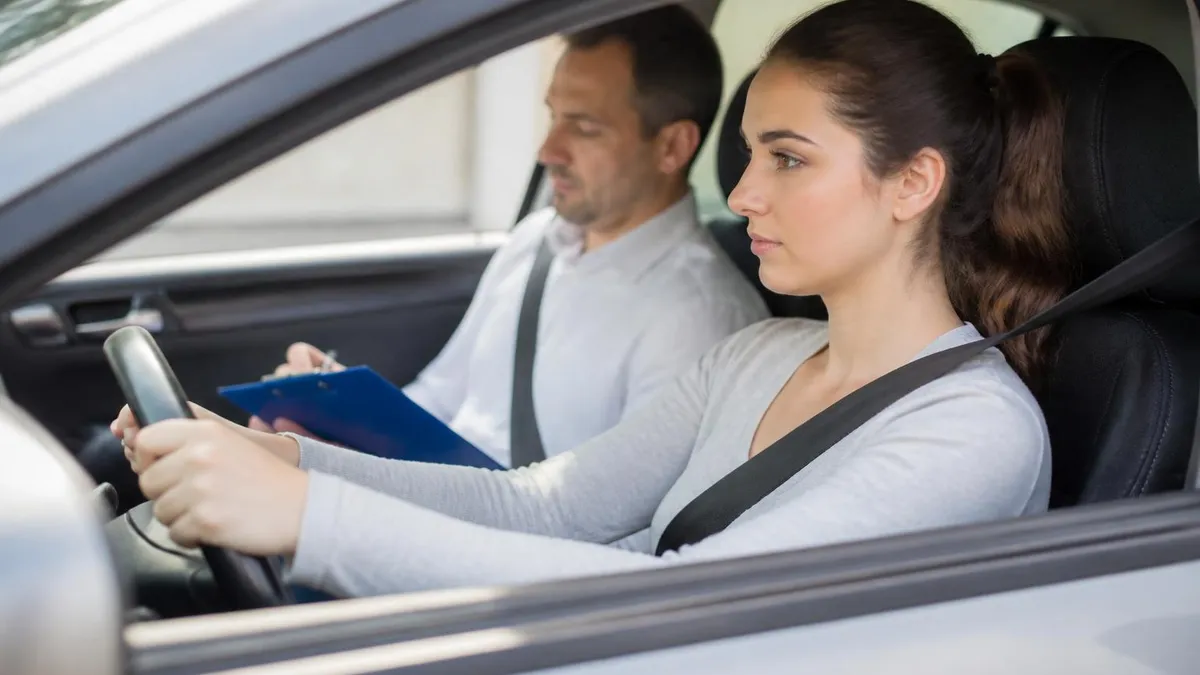
One underused preparation strategy is mock test sessions conducted with someone in an evaluator role — a parent, a driving instructor, or even a quiet friend who sits and takes notes while you drive without giving feedback. The discomfort of being watched and assessed without real-time reassurance is exactly what the actual test produces. Repeated exposure to this format — even two or three sessions — significantly reduces the novelty of the evaluation context on the real test day.
Evidence-Based Anxiety Management Techniques
The most accessible tool for acute anxiety — works within 2-3 minutes
- Technique: 4-7-8 pattern: inhale 4 counts, hold 7, exhale 8 counts
- Mechanism: Extended exhale activates parasympathetic nervous system
- When to use: In the car before entering the center, during test if anxiety spikes
- Preparation: Practice daily in the week before your test so it's automatic
Replace anxiety-amplifying thoughts with evidence-based alternatives
- Technique: Identify catastrophic thoughts, then replace with preparation-grounded facts
- Example: Change 'I'll blank completely' to 'I've taken 5 practice tests and know the content'
- When to use: While waiting, and if negative thoughts arise during the drive
- Preparation: Write down 3-5 preparation-grounded statements to recall on test day
Mental rehearsal of success — used by athletes in all high-performance domains
- Technique: 10 minutes daily: mentally drive your test route calmly and successfully
- Mechanism: Familiarizes nervous system with success scenario, reduces novelty threat
- When to use: Nightly in the week before your test; morning of the test
- Preparation: Know your route — visualize specific intersections, maneuvers, and checkpoints
Gradual exposure to evaluation conditions to reduce their anxiety trigger effect
- Technique: Practice driving with observers, evaluators, or in test-like conditions
- Mechanism: Repeated exposure to evaluation context reduces novelty and perceived threat
- When to use: In practice sessions weeks before the test
- Preparation: Ask a passenger to silently observe and take notes during practice drives
Managing Anxiety on Test Day and During the Drive
On your test day, the primary goal is physiological regulation — bringing your nervous system activation down from high anxiety to a manageable range without tipping into under-arousal and inattentiveness. Controlled breathing is the most accessible and evidence-supported technique for this. It requires no equipment, can be done anywhere, and begins working within a few minutes by directly activating the parasympathetic nervous system that counteracts the fight-or-flight response.
The 4-7-8 pattern works particularly well for acute anxiety: inhale for 4 counts, hold for 7, then exhale for 8. The extended exhale is the active element — it shifts the nervous system balance toward parasympathetic activation. Practice this technique in the days before your test so it's a familiar habit rather than a new skill you're attempting under pressure for the first time. Do several full rounds in your car before entering the testing center.
Arrive 15-20 minutes early — enough time to settle and do your breathing exercises, but not so early that you're sitting in an anxiety-inducing waiting environment for 45 minutes. Use the waiting time constructively: breathe, recall specific evidence of your preparation, and redirect catastrophic thinking. Thoughts like 'what if I blank completely' are unhelpful predictions about a future that hasn't happened. Replace them with preparation-grounded facts: 'I know the road signs, I've practiced this route, I've completed multiple practice test sessions.'
During the test itself, remember that the examiner's role is to evaluate you fairly — not to find reasons to fail you. Most examiners have seen hundreds of nervous candidates and aren't penalizing visible anxiety as long as you're driving safely. If you make a minor error, resist catastrophizing. In most driving tests, one or two minor errors don't cause a fail. The compounding mistake — the error caused by anxiety about the first error — is often more damaging than the original. Acknowledge the mistake internally, return your focus to the drive, and continue.
Visualization practice in the days before the test also reduces day-of anxiety in a measurable way. Spend 10 minutes each evening mentally rehearsing your test drive: approaching the testing center calmly, handling each required maneuver smoothly, responding correctly at intersections and junctions. Mental rehearsal of success doesn't guarantee a perfect drive, but it familiarizes your nervous system with a positive version of the scenario and reduces the perceived threat when the real experience begins. This is standard practice in competitive sport performance preparation for exactly this reason.
In the testing center waiting area, avoid comparing notes with other anxious candidates. Group anxiety is genuinely contagious, and listening to nervous test-takers share worst-case scenarios amplifies your own anxiety without providing anything useful. If the waiting environment feels overwhelming, it's completely acceptable to wait outside or in your car until you're called in. Use that time for breathing exercises rather than absorbing other people's nerves.
It's also worth knowing that examiners assess the full test, not isolated moments. A single fumbled maneuver doesn't define the outcome. Examiners look at overall driving competence: hazard awareness, mirror checks, appropriate speed management, positioning, and response to other road users. A candidate who drives competently throughout and hesitates briefly at one junction presents very differently from one who is visibly panicked and inconsistent from the start. Overall composure across the full drive matters considerably.
BMV Test Day Preparation Checklist
- ✓Complete at least 40-50 hours of supervised driving practice across varied conditions
- ✓Take 5+ full-length BMV practice tests covering all subject areas
- ✓Practice the testing center's route specifically if it is known or discoverable
- ✓Locate the testing center in advance — know the parking, entrance, and check-in process
- ✓Practice the 4-7-8 breathing technique daily in the week before your test
- ✓Get 7-9 hours of sleep the night before your appointment
- ✓Eat a proper meal before your test — avoid excess caffeine
- ✓Arrive 15-20 minutes early to settle before being called
- ✓Bring all required documents: ID, learner permit, proof of insurance, vehicle registration
- ✓Remember: the examiner wants you to pass, and one minor error typically does not fail the test
Managing Anxiety: Before vs During the Test
Days before: Build preparation confidence through practice tests and driving hours. Use visualization nightly — mentally rehearse a successful, calm test drive in detail. Practice the 4-7-8 breathing daily so it's automatic when you need it.
Night before: Prepare everything you need (documents, vehicle, route plan) so there are no morning logistics to manage under anxiety. Get to bed at a reasonable time — a poor night's sleep amplifies every anxiety symptom.
Morning of: Eat a proper breakfast, stay hydrated, and limit caffeine. Give yourself plenty of travel time. Arriving late or rushed creates unnecessary additional anxiety on top of the test nerves themselves.
In the car before entering: Do 5-10 minutes of 4-7-8 breathing. Review your preparation-grounded statements. Remind yourself that nerves are normal and that moderate arousal is actually helpful — it sharpens attention.
Addressing Test Anxiety vs Repeating Tests Without Addressing It
- +Directly targeting anxiety produces different outcomes — most candidates who fail due to nerves pass once anxiety is managed
- +Preparation-based techniques build real competence, not just confidence — both improve with the same effort
- +Breathing and visualization are free, require no equipment, and can be practiced anywhere
- +Addressing anxiety now prevents it from compounding across multiple failed attempts
- +Drivers who pass with managed anxiety tend to be more confident behind the wheel long-term
- +Understanding why anxiety happens makes the experience feel less like a personal failure
- −Anxiety management requires active practice — techniques that aren't rehearsed don't work reliably under pressure
- −Some candidates mistake increased preparation for anxiety management — additional hours don't help if anxiety is the core issue
- −Visualizing success can create rigid expectations — what to visualize is a calm drive, not a perfect one
- −Accepting that moderate nerves are unavoidable is part of the process — expecting to feel completely calm often sets up failure
- −For severe or clinical-level anxiety, self-help techniques alone may be insufficient and professional support is needed
BMV Questions and Answers
About the Author
Attorney & Bar Exam Preparation Specialist
Yale Law SchoolJames R. Hargrove is a practicing attorney and legal educator with a Juris Doctor from Yale Law School and an LLM in Constitutional Law. With over a decade of experience coaching bar exam candidates across multiple jurisdictions, he specializes in MBE strategy, state-specific essay preparation, and multistate performance test techniques.