
Road Test Near Me: How to Find, Book, and Pass Your Driving Test 2026 September
✍🏼 Find a road test near you, learn what to expect on your driving test, what to bring, common failure reasons, and tips to pass your BMV road test

What Is the Driving Road Test?
The driving road test — also called the behind-the-wheel test, skills test, or road skills test — is the practical driving examination administered by state motor vehicle agencies before issuing a full driver's licence. It evaluates whether you can operate a vehicle safely in real traffic conditions by observing you drive on actual roads while a state examiner or licensed third-party examiner assesses your control, observation habits, and ability to execute standard driving manoeuvres correctly.
In states that use the Bureau of Motor Vehicles (BMV) — including Indiana, Ohio, and several others — the driving test is administered at BMV branch offices or affiliated third-party testing sites. In states that use the Department of Motor Vehicles (DMV) or other names, the process is similar but administered through the relevant state agency. Regardless of what the agency is called, the driving road test serves the same purpose: demonstrating that you can drive safely before being licensed to drive independently.
The road test is the final required step in the standard driver licencing process for new drivers. Before taking the road test, most states require you to pass a written knowledge test, hold a learner's permit for a minimum period (typically 6 months for teens), and complete a minimum number of supervised driving hours. Adults obtaining their first licence typically have shorter holding periods or none at all, depending on state law. Once you pass the road test, your learner's permit is converted to a full licence.
Road tests are also required when converting an out-of-state or international driver's licence to your new state's licence in some circumstances, when your licence has been revoked and you're reinstating driving privileges, or when a court or medical review requires a driving competency evaluation. The specific circumstances requiring a road test beyond initial licencing vary by state — check your state's BMV or DMV website for the applicable requirements.
- Find a test location: Use your state's BMV/DMV website to search testing sites by zip code or city
- Schedule online: Most states allow online scheduling at the BMV/DMV website; some also allow phone scheduling
- What to bring: Learner's permit, proof of insurance, a vehicle in safe operating condition, and proof of identity if required
- Vehicle requirement: You must provide the vehicle for the test — it must be registered, insured, and meet all safety requirements
- Typical test duration: 15-30 minutes on the road; arrive 10-15 minutes early for paperwork
- Pass score: Most states require 70-80% to pass; each state has its own scoring system and automatic failure criteria
- If you fail: Most states allow you to retake the test after a waiting period of 1-14 days depending on the state
How to Find and Schedule a Road Test Near You
Step 1: Confirm your eligibility
Step 2: Find a testing site near you
Step 3: Schedule your appointment
Step 4: Prepare the vehicle
What Happens During the Road Test
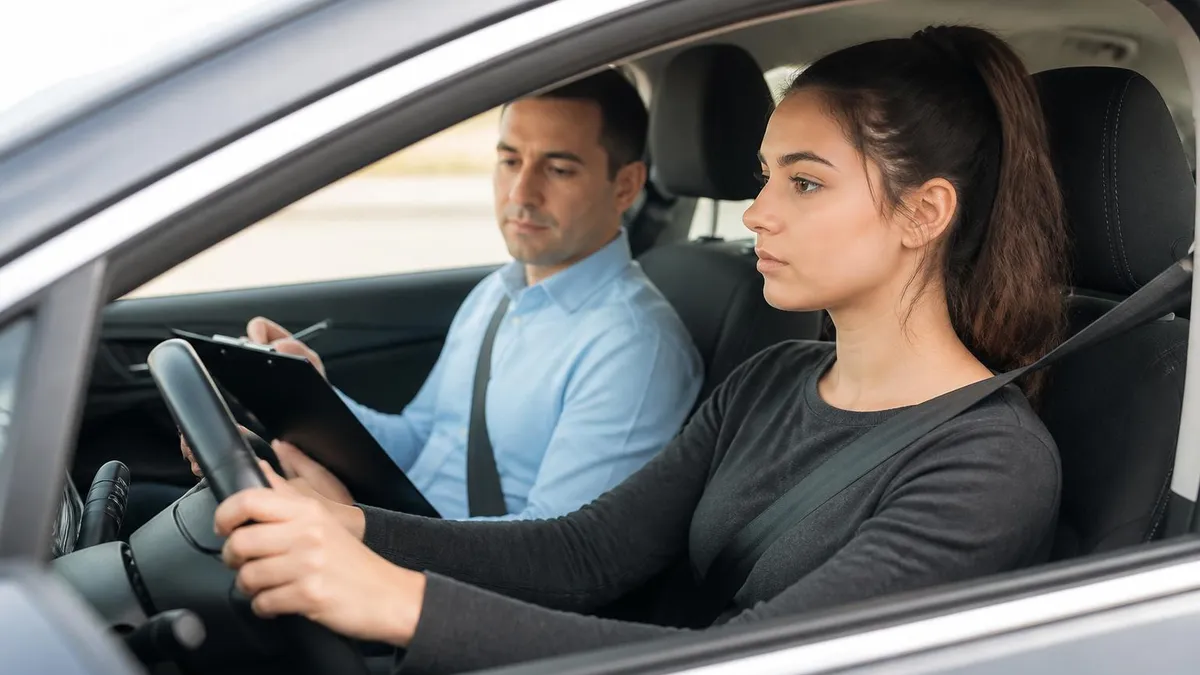
The road test begins before you leave the testing site. The examiner will walk around the vehicle with you or ask you to demonstrate basic vehicle controls — how to turn on headlights, operate the windshield wipers, use the horn, and identify where the emergency brake is. These pre-drive checks ensure you can operate your specific vehicle's controls without looking for them, which is a basic competency that the examiner must verify before putting the vehicle in motion on public roads.
The driving portion typically lasts 15-30 minutes and takes place on public roads rather than a closed course. You'll drive through the area surrounding the testing site while the examiner directs you through a series of observations and manoeuvres. The route is predetermined — examiners use standardised routes that expose candidates to the specific traffic situations and manoeuvres the test is designed to evaluate. You won't know the route in advance, but practising in the area near your testing location is a common and effective preparation strategy.
Common manoeuvres evaluated during the road test include: left and right turns (checking that you're looking both ways, yielding appropriately, and turning into the correct lane), lane changes (checking mirrors and blind spots before moving over), stopping at stop signs and traffic signals, navigating intersections, driving at appropriate speeds for posted limits and conditions, maintaining proper following distance, and parallel parking or other backing manoeuvres depending on the state. Some states also test highway or freeway entry and driving if the test route includes a highway segment.
The examiner sits in the passenger seat and observes without coaching during the test. They record observations on a scoring sheet as you drive. If you make a serious error — running a red light, failing to stop at a stop sign, or demonstrating a behaviour that the examiner considers an immediate safety concern — they may end the test early. In most states, reaching a certain number of error points during the test results in an automatic failure regardless of whether the test is completed.
Common Reasons for Road Test Failure
Failing to check mirrors and blind spots before changing lanes, turning, or merging is one of the top failure causes. Examiners specifically watch for head turns to check blind spots — a quick mirror check alone isn't enough. Make your observation movements deliberate and visible: turn your head to check the blind spot, look both ways at intersections, and scan ahead consistently rather than fixating on the road directly in front of you.
Coming to an incomplete stop at a stop sign — slowing down without the vehicle fully stopping — is a common automatic failure in many states. The vehicle must come to a complete, full stop, with the front bumper behind the stop line or crosswalk. Examiners watch for this carefully. Practise stopping completely even when the intersection appears clear; the habit of full stops at signs is what the test evaluates.
Turning into the wrong lane (turning left and ending up in the right lane, or vice versa), changing lanes unsafely, or straddling lane lines are consistently cited failure causes. When making turns, always turn into the closest appropriate lane — left turns into the leftmost lane, right turns into the rightmost lane — and then signal before moving to a different lane after completing the turn.
Both exceeding the speed limit and driving excessively below the flow of traffic are scored negatively. Nervousness often causes new drivers to drive too slowly, which creates a hazard for other vehicles. The examiner expects you to drive at a speed appropriate for the road and conditions — near the posted limit in normal conditions, slower in residential areas, and adjusted for weather or visibility.
Road Test Preparation and What to Bring
Arriving at the road test without required documents will prevent you from taking the test and forfeit your appointment. Prepare the following before your test day:
- Valid learner's permit: Your current, unexpired learner's permit is required. If your permit has expired, renew it before scheduling the road test.
- Proof of vehicle insurance: Bring the insurance card for the vehicle you'll use in the test — the examiner will verify the vehicle is insured
- Vehicle registration: Some states require proof of current registration; others check during the vehicle inspection. Bring it to be safe.
- A licensed adult (for teens): In most states, a parent, guardian, or licensed adult must accompany a teen driver to the road test even though they won't be in the vehicle during the test itself — they sign consent forms and take the vehicle afterwards if the teen doesn't pass
- Payment: Some states charge a road test fee of $10–$40; others include the test fee in the licence application fee. Check your state's fee schedule in advance.
- Glasses or contacts: If your permit requires corrective lenses, bring and wear them — failing to do so is an automatic disqualification
Road Test Scoring and Passing
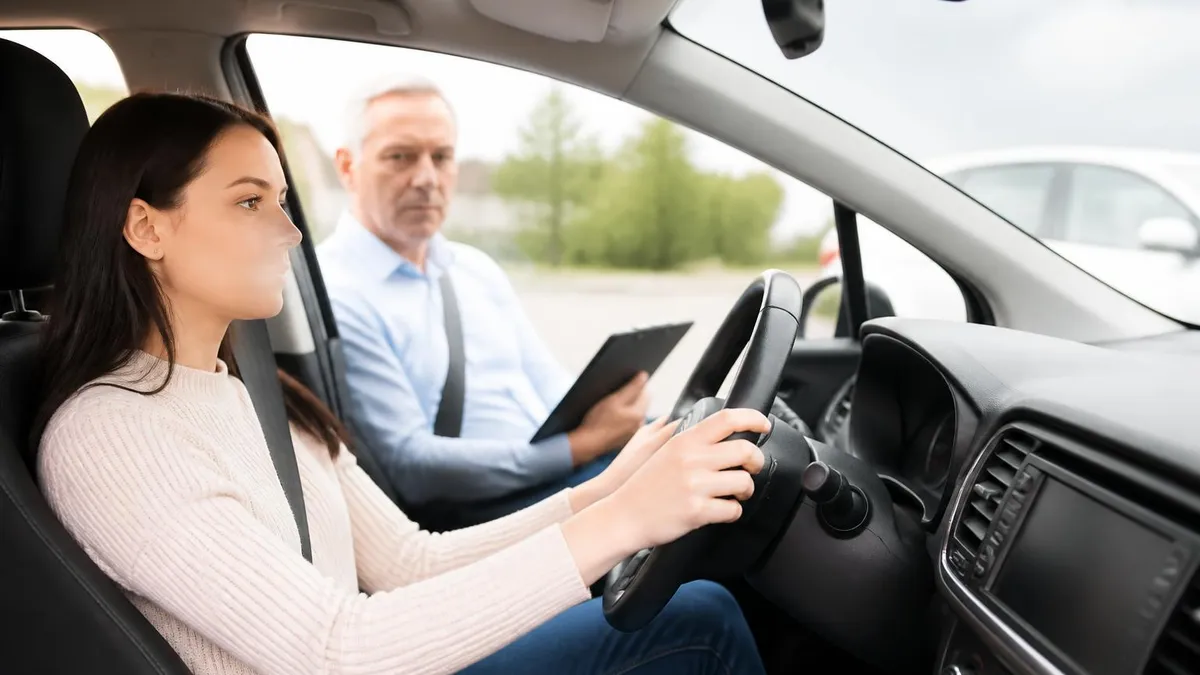
Road tests use point-based scoring systems, though the specific system varies by state. Errors are recorded as point deductions or as specific violation marks. The goal is to complete the test with fewer error points than the threshold that constitutes failure. In most states, a score of 70-80% of possible points or better is required to pass — the specific pass score is published in your state's driver's manual and on the BMV/DMV website.
Many states distinguish between minor errors (incorrect observation, slight speed issues, minor lane positioning errors) and major errors or automatic failures (running a stop sign, making contact with a kerb or obstacle, requiring the examiner to intervene to prevent an accident). A single automatic failure error ends the test immediately with a failed result regardless of how well the rest of the test was going. Understanding which behaviours trigger automatic failure in your state — the list is in the driver's manual — helps you prioritise those areas in practice.
When the road test is complete, the examiner will give you an immediate result. If you passed, you'll proceed inside to complete the licence issuance process — in some states you receive a temporary paper licence immediately; in others, the full plastic licence is mailed to you within 7-14 days. If you didn't pass, the examiner will explain the areas where errors were recorded, which gives you specific feedback for your next attempt.
One thing many test takers don't realise: the scoring sheet you receive after a failed test is one of the most useful study tools available to you. It tells you not just that you failed, but exactly which manoeuvres or behaviours generated deductions — and how many times each issue was observed during the test.
A single mark for an incomplete stop means you rolled through one sign; multiple marks on blind spot checks means the habit isn't consistent yet. Using that document to structure your practice before the retake is far more efficient than simply accumulating more general driving hours without a clear sense of what the examiner will be watching for when you sit down for your next attempt.
Road Test Day Checklist
- ✓Confirm your appointment time and testing location — don't rely on memory; check your confirmation email or text the morning of your test
- ✓Bring your valid, unexpired learner's permit — if it's expired, you cannot take the test
- ✓Bring proof of insurance for the vehicle you're using — the examiner will verify coverage before the test begins
- ✓Inspect the vehicle before leaving home: all lights functional, horn works, windshield clear, tyres inflated, mirrors adjusted
- ✓Arrive 10-15 minutes early to complete any check-in paperwork and settle your nerves before the test begins
- ✓Wear your corrective lenses if your permit requires them — driving without required corrective lenses is an automatic disqualification
- ✓Adjust your mirrors and seat to your preference before the examiner gets in — the vehicle should be set up for you to drive, not for the previous driver
- ✓During the test, make mirror and blind spot checks visibly deliberate — turn your head rather than just glancing at the mirror
- ✓Come to a complete full stop at every stop sign, even when the intersection appears clear — rolling stops are a common cause of failure
BMV Office vs. Third-Party Testing Sites
- +BMV branch offices are authoritative — passing the test at an official BMV location removes any ambiguity about result validity and ensures direct access to licence issuance
- +Third-party testing sites authorised by the state often have shorter wait times than BMV offices, particularly during busy periods — worth checking availability if your target BMV office has a long wait
- +Some third-party providers (like authorised driving schools) allow you to use their training vehicle for the test, which can be helpful if you don't have access to a suitable test vehicle
- +BMV offices often have bundled services — you can take the road test and complete licence issuance in the same visit
- −BMV office appointment availability can be limited during high-demand periods — popular times include spring (new grad season), summer, and after holidays; book well in advance
- −Third-party testing locations may have fees beyond the standard state test fee — check costs before booking to avoid surprises
- −Not all BMV branches offer road testing — verify that your chosen location administers driving tests, not just written tests and licence transactions
What Happens If You Fail the Road Test
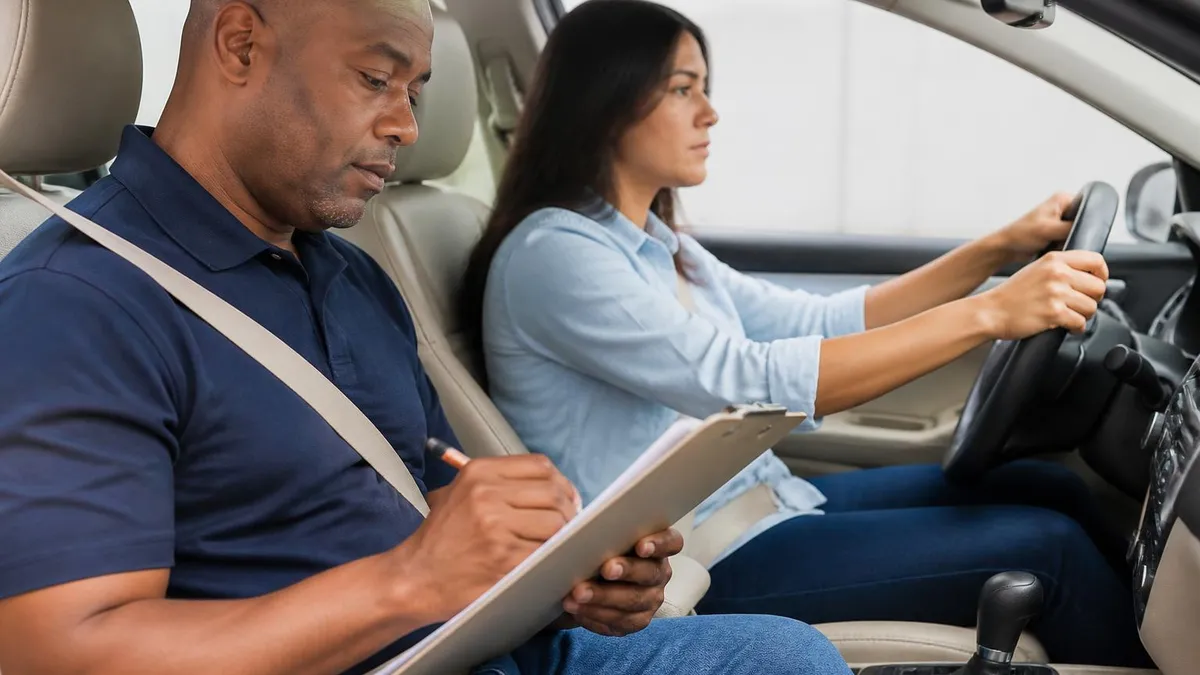
Failing the road test is disappointing but common — a significant percentage of first-time test takers don't pass on their first attempt. If you don't pass, the examiner will give you a copy of the scoring sheet explaining which areas resulted in deductions or failures. Read this feedback carefully — it's the most direct and specific guidance you'll receive on what to practise before your next attempt.
Most states require a waiting period before you can retake the road test — typically 1 to 14 days depending on the state. Indiana's BMV, for example, requires a waiting period before retaking. Some states also limit how many times you can attempt the road test within a given period before requiring additional training or a longer waiting period. Check your state's specific retake policies on the BMV/DMV website.
The most effective response to a failed road test is targeted practice on the specific errors identified in the examiner's feedback, rather than just general driving practice. If the failure was due to incomplete stops at signs, focus specifically on stop sign technique. If blind spot checks were marked consistently, build the habit of deliberate head turns into every lane change practice. Identifying and fixing the specific weaknesses that caused the failure is far more efficient than accumulating general driving hours that may not address those weaknesses at all.
Some drivers who fail the road test benefit from one or two sessions with a professional driving instructor before their next attempt. An instructor can evaluate your driving technique with objective eyes, identify habits you may not be aware of, and give direct corrective feedback in a way that friends or family supervisors may not feel comfortable doing. The investment in a lesson or two before the retake is often worth it if nerves or specific technique issues contributed to the first failure.
Driving Road Test: Key Facts
Road Tests for Teen Drivers vs. Adult New Drivers
The road test itself is the same for teen and adult new drivers — the same routes, the same manoeuvres, the same scoring. What differs is the path to becoming eligible to take the test and the licence conditions after passing.
Teen drivers in most states go through a graduated driver licensing (GDL) system. After holding a learner's permit for 6 months (with required supervised driving hours), they take the road test and, if they pass, receive a provisional or intermediate licence with restrictions — typically no driving late at night and no passengers under 18 without a licensed adult.
These restrictions gradually lift as the teen accumulates months of restriction-free driving without violations, eventually leading to a full unrestricted licence. The GDL structure is designed to let teen drivers build experience progressively rather than going from zero experience to full unsupervised driving in one step.
Adults (18 and over) obtaining their first licence typically face fewer or no holding period requirements before taking the road test, though states vary. Adult new drivers in some states can go directly from the knowledge test to the road test without a mandatory holding period. The road test requirements and scoring are identical, but the post-pass licence issued to adults is typically unrestricted from the start.
Both teen and adult new drivers must pass the same knowledge test before obtaining a permit. The written test covers traffic laws, road signs, safe driving practices, and state-specific rules. Passing the knowledge test is the prerequisite to the permit, which is the prerequisite to the road test. Preparing thoroughly for the knowledge test — particularly on areas like traffic signs, right-of-way rules, and speed limits — is valuable both for passing the written test and for having the knowledge foundation that makes passing the road test easier.
One area where teen and adult new drivers often differ in practice is vehicle experience. Adult new drivers may have spent years as passengers observing traffic and developing informal knowledge of road behaviour before ever sitting in the driver's seat. Teen drivers, by contrast, are often less experienced with traffic patterns, highway dynamics, and the spatial awareness that experienced passengers develop over time.
This difference means teen drivers typically benefit from more structured, deliberate practice sessions across a wide variety of road types — residential streets, multi-lane roads, intersections with different signal configurations, and if their state's road test includes it, highway entry and exit ramps. The supervised hours required by GDL programmes exist precisely to build this experience base before unsupervised driving begins.
The examiner will inspect your vehicle before the road test begins — a vehicle that fails inspection means no test that day, and you'll forfeit your appointment. Check these before arriving: all exterior lights functional (headlights, brake lights, reverse lights, turn signals), horn working, windshield without cracks obstructing the driver's view, windshield wipers functional, all doors opening and closing properly, and seats with working seatbelts. If your vehicle has any issues you're not sure about, have a mechanic check it before your test date. Bring your vehicle registration and current insurance documentation. The pre-test vehicle inspection is the examiner's standard starting procedure, not an optional step.
State-Specific BMV Road Test Information
While the core skills tested in a driving road test are universal — observation, vehicle control, traffic law compliance — the administrative details vary by state. What the agency is called (BMV in Indiana and Ohio; DMV in California, New York, and many others; DPS in Texas; DOL in Washington State) affects where you schedule your test and what the process looks like, but not the driving skills being evaluated.
Some states have moved to third-party road testing — authorised driving schools or testing companies that administer the road test on the state's behalf. Ohio, for example, uses licensed third-party testing providers for all road tests rather than administering them at BMV offices. Indiana's BMV administers tests at branch offices. California's DMV still administers tests at DMV offices. Knowing which model your state uses tells you where to schedule and what to expect from the testing environment.
Scheduling availability varies significantly by location. Urban BMV or DMV offices in high-population areas often have waiting times of several weeks for road test appointments, particularly during peak demand periods. Rural offices typically have much shorter waits. If your nearest office has a long wait, check whether nearby offices in less-populated areas have better availability — the extra drive to a less-busy testing location can easily save weeks.
The driver's manual for your state is the most authoritative source for road test requirements, passing criteria, automatic failure behaviours, and any state-specific manoeuvres required. The BMV or DMV website for your state will have the current manual available for download. Reading the driving test section of your state's manual before scheduling is time well spent — it tells you exactly what the examiner is looking for and what behaviours will cause you to fail immediately, so you can practise with the right targets in mind.
Fee structures also vary. Some states include the road test fee in the initial licence application fee, while others charge separately — typically between $10 and $40 for the first attempt, with additional fees for retakes. Third-party testing providers may charge fees above and beyond any state fee.
Checking the fee schedule before your appointment prevents surprises on test day, since some testing locations require payment at check-in and won't begin the test without it. Your state's BMV or DMV website will list the current road test fees for official testing locations and, in states that use third-party providers exclusively, a list of authorised providers and their contact information for scheduling and fee inquiries.
Driving Road Test Questions and Answers
About the Author
Licensed Driving Instructor & DMV Test Specialist
Penn State UniversityRobert J. Williams graduated from Penn State University with a degree in Transportation Management and has spent 20 years as a certified driving instructor and DMV examiner consultant. He has personally coached thousands of applicants through written knowledge tests, skills assessments, and commercial driver licensing programs across more than 30 states.
Join the Discussion
Connect with other students preparing for this exam. Share tips, ask questions, and get advice from people who have been there.
View discussion (9 replies)