
Driving Test Requirements: Complete Guide to BMV Eligibility, Documents, and What to Bring
Complete guide to driving test requirements: age limits, documents, vehicle rules, fees, and BMV checklist to pass your road test on the first try. ❓
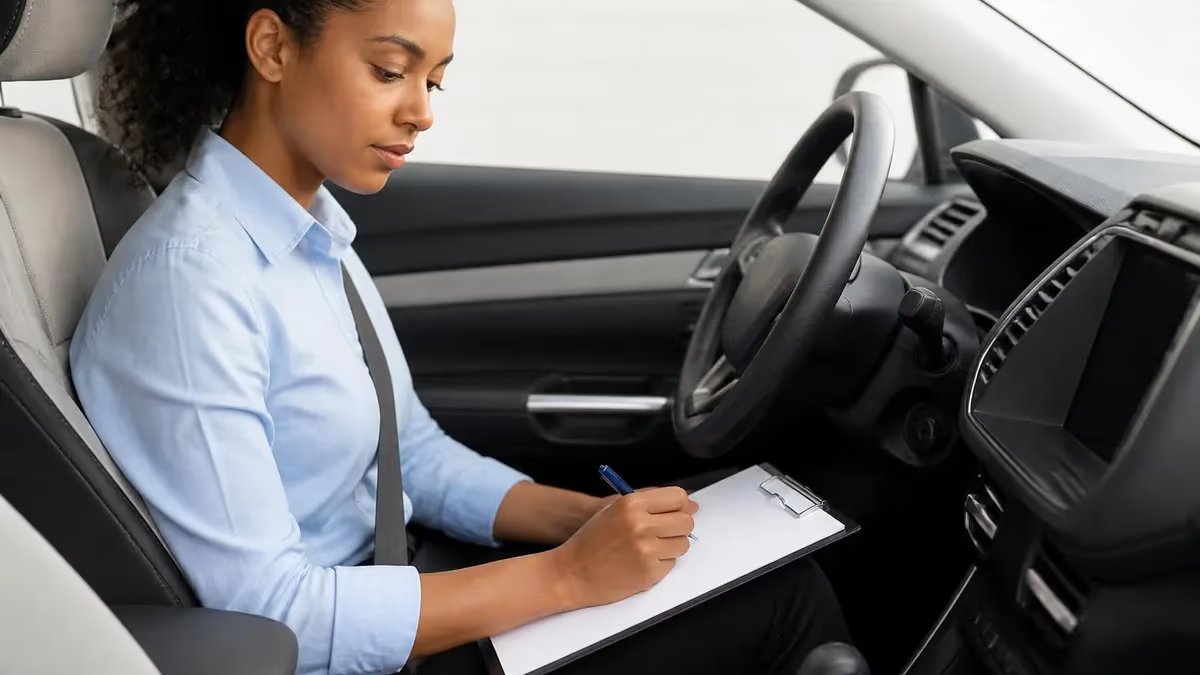
Understanding driving test requirements is the single most important step between you and a valid driver's license, and most first-time applicants are surprised by how many small details can derail an otherwise simple appointment. Whether you are a teenager scheduling your first road test or an adult finally getting licensed, the BMV expects you to arrive with specific documents, a qualified vehicle, valid insurance, and proof you have completed any required permit holding period. Missing even one item typically means a rescheduled appointment and another wait of two to six weeks.
The rules vary slightly from state to state, but the framework is remarkably consistent across the United States. You will need to prove your identity, prove your residency, prove your legal presence, and demonstrate that you have practiced enough to safely operate a motor vehicle on public roads. Examiners are not looking for perfect drivers; they are looking for safe ones who can follow instructions, observe traffic laws, and make sound judgments under mild pressure during a 15 to 25 minute evaluation route.
Most states require applicants under 18 to hold a learner's permit for a minimum period, typically six months to one year, before they can attempt the road test. During this time, supervised driving hours must be logged, often 40 to 60 hours total with at least 10 of those hours completed at night. Parents or guardians sign off on these logs, and the BMV reserves the right to verify the entries before scheduling your behind-the-wheel exam at the testing facility.
The vehicle you bring to the test must also meet strict safety standards. Examiners inspect tires, brake lights, turn signals, horn, windshield wipers, mirrors, and seat belts before they will step into the car. If any safety feature fails the pre-test inspection, the test is cancelled on the spot and you forfeit your appointment slot. This single requirement is responsible for roughly one in eight cancelled road tests nationwide, which is entirely preventable with a 10 minute check the night before.
Insurance and registration paperwork must be current and physically present in the vehicle. A digital insurance card on your phone is accepted in most states, but examiners in a few jurisdictions still require a printed copy, so bring both to eliminate any ambiguity. The registration must match the license plate on the car and cannot be expired. Borrowed vehicles are perfectly acceptable as long as the owner's insurance covers you as a permissive user during the examination period.
Beyond paperwork and vehicles, the testing experience itself rewards calm preparation. Examiners follow scripted routes designed to evaluate specific skills: lane changes, parallel parking, three-point turns, controlled stops, intersection navigation, and observation of posted speed limits. They score you on a standardized rubric, deducting points for each error, and the test ends either when you accumulate too many deductions or when you commit an automatic-fail violation such as running a stop sign or causing the examiner to brake.
This guide walks through every requirement in detail so that nothing about your appointment is left to chance. We cover documents, age and permit rules, vehicle inspection checklists, fees, scheduling logistics, common reasons people fail, and the practical habits that turn nervous permit holders into confident licensed drivers. By the time you finish reading, you will know exactly what to bring, what to expect, and how to walk into the BMV ready to pass.
Driving Test Requirements by the Numbers
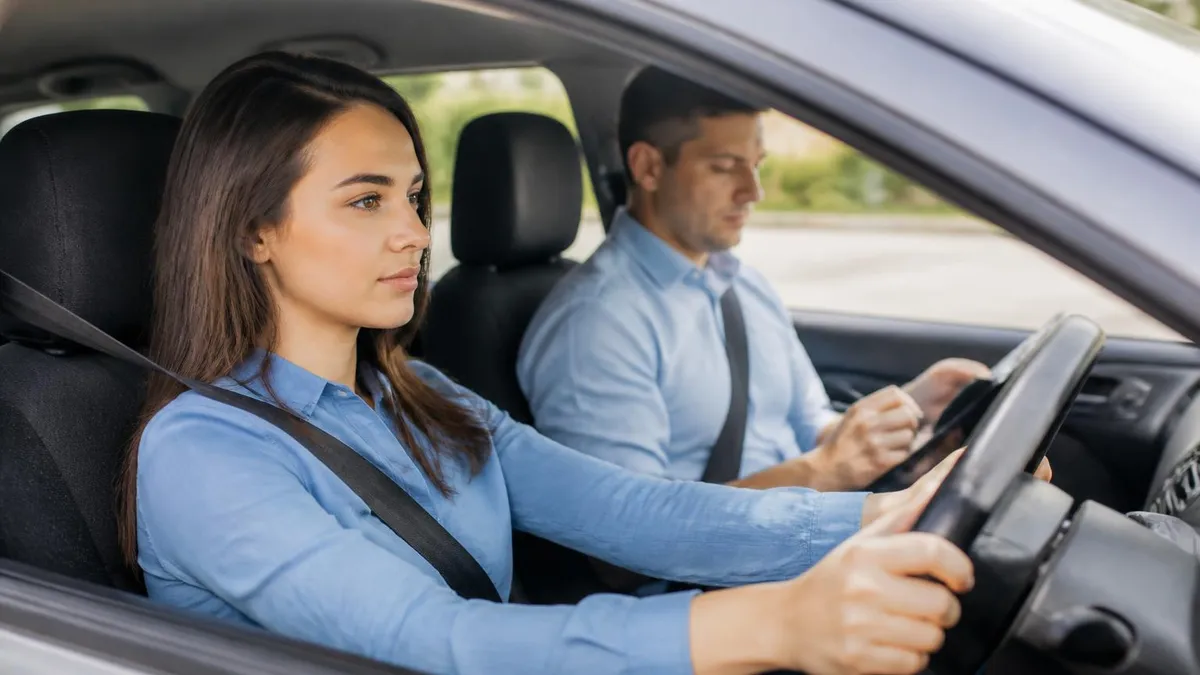
Core Eligibility and Age Requirements
Most states allow road testing at age 16, though Indiana and Ohio permit it at 16 years and one month. Adults 18+ can test immediately after holding a permit for the required period, which is shorter than the teen requirement.
Teens typically must hold a learner's permit for at least six months before the road test. Adults face shorter periods, often only 30 days, but still must demonstrate they have practiced enough to drive safely on public roads.
Most states require 40 to 60 logged hours of supervised driving for teens, including 10 night hours. Parents or licensed adults over 21 must sign the log, and the BMV may audit entries before scheduling your test.
Applicants under 18 generally must complete a state-approved driver education course covering 30 hours of classroom instruction and 6 to 8 hours of behind-the-wheel training with a certified instructor before testing.
Every applicant passes a vision test at the BMV before being permitted to take the road exam. Standards typically require 20/40 corrected vision with adequate peripheral range and the ability to distinguish red, green, and yellow.
Documentation is where most road drivers test appointments unravel before they even begin, so this section deserves your careful attention. The BMV operates on a strict verification framework built around four pillars: proof of identity, proof of Social Security number, proof of legal presence in the United States, and proof of residency in the state where you are testing. Each pillar requires specific documents, and accepting a substitute is never at the examiner's discretion. The rules are uniform and non-negotiable.
For proof of identity, a certified birth certificate with a raised seal or a valid US passport is the gold standard. Photocopies are not accepted under any circumstances, even notarized ones. If you were born outside the United States, you will need a permanent resident card, an employment authorization document, or a foreign passport accompanied by a valid visa and I-94 record. Hospital birth certificates with footprints do not qualify, even though families often keep them as keepsakes for decades.
Proof of Social Security number can be satisfied with your original Social Security card, a W-2 form from the previous tax year, a 1099 form, or a recent pay stub that shows the full nine-digit number. Most applicants bring the original card because it is the simplest option. If your card was lost or destroyed, the Social Security Administration can issue a replacement free of charge, but the process takes about two weeks, so plan ahead before booking your road test appointment.
Residency proof requires two separate documents from two separate sources, each dated within the last 60 to 90 days depending on your state. Acceptable items include utility bills, bank statements, mortgage documents, lease agreements, voter registration cards, and certain insurance policies. The address on both documents must match the address you list on your application, and the documents must show your full name. A bill addressed to your parents will not work unless your name is also printed on it.
Minors under 18 face additional documentation requirements that catch many families off guard. A parent or legal guardian must accompany the applicant to the BMV and sign a financial responsibility affidavit, which makes the adult legally responsible for any liability the new driver incurs during the first months of licensure. The driver education certificate of completion, supervised driving log, and any required permit-period violation-free attestation must also be presented at the counter on the day of the test.
Name changes complicate the documentation puzzle considerably. If your current name does not match the name printed on your birth certificate, you must produce the full legal chain of documents connecting the two. This typically means certified marriage certificates, divorce decrees, or court-ordered name change documents. Hyphenated names, suffix changes, and translations of foreign documents all require additional certified paperwork that can take weeks to obtain from the appropriate vital records office.
Finally, bring extras of everything. Examiners occasionally reject documents because of smudges, water damage, or unfamiliar formats from out-of-state issuers. Carrying backup proofs, especially a second residency document and a duplicate Social Security verification, eliminates the small but real risk of being turned away after waiting weeks for your appointment. A simple manila folder labeled with the BMV's required document categories keeps everything organized and visible to the clerk in one quick handoff.
BMV Practice Test Questions
Prepare for the BMV - Test exam with our free practice test modules. Each quiz covers key topics to help you pass on your first try.
BMV Basic BMV Practice
BMV Exam Questions covering Basic BMV Practice. Master BMV Test concepts for certification prep.
BMV Alcohol, Drugs, and Impaired Driving Laws
Free BMV Practice Test featuring Alcohol, Drugs, and Impaired Driving Laws. Improve your BMV Exam score with mock test prep.
BMV Licensing Requirements
BMV Mock Exam on BMV Licensing Requirements. BMV Study Guide questions to pass on your first try.
BMV Traffic Laws
BMV Test Prep for BMV Traffic Laws. Practice BMV Quiz questions and boost your score.
BMV Vehicle Operations
BMV Questions and Answers on BMV Vehicle Operations. Free BMV practice for exam readiness.
BMV Parking, Right-of-Way, and Intersections
BMV Mock Test covering Parking, Right-of-Way, and Intersections. Online BMV Test practice with instant feedback.
BMV Road Signs and Markings
Free BMV Quiz on Road Signs and Markings. BMV Exam prep questions with detailed explanations.
BMV Safe Driving and Hazard Awareness
BMV Practice Questions for Safe Driving and Hazard Awareness. Build confidence for your BMV certification exam.
Vehicle and Insurance Driving Test Requirements
The vehicle you bring must pass a pre-test safety inspection before the examiner agrees to ride with you. All exterior lights must function correctly, including headlights on both low and high beam, brake lights on both sides plus the center high-mount lamp, turn signals front and rear, hazard flashers, and the license plate light. Tires need legal tread depth, no visible damage, and properly inflated pressure consistent across all four wheels.
Inside the cabin, the horn must sound clearly, the windshield wipers must operate at all speed settings, the defroster must function, and every seat belt must latch and retract smoothly. Mirrors must be present and adjustable, including both side mirrors and the rearview mirror. Dashboard warning lights cannot be illuminated when the engine is running. A cracked windshield in the driver's line of sight is also grounds for immediate test cancellation in most states.
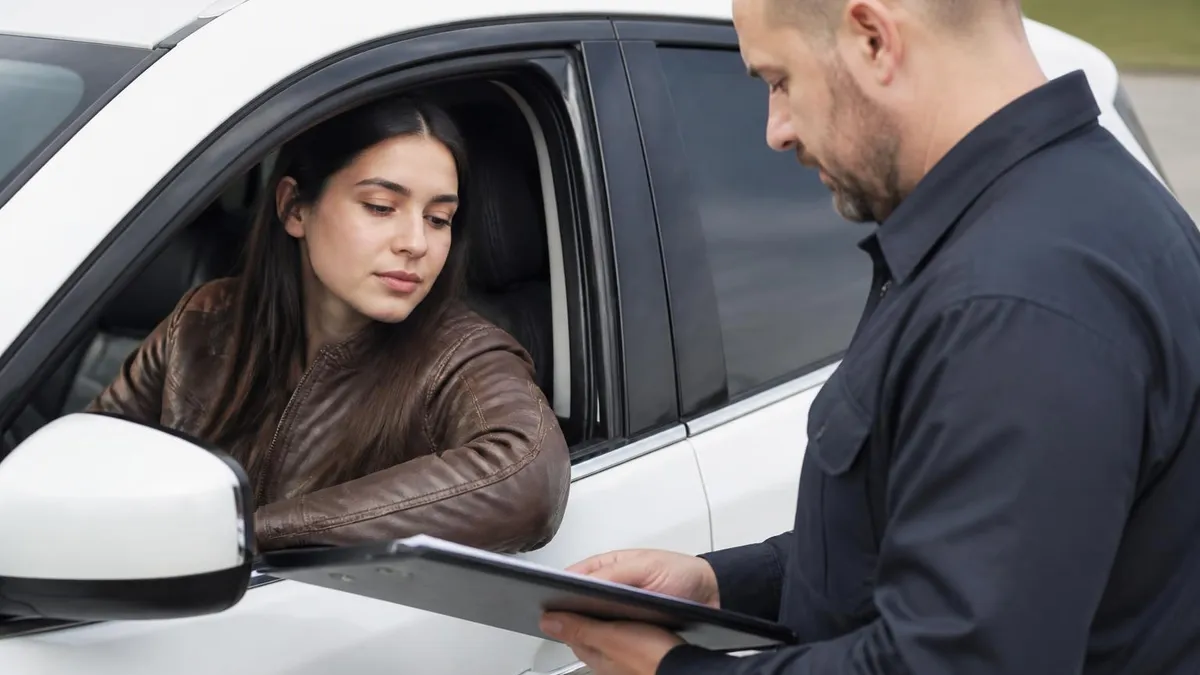
Is Taking Your Road Test Right Now the Right Move?
- +You meet the minimum permit holding period and all supervised hours are logged
- +Your vehicle has passed a thorough pre-test inspection within the last week
- +You feel comfortable performing parallel parking, three-point turns, and lane changes
- +You have completed multiple practice runs on roads similar to the test route
- +Your documents are organized, current, and verified against the BMV checklist
- +You can schedule the test for a weekday morning when traffic is lighter and examiners are fresh
- −You still hesitate during left turns at busy intersections or freeway merges
- −Your supervised driving log has gaps or relies on estimated hours rather than actual logs
- −The only available appointment is during rush hour or in unfamiliar territory
- −You have practiced fewer than 40 hours behind the wheel since getting your permit
- −Your test vehicle has any equipment defect, even one you consider minor
- −You feel rushed by family pressure rather than personal readiness to drive solo
Pros and Cons at a Glance
| Pros | Cons |
|---|---|
| You meet the minimum permit holding period and all supervised hours are logged | You still hesitate during left turns at busy intersections or freeway merges |
| Your vehicle has passed a thorough pre-test inspection within the last week | Your supervised driving log has gaps or relies on estimated hours rather than actual logs |
| You feel comfortable performing parallel parking, three-point turns, and lane changes | The only available appointment is during rush hour or in unfamiliar territory |
| You have completed multiple practice runs on roads similar to the test route | Your test vehicle has any equipment defect, even one you consider minor |
| Your documents are organized, current, and verified against the BMV checklist | You feel rushed by family pressure rather than personal readiness to drive solo |
Complete Driving Test Requirements Checklist
- ✓Bring your valid learner's permit and a second photo ID such as a school ID or passport
- ✓Pack your certified birth certificate or US passport for identity verification
- ✓Include your Social Security card or W-2 to satisfy SSN proof requirements
- ✓Carry two recent residency documents dated within the last 60 days
- ✓Bring your completed and signed supervised driving log if you are under 18
- ✓Confirm a parent or guardian will attend if you are under 18 to sign affidavits
- ✓Verify the test vehicle has current registration matching the license plate
- ✓Print or screenshot a current insurance card showing the test vehicle's VIN
- ✓Inspect all exterior lights, tires, wipers, horn, and seat belts the night before
- ✓Arrive 20 minutes early to allow time for vision screening and document review
Practice on the actual test route before your appointment
Applicants who drive the official test route at least three times in the two weeks before their exam pass at roughly 78%, compared to 54% for those who never drive the route. Most BMV offices publish route maps or describe the boundaries online, and even a single dry run with a licensed adult dramatically reduces test-day surprises and the anxiety that causes preventable errors.
The road test itself is more predictable than most applicants expect, and understanding the structure removes most of the anxiety that derails otherwise prepared drivers. Examiners follow a standardized script and use a printed scoring sheet that breaks the evaluation into roughly 30 to 50 distinct observations. They are not trying to trick you, and they do not award bonus points for advanced maneuvers. They are checking whether you can complete the basic tasks of driving without endangering yourself, the examiner, or other road users.
The test typically begins in the BMV parking lot with a pre-drive checklist. The examiner asks you to identify and operate the parking brake, hazard lights, defroster, turn signals, headlights, and windshield wipers. This sequence usually takes about three minutes. Failing to locate a control quickly is not an automatic disqualifier, but obvious unfamiliarity with the vehicle signals to the examiner that you have not practiced enough, which makes them more attentive to errors throughout the rest of the route.
After leaving the lot, you will encounter a sequence of common driving situations chosen to evaluate specific skills. Expect at least one four-way stop, one protected left turn, one unprotected left turn, several lane changes, a controlled merge, a school zone or residential 25 mph zone, and either a freeway entrance or a higher-speed arterial. Each situation gives the examiner an opportunity to score head checks, signal usage, speed control, lane positioning, and following distance against the printed rubric.
Parallel parking remains the most feared component for most applicants, but only about half of states still require it on the road test. Where it is required, you typically have three attempts to position the car within 12 to 18 inches of the curb without touching the cones or the curb itself. Three-point turns, also called Y-turns, are more universally tested and require executing a complete direction reversal on a narrow street using forward and reverse gears without striking the curb.
Automatic-fail violations end the test immediately regardless of how well you have driven up to that point. These include striking another vehicle or stationary object, running a red light or stop sign, exceeding the speed limit by more than 10 mph, refusing to follow the examiner's directions, requiring the examiner to grab the wheel or apply the passenger brake, and committing any moving violation that an officer could legally cite. Knowing these red lines lets you focus your attention on avoiding them.
Throughout the test, examiners observe how often you check your mirrors and perform shoulder checks before lane changes or turns. This is the single most common source of point deductions. Many applicants make safe maneuvers but fail to demonstrate the observation to the examiner because the head check is too subtle to see from the passenger seat. Exaggerate your head turns; the examiner cannot read your mind, and visible checks are worth real points on the scoring sheet.
Communication with the examiner should be polite, professional, and limited. Answer their direct questions clearly but do not engage in small talk or apologize for minor mistakes. Apologizing draws attention to errors the examiner may not have noticed and can shift them from a passive observer into an active critic. If you are unsure about an instruction, ask for clarification calmly rather than guessing. A confident driver who asks one question scores better than a silent driver who turns the wrong direction.
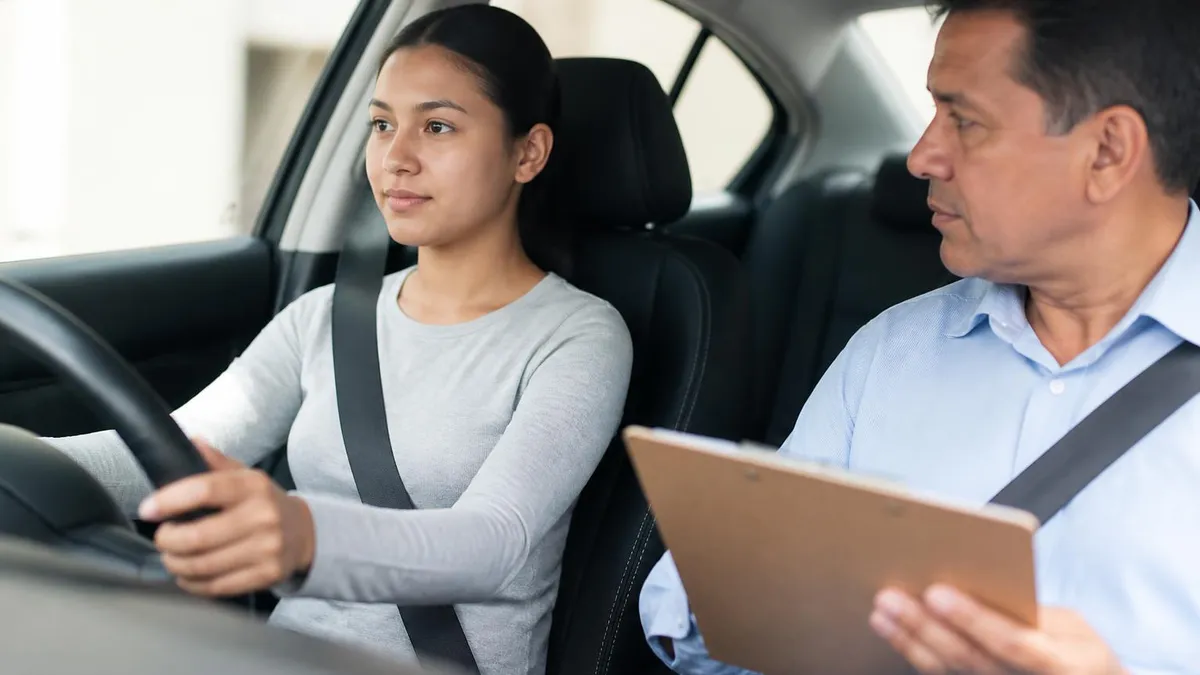
BMV staff occasionally audit supervised driving logs, especially when a teen applicant looks unusually nervous or makes early test mistakes. Falsified or rounded-up logs can result in test cancellation, permit suspension, and a mandatory waiting period before reapplying. Complete the actual hours, sign each entry honestly, and bring the original log rather than a reprinted copy when you arrive for your appointment.
Common reasons for failure cluster into a small number of preventable patterns, and recognizing these patterns lets you train them out of your driving before test day arrives. The number one cause of failure across nearly every state report is rolling through a stop sign instead of coming to a complete halt. A complete stop means the wheels stop turning fully, the chassis settles back on the suspension for a noticeable beat, and then you proceed. Practice this rhythm until it is automatic.
The second most common failure category is improper observation, particularly missed mirror and shoulder checks before lane changes. Examiners want to see a clear, exaggerated sequence: signal first, check the rearview mirror, check the appropriate side mirror, then turn your head to look over your shoulder into the blind spot before moving the steering wheel. If you do this sequence in less than two seconds, slow it down deliberately so the examiner cannot miss it from their seat.
Speed control causes many otherwise excellent applicants to lose. Driving five miles per hour over the limit might feel normal in everyday traffic, but examiners will deduct points for every instance and may fail you outright if you exceed by 10 mph. Equally damaging is driving too slowly, which examiners interpret as evidence of nervous overcaution and impaired judgment. Aim for the posted limit exactly, or two to three mph below in residential and school zones to demonstrate awareness.
Lane positioning errors account for a surprising share of point deductions. Drift toward the right side of the lane, drift toward the center line, or take wide turns that cross into adjacent lanes, and each instance costs you points. The proper position is centered between the lane markings with the car tracking parallel to the road. Use the hood ornament or center of the windshield as a reference and adjust gradually rather than with sudden corrections.
Following distance is tested specifically in stop-and-go traffic situations. Examiners expect at least three seconds of space between your front bumper and the vehicle ahead in normal conditions, and four to five seconds in rain or low visibility. Count the seconds aloud during practice runs until the distance feels natural. Tailgating not only loses points but also forces hard braking that examiners interpret as evidence you are unable to anticipate traffic flow ahead.
Intersection navigation includes several discrete skills the examiner watches carefully. At a four-way stop, you must yield to vehicles that arrived first and to the vehicle on your right if you arrive simultaneously. At protected turn arrows, you may proceed without yielding. At unprotected lefts, you must yield to oncoming traffic and to pedestrians in the crosswalk before completing the turn. Memorize these rules cold and verbalize them during practice to lock them in.
Finally, manage your mental state with a deliberate calm-down protocol the morning of the test. Sleep eight hours the night before, eat a normal breakfast, arrive early, and do three minutes of slow breathing in the parking lot before entering the BMV. Treat the examiner as a coach rather than a judge, and remind yourself that the test is simply 20 minutes of normal driving with someone watching. Confidence built on real practice consistently outperforms last-minute cramming.
Practical preparation in the final week before your road test should focus on routine consolidation rather than learning new skills. By this point, you have logged the required hours, completed driver education, and practiced the maneuvers dozens of times. The goal of the last week is to make those skills automatic under mild stress, not to add new techniques that you will execute clumsily on test day. Resist the urge to try unfamiliar parking lots or routes that introduce variables you have not encountered.
Drive at the same time of day your test is scheduled. Light conditions, traffic density, and your own circadian alertness all change throughout the day, and matching your practice to your test window helps your nervous system calibrate. A 9 a.m. test should be preceded by several 9 a.m. practice drives in the days leading up. If your test is in the afternoon, avoid heavy lunches that produce drowsiness and dehydration, both of which slow reaction time and reduce concentration measurably.
Have your test vehicle inspected by a mechanic if it is more than five years old or if you have any doubt about a warning light or unusual sound. This 30-minute service typically costs under $40 and catches the small defects that ruin appointments. Replace burned-out bulbs immediately, top off fluids, check tire pressure, and clean the windshield inside and out. Examiners notice cleanliness and interpret a well-maintained car as evidence of a conscientious driver who will respect traffic laws.
Pack your document folder the night before, not the morning of the test. Use a checklist printed from your state's BMV website and physically touch each item as you place it in the folder. Pack a backup of every document because lost items are recoverable but missing items mean rescheduling. Place the folder, your keys, and your wallet in the same location near the door so the morning routine cannot be derailed by a frantic last-minute search.
Eat a balanced breakfast about 90 minutes before your appointment. Protein and complex carbohydrates produce steady blood sugar that supports concentration without the crash that follows pure sugar or caffeine alone. Avoid drinking more than one cup of coffee because excess caffeine amplifies test anxiety and produces jittery hand movements that affect smooth steering. Drink a normal glass of water but not so much that bathroom needs intrude on your focus during the test.
Arrive at the BMV at least 20 minutes before your scheduled appointment. This buffer absorbs parking delays, document review at the counter, and the vision screening that precedes the road test. Use the extra time to walk around your vehicle one final time, confirming lights, tire pressure, and the absence of any new dashboard warnings. Sit in the driver's seat, adjust mirrors, fasten the seatbelt, and breathe slowly. By the time the examiner appears, you should feel settled and ready.
If you fail, remember that the road test is repeatable and most states allow a retest within one to two weeks. Examiners typically explain the specific reasons for failure on a printed scoring sheet, and reviewing that sheet honestly reveals exactly what to practice before your next attempt. About 70% of applicants who fail their first test pass the second, and 90% pass within three tries. A failure is feedback, not a verdict, and the licensed driver you want to become is still on the other side of one more appointment.
Sample BMV Practice Questions
Try these questions from our free BMV practice tests. The correct answer and an explanation follow each question.
What is the recommended minimum following distance under normal driving conditions?
- A. 1-second rule
- B. 2-second rule
- C. 3-second rule
- D. 5-second rule
Answer: C. 3-second rule
Indiana recommends a minimum 3-second following distance under normal conditions, increasing in bad weather or heavy traffic.
What vision requirements must be met for a driver's license?
- A. Minimum visual acuity of 20/40 in at least one eye (with or without corrective lenses) in most states
- B. Perfect 20/20 vision without glasses is required
- C. No vision test is required
- D. Only color blindness is tested
Answer: A. Minimum visual acuity of 20/40 in at least one eye (with or without corrective lenses) in most states
Most states require minimum 20/40 visual acuity in at least one eye (with corrective lenses if needed), adequate peripheral vision, and the ability to distinguish traffic signal colors for an unrestricted license.
What documents are typically required to obtain a driver's license?
- A. Proof of identity, Social Security number, proof of residency, and passing knowledge and road tests
- B. Only a photo ID
- C. Just a Social Security card
- D. A letter from a parent or guardian only
Answer: A. Proof of identity, Social Security number, proof of residency, and passing knowledge and road tests
Most states require proof of identity (birth certificate/passport), Social Security number, proof of state residency (utility bill/bank statement), passing the written knowledge test, vision test, and road skills test.
What does a white rectangular sign usually display?
- A. Warnings
- B. Regulations and laws
- C. Tourist information
- D. Construction zones
Answer: B. Regulations and laws
White regulatory signs communicate laws such as speed limits and lane use.
BMV Questions and Answers
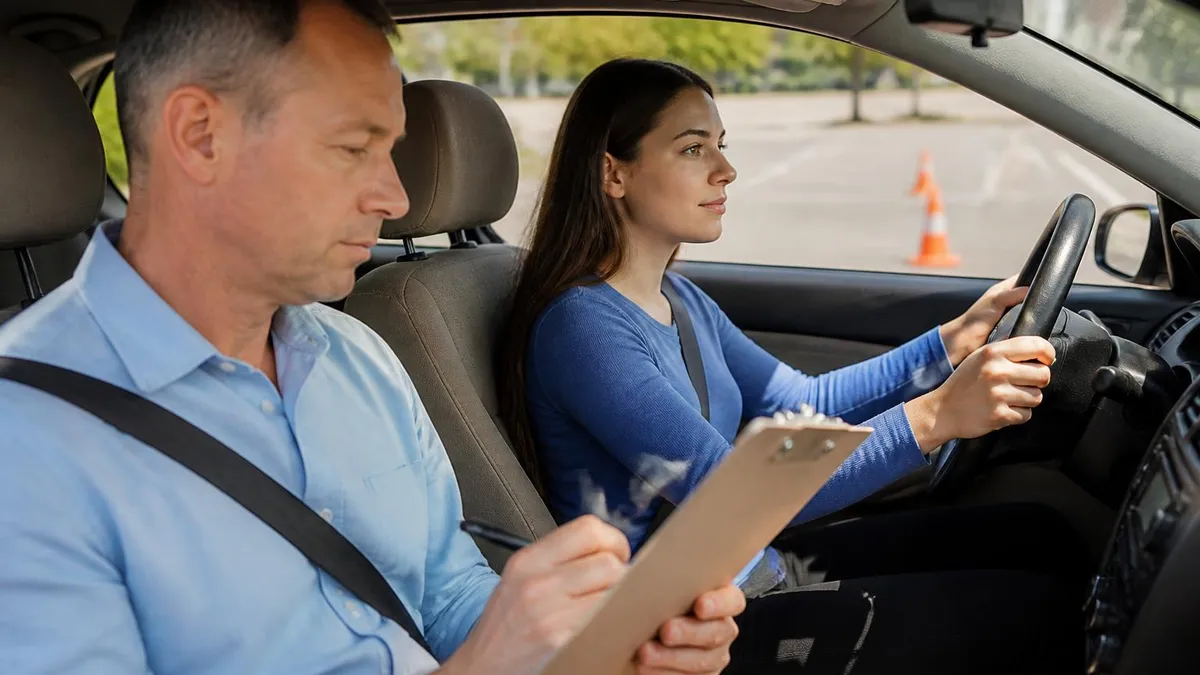
Driver Test Car Rental in Gastonia, NC: Complete BMV Road Test Vehicle Guide
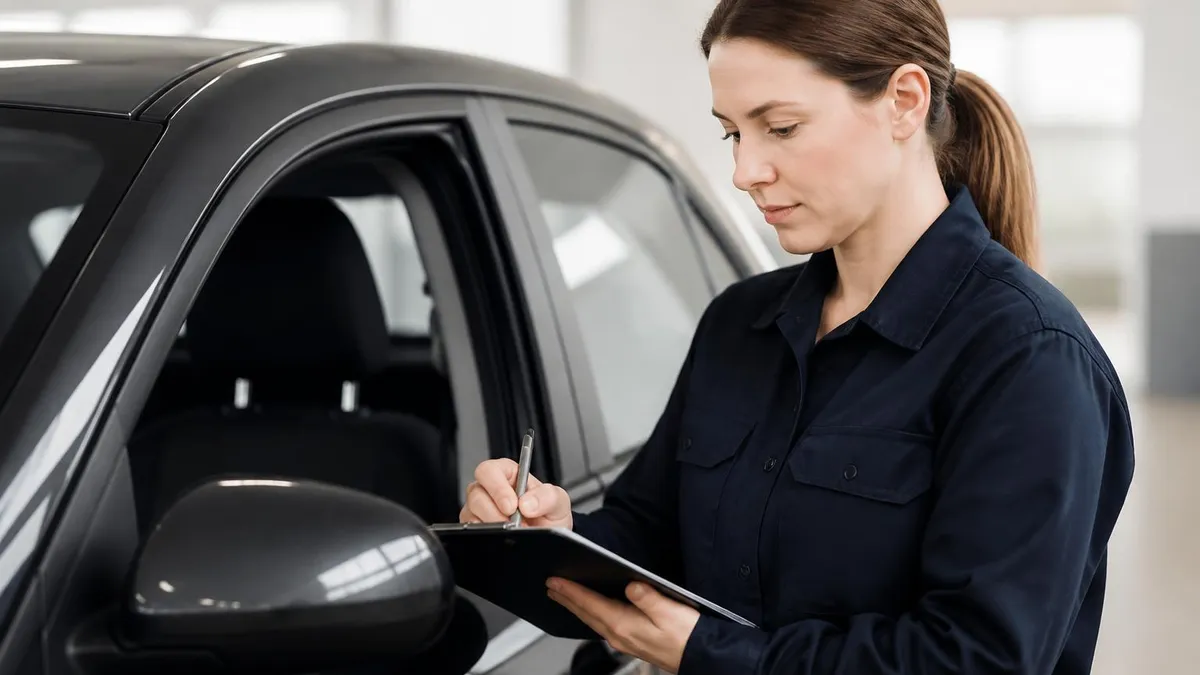
Ohio BMV Driving Test: Maneuverability, Road and Pass Tips
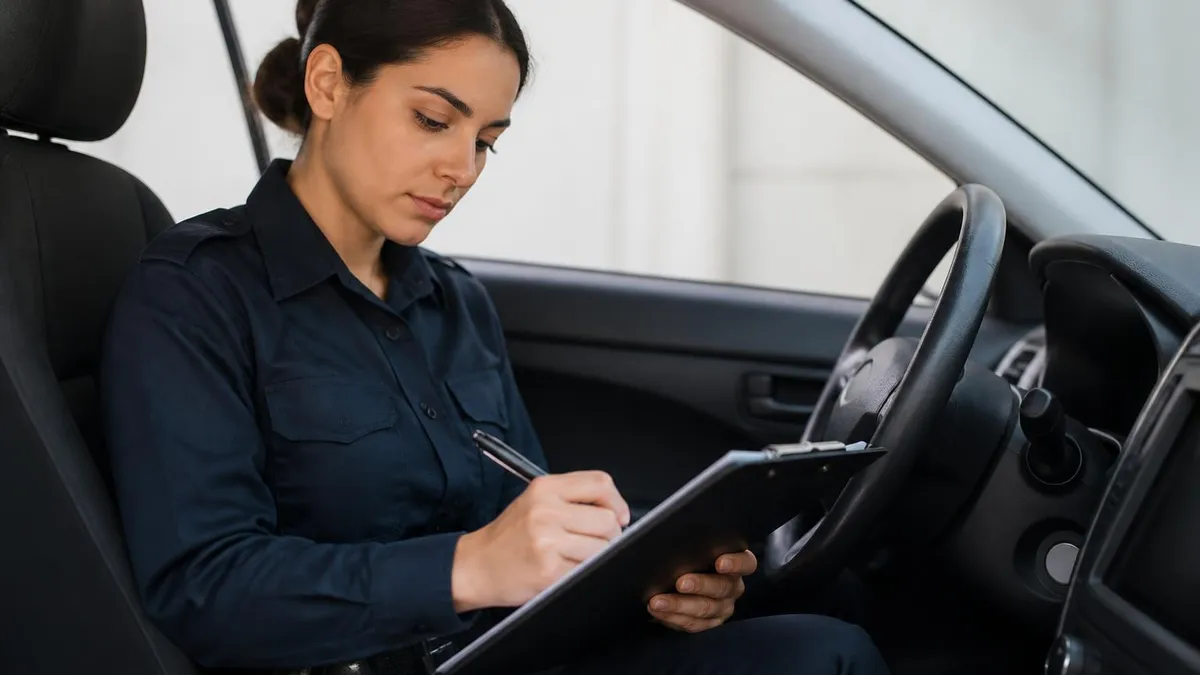
DMV Testing Area No Cell Phones Allowed: Complete Rules Guide for Your Driving Exam
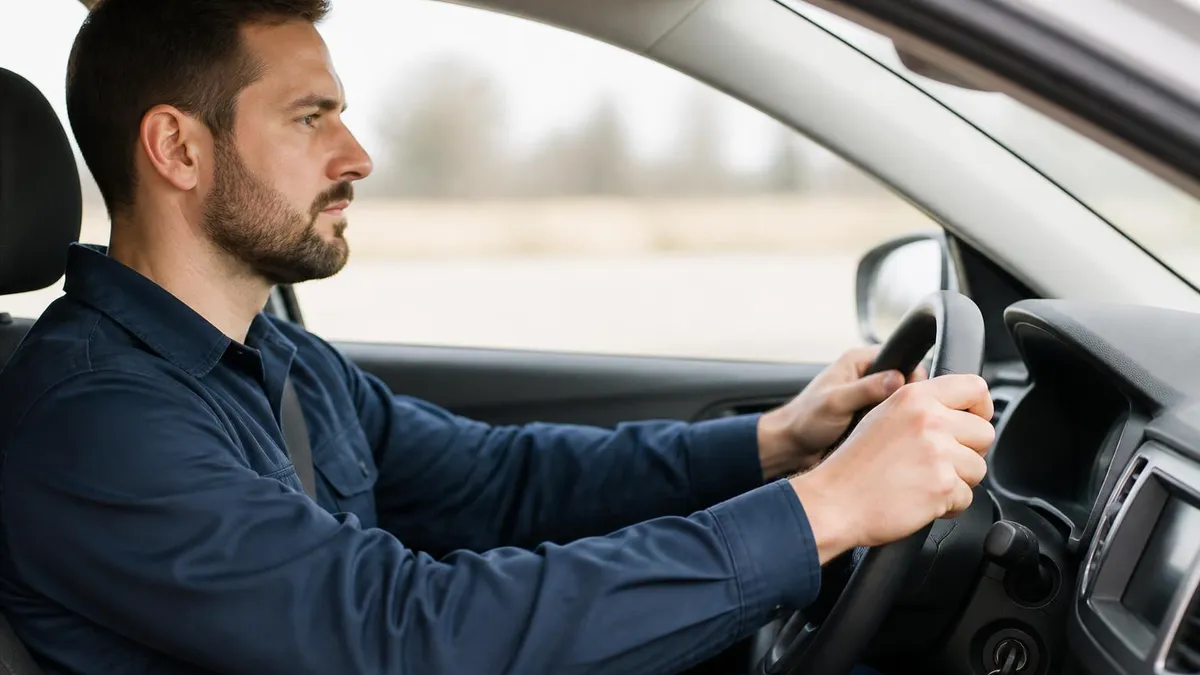
Hours of Ohio BMV: Complete Guide to Office Hours, Locations, and Visit Planning
BMV Appointment Guide: How to Schedule, Prepare, and Pass Your Visit on the First Try
About the Author
Licensed Driving Instructor & DMV Test Specialist
Penn State UniversityRobert J. Williams graduated from Penn State University with a degree in Transportation Management and has spent 20 years as a certified driving instructor and DMV examiner consultant. He has personally coached thousands of applicants through written knowledge tests, skills assessments, and commercial driver licensing programs across more than 30 states.
Join the Discussion
Connect with other students preparing for this exam. Share tips, ask questions, and get advice from people who have been there.
View discussion (9 replies)