
Ohio BMV Permit Test: Requirements, Content, and Preparation 2026 September
Ohio BMV permit test guide: eligibility requirements, test content, study materials, common questions, and tips for passing on first attempt. 📚
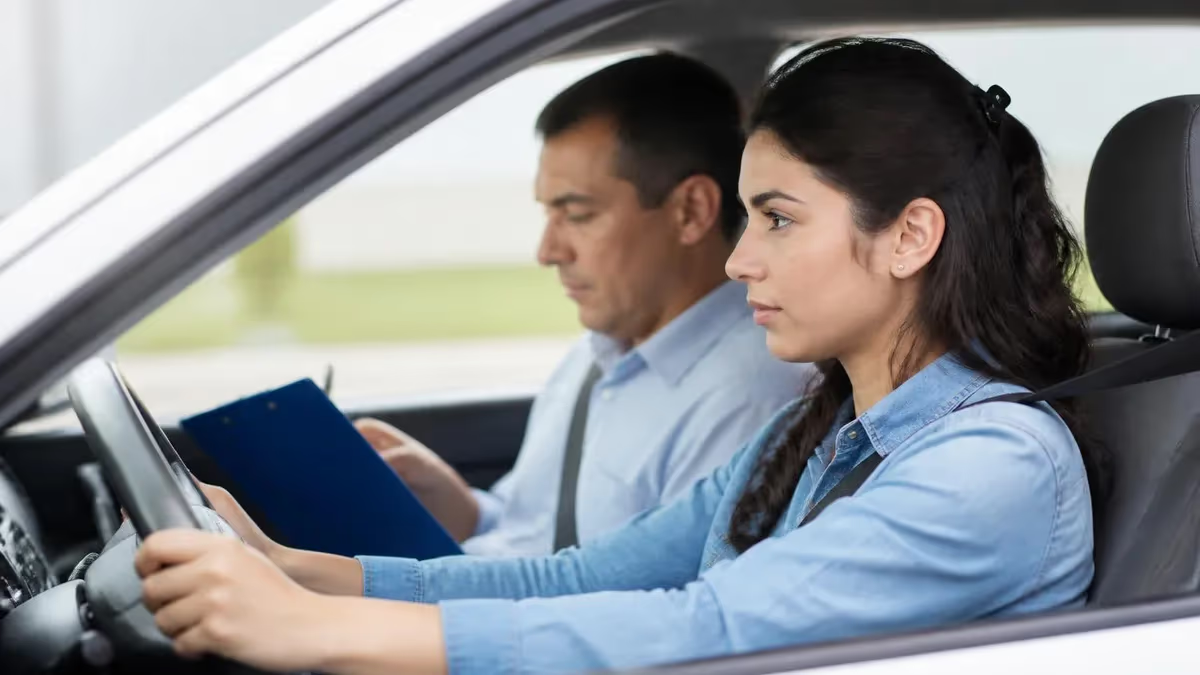
The Ohio BMV permit test is the written knowledge examination Ohio drivers must pass to obtain a Temporary Instruction Permit Identification Card (TIPIC), commonly called a learner's permit. Administered by the Ohio Bureau of Motor Vehicles (BMV) at Driver Exam Stations across the state, the test covers Ohio traffic laws, road signs, safe driving practices, and various other topics from the Ohio Digest of Motor Vehicle Laws.
Passing the permit test is the first step toward Ohio driver licensure for new drivers, particularly teenagers entering driver education and adults obtaining first-time licensure. Understanding what the test covers and how to prepare effectively supports passing on first attempt.
The Ohio BMV permit test consists of 40 questions divided between road sign identification (20 questions) and Ohio traffic laws (20 questions). Test takers must answer at least 75% correctly in each section — meaning at least 15 of 20 in each section, not 30 of 40 overall — to pass. The two-section structure means strong performance in one area can't compensate for weak performance in the other.
Both sections must independently meet the passing threshold. This requirement encourages thorough preparation across both content areas rather than focusing on one at the expense of the other. Most candidates who study adequately pass on first attempt; those who don't can retake after a brief waiting period.
Ohio BMV Permit Test Quick Facts
Test format: 40 questions in two sections — 20 road signs, 20 traffic laws. Passing score: 75% in EACH section (15 of 20 minimum each). Cost: $24 for permit test typically. Where: Ohio BMV Driver Exam Stations across state. Required: Identity documents, Social Security verification, proof of Ohio residency, parental consent if under 18. Study material: Ohio Digest of Motor Vehicle Laws (free PDF on BMV website). After passing: Receive TIPIC permit valid 6 months minimum for under 18, longer for adults.
Eligibility requirements for taking the Ohio permit test include specific age and documentation requirements. Drivers under 18 must complete pre-test requirements through driver education program enrollment or completion. Drivers 18 and older can take the test without driver education prerequisite.
All applicants must provide identity documents (birth certificate, passport, or other acceptable ID), Social Security verification, and proof of Ohio residency (utility bill, lease, or other documents). Drivers under 18 require parental or guardian presence and consent. Various other documentation may be required depending on individual circumstances including immigration status. Verify current requirements through Ohio BMV website before visiting Driver Exam Station.
Ohio Permit Test Components
20 questions identifying various Ohio road signs by shape, color, and meaning. Critical visual recognition skills.
20 questions covering Ohio traffic laws, right-of-way rules, speed limits, and various legal requirements.
Brief vision test verifying minimum visual acuity for safe driving. Glasses/contacts allowed if needed.
BMV verifies identity, residency, and required documentation before allowing test.
TIPIC issued upon passing. Valid 6+ months for under 18; longer for adults.
For under 18, prerequisite or concurrent driver education completion required before final license.
The road signs section tests recognition and meaning of various traffic control signs. Regulatory signs (red, white, with text or symbols) indicate laws and rules. Warning signs (yellow with black symbols) alert drivers to potential hazards. Construction signs (orange) indicate work zones. Guide signs (green or blue) provide directional and informational guidance.
Service signs (blue with white symbols) identify services like food, gas, lodging. School zone signs (yellow-green) alert to children and school activity. Each sign category has distinctive shape, color, and content patterns supporting recognition. Studying sign images and meanings systematically prepares for this section more than reading explanations alone.
The traffic laws section covers Ohio-specific rules and general driving knowledge. Right-of-way rules at intersections, four-way stops, roundabouts. Speed limits in various contexts (residential, school zones, highways, construction zones). Following distance, lane changes, passing rules. Parking restrictions and rules. Drunk driving laws including blood alcohol content limits. Seat belt and child restraint requirements. Special situations including emergency vehicles, school buses, pedestrians, bicyclists. Various other Ohio-specific traffic laws and regulations. The Ohio Digest of Motor Vehicle Laws covers all this content systematically as the official study source.
Common areas of difficulty for permit test takers include specific Ohio law details that differ from general driving knowledge, exact distance and time requirements (following distance, parking distances, etc.), specific blood alcohol content limits and consequences, school bus and emergency vehicle rules, and specific signaling requirements. Studying the Ohio Digest carefully and using practice tests focused on Ohio-specific content addresses these challenge areas. Generic driving knowledge from family driving experience or other states' learning may not match Ohio specifics — relying only on general knowledge often produces failed tests on Ohio-specific questions.
Permit test preparation: Download free Ohio Digest of Motor Vehicle Laws from Ohio BMV website. Read systematically including all chapters covering test content. Use online practice tests (free options at various Ohio driver education sites). Pay particular attention to road sign images and meanings. Take multiple practice tests scoring at least 90% before scheduling actual test. Plan 10-20 hours of study spread across 1-2 weeks before testing. Last-minute cramming rarely works — spread study supports better retention than intensive sessions.
Ohio's graduated driver licensing (GDL) system applies to drivers under 18, creating multi-stage licensure requirements. After passing permit test and obtaining TIPIC, drivers under 18 must hold permit at least 6 months and complete required driver education plus 50 hours practice driving (10 hours at night) before becoming eligible for probationary license.
Probationary license has restrictions including limits on nighttime driving, passenger restrictions, and zero tolerance for any traffic violations. Restrictions phase out as driver gains experience. Adults 18+ have simpler requirements without graduated system but still complete permit and road test stages. The graduated system reflects research showing teen driver safety improves substantially with structured experience-building before full driving privileges.
Driver education requirements for Ohio drivers under 18 include both classroom instruction (24 hours) and behind-the-wheel training (8 hours with certified driver education instructor). These requirements must be completed before obtaining final license, though they can be completed before or after passing permit test. Approved driver education programs available through high schools (some), commercial driving schools, and online providers (for classroom portion). Cost typically $300-$600 for complete program. Some schools include driver education in standard high school programs at no additional cost; others require separate enrollment in commercial programs. Verify program approval through Ohio BMV website before enrollment.
For new Ohio residents transferring driver licenses from other states, the process differs from initial Ohio licensure. Transfers typically require taking written knowledge test and vision screening but waive road test if previous license is currently valid or recently expired. Documentation requirements include previous license, identity verification, Social Security verification, and proof of Ohio residency. Some states have reciprocity agreements simplifying transfers further. The transfer process is generally smoother than initial licensure but still requires Driver Exam Station visit for testing and processing.

Don't rely only on family driving knowledge — Ohio-specific laws differ from generic driving rules. Don't skip studying road signs systematically — visual recognition matters as much as text knowledge. Don't show up unprepared for documentation requirements — missing documents prevent testing. Don't forget vision screening — bring glasses/contacts you normally wear. Don't underestimate Ohio Digest study — official source covers everything tested.
For practice driving with permit, several rules apply throughout permit period. Licensed adult 21+ with valid driver license must accompany permit holder in passenger seat at all times during driving. Permit holders cannot drive alone or with other young/unlicensed passengers. Driving practice should occur in varied conditions including different times of day, weather, traffic conditions, and road types to build comprehensive experience. The 50 hours practice requirement (10 nighttime hours) for under 18 represents minimum — many parents support more practice than minimum to build genuine confidence and competence before independent driving.
Common practice driving topics include parking maneuvers (parallel parking, perpendicular parking, hill parking), highway driving with merging and lane changes, neighborhood driving with stop signs and right-of-way decisions, and various weather conditions (rain, snow, fog when applicable). Each driving environment presents different challenges that experience addresses better than classroom instruction alone. Quality driver education programs combine classroom theory with extensive behind-the-wheel practice covering these various conditions. Parents supplementing professional instruction with additional practice typically produce better-prepared young drivers than minimum-only approaches.
For people considering whether Ohio's specific testing requirements differ from other states, comparison helps clarify. Most states have similar permit-then-license structure with written test followed by road test. Specific test content covers state-specific traffic laws differing across states. Graduated licensing systems for teens have similar structures across most states with some variations in specific requirements. Driver education requirements vary substantially — some states have stricter requirements than Ohio, some less strict. Verify your specific state requirements rather than assuming Ohio rules apply elsewhere or vice versa.
Preparing for Ohio Permit Test Success
- ✓Download free Ohio Digest of Motor Vehicle Laws from BMV website
- ✓Study systematically over 1-2 weeks (10-20 hours total)
- ✓Take multiple online practice tests scoring 90%+ before scheduling
- ✓Focus on road sign images and meanings
- ✓Pay attention to Ohio-specific laws differing from general knowledge
- ✓Gather all required documentation before visiting Driver Exam Station
- ✓Verify driver education enrollment if under 18
- ✓Plan 1-3 hours at Driver Exam Station for full process
Online practice tests provide valuable preparation supplementing official study materials. Many free options exist through driver education websites, BMV-affiliated sites, and various commercial providers. Practice tests simulate actual test format with multiple-choice questions covering similar content areas. Taking multiple practice tests under timed conditions builds familiarity with test format and pacing. Reviewing wrong answers carefully reveals knowledge gaps for additional study. Most practice test scores within range of actual test scores when both reflect adequate preparation. Combine practice tests with systematic Ohio Digest study for best preparation outcomes.
Common questions about Ohio permit test eligibility and process often have nuanced answers. Can someone with vision correction take the test? Yes, with corrected vision verified through screening. Can someone with disability accommodate the test? Yes, BMV offers various accommodations through advance arrangement. Can someone retake after failing both sections? Yes, with appropriate retest scheduling. Can someone study materials in languages other than English? Some BMV materials available in Spanish; the test itself can be administered in Spanish at some stations. Verify specific requirements through Ohio BMV website or contact local Driver Exam Station for individual situation questions.
For parents helping teens prepare for permit test, several strategies support success. Discuss content systematically rather than just handing over study materials. Quiz teens on road signs through visual flashcards or while driving together. Discuss real-world examples of various traffic situations encountered during family driving. Encourage practice tests to identify content areas needing additional study. Address test anxiety through realistic preparation and positive support. Most teens prepared adequately pass first attempt; those who fail often have study gaps that additional preparation addresses successfully.
For adults obtaining first Ohio license, the process is somewhat simpler than teen licensure but still requires permit test, practice period, and road test. Adult permit holders don't need to complete formal driver education program. Practice period requirements may be waived or shortened depending on individual circumstances. Road test follows similar format for adults and teens.
Adults with prior driving experience in other states typically pass more easily than complete beginners. Adults entering driving for first time benefit from professional driver education even when not legally required, since structured instruction supports safer driving habits than informal learning from family or friends.
For Ohio residents whose driver licenses have expired or been revoked, restoration processes vary by specific situation. Routine expired licenses can typically be renewed with knowledge test and vision screening within reasonable timeframe of expiration. Long-expired licenses may require full new licensure process including road test. Revoked licenses for various reasons (DUI, accumulated points, medical issues, etc.) have specific restoration processes often requiring substantial documentation, fees, and possibly retesting. Each situation has specific requirements through Ohio BMV. Working with BMV directly or qualified attorney for complex situations supports successful restoration.
Looking at Ohio driver licensing trends, several developments affect the testing process. Online testing availability is expanding for some test types though permit testing typically still requires in-person testing for identity verification. Mobile services bring some BMV functions to underserved areas. Modernized BMV systems support faster processing once at Driver Exam Stations. Real ID requirements add documentation complexity but support broader identification needs. Each trend affects specific aspects of the licensing process while core requirements remain stable. New permit applicants today face essentially same fundamental process as previous generations with some modernization improvements.

Ohio BMV Permit Test Quick Stats
Key Facts at a Glance
| Item | Value | Details |
|---|---|---|
| Total questions on permit test | 40 | |
| Required passing score in EACH section | 75% | |
| Typical permit test fee | $24 |
After Permit Test Process
Receive Temporary Instruction Permit Identification Card upon passing test. Valid for practice driving with adult.
Practice with licensed adult 21+ for required hours (50 total, 10 nighttime for under 18 graduated license).
For under 18, complete 24 hours classroom plus 8 hours behind-the-wheel with certified instructor.
Hold permit minimum 6 months for under 18 before road test eligibility.
Take road test after meeting holding period and practice requirements. Tests actual driving competence.
After passing road test, get probationary license with restrictions phasing out as you gain experience.
Specific Ohio-specific traffic laws candidates often miss include exact following distance recommendations (Ohio uses 2-second rule minimum, longer in adverse conditions), parking distance requirements from intersections and fire hydrants, school bus stopping rules (must stop in both directions on undivided roads), funeral procession rules (yield right of way), and specific blood alcohol content limits (0.08 for adults, 0.02 for under 21). These specific details often appear on permit tests catching candidates who studied generally but missed Ohio-specific particulars. Reading the Ohio Digest carefully and noting Ohio-specific specifics supports test success better than relying on general driving knowledge.
For people considering whether to take the permit test independently or with formal driver education program support, several factors guide the decision. Driver education programs typically provide structured study materials, practice tests, and test preparation as part of overall driver education curriculum. Independent study using free Ohio BMV materials and online practice tests can also produce successful outcomes for disciplined learners.
Cost difference is substantial — driver education programs cost $300-$600 while independent study costs minimal beyond test fees. Most teens benefit from driver education program even when not strictly required because structured learning supports better driving foundations. Adults often choose independent study supplemented with private driving lessons as needed.
Specific test-taking strategies improve performance during the actual permit test. Read each question carefully — Ohio test questions sometimes include qualifying language affecting correct answer. Eliminate obviously wrong answers first when uncertain, improving odds even when final selection isn't certain. Watch for questions asking what's NOT permitted versus what IS permitted — easy to misread under time pressure. Trust your preparation rather than second-guessing answers — most candidates' first instincts are correct when based on adequate study. Pace yourself across the 40 questions but don't rush — adequate time exists for careful consideration.
Test anxiety affects performance for many young drivers taking permit test. Practicing under realistic conditions (timed practice tests at home) builds familiarity reducing test-day anxiety. Adequate sleep before testing supports cognitive performance. Light meal before testing maintains energy without sluggishness. Arriving with adequate time prevents rushed-start anxiety. Mental preparation through positive visualization helps some candidates. Most teens initially nervous become more confident through systematic preparation that builds genuine knowledge — confidence comes from preparation more than from anxiety management techniques alone.
For specific question types appearing on Ohio permit tests, several patterns emerge. Multi-step questions involving sequential decisions (what to do when, then what to do next) test understanding of complete sequences not just individual steps. Sign recognition questions test ability to identify signs from descriptions or images. Distance and time-related questions test specific Ohio requirements.
Right-of-way questions test understanding of complex intersection situations. Speed limit questions test knowledge of various Ohio context-specific limits. Each pattern type benefits from targeted practice through online practice tests and Ohio Digest study covering specific content areas across the comprehensive Ohio driver knowledge requirements students must master before licensure across the various content areas tested in detail.
Ohio Permit Test Process: Pros and Cons
- +Free official study materials available through BMV
- +Multiple practice test options support preparation
- +Two-section structure encourages comprehensive preparation
- +Passing on first attempt is achievable with adequate study
- +Permit enables practice driving with proper supervision
- +Foundation for graduated licensing supporting safer young drivers
- −Both sections must independently meet passing threshold
- −Documentation requirements complex requiring careful preparation
- −Ohio-specific laws differ from general driving knowledge
- −Failing requires retest with additional fee and time
- −Permit period requirements add time before full license
- −Driver education adds substantial cost for under 18
BMV Questions and Answers
About the Author

Licensed Driving Instructor & DMV Test Specialist
Penn State UniversityRobert J. Williams graduated from Penn State University with a degree in Transportation Management and has spent 20 years as a certified driving instructor and DMV examiner consultant. He has personally coached thousands of applicants through written knowledge tests, skills assessments, and commercial driver licensing programs across more than 30 states.
Join the Discussion
Connect with other students preparing for this exam. Share tips, ask questions, and get advice from people who have been there.
View discussion (9 replies)