
Where Can I Get a CPR Card? Complete 2026 Guide to CPR Certification, BLS, ACLS Algorithm, and PALS Certification
🎓 Where can I get a CPR card? Compare AHA, Red Cross and National CPR Foundation classes, costs, BLS vs CPR, and how to certify fast in the US.

If you are asking where can i get a cpr card, the short answer is that several national organizations approve classes in nearly every U.S. city, and most take only a few hours. The American Heart Association, the American Red Cross, the American Safety and Health Institute, and the National CPR Foundation all issue cards. The real question is not who can teach you, but which card your employer, school, or licensing board will actually accept before you pay.
Start by identifying why you need the card. Nurses, EMTs, dental hygienists, and medical students almost always need a BLS provider card. Anyone asking what is a bls certification should know it stands for Basic Life Support, a healthcare-level course covering adult, child, and infant CPR, AED use, and team-based resuscitation. Teachers, coaches, lifeguards, and childcare workers usually need a layperson course such as Heartsaver or Red Cross Adult and Pediatric CPR/AED. Checking this first prevents paying twice.
Once you know the card type, choose a format. Fully in-person classes run about three to four hours, with an instructor guiding you through compressions on adult, child, and infant manikins. Blended learning lets you finish the knowledge portion online, then complete a short hands-on skills session. Online-only classes exist, but many employers and OSHA-regulated workplaces reject them because no one watches you perform compressions. Hands-on practice is the feature that separates an accepted card from a rejected one.
Cost and timing matter too. Expect to pay roughly $50 to $100 for most BLS or CPR and AED classes, with blended courses often priced in two parts: an online fee plus a skills-session fee. Hospitals, fire departments, community colleges, and local training centers frequently offer classes weekly, and many issue cards the same day you pass. For a step-by-step look at where can i get cpr certified through BLS programs, review our dedicated certification guide.
Be careful with look-alike searches. Likewise, a certificate printed from a random website is not the same as a card issued by a recognized provider with an authorized instructor. Always confirm the training center name, instructor credentials, and the exact card title before you register or hand over any payment.
You do not need any medical background to enroll. Courses are built for first-time learners, and instructors expect questions. You will practice the core sequence: check the scene, check for responsiveness and breathing, call 911, start compressions at 100 to 120 per minute, and use an AED as soon as it arrives. Many people also learn how to place a breathing person into the recovery position, a skill covered later in this guide.
This article walks through every legitimate place to get certified, including national providers, local classes, workplace programs, and online options. You will also see how CPR differs from BLS, ACLS, and PALS, what to expect during skills testing, how long cards last, and how to prepare. Use the practice questions linked throughout to test yourself before class, because arriving with the basics already familiar makes the hands-on portion faster and far less stressful.
CPR Certification by the Numbers
How to Get a CPR Card in Five Steps
Confirm the Card You Need
Pick an Approved Provider
Choose Your Format
Complete Class and Skills Test
Claim and Store Your Card
Where to Get a CPR Card: Providers, Training Centers, and Local Options
The American Heart Association is the benchmark most hospitals and clinics follow. AHA does not teach classes directly; instead, authorized training centers across the country run Heartsaver CPR AED, BLS Provider, ACLS, and PALS courses. You can search the AHA Find a Course tool by ZIP code, filter by course name, and book directly. Cards are issued as eCards that you claim online, and they remain valid for two years from the issue month.
The American Red Cross is the other dominant name, particularly for schools, camps, gyms, and corporate programs. Red Cross offers Adult and Pediatric CPR/AED, Basic Life Support for healthcare providers, and First Aid, often bundled together. Classes are available in person, blended, or through instructor-led virtual sessions with a skills check. The Red Cross also runs a searchable class finder, and digital certificates arrive by email shortly after you complete the course successfully.
The National CPR Foundation is a frequent search because it advertises low-cost, online-first certification with a downloadable card. It can suit people who need general proof of training, such as volunteers or some small employers. However, acceptance varies, and many hospitals, nursing boards, and OSHA-covered workplaces specifically require AHA or Red Cross cards with an in-person skills component. Ask your requester in writing whether a National CPR Foundation card qualifies before you register.
The American Safety and Health Institute and the Emergency Care and Safety Institute also certify instructors who teach through private companies. These providers are widely recognized for workplace and community training, and their cards often cost slightly less than hospital-run classes. If a local company advertises ASHI or ECSI, confirm that it is an authorized training site and that your final card lists the instructor name and expiration date. A reputable center will gladly show its authorization.
Local institutions are often the easiest answer to where can i get a cpr card quickly. Fire departments, hospitals, community colleges, YMCAs, parks and recreation departments, and EMS agencies regularly host open-enrollment classes, sometimes at reduced prices or free for residents. Libraries and health fairs occasionally run hands-only CPR demonstrations, though those short sessions usually do not issue formal cards. Call ahead and ask whether the class results in an official two-year certificate.
Employers and schools are another route. Many hospitals, dental offices, daycare centers, and manufacturers bring in instructors for group classes on site, which can cut per-person cost and eliminate travel. Nursing, EMT, and allied health programs often embed BLS certification in the first semester. If you work for a larger organization, ask HR or your safety officer before paying out of pocket, because reimbursement or in-house training may already exist for your role.
Blended learning deserves a closer look. In the AHA version, you complete an online module, such as HeartCode BLS, at your own pace, then schedule a short in-person session where an instructor evaluates compressions, breaths, and AED use. The Red Cross uses a similar model. This format suits busy shift workers because the online part can be done in pieces. Keep your online completion certificate, since training centers usually require it at check-in.
Infant CPR, Life Support, and Course Levels: Which Class Fits You?
The layperson course, often called Heartsaver CPR AED or Adult and Pediatric CPR/AED, suits teachers, coaches, babysitters, personal trainers, and parents. It covers adult, child, and infant CPR, choking relief, and AED use without requiring any clinical knowledge. Classes typically run two to four hours and cost roughly $50 to $90. Infant CPR is practiced on small manikins so you feel the lighter compression depth firsthand.
Choose this track if your employer or school asks for CPR certification without mentioning BLS or healthcare provider. Add the First Aid module if you work with children, run a childcare program, or serve in a workplace safety role. The card is valid for two years. If you are unsure, ask which provider and course name appear on the requirement, because some state childcare licensing rules list exact course titles.
Blended and Online CPR Certification: Is It Right for You?
- +Complete the knowledge portion at your own pace, including late at night or on days off
- +Shorter in-person session, often under an hour, because lessons are already finished
- +Widely accepted when issued by AHA or Red Cross with a hands-on skills check
- +Fits rotating shift schedules and busy student calendars better than a full-day class
- +Digital eCard typically arrives within a day of passing the skills session
- +Can reduce travel time and lost wages compared with a four-hour classroom course
- −Fully online courses with no skills evaluation are frequently rejected by employers and licensing boards
- −Requires two separate steps and two payments, which can be confusing to compare
- −Self-paced modules demand discipline, and incomplete modules block skills session entry
- −Skills session availability may be limited in rural areas or during busy seasons
- −You get less peer practice and fewer chances to hear instructor coaching in real time
- −Total cost can exceed a standard in-person class once both parts are added together
Checklist Before You Book: AHA, Red Cross, or National CPR Foundation
- ✓Get the required course name and provider in writing from your employer or school.
- ✓Confirm whether a hands-on skills session is mandatory for your requirement.
- ✓Search the AHA or Red Cross course finder by ZIP code for authorized sites.
- ✓Ask whether a National CPR Foundation card is accepted before paying for it.
- ✓Compare total price, including the manual, skills session, and eCard fee.
- ✓Check class size and schedule so you get enough manikin practice time.
- ✓Complete any online module at least one day before your skills session.
- ✓Bring a photo ID, your completion certificate, and comfortable clothing.
- ✓Ask what happens if you need extra practice or a retest during skills testing.
- ✓Claim your eCard, save a PDF copy, and set a renewal reminder 60 days early.
No hands-on skills check, no guarantee of acceptance
Most hospitals, schools, and OSHA-regulated employers require proof that an instructor watched you perform compressions and AED steps. A card from a fully online course may look official but still be refused. Ask your requester first, then book a class that includes in-person skills testing.
What You Learn in a CPR Class: AED, Respiratory Rate, and Recovery Position
Every accepted course teaches the same life-saving chain. You first make sure the scene is safe, tap and shout to check responsiveness, and look for normal breathing for no more than ten seconds. If the person is unresponsive and not breathing normally, you send someone to call 911 and fetch an AED. Then you begin chest compressions immediately, because each minute without circulation lowers survival chances by roughly seven to ten percent.
Compression technique is where most mistakes happen. For an adult, place the heel of one hand on the center of the chest, stack the other hand on top, and push at least 2 inches deep at 100 to 120 compressions per minute, allowing full recoil. A common training tip is to match the beat of a familiar song. With two rescuers, switch roles about every two minutes to avoid fatigue that reduces compression quality.
Many learners ask what does aed stand for. It means automated external defibrillator, a portable device that analyzes the heart rhythm and delivers a shock only when one is needed. You turn it on, follow the voice prompts, attach the pads to the bare chest, let the device analyze, and press the shock button when instructed. Anyone can use one safely, and classes let you practice with trainer units so the real device feels familiar.
Infant CPR differs from adult technique in important ways. You use two fingers, or two thumbs with the encircling-hands method when two rescuers are present, pressing about 1.5 inches deep on the center of the chest just below the nipple line. Breaths are gentle puffs covering the infant mouth and nose. A single rescuer uses 30 compressions to 2 breaths, while two rescuers use 15 to 2 for infants and children.
Respiratory rate also appears in coursework, especially at the BLS level. A normal resting adult breathes about 12 to 20 times per minute. During rescue breathing for an adult who has a pulse but is not breathing, you give one breath every 6 seconds, or about 10 per minute. For infants and children, give one breath every 2 to 3 seconds, or 20 to 30 per minute. Each breath lasts about one second and should make the chest visibly rise.
Position recovery, more commonly called the recovery position, is taught for people who are unresponsive but breathing normally. You roll the person onto their side, bend the top knee for stability, tilt the head back slightly to keep the airway open, and monitor breathing until help arrives. It reduces the risk of choking on vomit or the tongue blocking the airway. If breathing stops, you roll the person onto their back and begin CPR immediately.
Choking relief and basic first aid are often bundled in. You learn abdominal thrusts for adults and children, back blows and chest thrusts for infants, and how to recognize when a person becomes unresponsive and needs CPR. Instructors usually finish with a scenario in which you combine everything, including calling for help, using the AED, and handing off to responders. Practicing the full sequence aloud builds confidence, which is exactly what skills evaluators watch for.
Acceptance of the National CPR Foundation, other online-first providers, and even some local companies varies by employer, school, and state board. Email your requester the provider name and course title, and wait for written approval. Refunds for rejected cards are rarely guaranteed, and many licensing boards will not grandfather a card that was never accepted.
ACLS Algorithm and PALS Certification: Advanced Life Support Training
Basic CPR is only the first rung on the ladder of life support. Healthcare professionals who manage cardiac arrest, stroke, and severe arrhythmias move on to Advanced Cardiovascular Life Support, known as ACLS, and those caring for children progress to Pediatric Advanced Life Support, known as PALS. Both are provider-level certifications that require a current BLS card first. Hospitals, surgery centers, and EMS agencies commonly list them as hiring conditions for nurses, paramedics, and physicians.
The ACLS algorithm is a decision map used during cardiac arrest. After confirming no pulse, the team starts high-quality CPR and attaches a monitor or defibrillator. If the rhythm is shockable, such as ventricular fibrillation or pulseless ventricular tachycardia, they deliver a shock and resume compressions for two minutes. If it is non-shockable, like asystole or pulseless electrical activity, they focus on compressions, epinephrine, and finding reversible causes.
Medication timing is a core piece of the ACLS algorithm. Epinephrine is generally given every 3 to 5 minutes, and amiodarone or lidocaine may be considered for shock-refractory rhythms. Teams also review the H's and T's, such as hypoxia, hypovolemia, tension pneumothorax, and thrombosis, to search for causes. Because the algorithm changes with periodic guideline updates, study the current AHA materials or the version your instructor provides rather than relying on older notes.
PALS certification follows a similar structure but tailors assessment to infants and children. You learn a systematic approach: evaluate the child's appearance, work of breathing, and circulation, then identify whether the problem is respiratory, shock, or cardiac. Respiratory rate norms change with age, so participants memorize ranges rather than using adult numbers. Case-based megacode scenarios test your ability to lead a team, choose interventions, and communicate clearly, which matters as much as knowing medication doses.
Eligibility and cost differ from standard CPR. Initial ACLS or PALS courses usually take two days, while renewal classes may take one day, and prices typically range from about $150 to $300 depending on location and format. Students must pass a written exam, commonly with an 84 percent minimum on AHA tests, and a skills test. You are expected to arrive with a current BLS card and the pre-course self-assessment completed.
If you are unsure whether you need these courses, check job postings and your state licensing board. Many nurses on medical-surgical units need only BLS, while critical care, emergency, and labor-and-delivery staff typically need ACLS, and pediatric or neonatal staff add PALS or NRP. For deeper comparisons of the foundational card, browse the related guides at the end of this article, then plan your certification sequence so cards never lapse.
A strong study plan makes advanced courses far less intimidating. Review rhythm recognition, including sinus rhythm, atrial fibrillation, ventricular tachycardia, and heart blocks, at least a week ahead. Memorize the cardiac arrest algorithm flow rather than individual words. Practice team roles aloud, such as compressor, airway, monitor, and medication nurse. Finally, complete the pre-course assessment honestly, because it shows which topics need attention and gives you a baseline to improve before the instructor evaluates you.
Practical Tips for Getting Certified Quickly and Keeping Your Card Current
Begin by getting the requirement in writing. Email your employer, school program, or licensing board and ask exactly which course name and provider they accept. Screenshots or PDF confirmations protect you if a misunderstanding arises later. Many candidates waste money on a general CPR class when their workplace actually requires a BLS provider card from the American Heart Association. Spending five minutes on this question can save an afternoon and fifty dollars or more.
Compare at least three local training centers before booking. Look at the price, class size, schedule, and whether the fee includes the student manual and eCard. Smaller classes of six to twelve people usually give more individual time with manikins. Read recent reviews for comments about instructor quality and rescheduling policies. Also ask what happens if you need extra practice during skills testing, since reputable centers allow remediation at no additional cost.
Prepare before you arrive. Wear comfortable clothing, because you will kneel on the floor and compress manikins for several minutes. Review the basics, including compression rate, depth, ratios, and the steps of AED use. Take a few practice questions online so terminology feels familiar. If your course is blended, finish the online section at least a day earlier, print or save the completion certificate, and bring a photo ID, as many centers verify identity.
During class, speak up and ask for feedback. Many modern manikins give real-time feedback lights or sounds about depth and rate, which is the fastest way to correct technique. Do not worry about looking silly when you give clear commands directed at a specific bystander, like telling one person to call 911 and another to bring an AED. Evaluators want to see assertive communication. If compression depth is a struggle, lock your elbows and keep your shoulders directly over your hands.
Plan renewal early. Most CPR, BLS, ACLS, and PALS cards last two years, and the expiration is generally the end of the month shown on the card. Set a calendar reminder at least 60 days before, because renewal classes fill up, and some employers do not allow a grace period. Renewal courses are shorter and often cheaper than initial classes, but you must usually hold an unexpired or very recently expired card to qualify.
Keep digital and paper records. Download your eCard, store it in cloud storage, and send a copy to your employer or school portal. Write your card number and expiration date in your phone notes so you can verify it quickly. If you lose access, contact the training center that issued the card; AHA and Red Cross both let you search or reissue digital cards using your email. Never alter or share a card, since forged cards can end careers.
Finally, refresh your skills between classes. Skills decay measurably within months, so spend ten minutes every few months practicing compression rhythm on a pillow, reviewing AED steps, and rereading the infant CPR differences. Some training centers offer short, frequent practice sessions that keep technique sharp. The goal of certification is not the card itself but the ability to act calmly in the first minutes of an emergency, when your quick response is the best chance someone has.
CPR Questions and Answers

BLS CPR Certification Online: Complete Study Guide for ACLS Algorithm, PALS Certification, and Life Support Training in 2026
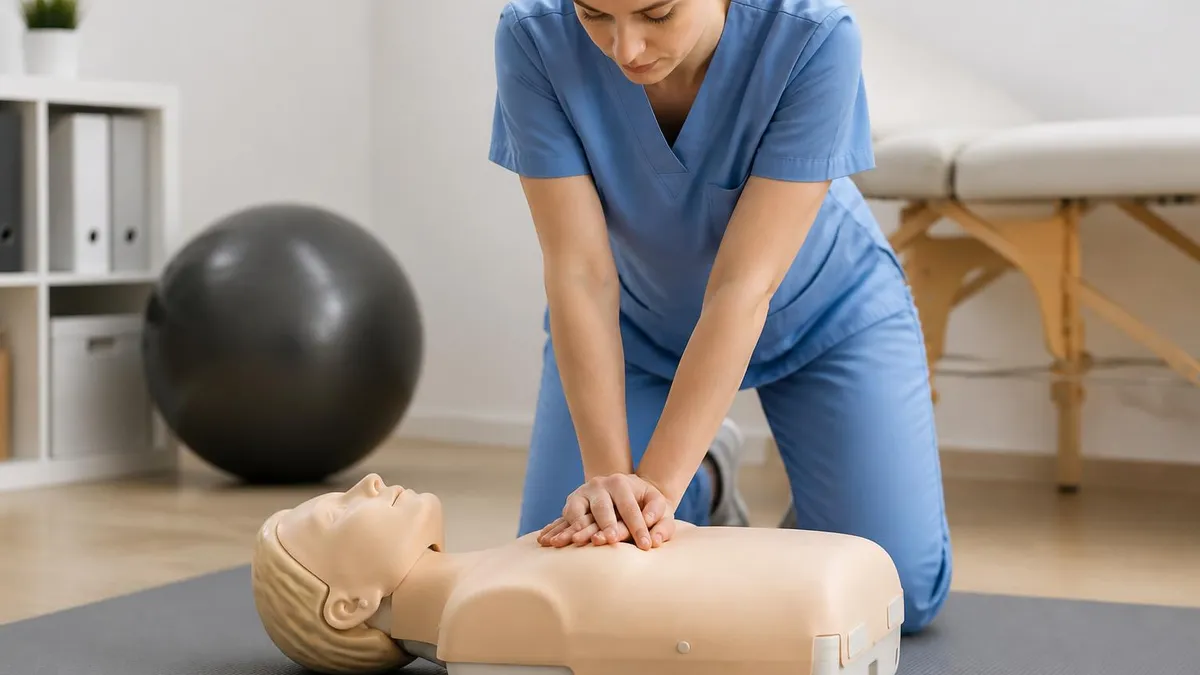
AHA BLS CPR: Complete 2026 Guide to American Heart Association Basic Life Support Certification, Course Requirements, and Skills
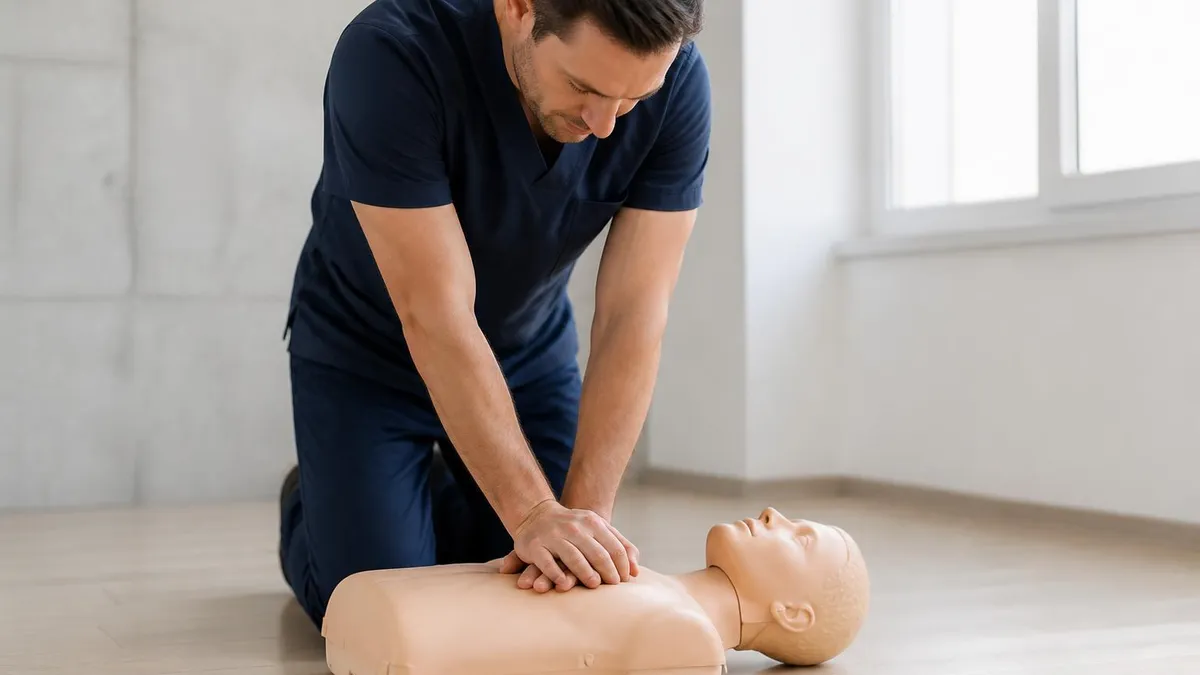
CPR vs BLS: Complete Comparison Guide for 2026 — Which Certification Do You Need?

CPR Austin TX: Complete Guide to Training, Certification, and Life-Saving Skills in 2026
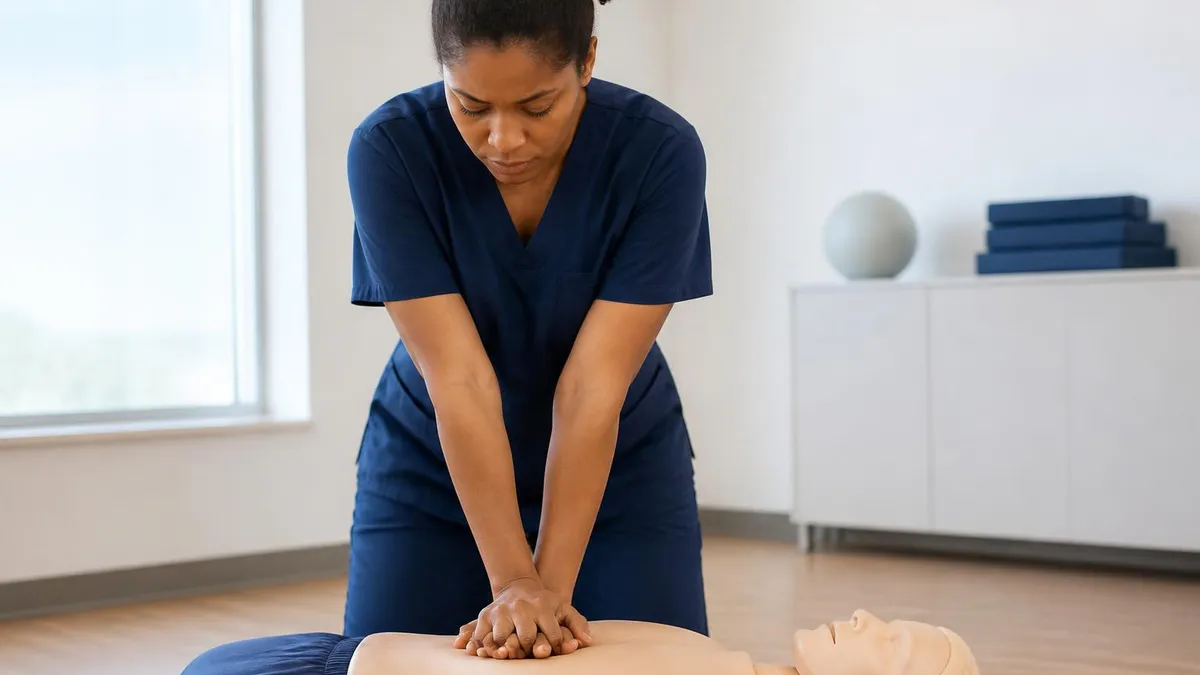
CPR vs First Aid: Is CPR and First Aid the Same? Complete 2026 Comparison Guide
Written and edited by Nathan Beja, founder of Practice Test Geeks, with AI assistance. Exam facts are checked against the official sources linked below. Editorial policy
Sources & references
Exam facts on this page (fees, format, dates, passing scores) are checked against these official sources; the date is our last check. Editorial policy
- redcross.org — Test delivery, score validity, renewal, passing score · verified Nov 2026
- cpr.heart.org — Test delivery, eligibility, score validity, renewal, score release · verified Nov 2026
- elearning.heart.org — Fees, passing score · verified Nov 2026