
C.A.B. Meaning in CPR: The CAB Sequence Explained Step by Step 2026 September
Learn the c.a.b. meaning cpr uses today: Compressions, Airway, Breathing. Master the CAB sequence, AED steps, and ACLS algorithm basics in this 2026 September guide. 🔎
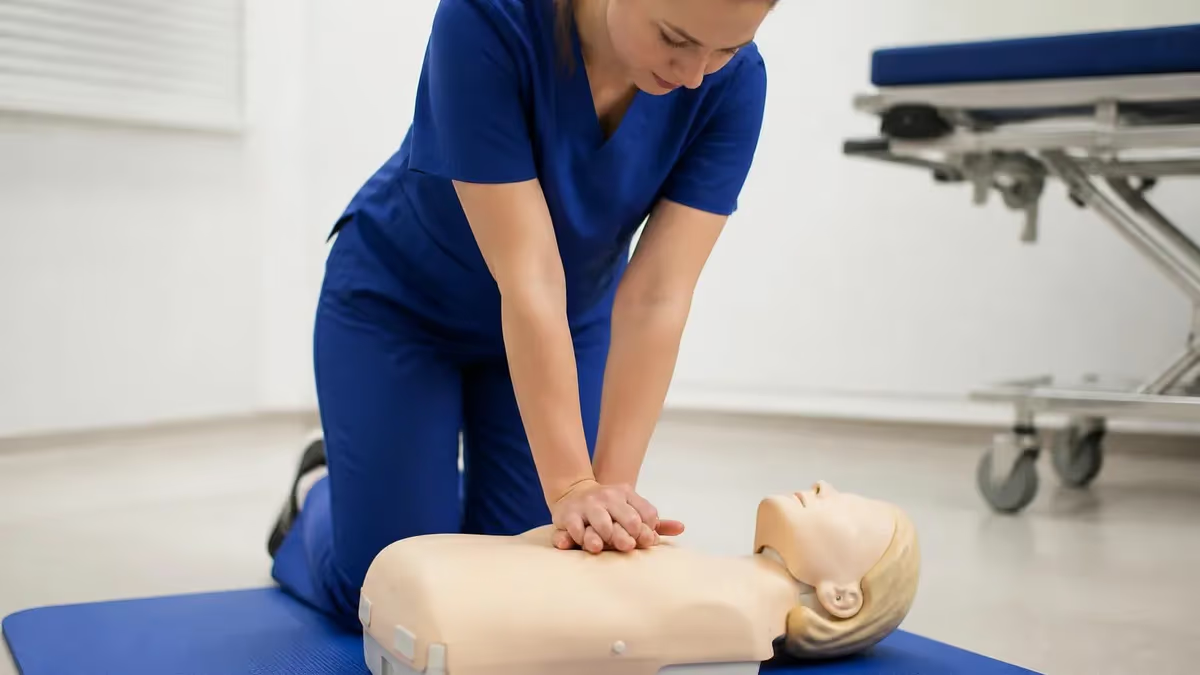
If you have ever wondered about the exact c.a.b. meaning cpr instructors teach, you are not alone. C.A.B. stands for Compressions, Airway, and Breathing, and it represents the order in which rescuers perform the core actions of cardiopulmonary resuscitation. For decades the public learned A-B-C, but the sequence was reversed so that chest compressions begin first. That change reflects a simple, life-saving truth: when a heart stops, getting blood moving quickly matters more than anything else you can do in those first seconds.
The reordering was not arbitrary. Researchers studying cardiac arrest survival found that the old approach wasted precious time. Rescuers fumbled with airway maneuvers and rescue breaths while the brain starved of oxygenated blood. By placing Compressions first, the CAB sequence shortens the delay before circulation restarts, often by 30 seconds or more. In a true emergency, half a minute can be the difference between a meaningful recovery and irreversible brain injury, which is why every modern course leads with this order.
Understanding the CAB sequence is foundational whether you are a parent, a teacher, a lifeguard, or a healthcare professional preparing for an acls algorithm exam. The same three letters anchor everything from a bystander performing hands-only CPR on a collapsed adult to a paramedic running a structured resuscitation. The depth of training changes, but the priority order does not. Knowing why Compressions come first helps you act without hesitation, and hesitation is the enemy of survival in any cardiac emergency.
This guide walks through each letter of the sequence in detail, explains how it differs slightly for adults, children, and infants, and connects it to the broader chain of survival. We will cover how to recognize an arrest, how deep and fast to push, when an airway adjunct helps, and how rescue breaths fit in once compressions are flowing. You will also see how the CAB approach feeds directly into more advanced protocols taught in professional certification courses.
Along the way we will clear up common confusion. Many people still picture the old A-B-C order they saw in a film or a poster years ago, and that outdated mental model can cost time. Others assume rescue breathing is mandatory and freeze when they feel uncomfortable performing it. The reality is more forgiving: for untrained bystanders, high-quality compressions alone save lives. The CAB framework gives you a clear, memorable order so you never have to guess what to do next.
By the end, you will understand not just what the letters mean but the physiology and evidence behind them. That deeper grasp builds the confidence to step in during a real emergency. If you want to see how these letters connect to the full picture of resuscitation, our overview of the cpr cab sequence ties the terminology together and shows where each step fits in the larger response. Let us start with the numbers that make this topic so urgent.
The CAB Sequence by the Numbers
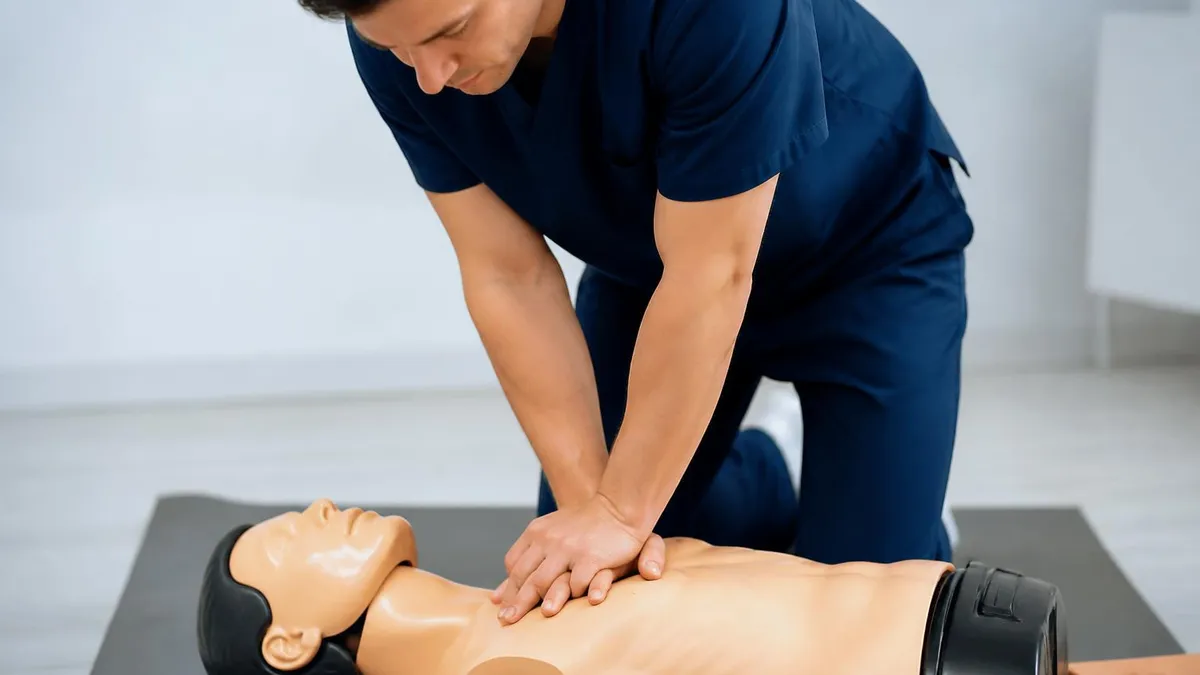
The CAB Sequence Step by Step
Check & Call
C - Compressions
A - Airway
B - Breathing
Defibrillate
Let us break down exactly what each letter in the CAB sequence stands for, because the precise c.a.b. meaning cpr courses teach is more nuanced than a simple acronym. The C is for Compressions, and it comes first for a reason rooted in physiology. When the heart stops, oxygen-rich blood is still in the bloodstream. Compressions act as an artificial pump, squeezing the heart to push that blood to the brain and vital organs while you work toward restoring a real heartbeat.
The A is for Airway. Once you have delivered an initial set of compressions, you open the airway to prepare for rescue breaths. In an unconscious person lying on their back, the tongue often falls backward and blocks the throat. The head-tilt, chin-lift maneuver corrects this by extending the neck and lifting the jaw. For suspected spinal injury, trained rescuers use a jaw-thrust instead. Opening the airway is quick, takes only a second or two, and sets up effective ventilation.
The B is for Breathing, meaning rescue breaths that deliver supplemental oxygen into the lungs. After 30 compressions you give two breaths, each lasting about one second and just enough to make the chest visibly rise. Overinflating the lungs forces air into the stomach and can cause vomiting, so gentle, measured breaths are the goal. The standard ratio for a single adult rescuer is 30 compressions to 2 breaths, repeated in continuous cycles until help arrives or the person recovers.
Why was the order flipped from the older A-B-C? The change came after large studies showed that starting with airway and breathing delayed compressions significantly. Bystanders often spent 30 or more seconds on airway steps before pushing on the chest. Because survival from sudden cardiac arrest falls roughly 10 percent for every minute without circulation, that delay was deadly. Putting Compressions first guarantees blood starts moving within seconds of recognizing the emergency, which is the highest priority in any resuscitation.
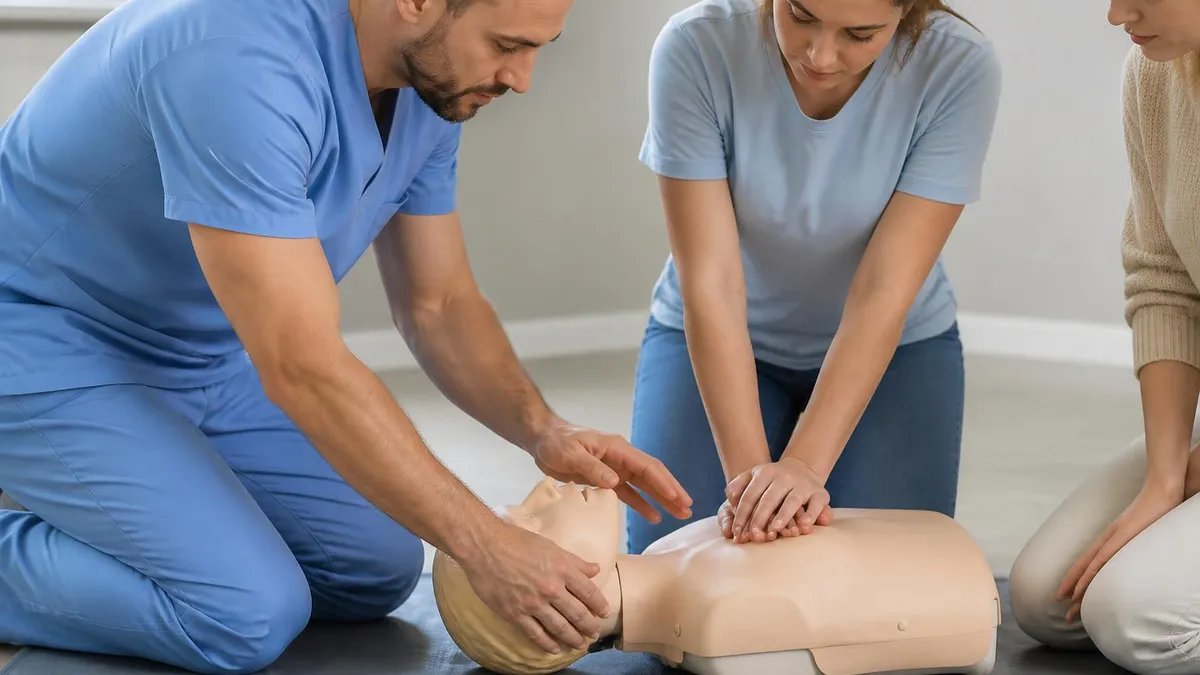
There is also an important caveat for untrained or unwilling rescuers. Hands-only CPR, which uses continuous compressions with no rescue breaths, is now recommended for bystanders who have not been trained or who are uncomfortable giving mouth-to-mouth. For the first several minutes of an adult collapse, the blood already contains enough oxygen, so compressions alone can be remarkably effective. The CAB framework still applies; you simply stay on the C and let the dispatcher coach you.
It is worth noting that the CAB sequence is the public-facing core of a much larger system. Healthcare providers layer on advanced airways, medications, rhythm analysis, and team dynamics taught in professional courses. Yet even the most sophisticated resuscitation rests on the same foundation: early, high-quality compressions with minimal interruptions. If you want the broader vocabulary and history behind these steps, our explainer on the cpr cab sequence connects the acronym to the full resuscitation picture and the chain of survival.
Infant CPR vs Child and Adult CAB Differences
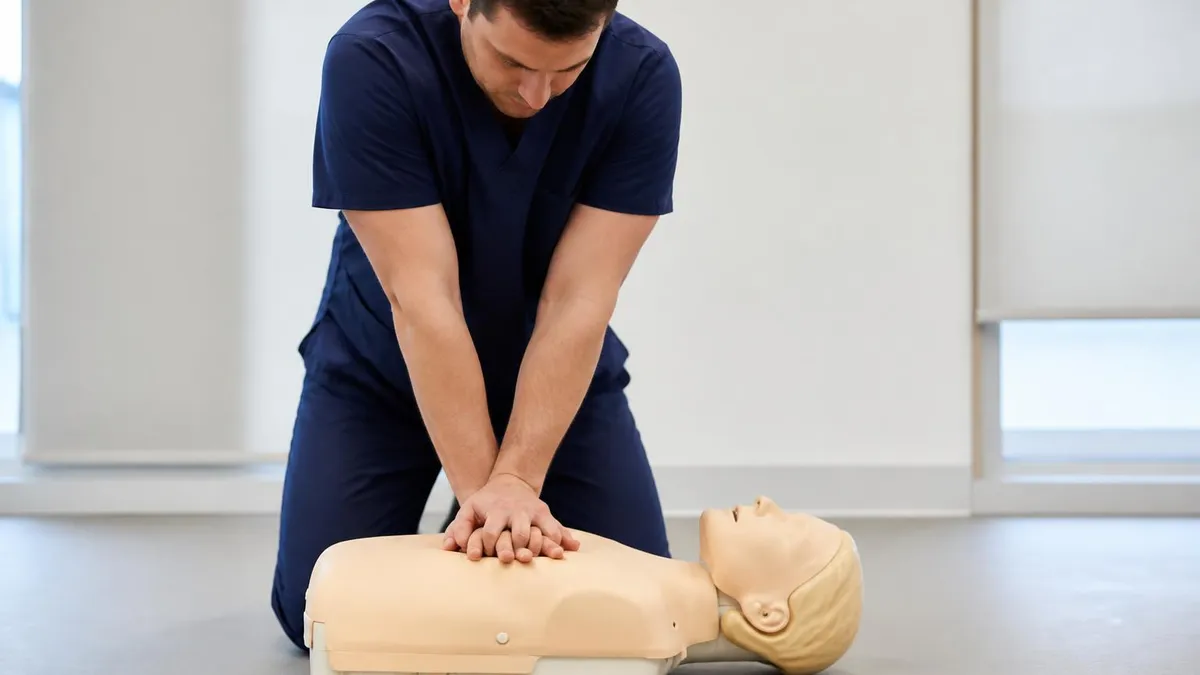
For adults the CAB sequence uses two hands stacked on the lower half of the breastbone, compressing at least two inches deep at 100 to 120 per minute. A single rescuer uses a 30:2 ratio of compressions to breaths. Sudden cardiac arrest in adults is most often caused by a heart rhythm problem, so early defibrillation is a top priority alongside compressions.
Because the cause is usually cardiac rather than respiratory, hands-only CPR works well for untrained bystanders during the first minutes. Push hard, push fast, allow full chest recoil, and minimize interruptions. Apply an AED the moment one is available. Maintaining a normal respiratory rate is irrelevant here because the person is not breathing on their own; your compressions are doing the circulatory work.
Hands-Only CPR vs Full CAB Sequence: What's Better?
- +Hands-only CPR removes hesitation about mouth-to-mouth contact
- +Continuous compressions keep blood flowing with no pauses
- +Easier to learn and remember for untrained bystanders
- +Dispatchers can coach it over the phone in seconds
- +Highly effective in the first minutes of adult cardiac arrest
- +Eliminates infection-transmission worries for strangers
- −Provides no supplemental oxygen through rescue breaths
- −Less effective for drowning, overdose, or respiratory arrest
- −Not ideal for children and infants who often need breaths
- −Blood oxygen eventually depletes during prolonged efforts
- −Misses the airway and breathing skills covered in full CPR
- −Cannot substitute for full CAB in many healthcare settings
Life Support CAB Performance Checklist
- ✓Confirm the scene is safe before approaching the victim.
- ✓Tap the shoulders and shout to check for responsiveness.
- ✓Look for absent or abnormal (gasping) breathing.
- ✓Call 911 and send someone for an AED immediately.
- ✓Start chest compressions within seconds of recognizing arrest.
- ✓Push at least 2 inches deep at 100 to 120 per minute.
- ✓Allow full chest recoil after every compression.
- ✓Open the airway with head-tilt, chin-lift before breaths.
- ✓Give 2 breaths that make the chest visibly rise.
- ✓Minimize interruptions and switch rescuers every 2 minutes.
Compressions first, always
The single biggest takeaway from the CAB sequence is that you should never delay chest compressions to set up airway or breathing steps. If you are untrained or unsure, push hard and fast in the center of the chest and let the 911 dispatcher guide you. Imperfect compressions started immediately beat perfect technique started late.
An AED, and the question of what does aed stand for, comes up constantly when people learn the CAB sequence. AED stands for Automated External Defibrillator, a portable device that analyzes the heart's rhythm and, if needed, delivers a controlled shock to restore a normal beat. Defibrillation is the only definitive treatment for the chaotic rhythms that cause most sudden adult arrests. Compressions buy time, but an AED is often what actually restarts an effective heartbeat, which is why fetching one early matters.
Using an AED is intentionally simple so that any bystander can operate it. Turn it on, and the device speaks step-by-step instructions aloud. Expose the chest, peel the pads, and place them as shown in the diagrams, one on the upper right chest and one on the lower left side. The AED then analyzes the rhythm; stand clear and do not touch the patient during this phase. If a shock is advised, ensure everyone is clear, press the button, and immediately resume compressions afterward.
The key principle is minimizing interruptions. Every pause in compressions lets blood pressure fall, so resume pushing the instant the AED finishes analyzing or shocking. Do not stop to check for a pulse after a shock; go straight back to compressions for two minutes before the device reanalyzes. Modern AEDs even count compressions and coach your rate, turning a frightened bystander into an effective rescuer with surprisingly little training required.
For healthcare professionals, the CAB sequence and AED use feed directly into the acls algorithm, the structured framework that guides advanced cardiac life support. The acls algorithm adds rhythm interpretation, intravenous medications like epinephrine, advanced airway placement, and reversible-cause analysis on top of the same high-quality CPR foundation. ACLS does not replace CAB; it wraps around it. Providers still measure success by compression depth, rate, recoil, and the fraction of time hands are actually on the chest.
Similarly, pals certification, which covers pediatric advanced life support, builds on the child and infant CAB techniques. PALS emphasizes recognizing respiratory distress before it becomes full arrest, since children so often deteriorate from breathing problems. Monitoring respiratory rate, oxygenation, and perfusion lets a pediatric team intervene early. The certification teaches structured assessment alongside the same compression and ventilation skills, scaled appropriately for small patients with very different physiology than adults.
Whether you pursue basic awareness or professional life support credentials, the throughline is consistent. Recognize arrest fast, start compressions immediately, defibrillate early, and add airway and breathing support as your training allows. The AED bridges the gap between bystander CPR and advanced care, and it is the reason public-access defibrillators now appear in airports, gyms, schools, and offices. Knowing both the CAB sequence and how to grab and use the nearest AED dramatically improves the odds for anyone who collapses near you.
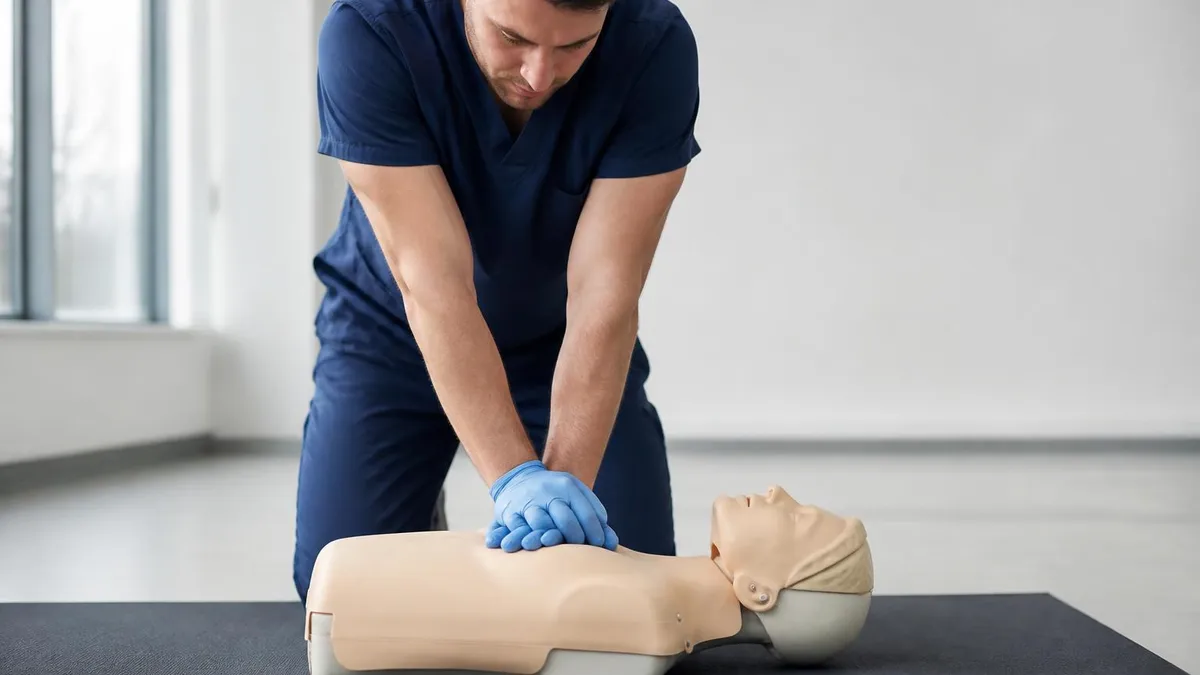
If a second rescuer is present, send them for an AED the moment you recognize cardiac arrest rather than waiting until you tire. Survival from a shockable rhythm falls rapidly each minute without defibrillation. The CAB sequence and the AED work together, not in sequence one after the other.
Earning a credential turns CAB knowledge into reliable, hands-on skill, and there are several reputable paths to choose from. The national cpr foundation and similar organizations offer online and blended courses for laypeople and professionals alike. A basic course teaches the CAB sequence, AED use, and choking relief in a few hours, while professional tracks build toward advanced certifications. Choosing a recognized provider matters, because employers and licensing boards expect credentials aligned with current resuscitation guidelines.
For healthcare workers, the typical progression starts with Basic Life Support, then advances to ACLS for adult emergency care and PALS for pediatric care. Each level deepens your command of the CAB foundation. BLS hammers home compression quality and team coordination. ACLS layers on the acls algorithm with rhythm recognition and medications. PALS adapts everything for children and infants. Many clinicians maintain all three, renewing every two years to keep their skills sharp and their certifications valid for hospital privileges.
One quirk worth clearing up for searchers: terms like cpr cell phone repair and cpr phone repair share the CPR initials but have nothing to do with resuscitation. CPR there is a retail brand for fixing cracked screens and dead batteries. If you searched for cpr phone repair and landed here looking for first aid, you are in the right place for the medical meaning; a screen fix is an entirely different kind of CPR.
Hands-on practice is where the CAB sequence truly sticks. Reading about two-inch compressions is no substitute for feeling the depth on a manikin and hearing the metronome at 110 beats per minute. Quality courses include skills sessions where instructors correct your hand placement, depth, recoil, and rate in real time. This muscle memory is what lets you perform under the adrenaline of a real emergency, when conscious thought narrows and you fall back on what your hands already know how to do.
Recovery care also deserves attention. Once a person regains a pulse and breathing, you may need to manage position recovery by rolling them onto their side into the recovery position. This keeps the airway open and lets fluids drain so the patient does not choke or aspirate while unconscious. Monitor their breathing continuously, because cardiac arrest can recur. Knowing what to do after resuscitation succeeds is just as important as the compressions that got them there.
If you are deciding between course formats, weigh your goals and timeline. Awareness-level learning suits parents, caregivers, and the general public who want confidence to act. Professional certification suits anyone whose job demands it, from nurses to coaches to childcare staff. Whatever path you choose, the CAB sequence is the unchanging core. Pairing a structured course with our practice questions on the cpr cab sequence and related topics reinforces both the why and the how so the steps become second nature.
When the moment comes, a few practical habits separate effective rescuers from frozen bystanders. First, commit to acting. Studies consistently show that the biggest barrier to survival is bystander inaction, often from fear of doing harm. You cannot make a person in cardiac arrest worse; they are already in the worst possible state. Any compressions you provide improve their odds. Rehearse the CAB order in your mind so that recognition, calling for help, and pushing on the chest happen almost automatically.
Second, master compression quality, because it is the variable that most affects survival. Aim for at least two inches deep on an adult, a steady rate of 100 to 120 per minute, and full recoil so the heart can refill between pushes. Lock your elbows and use your body weight rather than your arms alone, which tire quickly. If a metronome app or an AED with a rate prompt is available, use it. Counting out loud also keeps your tempo honest under stress.
Third, plan for fatigue. High-quality compressions are exhausting, and effectiveness drops noticeably after about two minutes even when you feel fine. If others are present, rotate rescuers every two minutes during the AED's rhythm analysis to keep compressions strong. Communicate clearly: assign one person to call 911, one to fetch the AED, and one to compress. Organized teamwork prevents the chaos that wastes precious seconds in a crowded, panicked scene.
Fourth, integrate the AED into your mental script from the start. The instant you confirm arrest, your brain should fire two parallel commands: start compressions and get the AED. Public-access defibrillators are designed for untrained users, so do not be intimidated. Following the device's voice prompts while a partner maintains compressions gives the patient the best combination of circulation and early defibrillation, which together drive the highest survival rates.
Fifth, do not over-prioritize rescue breaths if you are untrained or hesitant. For adult bystander CPR, hands-only compressions are explicitly endorsed and remove a common reason people refuse to help. If you are trained and the situation calls for breaths, especially for children, infants, drowning, or overdose, deliver them efficiently and return to compressions fast. The goal is always to keep hands on the chest as much of the time as possible.
Finally, prepare before you ever need these skills. Take a hands-on course, locate the AEDs in the places you frequent, and keep practicing with realistic questions so the knowledge stays fresh. Confidence comes from repetition. The CAB sequence is simple by design, but simple is not the same as easy under pressure. The people who save lives are not the ones who knew the most theory; they are the ones who acted immediately and pushed hard, fast, and without hesitation.
CPR Questions and Answers
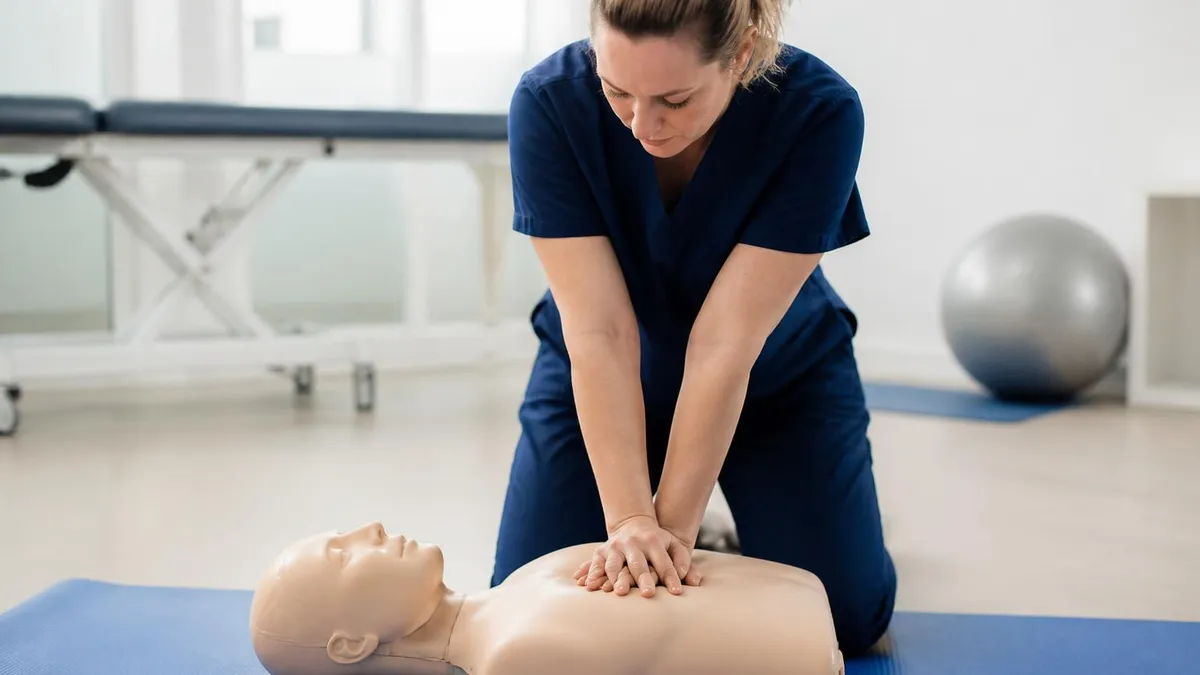
CPR Full Form: What CPR Stands For and Why It Matters
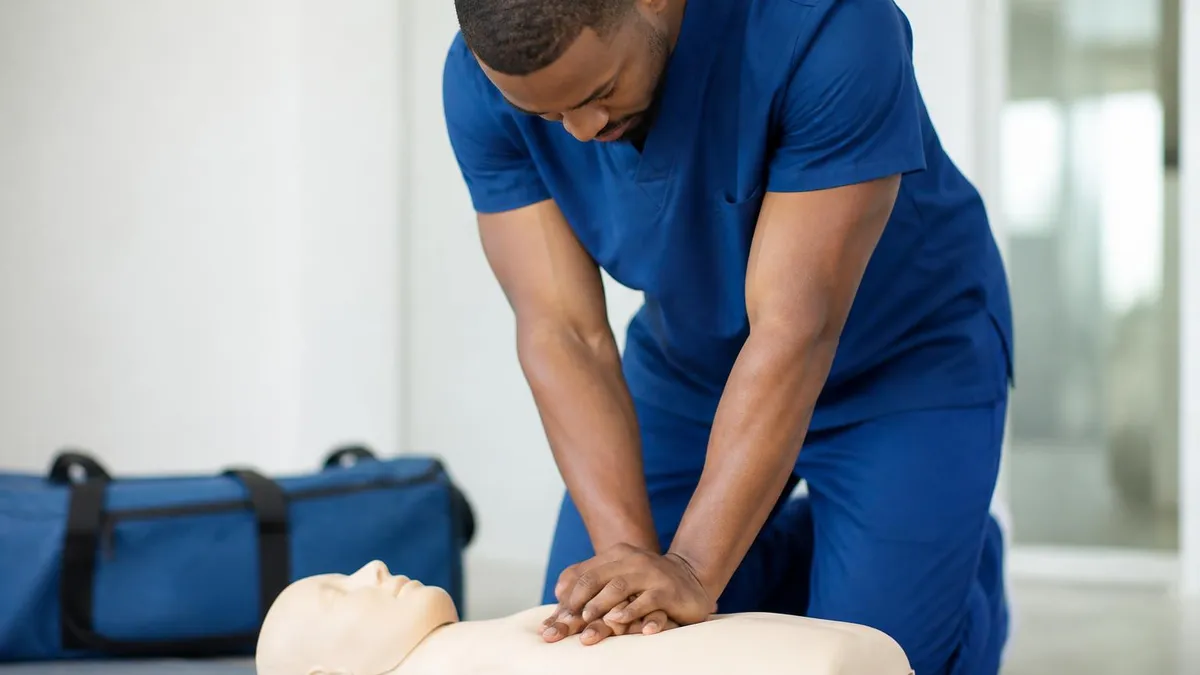
CPR Courses: Complete Guide to ACLS Algorithm, PALS Certification, and Life Support Training in 2026
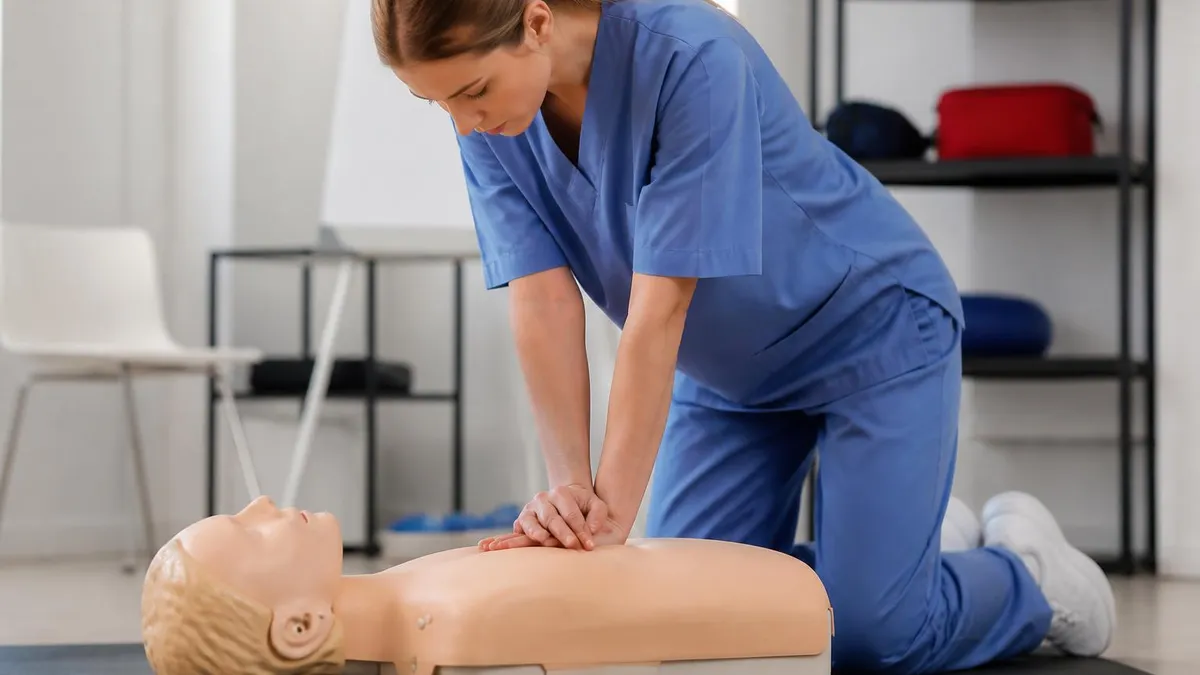
Types of CPR Training: From Basic Life Support to ACLS Algorithm Mastery in 2026
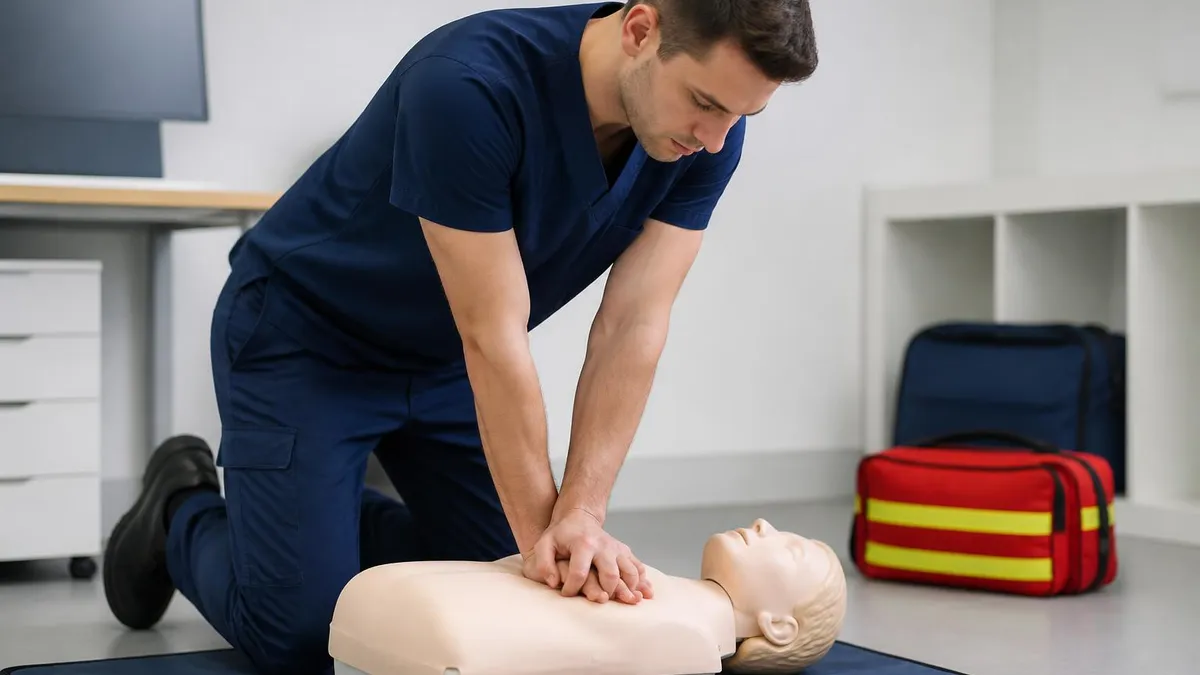
Adult CPR: Complete Step-by-Step Guide to Hands-Only and Standard CPR in 2026
BLS vs CPR: Is BLS the Same as CPR? Complete 2026 Guide
About the Author

Registered Nurse & Healthcare Educator
Johns Hopkins University School of NursingDr. Sarah Mitchell is a board-certified registered nurse with over 15 years of clinical and academic experience. She completed her PhD in Nursing Science at Johns Hopkins University and has taught NCLEX preparation and clinical skills courses for nursing students across the United States. Her research focuses on evidence-based exam preparation strategies for healthcare certification candidates.
Join the Discussion
Connect with other students preparing for this exam. Share tips, ask questions, and get advice from people who have been there.
View discussion (5 replies)