
CPI Training: Complete Guide to Crisis Prevention Intervention Certification
CPI trainig guide covering certification requirements, course content, exam prep, costs, and renewal. 🆕 Master Crisis Prevention Intervention with
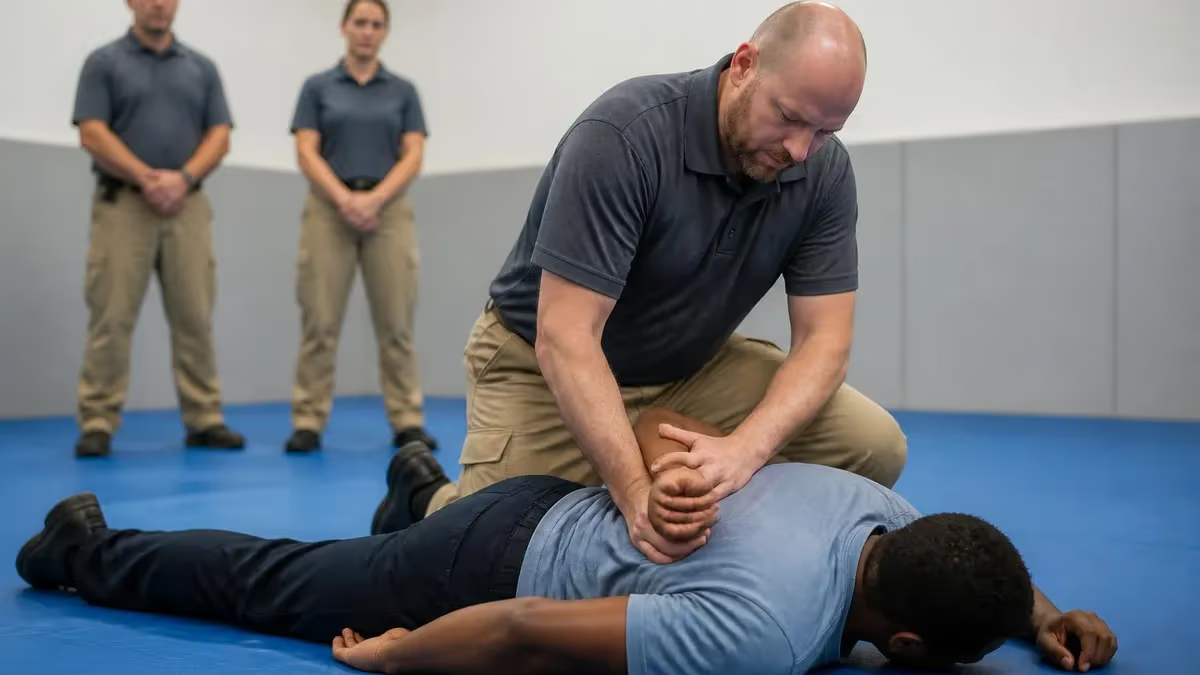
CPI trainig, more formally known as Crisis Prevention Intervention training, is the gold standard certification for professionals who work with individuals in distress, agitation, or behavioral crisis. Developed by the Crisis Prevention Institute, the program teaches verbal de-escalation, environmental awareness, and last-resort physical intervention techniques designed to protect both the staff member and the person in crisis. Whether you work in healthcare, education, mental health, or social services, this credential signals that you can defuse volatile situations safely and ethically. Practice with the free Crisis Prevention Intervention Certification practice test on PracticeTestGeeks (7 questions with answer explanations).
Across the United States, demand for certified CPI practitioners has surged as hospitals, schools, and residential facilities prioritize trauma-informed care and least-restrictive intervention models. Regulatory bodies like The Joint Commission, OSHA, and state departments of education increasingly reference CPI methodology when evaluating workplace safety standards. As a result, many employers now require staff to complete cpi nonviolent crisis intervention training training within their first 30 to 90 days of hire, with annual or biennial recertification mandates after that.
The full CPI course typically spans 8 to 16 hours of blended learning, combining online modules with hands-on classroom practice. Participants progress through a structured framework called the Crisis Development Model, which maps four behavioral levels to four matching staff responses. From early signs of anxiety to peak risk, learners practice scripted responses, body positioning, personal safety techniques, and team coordination drills until each skill becomes muscle memory.
What makes CPI distinct from generic conflict-resolution workshops is its emphasis on documented decision-making. Every restraint, hold, or physical intervention must be justified using the COPING model and recorded for post-incident review. This audit trail protects staff legally, supports continuous quality improvement, and ensures that physical intervention truly remains the last option after verbal techniques have failed. Few other certifications integrate clinical reasoning, legal liability, and physical technique with this level of rigor.
This complete guide walks through everything you need to know before, during, and after CPI trainig. We cover certification pathways, course formats, costs, exam expectations, renewal cycles, and study strategies that consistently produce first-attempt passes. You will also find practice quizzes, real-world examples, and answers to the most common questions candidates ask about Nonviolent Crisis Intervention and Advanced Physical Skills.
By the end, you should be able to choose between Foundation, Advanced, and Verbal Intervention courses with confidence, budget realistically for tuition and renewal, and approach the certification exam armed with a focused study plan. CPI training is more than a checkbox for compliance — it is a professional competency that will shape how you respond every time tension rises in your workplace.
Before diving deeper, it helps to understand the broader credentialing landscape. CPI is one of several crisis-intervention frameworks alongside Handle With Care, Therapeutic Crisis Intervention, and Mandt System, but its scale, third-party validation, and continuing-education infrastructure give it the widest employer recognition nationwide. That recognition translates directly into hiring use, internal mobility, and stronger workplace safety outcomes.
- CPI's Nonviolent Crisis Intervention 3rd Edition Instructor Certification program requires completion of its program components and an exam passing score of 80%. (Crisis Prevention Institute)
- CPI Instructor Certification is valid for two years from the original certification date. (Crisis Prevention Institute)
- CPI Certified Instructors must attend renewal training every two years to maintain certification. (Crisis Prevention Institute)
- The CPI Nonviolent Crisis Intervention 3rd Edition Instructor Certification final exam is completed online. (Crisis Prevention Institute)
- Organizations select CPI Instructor Certification candidates with CPI based on communication skills, teaching ability, and commitment to the training philosophy. (Crisis Prevention Institute)
Facts verified Oct 18, 2026 against Crisis Prevention Institute. Dates that have passed are removed automatically.
CPI Exam at a Glance
| Item | Detail | Official source |
|---|---|---|
| Passing score (Nonviolent Crisis Intervention Instructor Certification, 3rd Edition) | 80%, plus completion of program components | Crisis Prevention Institute |
| Validity (CPI Instructor Certification) | 2 years from original certification | Crisis Prevention Institute |
| Renewal (CPI Instructor Certification) | Renewal training every 2 years | Crisis Prevention Institute |
| Delivery (Nonviolent Crisis Intervention Instructor Certification, 3rd Edition) | Online final exam | Crisis Prevention Institute |
| Eligibility (CPI Instructor Certification) | Organization-selected candidates with communication and teaching skills | Crisis Prevention Institute |
Facts verified Oct 18, 2026 against Crisis Prevention Institute. Dates that have passed are removed automatically.
Free Crisis Prevention Intervention Certification Study Tools
Interactive Crisis Prevention Intervention Certification resources on PracticeTestGeeks, free to start:
- Crisis Prevention Intervention Certification flashcards — review key terms and concepts card by card
- Crisis Prevention Intervention Certification study guide — topic-by-topic overview of what the exam covers
- Crisis Prevention Intervention Certification cheat sheet — one-page printable summary for last-minute review
CPI Training by the Numbers
CPI Course Format & Requirements
An 8-hour introductory program covering verbal de-escalation, the Crisis Development Model, and basic personal safety techniques. Ideal for educators, social workers, and front-line staff who rarely encounter physical aggression but need conflict-management fundamentals.
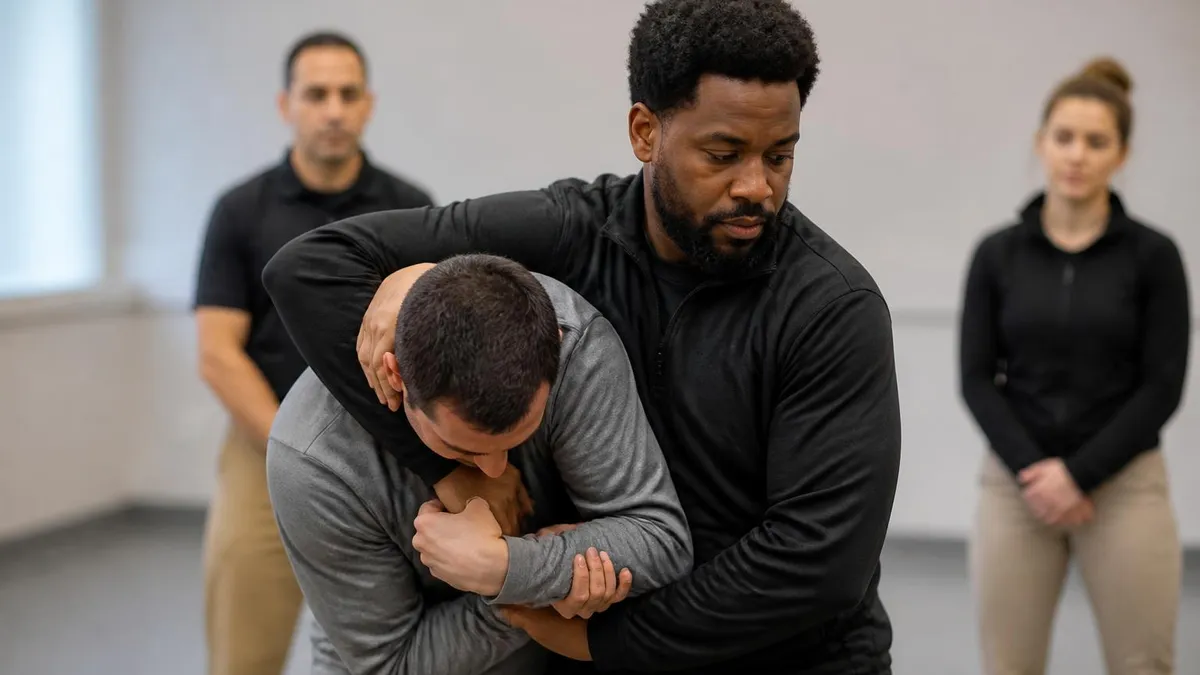
A 12 to 16-hour intensive that adds disengagement and holding skills, team intervention coordination, and post-event documentation. Required for behavioral health, residential treatment, emergency department, and forensic settings where physical intervention is more likely.
A 4-day train-the-trainer program for organizations that want internal capacity to deliver CPI to their own staff. Instructors must pass written and skills exams, then renew annually through CPI's continuing education portal.
A focused 4 to 6-hour course on de-escalation language, active listening, and trauma-informed communication. Popular in libraries, retail, transit, and customer-facing roles where physical intervention is prohibited but verbal crisis skills are essential.
The substance of CPI trainig rests on a deceptively simple framework called the Crisis Development Model. It identifies four observable behavior levels — Anxiety, Defensive, Risk Behavior, and Tension Reduction — and pairs each with a recommended staff response: Supportive, Directive, Safety Intervention, and Therapeutic Rapport. Mastering these pairings is the cornerstone of every CPI exam and the lens through which instructors evaluate every role-play scenario you will encounter during training.
Verbal de-escalation receives the largest share of classroom time, and rightly so. Studies cited by the Crisis Prevention Institute show that more than 90 percent of escalating incidents can be resolved without any physical contact when staff use empathic listening, paraverbal control, and limit-setting correctly. You will rehearse the CPI Verbal Escalation Continuum, learning how to recognize questioning, refusal, release, and intimidation behaviors and respond with calm, scripted phrases that avoid power struggles.
Body language and personal space are next. CPI teaches the Supportive Stance — standing at a 45-degree angle, one leg slightly back, hands visible and open — to project calm authority without appearing threatening. You will measure proximity in actual feet, identify escape routes in any room, and practice scanning the environment for thrown objects, weapons, or other agitated people who could complicate the situation within seconds.
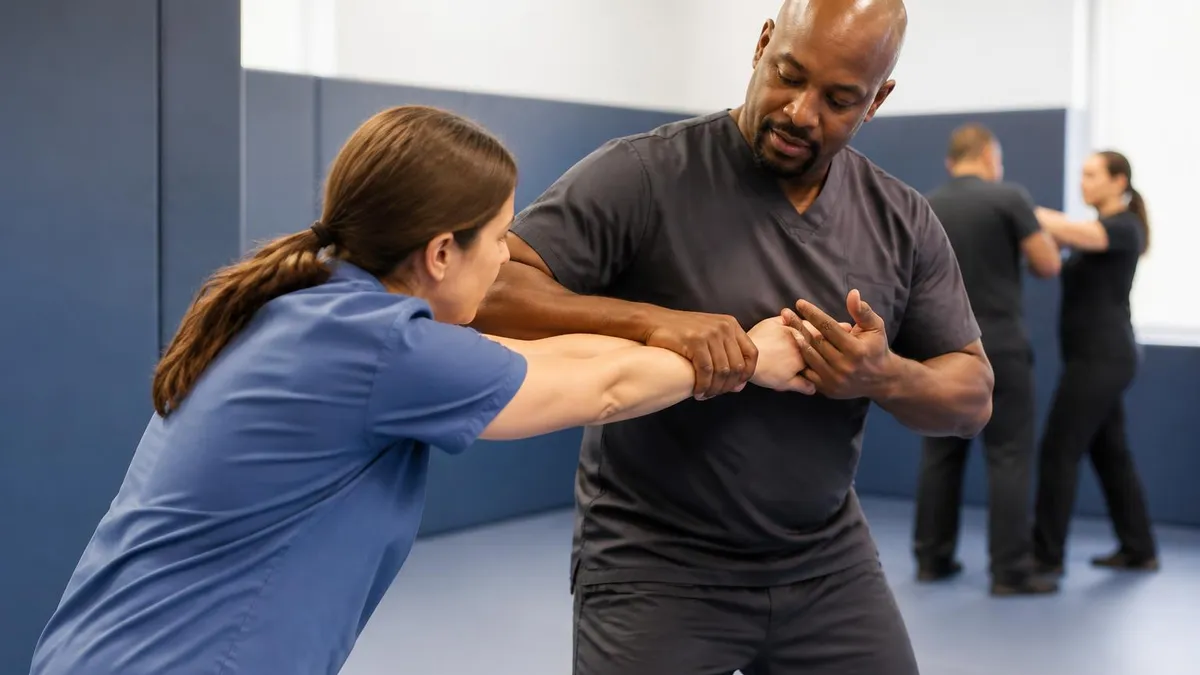
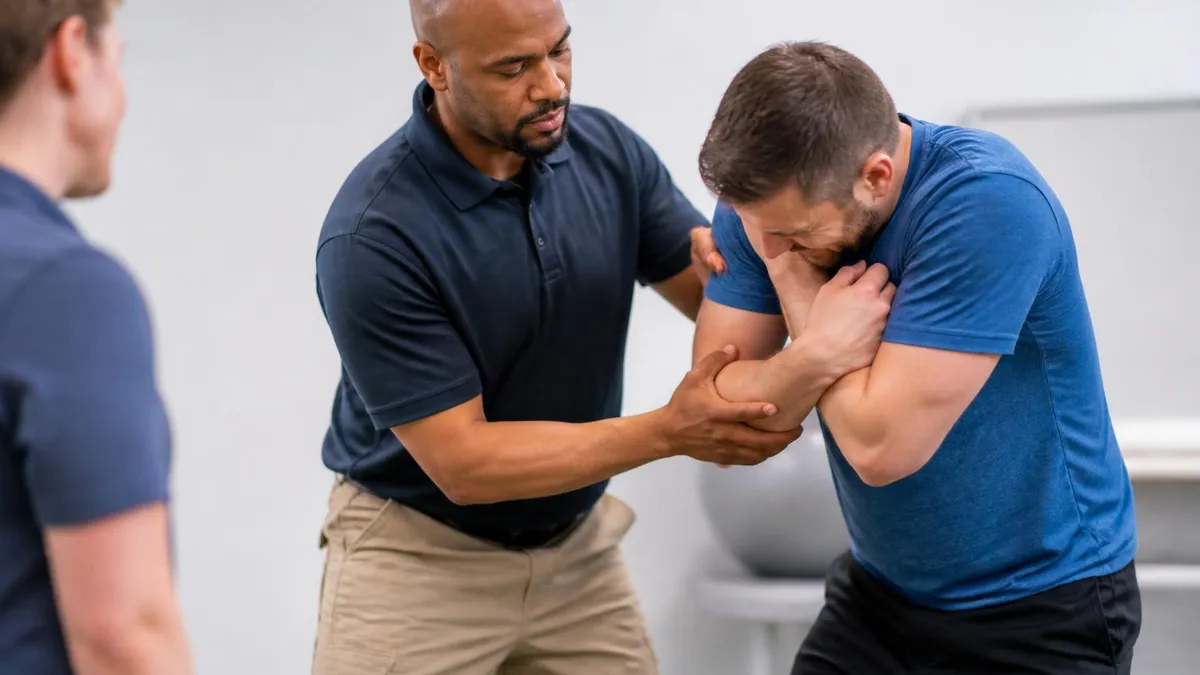
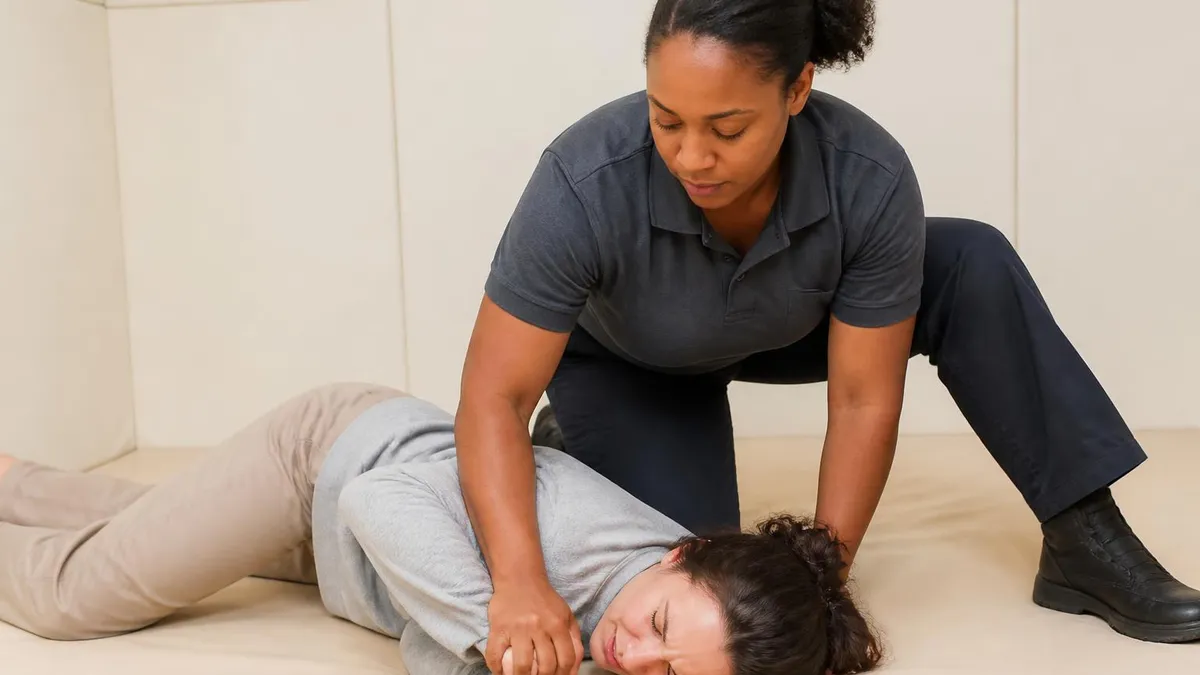
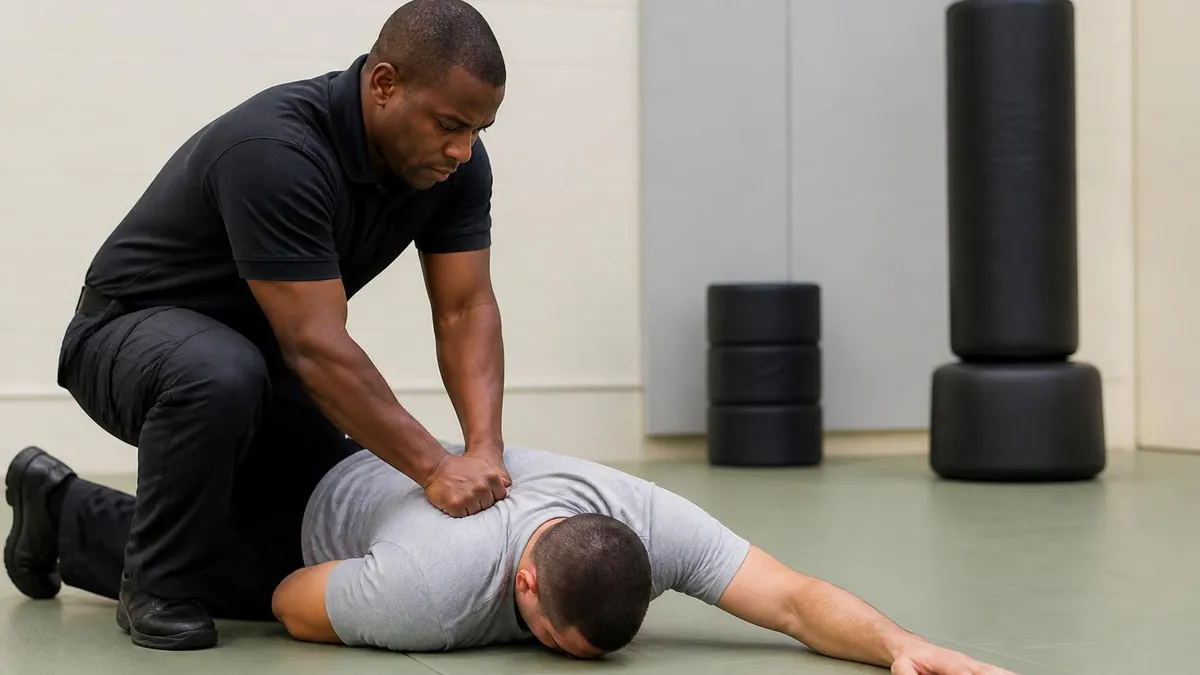
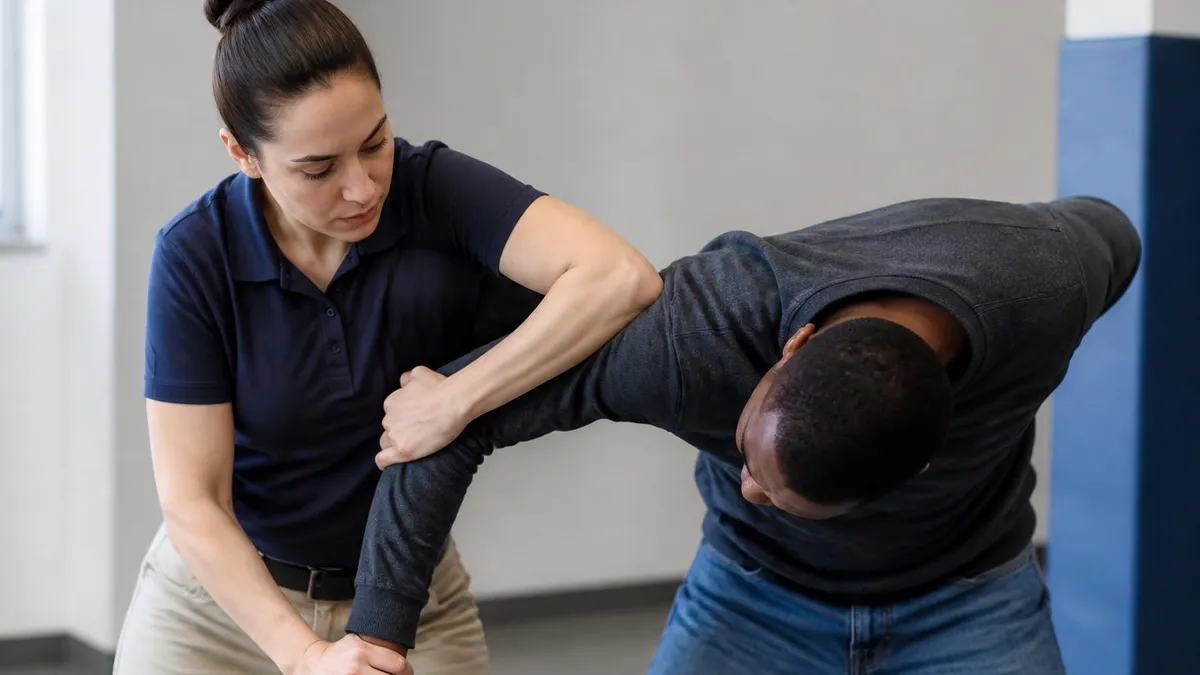
Physical intervention modules introduce disengagement skills first: how to release a wrist grab, hair pull, choke, or bite without harming the aggressor. Only after these defensive techniques are documented as fluent do instructors move on to restrictive holds, and even then the emphasis is on team-based interventions where multiple staff members coordinate using verbal cues, position assignments, and continuous medical monitoring throughout the hold.
Documentation is the final pillar and the one most candidates underestimate. Every intervention must be recorded using the COPING model — Control, Orient, Patterns, Investigate, Negotiate, Give — within 24 hours of the event. You will practice writing factual, behavior-focused incident reports that satisfy regulatory standards, support continuous improvement, and protect your organization in the event of litigation or external review.
Throughout the course, instructors weave in trauma-informed principles drawn from SAMHSA guidelines and the most current research on adverse childhood experiences. The goal is not just compliance but cultural change: a workplace where every staff member assumes that distressed behavior communicates unmet need, and where physical intervention is treated as a clinical failure to be analyzed rather than a routine tool.
To deepen your grasp of these concepts before sitting the exam, work through realistic question sets that mirror the format and difficulty of the official assessment. Targeted practice on behavioral risk indicators, safety positioning, and post-crisis review questions has the largest impact on first-attempt pass rates.
CPI Practice Test Questions
Prepare for the CPI - Crisis Prevention Intervention Certification exam with our free practice test modules. Each quiz covers key topics to help you pass on your first try.
CPI Anatomy & Kinesiology
CPI Exam Questions covering Anatomy & Kinesiology. Master CPI Test concepts for certification prep.
CPI Behavioral Risk Assessment & Interven...
Free CPI Practice Test featuring Behavioral Risk Assessment & Intervention. Improve your CPI Exam score with mock test prep.
CPI Client Assessment & Programming
CPI Mock Exam on Client Assessment & Programming. CPI Study Guide questions to pass on your first try.
CPI Post-Crisis Debriefing & Recovery
CPI Test Prep for CPI Post-Crisis Debriefing & Recovery. Practice CPI Quiz questions and boost your score.
CPI Post-Incident Debriefing & Documentation
CPI Questions and Answers on CPI Post-Incident Debriefing & Documentation. Free CPI practice for exam readiness.
CPI Trauma-Informed Care & Mental Health A...
CPI Mock Test covering CPI Trauma-Informed Care & Mental Health Awareness. Online CPI Test practice with instant feedback.
CPI Trauma-Informed Care Principles
Free CPI Quiz on CPI Trauma-Informed Care Principles. CPI Exam prep questions with detailed explanations.
CPI De-escalation Techniques & Conflict Re...
CPI Practice Questions for De-escalation Techniques & Conflict Resolution. Build confidence for your CPI certification exam.
CPI Ethical & Legal Compliance
CPI Test Online for Ethical & Legal Compliance. Free practice with instant results and feedback.
CPI Exercise Modifications & Progressions
CPI Study Material on Exercise Modifications & Progressions. Prepare effectively with real exam-style questions.
CPI Group Instruction & Class Design
Free CPI Test covering Group Instruction & Class Design. Practice and track your CPI exam readiness.
CPI Injury Prevention & Rehabilitation
CPI Exam Questions covering Injury Prevention & Rehabilitation. Master CPI Test concepts for certification prep.
CPI Motivational Techniques
Free CPI Practice Test featuring Motivational Techniques. Improve your CPI Exam score with mock test prep.
CPI Nutrition & Lifestyle Guidance
CPI Mock Exam on Nutrition & Lifestyle Guidance. CPI Study Guide questions to pass on your first try.
CPI Training Certification Levels Explained
The Verbal Intervention track is CPI's shortest pathway, designed for environments where physical contact with clients is prohibited by policy or simply unnecessary. Think library staff handling disruptive patrons, transit operators managing unruly passengers, or retail associates responding to aggressive customers. The course runs 4 to 6 hours and focuses entirely on de-escalation language, active listening, and the Verbal Escalation Continuum.
Graduates leave with scripted phrases for refusal, intimidation, and questioning behaviors, plus practical techniques for setting limits without triggering further escalation. The credential is valid for one year and renews through a 90-minute online refresher. Many municipal employers now accept this certification as their baseline behavioral-safety requirement, making it the fastest entry point into the broader CPI ecosystem.
Is CPI Training Worth the Investment?
- +Recognized by 99 percent of U.S. hospitals and most major school districts
- +Aligns with The Joint Commission and OSHA workplace violence standards
- +Reduces staff injury claims by an average of 40 percent post-implementation
- +Provides legally defensible documentation framework for every intervention
- +Improves staff confidence and retention in high-stress care settings
- +Transferable across states without additional licensing requirements
- +Continuing-education credits accepted by most nursing and social work boards
- −Tuition ranges from $150 to $500 per participant, often paid out of pocket
- −Two-year recertification cycle requires ongoing time and budget commitment
- −Physical-skills components can be challenging for staff with mobility limitations
- −Course quality varies significantly between certified instructors
- −Does not replace specialized training for weapons or active-shooter scenarios
- −Some advocacy groups criticize any restraint training on philosophical grounds
- −Online-only formats lack the hands-on rehearsal needed for true competency
Pros and Cons at a Glance
| Pros | Cons |
|---|---|
| Aligns with The Joint Commission and OSHA workplace violence standards | Two-year recertification cycle requires ongoing time and budget commitment |
| Provides legally defensible documentation framework for every intervention | Physical-skills components can be challenging for staff with mobility limitations |
| Improves staff confidence and retention in high-stress care settings | Course quality varies significantly between certified instructors |
| Transferable across states without additional licensing requirements | Does not replace specialized training for weapons or active-shooter scenarios |
| Continuing-education credits accepted by most nursing and social work boards | Some advocacy groups criticize any restraint training on philosophical grounds |
CPI Trainig Pre-Course Preparation Checklist
- ✓Confirm whether your employer reimburses CPI tuition or requires self-payment
- ✓Verify which CPI level your role requires — Verbal, Foundation, or Advanced
- ✓Block 8 to 16 consecutive hours on your calendar for in-person sessions
- ✓Wear comfortable, flexible clothing and closed-toe athletic shoes
- ✓Bring a notebook, pen, and water bottle for full-day classroom segments
- ✓Disclose any physical limitations or injuries to your instructor in advance
- ✓Review the Crisis Development Model and four levels of behavior before day one
- ✓Print or download the participant workbook from the CPI learner portal
- ✓Charge your laptop or tablet if any modules are delivered as blended learning
- ✓Identify one peer to practice scenario role-plays with after each training day
Physical skills fade faster than verbal skills
Research from CPI shows that physical-intervention proficiency declines measurably within 90 days of training if not practiced. That is why most behavioral health organizations now require quarterly skills refreshers in addition to the formal two-year recertification cycle. Build practice into your team meetings from day one.
Choosing between online, blended, and fully in-person CPI trainig is one of the first practical decisions you will face. Each format has trade-offs in cost, time commitment, skill retention, and employer acceptance, and the right answer depends heavily on your role, your organization's policies, and the level of physical intervention you are likely to perform. Understanding these differences before enrolling can save hundreds of dollars and prevent the painful surprise of discovering your credential is not accepted at hire.
Fully online CPI courses, often branded as Verbal Intervention or eLearning Foundations, take 4 to 6 hours and cost between $100 and $200. They use video scenarios, interactive scenario branching, and short quizzes to deliver the cognitive content. These programs work well for low-physical-risk environments like libraries, retail, and customer service, but they are explicitly not approved for clinical settings where any restrictive intervention may be needed.
Blended learning splits the curriculum, with cognitive content delivered online and physical skills rehearsed in a same-day or weekend in-person session. This format is increasingly popular because it cuts classroom time roughly in half while preserving the hands-on rehearsal that builds true muscle memory. Most healthcare systems now use blended formats as their default, scheduling cohorts of 8 to 16 staff every month to maintain continuous coverage.
Fully in-person Advanced Physical Skills training remains the gold standard for psychiatric, residential, and forensic settings. The full 12 to 16-hour delivery allows extended practice on team holds, medical monitoring rotations, and post-event documentation drills that simply cannot be replicated through a screen. If your role involves any chance of restrictive intervention, insist on this format even if the time commitment feels steep.
Cost varies more by region and instructor than by format. Urban markets like New York, San Francisco, and Boston routinely charge $400 to $500 per participant for in-person Advanced courses, while rural Midwestern and Southern markets often run $200 to $300 for the same content. Group rates negotiated by employers typically drop the per-head price by 30 to 40 percent, which is why most professionals receive their training through their workplace rather than as private learners.
Time-to-credential matters too. Online Verbal Intervention can be completed in a single afternoon, while Advanced Physical Skills often spans two consecutive days plus an evening study session. Build the full course into a single week if possible — splitting training across multiple weekends measurably reduces skills retention because the physical techniques rely on repetitive rehearsal within a compressed timeframe.
Finally, verify accreditation before paying. Only courses delivered by a CPI-certified instructor through the official Crisis Prevention Institute generate the digital credential that employers and regulators recognize. Third-party programs that use similar language but lack CPI accreditation may satisfy a curiosity, but they will not satisfy a Joint Commission auditor reviewing your facility's training records.
Dozens of online providers market generic crisis training using language nearly identical to official CPI materials. These programs are not accepted by The Joint Commission, CMS surveyors, or most state regulators. Always verify your instructor's certification number through the official Crisis Prevention Institute directory before paying.
Recertification is where many otherwise compliant professionals stumble. CPI credentials are valid for two years from your initial pass date, but most healthcare and education employers contractually require an annual refresher to maintain active status on your personnel file. Letting either deadline slip means you may be pulled from direct-care assignments until you complete a full re-credentialing session, which carries real career and financial consequences.
The standard renewal pathway is a 4 to 8-hour refresher that covers any curriculum updates released by the Crisis Prevention Institute since your last training, plus skills reassessment in verbal de-escalation and physical intervention. Renewals typically cost 50 to 70 percent of the initial course tuition and can often be completed at the same training site where you originally certified, reducing logistical friction considerably.
Curriculum updates matter more than many practitioners realize. CPI releases material revisions every 2 to 3 years to reflect new research on trauma-informed care, updated medical monitoring protocols, and evolving regulatory expectations. The 2022 revision, for instance, expanded coverage of restraint-related positional asphyxia and introduced more granular guidance on monitoring vital signs during prolonged holds. Skipping refreshers means practicing on outdated standards.
If your certification fully expires, you cannot simply renew — you must retake the complete Foundation or Advanced course at full price. This is the most expensive mistake new CPI practitioners make, and it can usually be avoided with a simple calendar reminder set for 90 days before your expiration date. Most employer learning management systems will automate these reminders, but the responsibility ultimately rests with you.
Some employers offer in-house renewal pathways where their certified instructors deliver the refresher as part of paid work time. This is the ideal scenario because it eliminates out-of-pocket cost and ensures the content is tailored to your facility's specific incident patterns. If your employer has not yet invested in internal instructor capacity, advocating for it during your next performance review can benefit your entire team. For additional study support, review proven exam strategies before sitting any reassessment.
Beyond formal renewal, continuous practice is what actually keeps you safe in the moment. The most effective behavioral health teams build 15 to 30-minute skills drills into their monthly staff meetings, rotating focus between verbal scripts, supportive stance positioning, and team-hold coordination. This habit dramatically reduces injury rates and increases staff confidence, which in turn reduces the frequency and severity of physical interventions overall.
Finally, document every continuing-education hour you complete in a personal training log. Should you change employers, transfer states, or pursue advanced credentials like CPI Instructor or Verbal Intervention Specialist, having a clean record of your recertifications and refresher dates will simplify every transition and protect the investment you have made in this professional skill set.
Successfully passing CPI trainig on your first attempt comes down to three habits: structured study, scenario rehearsal, and disciplined self-care during the training itself. The written portion of the exam includes 30 to 50 multiple-choice questions covering the Crisis Development Model, the Verbal Escalation Continuum, COPING documentation, and the specific physical skills appropriate to your certification level. The skills assessment is observational and demands fluency, not just familiarity.
Start your prep at least two weeks before the course. Spend the first week reviewing the four behavior levels and their matched staff responses until you can recite them in any order. Use index cards or a free spaced-repetition app to drill the terminology — words like paraverbal, supportive stance, decision-cpi decision making matrix, and therapeutic rapport must become second nature because the exam uses CPI's exact vocabulary and rejects synonyms.
In the second week, shift to scenario rehearsal. Pair with a colleague and take turns describing realistic incidents from your workplace, then walk each other through the correct CPI response step by step. Verbalize your reasoning out loud — naming the behavior level you observe, the response category you would select, and the documentation you would write afterward. This metacognitive habit dramatically improves recall under the time pressure of the written exam.
On training day, arrive rested, hydrated, and fueled with a substantial breakfast. The physical-skills modules are surprisingly demanding, especially for staff who do not exercise regularly. Stretch your shoulders, wrists, and hamstrings during every break, and immediately flag any developing soreness to your instructor. Pushing through injury during training virtually guarantees you will not retain the techniques and may sideline you from work for days afterward.
During verbal role-plays, resist the urge to improvise. Instructors are listening for CPI's exact scripted phrases — empathic non-judgmental statements, paraverbal control, and concrete limit-setting using the choice/consequence structure. Your real-world voice can return after certification, but during assessment, treat the script as if it were code that must compile exactly. This is the single most common reason candidates fail verbal portions despite strong workplace experience.
For physical skills, focus on form before speed. Instructors prioritize joint protection, body positioning, and team communication over how quickly you can execute a hold. Move deliberately, narrate your steps, and check in with your simulated client and team partners throughout. Speed develops with repetition after certification; what the exam measures is your ability to perform each technique safely under observation.
After certification, your real work begins. Schedule a personal practice session within the first 30 days to reinforce skills before forgetting curves take hold. Build a quarterly drill rhythm with your team, document every workplace incident using the COPING model, and revisit your participant workbook before each renewal. CPI is a career-long competency, not a single event, and the practitioners who treat it that way are the ones who stay safest and most effective in the long run.
Sample Crisis Prevention Intervention Certification Practice Questions
Try these questions from our free Crisis Prevention Intervention Certification practice tests. The correct answer and an explanation follow each question.
How does collaboration enhance Injury Prevention & Rehabilitation in Crisis Prevention Intervention Certification?
- A. It slows down the process
- B. It brings diverse perspectives and improves outcomes
- C. It creates unnecessary meetings
- D. It reduces individual accountability
Answer: B. It brings diverse perspectives and improves outcomes
Collaboration brings together different viewpoints and expertise, leading to better decision-making and outcomes.
What is a fundamental principle of Injury Prevention & Rehabilitation in Crisis Prevention Intervention Certification practice?
- A. Working in isolation without guidance
- B. Following established standards and best practices
- C. Ignoring industry guidelines
- D. Using outdated methods
Answer: B. Following established standards and best practices
Following established standards and best practices ensures quality and consistency in Injury Prevention & Rehabilitation.
Which skill is most important for success in Injury Prevention & Rehabilitation within Crisis Prevention Intervention Certification?
- A. Working without any training
- B. Continuous learning and adaptation
- C. Avoiding feedback
- D. Resisting change
Answer: B. Continuous learning and adaptation
Continuous learning ensures professionals stay current with evolving practices in Injury Prevention & Rehabilitation.
How does collaboration enhance Nutrition & Lifestyle Guidance in Crisis Prevention Intervention Certification?
- A. It slows down the process
- B. It brings diverse perspectives and improves outcomes
- C. It creates unnecessary meetings
- D. It reduces individual accountability
Answer: B. It brings diverse perspectives and improves outcomes
Collaboration brings together different viewpoints and expertise, leading to better decision-making and outcomes.
Take the full Crisis Prevention Intervention Certification practice test
CPI Questions and Answers

How to Ace Your CPI Certification: Top Tips for Crisis Prevention Intervention
What Is CPI Training?

CPI in Healthcare — Complete Guide (2026)
CPI Nonviolent Crisis Intervention Training: Complete Certification Study Guide
CPI Training Certification: Complete Guide to Crisis Prevention Intervention Credentialing
How this page was made: written with AI tools and published by Nathan Beja, founder of Practice Test Geeks, who is responsible for its content. Exam facts are checked against the official sources listed below. Not reviewed by a subject-matter expert. Editorial policy
Sources & references
Exam facts on this page (fees, format, dates, passing scores) are checked against these official sources; the date is our last check. Editorial policy
- crisisprevention.com — Eligibility, renewal, score validity · verified Oct 2026