
What Does a Directive Approach Mean in CPI: Complete Training Guide to Stage 3 Crisis Intervention
What does a directive approach mean in CPI? Learn when & how to use Stage 3 directive techniques to safely manage crisis behavior. ✅ Complete 2026 September guide.

Understanding what does a directive approach mean in CPI is essential for any professional working in schools, hospitals, behavioral health settings, or residential care facilities. The directive approach is the third stage in the Crisis Prevention Institute's Nonviolent Crisis Intervention (NCI) framework, triggered when an individual's behavior has escalated beyond anxiety and defensiveness into an active, acting-out state. At this point, the supportive and collaborative strategies used earlier are no longer sufficient, and staff must shift their communication style and physical positioning to restore safety.
The CPI directive approach is defined by clear, calm, and authoritative communication designed to redirect a person in crisis back toward rational thinking and safe behavior. Unlike punitive or coercive intervention, the directive approach remains person-centered — it prioritizes the dignity of the individual while acknowledging that immediate limits must be set. Staff using this approach give short, direct instructions, maintain a non-threatening stance, and avoid arguments or lengthy explanations that could fuel further escalation.
Many CPI-certified staff misunderstand the directive stage as simply "being firm" or raising their voice, but that interpretation is incorrect and counterproductive. The CPI framework teaches that tone, body language, and word choice work together to signal authority without aggression. A directive approach communicates confidence and control without communicating anger or punishment, which is a critical distinction when working with individuals experiencing a behavioral crisis.
The directive approach sits within a broader continuum of care that CPI training maps across all stages of the Crisis Development Model. Each stage — Anxiety, Defensiveness, Acting-Out, and Tension Reduction — corresponds to a specific staff response. The directive response is paired specifically with the Acting-Out stage, where behavior becomes physically or verbally dangerous. Recognizing when a person has crossed from defensiveness into acting-out behavior is the key skill that determines when to apply directive techniques.
Professionals preparing for CPI certification exams frequently encounter questions about the directive approach because it represents one of the most nuanced and high-stakes decisions in crisis intervention. Knowing the definition is only the beginning; you also need to understand the rationale, the specific behaviors it is used for, the communication techniques involved, and how it transitions into therapeutic rapport-building during the tension reduction stage that follows.
If you are studying for CPI credentialing, practicing with real exam-style questions is one of the most effective ways to internalize the conceptual distinctions between CPI stages and staff responses. Resources that cover the cpi directive approach in the context of broader NCI training can help you connect theory to real-world application so you feel confident both on your exam and on the floor.
This guide covers everything you need to know about the CPI directive approach: its definition, when to use it, what it looks like in practice, common errors to avoid, how it compares to other CPI staff response styles, and how to prepare for certification questions that test this material. Whether you are a first-time CPI trainee or refreshing your recertification knowledge, the sections below will give you a thorough, accurate foundation.
CPI Directive Approach by the Numbers

The CPI Crisis Development Model: All Four Stages
The individual shows increased tension or unusual behavior signaling stress. The appropriate staff response is the Supportive Approach: empathic listening, non-threatening body language, and open-ended questions to help the person feel heard and safe.
The person begins to lose rationality and may refuse directives, argue, or challenge authority. Staff shift to a Collaborative Approach, offering limited choices and logical consequences to restore a sense of control without escalating confrontation.
The individual's behavior becomes physically or verbally dangerous. Staff apply the Directive Approach: short, clear instructions, a calm but authoritative tone, and structured redirection — never threats or coercion — to restore immediate safety.
After the crisis peaks, the person begins to regain composure. Staff transition to the Therapeutic Rapport approach: reconnecting emotionally, discussing what happened, and collaboratively identifying strategies to prevent future escalation.
The CPI directive approach in practice looks very different from what many people imagine when they hear the word "directive." It does not involve shouting, repeated commands, or physical intimidation. Instead, it is a carefully calibrated communication style that combines verbal precision with deliberate body language to guide a person who is acting out back toward rational behavior. The goal is never to overpower but to redirect, and every element of the approach is designed with that objective in mind.
When a staff member identifies that an individual has entered the Acting-Out stage — characterized by behaviors such as throwing objects, physical aggression, screaming, self-injurious behavior, or complete refusal to follow safety instructions — they shift their communication stance immediately. The first change is language: sentences become short, simple, and action-specific. Rather than saying, "I need you to calm down and come sit with me so we can talk about what's upsetting you," a directive communicator says, "Step back. Sit down." Two words. One action. Maximum clarity.
Body language in the directive approach is equally important. Staff are trained to maintain a non-dominant posture — neither turning their back nor squaring up aggressively. The recommended CPI stance involves standing at a slight angle, maintaining appropriate distance (typically arm's length plus one step), keeping hands visible and relaxed, and making calm, steady eye contact. This stance communicates authority without hostility, which is essential because a person in crisis will read physical aggression cues and escalate further in response.
Voice tone during the directive stage should be firm, steady, and even — not raised, not pleading, and not sarcastic. CPI training emphasizes that how you say something carries as much weight as what you say. A shaky or uncertain voice undermines your authority and may increase the person's anxiety. A loud or angry voice can trigger a defensive response that intensifies the situation. Practitioners who master the directive approach learn to project calm confidence even when they are personally frightened or frustrated.
One of the most critical elements of the directive approach is what you do NOT do. You do not negotiate, offer multiple options, ask open-ended questions, or explain the rationale for your instructions during the Acting-Out stage. That does not mean rationale is unimportant — it means that during peak crisis, the individual's cognitive capacity is significantly impaired, and complex information cannot be processed. Explanations and problem-solving conversations are reserved for the Tension Reduction stage that follows.
Staff also learn in CPI training that giving a directive does not mean the person will immediately comply. The approach includes guidance on allowing processing time — what CPI calls "wait time" — after issuing an instruction. Repeating the same directive calmly, rather than escalating language or physical involvement, is the preferred next step. This wait time can feel uncomfortable for staff under stress, but it is often the difference between successful de-escalation and unnecessary physical intervention.
Understanding this approach thoroughly is one reason hands-on CPI training is so valuable. Classroom instruction and written study both contribute to comprehension, and practicing with exam questions helps you test your recall under pressure before your certification assessment. Building this knowledge base prepares you not only for the test but for the real-world moments when a directive approach must be deployed in seconds rather than minutes.
Directive Communication Techniques in CPI Training
Effective verbal directive techniques in CPI center on brevity and clarity. Staff are taught to use imperative sentences with a single, clear action: "Stop," "Step back," "Sit down." Commands should never be phrased as questions ("Can you please sit down?") because questions imply choice at a moment when choices are limited for safety. CPI also teaches staff to avoid "why" questions during the Acting-Out stage, as they require analytical reasoning that the individual cannot access during peak crisis.
Beyond word choice, tone regulation is a core verbal skill. CPI-trained staff practice speaking in a lower, slower register than their natural stress response would produce. The nervous system tends to speed up and raise pitch under threat — the opposite of what the directive approach requires. Deliberate breathing exercises taught in NCI training help staff regulate their own nervous system so that their voice remains a de-escalating tool even when the environment is chaotic and physically dangerous.

Directive Approach in CPI: Strengths and Limitations
- +Provides clear, structured guidance during the most dangerous stage of the Crisis Development Model
- +Short, simple commands are cognitively accessible even when a person's rational thinking is severely impaired
- +Maintains staff authority without requiring physical contact or coercive tactics
- +Reduces ambiguity for the individual in crisis, which lowers arousal and speeds de-escalation
- +Protects the dignity of the person by avoiding humiliating or punitive language
- +Prepares staff to act confidently under stress by providing a predictable scripted response framework
- −Can feel unnatural for staff trained in collaborative or therapeutic communication styles
- −Requires accurate stage identification — applying directive techniques at Stage 1 or 2 can escalate rather than de-escalate
- −May be misinterpreted as cold or uncaring by observers unfamiliar with CPI frameworks
- −Effectiveness depends heavily on staff tone and body language, which are difficult to maintain under fear or stress
- −Not appropriate for all populations — individuals with certain cognitive or sensory disabilities may not respond predictably
- −Provides no immediate emotional resolution; the therapeutic work must happen during Tension Reduction afterward
CPI Directive Approach: Certification Readiness Checklist
- ✓Define the directive approach and identify which stage of the Crisis Development Model it corresponds to.
- ✓Explain the behavioral indicators that signal a person has moved from Defensiveness into Acting-Out.
- ✓Demonstrate the CPI Supportive Stance and explain how it differs from an aggressive or submissive posture.
- ✓Practice delivering a short, clear directive command in a calm, authoritative tone without raising your voice.
- ✓Identify at least three verbal mistakes to avoid during the directive stage (negotiating, open-ended questions, lengthy explanations).
- ✓Describe the role of wait time after issuing a directive and explain why immediate repetition can escalate a crisis.
- ✓Explain how environmental modifications (removing bystanders, reducing stimulation) support the directive approach.
- ✓Distinguish the directive approach from the supportive approach and state the correct staff response for each CPI stage.
- ✓Articulate when it is appropriate to transition from the directive approach to the therapeutic rapport stage.
- ✓Locate and review CPI exam practice questions covering Stage 3 directive techniques before your certification date.
The Directive Approach Is About Clarity, Not Volume
The most common mistake candidates make on CPI certification exams is confusing the directive approach with aggressive or commanding behavior. CPI specifically defines the directive approach as calm, clear, and authoritative — never loud, threatening, or punitive. If an exam question describes a staff member raising their voice or using threatening language during Stage 3, that answer is wrong regardless of the context. The directive approach reduces stimulation, not adds to it.
One of the most important — and most frequently tested — aspects of the CPI directive approach is understanding the common errors that well-intentioned staff make when trying to apply it. These mistakes often arise from a natural human instinct to argue, explain, or negotiate when someone is being difficult or dangerous. The CPI framework directly contradicts that instinct, and recognizing why can dramatically improve both exam performance and real-world intervention outcomes.
The first and most prevalent error is giving too many words at once. When a person is in the Acting-Out stage, their prefrontal cortex — the brain region responsible for rational decision-making, language processing, and impulse control — is effectively offline. Research in crisis neuroscience consistently shows that arousal beyond a certain threshold causes cognitive narrowing, where the person can process only the most basic sensory and social information.
A staff member who says "I understand you're upset, but if you don't stop throwing things right now, I'm going to have to call security, and that's going to make things much worse for you" has given five separate propositions when the person can hear approximately one.
The second common mistake is phrasing directives as questions. "Can you sit down for me?" or "Would you mind lowering your voice?" are not directives — they are requests that imply the person has the option to say no. During Stage 3, that ambiguity is genuinely harmful.
CPI training is explicit: directives must be stated, not asked. "Sit down." "Lower your voice." The shift from question to command feels uncomfortable for many staff because they have been trained in therapeutic settings to offer autonomy and choice. The CPI framework makes clear that autonomy and choice return during Tension Reduction — not during Acting-Out.
Negotiating during the directive stage is another critical error. Offering deals — "If you calm down, I'll let you have extra screen time" — introduces complex contingencies at a moment when the person's brain cannot weigh costs and benefits. More dangerously, negotiating during a crisis teaches the individual that aggressive behavior gets them favorable terms, which reinforces future acting-out episodes. This is a long-term harm embedded in a short-term fix, and it is one of the reasons CPI training emphasizes consistent application of the model across staff.
Physical positioning mistakes also occur frequently. Some staff unconsciously adopt a confrontational stance — squaring shoulders, stepping close, pointing — because they are frightened or angry. Others move too far back out of fear, creating a perception that they have abandoned their role. The CPI Supportive Stance addresses both extremes by giving staff a specific, practiced body position to return to under stress. Having a physical default reduces cognitive load and allows the staff member to focus on verbal communication rather than managing their own body.
Staff burnout and emotional flooding are underappreciated contributors to directive approach failures. When staff are overwhelmed, frightened, or already exhausted from earlier interactions, their ability to regulate tone, body language, and word choice deteriorates significantly. CPI training addresses this through the Integrated Experience concept, which acknowledges that staff behavior and person-in-crisis behavior are interdependent: a calm staff response produces a calmer individual, while a stressed staff response amplifies the crisis. This is why self-awareness and personal de-escalation strategies are as important as external intervention techniques.
On the certification exam, questions about errors in the directive approach often present a scenario and ask candidates to identify what the staff member did wrong or what they should have done differently. Familiarity with these common mistakes — and the ability to articulate the reasoning behind the correct approach — is what separates candidates who pass confidently from those who second-guess their answers. Building that fluency requires deliberate practice with realistic exam questions and a solid conceptual understanding of the CPI model's underlying logic.
Understanding these pitfalls also prepares you for the real-world variability you'll encounter once certified. Every individual in crisis is different, every environment presents unique challenges, and no intervention goes exactly as modeled in the training room. The directive approach gives you a framework, not a script, and your ability to adapt that framework intelligently depends on how deeply you understand its principles rather than simply memorizing its steps.

Applying the directive approach too early — when a person is still in the Anxiety or Defensiveness stage — can accelerate escalation rather than prevent it. CPI training emphasizes that each staff response must be matched precisely to the corresponding crisis stage. If you issue short, commanding directives to someone who is anxious but still rational, you may trigger the defensiveness or acting-out behavior you were trying to prevent. Always assess the stage before selecting your response approach.
Transitioning out of the directive approach and into the Tension Reduction stage is one of the most important — and most delicate — skills taught in CPI training. Many staff members who successfully de-escalate an Acting-Out episode struggle at this pivot point because they either remain in directive mode too long (which feels dismissive or cold to a person who is now calming down) or they rush prematurely into therapeutic conversation before the person is genuinely ready (which can re-trigger defensiveness).
The behavioral indicators that signal readiness for Tension Reduction are specific and observable. The individual begins to show reduced physical tension: shoulders drop, fists unclench, breathing slows, and vocal volume decreases. Eye contact may become less intense and more communicative. The person may begin to cry, apologize, express shame or remorse, or simply become quiet and still. These are all signs that the Acting-Out stage is ending and the Tension Reduction phase — characterized by deflation and openness to reconnection — is beginning.
The transition is gradual, not a switch. Staff are taught to modulate their own response incrementally, softening their tone and introducing more conversational language as the person's arousal decreases. A directive stance maintained past the window of Acting-Out communicates that the staff member is still in threat-response mode, which can make the individual feel judged or unsafe during their most vulnerable post-crisis moment. CPI's Therapeutic Rapport approach, which follows the directive stage, is built on re-establishing a human connection after a frightening event.
Therapeutic Rapport during Tension Reduction includes acknowledging the emotional difficulty of what just happened, expressing genuine care for the person's wellbeing, and beginning the collaborative process of understanding what triggered the crisis. Staff are not conducting an interrogation or assigning blame — they are rebuilding the relationship that the crisis temporarily disrupted. This is also the stage where behavioral support plans can be reviewed and adjusted to reduce the likelihood of future escalation.
Documentation is another critical responsibility that follows the directive stage. CPI-trained organizations typically require staff to complete an incident report after any intervention involving the directive approach, and particularly after any physical management techniques. Accurate documentation protects both the individual and the staff member, supports quality improvement reviews, and contributes to the data used to evaluate the effectiveness of behavioral support plans. Learning what information should be captured in post-incident documentation is part of comprehensive CPI training.
For exam purposes, understanding the transition from directive to therapeutic rapport requires you to know both the behavioral signals that indicate readiness and the specific communication techniques used in each stage. Exam questions frequently test whether candidates can correctly identify which approach is appropriate given a specific behavioral description. The more vividly you can picture each stage's behavioral markers, the more confidently you can distinguish between them under the pressure of a timed certification exam.
Studying this full arc — from the earliest anxiety signals through Acting-Out to Tension Reduction and therapeutic repair — gives you a dynamic, integrated picture of crisis as a process rather than a moment. That dynamic understanding is what CPI training is ultimately designed to build, and it is what the certification exam is designed to measure. Whether you are taking your initial NCI certification or completing a recertification cycle, mastering the directive approach within this full arc is what makes the difference between competent crisis responders and genuinely excellent ones.
Preparing effectively for your CPI certification exam requires more than reading about the directive approach — it requires actively testing your understanding against realistic exam-style questions and using your errors to identify gaps in your conceptual knowledge. The most successful candidates combine multiple preparation methods: reviewing official CPI training materials, practicing with question banks, discussing scenarios with colleagues, and reflecting on real-world crisis experiences they have observed or participated in.
When using practice questions to study the directive approach specifically, pay close attention to the distractors — the answer choices that are almost right but reflect common misconceptions. CPI exam writers deliberately include options that describe reasonable-sounding but incorrect actions, such as offering choices during Stage 3, explaining consequences during Acting-Out, or maintaining the directive tone during Tension Reduction. Recognizing why these distractors are wrong is as instructive as knowing the correct answer.
Scenario-based questions are particularly valuable because they require you to apply the concept rather than just recall it. A question might describe a staff member working with an adult in a residential facility who begins throwing furniture and screaming threats. You need to identify the correct stage, select the appropriate staff response, choose the correct verbal approach, and evaluate the staff member's body language and positioning — all within the same question stem. That multi-layered integration is exactly what CPI training is designed to produce.
Time management on the CPI certification exam matters as well. Most candidates have more time than they need for straightforward recall questions, but scenario-based questions can be time-consuming if you are uncertain about the underlying concepts. Building a solid conceptual foundation — knowing not just what the directive approach is but why it works and when it applies — allows you to answer scenario questions efficiently without needing to reason from first principles each time.
Group study and role-play practice are underutilized preparation strategies that align well with the directive approach material. Having a colleague role-play an Acting-Out scenario while you practice delivering calm, short directives reinforces the kinesthetic and vocal components of the technique in ways that reading cannot. Many CPI trainer instructors build this type of active practice into their courses for exactly this reason: knowledge that is only cognitive rarely translates to effective real-world performance.
It is also worth reviewing the CPI post-crisis materials as part of your directive approach study, because the debriefing stage is directly linked to the directive stage in the Crisis Development Model. Understanding how organizations review interventions, support staff who were involved, and use incident data to improve behavioral support plans gives you a complete picture of the NCI framework that will serve you well both on the exam and throughout your career.
Finally, remember that CPI certification is not a destination — it is a credential that marks the beginning of ongoing practice. The directive approach, like all CPI skills, improves with repeated application, reflective debriefing, and continued learning. Staff who treat each crisis intervention as a learning opportunity and who stay current with CPI's evolving training materials consistently demonstrate better outcomes for the individuals they support and greater personal confidence in their professional role.
CPI Questions and Answers

CPI Certification Online Free: What's Real, What Costs Money, and How to Prepare (2026)

CPI Decision Making Matrix: Complete Guide to Crisis Risk Assessment and Staff Response

CPI Training Certification: Complete Guide to Crisis Prevention Intervention Credentialing
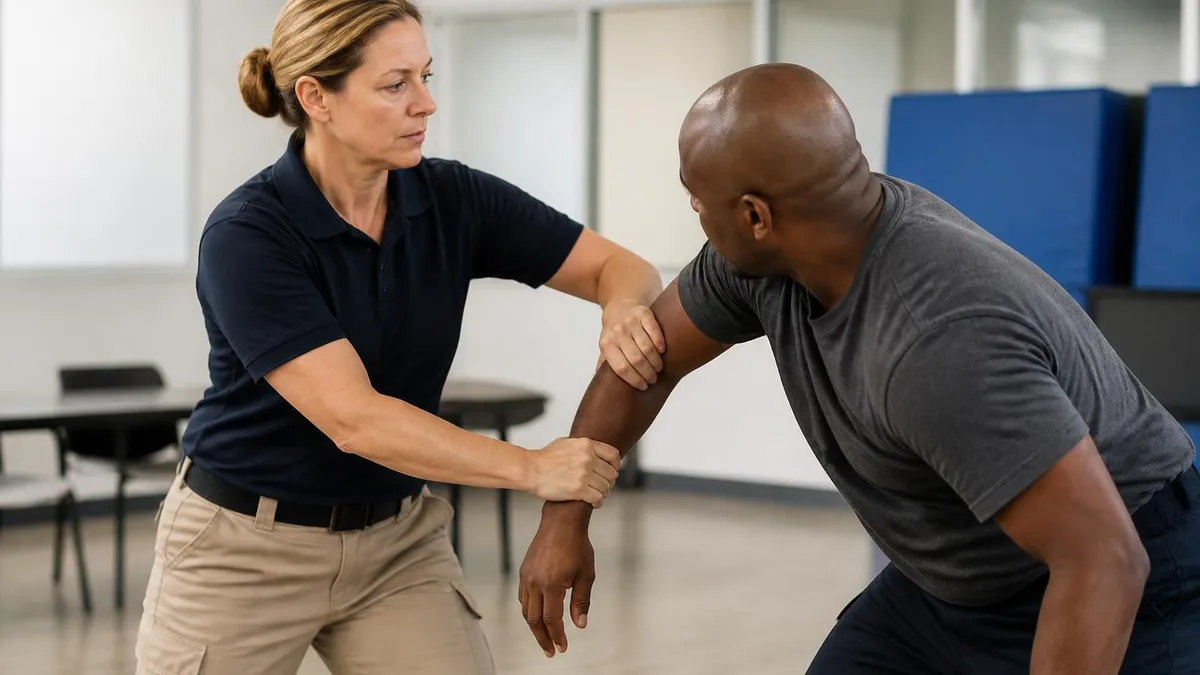
CPI Supportive Approach: Complete Guide to Stage 2 De-escalation and Anxiety Response

CPI Training Online: Complete Guide to Crisis Prevention Certification Formats, Requirements, and Preparation in 2026
About the Author

Educational Psychologist & Academic Test Preparation Expert
Columbia University Teachers CollegeDr. Lisa Patel holds a Doctorate in Education from Columbia University Teachers College and has spent 17 years researching standardized test design and academic assessment. She has developed preparation programs for SAT, ACT, GRE, LSAT, UCAT, and numerous professional licensing exams, helping students of all backgrounds achieve their target scores.
Join the Discussion
Connect with other students preparing for this exam. Share tips, ask questions, and get advice from people who have been there.
View discussion (8 replies)